When Wind Damage Requires Roof Replacement
Wind damage requires roof replacement when the roof can no longer be trusted to shed water reliably. That does not mean every missing shingle or lifted tab means the whole roof must be replaced. Some wind damage is localized and repairable. The question is whether the damage is isolated, or whether the roof system has been weakened enough that spot repairs are unlikely to provide dependable protection.
After a windstorm, homeowners often focus on the most obvious signs: missing shingles, loose pieces on the ground, or shingles hanging from the roof edge. Those signs matter, but replacement decisions are usually based on a broader picture. Widespread broken seals, creased shingles, brittle materials, repeated leaks, exposed underlayment, damaged decking, and roof age all affect whether repair is realistic.
Wind damage moves toward replacement when repairs would depend on brittle, unsealed, repeatedly leaking, or structurally weakened roofing materials. This guide focuses on the point where patching damaged shingles is no longer likely to restore reliable protection. If you are still trying to understand subtle storm damage before deciding what to do, start with the guide to hidden wind damage that leads to roof leaks.
Why Wind Damage Does Not Always Mean Roof Replacement
Wind damage does not automatically mean the entire roof needs to be replaced. A small number of missing or damaged shingles may be repairable when the rest of the roof is still in good condition. If the surrounding shingles are flexible, well sealed, properly attached, and not near the end of their service life, a localized repair may restore protection in that specific area.
Do not judge wind damage by one visible defect. One missing shingle may be repairable, while an intact-looking roof may still have broken seals, lifted tabs, or moisture risk. The decision depends on severity, spread, roof age, and whether water has entered the system.
Localized wind damage is more likely to be repairable when:
- Only a few shingles are missing or damaged.
- The damage is limited to one small area.
- The surrounding shingles are not brittle or badly worn.
- There are no signs of widespread seal failure.
- The roof deck and attic remain dry.
- The roof has not had repeated wind-related leaks.
- The repair can be made without damaging nearby shingles.
Replacement becomes more likely when the damage is no longer isolated. If many shingles are lifted, creased, loose, or missing, the issue is not just one damaged spot. It may indicate that the roof surface has lost wind resistance across a larger area. That can turn a repair question into a roof system question.
This is why wind damage belongs within the broader topic of common roofing material failures. Sometimes the material has failed only in one place. Other times, the wind exposes a roof that is already too aged, brittle, or weak to repair reliably.
When Wind Damage May Be Too Severe for Simple Repair
Wind damage may be too severe for simple repair when the roof has lost dependable protection across a broad area. The more widespread the damage is, the harder it becomes to treat the problem as a small patch. A repair must connect to surrounding materials that can still perform. If those surrounding shingles are also weakened, brittle, or unsealed, the repair may not last.
Several conditions raise the likelihood that a roof replacement evaluation is needed.
Widespread Missing Shingles
A few missing shingles may be a repair issue. Widespread missing shingles are different. When wind removes shingles across a large section of roof, the underlayment may be exposed to rain, sunlight, debris, and further wind. If the underlayment is torn or aged, water may reach the roof deck before the damage is repaired.
Large missing sections also suggest that wind forces overcame the roof’s attachment and sealing system in more than one place. That can mean the roof is vulnerable beyond the areas where shingles are visibly gone. Nearby shingles may also have broken seals or loosened fasteners even if they remain in place.
The location of missing shingles also matters. Missing shingles near roof edges, corners, valleys, ridges, or previous repairs may create higher leak risk than a single isolated shingle in the middle of a roof plane. These areas already handle more water movement, wind uplift, and transition details.
Multiple Lifted or Creased Shingles
Lifted shingles are a warning sign because they may indicate broken adhesive seals. A shingle that lifts during wind may settle back down after the storm, but it may not rebond properly. If many shingles are lifted across one slope, the roof may be vulnerable to future wind-driven rain even if only a few shingles are missing.
Creased shingles are more serious than simple lifting. A crease suggests that the shingle bent under wind force. Once a shingle is creased, the material itself may be weakened. It may crack, shed granules, or fail to shed water properly. Pressing it back down does not necessarily restore its original performance.
Widespread lifted or creased shingles are one of the clearest reasons to get a replacement evaluation. The companion article on how wind damage weakens roof seals explains the seal failure process in more detail. For replacement decisions, the key point is that many unsealed or creased shingles reduce confidence in the roof’s future performance.
Damage Across More Than One Roof Slope
Damage across more than one roof slope usually points to a larger wind event or a roof that is generally vulnerable. If one small area is damaged, repair may be practical. If several slopes show lifted tabs, missing shingles, torn edges, or ridge damage, the roof may need a broader evaluation.
Multiple-slope damage matters because repairs become more scattered and less predictable. Each repair must tie into surrounding shingles. If many areas are affected, the roof may end up with numerous patches across aged or weakened material. That can increase the chance of future leaks, especially during strong wind and rain.
Damage pattern matters too. One slope may show the worst damage because it faced the strongest wind, but other slopes can still have lifted tabs or broken seals. A one-slope repair decision should not be made until the rest of the roof has been checked for hidden wind damage.
Repeated Leaks After Wind Events
Repeated leaks after wind events are a strong warning sign that simple repair may not be solving the real problem. A roof that leaks only during wind-driven rain may have loose shingles, broken seals, edge failures, ridge damage, or other openings that are not obvious during calm weather.
This pattern can be frustrating because the roof may seem dry during ordinary rain. The homeowner may think the issue was fixed, only to see the same stain return after another storm. When leaks repeat after wind events, the problem may involve more than one failed shingle. It may involve a weakened roof surface that allows water under certain storm conditions.
Repeated wind-related leaks are especially concerning when they affect the same area more than once. That can mean the original repair did not address the underlying vulnerability, or that the surrounding shingles are too worn to hold a reliable repair. If water has already reached the attic or ceiling, homeowners should also review how to detect hidden roof leaks before assuming the only issue is the visible shingle damage.
How Broken Roof Seals Affect the Replacement Decision
Broken roof seals affect the replacement decision because they change how the roof will perform in future wind. A roof with intact shingles but widespread broken seals may look better than it actually is. The shingles may still cover the roof, but they may no longer resist uplift or wind-driven rain as designed.
Isolated seal damage may be repairable. If one small area has several lifted tabs and the surrounding roof is healthy, a roofer may be able to correct that area. The concern grows when many shingles across a slope or roof section have lost their seal. At that point, the roof may not have enough reliable adhesion to perform well in the next storm.
Seal failure matters even more on older roofs. If shingles are brittle, worn, or granule-depleted, attempting spot repairs may crack surrounding shingles. A repair that looks simple on a newer roof may become difficult on an older roof because the nearby shingles do not tolerate lifting, bending, or handling.
Broken seals create future risk even when there is no active leak today. Unsealed shingles are more likely to lift again, allowing wind-driven rain to reach underlayment, nail holes, seams, or decking. Widespread seal failure can justify a replacement evaluation because the roof has lost dependable wind resistance, not merely because one leak is visible.
Why Roof Age Matters After Wind Damage
Roof age matters because older shingles are usually harder to repair after wind damage. Over time, asphalt shingles lose flexibility, adhesive strength, and surface protection. Granule loss, heat exposure, sunlight, freeze-thaw cycles, and previous storms all reduce the roof’s ability to tolerate new damage.
On a newer roof, isolated wind damage may be easier to repair because the surrounding shingles are still flexible and better sealed. On an older roof, the surrounding shingles may crack when lifted for repair. The adhesive strips may not reseal well. The roof may already have curled edges, brittle tabs, or previous patches that make another repair less dependable.
This is why two roofs with similar wind damage can require different decisions. Five missing shingles on a relatively healthy roof may be a repair. Five missing shingles on an old, brittle, leak-prone roof may reveal a larger end-of-life problem. The damage count alone does not tell the whole story.
Homeowners should also consider whether the roof had problems before the windstorm. If there were already recurring leaks, worn shingles, poor drainage patterns, soft decking, or previous repairs, wind damage may be the event that exposes a roof that was already close to replacement. For a broader look at that issue, see how roof age affects leak risk.
Moisture Signs That Make Wind Damage More Serious
Wind damage becomes more serious when moisture has already entered the roof system. At that point, the issue is no longer only about the appearance of shingles. Water may have reached materials that can hold moisture, weaken, stain, or support mold growth if the leak continues.
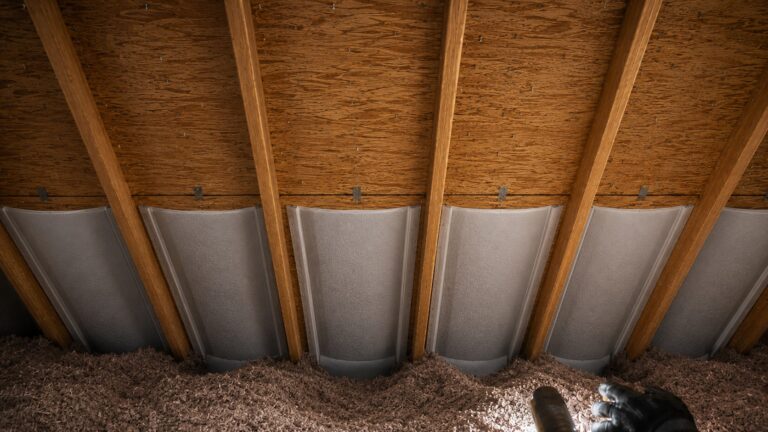
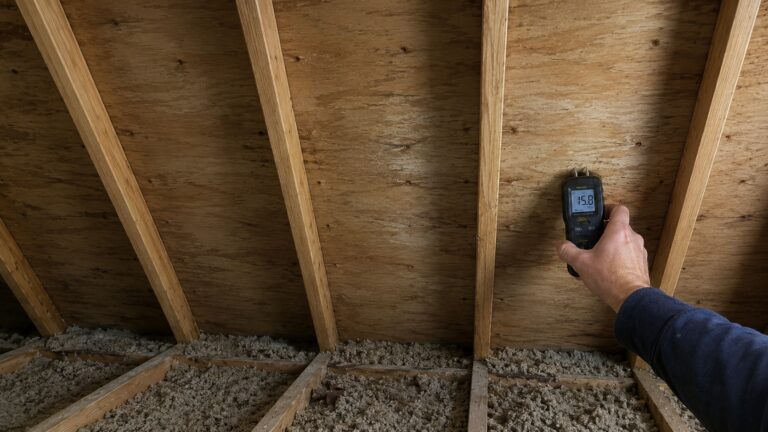
Attic moisture is one of the most important warning signs. Damp insulation, darkened roof decking, stained rafters, musty odors, or visible dripping after rain can all suggest that wind damage has allowed water past the roof covering. These signs should not be ignored simply because the ceiling below still looks normal. A dry ceiling does not prove the roof system is dry; insulation, decking, and rafters can hold moisture before stains appear indoors.
Ceiling stains also raise the urgency. A small yellow or brown stain may represent moisture that traveled through the roof deck, attic space, insulation, and drywall before becoming visible. By the time water appears indoors, the roof leak may have been active longer than the homeowner realizes.
Moisture signs are especially important after wind-driven rain. If a roof only leaks during storms with strong sideways rain, the problem may involve lifted shingles, broken seals, ridge damage, or edge vulnerabilities. These leaks can be intermittent, which makes them easy to underestimate.
When interior signs appear, the homeowner should compare the symptoms with signs of roof leaks inside the house. Interior moisture does not automatically mean full replacement, but it does mean the damage has progressed beyond surface appearance and should be evaluated promptly.
Repair vs. Replacement: How Homeowners Should Think About the Decision
The repair versus replacement decision should be based on reliability. A repair is worthwhile when it can restore dependable protection in a limited area. Replacement becomes more reasonable when repairs would only patch symptoms while leaving a weakened roof system in place. For the broader decision framework beyond wind damage, see repair vs. replace a roof after storm damage.
A localized repair may make sense when the damage is small, the roof is not old or brittle, the surrounding shingles are still sealed, and there is no moisture intrusion. In that case, replacing a few damaged shingles may solve the problem without disturbing the rest of the roof.
A partial replacement or slope replacement may be discussed when one roof plane has severe damage but the rest of the roof is in better condition. This depends on roof design, material match, age, warranties, local codes, and whether tying new materials into old materials will create future weak points.
A full replacement evaluation becomes more likely when damage is widespread, the roof is near the end of its service life, shingles are brittle, seal failure is common across the roof, or moisture has entered the attic or living space. In that situation, repeated patching may delay the inevitable while allowing more water damage to develop.
The most important question is not simply, “Can someone patch this?” The better question is, “Will the repair provide reliable protection through future wind and rain?” If the answer is uncertain because the roof surface is broadly weakened, replacement may be the more realistic long-term solution. A practical rule of thumb is to compare three things together: how much of the roof is affected, how well the surrounding shingles can tolerate repair, and whether any water has already reached the attic, decking, insulation, or ceiling.
When a Professional Roof Inspection Is Necessary
A professional roof inspection is necessary when wind damage is widespread, difficult to see safely, or connected to moisture inside the home. Wind damage often affects areas that homeowners cannot evaluate well from the ground, including shingle seals, fastener lines, ridge caps, roof edges, and underlayment exposure. For a homeowner-level post-storm shingle check before calling a contractor, see how to inspect roof shingles after high winds.
Professional inspection is especially important when several shingles are lifted, creased, torn, or missing. These signs can indicate that the roof surface has lost more than a few individual shingles. A roofer can evaluate whether the surrounding shingles are still repairable or whether attempting spot repairs would damage brittle materials nearby.
Older roofs should also be inspected carefully after wind damage. An older roof may not tolerate repair work well because the shingles can crack when lifted or disturbed. A professional can help determine whether the roof still has enough remaining condition to make repair practical.
Interior moisture is another reason to get an inspection. If wind damage has led to attic dampness, stained decking, wet insulation, ceiling stains, peeling paint, or recurring leaks, the roof should be evaluated as part of a complete moisture problem. The inspection should not only look for missing shingles. It should also check where water entered, how far it traveled, and whether building materials have been affected.
Safety is also a major factor. Homeowners should not walk on steep, wet, high, brittle, or storm-damaged roofs. Loose shingles, weakened decking, and hidden damage can make the surface unsafe even when it looks accessible from the ground. DIY inspection should usually stop at ground-level observation and safe attic checks. If roof access is needed, it is better handled by someone trained and equipped to do it safely. Homeowners who are unsure whether the issue has moved beyond DIY observation should review when to hire a roofing contractor for moisture problems.
What Not to Assume After Wind Damage
After wind damage, two mistakes are common: assuming every damaged roof needs replacement, or assuming an intact-looking roof is safe to ignore.
Do not assume that one missing shingle means the whole roof must be replaced. Isolated damage may be repairable if the surrounding shingles are healthy and the roof deck is dry. A replacement decision should be based on the full condition of the roof, not one visible defect.
Do not assume that a roof is fine because no shingles are missing. Lifted tabs, broken seals, creased shingles, and loosened fasteners can create future leak risk. Wind damage can remain hidden until the next storm exposes the weakness.
Do not assume that a quick patch solves widespread damage. A patch may stop one opening, but it does not restore a roof surface that has widespread seal failure, brittle shingles, or repeated storm leaks. Patching can be useful in the right situation, but it should not replace a proper evaluation when the damage pattern is broad.
Do not assume that the visible ceiling stain is directly below the roof damage. Water can travel along decking, rafters, insulation, and drywall before appearing indoors. A stain may show up several feet from the original entry point.
Finally, do not assume that replacement is only about visible storm damage. Sometimes wind damage reveals an older roof that was already near the end of reliable service. In that case, replacement may be considered because the roof system is no longer dependable, not simply because one storm caused one damaged spot.
FAQ
Does wind damage always mean roof replacement?
No. Isolated wind damage may be repairable when only a small area is affected and the surrounding roof is still in good condition. Replacement becomes more likely when damage is widespread, shingles are brittle or creased, seals have failed across large areas, or moisture has entered the roof system.
How many missing shingles require roof replacement?
There is no single number that automatically requires replacement. A few missing shingles on a healthy roof may be repairable, while scattered missing shingles across several slopes on an older roof may justify replacement evaluation. Damage pattern, roof age, shingle condition, and moisture intrusion matter more than the count alone.
Can lifted shingles be repaired?
Some lifted shingles may be repairable if the shingles are still flexible, not creased, and limited to a small area. Widespread lifted shingles are more concerning because they may indicate broad seal failure. Older brittle shingles may not repair reliably after being lifted by wind.
Can a roof be replaced by slope after wind damage?
Sometimes. A slope replacement may be possible when wind damage is concentrated on one roof plane and the rest of the roof is still in good condition. The decision depends on material match, roof age, tie-in details, local requirements, and whether other slopes have hidden seal damage.
Is widespread seal damage enough to replace a roof?
Widespread seal damage can support a roof replacement evaluation because the roof may have lost reliable wind resistance. It does not automatically prove replacement is required, but many unsealed shingles across a roof can make future wind and rain damage more likely.
Should an older roof be replaced after wind damage?
An older roof does not always need replacement after wind damage, but age makes the decision more serious. If shingles are brittle, curled, granule-depleted, creased, or already leaking, wind damage may reveal that repairs are no longer dependable.
Can wind damage cause leaks later?
Yes. Wind can weaken shingles, break seals, or loosen edges before water enters the home. A later storm may push rain beneath the damaged area and create a leak. This delayed pattern is common when wind damage affects the roof’s water-shedding surface before visible interior symptoms appear.
Wind Damage Roof Replacement Checklist
- Wind damage does not automatically require roof replacement.
- Replacement becomes more likely when damage is widespread, recurring, or moisture-related.
- Missing shingles, lifted shingles, creased shingles, and broken seals all affect the decision.
- Older roofs are harder to repair reliably after wind damage because shingles may be brittle or poorly sealed.
- Interior moisture signs make wind damage more urgent and require closer evaluation.
- Repeated patching may not be a good long-term solution when the roof surface is broadly weakened.
- Professional inspection is important when damage affects multiple slopes, roof edges, ridges, or attic materials.
- The main question is whether repair can restore reliable protection through future wind and rain.
The Bottom Line on Wind-Damaged Roof Replacement
Wind damage requires roof replacement when the roof can no longer provide dependable protection as a water-shedding system. A small damaged area may be repairable, but widespread missing shingles, lifted tabs, creased shingles, broken seals, repeated leaks, and attic or ceiling moisture can move the decision toward replacement.
The age and condition of the roof matter as much as the storm damage itself. A newer roof with isolated damage may be a repair candidate. An older roof with brittle shingles, weak seals, previous repairs, and recurring wind-related leaks may not be reliable enough for another patch.
Evaluate the whole damage pattern, not one symptom. If wind damage is widespread, leaks have appeared, or repairs would depend on brittle surrounding shingles, a professional replacement evaluation is the right next step. The goal is not just to replace damaged shingles; it is to make sure the roof can protect the home through future storms and prevent recurring moisture problems.