
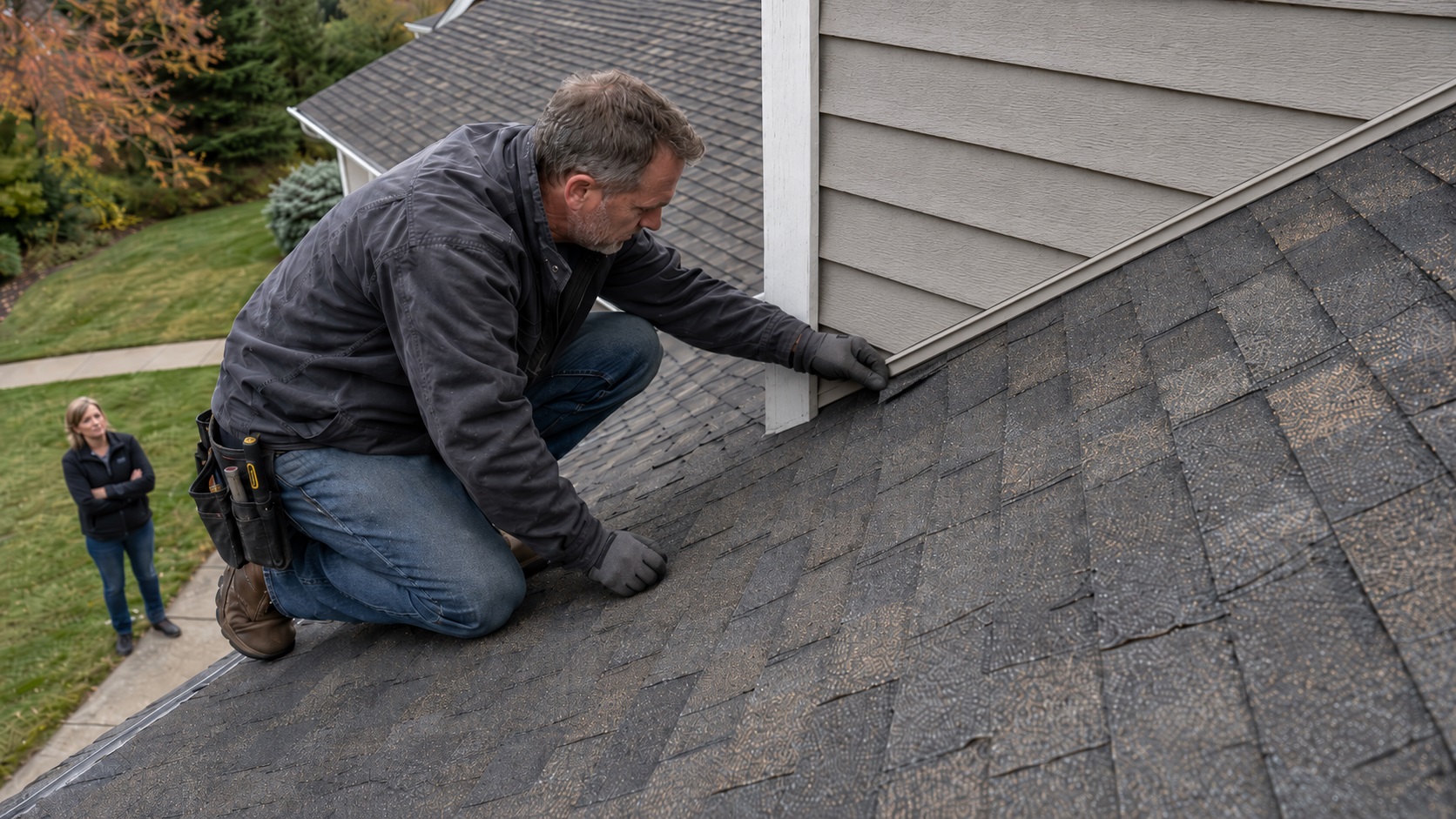
How to Decide Whether to Repair or Replace a Roof
Deciding whether to repair or replace a roof is not always as simple as looking at one leak, one missing shingle, or one repair estimate. A roof can have a small, isolated problem that is worth repairing, or it can have a pattern of aging, repeated leaks, and hidden moisture damage that makes replacement the smarter long-term decision.
The right choice depends on five main factors: roof age, damage spread, whether the leak source is isolated, how much useful life remains, and whether moisture has reached the decking, attic, insulation, or interior ceilings. A repair is usually the better choice when the problem is limited and the rest of the roof is still in good condition. Replacement becomes more likely when repairs are only delaying a larger failure.
The decision is not just whether the current leak can be patched. It is whether the repair is likely to buy enough reliable roof life to justify the cost. For broader context on roof aging, leak patterns, and material breakdown, it also helps to understand the most common common roofing material failures that lead homeowners into this decision in the first place.
The Main Difference Between a Roof Worth Repairing and a Roof Worth Replacing
The biggest question is whether the roof has a localized problem or a system-wide problem.
A localized problem affects one limited area of an otherwise healthy roof. For example, a small flashing leak around a vent pipe, a few damaged shingles from a fallen branch, or a minor leak at one roof penetration may be repairable if the surrounding roof surface is still sound. In those cases, the roof itself may still have years of service life left. The repair is not trying to save a failing system; it is correcting a specific defect.
A system-wide problem is different. That means the roof is failing across multiple areas or the materials are nearing the end of their useful life. If shingles are brittle across several slopes, granules are heavily worn, flashing problems keep appearing, leaks return after previous repairs, or the decking has started to soften, the roof may no longer be a good candidate for repeated patching.
This distinction matters because a repair only makes sense if it solves the actual problem. If the visible leak is just one symptom of a roof that is aging everywhere, a repair may stop water temporarily while leaving the homeowner with the same decision again a few months later.
A useful way to think about it is this:
- Repair makes sense when the roof is mostly healthy and the damage is limited.
- Replacement makes sense when the roof is broadly worn, repeatedly leaking, or no longer protecting the structure reliably.
Homeowners sometimes ask, “Can this be repaired?” when the better question is, “Will this repair give me enough reliable roof life to justify the cost?” Many roof problems can be patched in some way, but that does not always make patching the best decision. At the same time, one leak does not automatically mean the whole roof needs replacement if the roof is still sound and the leak source is clearly isolated.
Start With Roof Age, But Do Not Use Age Alone
Roof age is one of the most important repair-or-replace factors, but it should never be the only factor. A newer roof can fail early if it was installed poorly, damaged by severe weather, or affected by bad flashing details. An older roof may still be repairable if it has been maintained well and the problem is isolated. Age gives you context, but condition gives you the answer.
For a newer roof, repair is often the first option to evaluate. If the roof is only a few years old and has one leak around a vent, skylight, chimney, valley, or flashing detail, the problem may be tied to installation, sealant failure, mechanical damage, or one weak area. In that situation, replacing the entire roof may be excessive unless there are signs of widespread defects.
For a mid-life roof, the decision becomes more balanced. A roof that still has meaningful life left may be worth repairing, especially if the damage is limited. However, if the repair is expensive and the roof is already showing broader wear, the homeowner should compare the repair cost against how many more years the roof is likely to provide.
For an older roof, replacement becomes more likely. This does not mean every old roof must be replaced immediately. It means repair decisions need more caution. If a roof is already near the end of its expected service life, a large repair may only buy a short delay before the next leak or failure appears.
Different materials age differently. Asphalt shingles, metal roofing, slate, and rubber membrane roofs all have different wear patterns and expected service lives. If you are dealing with shingles, it helps to understand how long asphalt shingles usually last before deciding whether repair still makes sense. A roof that is early in its lifespan deserves a different decision than one already approaching the end.
Age should also be compared with the type of damage. A single missing shingle on a roof with many years left is usually a repair issue. A single leak on a roof that is already brittle, worn, patched several times, and showing interior staining may point toward replacement, even if the leak appears small from inside the house.
Avoid using age as a rule by itself. A roof is not automatically healthy because it is newer, and it is not automatically beyond repair because it is older. The better question is whether the roof’s current condition supports a repair that will last.
Look at Whether the Damage Is Localized or Widespread
After roof age, the next major factor is the pattern of damage. A roof with one damaged area is very different from a roof with several weak points appearing at the same time.
Localized damage usually points toward repair. This may include a few missing shingles, one cracked pipe boot, a small leak around a chimney, a damaged section near a valley, or one area where flashing has pulled loose. If the rest of the roof surface still looks consistent, lies flat, and shows no major deterioration, a focused repair may solve the problem without replacing the full roof.
Widespread damage points more strongly toward replacement. If the roof has multiple leaks, broad surface wear, many brittle or curling shingles, large areas of granule loss, rust or corrosion across metal panels, separated seams on a flat roof, or recurring water stains inside the home, the issue may no longer be isolated. At that point, fixing one spot may not address the larger roof condition.
This is where many homeowners underestimate the problem. They see one ceiling stain and assume there is one leak directly above it. Sometimes that is true. But water can travel along rafters, decking, underlayment, insulation, or ceiling framing before it becomes visible indoors. The stain may appear in one room while the actual entry point is higher up the roof or several feet away.
That does not mean every roof stain requires replacement. It means the decision should be based on the roof system, not only the indoor symptom. If one clear defect explains the leak and the surrounding materials are sound, repair may be enough. If several entry points are possible or the same area has been repaired before, replacement becomes more reasonable to consider.
When evaluating the pattern of damage, look for these broad clues:
- Is the damage limited to one small area?
- Are the surrounding shingles, panels, tiles, or membrane still in good condition?
- Has the roof leaked before in the same area?
- Are there multiple stains, soft spots, or worn areas?
- Does the damage appear tied to one event, or does it look like aging?
If the roof has obvious warning signs across multiple areas, it may help to compare your situation with the broader signs a roof needs replacement. That type of symptom-based evaluation is separate from the financial decision, but it gives important context before you approve another repair.
Compare Repair Cost Against Remaining Roof Life
A roof repair is not automatically the cheaper decision just because the price is lower than replacement. The real question is how much reliable roof life the repair is likely to buy.
A modest repair on a roof with many years left can be a good financial decision. For example, replacing damaged flashing, sealing a clear penetration leak, or repairing a small storm-damaged section can protect the home without the cost of full replacement. In that case, the repair cost is buying meaningful remaining service life.
A large repair on an old or failing roof is different. If the roof is already near the end of its life, a major repair may only postpone replacement for a short time. The homeowner spends money now, then still has to pay for a new roof soon afterward. That is how repeated repairs become more expensive than acting once.
The decision is not based on one universal dollar amount. Roof size, material, slope, labor costs, location, access, decking damage, and leak complexity all affect price. Instead of asking whether the repair is “expensive” in isolation, compare the repair cost with the expected result.
Ask these questions:
- Will this repair likely solve the actual cause of the leak?
- How many more years of service should the roof have after the repair?
- Is this the first repair, or one of several recent repairs?
- Is the repair limited to exterior roofing, or does it include decking and moisture damage?
- Would the repair cost be better applied toward replacement?
A repair that gives the roof several more reliable years can be worth it. A repair that only covers one weak spot on a roof that is failing everywhere may not be. The problem is not the repair itself. The problem is paying for short-term patches when the roof is no longer capable of long-term performance.
For cost planning, compare the estimate with a guide to roof leak repair cost so you can tell whether the proposed work is minor, moderate, or moving into the range where replacement deserves serious consideration.
When Roof Repair Usually Makes Sense
Roof repair usually makes sense when the damage is limited, the roof is not near the end of its life, and the repair addresses a clear cause. In this situation, the roof still has enough value left that preserving it is reasonable.
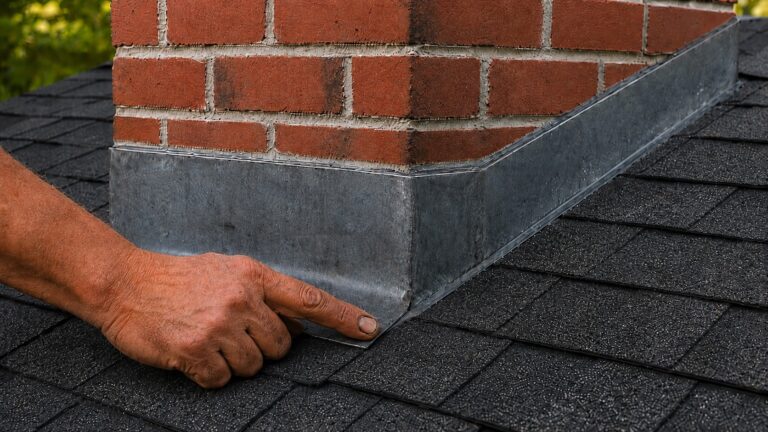
One of the strongest repair candidates is a clear flashing problem. Flashing around chimneys, sidewalls, valleys, skylights, vents, and roof transitions is a common leak point. If the surrounding roof material is in good condition, repairing or replacing the flashing may be enough. The roof covering itself may not need replacement.
Another repair-friendly situation is minor physical damage. A branch may damage a small section of shingles. Wind may lift a few tabs. A pipe boot may crack while the rest of the roof remains intact. In these cases, the failure may be real but limited.
Repair also makes sense when the roof has not developed a history of repeated leaks. A first-time leak with an obvious source is easier to justify repairing than a leak that keeps returning after several attempts. One successful repair on a healthy roof is very different from a series of repairs on a roof that keeps failing in new places.
In general, repair is more likely to be the right choice when:
- The roof is relatively new or still within a useful middle stage of life.
- The damage is limited to one area.
- The surrounding roofing material is still sound.
- The leak source is identifiable.
- The roof decking is dry and solid.
- There is no pattern of repeated leaks.
- The repair cost is reasonable compared with the roof life remaining.
Repairs are also more defensible when the contractor can explain the cause clearly. “This pipe boot has cracked and the surrounding shingles are still in good condition” is a stronger repair explanation than “We can seal this area and see what happens.” A repair should be tied to a specific failure, not just a guess.
When Roof Replacement Usually Makes More Sense
Roof replacement usually makes more sense when the roof is no longer failing in one isolated place. If the roof is old, worn across multiple areas, leaking repeatedly, or allowing moisture into the structure, repair may only delay a replacement that is already needed.
The strongest replacement signal is a pattern of failure. A roof that has one leak may be repairable. A roof that has leaked in several places, needed repeated patching, or developed new problems shortly after repairs is showing a broader reliability issue. Even if each repair seems small by itself, the combined pattern may show that the roofing system is no longer dependable.
Replacement also becomes more likely when the visible roof surface is deteriorating across large areas. On an asphalt shingle roof, that may look like widespread curling, cracking, brittleness, missing granules, or shingles that break instead of flexing. On a metal roof, it may include widespread corrosion, panel distortion, fastener failure, or seam problems. On a flat or rubber roof, it may include membrane shrinkage, open seams, ponding-related deterioration, or surface breakdown.
The condition underneath the roof covering matters just as much. If the roof decking is soft, rotted, delaminated, or visibly water-stained across multiple areas, the decision becomes more serious. Replacing surface materials without addressing damaged decking does not restore the roof system. In some cases, a roof that looks like a surface repair from outside becomes a larger replacement project once the moisture damage underneath is exposed.
Replacement is also more reasonable when the repair estimate is high and the roof has little useful life left. A major repair may stop the current leak, but if the next weak area is likely to fail soon, that money may be better applied toward replacement.
In general, replacement deserves serious consideration when:
- The roof is near or past its expected service life.
- Leaks have appeared in more than one area.
- Previous repairs have failed or only worked temporarily.
- The roof surface shows widespread aging or deterioration.
- Decking, sheathing, or attic framing shows moisture damage.
- The repair cost is high compared with the value of the roof life remaining.
- The roof has multiple layers, poor past repairs, or installation defects that make new repairs unreliable.
This is different from saying every worn roof must be replaced immediately. Some roofs can still be maintained for a time. But when broad failure patterns are present, compare the current condition with when a roof must be replaced instead of repaired, especially if there are structural or moisture-related warning signs.
How Moisture Damage Changes the Decision
Moisture damage can turn a simple roof repair into a larger roof replacement decision. The outside roof covering is only one part of the system. Once water gets past the roofing material, it can affect underlayment, decking, rafters, insulation, ceilings, and interior finishes.
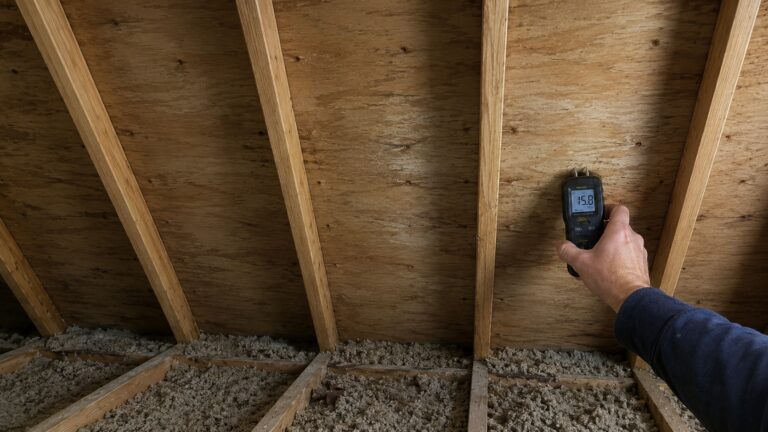
A small leak caught early may only require an exterior repair. But a leak that has been active for months may have already affected hidden materials. If the roof deck is stained, softened, swollen, or deteriorated, repairing the visible leak may not be enough. The damaged decking may need to be replaced before the roof can perform properly again.
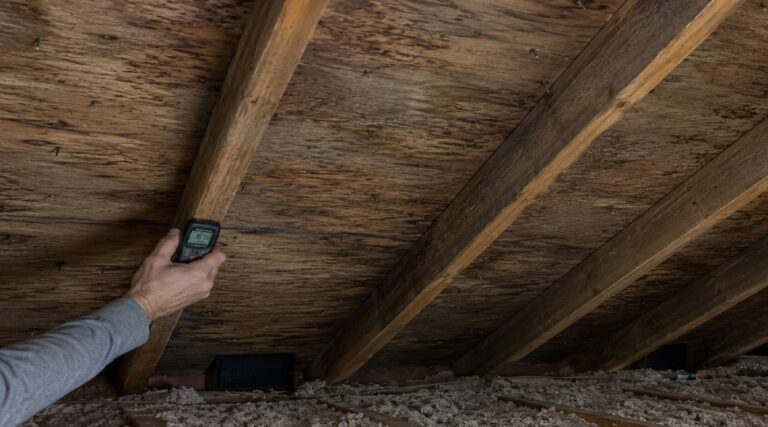
Attic signs are especially important. A homeowner may notice water stains on sheathing, damp insulation, musty odors, darkened wood, or recurring ceiling stains after rain. These do not automatically prove that the whole roof needs replacement, but they do mean the decision should not be based only on the exterior surface. The structure below the roof must be evaluated.
Moisture also changes the financial side of the decision. A repair that seems inexpensive from the outside can become more costly if it involves removing roofing, replacing decking, drying affected areas, or correcting hidden damage. If several sections are affected, the project may start to resemble a partial or full replacement rather than a small repair.
This is why repeated leaks are a major warning sign. Water damage is often cumulative. Even if each leak seems minor, repeated wetting can weaken materials over time. A ceiling stain that dries out does not prove the roof is safe. It only proves the visible surface water disappeared. Hidden materials may still have absorbed moisture.
When moisture has moved beyond the roof covering, the decision should include these questions:
- Is the decking still solid?
- Has the attic insulation been wet?
- Are there stains or dark areas on the underside of the roof sheathing?
- Have ceiling stains returned after previous repairs?
- Is there a musty odor in the attic or upper rooms?
- Are there multiple leak paths instead of one clear source?
If moisture damage is part of the problem, the repair-or-replace decision should fit into the larger goal of how to find, fix, and prevent moisture problems in a home. The roof decision is not only about stopping rain from entering today. It is also about preventing repeated water intrusion from causing deeper structural damage later.
How Roof Material Changes the Decision
The same basic framework applies to every roof: age, damage pattern, repair cost, moisture risk, and remaining service life. The material still matters because asphalt shingles, metal roofing, slate, tile, and rubber membrane roofs fail in different ways.
Asphalt shingles are often repairable when the damage is limited to a few shingles, one flashing detail, or one penetration. Replacement becomes more likely when shingles are broadly curling, cracking, losing granules, or becoming brittle across large areas. For shingle-specific thresholds, use the guide on whether to repair vs replace an asphalt shingle roof.
Metal, slate, tile, and rubber roofs can sometimes justify repair longer because individual panels, slates, tiles, seams, or membrane sections may be repairable. But widespread corrosion, failed seams, broken underlayment, broad membrane deterioration, or structural moisture damage can still push the decision toward replacement. The material affects the repair options, but it should not override the larger question: is the roof still reliable as a system?
Questions to Ask Before Approving a Roof Repair
Before approving a roof repair, ask enough questions to understand whether the repair is solving the real problem or only covering the visible symptom. A good repair recommendation should explain what failed, why it failed, how localized the damage is, and how much life the rest of the roof appears to have.
Start with the cause. If the contractor can point to a cracked pipe boot, loose flashing, missing shingles, storm damage, or a specific seam failure, the repair has a clearer purpose. If the explanation is vague, the repair may be less reliable. A roof repair should not be based only on sealing the area where water appeared indoors.
Ask these questions before deciding:
- What caused the leak or roof damage?
- Is the problem isolated or part of wider roof deterioration?
- How much useful life does the rest of the roof appear to have?
- Is the roof decking dry, solid, and structurally sound?
- Can the contractor show photos of the damaged area and the surrounding roof condition?
- Has this area been repaired before?
- What happens if the repair does not stop the leak?
- Is the repair compatible with the existing roofing material?
- Would this repair still make sense if replacement is likely within a few years?
These questions help separate a practical repair from a temporary patch. A temporary patch may still be useful in an emergency, especially if active water intrusion needs to be stopped quickly. But it should not be confused with a long-term solution if the roof is already failing across multiple areas.
If the roof has repeated leaks, widespread aging, or conflicting contractor recommendations, it may be time to review when to hire a roofing contractor for moisture problems. A professional inspection is most useful when it explains the full roof condition, not just the most obvious leak point.
When to Get a Professional Roof Inspection
A professional roof inspection is worth considering when the repair-or-replace decision is unclear, the roof is older, the leak has returned, or moisture may have reached structural materials. The goal is not just to get a price. The goal is to understand the condition of the roof system.
You should get a professional inspection if water is actively entering the home, ceiling stains are spreading, attic materials are damp, shingles or panels are failing in several areas, or a previous repair did not solve the problem. You should also get help if the roof surface is steep, high, storm-damaged, or unsafe to inspect from a ladder.
Do not climb onto a wet, steep, icy, storm-damaged, or visibly unstable roof. Many repair-or-replace clues can be checked from the ground, from attic access, or through contractor photos without walking the roof yourself.
A good inspection should check more than the visible roof covering. It should consider flashing, penetrations, valleys, roof edges, underlayment condition where visible, ventilation issues, decking condition, attic staining, and evidence of recurring moisture. The inspector should be able to explain whether the problem is isolated, widespread, or uncertain without removal of roofing materials.
It is reasonable to get more than one estimate when replacement is recommended. One contractor may recommend a repair while another recommends replacement because they are evaluating risk differently. A useful estimate should explain the evidence behind the recommendation.
When comparing contractors, pay attention to the details included in the scope of work. A low repair price may not include decking replacement, flashing correction, leak testing, or warranty protection. A replacement estimate may vary depending on tear-off, underlayment, ventilation, flashing, disposal, and structural repairs. If you are unsure how to evaluate proposals, a guide on how to choose a roofing contractor for leak repairs can help you compare more than just price.
FAQ: Repairing or Replacing a Roof
Is it better to repair or replace a roof with one leak?
One leak does not automatically mean the roof needs replacement. If the leak comes from one clear failure point and the rest of the roof is in good condition, repair may be the better choice. Replacement becomes more likely when the leak is part of broader aging, repeated failures, or hidden moisture damage.
How old should a roof be before replacement makes more sense than repair?
There is no single age that applies to every roof. The answer depends on material, installation quality, climate, maintenance, and current condition. A newer roof with one isolated problem is usually more repairable. An older roof with repeated leaks or widespread wear is more likely to justify replacement.
Should I keep repairing a roof that leaks every year?
A roof that leaks every year should be evaluated carefully. Repeated leaks often mean the problem is not fully isolated or the roof system is aging beyond reliable repair. Even if each repair seems affordable, the pattern may make replacement the better long-term financial decision.
Can a roof be repaired if the decking is damaged?
Sometimes, but the damaged decking usually has to be replaced as part of the work. A surface repair over soft, rotted, or delaminated decking is not a reliable repair. Once moisture has damaged the roof structure below the covering, the project may become larger than a simple patch.
Is roof replacement worth it before selling a house?
It depends on the roof condition, buyer expectations, inspection risk, and local market. If the roof is near failure, replacement may prevent negotiation problems. If the roof has only minor isolated damage, a documented repair may be enough. A real estate agent and roofing contractor can help weigh the cost against likely sale impact.
Should I get more than one estimate before replacing a roof?
Yes, especially if the recommendation is expensive, the roof has repeated leaks, or one contractor recommends replacement while another recommends repair. Multiple estimates help you compare scope, materials, warranty terms, and the reasoning behind each recommendation.
A Simple Way to Make the Final Decision
The best way to decide whether to repair or replace a roof is to look beyond the immediate leak or repair price. A roof repair makes sense when the damage is limited, the cause is clear, the roof still has useful life, and the surrounding materials are sound. Replacement makes more sense when the roof is old, broadly worn, repeatedly leaking, moisture-damaged, or no longer reliable as a system.
The decision should balance short-term cost with long-term risk. A repair that gives the roof several more dependable years can be a smart choice. A repair that only delays an unavoidable replacement may cost more over time. The more widespread the damage and the greater the moisture risk, the more carefully replacement should be considered.
When the answer is not obvious, get the roof inspected and ask for the reasoning behind the recommendation. A good contractor should be able to explain whether the problem is isolated, whether the roof has useful life left, and whether repair or replacement better protects the home.
2 Comments
Comments are closed.