When to Repair vs Replace an Asphalt Shingle Roof
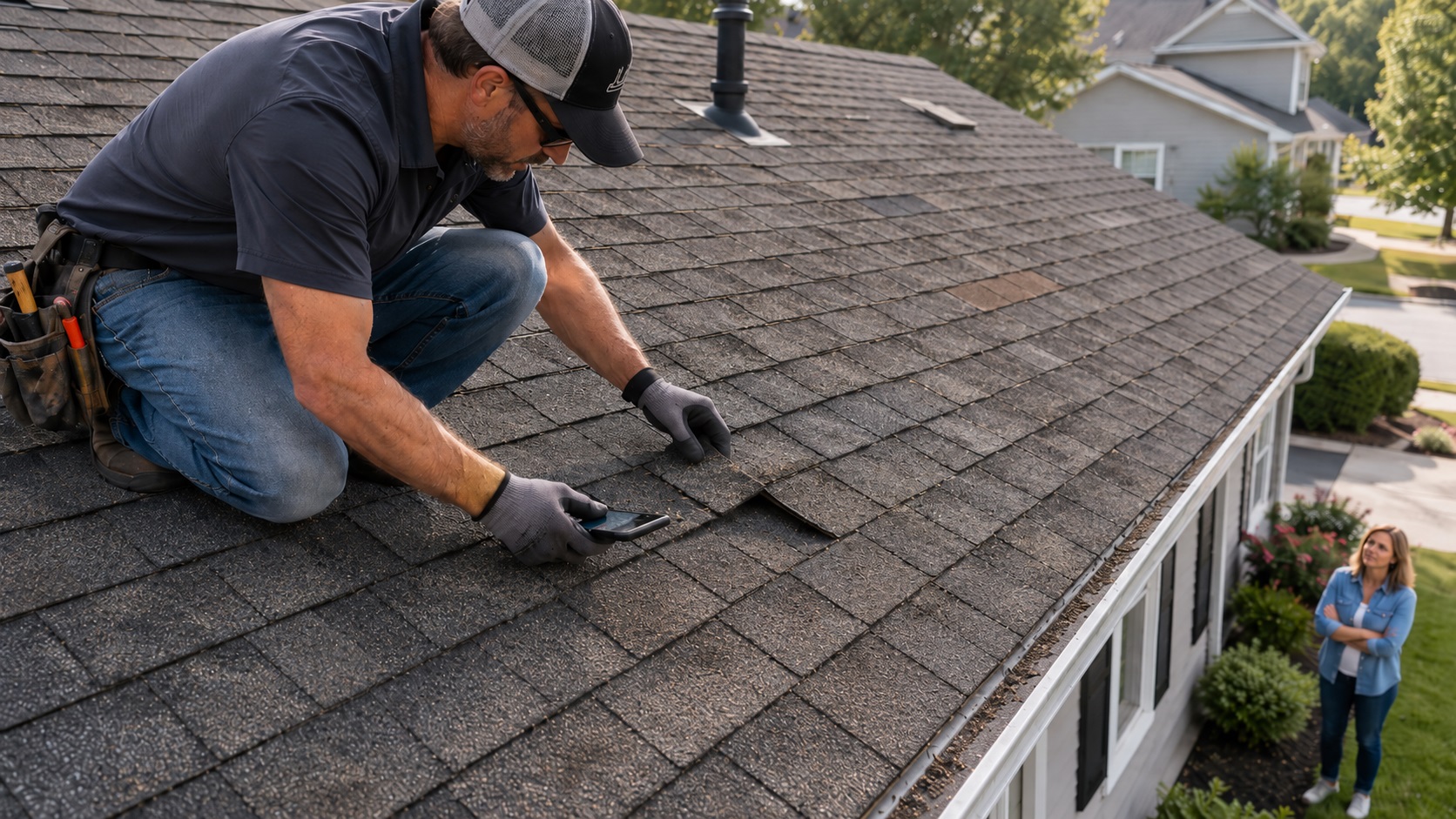
Repair usually makes sense on an asphalt shingle roof when the damage is isolated, the surrounding shingles are still flexible, and the roof still has useful life left. Replacement becomes more likely when shingles are curling, cracking, shedding granules heavily, leaking repeatedly, or becoming too brittle for repairs to hold.
The main question is not simply whether a roofer can patch the damaged area. Many asphalt shingle problems can be patched temporarily. The better question is whether the repair will solve the actual problem and give the roof enough reliable life to justify the cost.
This guide focuses only on asphalt shingle roofs. For the broader roof-level decision, including other materials and general cost-vs-lifespan logic, see the full guide on how to decide whether to repair or replace a roof.
The Main Question: Are the Shingles Locally Damaged or Failing Across the Roof?
The first step is to decide whether the asphalt shingles are damaged in one limited area or failing across the roof surface. This distinction usually determines whether repair is realistic or replacement should be considered.
Localized shingle damage means the rest of the roof still looks and performs normally. A few missing shingles after a wind event, one cracked tab, one damaged section near a branch impact, or one leak around a pipe boot may be repairable if the surrounding shingles are still in good condition. In that situation, the roof system may not be failing. One part of it has been damaged.
Roof-wide shingle failure is different. If many shingles are curling, cupping, cracking, lifting, losing granules, or becoming brittle, the roof is not dealing with one isolated defect. The asphalt shingles are aging as a system. Replacing one area may stop one leak, but it may not prevent the next weak area from failing.
This is why asphalt shingle roofs need a material-specific decision. Shingles depend on flexibility, surface granules, adhesive seal strips, and overlapping courses to shed water. When those features break down across the roof, individual repairs become less reliable. The roof may still be patchable, but that does not always make repair the best investment.
A useful way to separate the two situations is this:
- Repair is more likely when the damage is limited and the surrounding shingles still lie flat, seal properly, and remain flexible.
- Replacement is more likely when shingles are worn, brittle, curled, cracked, or losing granules across several areas.
Understanding those wear patterns is part of evaluating common roofing material failures without confusing one damaged shingle with a roof that has reached the end of its service life.
When Asphalt Shingle Roof Repair Usually Makes Sense
Repair usually makes sense when the damage is isolated, the roof is not near the end of its life, and the shingles around the repair area are still workable. In these cases, replacing a small number of shingles or fixing one detail may restore the roof without the cost of full replacement.
One common repair-friendly situation is wind damage limited to one small section. If a few shingles were lifted or blown off during a storm but the surrounding shingles are still flat and sealed, those missing shingles may be replaceable. The repair should also check whether the exposed area allowed water into the underlayment or decking.
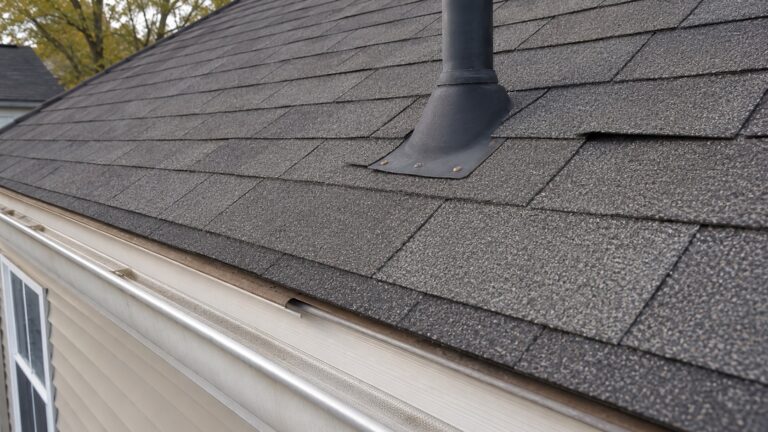
Another repair-friendly situation is a leak caused by a specific flashing or penetration problem. A cracked pipe boot, loose flashing, lifted shingle edge, or small valley issue may cause water intrusion even when the overall shingle field is still healthy. In that case, the repair should address the actual weak point instead of replacing shingles randomly around the leak stain.
Repair may also make sense when a small number of shingles are damaged by a branch, falling debris, foot traffic, or localized installation damage. If the surrounding shingles are still flexible and the roof deck is dry, the damaged shingles can often be replaced without replacing the full roof.
In general, asphalt shingle roof repair is more reasonable when:
- The damage is limited to one area.
- The roof is still early or midway through its expected service life.
- The surrounding shingles are not brittle or breaking apart.
- Granule loss is minor and not exposing the shingle mat.
- The leak source is clear.
- The roof deck below the shingles is dry and solid.
- This is not a recurring leak area.
The condition of the surrounding shingles is especially important. A repair may require lifting nearby shingles to remove nails, slide in replacements, or correct flashing. If those shingles crack as soon as they are lifted, the roof may be too brittle for a clean repair. That does not automatically mean full replacement is required, but it does make the repair less dependable.
A repair should also match the real cause. Replacing a few shingles may not solve a leak caused by bad flashing, nail pops, poor ventilation, deteriorated underlayment, or damaged decking. A good asphalt shingle repair is specific. It explains what failed and why the proposed work should stop the water from entering again.
When Asphalt Shingle Roof Replacement Usually Makes More Sense
Asphalt shingle roof replacement usually makes more sense when the shingles are no longer failing in one small area. If the roof surface is aging across multiple slopes, repairs may only buy a short delay before another section begins leaking or shedding shingles.
Widespread curling is one of the strongest warning signs. When shingle edges curl upward or tabs begin to cup, the shingles no longer lie flat against the roof. That makes it harder for the roof to shed water as designed. A few curled shingles may be replaceable, but widespread curling usually means the shingles are aging as a roof system.
Cracking is another serious sign when it appears across many shingles. A single cracked shingle can often be replaced. Many cracked shingles suggest the asphalt has dried, aged, or become brittle. Once shingles become brittle, repairs are harder because nearby shingles may break during the work.
Heavy granule loss also pushes the decision toward replacement. Granules protect the asphalt layer from sun exposure and weathering. When large areas become bald or the dark asphalt surface is exposed, the shingle has lost part of its protective surface. If this is happening across multiple slopes, replacing a few shingles will not restore the roof’s overall condition.
Replacement is also more likely when shingles are missing repeatedly. One wind-damaged section may be repairable. But if shingles keep blowing off, lifting, or failing to seal in different areas, the problem may be tied to age, poor adhesion, brittle materials, installation defects, or roof-wide wear.
In general, replacement deserves serious consideration when:
- Shingles are curling, cupping, or clawing across several areas.
- Many shingles are cracked, split, or brittle.
- Granule loss is heavy and widespread.
- Bare asphalt or fiberglass mat is visible.
- Shingles are missing or lifting in multiple locations.
- Leaks have returned after previous repairs.
- The roof is near the end of its expected service life.
- Decking or attic materials show moisture damage.
If the roof has several of these problems at the same time, it may also be useful to compare them with broader signs a roof needs replacement. This article focuses on asphalt shingles, but the larger pattern matters: a roof that is worn across many areas is usually a better replacement candidate than a repair candidate.
How Granule Loss Affects the Repair vs Replacement Decision
Granule loss is one of the most common reasons homeowners question whether an asphalt shingle roof can still be repaired. The answer depends on how much granule loss exists, where it appears, and whether the shingle mat is exposed.
Some granule loss is normal as asphalt shingles age. You may see small amounts of loose granules in gutters, at downspout exits, or near roof edges. Newer shingles can also shed some loose granules after installation. Light, even granule loss does not automatically mean the roof needs replacement.
Heavy granule loss is different. If shingles have bald spots, dark exposed asphalt, shiny areas, or visible fiberglass mat, the protective surface has been compromised. Once the granules are gone, the asphalt layer is more exposed to sunlight, heat, and weathering. That usually shortens the remaining life of the shingle.
The pattern of granule loss matters. A small damaged area may be repairable if the rest of the roof still has good granule coverage. But widespread granule loss across several slopes usually points toward roof-wide aging. Replacing a few shingles will not restore the protective surface across the rest of the roof.
Pay special attention to slopes that receive the most sun, wind, or weather exposure. It is common for one side of the roof to age faster than another. If one slope has severe granule loss but the rest of the roof is still in reasonable condition, a contractor may discuss whether partial replacement is possible. If all slopes are worn, full replacement is usually more logical.
Granule loss should be evaluated with other signs, not by itself. A roof with light granule loss but no leaks, curling, cracking, or exposed mat may still be serviceable. A roof with granule loss plus brittle shingles, cracking, and recurring leaks is a much stronger replacement candidate.
When deciding, ask:
- Are granules missing from one small area or across many slopes?
- Are there bald spots or exposed shingle mat?
- Are granules collecting heavily in gutters after every rain?
- Are the affected shingles also curling or cracking?
- Is the roof already old enough that repairs may not last long?
Granule loss is not just cosmetic when it exposes the asphalt surface. At that point, the shingles are losing part of the weather protection they were designed to provide.
How Curling, Cupping, and Cracking Change the Decision
Curling, cupping, and cracking are important because they show how the asphalt shingles are physically aging. These conditions also affect whether a repair can be performed without damaging the surrounding roof.
Curling usually means the shingle edges are lifting. Cupping usually means the shingle tabs are curling upward or forming a shallow bowl shape. Clawing often means the middle of the tab is raised while the edges turn downward. These patterns can happen as shingles age, dry out, overheat, or lose flexibility.
A few curled or damaged shingles may be replaceable if the rest of the roof is still flexible and sealed properly. But widespread curling usually points toward replacement because the shingles are no longer lying flat as a system. Water can be driven under lifted edges more easily, and wind may have an easier time lifting the tabs.
Cracking creates a similar problem. A single cracked tab can often be replaced. But many cracked shingles mean the asphalt has lost flexibility. When a roofer tries to lift nearby shingles for repair, they may crack as well. That makes small repairs harder and less predictable.
Brittleness is one of the most important repair limitations on an older asphalt shingle roof. A contractor may be able to replace one damaged shingle in theory, but if every surrounding shingle breaks during the repair, the repair area can grow quickly. This is one reason older shingle roofs often shift from repairable to replacement-ready even when the original damaged area looks small.
Do not assume curled shingles can simply be flattened and sealed as a permanent fix. Sealant may temporarily hold down a lifted edge in some cases, but it does not reverse shingle aging. If the shingle has lost flexibility, dried out, or distorted across the roof, a surface patch will not restore the roof’s long-term performance.
Curling, cupping, and cracking point more strongly toward replacement when they appear with:
- Heavy granule loss
- Repeated wind lifting
- Multiple leak areas
- Brittle shingles that break when handled
- Exposed asphalt or fiberglass mat
- Moisture stains on roof decking or attic materials
If these conditions are widespread, it may be time to compare the roof against when a roof must be replaced instead of repaired. A shingle roof does not have to collapse or leak heavily before replacement becomes the more reasonable decision.
How Missing Shingles Should Be Evaluated
Missing shingles do not always mean an asphalt shingle roof needs replacement. The decision depends on how many shingles are missing, why they came loose, whether the surrounding shingles are still sealed, and whether water reached the underlayment or roof deck.
A few missing shingles in one area may be repairable. This is especially true if the damage happened during a specific wind event or from localized impact, and the rest of the roof still looks healthy. In that case, replacing the missing shingles and checking the exposed area may be enough.
Repeated missing shingles are more concerning. If shingles keep blowing off in different areas, the roof may have poor adhesion, aging seal strips, brittle materials, installation problems, or wind-related vulnerability across the roof. Replacing one missing shingle at a time may not solve the underlying issue.
The condition of nearby shingles matters just as much as the missing shingle itself. If surrounding shingles are flexible, flat, and well bonded, a repair is more likely to work. If they are brittle, cracked, curled, or poorly sealed, the repair may disturb more shingles than expected. A simple missing-shingle repair can become difficult when the adjacent shingles break during removal or lifting.
Matching is another practical issue, but it should not control the decision by itself. New shingles may not match older faded shingles perfectly. That can matter visually, especially on a visible slope, but the more important question is whether the repair will shed water properly. Cosmetic mismatch is different from functional failure.
When shingles are missing, evaluate these points:
- Are only one or two shingles missing, or are several areas affected?
- Did the damage happen during one storm or over time?
- Are nearby shingles still sealed and flexible?
- Is the underlayment exposed or damaged?
- Is the roof deck below the missing shingles still dry and solid?
- Have shingles blown off before?
If the missing shingles exposed the roof during rain, the inspection should include the area below the roof surface. Water can enter around nail holes, exposed underlayment, damaged seams, or lifted adjacent shingles. Check the attic side for fresh staining, damp insulation, darkened sheathing, or soft decking before treating the repair as only a missing-shingle problem.
How Roof Age Changes the Asphalt Shingle Decision
Age changes the repair-or-replace decision because asphalt shingles lose flexibility and weather resistance over time. A repair that makes sense on a newer roof may not make sense on an older roof with brittle shingles and limited service life remaining.
On a newer asphalt shingle roof, repair is usually the first option to consider if the damage is localized. A few missing shingles, a cracked pipe boot, a small flashing problem, or a limited impact area may not justify full replacement. The roof may still have many years of useful life left if the surrounding shingles are in good condition.
On a mid-life roof, the decision depends more heavily on condition. If the shingles are still flexible, sealed, and not heavily worn, repair may still be reasonable. But if the roof is showing early curling, granule loss, and multiple weak spots, the homeowner should think carefully before spending heavily on repairs.
On an older asphalt shingle roof, replacement becomes more likely. The issue is not age alone. The issue is that older shingles are more likely to crack during repair, lose granules, lift in wind, and fail around nails or seal strips. If the roof is already close to the end of its expected service life, a major repair may only postpone replacement for a short period.
Shingle type also matters. Architectural shingles and 3-tab shingles may age differently depending on installation quality, climate, ventilation, and exposure. If the roof type is part of the decision, it helps to understand the practical differences between architectural shingles vs 3-tab shingles before assuming every asphalt shingle roof should be evaluated the same way.
For lifespan context, compare the roof’s condition with realistic expectations for how long asphalt shingles usually last. A repair on a roof with many years left can be a sound decision. A repair on a roof already near the end of its lifespan needs stronger justification.
The best age-based question is not, “How old is the roof?” It is, “How much reliable life is left after the repair?” If the answer is several years, repair may make sense. If the answer is uncertain or very short, replacement may be the better investment.
How Moisture Below the Shingles Changes the Decision
Moisture below the shingles can change the decision from a simple shingle repair to a larger roof repair or replacement project. Asphalt shingles are the visible outer layer, but the roof system also depends on underlayment, decking, flashing, ventilation, and attic conditions.
If a damaged shingle area was caught early and the decking below is dry, the repair may be limited. But if water has already reached the roof deck, attic insulation, or ceiling materials, the repair decision becomes more serious. Replacing the visible shingles does not automatically fix moisture-damaged materials underneath.
Signs that moisture may have moved below the shingles include:
- Water stains on the underside of roof sheathing
- Soft or swollen decking
- Damp or compressed attic insulation
- Recurring ceiling stains after rain
- Musty attic odors
- Darkened wood around nails, vents, valleys, or flashing areas
These signs do not always mean the entire roof must be replaced, but they do mean the repair scope may be larger than a surface patch. Damaged decking may need to be removed and replaced. Wet insulation may need to be dried or replaced. Flashing or underlayment may need correction. If moisture is found in several areas, replacement becomes more likely.
This is also why asphalt shingle roof repairs should not be judged only from the ground. A roof can look moderately worn from outside while the attic reveals repeated moisture exposure. The opposite can also happen: a roof may look damaged in one small area, but the attic below is dry and the rest of the system is sound.
When moisture is involved, the goal is not just to stop the current leak. The goal is to prevent repeated water entry and hidden damage below the shingles. If a shingle problem has already allowed water into the home, the repair should fit into the broader process of how to find, fix, and prevent moisture problems in a home.
A repair is strongest when it addresses both the shingle failure and the moisture path. A replacement becomes more logical when water entry has exposed broader weaknesses in the roof system.
Questions to Ask Before Repairing an Asphalt Shingle Roof
Before approving an asphalt shingle roof repair, ask questions that reveal whether the repair is likely to last. A repair estimate should explain the condition of the shingles around the damaged area, the cause of the leak or damage, and whether the roof is still a good candidate for repair.
Start with the surrounding shingles. Asphalt shingle repairs often depend on lifting or working around nearby shingles. If those shingles are flexible and intact, the repair is more likely to be clean. If they crack, crumble, or break when handled, the repair may become less reliable or expand beyond the original area.
Ask these questions before approving the repair:
- Is the damage limited to one area?
- Are the surrounding shingles flexible enough to repair without breaking?
- Will the repair require disturbing a large area of old shingles to fix one small defect?
- Is granule loss light, moderate, or severe?
- Are any shingles showing exposed asphalt or fiberglass mat?
- Are the shingles curling or cracking in other areas?
- Is the leak caused by shingles, flashing, a pipe boot, or another detail?
- Is the roof decking dry and solid?
- Has this part of the roof leaked or been repaired before?
- How long should the repair reasonably last?
- Would the repair still make sense if replacement is likely soon?
These questions help prevent one of the most common repair mistakes: treating an old asphalt shingle roof as if it were still a young roof with one minor defect. A small repair can be logical on a roof with good remaining life. The same repair may be a poor investment on a brittle, aging roof that is already close to replacement.
Cost should also be evaluated in context. A repair that is inexpensive and likely to last may be reasonable. A large repair on an old, worn roof should be compared with replacement planning. When reviewing estimates, it can help to understand typical roof leak repair cost ranges so you can separate a minor repair from a repair that is large enough to reconsider the whole roof.
When to Call a Roofing Contractor
You should call a roofing contractor when the roof is unsafe to inspect, the leak has returned, the shingles are brittle, or you are not sure whether the problem is isolated. Do not climb onto a steep, wet, icy, storm-damaged, or visibly unstable roof to make this decision yourself. Asphalt shingle roofs can look simple from the ground, but the real decision often depends on details that are hard to judge without a safe roof and attic inspection.
A professional inspection is especially useful when shingles are curling across multiple slopes, granules are collecting heavily in gutters, shingles keep blowing off, or ceiling stains have appeared after rain. These conditions may involve more than one damaged shingle. They may indicate that the roof is losing its ability to shed water reliably.
Call a contractor sooner if you notice signs of moisture below the roof surface. Water stains on decking, wet attic insulation, darkened sheathing, soft spots, or repeated ceiling stains can mean the problem has moved beyond the visible shingles. In that case, the contractor should inspect both the roof surface and the areas below it.
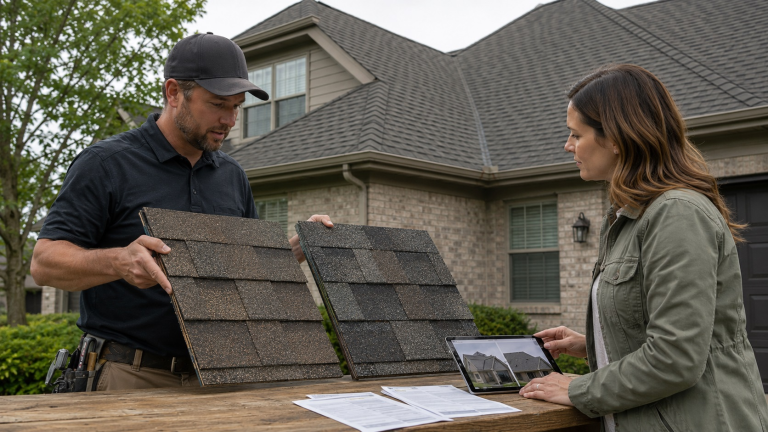
It is also wise to get more than one estimate when replacement is recommended. One contractor may focus on repairing the visible defect, while another may focus on the age and condition of the entire shingle system. Comparing estimates helps you see whether the recommendation is based on one repairable problem or broader roof deterioration.
If moisture is part of the decision, review guidance on when to hire a roofing contractor for moisture problems. If you are comparing estimates, scope of work, warranties, or repair recommendations, it also helps to know how to choose a roofing contractor for leak repairs.
FAQ: Repairing or Replacing an Asphalt Shingle Roof
Can curled asphalt shingles be repaired?
A few curled shingles may be replaceable if the surrounding shingles are still flexible and the roof is otherwise in good condition. Widespread curling usually points to roof-wide aging, heat exposure, poor ventilation, or shingle deterioration. In that case, replacement is often more practical than trying to flatten or seal many curled shingles.
Does granule loss mean an asphalt shingle roof needs replacement?
Light granule loss does not automatically mean replacement is needed. Some granule shedding is normal with age and weather exposure. Replacement becomes more likely when granule loss is heavy, widespread, or exposing dark asphalt or fiberglass mat. Granule loss should also be evaluated with curling, cracking, leaks, and roof age.
Can missing shingles be replaced individually?
Yes, missing shingles can often be replaced individually if the surrounding shingles are still flexible, sealed, and not badly worn. Individual replacement becomes less reliable when nearby shingles are brittle, curling, cracking, or losing granules heavily. Repeated missing shingles in different areas may point to a larger roof problem.
Is it worth repairing a 20-year-old asphalt shingle roof?
It depends on the shingle type, installation quality, climate, leak history, and current condition. A small repair may still make sense if the roof is otherwise sound and the surrounding shingles can be lifted without breaking. A large repair on a 20-year-old roof with curling, granule loss, brittle shingles, or repeated leaks may not be worth the cost if replacement is likely soon.
Why do asphalt shingle repairs fail?
Asphalt shingle repairs often fail when the surrounding shingles are too brittle, the leak source was misidentified, flashing was not corrected, the roof deck was already damaged, or the roof is aging across multiple areas. Repairs are most reliable when the problem is isolated and the surrounding roof is still in good condition.
Does one leak mean an asphalt shingle roof needs replacement?
Not automatically. One leak may come from a repairable issue such as flashing, a pipe boot, a missing shingle, or localized damage. Replacement becomes more likely if the roof is old, broadly worn, leaking repeatedly, or showing moisture damage below the shingles or roof deck.
Final Decision: Repair the Defect or Replace the Failing Roof?
An asphalt shingle roof should usually be repaired when the damage is localized, the surrounding shingles are still flexible, the roof has useful life left, and the leak source is clear. Replacement becomes more reasonable when shingles are curling, cracking, losing granules heavily, becoming brittle, leaking repeatedly, or allowing moisture into the roof structure.
The most important distinction is whether the roof has one repairable defect or whether the asphalt shingles are failing as a system. Before spending money on repairs, compare the repair scope with the roof’s remaining life. A good repair should solve a clear problem and provide dependable service. If the repair only delays a replacement that is already likely, replacement may be the smarter long-term decision.