
Signs a Roof Needs Replacement
A roof may need replacement when damage is widespread, recurring, structural, or tied to materials near the end of their useful life. One missing shingle, one cracked tile, or one small flashing leak does not always mean the entire roof needs to be replaced. But repeated leaks, sagging rooflines, soft decking, widespread material deterioration, and moisture reaching the attic or structure are serious warning signs.
The main question is whether the roof is still protecting the home reliably. A roof can often be repaired when the problem is isolated, but replacement becomes more likely when several parts of the roof are failing at once, repairs no longer hold, or water has begun damaging the roof deck, framing, insulation, ceilings, or upper walls.
The Clearest Signs a Roof May Need Replacement
The clearest signs a roof may need replacement are usually broad patterns, not isolated defects. A roof that is failing across multiple areas is more concerning than one damaged spot.
Some of the strongest warning signs include:
- Widespread missing or damaged roofing materials: Large areas of missing shingles, cracked tiles, loose metal panels, broken shakes, or deteriorated roof covering suggest the roof system is losing protection.
- Repeated roof leaks: One leak may be repairable, but leaks that return after repairs or appear in several areas can indicate broader roof failure.
- Sagging rooflines: A sagging or uneven roof plane can point to decking, framing, or structural moisture damage.
- Soft or rotten roof decking: If the roof deck has been weakened by moisture, replacement may involve more than surface roofing material.
- Major asphalt shingle granule loss: Heavy granule loss can leave shingles exposed, brittle, and less able to shed water.
- Multiple flashing failures: Leaks around several chimneys, skylights, walls, valleys, or vents may indicate the roof details are aging together.
- Roof materials near the end of their lifespan: Age becomes more serious when it appears alongside visible deterioration, leaks, or repeated repairs.
These signs should be judged together. A roof with one minor defect may still have years of service left. A roof with age, leaks, surface deterioration, and structural symptoms should be inspected promptly.
Roof Age and Material Lifespan Warning Signs
Roof age is one of the first things homeowners think about, but age alone does not prove a roof needs replacement. Different roofing materials have different lifespans, and roofs age differently depending on installation quality, maintenance, weather exposure, ventilation, and drainage.
An asphalt shingle roof near the end of its expected lifespan with curling shingles, granule loss, and recurring leaks is more concerning than an older slate or tile roof that has intact materials and sound flashing. A cedar shake roof may age faster in damp, shaded conditions than in a dry, open location. A metal roof may last for decades but still need attention if seams, fasteners, or coatings fail.
Age becomes a replacement warning sign when it appears with other symptoms, such as:
- Roof materials becoming brittle, loose, curled, cracked, or broken.
- Leaks appearing after normal rainstorms.
- Repairs becoming more frequent.
- Flashing failing in multiple areas.
- Visible sagging or uneven roof planes.
- Moisture stains in the attic or on ceilings.
This is why roof age should be evaluated within the larger pattern of common roofing material failures. Materials do not all fail the same way, but a roof that is both old and visibly deteriorating deserves closer attention.
Weather exposure also affects how quickly roof materials age. Sun, heat, hail, snow, wind, freeze-thaw cycles, heavy rain, and debris all influence roof life. A roof in a harsh climate may reach replacement condition sooner than the same material in a milder environment. For more detail, see how weather affects roof lifespan and how roof age affects leak risk.
Exterior Signs Your Roof Is Failing
Exterior roof symptoms are often the first visible clues that replacement may be needed. Some exterior damage is minor and repairable. The concern increases when the damage appears across multiple roof slopes, keeps returning after repairs, or exposes the roof layers beneath the surface material.
Widespread Missing or Damaged Roofing Materials
Missing roofing materials are a serious warning sign when they are widespread. One missing shingle or one cracked tile may be repairable. Multiple missing shingles, broken tiles, loose shakes, torn membrane sections, or displaced panels across different areas suggest the roof covering is no longer reliably protecting the structure.
Widespread damage can allow water to reach underlayment, decking, attic insulation, and framing. The longer those areas remain exposed, the greater the risk of hidden moisture damage below the visible roof surface.
Curling, Cracking, Brittle, or Loose Shingles
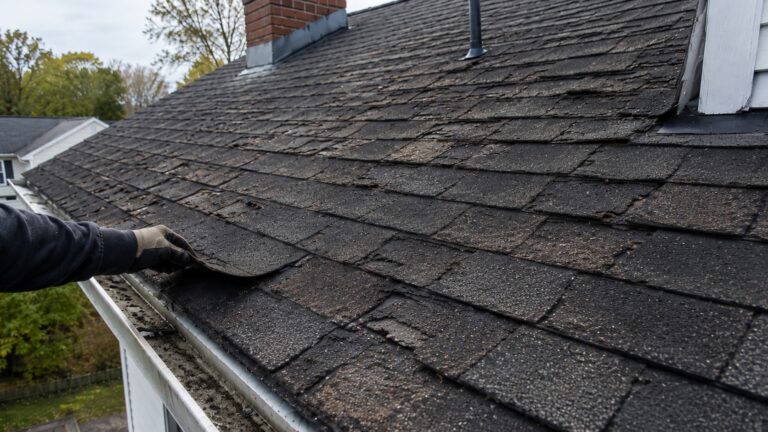
On asphalt shingle roofs, curling, cracking, brittleness, and loose shingles are common end-of-life signs. Shingles that no longer lie flat may allow wind-driven rain to get underneath. Brittle shingles are also harder to repair because they can break during normal handling.
If only a small area is affected, repair may be possible. If shingles are curling, cracking, or lifting across the roof, replacement becomes more likely because the material is deteriorating as a system.
Broken, Slipped, or Displaced Roofing Components
Tile, slate, cedar shake, and metal roofs show failure differently than asphalt shingles. Broken tiles, slipped slates, loose shakes, displaced panels, or shifted roof components can expose the layers below. A few isolated pieces may be repairable, but widespread movement or breakage can indicate larger roof system problems.
Displaced roofing components are especially concerning after storms, improper foot traffic, or repeated repairs. If roof materials are no longer staying in place, the roof may not be shedding water as designed.
Major Granule Loss on Asphalt Shingles
Granule loss is one of the most common warning signs on aging asphalt shingle roofs. Granules protect the shingle surface from sun exposure and weather. When too many granules are gone, the shingle becomes more vulnerable to drying, cracking, heat damage, and water intrusion.
Some granule shedding can happen naturally, especially on newer shingles or after storms. The concern increases when gutters contain large amounts of granules, shingles look bald in multiple areas, or the roof surface has uneven dark patches where protection has worn away.
Heavy granule loss does not always mean replacement is needed immediately, but it is a strong sign that the roof should be evaluated. When granule loss appears with curling, cracking, missing shingles, or leaks, replacement becomes more likely.
Damaged Flashing in Multiple Areas
Flashing protects some of the most vulnerable parts of a roof. Chimneys, skylights, dormers, valleys, vents, sidewalls, and roof edges all depend on properly installed flashing to keep water out of joints and transitions.
One flashing problem may be repairable. Multiple flashing failures across the roof are more concerning because they may indicate that the roof details are aging together. Rusted metal, lifted edges, cracked sealant, loose counterflashing, open gaps, or repeated patching can all allow water to enter the roof system.
Flashing damage is especially important because leaks often begin at transitions before the main roof surface fails. If several flashing areas are leaking or patched repeatedly, the roof may need more than another small repair.
Moss, Rot, or Moisture-Trapping Debris
Moss and debris do not always mean a roof needs replacement, but they can shorten roof life when they hold moisture against the roof surface. Leaves, pine needles, branches, seed pods, and thick moss can slow drying and contribute to material deterioration.
The risk depends on the material and severity. Cedar shakes can rot when they stay damp. Asphalt shingles can deteriorate faster when moss lifts edges or traps moisture. Tile and slate may resist rot, but debris can block drainage and expose underlayment or flashing to more water than intended.
Moisture-trapping debris becomes a replacement concern when it has contributed to widespread material decay, roof deck damage, repeated leaks, or long-term rot. If the roof surface is still mostly sound, cleaning and maintenance may be enough. If the material beneath the debris is soft, broken, brittle, or leaking, inspection is needed.
Sagging or Uneven Rooflines
A sagging roofline is one of the more serious signs that a roof may need replacement or structural repair. Roof sagging can come from weakened decking, framing movement, long-term moisture damage, excessive load, poor construction, or structural settling.
Unlike one missing shingle or a small flashing leak, sagging suggests that the support system may be affected. A sagging roof plane can also change how water drains, which may create more leaks and moisture problems over time.
Homeowners should not walk on a roof that appears sagging, soft, or structurally unstable. The safer response is to document what is visible from the ground or from a safe attic access point, then schedule a professional inspection. If the roof deck or framing is compromised, surface repairs alone may not solve the problem.
Interior Signs That Roof Damage Is Becoming Serious
Interior symptoms can reveal roof failure before the full exterior problem is obvious. A roof leak may travel along rafters, insulation, electrical openings, or framing before it appears on the ceiling. This means the visible stain may not be directly below the roof opening.
Interior signs do not automatically prove the roof needs replacement. Plumbing leaks, condensation, and HVAC issues can also cause moisture indoors. But when interior stains or dampness appear after rain, storms, snowmelt, or wind-driven weather, the roof should be considered a likely source. A useful clue is timing: roof-related stains often darken after weather events, while plumbing or HVAC moisture may appear during fixture use, cooling cycles, or drain backups instead.
Ceiling Stains After Rain
Ceiling stains that appear or grow after rain are one of the most common interior signs of roof trouble. Brown rings, yellow staining, peeling paint, bubbling drywall, or soft ceiling material can indicate water has entered from above.
One ceiling stain may come from a localized leak, such as a vent boot, flashing detail, or damaged shingle. Replacement becomes more likely when ceiling stains return after repairs, appear in multiple rooms, spread over time, or connect with attic moisture and roof deck damage.
Because ceiling stains can have several causes, they should be interpreted carefully. For a ceiling-specific breakdown, see ceiling water damage signs.
Repeated Leaks in the Same or Different Areas
Repeated leaks are more concerning than a single leak. If the same leak keeps returning after repair, the original cause may not have been fixed, or the surrounding materials may be too deteriorated to hold another repair. If new leaks appear in different areas, the roof may be failing as a system.
A pattern of recurring leaks often means water is finding multiple weak points. These may include failed flashing, brittle shingles, cracked tiles, deteriorated underlayment, damaged valleys, or roof deck movement.
The more often leaks return, the more important it becomes to evaluate the entire roof rather than patching one spot at a time.
Peeling Paint, Bubbling Drywall, or Musty Odors
Roof leaks do not always appear as obvious dripping water. Sometimes the first interior signs are peeling paint, bubbling drywall, musty odors, or faint discoloration near upper walls and ceilings.
These symptoms may indicate slow moisture movement. Water can enter through a roof opening, travel along framing, and collect in ceiling cavities or wall intersections. If this happens repeatedly, moisture can damage drywall, insulation, wood framing, and finishes.
Musty odors near an attic, ceiling, or upper room should not be ignored if they appear with staining, dampness, or known roof damage. Moisture hidden above finished ceilings can create larger problems before the source is visible.
Moisture Around Chimneys, Skylights, Vents, or Walls
Moisture around chimneys, skylights, vents, dormers, or wall intersections often points to flashing or transition failures. These areas are common leak locations because they interrupt the roof surface and require precise water-shedding details.
A single leak around one penetration may be repairable. Multiple leaks around different roof transitions are more concerning because they may indicate aging flashing, poor installation, or widespread roof detail failure.
When interior moisture appears near roof penetrations, it should be evaluated before water reaches deeper structural materials.
Attic and Structural Signs of Roof Failure
The attic often shows roof failure before the living space does. Water can enter through the roof covering, move across the underside of the roof deck, soak insulation, stain framing, or collect in hidden areas before a ceiling stain appears below.
Attic symptoms are especially important because they show what is happening behind the finished surfaces of the home. If roof leaks are reaching the attic repeatedly, the concern is no longer only the exterior roof material. The roof deck, framing, insulation, and moisture control layers may also be affected.
Daylight Through the Roof Deck
Visible daylight through the roof deck is a serious warning sign. Small points of light may indicate gaps, holes, missing roofing materials, damaged decking, or openings around roof penetrations. If daylight can enter, wind-driven rain may also be able to enter.
Not every small opening means the full roof needs replacement, but daylight should always be investigated. If there are multiple openings, visible moisture, staining, or damaged decking around the area, the problem may be more significant than a simple exterior repair.
Wet or Stained Roof Decking
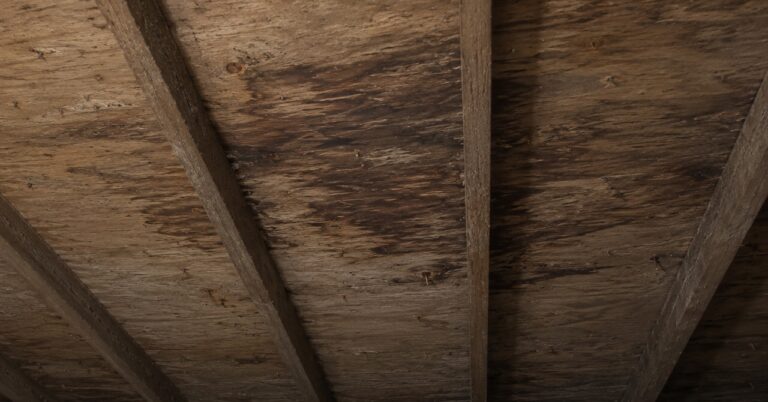
Water stains on the underside of roof decking can reveal past or active roof leaks. Dark streaks, damp sheathing, water trails, or staining around nails, rafters, valleys, chimneys, or vents may show where water has entered.
Old, dry stains may show a previous leak that was repaired. Fresh dampness, expanding stains, or stains that worsen after storms are more concerning. If roof decking stays wet repeatedly, it can weaken, rot, or lose its ability to hold fasteners properly.
Homeowners should avoid stepping on attic surfaces unless the area is safe, properly supported, and designed for access. If decking appears wet, soft, stained, or sagging, a professional inspection is safer than trying to test the roof from above.
Soft, Sagging, or Rotten Roof Sheathing
Roof sheathing, also called roof decking, is the structural layer beneath the roof covering. If it becomes soft, sagging, or rotten, the roof may no longer have a stable base. Surface roofing materials cannot perform well when the deck underneath them is failing.
Soft decking is often caused by repeated moisture exposure. A small roof leak that continues for months or years can weaken sheathing, loosen fasteners, and affect the surrounding roof structure. Once decking is damaged, replacing only the visible roof material may not be enough.
If roof decking appears rotten or structurally weakened, the issue should be evaluated carefully. For a more focused breakdown, see signs roof decking is rotten and when roof decking must be replaced.
Moisture Stains on Rafters or Trusses
Rafters and trusses can also show signs of roof failure. Water stains, dark streaks, damp wood, corrosion on metal connectors, or mold-like growth on framing may indicate that roof moisture has moved beyond the outer covering and into structural areas.
Framing stains are more concerning when they are active, widespread, or connected to visible leaks. If water has reached structural wood repeatedly, the roof problem may have progressed beyond a simple patch.
Wet or Compressed Attic Insulation
Attic insulation can hold moisture after a roof leak. Wet insulation may look flattened, stained, clumped, or darker than surrounding insulation. Once insulation becomes wet, it can lose effectiveness and keep moisture near ceiling materials and framing.
Wet insulation does not always prove the roof needs replacement, but it does show that water has entered the attic. If the source is a recurring roof leak or multiple roof leak paths, the roof system should be evaluated before more damage spreads.
Moisture-Related Signs Replacement May Be Necessary
Moisture is one of the clearest indicators that a roof problem is becoming serious. Roof materials are supposed to shed water before it reaches the home’s structure. When water repeatedly reaches the attic, decking, ceilings, or walls, the roof may no longer be performing reliably.
The concern increases when moisture is recurring, widespread, or connected to structural damage. Multiple leak paths, repeated ceiling stains, damp attic framing, and soft decking suggest a deeper roof system problem.
Moisture-related warning signs include:
- Leaks that return after repairs.
- Water stains in more than one room or roof area.
- Attic dampness after rain or snowmelt.
- Wet insulation near roof penetrations or valleys.
- Soft, stained, or rotten roof decking.
- Moisture around chimneys, skylights, vents, or dormers.
- Mold-like growth connected to roof leaks or damp attic materials.
- Interior stains that expand after storms.
The goal is to stop moisture before it spreads into hidden parts of the home. A roof leak that reaches the ceiling once may be manageable. A roof leak that keeps returning can lead to attic moisture, insulation damage, wood rot, and mold risk. If you are trying to locate a leak early, see how to find roof leaks before mold forms.
Roof moisture should also be viewed as part of the home’s larger water-control system. A failing roof can create problems far beyond the roof surface, including ceiling damage, wall moisture, attic mold risk, and structural decay. For a broader prevention framework, see how to find, fix, and prevent moisture problems in homes.
When Repeated Repairs Become a Warning Sign
Repeated roof repairs can be a sign that the roof is moving beyond normal maintenance. Repair is often the right choice when the problem is isolated and the surrounding materials are still sound. But if repairs keep failing or new problems keep appearing, the roof may no longer be a good candidate for patchwork fixes.
Repeated repairs are especially concerning when:
- The same leak returns after multiple repairs.
- New leaks appear after almost every storm.
- Flashing repairs do not hold.
- Roofing materials around repaired areas are brittle, cracked, or loose.
- Repairs are spread across multiple roof slopes.
- The roof is near the end of its expected lifespan.
- Water damage has reached decking, insulation, or framing.
At that point, the issue may not be one defective spot. The roof system may be aging as a whole. Continuing to repair one leak at a time can become risky if water keeps entering and damaging hidden structural materials.
This does not mean every repaired roof needs replacement. It means repair history should be considered as part of the overall condition. If the roof is old, leaking repeatedly, and deteriorating in several areas, a replacement evaluation may be more practical than another temporary fix. For the full repair-versus-replacement threshold, see when a roof must be replaced instead of repaired.
Signs That May Only Need Repair, Not Replacement
Not every roof problem means the roof needs replacement. Some warning signs are serious enough to inspect, but still localized enough to repair if the surrounding roof system is sound. A trustworthy roof evaluation should separate isolated damage from widespread failure.
Roof problems that may only need repair include:
- One missing shingle: If the surrounding shingles are still flexible, sealed, and in good condition, a localized repair may be enough.
- One cracked tile: A single broken clay or concrete tile may be replaceable if the underlayment and nearby tiles are still sound.
- One slipped slate: Isolated slate movement may be repairable if the rest of the roof is stable.
- One damaged vent boot: A leaking plumbing vent boot may not require full roof replacement if the roof surface is otherwise healthy.
- One small flashing issue: Localized flashing repair may solve the problem when nearby materials are still intact.
- Minor storm damage in one area: A small impact zone may be repairable if damage has not spread across the roof.
The difference is scope. A small problem in a sound roof is usually a repair candidate. The same problem on an old, brittle, leaking, or structurally weakened roof may be part of a larger replacement issue.
Homeowners should be cautious with temporary patches. Roofing cement, caulk, or exposed sealant may slow water briefly, but they do not solve widespread roof aging or structural moisture damage. If the same problem keeps coming back, the repair may be treating a symptom rather than the underlying roof condition.
When to Call a Roofing Professional
A roofing professional should be called when roof problems are widespread, structural, recurring, or connected to interior moisture. The goal is not always immediate replacement. The goal is to determine whether targeted repair is still safe and realistic, or whether the roof system has reached the point where replacement is more practical.
Schedule a professional roof inspection if you notice:
- Sagging or uneven rooflines.
- Repeated leaks after repairs.
- Water stains that appear after rain.
- Multiple missing, cracked, curled, broken, or loose roof materials.
- Soft, wet, stained, or rotten roof decking.
- Daylight visible through the roof deck.
- Attic moisture, wet insulation, or damp framing.
- Flashing failures around several roof penetrations.
- Roof materials near the end of their expected lifespan with visible deterioration.
- Tile fragments, shingle granules, shake pieces, or slate pieces collecting around the home.
A professional inspection is also wise before buying a home with an older roof. Some roofs look acceptable from the ground but have hidden underlayment failure, roof deck damage, attic moisture, or repeated patch repairs. A roof-specific inspection can help estimate whether the roof has usable life left or whether replacement should be planned.
If the roof has several replacement-level signs, the next step is usually a repair-versus-replacement evaluation. That decision should consider roof age, damage scope, material condition, leak history, decking condition, and whether repairs are likely to hold. For the broader decision process, see how to decide whether to repair or replace a roof.
FAQ About Signs a Roof Needs Replacement
Does one leak mean my roof needs replacement?
No. One leak does not automatically mean the roof needs replacement. A single leak may come from a damaged vent boot, one flashing problem, or a localized roof defect. Replacement becomes more likely when leaks keep returning, appear in multiple areas, or cause decking, attic, or ceiling damage.
Is roof age enough to decide on replacement?
Roof age is important, but it is not enough by itself. A roof near the end of its expected lifespan should be watched closely, but condition matters more. Age becomes more serious when it appears with curling, cracking, missing materials, repeated leaks, sagging, or moisture damage.
Do missing shingles mean the whole roof needs replacement?
Not always. One or two missing shingles may be repairable if the roof is otherwise in good condition. Widespread missing shingles, brittle materials, repeated wind damage, or exposed decking are more serious signs that the roof may need replacement.
Does a sagging roof always need replacement?
A sagging roof is always serious and should be inspected promptly. It may involve weakened decking, framing movement, moisture damage, or structural stress. Whether the roof needs full replacement depends on the cause and extent of the damage, but surface repairs alone are often not enough.
Can ceiling stains mean the roof needs replacement?
Ceiling stains can be a warning sign, especially if they appear after rain or keep returning. One stain may come from a localized roof leak, but repeated stains, attic moisture, wet insulation, or roof deck damage suggest a more serious roof system problem.
Should I replace a roof before it leaks?
Sometimes. A roof may be worth replacing before active leaks appear if it is near the end of its lifespan and already has widespread deterioration, failing flashing, major granule loss, or soft decking. Waiting for leaks can allow water to damage decking, insulation, ceilings, and framing. A professional inspection can help determine whether proactive replacement makes sense.
What These Roof Replacement Signs Mean
The strongest signs a roof needs replacement are usually widespread, recurring, structural, or moisture-related. A single missing shingle, cracked tile, or isolated flashing problem may be repairable. But repeated leaks, sagging rooflines, soft decking, widespread material deterioration, and attic moisture suggest the roof may no longer be protecting the home reliably.
If you see multiple replacement warning signs, do not rely on another temporary patch. A professional roof inspection can determine whether targeted repair is still realistic or whether replacement is the safer long-term solution.
Quick Roof Replacement Warning Checklist
- One isolated roof problem does not always mean replacement is needed.
- Widespread damage is more concerning than one missing or broken roofing component.
- Repeated leaks are a major warning sign that repairs may no longer be enough.
- Sagging rooflines, soft decking, and rotten sheathing require prompt inspection.
- Roof age matters most when paired with visible deterioration or moisture damage.
- Ceiling stains, attic dampness, and wet insulation should not be ignored.
- Multiple flashing failures can indicate broader roof system decline.
- A professional inspection is the safest next step when warning signs are structural, recurring, or widespread.
One Comment
Comments are closed.