
Signs Roof Decking Is Rotten
Signs roof decking is rotten include dark water staining, soft or spongy sheathing, sagging between rafters, swollen OSB, delaminated plywood, musty attic odors, mold-like growth, rusty nails, and repeated leak patterns in the same roof area. The clearest warning signs are not just color changes. Rotten roof decking usually shows some type of material breakdown, weakness, swelling, softness, or structural movement.
Roof decking is the plywood, OSB, or plank surface beneath the roof covering. It supports shingles, underlayment, flashing details, and fasteners. When roof decking stays wet long enough, the wood can weaken and begin to rot. That damage may be visible from inside the attic, discovered during roof tear-off, or suspected because of sagging, recurring leaks, or unusual roof surface movement.
This article focuses on symptoms. If you already know the decking is damaged and are deciding whether it can stay or must be removed, the next step is understanding when roof decking must be replaced. Rotten decking signs and replacement decisions are connected, but they are not the same question.
Signs Roof Decking Is Rotten
Rotten roof decking usually shows a combination of moisture history and wood deterioration. A roof deck may have stains from past leaks without being structurally rotten. But when staining appears with softness, sagging, crumbling, swelling, or delamination, the concern becomes much more serious.
Common signs of rotten roof decking include:
- Dark staining on the underside of sheathing: This can show where moisture has reached the roof deck.
- Soft or spongy areas: Weak decking may flex, compress, or feel unstable.
- Sagging between rafters or trusses: The deck may dip where moisture has weakened the panel.
- Swollen OSB edges: OSB can expand and roughen after repeated wetting.
- Delaminated plywood: Plywood layers may separate when moisture breaks down the bond.
- Musty attic odor: Persistent damp smells can suggest trapped roof moisture.
- Mold-like growth: Surface growth can indicate long-term moisture conditions around the decking.
- Rusty nails or fasteners: Corrosion can show repeated condensation or roof leak exposure.
- Recurring leak marks: Repeated staining in the same area may point to an unresolved moisture source.
These symptoms are especially important when they appear near common leak-prone areas such as chimneys, valleys, skylights, vent pipes, roof edges, and flashing transitions. Roof decking rot usually starts where moisture repeatedly reaches the sheathing and cannot dry quickly enough.
Because roof decking is part of the larger roof system, these symptoms also connect to broader common roofing material failures. A shingle problem, flashing defect, ventilation issue, or hidden leak can eventually become a roof deck problem if moisture reaches the wood layer below.
Dark Stains on the Underside of Roof Decking
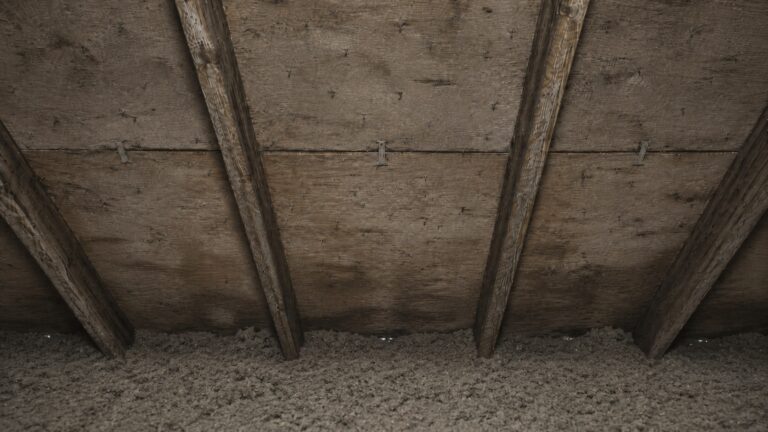
Dark stains on the underside of roof decking are one of the most common warning signs homeowners notice from the attic. These stains may appear as brown, gray, black, or uneven water marks on plywood or OSB. They often show where water has touched the sheathing or where condensation has formed repeatedly on the underside of the roof deck.
Staining is important because it gives you a moisture map. It may show that water entered around a roof penetration, followed a rafter line, dripped from a nail point, or spread across the underside of the sheathing. Stains near valleys, chimneys, skylights, and vent boots often deserve closer attention because those areas are common leak paths.
However, dark roof decking is not automatically rotten roof decking. Old stains can remain long after a leak has been repaired, and dust, surface discoloration, or mild surface growth can make sheathing look worse than it is. The more important question is whether the decking is still firm, dry, flat, and structurally intact.
Dark staining becomes more concerning when it appears with other symptoms, such as:
- soft or punky wood texture
- visible sagging between framing members
- flaking or crumbling wood fibers
- swollen OSB edges
- plywood layers separating
- musty attic odor
- active dampness after rain
- ceiling stains below the same area
If the stain is dry, the wood is firm, and there are no signs of deformation or fiber breakdown, the decking may only need monitoring. If the stain is damp, spreading, soft, or connected to interior leak symptoms, the moisture source should be investigated. Homeowners who are still tracing the problem may need to start with the signs of roof leaks inside the house and then connect those clues back to the attic or roof surface.
Soft or Spongy Roof Decking
Soft or spongy roof decking is a stronger warning sign than staining. Wood can be stained and still remain firm, but softness means the material may have lost strength. If roof sheathing compresses, flexes, or feels unstable, the damage has likely moved beyond surface discoloration.
Homeowners should be careful with this symptom. Do not walk on a roof if you suspect the decking is soft. Weak decking can create a fall hazard, especially on older roofs, wet roofs, steep roofs, or areas where the sheathing has been weakened by long-term moisture. Softness should be evaluated from safe access points or by a qualified roofing professional.
Do not stab, cut, or forcefully probe suspect decking from inside the attic. Light visual inspection is safer than weakening a damaged panel further, disturbing mold-like growth, or making an already compromised roof deck worse.
Soft decking may be caused by repeated roof leaks, trapped moisture under shingles, wet insulation pressing against the sheathing, or attic condensation that has affected the same area over time. Once the wood fibers begin to break down, drying the surface may not restore the original strength of the decking.
Softness is especially concerning when it appears near visible staining, sagging, or active leak marks. Those combined symptoms suggest the roof deck may not only have been wet but may have started to deteriorate structurally.
Sagging or Wavy Roof Decking
Sagging roof decking can be a sign that the sheathing has weakened from moisture damage. From inside the attic, this may look like roof decking dipping between rafters or trusses. From the outside, it may appear as a wavy roof surface, uneven shingle lines, or a visible depression in one section of the roof.
Sagging is more serious than staining because it suggests the deck may no longer be holding its shape. Roof decking should form a stable, supported plane across the framing. When it dips, bows, or sags, the material may have lost stiffness, been installed with inadequate support, or been damaged by repeated wetting.
This symptom should be treated carefully because sagging can involve more than the decking itself. In some cases, the sheathing is the only damaged material. In others, rafters, trusses, or nearby framing may also be affected. If the sagging appears structural rather than surface-level, compare it with the broader signs of structural roof damage. Sagging roof decking should be evaluated professionally, especially if the roof surface also feels soft or if interior leak stains are present.
Sagging is more concerning when it appears with:
- dark staining on the underside of the roof deck
- wet or compressed attic insulation below the area
- soft or flexible sheathing
- visible cracks, splits, or panel separation
- repeated leaks in the same roof section
- shingles that no longer lie flat above the dip
If the sagging appears after a known roof leak, the roof deck may have absorbed water long enough to weaken. If it appears across broad attic areas, the problem may involve ventilation, condensation, framing support, or long-term moisture exposure rather than one isolated leak.
Swollen OSB or Delaminated Plywood
Swollen OSB and delaminated plywood are two of the clearest material-specific signs of roof decking damage. Both conditions show that moisture has affected the structure of the panel, not just the surface color.
Swollen OSB Roof Decking
OSB roof decking is made from compressed wood strands bonded together. When OSB is repeatedly wetted or left damp, it can swell, especially along panel edges. The surface may look raised, rough, fuzzy, or uneven. In more advanced cases, the strands may flake, crumble, or lose density.
Swollen OSB is especially common near eaves, valleys, roof penetrations, and flashing failures because these areas often see repeated moisture exposure. If the OSB is only stained but still flat and firm, the issue may be less serious. If it is swollen, soft, flaking, or no longer holding fasteners well, the decking may be deteriorating.
Delaminated Plywood Roof Decking
Plywood roof decking is made from bonded layers of wood veneer. When moisture weakens the bond between those layers, the panel can delaminate. Delaminated plywood may look bubbled, peeled, split, flaky, or separated at the edges.
Delamination matters because plywood is designed to act as one solid panel. Once the layers begin separating, the deck may lose stiffness and fastener strength. A delaminated section is more concerning than a simple water stain because the panel itself has changed shape or structure.
Material breakdown like swelling or delamination is one reason roof decking symptoms should not be judged by color alone. A light-colored panel that is soft and delaminated can be more serious than a dark-stained panel that is still dry and firm.
Musty Attic Odors or Mold-Like Growth
A musty attic odor can be a warning sign that roof decking or nearby attic materials have stayed damp for too long. The smell may come from wet insulation, damp wood, mold-like surface growth, or moisture trapped in the roof assembly. Odor alone does not prove the roof decking is rotten, but it does suggest that moisture conditions should be investigated.
Mold-like growth on roof sheathing is another moisture clue. It may appear as dark spotting, patchy discoloration, fuzzy surface growth, or irregular staining on the underside of the roof deck. This does not automatically mean the decking is structurally rotten. Mold-like growth can form on the surface before the wood itself has lost strength.
The distinction matters. Mold-like growth is a surface contamination and moisture clue. Rot is wood deterioration. They can appear together when moisture is persistent, but they are not the same thing. This article is focused on roof decking rot symptoms, not mold cleanup procedures.
Musty odors and mold-like growth become more concerning when they appear with:
- soft roof sheathing
- active dampness after rain
- wet attic insulation
- poor attic ventilation symptoms
- rusty roofing nails
- dark staining that keeps spreading
- visible sagging or material breakdown
If these clues appear together, the issue may be part of a larger roof moisture pattern. A broader guide to signs of hidden roof moisture can help separate isolated stains from ongoing attic or roof assembly moisture problems.
Rusty Nails, Water Tracks, and Repeated Leak Patterns
Rusty roofing nails are often a clue that moisture has been present around the roof deck. From inside the attic, nail tips may look rusty, dark, or surrounded by small moisture stains. This can happen from roof leaks, condensation on cold nail tips, or repeated damp conditions against the underside of the sheathing. A few rusty nail tips across a cold attic may point more toward condensation, while concentrated rust below a valley, vent, chimney, or flashing transition is more suspicious for a leak path.
Water tracks are another clue. These may appear as streaks running down the underside of decking, stains following a rafter, or drip marks below a roof penetration. Water does not always fall straight down. It can travel along framing, underlayment, nail points, or the underside of roof sheathing before showing up somewhere else.
Repeated leak patterns are especially important. If the same section of roof decking becomes damp after storms, or if ceiling stains keep returning below the same roof area, the roof deck may be exposed to repeated moisture. Repeated wetting increases the risk of rot because the wood may never dry fully between events.
These signs do not always mean the decking is already rotten, but they do mean the moisture source should be found. If the source is still unclear, use a more focused guide on how to detect hidden roof leaks before assuming the visible attic stain is the entire problem.
Roof Surface Clues That May Point to Rotten Decking
Some signs of rotten roof decking are visible from the roof surface rather than the attic. These clues do not always prove the deck is rotten, but they can suggest that the surface underneath the shingles is no longer flat, firm, or properly supported.
Possible roof surface clues include:
- Wavy shingle lines: Shingles may follow dips or uneven areas in the deck below.
- Visible roof depressions: Low spots can suggest weakened sheathing or framing support problems.
- Repeated leaks in one roof area: A recurring leak can keep the same decking section damp.
- Shingles that will not lie flat: Uneven decking can affect how the roof covering sits.
- Localized sagging near penetrations: Decking around chimneys, skylights, vents, and valleys is often more vulnerable to leak-related rot.
Homeowners should not walk on the roof to check for soft decking. If the deck is weak, stepping on it can be dangerous. Roof surface clues are best evaluated from the ground, from safe ladder positioning, from attic access, or by a qualified roofing professional.
How to Tell Old Staining From Possible Roof Deck Rot
The difference between old staining and possible rot comes down to condition, not just appearance. Old staining may remain visible for years after a leak is fixed. Rot means the wood itself has deteriorated.
A useful quick check is to compare the stain with the surrounding panel: look for a change in texture, raised edges, loose wood fibers, panel movement, or dampness after recent rain. A stain that looks dramatic but stays flat, dry, and firm is less urgent than a smaller area that feels soft or has changed shape.
Old staining is less concerning when:
- The decking is dry.
- The wood feels firm.
- The panel is flat and not sagging.
- There is no crumbling, flaking, or delamination.
- The stain has not spread after recent rain.
- There are no musty odors or active leak symptoms nearby.
Possible rot is more concerning when:
- The stained area is soft, punky, or crumbly.
- The wood fibers break apart easily.
- OSB edges are swollen or rough.
- Plywood layers are separating.
- The deck sags between rafters or trusses.
- The area smells musty or stays damp.
- Ceiling stains or attic moisture keep returning below the same section.
A practical way to think about it is this: staining tells you moisture was present. Texture, firmness, shape, odor, and active dampness tell you whether the roof deck may be deteriorating. If you need a step-by-step attic-based check, use the companion guide on how to inspect roof decking from the attic.
When Signs of Rotten Roof Decking Need Professional Inspection
Signs of rotten roof decking should be evaluated professionally when they suggest structural weakness, active moisture, or widespread damage. A small dry stain may not require immediate repair, but soft decking, sagging, active leaks, swelling, delamination, or repeated moisture patterns should not be ignored.
Call a roofing professional when you notice:
- soft or spongy roof areas
- visible sagging from the attic or exterior
- water stains that keep returning after rain
- dark sheathing that is damp or spreading
- swollen OSB or delaminated plywood
- musty attic odors with visible moisture signs
- roofing nails that are rusty or loose
- ceiling stains below the same roof section
- mold-like growth across large areas of sheathing
Professional inspection is especially important if you are planning roof replacement. Rotten decking should be identified before new roofing materials are installed because soft or structurally weakened sheathing may not provide a reliable fastening surface below the new roof covering. For the replacement decision itself, use the separate guide on when roof decking must be replaced.
When symptoms are serious or hard to interpret, the inspection should include the roof covering, deck surface, attic side, flashing details, and surrounding moisture patterns together. If the problem appears connected to active roof moisture, review when to hire a roofing contractor for moisture problems.
FAQ About Rotten Roof Decking Signs
What does rotten roof decking look like?
Rotten roof decking may look dark, stained, swollen, sagging, flaky, crumbly, or uneven. Plywood may separate into layers, while OSB may swell or roughen at the edges. The strongest signs are softness, crumbling texture, sagging, and material breakdown, not color alone.
Is black roof decking always rotten?
No. Black or dark roof decking is not always rotten. It may be stained from an old leak, surface discoloration, dust, or past moisture exposure. It becomes more concerning when the dark area is damp, soft, spreading, sagging, moldy, swollen, or structurally weak.
Can roof decking be rotten without a ceiling leak?
Yes. Roof decking can deteriorate before water reaches the ceiling. Moisture may stay in the attic, soak insulation, collect on the underside of sheathing, or dry between rain events before a visible ceiling stain appears inside the living space.
Can you see rotten roof decking from the attic?
Sometimes. From the attic, you may see staining, sagging, mold-like growth, rusty nails, water tracks, or darkened sheathing. However, some damage is hidden on the top side of the deck beneath shingles and underlayment until roof tear-off.
Is soft roof decking dangerous?
Soft roof decking can be dangerous because it may not support weight safely. Do not walk on a roof if you suspect soft or rotten decking. Softness should be evaluated from safe access points or by a qualified roofing professional.
Can roof decking rot from attic condensation instead of a roof leak?
Yes. Roof decking can deteriorate from repeated attic condensation if the sheathing stays damp long enough. Leak-related rot is often localized near valleys, chimneys, vents, skylights, or flashing. Condensation-related moisture may appear more broadly across cold roof sheathing, with scattered rusty nail tips or moisture patterns in poorly ventilated attic areas.
Key Takeaways About Rotten Roof Decking Signs
- Rotten roof decking usually shows weakness, texture changes, swelling, sagging, or crumbling—not just discoloration.
- Dark stains are warning signs, but they do not always prove the decking is rotten.
- Soft or spongy decking is one of the strongest signs of structural deterioration.
- Swollen OSB and delaminated plywood indicate moisture has changed the material, not just stained it.
- Musty attic odors, rusty nails, and water tracks can point to ongoing roof moisture.
- Roof surface waves or depressions may suggest weakened decking below the shingles.
- Do not walk on a roof if you suspect soft or rotten decking.
- Professional inspection is needed when rot symptoms are active, widespread, or connected to leaks or sagging.
One Comment
Comments are closed.