
How to Tell If Roof Damage Is Structural
Roof damage is structural when it affects more than the visible roofing surface. Missing shingles, cracked sealant, or a damaged vent boot may be surface-level problems if they are caught early. Structural roof damage is more serious because it can involve the roof decking, sheathing, rafters, trusses, ridge framing, ceiling support, or other components that help carry load and protect the home.
The challenge is that structural roof damage is not always obvious from the ground. A roof can have a few damaged shingles and still be structurally sound. Another roof may look mostly intact from outside but have soft decking, wet insulation, stained rafters, or sagging roof planes hidden beneath the surface. The difference matters because structural damage can affect safety, repair cost, moisture risk, and whether the home needs urgent professional inspection.
The key distinction is whether the damage has moved beyond the roof covering into the support system below. If you are comparing this issue with broader common roofing material failures, structural roof damage is the category where safety, load support, hidden moisture, and repair scope become bigger concerns.
What Structural Roof Damage Means
Structural roof damage means the problem may affect the parts of the roof that support weight, hold roofing materials in place, or maintain the shape and stability of the roof assembly. These parts are usually hidden below the shingles or roofing surface, which is why serious damage can sometimes go unnoticed until leaks, sagging, or attic symptoms appear.
Structural roof components can include:
- Roof decking or sheathing beneath the roofing material
- Rafters that support the roof slope
- Trusses that carry roof loads across the structure
- Ridge framing and roof peak support
- Valley framing where roof planes meet
- Eave and overhang framing
- Ceiling joists tied into roof load paths
- Framing around chimneys, skylights, dormers, and roof penetrations
Damage to these areas is more serious than surface wear because these components help the roof keep its shape and carry loads. If water, impact, rot, or long-term stress weakens them, the roof may begin to sag, shift, leak repeatedly, or lose its ability to hold fasteners securely.
Moisture is one of the most common reasons surface roof damage becomes structural. A small shingle or flashing defect may start as a simple leak. If that leak continues, water can soak roof decking, wet insulation, stain rafters, and eventually weaken wood. Over time, the problem may move from a roofing repair into a structural moisture issue. That is why early roof leak control is part of a larger strategy to prevent moisture problems from spreading through the home.
Surface Damage vs Structural Roof Damage
The first step is separating surface-level damage from signs that the roof structure may be affected. Surface damage usually involves the outer roofing materials. Structural damage involves the supporting layers below those materials or the framing that holds the roof in place.
Surface damage may include:
- A few missing or cracked shingles
- Minor granule loss on asphalt shingles
- A damaged vent boot caught early
- A localized flashing gap with no long-term moisture signs
- Small isolated storm damage limited to the roof covering
- Cosmetic discoloration or surface wear
These problems still matter because they can let water in if ignored. However, if the roof deck is dry, the attic framing is sound, and the damage is limited to the exterior material, the issue may not be structural yet.
Potential structural roof damage is different. It may involve:
- A sagging roofline or roof plane
- Soft, spongy, or rotten decking
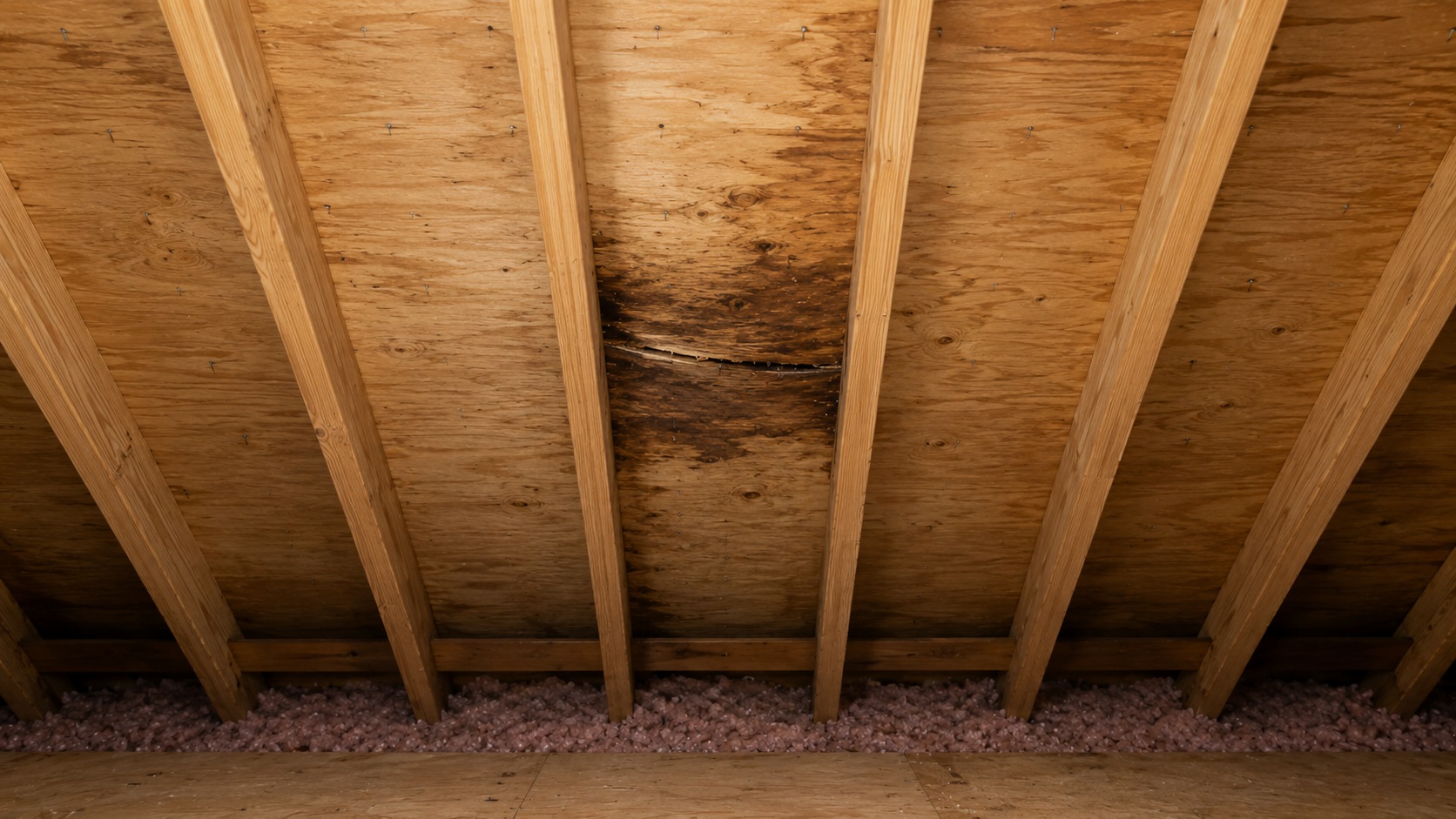
- Dark, damp, or deteriorated sheathing visible from the attic
- Cracked, bowed, or separated rafters
- Damaged trusses or framing connectors
- Ceiling sagging below a roof leak
- Repeated leaks in the same area over time
- Impact damage from a tree limb or fallen object
- Long-term attic moisture, mold-like staining, or wood decay
The difference often comes down to depth and duration. A single missing shingle after a storm may be surface damage if repaired quickly. A missing shingle that allowed water to soak the deck for months may become a structural concern. A small ceiling stain may be minor if it came from a one-time leak. A spreading stain with sagging drywall, wet insulation, or stained rafters may point to deeper roof damage.
Structural roof damage is also more likely when symptoms appear in connected areas. For example, an exterior dip in the roof plane, dark attic sheathing below that dip, and a ceiling stain in the room underneath are not separate issues. Together, they suggest that the roof surface, deck, and interior materials may all be part of the same moisture path.
When you are unsure, avoid walking on the roof to test it. A roof section that is soft, sagging, wet, or structurally weakened may not be safe to step on. Use ground-level photos, attic observations if safely accessible, and professional inspection instead.
Sagging, Dips, or Uneven Roof Planes
A sagging roofline is one of the clearest signs that roof damage may be structural. Shingles can crack, curl, or blow off without the roof structure being damaged. Sagging is different because it may indicate movement in the roof deck, rafters, trusses, ridge, or supporting framing below the visible roof surface.
Sagging can appear in several ways. The ridge line may dip instead of running straight. A roof slope may have a depressed area between framing members. The roof edge may droop near the eaves. A valley may look sunken. One section may appear wavy or lower than the surrounding roof plane. These visual changes matter because the roof is no longer holding its intended shape.
Not every uneven roof plane is an emergency. Some older homes have mild historical settling or framing irregularities that have existed for years. The concern becomes stronger when the dip is new, worsening, localized, connected to a leak, visible after a storm, or paired with attic or ceiling symptoms.
Warning signs include:
- A roof ridge that dips or bows noticeably
- Depressed areas between rafters or trusses
- Wavy roof planes that appear worse after rain or snow
- A sagging section below a known leak
- Roof edges that droop near gutters or overhangs
- Ceiling sagging below the same area
- Visible cracked, bowed, or stained framing in the attic
Sagging should be taken seriously because it can indicate weakened decking, moisture-damaged framing, overloaded structural members, or long-term deterioration. It can also affect drainage. A roof plane that dips may hold water longer, direct runoff poorly, or place extra stress on shingles and flashing. Over time, that can make moisture problems worse.
If the roof appears to sag after a storm, tree impact, heavy snow load, or repeated roof leaks, do not walk on that area. The surface may not be able to support weight safely. A professional should inspect the roof from safe access points and evaluate the attic framing below the sagging area.
Signs Roof Decking May Be Damaged
Roof decking, also called sheathing, is the layer of wood beneath the roofing material. It supports shingles or other roof coverings and gives fasteners a solid surface to hold onto. When the decking is damaged, the roof surface may still look mostly intact, but the structure below may be weakened.
Decking damage often starts with moisture. A roof leak, flashing failure, condensation problem, or poorly installed roof layer can allow water to soak the sheathing. Over time, the wood may stain, swell, delaminate, soften, or rot. Once that happens, fasteners may not hold correctly and the roof surface may become uneven.
Possible signs of damaged roof decking include:
- Soft or spongy areas reported by a roofer or inspector
- Dark staining on the underside of roof sheathing in the attic
- Wood that looks swollen, flaking, delaminated, or deteriorated
- Shingles that dip, buckle, or look wavy above one area
- Nail tips surrounded by dark stains or damp wood
- Repeated leaks in the same section of roof
- Musty odors or damp insulation below the roof deck
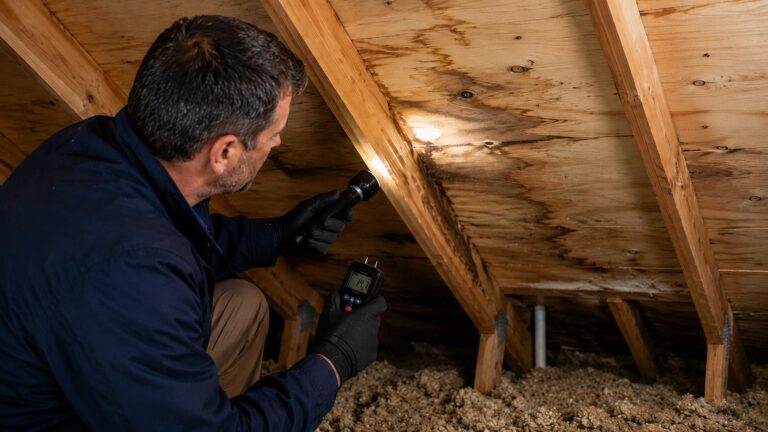
Homeowners usually should not test roof decking by walking on it. A soft roof section may be unsafe, especially if the sheathing is wet or rotten. Safer clues often come from the attic. If you can access the attic safely, look for staining, dampness, sagging sheathing, or areas where the wood looks darker than the surrounding deck.
A moisture meter can support an attic inspection, but it should not be used as the only deciding factor. Compare suspicious sheathing or framing with nearby dry-looking wood, and treat soft, delaminated, sagging, or visibly deteriorated areas as more serious than a single reading.
Decking damage does not always mean the entire roof is structurally compromised, but it should not be ignored. The roof deck supports the materials above it and helps transfer loads into the roof framing. If the deck is soft or rotten, the roof may become more vulnerable to leaks, wind damage, and fastener failure.
If the main concern is the decking itself, compare what you are seeing with the more specific guide to signs roof decking is rotten. If a contractor has already confirmed significant deck deterioration, the next question may be when roof decking must be replaced instead of whether the damage is structural.
Decking problems become more serious when they appear with sagging roof planes, cracked rafters, wet insulation, ceiling movement, or long-term leaks. In those cases, the issue may no longer be just rotten sheathing; it may involve the broader roof structure.
Attic Clues That Roof Damage May Be Structural
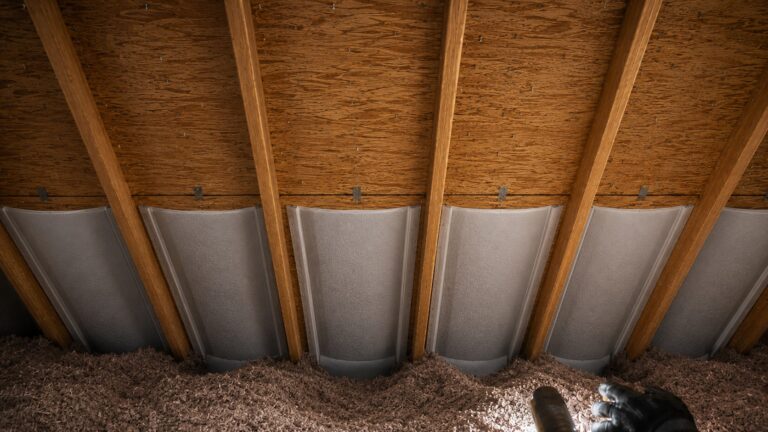
The attic is often the best place to look for early clues that roof damage may involve more than the surface materials. From outside, shingles or roofing materials can hide what is happening below. From inside the attic, you may be able to see the underside of the roof deck, rafters, trusses, insulation, and water paths.
Only inspect the attic if it is safely accessible. Do not step between ceiling joists, crawl into unstable areas, disturb damaged insulation, or enter an attic where electrical hazards, active dripping, mold-like contamination, or framing movement makes the space unsafe. If the attic is difficult to access, let a professional inspect it.
Attic warning signs that roof damage may be structural include:
- Dark stains on the underside of roof sheathing
- Wet or compressed insulation below a roof leak
- Rafters that look cracked, bowed, split, or separated
- Trusses with visible damage, movement, or altered members
- Sheathing that sags between framing members
- Daylight visible through roof boards or gaps
- Musty odors near repeated roof leaks
- Water trails running down rafters or framing
- Mold-like staining on roof decking or structural wood
Some attic stains are old and dry. Others are active. The difference matters. A dry stain may show where a previous leak occurred, while damp wood, wet insulation, or staining that grows after rain suggests ongoing moisture entry. Repeated wetting is what turns many roof leaks into structural concerns.
Rafters and trusses deserve special attention because they help carry roof loads. Staining alone does not always mean the framing is unsafe, but dark, wet, softened, cracked, or distorted framing should be evaluated. If you see visible wood deterioration or repeated dampness on framing members, compare the symptoms with more specific guidance on moisture damage in roof rafters.
Attic clues can also help distinguish a roof leak from a condensation problem. A leak often follows a water path from a roof penetration, valley, flashing transition, or damaged roof surface. Condensation may appear more broadly across cold roof sheathing, nail tips, or poorly ventilated areas. Either condition can damage wood if it continues long enough, but the correction path may be different.
Interior Signs That Roof Damage Has Spread
Interior symptoms do not automatically prove structural roof damage, but they can show that the roof problem has moved beyond the exterior covering. Once water reaches ceilings, drywall, insulation, trim, or wall cavities, the damage may be more widespread than it appears from the roof surface.
Ceiling stains are common after roof leaks. A small stain may come from a localized leak that was caught early. A spreading stain, sagging ceiling, cracked drywall, or soft texture is more concerning because it may indicate ongoing moisture, trapped water, or weakening materials above the ceiling.
Interior warning signs include:
- Ceiling drywall sagging below a roof leak
- Brown or yellow stains that expand after rain
- Bubbling paint or peeling texture on ceilings
- Cracks near ceiling stains or upper wall corners
- Water dripping from light fixtures or ceiling openings
- Soft drywall or trim near the leak area
- Musty odors in rooms below roof damage
- Recurring stains that return after patching or painting
Water near electrical fixtures should be treated as urgent. Do not touch wet light fixtures, switches, or ceiling fans. If water is dripping near electrical components, stay out of the wet area, shut off power to the affected circuit only if you can do so safely from a dry location, and call the appropriate professional.
Interior stains can be misleading because water often travels before it becomes visible. A leak near a roof valley may run along framing and stain a ceiling several feet away. A chimney or vent leak may appear as a wall stain instead of a ceiling stain. That is why interior symptoms should be connected back to roof and attic observations instead of treated as isolated drywall damage.
If water stains, damp insulation, or ceiling symptoms are present, review the broader signs of water damage from roof leaks. The goal is to determine whether the moisture is limited to finish materials or whether it may have reached decking, rafters, insulation, or structural wood.
Storm, Impact, and Moisture Damage That Can Become Structural
Structural roof damage can happen suddenly after impact or slowly after repeated moisture exposure. In both cases, the roof may look repairable at the surface while deeper damage develops below.
Storm and impact damage can become structural when force reaches the roof deck or framing. A few missing shingles may be surface damage. A fallen branch that dents the roof plane, cracks sheathing, breaks rafters, or causes ceiling movement is more serious. Hail can damage shingles, but large impacts or long-term leaks after hail damage may eventually affect the layers below.
Impact-related warning signs include:
- A depressed roof area after a branch or tree impact
- Cracked or broken decking below the impact area
- Visible damage to rafters or trusses in the attic
- Ceiling cracks or sagging below the impact point
- Water entry after the impact
- Roof planes that look shifted, buckled, or out of line
Long-term moisture damage is often less dramatic but just as important. A small roof leak can wet the same area repeatedly. Over time, the roof deck may soften, fasteners may loosen, insulation may stay damp, and rafters may begin to stain or decay. By the time the homeowner notices sagging or ceiling movement, the leak may have been active for a long time.
This progression is one of the reasons roof damage should not be judged only by the visible shingles. A minor surface defect can become structural if it lets water enter repeatedly. Once moisture reaches wood components and stays there, the risk shifts from simple roof repair toward rot, mold growth, and load-bearing deterioration.
If the damage appears chronic, with old stains, repeated leaks, musty attic odors, or wood deterioration, compare the situation with broader long-term roof moisture damage. Chronic moisture is often what turns a repairable roof leak into a structural concern.
When Roof Damage Needs Immediate Professional Inspection
Structural roof damage should not be handled the same way as a small surface repair. If the roof may be sagging, weakened, leaking into the structure, or damaged by impact, the safest next step is professional inspection. The goal is to determine whether the damage is limited to roofing materials or whether it has affected decking, rafters, trusses, insulation, ceilings, or load-bearing paths.
Get prompt professional evaluation if you notice:
- A sagging ridge line or sagging roof plane
- A roof section that looks sunken, depressed, or shifted
- Soft or rotten roof decking reported by a roofer or inspector
- Visible cracked, bowed, or separated rafters or trusses
- Ceiling sagging below a roof leak
- Water dripping near electrical fixtures
- Wet attic insulation after repeated rain
- Tree or large branch impact on the roof
- Recurring leaks in the same roof area
- Moisture damage that appears to be spreading into framing or ceiling materials
A qualified roofer can often identify whether the problem starts with shingles, flashing, decking, ventilation, or roof penetrations. If the inspection reveals damaged rafters, trusses, major sagging, load-bearing movement, or framing displacement, a structural contractor or engineer may also be needed.
Use ground-level photos, attic observations if safe, and professional inspection instead of walking on a roof that may have soft decking, sagging sections, or structural damage.
If the roof damage is severe enough that replacement may be part of the conversation, compare the symptoms with broader signs a roof needs replacement. Structural damage does not always mean the entire roof must be replaced, but it can change the scope from a simple surface repair to a more involved repair plan.
What Homeowners Should Document Before Repairs
Before repairs begin, document the damage carefully. Good documentation helps contractors understand the moisture path, helps separate old damage from new damage, and may be useful for warranty, insurance, or second-opinion discussions.
Start with wide photos from the ground. Capture the whole roof plane, then zoom in on sagging areas, missing materials, impact damage, valleys, roof edges, chimneys, vents, or other problem locations. If there is interior damage, photograph the ceiling, walls, trim, and floors below the affected area.
If the attic is safely accessible, document visible roof deck staining, wet insulation, rafter staining, cracked framing, or water trails. Do not step on ceiling drywall or move through areas where framing access is unsafe. If you are unsure where to step, do not enter the attic.
Useful documentation includes:
- Photos of exterior roof damage from multiple angles
- Photos of attic staining, wet insulation, or damaged framing
- Interior photos of ceiling stains, sagging, cracks, or bubbling paint
- The date you first noticed the damage
- Dates of storms, impacts, leaks, or repairs
- Notes about whether stains grow after rain
- Roof age, installation records, and warranty information
- Previous repair invoices or inspection reports
When speaking with a contractor, describe what changed and when. For example, “the ceiling stain appeared after the storm on Friday” is more useful than “the ceiling looks bad.” “The roofline has looked wavy for years” means something different from “this dip appeared after a tree limb hit the roof.” Timing helps separate old cosmetic irregularities from active structural concerns.
If you are hiring a contractor for leak repair or structural evaluation, choose someone who can explain both the roof surface and the moisture path below it. A good inspection should not stop at the first visible defect if there are signs of hidden dampness or framing movement. For repair-related hiring, review how to choose a roofing contractor for leak repairs before approving major work.
FAQ
Does a sagging roof always mean structural damage?
Not always, but sagging should be taken seriously. Some older homes have long-standing uneven rooflines, but new, worsening, localized, or leak-related sagging may indicate damaged decking, rafters, trusses, or support framing. A sagging roof section should be inspected before anyone walks on it.
Can a roof leak damage the structure?
Yes. A roof leak can start as a surface problem, but repeated wetting can damage decking, insulation, rafters, ceiling drywall, and other structural wood. The longer moisture remains hidden, the more likely the damage is to move beyond a simple roof-surface repair.
Is soft roof decking a structural problem?
Soft roof decking can be a structural concern because the deck supports roofing materials and gives fasteners something solid to hold. If decking is rotten, delaminated, or spongy, shingles may not stay secure and moisture may spread into the roof framing below.
Can structural roof damage be repaired?
Structural roof damage can often be repaired, but the scope depends on what is damaged and whether the source of water or impact damage has been corrected. Replacing a small section of decking is different from repairing rafters, trusses, or load-bearing framing. Severe framing movement may require a structural specialist or engineer.
Should I call a roofer or a structural engineer?
Start with a qualified roofing contractor if the issue appears to involve leaks, shingles, flashing, decking, or roof surface damage. If there is sagging, cracked framing, truss damage, load-bearing movement, or uncertainty about structural safety, a structural contractor or engineer may also be needed.
What to Do Next If Roof Damage Looks Structural
Roof damage is structural when it affects the support system beneath the visible roofing materials. Sagging roof planes, soft decking, cracked rafters, damaged trusses, ceiling movement, impact damage, and long-term moisture are stronger warning signs than isolated shingle or flashing wear.
The safest next step is to look for connected symptoms without walking on a questionable roof. A roof dip, stained attic sheathing, wet insulation, and a spreading ceiling stain may all point to the same deeper problem. Document what you can safely see, avoid the damaged area, and get professional inspection before approving surface repairs that may miss the structural damage below.
2 Comments
Comments are closed.