Should You Repair or Replace Roof Leak Damage?
Roof leak damage can often be repaired when the leak was recent, the source has been fixed, and the affected materials are still dry, firm, and structurally sound. Replacement becomes more likely when the same area keeps getting wet, ceiling drywall sags, insulation stays damp, roof decking feels soft, mold appears, or structural wood shows signs of long-term moisture damage.
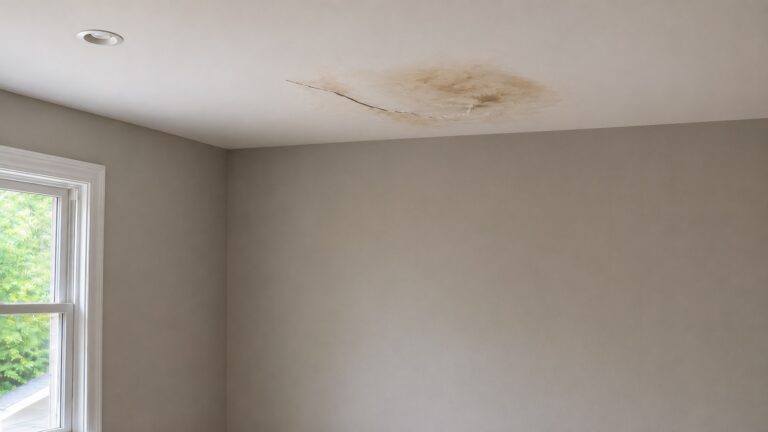
The difficult part is that roof leak damage is not always measured by the size of the ceiling stain. A small brown mark on drywall may be a minor cosmetic repair, or it may be the first visible sign of water that traveled across roof decking, insulation, rafters, and ceiling materials before finally showing up inside the room.
That is why the repair-or-replace decision should be based on each affected material, not just the visible stain. Separate the roof problem from the attic problem, the insulation problem, the drywall problem, and the structural wood problem. A small roof repair may still leave damaged insulation or drywall behind, while a larger roof repair may not require major interior replacement if the leak was caught quickly.
If you are still trying to understand where the moisture started, begin with the broader guide to common roofing material failures. For a larger whole-home view, this topic also fits into a complete strategy to find, fix, and prevent moisture problems in your home.
The Short Answer: When to Repair vs. Replace Roof Leak Damage
You can usually repair roof leak damage when the leak was isolated, recent, and limited to surface-level staining or minor material damage. You should lean toward replacement when the affected material is soft, sagging, swollen, moldy, repeatedly wet, or no longer performing its original job.
Here is the simplest way to think about it:
- Repair is more likely when the material is dry, firm, flat, structurally sound, and the leak source has been corrected.
- Replacement is more likely when the material is soft, distorted, contaminated, moldy, weakened, or has been wet more than once.
- Professional evaluation is needed when roof decking, rafters, trusses, ceiling joists, electrical fixtures, or mold-contaminated areas are involved.
A roof leak should not be treated as one single repair decision. The roofing material, roof decking, insulation, drywall, paint, and framing may each need a different answer. One material may be repairable while another needs removal.
Start With the Leak Source Before Repairing the Damage
Before deciding whether to repair or replace damaged materials, make sure the roof leak itself has been found and corrected. Interior repairs should never be treated as final while the entry point is still active. If water can enter again during the next storm, new drywall, insulation, paint, or trim can be damaged just like the old materials.
Common roof leak sources include failed flashing, cracked vent boots, missing shingles, damaged valleys, worn sealant, storm damage, skylight leaks, chimney flashing gaps, and roof penetrations. The water stain inside the home may not appear directly below the leak because water can travel along rafters, roof decking, insulation, wiring, or ceiling framing before it becomes visible indoors.
If the stain is new and the leak source is obvious, such as a damaged vent boot or a small area of missing shingles, a targeted roof repair may be enough. If the leak path is unclear, appears after multiple storms, or keeps returning after patching, the decision becomes more serious. In that case, the homeowner may need to follow a more detailed process for detecting hidden roof leaks before repairing the visible damage.
Key Factors That Decide Whether Roof Leak Damage Can Be Repaired
The right choice depends on more than whether the area “looks dry.” Roof leak damage should be judged by exposure time, material condition, recurrence, and structural importance. These factors help separate a simple cosmetic repair from a deeper replacement problem.
How Long the Leak Was Active
A recent leak that was caught quickly is more likely to leave repairable damage. For example, a small ceiling stain after one storm may only require roof repair, drying, stain blocking, and repainting if the drywall remains firm and dry.
A leak that went unnoticed for weeks or months is different. Long-term moisture can soak insulation, soften drywall, stain framing, support mold growth, and weaken roof decking before the ceiling stain becomes obvious indoors.
Whether the Same Area Has Been Wet Before
Recurring leaks are one of the strongest signs that replacement may be needed. Materials can sometimes tolerate a brief wetting event if they dry quickly, but repeated wetting breaks down drywall paper, compresses insulation, stains wood, and increases the chance of mold or decay.
If the same ceiling stain grows after every rain, or if a roof patch stops the leak temporarily but the damage returns, the issue may not be a simple surface problem. It may be part of a larger roof failure, flashing problem, or drainage path. In that situation, it is worth comparing the damage with the signs of recurring roof leaks.
Whether the Material Is Still Firm and Stable
Firm materials are usually more repairable than soft or distorted materials. A dry stain on solid drywall is very different from a sagging ceiling panel. Darkened but firm roof sheathing is very different from sheathing that feels spongy or delaminated. Lightly damp insulation that dried quickly is different from insulation that stayed wet, collapsed, clumped, or developed odor.
As a general rule, repair becomes more realistic when the material still holds its shape and function. Replacement becomes more likely when the material has lost strength, shape, cleanliness, or performance.
Whether Mold or Musty Odor Is Present
Mold changes the repair decision because it suggests that moisture lasted long enough to support biological growth. A musty odor, spotting on drywall paper, visible growth on roof decking, or contaminated insulation should not be treated as a simple cosmetic issue.
This does not mean every mold concern requires panic or full demolition. It does mean the homeowner should stop thinking only in terms of patching and repainting. The moisture source must be corrected, affected materials must be evaluated, and porous materials may need removal if they cannot be cleaned or dried safely.
Whether the Damaged Material Is Structural
Roof decking, rafters, trusses, ceiling joists, and other load-bearing materials require more caution than paint or surface drywall. A stained board is not automatically unsafe, but soft, sagging, cracked, delaminated, or decayed wood should not be ignored.
Structural wood damage is especially important when the leak has been active for a long time or when the roof surface feels uneven, sagging, or unstable. If moisture has reached rafters or framing, the repair decision may need to involve a roofing contractor, structural repair specialist, or qualified inspector.
Roof Leak Damage You Can Usually Repair
Some roof leak damage is minor enough to repair once the leak source is fixed and the materials are fully dry. The key is that the damage must be localized, stable, and not part of a recurring moisture pattern.
Small, Dry Ceiling Stains
A small ceiling stain may be repairable if the drywall is flat, firm, dry, and free of odor or mold. In that case, the usual sequence is to fix the roof leak first, confirm that the ceiling area stays dry after rain, then use a stain-blocking primer and repaint the area.
Painting too early is a common mistake. A stain can look dry on the surface while moisture remains above the ceiling or inside insulation. If the stain darkens again, spreads, bubbles, or feels soft, the problem is not just cosmetic. Mark the stain edge lightly with painter’s tape or take a dated photo before the next rain so you can tell whether the mark is actually growing.
Minor Roofing Failures Caught Early
A few damaged shingles, a cracked vent boot, a small flashing gap, or a minor storm-related defect may be repairable if the surrounding roof is still in good condition. In these cases, the roof may not need full replacement. The damaged component can often be replaced or repaired by a qualified roofer.
However, a small visible defect can sometimes be part of a larger aging pattern. If nearby shingles are brittle, curled, cracked, loose, or losing granules, a patch may not hold for long. This is where the condition of the surrounding roof matters as much as the leak point itself.
Attic Framing That Is Stained but Still Dry and Firm
Wood framing that has minor staining from a past leak may not need replacement if it is dry, hard, straight, and structurally sound. Staining alone does not always mean the wood has lost strength.
The concern increases when wood remains damp, feels soft, shows fungal growth, flakes apart, or has been wet repeatedly. Those signs move the issue away from simple monitoring and closer to professional evaluation.
Light Moisture Exposure That Dried Quickly
Some materials can survive brief moisture exposure if they dry quickly and do not develop odor, mold, softness, or deformation. A minor roof leak that is caught immediately may not require removing every nearby material.
Still, this judgment should be conservative with porous materials. Drywall paper, insulation, and ceiling cavities can hold moisture longer than expected. If the homeowner is unsure whether hidden materials are dry, it is better to inspect further before closing the area back up or painting over it.
Roof Leak Damage That Usually Needs Replacement
Replacement becomes more likely when roof leak damage affects the strength, shape, cleanliness, or performance of the material. A material does not need to be completely destroyed before replacement makes sense. If it can no longer dry properly, hold fasteners, support weight, resist mold, insulate effectively, or provide a stable surface, repairing the surface may only hide the problem.
Soft or Swollen Roof Decking
Roof decking, also called roof sheathing, supports the roofing material above it. When decking becomes soft, swollen, delaminated, or spongy, it is no longer just a cosmetic issue. Damaged sheathing may not hold nails properly, may allow future leaks, and may create uneven support under new shingles or other roofing materials.
If roof decking has only been briefly damp and dries while remaining hard and flat, it may be monitored. But if it flexes, crumbles, flakes, sags, or feels weak under the roofing surface, replacement is usually the safer option. This is especially true when the roof has leaked more than once in the same area.
Sagging or Crumbling Ceiling Drywall
Ceiling drywall is more fragile than many homeowners realize. Once water collects above it, the gypsum core can soften and the paper face can separate. A ceiling that sags, bulges, cracks, crumbles, or feels soft should not be treated as a simple paint repair.
If the drywall is flat, firm, dry, and only stained, it may be repairable. But if it has lost its shape or strength, replacement is usually needed. A sagging ceiling can also mean water is still trapped above the drywall; keep people out from under the area and avoid poking, cutting, or disturbing it until the risk is understood.
Saturated or Compressed Insulation
Wet insulation often needs replacement when it becomes saturated, compressed, clumped, contaminated, or musty. Insulation works partly by trapping air. When it collapses or holds water, it loses performance and can keep moisture against wood, drywall, or ceiling materials.
Blown-in insulation is especially vulnerable because it can clump, mat down, or hold moisture in pockets. Cellulose insulation can absorb water heavily. Fiberglass batts may drain better than some materials, but they can still trap moisture against framing or become contaminated. If insulation stayed wet after a roof leak, replacement is usually safer than assuming it will return to normal.
Mold-Damaged Porous Materials
Porous materials affected by mold are harder to restore than hard surfaces. Drywall paper, insulation, ceiling texture, and some wood surfaces can hold mold growth or odor after prolonged moisture exposure. In these cases, surface cleaning may not solve the underlying material problem.
When mold appears after a roof leak, the repair decision should shift from “Can I cover this stain?” to “Which materials stayed wet long enough to support growth?” Mold does not automatically mean every nearby material must be removed, but it does mean the area needs a careful moisture and material assessment.
Repeated Damage From the Same Leak Path
If the same stain, damp area, or attic moisture pattern keeps coming back, replacement may be needed even if the visible damage looks modest. Repeated wetting weakens materials over time. It also suggests the original repair did not address the full water entry path.
Recurring leaks should not be handled with repeated paint, caulk, or patch repairs alone. At that point, the homeowner needs to understand why the leak keeps returning and whether the roof system itself needs a deeper repair. For that scenario, the article on how to fix persistent roof leak problems is the more specific next step.
Repair or Replace Roofing Materials After a Leak?
The roof covering is the first material to evaluate because it is usually the source of the leak. A damaged ceiling may get the homeowner’s attention, but the interior repair will not last unless the roofing problem is corrected first.
Roofing materials may be repairable when the leak comes from a specific, isolated failure. Examples include a cracked pipe boot, a small flashing gap, a few missing shingles, a loose fastener, a minor valley defect, or a localized storm-damaged area. If the surrounding roof is still in good condition, targeted repair can be reasonable.
Roofing replacement becomes more likely when the leak is only one symptom of broader deterioration. If shingles are brittle, curled, cracked, cupped, loose, or shedding granules across large areas, patching one leak may not prevent the next one. If multiple roof penetrations are failing or flashing details are deteriorated in several places, the issue may be more than a single defect. In that situation, compare the roof with the broader signs for when a roof must be replaced instead of repaired.
Age also matters, but it should not decide the issue by itself. A newer roof can leak from poor installation or storm damage, while an older roof may still have a localized repairable issue. The better question is whether the roof area around the leak can still perform reliably after repair.
When a Roof Patch May Be Enough
A roof patch or targeted repair may be enough when the damage is isolated and the surrounding roof is still sound. This often applies to individual flashing defects, localized shingle damage, vent boot cracks, or small roof penetration failures.
The interior materials still need separate evaluation. Even if the roof repair is small, the leak may have soaked insulation or softened drywall before it was discovered. A minor roof repair does not automatically mean minor interior damage.
When Roofing Materials Should Be Replaced
Replacement becomes more likely when the roof covering has widespread failure, multiple leak points, repeated patch failures, or damage across a roof plane. If the roofer cannot create a durable repair because nearby materials are too brittle, loose, or deteriorated, replacing a larger roof area may be more practical than chasing one leak after another.
This is where homeowners should be careful about false savings. A cheap patch can be reasonable when the problem is truly local. But if the roof system is failing around the repair, a patch may only delay a larger repair while allowing more interior water damage to occur.
Repair or Replace Roof Decking and Sheathing?
Roof decking is one of the most important materials in a roof leak damage decision. It sits beneath the roof covering and gives the roofing system a solid base. When roof decking is damaged, replacing shingles or patching flashing may not be enough.
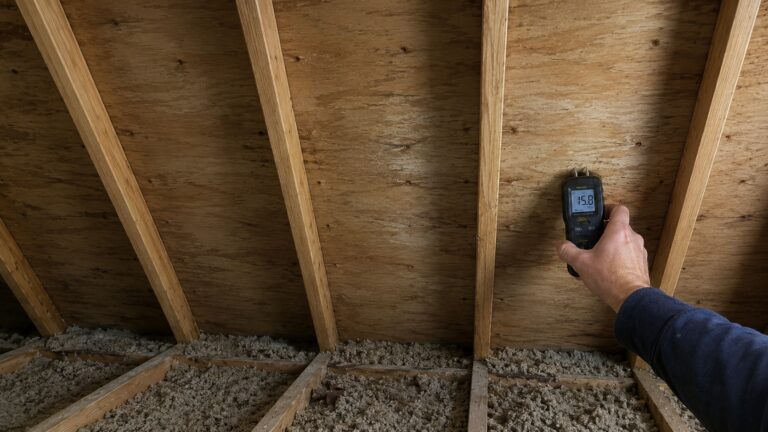
Decking can sometimes dry after a minor leak if the exposure was brief and the wood remains hard, flat, and structurally sound. Staining alone does not always mean the sheathing must be removed. But staining should still be taken seriously because it shows where water traveled.
Replacement is more likely when roof decking shows physical change. Softness, swelling, delamination, sagging, dark fungal growth, crumbling edges, or fasteners that no longer hold properly are warning signs. These conditions mean the material may no longer support roofing reliably. Do not test roof decking strength by walking on a suspect area from above; soft decking can fail under weight and should be evaluated from a safe attic position or by a qualified roofer.
Signs Roof Decking May Be Repairable
- The leak was recent and corrected quickly.
- The sheathing is dry during inspection.
- The wood is hard, flat, and not delaminated.
- There is no sagging between rafters or trusses.
- There is no musty odor or visible mold growth.
- The same area has not leaked repeatedly.
Signs Roof Decking Likely Needs Replacement
- The decking feels soft, spongy, or weak.
- The wood is swollen, warped, delaminated, or sagging.
- There are dark growth patterns or decay-like symptoms.
- Nails or fasteners no longer hold securely.
- The roof surface above the area looks uneven or depressed.
- The leak has returned several times in the same area.
If the roof structure itself may be affected, compare the area with the warning signs in signs of moisture damage in roof rafters. Rafters and structural framing need more caution than surface sheathing stains.
Repair or Replace Interior Ceiling and Drywall Damage?
Ceiling drywall damage is often the most visible sign of a roof leak. Unfortunately, it is also one of the easiest places to make a premature cosmetic repair. A stain can be painted over, but softened drywall, wet insulation above the ceiling, or an active leak path cannot be fixed with primer.
Drywall may be repairable when it is fully dry, firm, flat, and only discolored. In that case, after the roof leak is fixed and the area has been monitored through rain, the stain can often be sealed with stain-blocking primer and repainted.
Drywall replacement becomes more likely when the ceiling sags, bubbles, cracks, crumbles, smells musty, or feels soft. These symptoms mean water affected the material itself, not just the paint layer. If the paper face has separated or the gypsum core has weakened, the drywall is no longer a stable surface.
When Ceiling Drywall Can Usually Be Repaired
- The leak source has been fixed.
- The ceiling is completely dry.
- The drywall is firm and flat.
- There is no sagging, bubbling, or crumbling.
- There is no mold growth or musty odor.
- The stain has not grown after additional rain.
When Ceiling Drywall Should Usually Be Replaced
- The drywall is soft, swollen, sagging, or bowed.
- The surface paper is peeling or separating.
- The ceiling texture is falling apart.
- Water collected above the ceiling.
- The same area has leaked repeatedly.
- Mold growth or musty odor is present.
If the homeowner is still trying to identify whether the visible damage is truly from the roof, it may help to compare symptoms with signs of water damage from roof leaks. Roof leak damage can sometimes resemble plumbing leaks, condensation, or HVAC moisture problems, especially near ceilings and upper walls.
Do Not Repair the Interior Before the Roof Is Fixed
Interior repair should come after roof repair, not before it. New drywall, insulation, paint, or trim can be damaged again if the roof entry point remains active.
The safer sequence is:
- Find and correct the roof entry point.
- Check attic materials, insulation, decking, and ceiling drywall.
- Dry or remove affected materials as needed.
- Monitor the area during or after rain.
- Repair the interior finish only after the area stays dry.
This sequence prevents wasted repairs because the visible interior damage is not being restored while the actual leak source remains active above it.
Repair or Replace Wet Attic Insulation?
Wet attic insulation is one of the most important materials to evaluate after a roof leak because it can hide moisture above the ceiling. A homeowner may see only a small stain indoors while insulation above that area has absorbed, trapped, or spread water across a larger space.
Insulation does not behave like solid wood or painted drywall. Its performance depends on staying dry, fluffy, and clean enough to trap air. Once it becomes saturated, compressed, clumped, contaminated, or musty, it may no longer insulate properly even after the surface appears dry.
Whether wet attic insulation can be saved depends on the type of insulation, how wet it became, how quickly it dried, and whether there is any odor, staining, mold growth, or contamination.
When Attic Insulation May Be Repairable
Insulation may be salvageable when the leak was minor, the water exposure was brief, the insulation dried quickly, and there are no signs of odor, mold, compression, or contamination. This is more likely with a small, fresh leak that was caught immediately and did not soak a large attic area.
Even then, the homeowner should be cautious. Insulation can feel dry on top while holding moisture underneath or against drywall. If insulation was wet enough to soak the ceiling drywall below it, the area deserves closer inspection before assuming everything can stay in place.
When Attic Insulation Should Usually Be Replaced
Replacement is usually the better option when insulation is saturated, clumped, compressed, moldy, musty, or slow to dry. Wet insulation can hold moisture against roof framing, ceiling drywall, and attic materials, which can extend the damage beyond the original leak.
Blown-in insulation often needs replacement when it mats down or clumps together. Cellulose insulation can absorb water heavily and may not return to its original condition. Fiberglass batts may sometimes dry after light exposure, but if they remain wet against wood or drywall, smell musty, or show visible contamination, replacement is usually safer.
If mold is part of the concern, the decision overlaps with the separate question of whether to repair or replace mold-damaged insulation. Roof leak insulation damage should not be judged only by whether the insulation eventually feels dry. It should also be judged by whether it still performs, whether it stayed wet long enough to support growth, and whether it can remain in place without keeping nearby materials damp.
When Roof Leak Damage Becomes a Structural Concern
Roof leak damage becomes more serious when water reaches structural wood. A stain on roof framing does not automatically mean the wood has failed, but repeated moisture exposure can weaken wood, support fungal growth, damage connections, and compromise roof or ceiling support.
Structural materials include rafters, trusses, roof decking, ceiling joists, collar ties, blocking, and other load-bearing components. These should be evaluated differently from paint or drywall because they help carry weight and maintain the shape of the roof system.
Structural Wood That May Only Need Drying and Monitoring
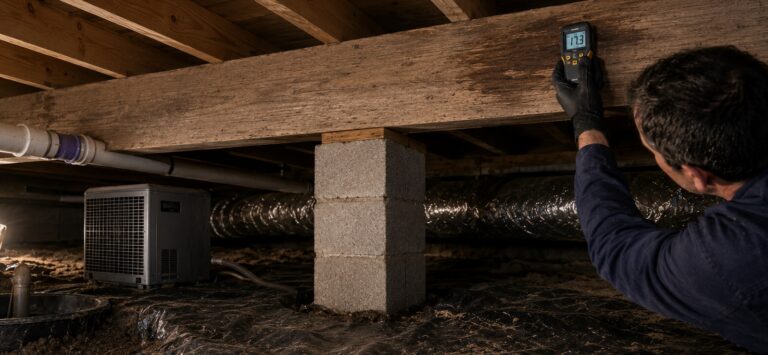
Structural wood may not need replacement when it is stained but dry, hard, straight, and stable. Water staining alone does not always mean the wood is unsafe. If the leak was recent, the source has been fixed, and the wood has dried without softness, distortion, or mold growth, monitoring may be enough.
However, monitoring should be active, not casual. The homeowner should check the area after future rain, look for odor, watch for darkening stains, and make sure the roof repair has actually stopped the moisture path. A dry board that keeps getting wet can eventually become a replacement issue.
Structural Wood That Needs Professional Evaluation
Professional evaluation is needed when structural wood is soft, spongy, cracked, sagging, delaminated, decayed, or repeatedly wet. Wood that crushes under light pressure, flakes apart, shows fungal growth, or has lost its shape should not be treated as a simple drying problem.
Roof leaks around valleys, chimneys, skylights, dormers, and roof penetrations can sometimes wet structural framing for a long time before the homeowner notices interior staining. If the roof deck is sagging or the ceiling line looks uneven, the issue may involve more than the visible stain.
When structural materials are affected, the repair plan may involve roofing work, sheathing replacement, framing repair, reinforcement, or moisture remediation. This is where a homeowner should move beyond surface repair and consider qualified help.
Common Mistakes Homeowners Make After Roof Leak Damage
Roof leak damage often becomes more expensive when homeowners repair the visible symptom before confirming the hidden condition. The most common mistakes are simple decisions that make sense in the moment but allow moisture damage to continue behind the surface.
Mistake 1: Painting Over a Ceiling Stain Too Soon
Painting over a roof leak stain before the leak source is fixed can hide a warning sign without solving the problem. If the roof still leaks, the stain will return, spread, or appear somewhere else. If the drywall is still damp, paint can trap moisture and fail later.
Stain-blocking primer and repainting make sense only after the roof leak has been repaired, the ceiling is fully dry, and the drywall is still firm. If the ceiling is soft, sagging, or musty, paint is not the right repair.
Mistake 2: Assuming a Small Stain Means Small Damage
A small stain can be misleading. Water often travels before it appears indoors. It may run along the underside of roof decking, drip onto insulation, follow framing, or collect above drywall before finally showing up as a small mark on the ceiling.
For that reason, a small stain should trigger inspection, not guesswork. If the stain appeared after heavy rain, wind-driven rain, snow melt, or a storm, the area above it should be checked when safe and accessible.
Mistake 3: Replacing Interior Materials Before Fixing the Roof
Replacing ceiling drywall or insulation before repairing the roof leak can waste money. New materials can be damaged by the next storm if the entry point remains open. The roof source should be corrected first, then the attic and interior materials should be repaired or replaced.
The only exception is when wet interior materials create an immediate safety concern, such as sagging drywall, trapped water, electrical risk, or mold-contaminated porous materials. In those cases, emergency stabilization may be needed, but the roof still has to be fixed for the repair to last.
Mistake 4: Treating Wet Insulation as Harmless Once It Dries
Insulation can lose performance after it gets wet, especially if it compresses, clumps, or holds moisture against nearby materials. Surface dryness alone does not prove the insulation is clean, dry underneath, or performing normally.
Wet insulation should be evaluated for odor, staining, compression, visible contamination, and contact with drywall or framing. If it stayed wet long enough to create musty smell or mold concern, replacement is often more reliable than trying to preserve it.
Mistake 5: Repeating the Same Roof Patch
If the same roof area keeps leaking after repairs, the problem may not be the patch material. The leak may be caused by poor flashing design, deteriorated surrounding roofing, hidden decking damage, roof slope issues, valley problems, or water entering higher up and traveling to the visible area.
Repeated patches can delay the correct repair while interior damage spreads. When a leak returns after a repair, the next step should be diagnosis, not another quick surface fix. A homeowner who is comparing repair scope and budget can also review what affects roof leak repair cost so the decision is based on actual scope rather than the cheapest immediate patch.
How to Decide What to Repair First
When several materials are affected, repair order matters. The wrong order can create repeated damage, hidden moisture, and wasted interior repairs. The safest approach is to work from the outside source inward.
First: Stop the Roof Leak
The roof entry point must be corrected before interior repairs are considered finished. This may involve replacing damaged shingles, repairing flashing, replacing a vent boot, correcting a valley issue, sealing a roof penetration, or replacing a larger roof area when the surrounding materials are failing.
Second: Evaluate Attic and Structural Materials
After the roof source is handled, inspect the attic side when safe and accessible. Check roof decking, rafters, trusses, insulation, and the top side of ceiling drywall with a flashlight from stable framing or a safe walkway. The goal is to understand what actually got wet, not just what is visible inside the living space.
If structural materials are wet or stained, do not assume they are fine based only on appearance. Look for softness, distortion, decay-like symptoms, repeated staining, and musty odor. If the area includes structural wood, compare it with guidance on how to dry structural roof components after moisture exposure.
Third: Remove or Replace Materials That Cannot Be Safely Restored
Saturated insulation, sagging drywall, mold-contaminated porous materials, and softened sheathing should be addressed before cosmetic work begins. These materials can continue to hold moisture or create future problems if they are simply covered.
Fourth: Repair Interior Finishes
Paint, texture, trim, and cosmetic ceiling repair should come last. Interior finish work is worthwhile only after the source is fixed, damaged materials are removed or dried, and the area has stayed dry long enough to confirm the repair worked.
Repair vs. Replace Decision Table
The following comparison can help homeowners think through the decision more clearly. It is not a substitute for professional inspection when structural damage, mold, electrical risk, or active leaking is present, but it gives a practical starting point.
| Material | Repair May Be Enough When… | Replacement Is More Likely When… |
|---|---|---|
| Roofing material | The leak is isolated, the surrounding roof is sound, and the damaged component can be corrected. | There are multiple leaks, widespread aging, repeated patch failures, or failing materials across a larger roof area. |
| Roof decking | The wood is dry, hard, flat, and only lightly stained from a short-term leak. | The decking is soft, swollen, sagging, delaminated, moldy, or repeatedly wet. |
| Ceiling drywall | The drywall is dry, firm, flat, and only stained. | The drywall is sagging, soft, bubbling, crumbling, moldy, or musty. |
| Attic insulation | The insulation was only lightly damp and dried quickly without odor, clumping, or contamination. | The insulation is saturated, compressed, clumped, moldy, musty, or slow to dry. |
| Structural wood | The wood is stained but dry, hard, straight, and stable. | The wood is soft, decayed, sagging, cracked, fungal-stained, or repeatedly wet. |
| Interior paint | The substrate is dry and firm, and the stain is only cosmetic. | The paint is bubbling, peeling, or covering damp or damaged drywall. |
When to Call a Professional for Roof Leak Damage
Some roof leak damage can be handled with targeted repairs, drying, and cosmetic restoration. Other damage needs professional evaluation because the risk is not limited to the visible stain. If the leak involves roof access, structural materials, mold, electrical fixtures, or repeated water entry, it is safer to get qualified help before closing the area or repainting.
You should consider calling a roofing contractor when the leak source is not obvious, the roof is steep or difficult to access, the leak returns after previous repairs, or the roof covering shows widespread deterioration. A roofer can evaluate whether the problem is a small failed component or part of a larger roof-system issue.
You should also consider professional help when the damage extends beyond the roof covering. Wet insulation, sagging drywall, mold growth, soft roof decking, or structural wood concerns may require more than a basic roof patch. If you are unsure whether the issue has reached contractor-level urgency, review the signs for when to hire a roofing contractor for moisture problems.
Call a Professional Immediately If You See These Warning Signs
- Active dripping during rain
- A sagging or bulging ceiling
- Wet areas near electrical fixtures, wiring, ceiling fans, or recessed lights
- Soft, spongy, or sagging roof decking
- Visible mold growth on drywall, insulation, or attic materials
- Repeated stains after previous roof repairs
- Storm damage, missing roofing materials, or damaged flashing
- Cracked, sagging, or distorted structural wood
- A roof area that is unsafe to access from inside or outside
Do not climb onto a wet, steep, storm-damaged, icy, or unstable roof to inspect damage yourself. Roof leak decisions often require close inspection, but that inspection should be done safely. A homeowner can document visible interior damage, check accessible attic areas from stable surfaces, and monitor stains after rain without taking unnecessary fall risks.
When a Contractor Should Inspect More Than the Roof Surface
A roof leak repair should not stop at the exterior surface when there are signs of deeper damage. If the ceiling is sagging, insulation is saturated, roof decking is soft, or attic framing looks stained and damp, the inspection should include both the roof system and the materials below it.
This matters because one contractor may fix the roof leak while another may need to handle damaged drywall, insulation, or structural repairs. In some cases, a roofing contractor, water damage restoration company, mold professional, or structural repair specialist may each have a role. If the roof leak has returned after previous work, it may also help to use a more careful process for choosing a roofing contractor for leak repairs.
How to Prevent Roof Leak Damage From Returning
A lasting repair stops the leak path, removes or restores damaged materials, and gives the homeowner a way to confirm the area stays dry after future rain.
Confirm the Source Was Actually Fixed
Many roof leak problems return because the visible symptom was repaired but the water entry point was not fully corrected. A stain may be sealed. A ceiling may be repainted. A small roof area may be patched. But if the original leak path still exists, the damage can return behind new materials.
After a roof repair, monitor the area during the next few rain events. Look for darkening stains, damp insulation, new musty odor, peeling paint, or recurring ceiling discoloration. If moisture returns, treat it as an active problem rather than a failed paint job.
Watch High-Risk Roof Areas
Roof leaks often form around details where water is directed, interrupted, or forced around penetrations. These include chimneys, skylights, vent boots, plumbing stacks, valleys, dormers, roof-wall intersections, flashing details, and low-slope transitions.
These areas should be monitored more closely after a repair. If one flashing detail failed, similar details may also be aging. If one vent boot cracked, others may be close behind. A roof leak repair should include a practical look at related weak points, not just the one spot that happened to stain the ceiling.
Keep Attic Areas Dry and Ventilated
Roof leaks are not the only reason attic materials get damp. Poor ventilation, blocked airflow, condensation, and humidity problems can keep roof sheathing or insulation damp even after a leak has been repaired, which can make an active leak harder to distinguish from attic moisture conditions.
After roof leak repairs, attic areas should be checked for dry insulation, dry sheathing, and no recurring condensation patterns. If the attic continues to feel damp or musty, the problem may involve both leak repair and ventilation correction.
Monitor Repairs Over Time
A roof leak repair should be checked after the first hard rain, after wind-driven rain, and during seasonal weather changes. Some leaks do not reappear during light rain but return when wind pushes water under flashing or when heavy runoff moves through valleys and roof transitions.
Use photos to track stains, attic conditions, and any visible changes. If a stain grows, a musty odor develops, or insulation becomes damp again, the repair should be re-evaluated. For a more focused follow-up process, use a plan to monitor roof areas after repairs.
FAQ: Repairing or Replacing Roof Leak Damage
Can a ceiling stain from a roof leak be repaired without replacing drywall?
Yes, a ceiling stain can often be repaired without replacing drywall if the drywall is fully dry, firm, flat, and free of mold or musty odor. The roof leak should be fixed first, and the stain should be monitored after rain before primer or paint is applied. If the drywall is soft, sagging, bubbling, crumbling, or repeatedly wet, replacement is usually the better option.
Does wet roof decking always need to be replaced?
No, wet roof decking does not always need replacement if the leak was recent, the decking dried fully, and the wood remains hard, flat, and structurally sound. Replacement becomes more likely when the decking is soft, swollen, sagging, delaminated, moldy, or unable to hold fasteners properly.
Should wet attic insulation be removed after a roof leak?
Wet attic insulation should usually be removed or replaced when it is saturated, compressed, clumped, musty, moldy, or slow to dry. Light moisture exposure may be repairable if the insulation dries quickly and remains clean and fluffy. However, insulation can hide moisture against drywall and framing, so it should be inspected carefully before leaving it in place.
Can I paint over roof leak stains after they dry?
You can paint over a roof leak stain only after the roof leak has been fixed, the ceiling material is fully dry, and the drywall is still firm. Use stain-blocking primer before repainting. Do not paint over soft drywall, active stains, bubbling paint, musty areas, or stains that keep returning after rain.
When does a roof leak mean the whole roof needs replacement?
A roof leak may point toward larger roof replacement when the roof has widespread aging, multiple leak points, brittle or curling shingles, repeated patch failures, deteriorated flashing systems, or widespread decking problems. One localized leak does not automatically mean the whole roof must be replaced, but repeated leaks on an aging roof often justify a broader roof evaluation.
Is mold after a roof leak a repair or replacement issue?
It can be both. Mold means moisture lasted long enough to support growth, so the leak source must be fixed first. Non-porous surfaces may sometimes be cleaned, but porous materials such as drywall paper, insulation, and some ceiling materials may need replacement if they are contaminated, damaged, or cannot be dried safely.
Should I fix the interior damage before or after the roof repair?
In most cases, fix the roof leak before completing interior repairs. Interior materials can be dried, protected, or removed if needed, but final drywall, paint, insulation, or finish repairs should wait until the roof source is corrected. Otherwise, the same area can be damaged again during the next rain.
How many rains should I monitor after roof leak repairs?
Monitor the area through several rain events, especially heavy rain and wind-driven rain. Take photos of the stain or attic area so you can compare changes instead of relying on memory. Watch for darkening stains, damp insulation, musty odor, peeling paint, or recurring discoloration. If the damage returns, the original leak path may not have been fully corrected.
Final Decision: Repair the Source, Then Judge Each Material
You should repair roof leak damage when the leak was recent, the source is fixed, and the affected materials are dry, firm, stable, and limited to minor staining or surface damage. You should replace materials when they are soft, sagging, swollen, moldy, saturated, compressed, structurally weakened, or repeatedly wet.
The most important rule is to judge each material separately. A small roof repair may still require insulation or drywall replacement. A stained board may only need drying and monitoring if it remains solid. A ceiling stain may be cosmetic, or it may point to hidden moisture above the drywall.
Do not let the visible stain control the whole decision. Start with the roof source, inspect the attic and structural materials, remove or replace materials that cannot be safely restored, and finish with cosmetic repairs only after the area stays dry. That sequence gives the repair the best chance of lasting.