When Roof Repairs Are Worth the Cost
Roof repairs are worth the cost when they solve a specific problem, protect the remaining life of the roof, and prevent water from spreading into more expensive parts of the home. A repair does not have to be permanent forever to be worthwhile. It does need to address the actual source of the problem, not just cover the visible symptom.
For many homeowners, the hard part is deciding whether a repair is smart or whether it is just delaying a roof replacement that is already unavoidable. A few missing shingles, a cracked pipe boot, a small flashing gap, or one damaged valley may be worth repairing if the rest of the roof is still performing well. But repeated patching on a roof with widespread deterioration can become expensive without reducing the risk of leaks.
The best way to think about roof repair value is simple: a repair is worth paying for when it prevents more damage than it costs and extends the useful service of a roof that still has life left. It becomes questionable when the same roof keeps leaking, the repair does not fix the root cause, or the roof has broader deterioration that fits the pattern of common roofing material failures.
Roof Repairs Are Worth It When They Solve a Defined Problem
A roof repair has the most value when the problem is clearly defined. That means the roofer can point to the likely failure point, explain why water is entering, and describe how the repair will stop that specific path. A repair estimate that only says “patch leak” is less useful than one that identifies a failed flashing, missing shingle, cracked vent boot, damaged tile, loose fastener, punctured membrane, or separated roof transition.
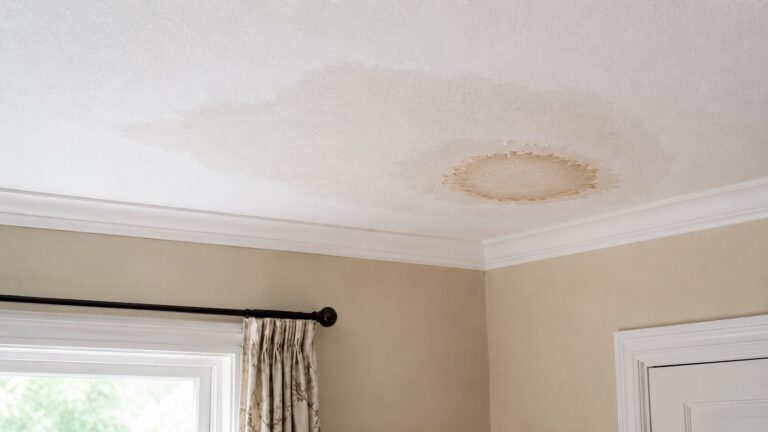
This matters because roof leaks often show up far from the place where water enters. A ceiling stain in one room does not automatically mean the roof surface directly above that stain is the source. Water can travel along rafters, decking, insulation, pipes, or framing before it appears indoors. A good repair should be based on source tracing, not guesswork.
A repair is usually more worthwhile when the roofer can answer three questions clearly:
- What failed? The damaged material, flashing, seal, fastener, valley, vent, or roof section should be identified.
- Why did it fail? The cause may be age, storm damage, installation error, movement, clogged debris, or material deterioration.
- What will the repair change? The repair should restore drainage, sealing, fastening, flashing, or water-shedding performance.
If those questions cannot be answered, the repair may still reduce water temporarily, but it is harder to know whether it is worth the cost. Applying sealant over a suspected leak, replacing random shingles, or patching a stain without confirming the entry point may lead to repeat leaks. A roof repair is most valuable when it corrects the failure that allowed water in.
Defined repairs are also easier to compare against replacement. If the roof has one damaged flashing area and otherwise has usable life left, repair may be a strong choice. If there are multiple leak points, widespread material wear, and soft decking, the issue is no longer isolated. At that point, the decision may need to shift toward a broader roof repair vs replacement decision.
When Paying for Roof Repair Usually Makes Sense
Paying for roof repair usually makes sense when the damage is local, the roof is still structurally sound, and the repair can stop water before it causes interior damage. The best repair candidates are roofs that have a limited problem rather than a system-wide failure.
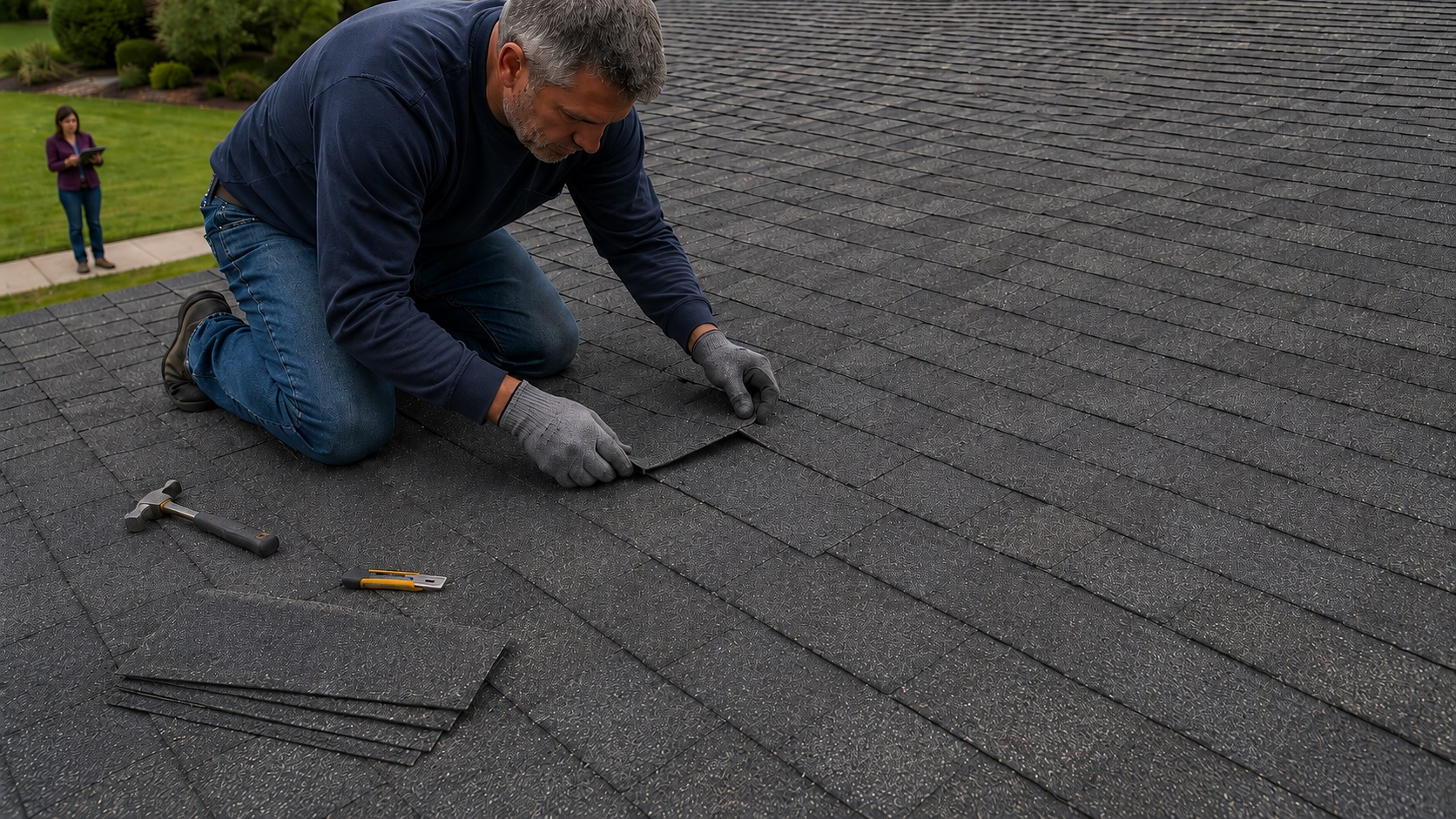
For example, a roof repair may be worth the cost when a few shingles are missing after wind, a pipe boot has cracked, a small flashing detail has opened, a branch has damaged one area, or a valley has a localized problem. In these cases, the roof may still be doing its job except for one weak point. Paying to correct that weak point can be much cheaper than allowing water to reach the roof deck, attic insulation, ceiling drywall, or interior finishes.
Roof repair is usually worth considering when these conditions are present:
- The problem is limited to one roof area.
- The source of the leak or damage can be identified.
- The roof deck is dry, firm, and not rotted.
- The roof material around the damaged area is still in usable condition.
- This is the first repair in that location, or repairs have been rare.
- The repair addresses flashing, drainage, fastening, or material failure directly.
- The roof is not already showing widespread signs of replacement need.
Repairs also make sense when they protect remaining roof life. If a roof still has years of useful service ahead, a targeted repair can preserve that value. Ignoring a small leak on an otherwise serviceable roof can shorten its life because water damage may spread below the surface. A repair that stops the leak early can protect the roof system and the interior of the home at the same time.
Damage from a specific event is also a good repair candidate. A fallen limb, isolated wind damage, a cracked vent boot, or a localized flashing failure may not mean the entire roof is failing. If the surrounding materials are sound, repair may be the most reasonable response.
However, the repair should match the problem. Replacing surface material may not be enough if the issue is actually failed flashing. Sealing around a vent may not be enough if the boot is split. Replacing one patch of shingles may not be enough if the decking below is soft. Roof repairs are worth the cost when they restore the function of the failed part, not when they simply make the roof look fixed from the outside.
When Roof Repair Saves Money
Roof repair saves money when it stops a small failure from becoming a larger moisture problem. The cost of a roof repair is not only about the roof surface. It is also about what the repair prevents. Water that gets past the roof covering can damage roof decking, insulation, ceiling drywall, paint, trim, framing, flooring, and personal belongings. A repair that prevents that chain reaction can be worth far more than the repair invoice itself.
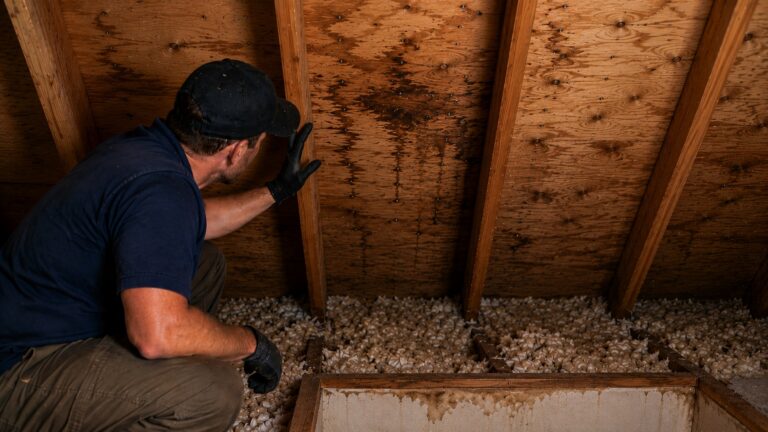
This is especially true with leaks that look small indoors. A ceiling stain may only be a few inches wide, but that does not mean the hidden wet area is only a few inches wide. Water can soak insulation, darken sheathing, follow framing, or collect above drywall before the homeowner sees a stain. If the repair stops the water early, it can prevent more expensive drying, demolition, and reconstruction work later.
A timely repair can prevent:
- roof decking rot or delamination;
- damp attic insulation;
- ceiling drywall stains or collapse;
- mold growth after repeated wetting;
- damage to electrical fixtures or attic equipment;
- repeated interior painting and patching;
- emergency repair during heavy rain;
- larger replacement work caused by delayed action.
Moisture prevention is a major part of the value calculation. A roof repair may feel expensive when the only visible problem is a small stain or missing shingle, but delaying that repair can allow water to spread into materials that are harder to dry and more expensive to replace. This is why roof problems should be evaluated as part of preventing moisture problems from spreading through a home, not just as a surface maintenance issue.
Repair can also save money when it preserves the roof’s remaining useful life. Replacing damaged chimney flashing may protect the surrounding deck and attic framing. Replacing a cracked pipe boot may stop water before it stains ceilings. Repairing a small puncture in a flat or low-slope area may prevent water from spreading below the membrane.
The repair is most valuable when it is done before repeated wetting occurs. A one-time leak that is fixed quickly is usually less damaging than a slow leak that continues through multiple storms. Repeated moisture cycles make wood, insulation, and drywall harder to protect. If mold growth becomes part of the problem, the repair may no longer be only a roofing issue. Homeowners who see leak-related staining or musty odors should understand why roof leaks can lead to mold growth when moisture is not stopped and dried properly.
When a Roof Repair Is Only a Temporary Bridge
A temporary roof repair is not automatically a waste of money. Sometimes a short-term repair is the right decision because it buys time, stops active water entry, or protects the home until a larger project can be scheduled. The key is knowing whether the repair is meant to solve the problem or only protect the home until larger work can be done.
A temporary repair may be worth the cost when replacement is already planned but cannot happen immediately. For example, a homeowner may need to stop an active leak before the roofing contractor can schedule a full replacement. In that case, the repair is not meant to reset the roof’s life; it is meant to protect the house until the permanent work begins.
Temporary repairs may also make sense during bad weather, after sudden damage, or when a homeowner needs time to compare estimates. If a storm opens a small roof area and rain is expected again, emergency stabilization may be worth paying for even if the roof needs more work later.
A bridge repair can also be reasonable during a home sale, but it should be handled carefully. If the roof has a defined problem that can be repaired properly, fixing it may help the transaction move forward. But if the roof has broader failure, a small repair should not be used to hide a replacement issue. Buyers, inspectors, and lenders may still identify the roof as a concern if the underlying system is near the end of its service life.
Temporary roof repair is most reasonable when:
- the homeowner understands that the repair is limited;
- the repair stops active water entry;
- replacement or larger work is already being planned;
- the repair prevents interior damage while decisions are made;
- the repair is not being presented as a permanent solution to system-wide failure.
The mistake is paying for temporary repairs repeatedly while pretending they are permanent repairs. One emergency patch may be sensible. Several patches in different areas over a short period may mean the roof is failing as a system. When temporary work becomes a pattern, the homeowner should compare continued repair spending with when roof replacement saves money long-term.
When Roof Repairs Are Not Worth the Cost
Roof repairs are not worth the cost when they do not meaningfully reduce the chance of more leaks. This usually happens when the repair is too small for the actual problem, when the roof has widespread deterioration, or when the same roof keeps needing attention after every storm. In those cases, the repair may be cheaper than replacement today but more expensive over time.
The clearest warning sign is repetition. If the roof has needed several repairs in a short period, the problem may no longer be isolated. One failed pipe boot, one missing shingle section, or one damaged flashing detail may be a repair issue. But leaks in different areas, repeated patching, and new stains after each heavy rain suggest the roof system is losing reliability. If the same leak keeps coming back, the issue may fit the pattern of roof leaks returning after repairs, not a one-time repair problem.
Roof repairs become less worthwhile when these conditions are present:
- The roof leaks from multiple areas.
- The same leak returns after repair.
- The roof surface is broadly worn, cracked, curled, loose, rusted, broken, or deteriorated.
- The repair estimate is high compared with the remaining life of the roof.
- The roof deck is soft, rotted, sagging, or visibly stained in several areas.
- Flashing failures appear around several roof transitions.
- The repair relies mostly on sealant instead of correcting the failed material or flashing.
- A contractor cannot clearly explain what caused the leak.
A repair is also less valuable when the roof is already showing broader replacement signs. If a roof has widespread material failure, repeated interior leaks, damaged decking, poor installation, or several failing roof details at once, repair may not restore confidence in the roof. At that point, compare the repair estimate against the larger pattern of signs a roof needs replacement.
High repair cost can also change the decision, but cost should not be judged alone. A high repair may be worth it if the damage is contained and the rest of the roof has many useful years left. A lower repair may be a poor value if it only delays a roof replacement that is likely to be needed soon. The best question is not “Is the repair cheaper than replacement?” but “Does this repair solve enough of the problem to justify the money?”
Repairs are especially questionable when they do not address water that has already reached the structure. If the roof deck is soft, attic sheathing is stained, insulation is damp, or ceiling drywall has been repeatedly wet, the repair may need to include more than the roof surface. In some cases, the homeowner may need to decide whether to repair or replace roof leak damage inside the roof system or interior, not just patch the exterior leak.
How to Compare Repair Cost Against Replacement Risk
You do not need an exact formula to decide whether a roof repair is worth it. You need a practical comparison between repair cost, remaining roof life, leak risk, and replacement timing. A repair that costs less than replacement is not automatically a good value. It is a good value only if it reduces risk enough to justify the money.
Start with the cause. If the cause is specific and repairable, the repair has stronger value. Examples include one failed roof vent, one damaged flashing section, a small storm-damaged area, a puncture, or a limited material failure. If the cause is unclear or appears in multiple areas, the repair has weaker value because the chance of another leak is higher.
Next, consider remaining roof life. A repair on a roof with meaningful usable life left is often financially sensible. A repair on a roof that is already near replacement may still be necessary, but the purpose changes. It may be an emergency bridge, not a long-term investment. That difference matters because a homeowner should not judge a short-term stabilization repair the same way they judge a repair meant to preserve the roof for years.
Then compare the repair to the risk of doing nothing. If delaying the repair could lead to wet decking, damaged insulation, stained ceilings, mold risk, or emergency service during the next storm, the repair may be worth approving quickly. If the issue is cosmetic, inactive, or not allowing water into the home, the homeowner may have more time to gather estimates and compare options.
A simple value test is to ask: “If this repair works exactly as described, what damage does it prevent, and how much useful roof life does it protect?” If the answer is clear, the repair is easier to justify. If the answer is vague, the estimate needs more explanation.
A useful decision process looks like this:
- If the roof is mostly sound and the problem is local, repair is usually worth considering.
- If the roof is old but the problem is urgent, a temporary repair may be worth it as a bridge.
- If the repair is large and the roof has little life left, replacement should be compared seriously.
- If repairs keep repeating, the value of each new repair drops.
- If water has reached decking or interior materials, the repair should include moisture damage risk, not just roof surface work.
It can also help to compare the repair estimate with realistic next steps. If the repair is small and likely to stop the leak, it may be worth approving. If the repair is large and the contractor says replacement is probably needed soon anyway, the homeowner should ask whether the repair is buying months, years, or only the next storm. For more specific price context, a separate guide to roof leak repair cost can help, but the final decision should still depend on cause, scope, and remaining roof life.
Questions to Ask Before Approving a Roof Repair
Before approving a roof repair, ask questions that reveal whether the repair is solving a root problem or only reducing a symptom. A good contractor should be able to explain the failure clearly and connect the repair to the cause.
- What caused the leak or damage? The answer should be more specific than “old roof” or “wear and tear.”
- Does this repair fix the source? The repair should address the entry point, failed flashing, damaged material, or drainage problem.
- Is the roof deck dry and solid? If the deck is damaged, surface repair may not be enough.
- Is this the first repair in this area? Repeat repairs suggest the cause may not have been fully corrected.
- How much of the roof is affected? A local repair is different from widespread deterioration.
- What happens if I delay the repair? Urgent water-entry problems should be treated differently from cosmetic issues.
- Is replacement likely soon anyway? If yes, the repair may be a bridge rather than a long-term solution.
These questions help homeowners avoid paying for vague repairs. A repair estimate should not only describe what will be patched. It should explain why that repair is expected to work. If the contractor cannot identify the source, does not inspect the likely leak path, or only recommends surface sealant for a recurring issue, a second opinion may be wise.
Avoid walking on a wet, steep, icy, storm-damaged, or visibly unstable roof to verify a repair yourself. Many repair-value questions can be answered from photos, attic inspection, contractor documentation, or a ground-level visual check.
When to Get a Second Opinion
A second opinion is worth getting when the repair recommendation is expensive, vague, contradictory, or not clearly tied to the source of the problem. Roof repairs can vary widely in scope. One contractor may recommend a small flashing repair, while another may recommend replacing a larger section. The goal is not to collect endless estimates, but to make sure the repair plan matches the actual condition of the roof.
Get a second opinion if a contractor recommends a large repair without explaining what failed. A homeowner should understand whether the problem is missing roofing material, failed flashing, deteriorated underlayment, damaged decking, poor ventilation, storm damage, or an installation defect. Without that explanation, it is hard to know whether the repair is worth the cost.
A second opinion is also smart when a contractor recommends full replacement for what appears to be an isolated problem. Sometimes replacement is the right answer, especially when the roof has widespread deterioration. But if the issue seems limited to one vent, one chimney, one valley, or one small area, the homeowner should understand why a smaller repair would not work before approving a major project.
Second opinions are especially useful when:
- The repair estimate is high compared with the visible damage.
- The same leak has already been repaired before.
- The contractor cannot clearly explain the leak source.
- The repair relies mostly on caulk, sealant, or surface patching.
- One contractor recommends repair and another recommends replacement.
- The roof is near the end of its useful life.
- The estimate does not mention decking, flashing, ventilation, or underlayment condition.
A second opinion is not only about price. A lower estimate is not automatically better if it ignores the real failure. A higher estimate is not automatically wrong if it includes needed flashing, decking, or underlayment work. The best opinion is the one that explains the cause, the repair scope, the expected result, and the risk of future leaks.
FAQ: Roof Repair Value and Cost Decisions
Is it worth repairing an old roof?
It can be worth repairing an old roof if the damage is isolated, the roof is not leaking in multiple areas, and replacement is not immediately necessary. However, expensive repairs on a roof with widespread deterioration may not be a good value. In that case, replacement should be compared seriously.
When is roof repair a waste of money?
Roof repair is usually a waste of money when it does not fix the source of the leak, when the same problem keeps returning, or when the roof has system-wide failure. Repeated patching on a roof that already needs replacement often delays the decision without reducing long-term risk.
Is fixing a small roof leak worth the cost?
Yes, fixing a small roof leak is usually worth the cost if the leak source is clear and the rest of the roof is serviceable. Small leaks can spread into decking, insulation, drywall, and framing. Early repair often prevents more expensive moisture damage later.
Should I repair a roof if I plan to replace it soon?
Sometimes. A short-term repair may be worth it if it stops active water entry while you wait for replacement. The repair should be treated as temporary protection, not a long-term solution. This is most useful when replacement is already planned but cannot happen immediately.
How many roof repairs are too many?
There is no exact number, but repeated repairs in different areas within the same season or over a short period are a warning sign. If the roof needs repair after every major storm or keeps leaking despite previous work, the problem may be broader than one damaged spot. At that point, replacement should be evaluated.
Is roof repair worth it before selling a house?
Roof repair may be worth it before selling if the problem is specific, repairable, and properly documented. A small repair can help avoid inspection issues. However, a minor patch should not be used to hide a roof that needs replacement, because buyers and inspectors may still flag broader roof problems.
Final Decision: Pay for Repair Only When It Reduces Real Risk
A roof repair is worth the cost when it fixes a defined failure, protects remaining roof life, and reduces the risk of water reaching decking, insulation, ceilings, or framing. It is less worthwhile when the repair is vague, repetitive, mostly cosmetic, or applied to a roof that is already failing in several areas.
Before approving the work, the homeowner should be able to name the failure, understand why the repair should stop it, and know whether the repair is meant to last for years or only serve as a temporary bridge. If that answer is not clear, the repair may need a better explanation, a second opinion, or comparison with replacement options.