How to Inspect Roof Surfaces for Condensation Damage
Roof condensation damage should be inspected by looking for changes in material condition, not just visible moisture. Staining, rusty nail tips, surface roughness, soft wood, swelling, cracking, and sagging all help show whether condensation has stayed cosmetic or begun weakening roof sheathing, rafters, trusses, or fasteners.
Learning how to inspect roof surfaces for condensation damage helps homeowners separate minor moisture staining from structural deterioration. If you are still unsure whether the moisture pattern is condensation or a roof leak, first compare the area with signs of roof condensation in attics before evaluating the damage itself.
Why Inspecting Roof Surfaces for Condensation Damage Matters
Condensation may dry from the surface while still leaving stains, softened fibers, corrosion, or mold on vulnerable roof materials. Inspection matters because the goal is to judge whether the material is still sound, not simply whether it looks dry today.
Condensation Damage Often Develops Gradually
Unlike sudden water leaks, condensation damage usually develops slowly. Moisture forms in small amounts but repeats frequently. Over time, wood fibers absorb moisture and begin to weaken.
Gradual damage progression typically follows this pattern:
- Surface staining appears first
- Wood fibers absorb moisture
- Materials remain damp for longer periods
- Surface strength begins to decline
- Structural damage develops if moisture continues
Early Inspection Prevents Expensive Repairs
Detecting structural changes early allows homeowners to address moisture problems before damage spreads. Small areas of moisture-related wear may remain manageable if corrected quickly.
Ignoring early signs increases the likelihood that structural repairs will be required later. Once wood materials weaken significantly, replacement becomes more likely than restoration.
Understanding how moisture contributes to material breakdown also helps explain why structural problems develop over time. Reviewing why roof condensation causes mold growth provides insight into how moisture persistence leads to biological and structural damage.
Key Roof Surfaces to Inspect for Condensation Damage
Not all attic surfaces are equally vulnerable to condensation damage. Certain materials experience repeated exposure to moisture and should receive special attention during inspection.
Before touching or probing roof materials, stay on stable attic framing, avoid stepping on ceiling drywall, wear gloves and eye protection, and stop the inspection if framing appears unstable or mold coverage is extensive.
Focusing on these high-risk areas improves inspection accuracy and helps identify structural concerns before they spread.
Roof Sheathing: The Primary Damage Zone
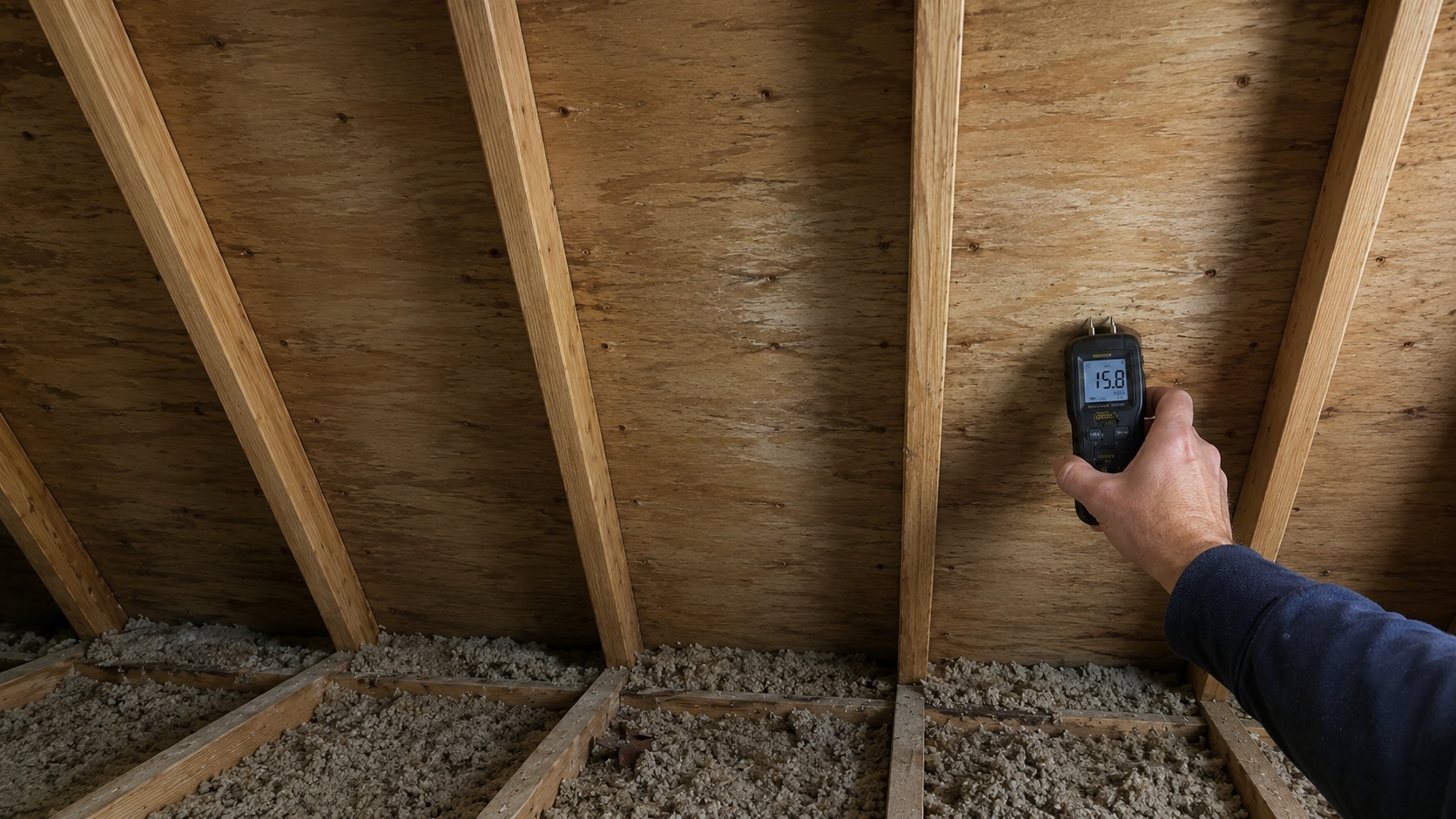
Roof sheathing is the surface most commonly affected by condensation damage. Because it sits directly beneath the roof covering, it experiences the strongest temperature differences and repeated moisture exposure.
During inspection, examine the underside of roof sheathing carefully. Look for:
- Dark staining patterns across wood surfaces
- Uneven discoloration along nail lines
- Surface roughness or texture changes
- Areas that remain damp longer than surrounding sections
- Signs of spreading mold growth
Staining alone does not prove structural damage. Press gently with a gloved finger or the handle end of a small tool; sound sheathing should feel firm, while damaged sheathing may feel soft, spongy, flaky, swollen, or crumbly.
If most of the visible evidence is limited to the underside of the roof deck, compare the area with signs of condensation on roof sheathing before assuming the sheathing has structural damage.
Rafters and Trusses: Structural Support Areas
Rafters and trusses provide structural support for the roof system. When condensation forms on nearby surfaces, moisture may transfer to framing materials through dripping or vapor movement.
Inspect framing components for:
- Darkened wood surfaces
- Localized mold growth
- Surface texture changes
- Early signs of softness
- Persistent dampness in shaded areas
Framing damage should not be ignored, especially if multiple areas show signs of moisture exposure. Structural components support roof loads, and weakening in these areas increases long-term repair risks.
Nail Tips and Fasteners: Early Warning Indicators
Metal fasteners often reveal condensation damage earlier than surrounding wood. Because metal cools faster than wood, condensation frequently forms on exposed nail tips.
Inspect nail tips and metal connectors for:
- Rust formation
- Water stains surrounding fasteners
- Corrosion patterns
- Signs of repeated moisture exposure
Rust does not automatically indicate structural failure, but it serves as a strong indicator that moisture cycles have occurred repeatedly.
Inspect Structural Joints and Hidden Moisture Zones
Structural joints, seams, and enclosed corners often dry more slowly than open roof surfaces. During inspection, these areas deserve extra attention because trapped condensation can leave darker staining, mold growth, corrosion, or early softness before the surrounding wood shows obvious damage.
Check Corners and Surface Intersections
Corners where roof components meet often collect moisture. These areas receive less airflow and remain shaded, allowing condensation to persist longer than in exposed areas.
Look closely at:
- Roof-to-rafter connections
- Ridge intersections
- Roof valley framing areas
- Corner joints between structural members
Darkened wood or persistent dampness in these areas may indicate repeated moisture accumulation.
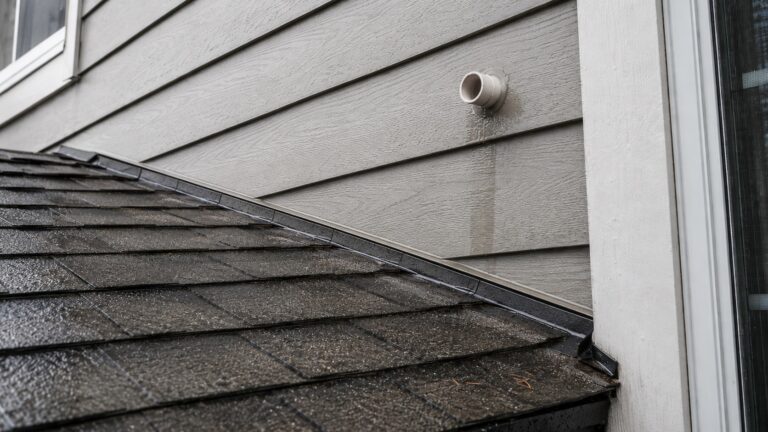
Inspect Around Roof Penetrations
Roof penetrations such as vents, pipes, and chimneys need careful inspection because moisture here may come from either condensation or exterior leaks. Condensation is more likely when staining is widespread or appears on cold metal surfaces; a leak is more likely when damage is concentrated below one penetration.
During inspection, observe:
- Wood surfaces surrounding vent openings
- Areas near pipe penetrations
- Framing around chimney passages
- Localized staining near openings
Moisture patterns near penetrations may result from condensation or leaks. If moisture appears concentrated in specific areas, reviewing signs of roof leaks inside the house helps determine whether the damage originates from exterior water entry.
Examine Areas With Limited Airflow
Airflow restrictions allow moisture to remain trapped inside certain attic zones. These areas often experience slower drying and higher moisture retention.
Common restricted-airflow zones include:
- Areas near blocked vents
- Corners with limited airflow movement
- Sections behind stored materials
- Enclosed framing cavities
If restricted airflow contributes to moisture buildup, reviewing signs of poor attic ventilation can help identify airflow limitations affecting moisture behavior.
Early Signs of Condensation Damage
Early condensation damage usually appears as cosmetic change without obvious structural weakness. The key distinction is that the surface still feels firm even though it shows staining, slight roughness, or mild fastener rust.
Surface Staining Without Softness
Staining is often the first visible sign of condensation damage. Dark streaks or uneven coloration may develop across wood surfaces exposed to repeated moisture cycles.
Early-stage staining characteristics include:
- Light discoloration along wood grain
- Subtle darkening near nail lines
- Patchy staining across sheathing
- No noticeable softness in wood
Staining alone does not necessarily indicate structural damage. However, it signals that moisture exposure has occurred repeatedly.
Localized Roughness or Texture Changes
Repeated moisture exposure may cause slight changes in surface texture. Wood may appear rougher or slightly raised compared to surrounding areas.
These texture changes often develop before visible structural weakening occurs.
Indicators of early texture change include:
- Uneven wood surfaces
- Slight surface swelling
- Raised wood grain
- Minor surface distortion
Texture changes indicate moisture absorption and should be monitored closely.
Mild Rust on Metal Components
Rust formation on nail tips or metal connectors often signals repeated condensation cycles. Although rust alone does not weaken structural wood, it confirms that moisture has been present consistently.
Early rust indicators include:
- Small rust spots on metal surfaces
- Water staining around fasteners
- Minor corrosion patterns
These warning signs help confirm that condensation cycles have occurred over time.
Recognizing Moderate Structural Damage
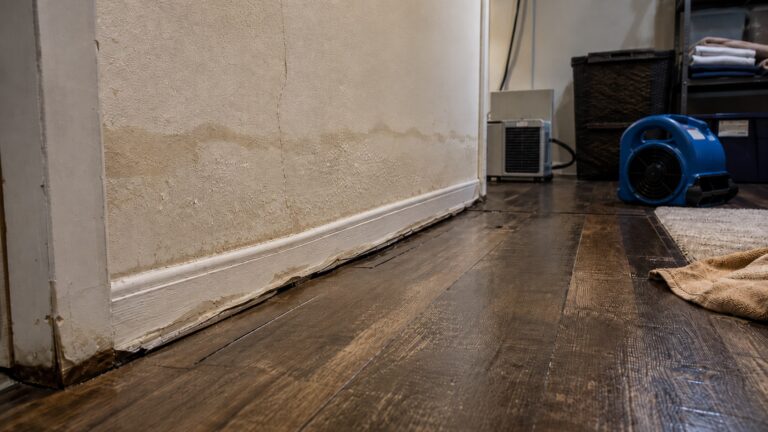
Moderate condensation damage occurs when moisture persists long enough to begin weakening materials. At this stage, wood surfaces may no longer return to their original condition after drying.
Moderate damage often indicates that condensation problems have continued without correction.
Surface Softening or Spongy Texture
One of the most important indicators of moderate damage is softness. Wood that feels soft or slightly spongy may have absorbed enough moisture to weaken internal fibers.
During inspection, gently press wood surfaces to test firmness. Signs of moderate damage include:
- Slight softness when pressed
- Reduced surface firmness
- Spongy texture in isolated areas
- Persistent dampness even after drying periods
Softness is more serious than staining and should be tracked closely or evaluated if it spreads.
Layered Staining and Persistent Discoloration
Repeated moisture cycles often create layered staining patterns. Darkening may spread gradually across surfaces rather than remaining isolated.
Moderate discoloration signs include:
- Multiple layers of staining
- Dark patches expanding across surfaces
- Staining that does not fade over time
- Localized areas of mold growth
Persistent discoloration suggests ongoing moisture exposure.
Minor Swelling or Warping
Moisture absorption can cause wood materials to swell slightly. Over time, repeated swelling and drying may create minor distortion in wood surfaces.
Signs of moderate swelling include:
- Edges that appear raised
- Subtle warping of wood surfaces
- Uneven alignment between materials
Swelling indicates that moisture has penetrated wood fibers and should be addressed promptly.
Severe Structural Damage Warning Signs
Severe condensation damage develops when moisture exposure continues for extended periods without correction. At this stage, structural materials may lose strength, and visible deterioration becomes more obvious. Identifying severe warning signs helps homeowners determine when professional repair is necessary.
Severe damage typically results from months or years of repeated moisture cycles. Unlike early-stage staining, severe damage often affects the integrity of wood components.
Soft or Crumbling Wood Surfaces
Softness is one of the most critical indicators of structural damage. When wood fibers weaken significantly, materials may feel soft, spongy, or crumbly to the touch.
Severe softness indicators include:
- Wood that compresses easily when pressed
- Surface layers that crumble or flake
- Deep softness beneath surface layers
- Wood that does not regain firmness after drying
These conditions indicate that moisture has compromised the strength of the material and may require professional repair.
Splitting, Cracking, or Separation of Materials
Repeated moisture expansion and drying cycles can cause wood materials to split or crack. Structural stress increases when moisture weakens internal fibers.
Signs of splitting damage include:
- Visible cracks along wood grain
- Separation between connected materials
- Splitting near joints or fasteners
- Cracks expanding over time
Splitting weakens structural stability and should not be ignored.
Sagging or Deformation of Roof Components
Sagging indicates significant structural weakening. When wood components lose strength, they may no longer support normal loads effectively.
Severe deformation signs include:
- Visible sagging along roof surfaces
- Uneven alignment between rafters
- Distorted framing components
- Movement or shifting of structural members
Sagging roof components require immediate professional attention.
Extensive Mold Growth Combined With Structural Damage
Large mold colonies often develop alongside long-term moisture exposure. Mold itself does not cause structural damage, but the moisture that supports mold can weaken materials significantly.
Severe mold-related indicators include:
- Wide mold coverage across roof sheathing
- Persistent musty odors
- Darkened wood spreading across large areas
- Combined mold and softness in wood materials
If mold growth appears alongside structural weakening, reviewing signs of mold growth in attics helps confirm whether biological contamination may be contributing to long-term deterioration.
How to Evaluate Overall Damage Severity
Evaluating damage severity helps determine whether monitoring, repair, or replacement may be necessary. Not all visible changes require immediate repair, but understanding severity levels improves decision-making.
Damage severity typically falls into three categories: early, moderate, and severe.
Low-Severity Damage: Cosmetic Changes Only
Low-severity damage includes visible changes without structural weakening. Materials remain firm and capable of performing their intended function.
Low-severity indicators include:
- Surface staining without softness
- Minor rust on fasteners
- Light discoloration across wood surfaces
- No structural distortion
At this stage, preventing further moisture exposure becomes the primary focus. Reviewing how to prevent roof condensation helps reduce the risk of further deterioration.
Moderate-Severity Damage: Structural Weakening Begins
Moderate damage indicates that moisture exposure has begun affecting material strength. While materials may still function, their durability may be reduced.
Moderate-severity indicators include:
- Slight softness in isolated areas
- Layered staining patterns
- Minor warping or distortion
- Persistent dampness
Moderate damage should be compared against earlier photos or notes to determine whether it is stable or spreading.
High-Severity Damage: Structural Failure Risk
High-severity damage indicates significant weakening of structural materials. At this stage, professional repair or replacement is often required.
High-severity indicators include:
- Soft or crumbling wood
- Sagging or distorted framing
- Extensive cracking or separation
- Widespread mold growth
These conditions represent serious structural risks that should be addressed immediately.
Determining Repair Urgency After Inspection
After inspection, repair urgency depends on whether the damage is cosmetic, actively progressing, or affecting structural strength. Staining without softness can often be monitored, but spreading softness, sagging, cracking, or large mold coverage should be evaluated professionally.
Conditions That Require Immediate Professional Evaluation
Certain conditions indicate urgent repair needs. Ignoring these signs increases the likelihood of structural failure.
Urgent warning signs include:
- Visible sagging roof components
- Large areas of soft or weakened wood
- Rapidly spreading damage
- Structural instability during inspection
Immediate professional evaluation helps prevent further deterioration.
Conditions That Require Monitoring and Preventive Action
Some damage remains stable when moisture exposure is controlled. These conditions may require monitoring rather than immediate repair.
Monitoring-level indicators include:
- Surface staining without softness
- Minor rust formation
- Localized discoloration
- No visible distortion
If monitoring-level damage is present, focusing on moisture control and prevention reduces future risk.
When Professional Inspection or Repairs Become Necessary
While many homeowners can identify early and moderate condensation damage, certain conditions require professional evaluation. Structural integrity depends on the strength of roof materials, and significant weakening should never be ignored.
Professional inspection is most important when damage affects strength, spreads across multiple areas, or continues after condensation prevention steps have been taken.
When Softness Extends Across Multiple Areas
Localized softness may indicate moderate damage, but widespread softness across several areas signals a more serious condition. When wood surfaces lose strength in multiple locations, the structural stability of the roof may be affected.
Professional evaluation is recommended when:
- Soft wood appears in more than one section
- Soft areas expand over time
- Wood does not regain firmness after drying
- Multiple structural components show weakness
When Structural Movement or Sagging Is Visible
Sagging roof components represent one of the most serious warning signs. Structural movement suggests that materials may no longer support normal loads safely.
Professional inspection becomes necessary when:
- Roof lines appear uneven
- Structural members shift or move
- Framing components show visible distortion
- Sagging worsens over time
These signs require immediate attention to prevent further deterioration.
When Damage Continues to Spread Despite Prevention
If damage progresses even after moisture prevention steps have been taken, hidden moisture sources may remain active. Continued deterioration indicates that moisture conditions have not been fully controlled.
If preventive efforts fail to stop damage progression, reviewing how to prevent roof condensation may help identify additional measures that reduce moisture exposure.
At that point, the inspection should shift from homeowner monitoring to professional diagnosis of the moisture source and structural condition.
When Mold Covers Large Structural Areas
Extensive mold growth combined with structural damage increases health and safety risks. Large mold coverage typically indicates long-term moisture exposure that has affected structural materials.
If mold spreads across wide surfaces, reviewing signs of mold growth in attics helps confirm whether contamination has reached advanced stages.
Professional remediation and structural repair may be required in these situations.
How to Track Condensation Damage Over Time
Regular roof-surface inspections help homeowners track whether condensation damage is stable, improving, or spreading. Photos, notes, and repeat checks of the same stained or rusty areas make it easier to know when monitoring is enough and when professional evaluation is needed.
For a simple inspection record, photograph each stained area, note whether the wood is firm or soft, check whether nearby nail tips are rusting, and reinspect the same spots after cold weather or humidity changes. Spreading stains, increasing rust, or new softness means the moisture cycle is still active.
If structural concerns develop alongside visible roof deterioration, reviewing most common roofing material failures provides additional insight into how prolonged moisture exposure contributes to long-term damage.
FAQ: How to Inspect Roof Surfaces for Condensation Damage
How do I know if roof wood is seriously damaged?
Serious damage often involves softness, cracking, or sagging. Wood that compresses easily or crumbles when touched may indicate significant structural weakening.
Can condensation permanently damage roof sheathing?
Yes. Repeated moisture exposure can weaken wood fibers permanently. Even after drying, structural strength may remain reduced if moisture damage has progressed.
Does staining always mean the roof is damaged?
No. Staining alone usually indicates moisture exposure rather than structural failure. However, staining combined with softness or distortion may signal more serious damage.
How often should I reinspect roof surfaces after finding condensation damage?
Reinspect the same stained or rusty areas after major temperature swings, heavy indoor humidity periods, or ventilation repairs. If stains spread, wood softens, or fasteners continue rusting, the moisture problem is still active.
What is the most serious warning sign during inspection?
Sagging or movement of structural components represents the most serious warning sign. These conditions suggest that structural strength has been compromised.
Can I monitor stained roof sheathing instead of repairing it?
Yes, if the sheathing is firm, dry, and not sagging or crumbling. Mark or photograph the stained area and reinspect it later; spreading discoloration, softness, mold, or rust means the problem needs further evaluation.
Conclusion: Inspecting Roof Surfaces Protects Structural Integrity
Inspecting roof surfaces for condensation damage comes down to separating cosmetic moisture evidence from material weakness. Staining, mild rust, or surface roughness may only require monitoring and moisture control, but soft wood, swelling, cracking, sagging, spreading mold, or movement in structural members requires professional evaluation.
If the inspection shows that condensation is still recurring, the next step is to address the moisture source rather than only watching the damaged area. Reviewing how to prevent roof condensation can help identify the ventilation, air sealing, and moisture-control steps needed to stop further roof-surface damage.