When to Repair vs Replace Fiber Cement Siding
Repair fiber cement siding when the damage is isolated, dry, stable, and limited to one board or one small area. Replace damaged sections when boards are cracked across a pattern, edges are soft or crumbling, paint keeps failing in the same place, or water may be getting behind the siding.
The repair-or-replace decision depends on more than how the siding looks from the outside. A small chip on one board is very different from repeated cracking across several courses, soft lower edges, blistering paint, or staining near joints. Fiber cement siding works as part of a larger exterior wall system, so the real question is whether the siding is still shedding water and protecting the structure behind it. For a broader explanation of that wall system, see how exterior walls allow moisture into homes.
The practical decision is simple: repair the board when the problem is small and the wall is dry; replace more siding when the damage pattern suggests moisture, installation stress, or hidden wall damage.
Can Fiber Cement Siding Be Repaired?
Yes, fiber cement siding can often be repaired when the problem is limited to a small area. A cracked board, chipped corner, loose section, or small area of paint failure does not automatically mean the entire wall needs new siding. In many cases, one damaged board can be replaced, a small defect can be corrected, or the surface can be prepared and repainted.
The key is whether the damaged area is still structurally sound. Fiber cement siding should feel firm, stay securely fastened, and maintain its shape. If the board is dry and the damage has not reached the wall behind it, repair may be a reasonable option.
Repair becomes less reliable when the visible damage is only the surface symptom of a bigger problem. A single impact crack may be simple to replace, but repeated cracks near a window, roofline, deck ledger, or lower wall area may point to water intrusion, improper clearance, failed flashing, or installation stress.
A good repair decision starts with three questions:
- Is the damage limited to one small area?
- Is the siding still dry, firm, and securely attached?
- Has the cause of the damage been corrected?
If the answer to all three is yes, repair may be enough. If the answer is no, replacement or deeper inspection may be the safer choice.
When Fiber Cement Siding Repair Usually Makes Sense
Fiber cement siding repair usually makes sense when the damage is minor, localized, and not connected to ongoing water exposure. The repair should restore water shedding, not just improve appearance.
One Board Is Cracked or Chipped
A single cracked or chipped fiber cement board is often repairable, especially when the damage was caused by impact. Lawn equipment, ladders, branches, hail, and accidental bumps can chip corners or crack one board without affecting the rest of the wall.
If the board is otherwise stable and the surrounding siding is in good condition, replacing that one piece may solve the problem. The important detail is whether the crack is isolated. If several nearby boards are cracked in a similar pattern, the issue may be more than impact damage.
The Damage Is Cosmetic and the Board Is Still Firm
Minor surface blemishes do not always require replacement. Scratches, small chips, fading, and normal paint wear may be repairable if the board underneath is sound. Fiber cement siding can often be cleaned, prepared, primed where needed, and repainted when the problem is limited to the coating.
The board itself should not feel soft, swollen, crumbly, or loose. If the siding surface looks worn but the material underneath is still firm and dry, repair or refinishing may be reasonable. If the material is deteriorating, repainting will only hide the problem temporarily.
Paint Failure Is Limited and Has a Clear Cause
Paint failure does not automatically mean fiber cement siding needs to be replaced. Paint can fade, chalk, peel, or fail because of age, poor surface preparation, incompatible coatings, or sun exposure. When the affected area is limited and the siding is dry, repainting may be enough.
However, paint failure deserves closer attention when it keeps happening in the same area. Repeated peeling, bubbling, or blistering may indicate moisture behind the paint film or water escaping from behind the siding. That changes the decision from surface maintenance to moisture investigation.
A Loose Board Is Isolated
A loose board may be repairable if the issue is limited to one fastener area or one board. Wind, impact, or poor fastening in a small section may allow a board to shift without requiring full replacement.
The concern is whether the looseness is isolated or widespread. One loose board can often be corrected. Multiple loose boards may suggest improper installation, wall movement, fastener failure, or moisture-damaged backing. In that case, simply refastening the siding may not solve the underlying problem.
The Wall Behind the Siding Appears Dry
Repair is most reasonable when there are no signs that water has reached the wall behind the siding. That means no interior staining, no musty odor near the wall, no soft sheathing, no recurring paint failure, and no suspicious moisture patterns around seams or penetrations.
When the wall behind the siding is dry, a localized siding repair can be a practical fix. When there are signs of hidden moisture, the siding damage should be treated as part of a larger inspection. A repair that does not address trapped moisture or failed drainage details may fail again.
A practical first check is to compare the damaged area with nearby sound boards: look for darker staining, raised edges, soft trim, swollen seams, loose fasteners, or interior staining on the same wall line.
The Cause of Damage Has Been Corrected
A repair is only worth doing if the cause of the damage is fixed. Replacing a board below an overflowing gutter, near a leaking window, or against soil splashback will not last if the water source remains. The new board may eventually show the same damage as the old one.
This is where fiber cement siding repair overlaps with broader siding decision-making. A damaged board may be repairable by itself, but the repair only makes sense if the wall system can keep the replacement board dry. For a broader siding-wide framework, see how to decide whether to repair or replace siding.
The Pattern Matters More Than One Damaged Board
The simplest repair cases have a clear boundary: one board is damaged, the surrounding siding is sound, the wall is dry, and the cause is obvious. When cracks, paint failure, staining, or loose boards appear in multiple places, inspect for moisture or installation problems before choosing a patch, caulk, or paint repair.
When Fiber Cement Siding Should Usually Be Replaced
Fiber cement siding replacement becomes the better option when the damage is no longer isolated or when the siding is no longer protecting the wall behind it. The main question is not whether the surface can be patched. The real question is whether the siding system is still dry, stable, and dependable.
Replacement is more likely when several boards are damaged, the same repair keeps failing, or water appears to be entering behind the siding.
Multiple Boards Are Cracked or Broken
One cracked board may be an isolated repair. Several cracked boards in the same area suggest a larger problem. Repeated cracks can point to installation stress, structural movement, impact exposure, or moisture cycling behind the siding.
If cracks appear around windows, doors, trim, roof-wall intersections, or lower wall areas, the location matters. These are common water-entry points. Replacing only the most visible cracked board may not solve the reason the damage started.
Edges Are Soft, Swollen, or Crumbling
Fiber cement does not rot like wood, but damaged edges can still deteriorate when they stay wet. Lower edges, cut ends, corners, and unprotected board edges are especially vulnerable when water is allowed to sit against them.
Soft, swollen, crumbly, or flaking edges are more serious than surface fading. They suggest the board has been exposed to moisture long enough for the material to lose integrity. Once the board edge is breaking down, repainting or caulking over it is usually not a dependable repair.
Paint Keeps Peeling or Blistering in the Same Area
Repeated paint failure is one of the clearest signs that the problem may not be the paint itself. If paint peels once after years of service, it may simply be normal aging or poor surface preparation. If paint fails repeatedly in the same area, moisture may be moving through or behind the siding.
Blistering, bubbling, or peeling near joints, trim, lower edges, or flashing transitions should be treated carefully. These locations often reveal drainage problems. The siding may need more than repainting if water is trapped behind the boards.
Boards Are Loose Across a Larger Section
A single loose board may be repairable. A wall section with multiple loose boards is different. Widespread looseness can mean the siding was fastened incorrectly, the backing material is damaged, or repeated moisture movement has affected the wall assembly.
If loose boards are paired with stains, cracks, gaps, or soft areas, replacement may be needed to expose the wall and correct the cause. Refastening loose siding without checking the wall behind it can trap a hidden moisture problem.
There Are Signs of Water Behind the Siding
Water behind fiber cement siding changes the decision. Once water reaches the sheathing, housewrap, framing, or insulation, the siding problem is no longer only a surface issue. The damaged siding may need to be removed so the wall can be inspected and dried properly.
Warning signs can include interior stains, musty odors near exterior walls, soft wall areas, discoloration below siding seams, swelling trim, or repeated damage near the same penetration. These conditions are covered in more detail in warning signs of water damage behind siding.
How Cracks Affect the Repair vs Replacement Decision
Cracks should be judged by size, location, pattern, and whether they are spreading. One impact crack is different from repeated cracks near joints, trim, rooflines, or lower wall sections.
Hairline Cracks
A small hairline crack in one board may be repairable if the board is dry, firm, and stable. This is especially true when the crack was caused by a clear impact and has not spread over time.
Even then, the crack should not be ignored. Fiber cement siding depends on a protective surface coating and proper water shedding. A small crack that opens over time can allow water to enter the board edge or reach the wall behind it.
Open or Widening Cracks
Open cracks are more serious because they create a direct pathway for water. If the crack is wide enough to collect water, expose the back of the board, or show staining below it, simple surface repair may not be enough.
A crack that keeps widening also deserves closer evaluation. Movement may be coming from fastening stress, improper installation, impact damage, or the wall structure behind the siding. Replacement of the affected board may be needed, but the cause should be understood before installing a new piece.
Cracks Near Joints, Corners, and Openings
Cracks near butt joints, outside corners, window trim, door trim, and wall penetrations are more concerning than cracks in the middle of a single board. These areas already depend on flashing, caulk, trim details, and drainage paths to keep water out.
If a crack appears where water is already likely to collect or move, the damage should be evaluated as part of the wall system. The siding may need repair, but the joint, flashing, or trim detail may also need correction.
Repeated Cracks Across the Same Wall
Repeated cracking across several fiber cement boards usually points away from simple repair. A pattern of cracks may mean the siding was installed too tightly, fastened incorrectly, exposed to repeated moisture, or affected by movement in the wall behind it.
When cracks follow a pattern, replacing only one visible board may not solve the issue. The repeated pattern is the clue. In that case, a contractor may need to inspect the installation, fasteners, clearances, and hidden wall conditions before deciding how much siding should be replaced.
Paint and Surface Failure: Cosmetic or Structural Warning?
Paint failure can be normal maintenance or a moisture warning. Fiber cement siding relies on paint or factory finish to protect the surface, so repeated peeling or blistering should be judged by location and pattern.
Normal Paint Wear
Normal paint wear usually develops gradually. The siding may look faded, chalky, or dull, especially on sun-exposed walls. If the boards are still firm, dry, and well attached, repainting may be the correct maintenance step.
This kind of surface aging does not necessarily mean the siding should be replaced. The key is whether the coating is aging evenly and whether the board underneath is still sound.
Peeling From Poor Preparation
Paint can also fail because the surface was not prepared correctly before repainting. Dirt, chalky residue, incompatible coatings, or skipped primer can cause peeling even when the siding itself is not damaged.
If the siding is dry and the failure is limited to the paint film, proper preparation and repainting may solve the problem. But this should not be assumed when peeling appears near joints, lower edges, or trim transitions.
Blistering or Bubbling Paint
Blistering paint is more concerning because it may indicate trapped moisture. When water vapor or liquid moisture pushes against the paint film, the coating can bubble or separate from the siding surface.
If blistering appears repeatedly in the same location, the siding should be inspected for moisture sources. The issue may involve failed flashing, poor drainage, unsealed edges, or water trapped behind the boards. A detailed inspection process is covered in how to inspect exterior siding for water damage.
Surface Damage Paired With Edge Deterioration
Paint failure becomes more serious when it appears with deteriorating board edges. A faded surface may only need maintenance. A peeling surface with soft lower edges, flaking corners, or crumbly cut ends suggests moisture has affected the siding material itself.
Once the board edge is compromised, repainting cannot restore the original strength of the material. In that case, replacing the affected board is usually more reliable than repeated surface repairs.
Water Intrusion Behind Fiber Cement Siding
Water intrusion is the point where the repair-or-replace decision becomes more serious. Fiber cement siding is designed to shed water, but it is not the only layer protecting the wall. The siding, trim, flashing, sealants, housewrap, drainage gaps, and sheathing all work together. When water gets past the siding, the visible board damage may only be the first clue.
A cracked board, failed joint, or peeling paint area may be connected to a hidden water path. If the wall behind the siding is wet, replacing the visible board without correcting that path can leave the real problem untouched.
Common Places Water Gets Behind Fiber Cement Siding
Water often enters behind fiber cement siding at weak transitions. These are the areas where siding meets another material, changes direction, or depends on flashing and sealant to move water away.
- Butt joints between siding boards
- Window and door trim
- Outside corners
- Roof-to-wall intersections
- Deck and porch connections
- Lower wall sections near grade, concrete, or landscaping
- Wall penetrations such as vents, pipes, lights, and hose bibs
- Areas below overflowing gutters or damaged downspouts
When damage appears near these areas, inspect the transition before replacing the board. The board may be damaged, but the flashing, clearance, or drainage detail may be the reason it failed.
Why Lower Edges Are Important
Lower edges are especially important on fiber cement siding. Water can splash upward from soil, concrete, decks, roofs, or hardscaping. If the siding is too close to these surfaces, the lower edge may stay damp longer than it should.
Over time, repeated wetting can lead to paint failure, edge deterioration, and localized board damage. If only one lower board is affected and the moisture source can be corrected, partial replacement may be enough. If many lower boards are deteriorating across the wall, the problem may be systemic.
Hidden Wall Damage Changes the Decision
Once water reaches the wall behind fiber cement siding, replacement may be needed to expose the damage. The concern is not only the siding board. Wet sheathing, damp insulation, stained framing, or trapped moisture behind the water-resistive barrier can create a much larger repair.
Homeowners may see clues inside the house before the exterior looks severe. Interior staining, peeling drywall paint, soft wall areas, musty odors, or moisture near windows and trim can suggest that water has moved past the siding layer. When moisture affects more than one surface, step back and use the broader process in how to find, fix, and prevent moisture problems in homes.
Repair vs Replace by Damage Severity
The easiest way to decide between repair and replacement is to sort the damage by severity. Fiber cement siding problems usually fall into three broad categories: minor, moderate, and severe. The category depends on the amount of damage, the moisture risk, and whether the cause has been corrected.
Minor Damage: Repair Usually Makes Sense
Minor fiber cement siding damage is limited, dry, and stable. It usually affects one board or one small area. The siding still feels firm, remains attached, and does not show signs of hidden water intrusion.
Examples of minor damage include:
- A small chip from impact
- One hairline crack that is not spreading
- Limited paint wear on an otherwise sound board
- One loose board with no signs of moisture damage
- Minor caulk failure that has not allowed water behind the siding
In these cases, repair, repainting, or replacing one board may be enough. The repair should still address the cause. If a chip was caused by impact, that may be simple. If the same area is repeatedly damaged by splashback or gutter overflow, the water source should be corrected before the siding is repaired.
Moderate Damage: Inspect Before Deciding
Moderate damage is the gray area. The siding may not need full replacement, but the damage is significant enough that inspection should come before repair. This is common when several boards show early signs of failure or when paint and caulk problems keep returning around the same area.
Examples of moderate damage include:
- Several cracked boards in one section
- Paint peeling around joints or trim
- Recurring caulk failure
- Staining below seams or penetrations
- Minor edge deterioration on multiple boards
- Loose siding near a window, door, or roof-wall transition
Moderate damage should be treated as a warning sign. The siding may be repairable, but the wall should be checked for moisture entry. If the backing is dry and the cause is corrected, partial replacement may be enough. If the wall behind the siding is wet, replacement may need to extend beyond the visibly damaged boards.
Severe Damage: Replacement Is Usually the Better Choice
Severe fiber cement siding damage usually means repair is no longer the most dependable option. At this stage, the siding is no longer performing consistently as a protective layer. Repeated patching can become a cycle of short-term fixes.
Examples of severe damage include:
- Widespread cracking across a wall elevation
- Soft, swollen, or crumbling board edges
- Water staining behind or below the siding
- Loose boards across a large section
- Repeated paint failure after previous repairs
- Visible sheathing damage behind removed boards
- Damage caused by improper installation across multiple areas
When damage is severe, replacing the affected siding gives the contractor a chance to inspect and correct the wall assembly. This may include fixing flashing, replacing damaged sheathing, correcting clearances, or improving drainage details before new siding is installed.
When Partial Replacement Is Better Than Full Replacement
Partial replacement can be a smart middle ground when the damage is real but limited. Fiber cement siding does not always need to be replaced on the entire house. If only one section has failed and the rest of the siding is sound, replacing the affected boards may provide a durable repair without unnecessary expense.
Partial replacement usually makes sense when:
- The damaged boards are limited to one area
- The surrounding siding is firm and dry
- The wall behind the damaged boards is not compromised
- The cause of the damage is corrected
- Matching boards or a visually acceptable replacement can be found
- The rest of the siding still has useful service life
For example, a few damaged boards below a gutter overflow may be replaced after the gutter problem is corrected. A cracked board near a walkway may be replaced if impact caused the damage. A small section near a window may be repaired if the flashing is corrected and the wall behind it is dry.
Partial replacement becomes less useful when the damage pattern is widespread. If the same symptoms appear on several walls, or if the original siding was installed with the same clearance or fastening problem throughout the house, replacing one section may only delay a larger repair.
When Full Replacement Becomes More Practical
Full replacement becomes more practical when fiber cement siding problems are no longer limited to one area. This does not always mean every board is visibly destroyed. It means the siding system is failing in a pattern that makes continued spot repairs inefficient or unreliable.
Full replacement may be the better option when the symptoms go beyond one damaged board. For a broader list of replacement warning signs across all siding materials, see signs siding needs replacement.
- Several elevations show the same type of damage
- Paint failure is widespread and tied to moisture
- Boards are cracking repeatedly after repair
- Clearance problems affect the whole installation
- Matching replacement boards are unavailable
- Hidden wall damage is found in multiple areas
- Repair work would require removing large sections anyway
In these cases, replacement is not only about appearance. It may be the most practical way to correct the wall system, restore proper water shedding, and prevent repeated moisture problems behind the siding. If moisture keeps returning behind the siding after repairs, see how to fix persistent moisture problems behind siding.
When to Call a Siding Contractor
A siding contractor should be called when the damage may involve more than the surface of the fiber cement board. Small isolated chips and stable cracks may be manageable as minor repairs, but moisture-related damage needs a more careful evaluation.
Professional inspection is especially important when the damage appears near windows, doors, rooflines, decks, trim, or lower wall sections. These areas depend on proper flashing, clearances, drainage, and fastening. If one of those details has failed, the damaged siding may only be the visible symptom.
Stop DIY inspection if siding removal would expose wet sheathing, electrical penetrations, structural damage, or suspected mold inside the wall. At that point, the issue is no longer just a siding surface repair.
Call a siding contractor when you see:
- Multiple cracked or loose fiber cement boards
- Soft, swollen, or crumbling board edges
- Repeated peeling or blistering paint in the same area
- Water stains below siding seams or trim
- Interior stains on walls near damaged siding
- Musty odors near exterior walls
- Damage around windows, doors, decks, or roof-wall intersections
- Signs that sheathing or framing may be wet behind the siding
- Repairs that keep failing after caulking, repainting, or replacing boards
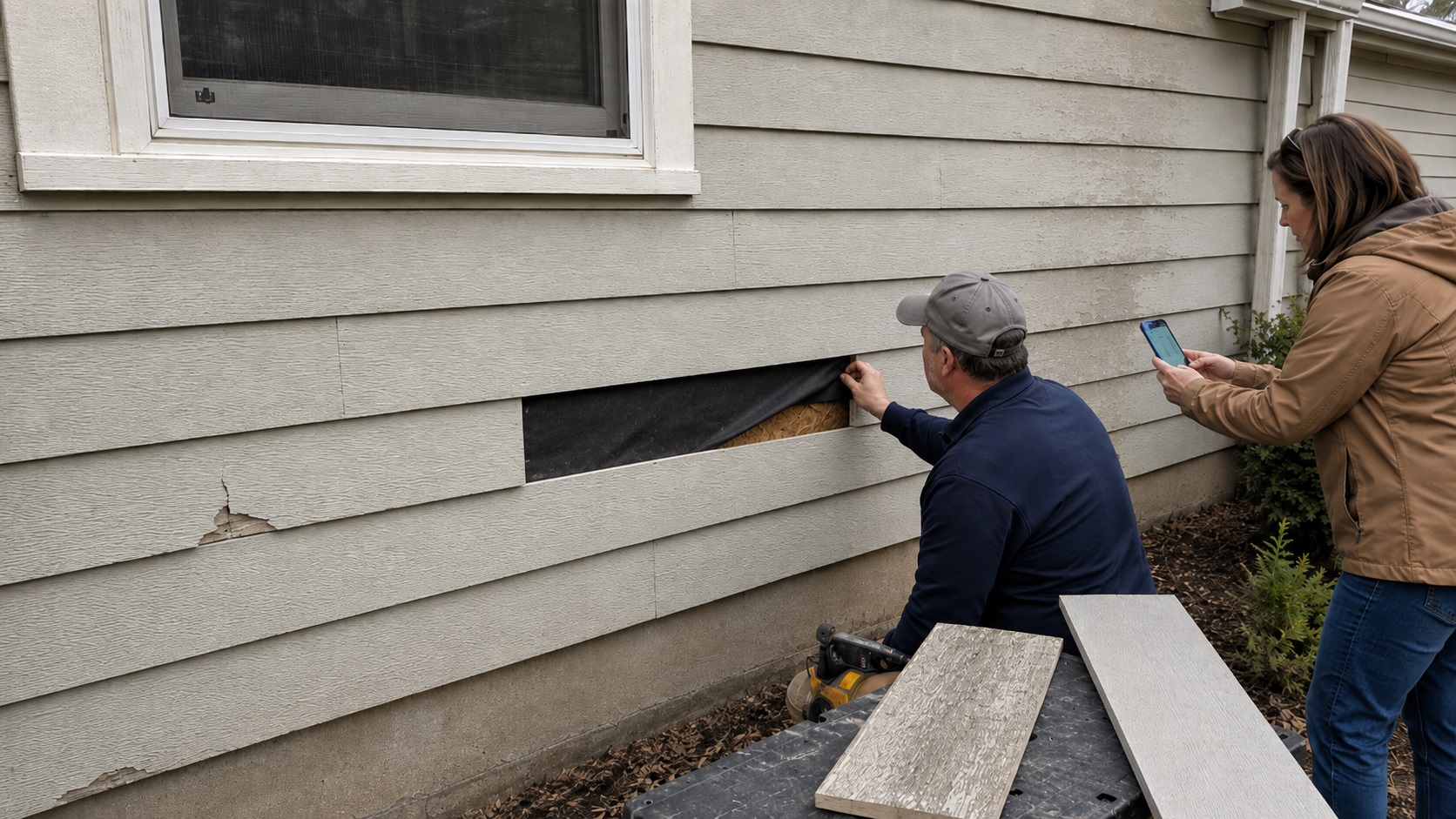
A contractor can remove a small section of siding if needed, check the wall behind it, and determine whether the problem is limited to the siding or connected to flashing, sheathing, drainage, or installation issues. That matters because fiber cement siding replacement is only durable when the wall behind it is dry and the water path has been corrected.
Fiber Cement Siding Repair vs Replacement Checklist
The repair-or-replace decision should be based on severity, pattern, and moisture risk. A single damaged board does not automatically justify full replacement. Widespread or recurring damage should not be treated as a simple surface repair.
Use this practical framework:
- Repair when the damage is isolated, dry, stable, and caused by a limited issue.
- Inspect further when cracks, paint failure, staining, or loose boards suggest moisture behind the siding.
- Replace affected sections when boards are deteriorated, moisture-damaged, or repeatedly failing.
- Consider full replacement when damage is widespread, installation-related, or affecting multiple wall elevations.
The most important rule is to avoid covering up an active moisture problem. Caulk, paint, and patching can improve a minor defect, but they cannot fix hidden water intrusion, wet sheathing, failed flashing, or repeated drainage problems. When the siding keeps failing in the same area, the cause must be found before more repair money is spent.
FAQ About Repairing or Replacing Fiber Cement Siding
Can cracked fiber cement siding be repaired?
Yes, cracked fiber cement siding can sometimes be repaired if the crack is isolated, dry, and not spreading. A single hairline crack or impact-damaged board may be repairable. Open cracks, repeated cracks, or cracks near joints and openings should be inspected more carefully because they may allow water behind the siding.
Does peeling paint mean fiber cement siding needs replacement?
Not always. Peeling paint may be caused by age, sun exposure, or poor surface preparation. Replacement becomes more likely when paint repeatedly peels or blisters in the same location, especially near joints, lower edges, trim, or flashing. That pattern may indicate trapped moisture rather than simple paint failure.
Can you replace only one fiber cement siding board?
Yes, one fiber cement siding board can often be replaced when the damage is isolated and the surrounding boards are still sound. This is common after impact damage or a localized crack. The repair is more dependable when matching material is available and the wall behind the damaged board is dry.
Is water-damaged fiber cement siding salvageable?
It depends on the severity. If the board is still firm and the moisture exposure was brief, repair may be possible. If the board edges are soft, swollen, crumbling, or the wall behind the siding is wet, replacement is usually more reliable. Hidden moisture should be evaluated before deciding.
When is fiber cement siding damage more than cosmetic?
Damage is more than cosmetic when it affects the siding’s ability to shed water or stay attached. Soft edges, open cracks, loose boards, repeated paint failure, staining below seams, and moisture near interior walls all suggest a deeper problem. Cosmetic wear usually affects appearance only; functional damage affects wall protection.
Should I repaint or replace fiber cement siding?
Repainting may be enough when the siding is dry, firm, and only showing normal surface wear. Replacement is more appropriate when the paint failure is tied to board deterioration, moisture intrusion, open cracks, or repeated peeling in the same location. Repainting damaged siding can hide the problem temporarily without solving it.
Final Decision: Repair the Board or Replace the Section?
Fiber cement siding repair makes sense when the damage is isolated, dry, stable, and easy to trace to a limited cause. A single chipped board, minor paint wear, or one stable crack does not always justify replacement. In those situations, repair can preserve the siding system without unnecessary expense.
Replacement becomes the better decision when fiber cement siding shows widespread cracking, soft edges, recurring paint failure, loose boards, or signs that water has reached the wall behind it. These conditions suggest the siding is no longer just cosmetically damaged. It may be failing as part of the exterior wall moisture-control system.
The safest decision is to look beyond the surface. Repair the board when the problem is small and the wall is dry. Inspect deeper when the pattern suggests moisture. Replace damaged sections when the siding can no longer protect the wall reliably.
Key Takeaways
- Fiber cement siding can often be repaired when damage is isolated, dry, and stable.
- A single cracked or chipped board does not always require full replacement.
- Repeated cracking, peeling paint, or loose boards may indicate a larger siding-system problem.
- Soft, swollen, or crumbling edges usually make replacement more reliable than repair.
- Water behind fiber cement siding usually means the wall should be inspected before more patching or painting.
- Partial replacement can work when damage is limited and the cause has been corrected.
- Full replacement becomes more practical when damage is widespread, recurring, or tied to poor installation.
- Do not rely on paint or caulk when cracking, peeling, or staining keeps returning in the same area.