When Flooring Must Be Replaced After Flooding: Salvage vs Removal Guide
Flooring usually must be replaced after flooding when the water was contaminated, reached padding or underlayment, softened the subfloor, or became trapped beneath a surface that cannot dry from above. The top of the floor may look dry while the layers underneath are still wet.
That is why flood-damaged flooring should not be judged by appearance alone. A carpet may feel mostly dry while the padding underneath is soaked. Vinyl plank may look intact while water is trapped below it. Tile may survive while the underlayment or subfloor becomes damp. Hardwood may be salvageable in some clean-water situations but ruined in others by buckling, contamination, or subfloor moisture.
This guide explains when flooring must be replaced after flooding, when limited salvage may be possible, why the subfloor matters more than the surface, and why new flooring should not be installed until hidden moisture is under control. For the broader repair context, see this guide to structural moisture problems after flooding.
Why Flood-Damaged Flooring Is Hard to Evaluate
Flood-damaged flooring is difficult to evaluate because most floors are layered systems. What you see from above is only the finished surface. Below that may be adhesive, padding, underlayment, vapor barrier, plywood, oriented strand board, concrete, sleepers, joists, or insulation. Water can move into these layers and remain there after the room looks cleaner.
Surface drying can be misleading. A fan may dry the top of a floor while moisture remains below. A dehumidifier may lower room humidity while underlayment stays damp. A mop or wet vacuum may remove visible water while floodwater remains under baseboards, at plank seams, under carpet padding, or inside subfloor materials.
Flooding also affects different flooring materials in different ways. Some materials absorb water quickly. Some swell at edges. Some trap water underneath. Some separate from adhesives. Some hide moisture until odor, mold, cupping, or soft spots appear later.
That means the question is not simply, “Does the floor look okay?” The better questions are:
- What kind of water touched the floor?
- How long did the flooring stay wet?
- Did water reach padding, underlayment, or the subfloor?
- Is the material porous or layered?
- Does the floor feel soft, swollen, cupped, buckled, loose, or musty?
- Can the hidden layers dry without removing the finished flooring?
- Is the subfloor dry and stable enough to keep?
Quick rule: clean water, brief exposure, no hidden moisture, and a stable subfloor may allow limited salvage. Contaminated floodwater, wet padding, swollen plank cores, trapped water under vinyl, or a soft subfloor usually points toward removal.
Before flooring decisions begin, basic safety hazards should already be handled. Do not pull flooring, move appliances, or walk across questionable areas until utilities, contamination, and structural risks are checked. If you are still in the early reentry stage, review the safety hazards to watch for after flooding first.
Hidden Layers Beneath Flooring Matter
Many flood repairs fail because only the visible flooring surface is addressed. Hidden layers are often the real problem. Carpet padding can stay wet after the carpet face dries. Laminate underlayment can hold moisture below swollen seams. Vinyl plank can trap water between the finished floor and subfloor. Hardwood can cup while moisture remains below the boards. Tile can look intact while water weakens the bond underneath.
Baseboards and wall edges can also trap water at the floor perimeter. Floodwater often collects at the lowest part of the room, then moves under trim, into expansion gaps, beneath cabinets, and along seams. By the time the surface looks dry, moisture may still be sitting at the floor-wall joint.
The subfloor is the most important hidden layer. If the subfloor is wet, swollen, soft, delaminated, moldy, or unstable, the finished flooring above it cannot be considered fully recovered. New flooring installed over a damp subfloor can fail quickly, even if the replacement material is brand new.
Signs that hidden layers may still be wet include:
- A musty odor near floor edges or baseboards.
- Soft or spongy areas underfoot.
- Swollen seams in laminate or engineered wood.
- Cupped, crowned, or buckled wood flooring.
- Vinyl planks lifting or separating.
- Carpet that feels dry on top but squishes underneath.
- Loose tile, hollow sounds, or cracked grout after flooding.
- Moisture readings that remain elevated below the surface.
If water is trapped below the surface, drying the top of the floor is not enough. The flooring may need to be lifted or removed so the layers underneath can be inspected and dried.
Why Floodwater Contamination Changes the Decision
The water source is one of the biggest factors in deciding whether flooring can be saved. A small clean-water plumbing leak is different from storm flooding, groundwater, sewage backup, drain overflow, or water that moved through a basement, crawl space, garage, street, or yard.
Floodwater can carry bacteria, sewage residue, mud, silt, chemicals, fuel, pesticides, animal waste, and other contaminants into flooring materials. Porous materials such as carpet, padding, wood fiber cores, underlayment, and some subfloor products can absorb that water. Once contamination enters those layers, drying alone may not make the floor safe or odor-free.
Contamination is especially important when floodwater touched:
- Carpet or carpet padding.
- Laminate or engineered wood cores.
- Wood subflooring or underlayment.
- Flooring in basements, garages, crawl-space-connected rooms, or utility areas.
- Flooring near sewage backups, drains, toilets, or sump pump failures.
- Flooring that stayed wet for many hours or longer.
When the source is unknown or likely contaminated, the replacement threshold should be more cautious. A floor that could theoretically dry may still hold odor, residue, and microbial risk beneath the surface. This is why flood-exposed flooring is often removed even when it does not look completely destroyed. Wear gloves, boots, eye protection, and appropriate respiratory protection, and avoid cutting, pulling, or disturbing contaminated flooring until the area is safe to enter and the water source is understood.
If visible standing water is still present, do not focus on replacement yet. First make sure the area is safe, then follow a controlled process to remove standing water safely. Flooring salvage decisions should come after immediate water removal and safety checks, not before.
When Flooring Must Be Replaced After Flooding
Flooring usually must be replaced after flooding when the water was contaminated, the material stayed wet too long, hidden layers cannot dry, the floor has physically changed shape, or the subfloor is no longer stable. The exact decision depends on the flooring type, but the same basic rule applies: a floor is not safe to keep just because the top surface looks better.
Replacement is usually the safer choice when:
- Floodwater came from stormwater, groundwater, sewage, drain backup, or an unknown source.
- Carpet padding, underlayment, adhesive, or subflooring is wet.
- The floor smells musty after drying attempts.
- The surface is warped, buckled, cupped, swollen, bubbling, peeling, or separating.
- The flooring feels soft, spongy, uneven, or unstable underfoot.
- Water reached beneath floating floors, plank seams, or glued flooring.
- Mold is visible or suspected below the flooring.
- The floor stayed wet long enough for padding, underlayment, seams, or wood-based layers to absorb moisture.
- Moisture readings remain elevated below the surface.
- New flooring cannot be installed without first removing damaged layers.
If any of these conditions are present, drying the surface may only delay the real repair. Water trapped under flooring can continue affecting the subfloor, baseboards, wall bottoms, cabinets, and nearby insulation. That is why flooring decisions often overlap with drywall replacement after flooding and other material decisions around the same flooded area.
Flooring Types Most Likely to Need Replacement
Some flooring materials tolerate short-term moisture better than others, but flooding is different from ordinary spills. The material matters, but the hidden layers and water source often matter more.
Carpet and Padding
Carpet and carpet padding are among the most likely flooring materials to require replacement after flooding. Carpet padding acts like a sponge. Once floodwater reaches it, the padding can hold moisture, odor, soil, and contamination even after the carpet surface has been extracted.
In many flood situations, padding should be considered unsalvageable. Even if the carpet face is professionally cleaned, wet padding underneath can keep the floor damp, hold odor, and continue affecting the subfloor.
Carpet itself may sometimes be salvageable after a very limited clean-water event if it is lifted, cleaned, dried quickly, and verified. But carpet exposed to stormwater, sewage, groundwater, or unknown floodwater is usually a replacement candidate. The more contaminated the water, the less realistic carpet salvage becomes.
Signs carpet and padding should be removed include:
- Squishing or water movement underfoot.
- Persistent musty odor.
- Staining from dirty water or sewage.
- Wet padding after the carpet surface feels dry.
- Delamination or separation of the carpet backing.
- Mold growth or dark staining near edges.
- Floodwater that remained for many hours or longer.
If carpet and the subfloor were both affected, the recovery process becomes more than carpet cleaning. A deeper article on carpet and subfloor flood recovery can support the drying and assessment stage after the replacement decision is made.
Laminate Flooring
Laminate flooring is usually a poor candidate for salvage after flooding. Most laminate has a fiberboard core that can absorb water through seams, edges, and damaged wear layers. Once the core swells, the flooring often does not return to its original shape.
Flood-damaged laminate may show raised seams, bubbling, peaking, curling, soft spots, or gaps between planks. The surface may look mostly intact from a distance while the edges reveal swelling. Underlayment beneath laminate can also hold moisture against the subfloor.
Laminate flooring should usually be replaced when floodwater reached:
- Plank seams or edges.
- The underlayment beneath the laminate.
- The fiberboard core.
- The wall edges or expansion gaps.
- The subfloor below the laminate.
Trying to dry swollen laminate in place often leaves warped flooring and trapped moisture underneath. If the laminate has lifted, separated, or swollen, replacement is usually more practical than attempting cosmetic repair.
Engineered Wood Flooring
Engineered wood can react differently depending on its construction, veneer thickness, adhesive quality, core material, and how long it stayed wet. Some engineered wood floors tolerate minor moisture better than laminate, but flooding can still cause delamination, veneer lifting, core swelling, staining, and adhesive failure.
Engineered wood is more likely to need replacement when the planks separate, edges swell, veneer layers peel, boards cup or buckle, or the floor develops a persistent musty smell. If water reached the underside of the boards or the underlayment, hidden moisture may remain even after the top surface dries.
Because engineered wood is layered, severe flood exposure can weaken the bond between layers. Once delamination starts, the material usually cannot be restored to its original condition. A flooring professional may be needed to determine whether limited repair is possible or whether full removal is safer.
Hardwood Flooring
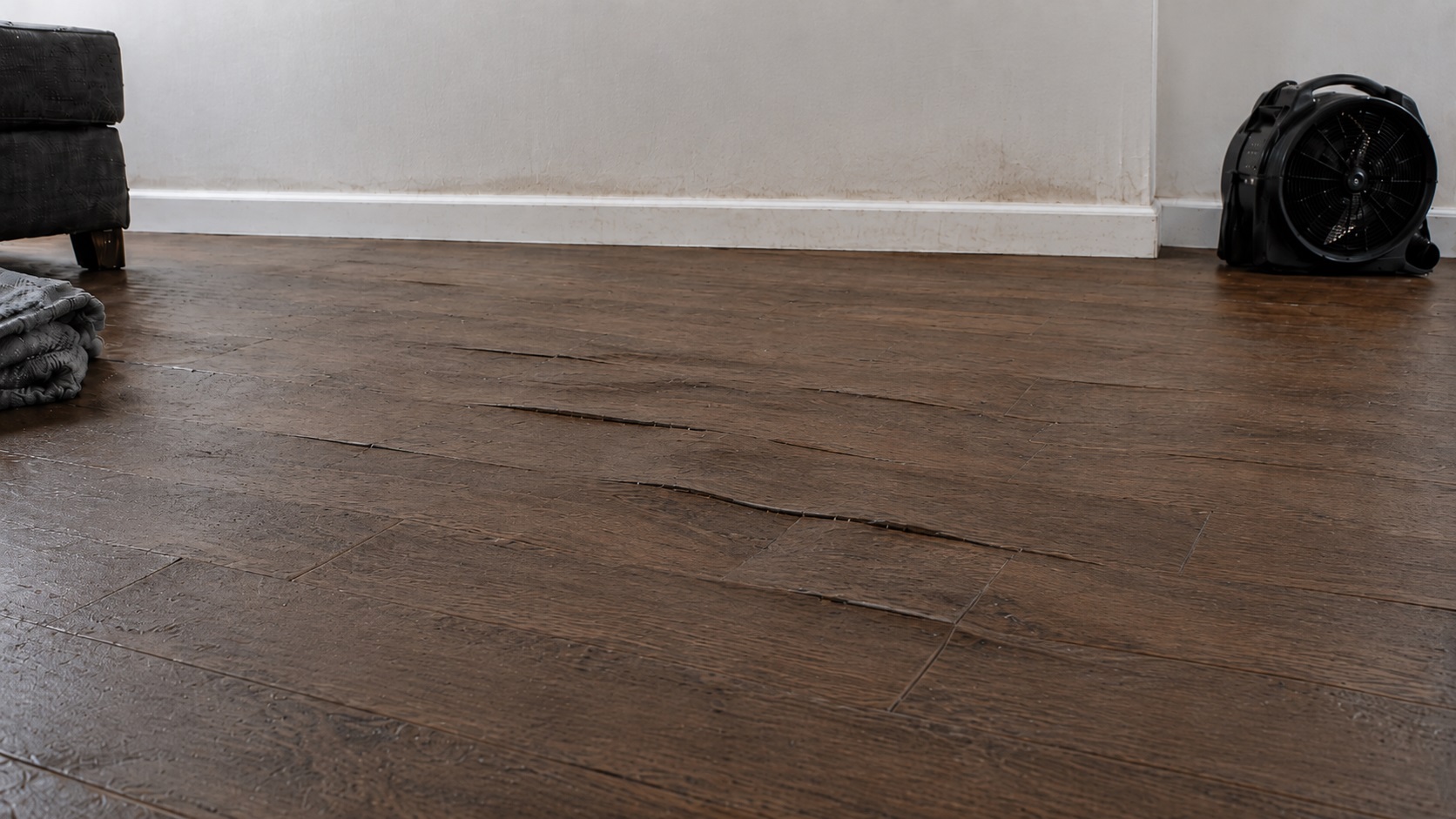
Solid hardwood is not automatically ruined the moment it gets wet, but flooding makes salvage difficult. Hardwood can absorb water, cup, crown, buckle, stain, gap, or pull away from fasteners. In some cases, hardwood may be dried and later refinished if the water was clean, exposure was brief, drying began quickly, and the subfloor is stable.
Hardwood is more likely to require replacement when:
- The water was contaminated or unknown.
- Boards are severely cupped, crowned, or buckled.
- The floor has black staining, odor, or mold-like growth.
- Water reached the subfloor and stayed trapped underneath.
- Boards have loosened, lifted, or separated from fasteners.
- The subfloor is soft, swollen, or delaminated.
- Moisture readings remain elevated after drying.
Hardwood decisions should be made slowly after controlled drying. Sanding or refinishing too early can cause problems if the boards are still moving as they release moisture. If the hardwood is over a wet subfloor, the subfloor condition may determine whether the finished floor can be saved.
Vinyl Plank and Sheet Vinyl
Vinyl flooring can be misleading after flooding because the surface often looks better than the layers underneath. Luxury vinyl plank, rigid-core vinyl, and sheet vinyl may resist water on the surface, but that does not mean the entire floor system is dry or safe to keep.
Water can move through plank seams, around room edges, under baseboards, into expansion gaps, below transition strips, and underneath sheet flooring where seams or edges are not sealed. Once water is trapped below vinyl, the surface may block evaporation and keep the underlayment or subfloor wet.
Vinyl plank may need to be removed after flooding when:
- Water reached under the planks through seams, edges, or transitions.
- The planks are lifting, curling, cupping, separating, or clicking loose.
- There is a musty odor near floor edges.
- The underlayment below the vinyl is wet.
- The subfloor is wood-based and moisture readings remain high.
- The floodwater was contaminated or unknown.
Sheet vinyl may stay visually intact while water is trapped below it. If the sheet flooring bubbles, releases from adhesive, curls at the edges, smells musty, or has water below it, removal may be needed so the substrate can dry. A waterproof surface is not helpful if it traps floodwater underneath.
Tile Floors
Ceramic and porcelain tile are usually more water-resistant than carpet, laminate, or wood flooring, but tile is not always a complete flood solution. The tile surface may survive while the grout, mortar bed, backer board, plywood underlayment, or subfloor below it is affected.
Tile is more likely to remain in place if it is bonded well to a stable, non-damaged substrate and the floodwater did not compromise the layers underneath. However, the floor should still be checked for signs of hidden moisture, loose bond, and contaminated water intrusion at edges or cracks.
Tile may need repair or removal after flooding when:
- Tiles sound hollow or move underfoot.
- Grout cracks, crumbles, or separates after flooding.
- Water entered beneath the tile through cracks, edges, or transitions.
- The underlayment or subfloor below the tile is wood-based and stayed wet.
- There is a persistent musty odor from floor edges or grout lines.
- The tile floor is over a damaged subfloor, loose backer board, or weakened adhesive bed.
Tile over concrete may be easier to dry than tile over plywood or wood subflooring, but contamination still matters. If floodwater carried sewage, mud, chemicals, or unknown residue, cleaning the surface may not address what entered cracks, grout lines, or perimeter gaps.
Can Any Flooring Be Saved After Flooding?
Some flooring can be saved after limited water exposure, but the conditions have to be favorable. The water source, exposure time, material type, and hidden layer condition all matter. A short clean-water leak on a hard surface is not the same as a basement flood that soaked carpet padding and subflooring.
Flooring is more likely to be salvageable when:
- The water came from a clean supply line and was stopped quickly.
- The flooring was damp but not submerged for long.
- Water did not reach padding, underlayment, or the subfloor.
- The material did not swell, buckle, delaminate, or separate.
- There is no musty odor, sewage exposure, chemical contamination, or visible mold.
- Moisture readings confirm that the surface and layers below are drying properly.
- The floor remains firm, flat, bonded, and stable after drying.
Borderline floors should be rechecked after drying, not judged only on the first day. Swelling, odor, cupping, loose planks, or soft spots can appear after trapped moisture redistributes through the floor system.
Even when flooring appears salvageable, it should be monitored closely. Musty odor, swelling at edges, recurring dampness, soft spots, and stains near baseboards can show up later if water remained trapped below the surface. If you are specifically concerned about mold developing below the finished surface, review the signs of mold under flooring rather than relying only on the appearance of the floor.
Professional drying and moisture verification can make a major difference in borderline cases. Some hardwood floors, tile assemblies, and limited clean-water events may be recoverable if drying begins quickly and the subfloor remains stable. But floodwater exposure, wet padding, swollen laminate, and damp underlayment usually push the decision toward removal.
Why the Subfloor Matters More Than the Surface
The subfloor is the structural layer that supports the finished flooring. If the subfloor is wet, swollen, soft, delaminated, moldy, or unstable, the finished flooring cannot be considered safe just because the top looks dry.
Wood subfloors are especially vulnerable after flooding. Plywood and oriented strand board can absorb water, swell at edges, separate between layers, lose fastener strength, and hold moisture against joists or framing. Concrete slabs do not rot like wood, but they can hold moisture, release vapor into new flooring, and keep adhesives or underlayment damp if drying is incomplete.
Warning signs of subfloor trouble include:
- Soft, spongy, or bouncy areas underfoot.
- Flooring that dips, sags, or flexes after flooding.
- Persistent musty odor near floor edges.
- Swelling or raised seams in wood-based panels.
- Fasteners that no longer hold securely.
- Delamination, flaking, or crumbling subfloor material.
- Moisture readings that stay elevated below the finished floor.
- New gaps between flooring, baseboards, cabinets, or walls.
If these signs are present, the issue is no longer just finished flooring. The floor system itself may need evaluation. A deeper inspection may be needed to detect water damage under floors and determine whether the subfloor is dry, stable, and safe to rebuild over. If the subfloor itself is swollen, soft, delaminated, or structurally weak, review when subfloors must be replaced after water damage.
Subfloor damage also affects nearby materials. Wet subfloors can keep baseboards, lower drywall, cabinets, and insulation damp. If a flood affected both floors and walls, repair decisions should be coordinated rather than handled one material at a time.
Do Not Install New Flooring Until the Subfloor Is Dry
New flooring should not be installed over a damp subfloor. Even if the old flooring has been removed, the floor system still needs time to dry. If replacement flooring is installed too soon, moisture can become trapped below the new material and cause swelling, adhesive failure, odor, mold growth, cupping, buckling, or another round of replacement.
The subfloor should be checked before rebuilding. That may involve moisture meter readings, visual inspection, airflow, dehumidification, and time. A floor that feels dry on the surface may still have elevated moisture inside wood panels, underlayment, seams, slab pores, or framing below.
Before new flooring goes down, confirm that:
- The original water source has been stopped or corrected.
- Standing water has been removed.
- Wet padding, underlayment, or damaged flooring has been removed.
- The subfloor is dry enough for the replacement material being installed.
- There is no musty odor, visible mold, sewage residue, or hidden dampness.
- Soft, swollen, delaminated, or unstable subfloor sections have been repaired.
- Room humidity is controlled enough to support drying and rebuilding.
This matters because many modern flooring products are sensitive to moisture below the surface. Laminate, engineered wood, hardwood, glued vinyl, floating plank systems, carpet padding, and some underlayments can all fail if installed over a damp substrate. Even tile can fail if the substrate below it is weakened or still releasing moisture.
If the floor still feels soft, smells musty, or shows elevated moisture readings, do not cover it. The replacement flooring may hide the problem temporarily, but the moisture can continue affecting the structure below. For subfloor-specific warning signs, review the signs of water damage in subfloors.
When to Call a Restoration or Flooring Professional
Some flood-damaged flooring decisions are straightforward. If carpet padding was soaked by contaminated floodwater, it usually needs removal. If laminate has swollen at every seam, replacement is usually obvious. But many situations are harder because the surface looks better than the layers below.
Call a restoration or flooring professional when:
- Floodwater came from stormwater, groundwater, sewage, or an unknown source.
- Multiple rooms, a finished basement, or a crawl-space-connected floor system was affected.
- Carpet padding, underlayment, or subflooring is wet.
- Hardwood is cupping, crowning, buckling, or separating.
- Engineered wood is delaminating or lifting.
- Vinyl plank or sheet vinyl may be trapping water underneath.
- Tile sounds hollow, grout is cracking, or the substrate may be wet.
- The floor feels soft, bouncy, sagging, or unstable.
- Mold or musty odor is present after drying attempts.
- You cannot verify that the subfloor is dry.
A restoration professional can help remove damaged materials, measure hidden moisture, dry the subfloor, and determine whether the flooring system is safe to rebuild. A flooring contractor may also be needed once the structure is dry enough for new material. If the damage is widespread or you are unsure whether DIY cleanup is safe, see this guide on when to call water damage restoration services.
Professional help is especially important when flooring damage overlaps with walls, cabinets, insulation, HVAC equipment, or electrical systems. Floodwater often moves under flooring, behind trim, into wall bases, and into cavities where damage is harder to see.
What to Check After Flooring Is Removed
Removing damaged flooring is not the final repair step. It exposes the hidden layers that decide whether rebuilding can begin. Once flooring is lifted or removed, the subfloor, underlayment, wall edges, baseboards, cabinets, and nearby materials can be evaluated more accurately.
After flooring removal, look for:
- Wet or damaged underlayment.
- Swollen plywood or oriented strand board.
- Soft, spongy, or delaminated subfloor areas.
- Moisture along wall edges and baseboards.
- Water stains or odor near cabinets and doorways.
- Mold-like staining or musty smell below the floor surface.
- Moisture that appears to be coming from below the floor.
- Concrete slab moisture that may affect future flooring.
If wall materials were also wet, flooring removal should be coordinated with drywall and insulation decisions. A flood that reaches the floor-wall joint often affects drywall, baseboards, insulation, and lower wall cavities at the same time. The repair path may need to include when insulation must be replaced after flooding along with flooring and drywall decisions.
The safest rebuilding sequence is to remove unsalvageable flooring, expose hidden wet layers, dry the subfloor, verify moisture conditions, repair damaged structural areas, and then install new flooring. If hidden moisture is covered too soon, the replacement floor may fail for the same reason the old floor had to be removed.
FAQ: When Flooring Must Be Replaced After Flooding
Does all flooring need to be replaced after flooding?
No. Not all flooring automatically needs replacement, but flooring exposed to contaminated floodwater, trapped moisture, wet padding, swollen underlayment, or subfloor damage often does. The decision depends on the water source, flooring type, exposure time, hidden layers, and subfloor condition.
Can carpet be saved after a flood?
Carpet is difficult to save after flooding, especially when the water was contaminated. Carpet padding that absorbed floodwater usually needs replacement. Carpet itself may only be considered for salvage after a limited clean-water event with fast professional extraction, cleaning, drying, and verification.
Can vinyl plank flooring survive flooding?
Sometimes, but vinyl plank can trap water underneath. Even if the planks look fine, water may remain below seams, edges, transitions, or underlayment. If the subfloor is wet or the floodwater was contaminated, removal may be needed to dry and inspect the layers below.
Does laminate flooring need replacement after floodwater?
Laminate usually needs replacement if floodwater reached the seams, edges, core, or underlayment. Once laminate swells, bubbles, separates, or warps, it usually cannot be restored to its original condition.
Can hardwood floors dry after flooding?
Some hardwood floors can dry after limited clean-water exposure, but floodwater makes salvage harder. Severe cupping, buckling, contamination, black staining, odor, loose boards, or a wet subfloor can make replacement necessary.
What are the clearest signs water is trapped under flooring?
Warning signs include musty odor, squishy carpet, soft spots, swelling at seams, lifting vinyl, cupped wood, hollow-sounding tile, cracked grout, or moisture readings that stay elevated. If you cannot verify the hidden layers are dry, the floor may need to be opened or professionally inspected.
Can I install new flooring over a damp subfloor?
No. New flooring should not be installed over a damp subfloor. Moisture trapped underneath can cause mold, odor, swelling, adhesive failure, cupping, buckling, and premature failure of the replacement flooring.
Final Flooring Replacement Decision
The safest rule is to evaluate the floor as a system, not just a surface. Remove unsalvageable layers, expose hidden wet materials, dry and verify the subfloor, and rebuild only when the structure below the finished floor is stable and dry.