Drywall Replacement After Flooding: When Wet Drywall Must Be Removed
Drywall replacement after flooding is often necessary because floodwater does more than stain the wall surface. It can soak into the paper facing, soften the gypsum core, wick above the visible water line, carry contaminants into porous materials, and hide moisture inside the wall cavity. Even when the wall looks dry from the room side, the lower wall, insulation, framing, and base plate may still be damp.
The main question after flooding is not simply whether the drywall looks bad. The real question is whether the drywall can be safely dried, cleaned, and left in place without trapping moisture or contamination. In many flood situations, especially when stormwater, groundwater, sewage, or dirty water reached the wall, replacement is safer than trying to save the panel.
As a practical rule, drywall that was directly touched by floodwater should usually be removed unless the water was clean, exposure was brief, the wall stayed firm, insulation remained dry, and moisture checks confirm the wall assembly is drying safely.
This article explains when flood-damaged drywall must be removed, when limited drying may be possible, how high drywall may need to be cut, why insulation behind the wall matters, and why new drywall should not be installed until the wall assembly is truly dry. For the broader repair context, see this guide to structural moisture problems in homes.
Why Flood-Damaged Drywall Often Needs Replacement
Drywall is not designed to handle prolonged flood exposure. A typical drywall panel has a gypsum core covered with paper facing. The gypsum can absorb moisture, and the paper facing can hold water, dirt, odor, and microbial contamination. Once floodwater reaches the panel, the problem often extends beyond a surface stain.
Floodwater also behaves differently from a small clean-water leak. A minor supply-line leak may dampen part of a wall without contaminating it, but floodwater can carry mud, sewage, bacteria, chemicals, fuel, pesticides, drain water, and debris into porous drywall. Drying the panel in place may not remove what the water carried into the material.
Drywall can also lose strength after saturation. The lower wall may become soft, swollen, crumbly, bowed, or separated from the paper facing. Paint may bubble. Joint tape may loosen. Corners may crumble. Baseboards may pull away because the drywall behind them has softened. These are signs that the material is no longer a reliable surface to keep or repair.
Flood-damaged drywall can create hidden problems because it covers the wall cavity. Behind the panel may be wet insulation, damp studs, a saturated bottom plate, wet exterior sheathing, or moisture trapped behind vapor-retarding materials. If the drywall is left in place too long, the wall can stay damp even when the room feels dry.
Before removing drywall, basic safety should already be addressed. Utilities, gas hazards, electrical risks, contaminated water, and structural instability should be checked before demolition or cleanup begins. Do not cut into wet walls near outlets, wiring, or electrical panels until the area has been made safe. If that step has not happened yet, review the safety hazards to watch for after flooding before disturbing wet materials.
How Drywall Absorbs and Hides Water
One of the most important things to understand is that drywall can wick water upward. The visible flood line on the wall does not always show the highest point of moisture. Water can move through the paper facing, behind paint, around fasteners, along seams, and into the gypsum core. This is why a wall may need to be opened above the obvious stain.
Baseboards and lower trim can make the problem worse. Trim can trap water against the bottom of the wall, hide wet drywall paper, and slow drying at the floor-wall joint. A wall that looks only lightly stained above the baseboard may have heavily saturated drywall behind the trim.
Paint can also be misleading. Painted drywall may look like it resisted water, but moisture can still be trapped behind the paint layer or inside the gypsum. Glossy paint, multiple paint layers, wallpaper, vinyl wallcovering, and certain coatings can slow evaporation. The surface may feel dry while the wall cavity remains damp.
Drywall around outlets, corners, door openings, window openings, and inside closets may dry unevenly. Water can collect in lower wall cavities, behind cabinets, near insulation, and along bottom plates. That is why flood-damaged drywall should be evaluated as part of the whole wall assembly, not as a simple cosmetic surface.
Hidden moisture is more likely when the wall stayed wet for hours, the room remained humid, or air could not reach the back side of the panel. Surface fans may dry the paint face while leaving the wall cavity damp.
Why Floodwater Contamination Changes the Decision
The source of the water matters. Drywall dampened by a small clean-water supply leak may sometimes be dried if the leak is stopped quickly, the wall cavity is not saturated, insulation is not wet, and moisture readings confirm drying. Drywall exposed to floodwater is usually a different situation.
Floodwater may come from outside stormwater, groundwater, river flooding, sewage backup, overflowing drains, sump pump failure, or contaminated basement water. This water can carry organic material, bacteria, silt, chemicals, and odors into porous building materials. Once those materials absorb contaminated water, drying alone may not make them clean.
This is why flood-exposed drywall is often removed instead of saved. Replacement is not just about appearance. It can be necessary to remove contaminated material, expose wet cavities, allow framing to dry, inspect insulation, and prevent hidden odor or mold problems.
Contamination is especially important when floodwater touched:
- Basement drywall after storm flooding or groundwater entry.
- Drywall near sewage backups or drain overflows.
- Garage drywall exposed to fuel, chemicals, or dirty water.
- Lower-level drywall after river, street, or yard flooding.
- Drywall behind wet carpet, baseboards, cabinets, or insulation.
- Walls that stayed wet for more than a short period.
Trying to save contaminated drywall can create a false sense of recovery. The wall may look better after drying, but odor, staining, mold risk, and hidden contamination can remain. If the floodwater source is unknown or likely contaminated, removal is usually the safer assumption.
When Drywall Must Be Removed After Flooding
Drywall should usually be removed when it was directly touched by floodwater, stayed wet long enough to soften, or may be hiding wet insulation or wall cavity moisture. The more contaminated the water was, the longer the drywall stayed wet, and the more materials behind the wall were affected, the stronger the case for removal.
Drywall replacement is usually needed when:
- The drywall was submerged or directly contacted by floodwater.
- The water came from storm flooding, groundwater, sewage, drain backup, or an unknown source.
- The drywall is soft, swollen, crumbly, bowed, sagging, or separating from the paper face.
- Paint is bubbling, peeling, blistering, or stained along the flood line.
- Joint tape has loosened or seams have opened.
- Baseboards are swollen, loose, stained, or trapping moisture against the lower wall.
- Mold is visible or a musty odor remains near the wall.
- Insulation behind the drywall is wet or suspected to be wet.
- The wall stayed damp for more than a short cleanup window.
- Moisture readings remain elevated after surface drying.
In these cases, trying to dry the panel in place may leave contaminated material, trapped moisture, or weakened drywall behind. A wall that looks acceptable after a few days can still have damp insulation, wet framing, or odor trapped inside the cavity.
Drywall should also be removed when it blocks proper drying. If the wall cavity needs airflow, inspection, or insulation removal, the drywall has to be opened. Leaving the panel in place may protect the appearance of the room temporarily, but it can prevent the parts of the wall that matter most from drying.
Signs the Drywall Is Too Damaged to Keep
Some flood-damaged drywall is obviously beyond saving. If the panel has lost shape, texture, strength, or surface integrity, it should not be treated as a repairable finish. Soft drywall does not provide a solid base for paint, texture, trim, cabinets, or new finishes.
Look for these signs:
- The lower wall dents easily with light pressure.
- The drywall paper peels, bubbles, or separates.
- The gypsum core crumbles when touched.
- The wall bows outward or feels spongy.
- The bottom edge breaks apart near the floor.
- The wall has persistent stains or odors after drying attempts.
- Mold appears on the paper facing, behind baseboards, or near seams.
Do not paint over these symptoms. Paint may hide staining, but it does not restore softened gypsum, remove contamination, or dry the wall cavity. If the drywall has physically deteriorated, replacement is the practical repair path.
Can Any Drywall Be Saved After Flooding?
Some damp drywall can be saved after a limited water event, but true flooding makes that less likely. The difference usually comes down to water source, exposure time, saturation depth, contamination, insulation, and drying verification.
Drywall may be more likely to dry in place when all of these are true:
- The water came from a clean supply line, not sewage, groundwater, stormwater, or floodwater.
- The water was stopped quickly.
- The drywall was damp but not submerged or saturated.
- The wall cavity and insulation did not get wet.
- The panel is firm, flat, and not crumbling or swollen.
- There is no musty odor, visible mold, or contamination.
- Moisture readings confirm the drywall and nearby materials are drying properly.
That is why a small plumbing leak and a flooded basement should not be treated the same way. A clean-water leak that dampens a small section of wall for a short time may be manageable with fast drying and verification. Floodwater that rises against drywall, sits at the base of the wall, or enters behind trim usually calls for removal.
If you are dealing with a non-flood clean-water event, compare the situation with this guide on whether wet drywall can be saved. For floodwater exposure, the standard should be more cautious because contamination and hidden cavity moisture are more likely.
How High Should Drywall Be Removed After a Flood?
There is no single cut height that works for every flood. Some homeowners hear that drywall should always be cut 12 inches, 24 inches, or 48 inches above the water line. Those measurements can be useful in some cleanup situations, but they are not a substitute for evaluating how high the moisture and contamination actually traveled.
The cut height depends on several factors:
- How high the floodwater reached.
- How long the drywall stayed wet.
- Whether the water was contaminated.
- How far moisture wicked above the visible line.
- Whether insulation behind the wall is wet.
- Whether mold or odor is present.
- How the drywall panels are installed.
- Whether cabinets, trim, or wall coverings trapped moisture.
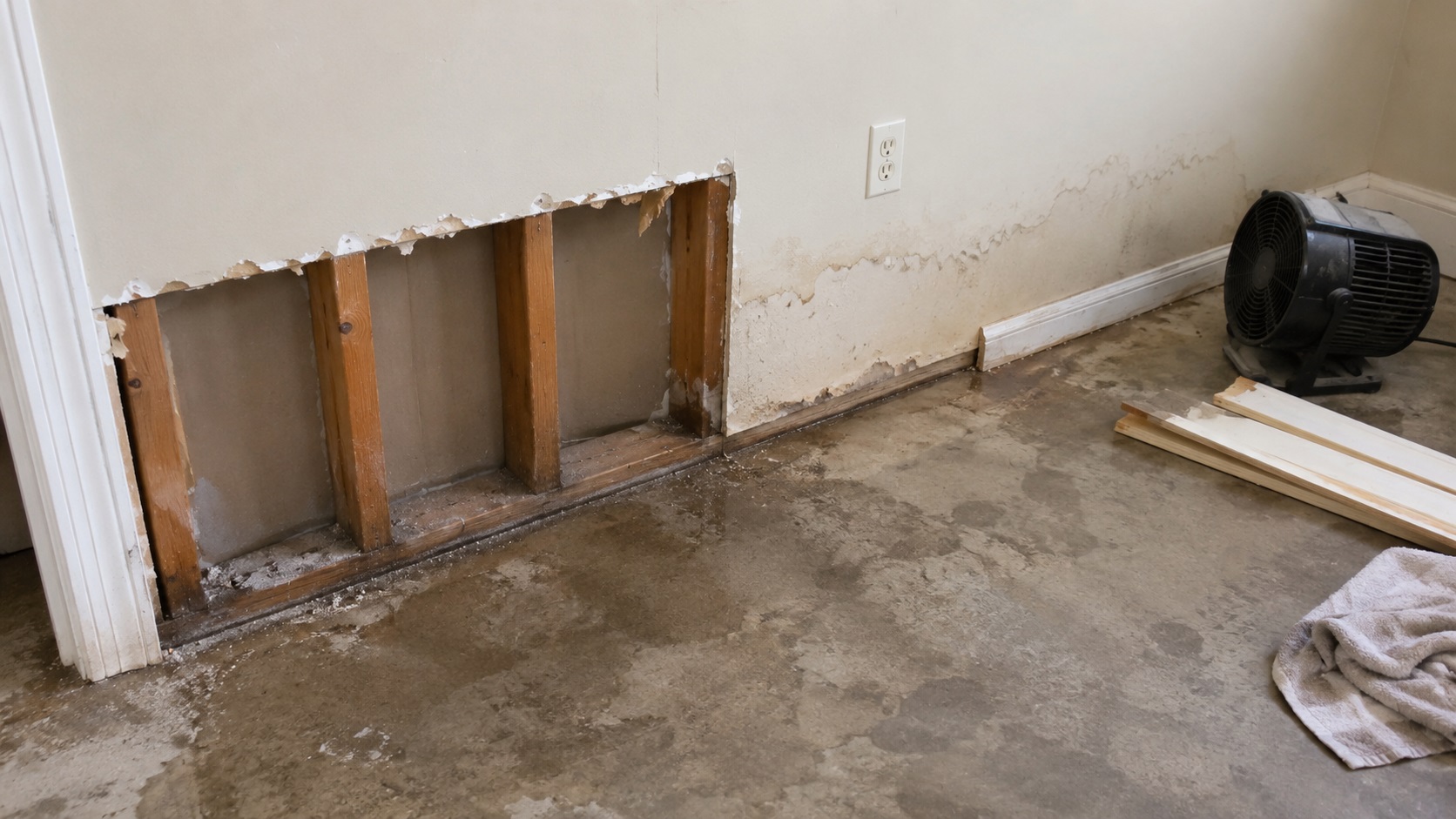
At minimum, drywall removal usually needs to extend above the visible water line because moisture can wick upward. A straight, level cut above the highest affected area also makes patching cleaner than several small irregular cuts around stains. In many flood situations, the cut may need to be high enough to expose wet insulation, allow drying equipment to reach the cavity, and leave a clean, dry edge for repair.
If water only reached a few inches up the wall but wicked behind baseboards, a lower cut may expose the affected area. If the water reached higher, stayed in place for many hours, or involved contamination, the removal may need to extend much higher. In some cases, removing full lower panels is cleaner and more practical than making a narrow cut that leaves questionable material behind.
Why the Visible Water Line Is Not Enough
The visible water line is only the point where staining is easiest to see. Moisture may be higher inside the panel, behind paint, inside the paper facing, around seams, or behind baseboards. If the wall has insulation, moisture may be held higher and longer than the drywall surface suggests.
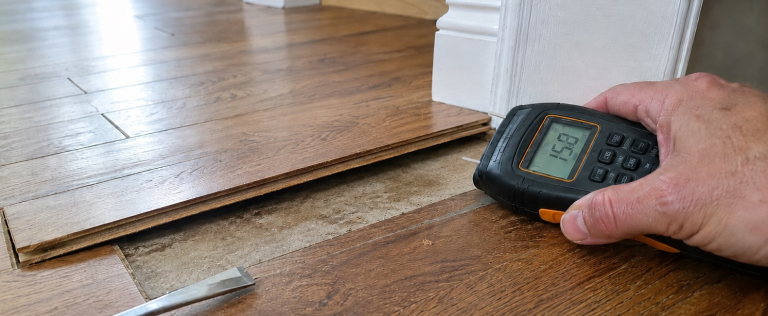
A moisture meter can help identify elevated moisture above the visible line, but readings should be interpreted carefully. Different materials, paint layers, salts, contamination, and wall construction can affect readings. The goal is not just to find the stain. The goal is to identify the highest affected area and confirm that the remaining wall can dry safely.
When in doubt, it is safer to remove enough drywall to expose the wall cavity and verify conditions than to preserve a narrow strip of questionable material. A slightly larger removal area is often less costly than closing the wall too soon and discovering mold, odor, or damp framing later.
Why Insulation Behind Drywall Changes the Decision
Insulation behind wet drywall is one of the biggest reasons flood-damaged walls need to be opened. The drywall may look like the main problem from the room side, but the wall cavity behind it can hold moisture long after the surface begins to dry.
Fiberglass batts, mineral wool, cellulose, foam products, and other insulation materials respond differently to water, but all insulation should be treated carefully after flooding. Some insulation can hold water. Some can trap contaminated residue. Some can prevent airflow inside the cavity. Some may look dry on the exposed face while staying damp against framing or sheathing.
If floodwater reached the insulation, the drywall usually needs to be removed so the cavity can be inspected. Otherwise, wet insulation can keep the studs, bottom plate, sheathing, and lower wall area damp. That trapped moisture can lead to musty odor, mold growth, wood moisture problems, and recurring wall damage after the room appears repaired.
Wet insulation also makes drying less predictable. Air movers and dehumidifiers may dry the room side of the wall, but they cannot reliably dry soaked insulation sealed behind drywall. If the insulation is contaminated or compressed with dirty water, drying it in place may not be appropriate. For the insulation-specific decision, see when insulation must be replaced after flooding.
Do Not Install New Drywall Until the Wall Is Dry
New drywall should not be installed just because the damaged panels have been removed. Before rebuilding, the wall cavity needs to be dry, clean, stable, and safe. If replacement drywall goes over damp framing, wet plates, hidden insulation moisture, or contaminated cavities, the new wall can trap the same problem that caused the removal.
The bottom plate and lower studs are especially important after flooding. These areas sit closest to the floor, where water collects and drying is slowest. If the wall borders a basement, crawl space, slab, exterior wall, or finished lower level, moisture may remain in contact with wood, concrete, insulation, or sheathing longer than expected.
Before new drywall goes up, check that:
- Flood-damaged drywall has been removed high enough to expose affected areas.
- Wet insulation has been removed or properly evaluated.
- Studs, plates, and cavity surfaces are dry enough for rebuilding, based on moisture checks rather than touch alone.
- There is no active leak, seepage, or recurring water source.
- There is no sewage residue, mud, odor, or visible mold left in the cavity.
- Moisture readings or professional drying checks support rebuilding.
- The room humidity is controlled enough that new materials will not absorb moisture.
Surface dryness is not enough. A wall can feel dry to the touch while framing or nearby materials remain damp. If you close the wall too soon, moisture may be trapped behind new drywall, where it is harder to detect and more expensive to fix later.
Why Drying Comes Before Rebuilding
Flood repair should follow the right order: control the water source, address safety hazards, remove unsalvageable materials, dry the structure, verify moisture levels, then rebuild. Skipping the drying verification step is one of the most common reasons flood repairs fail.
Drying may require dehumidifiers, air movement, cavity exposure, baseboard removal, insulation removal, and time. The exact approach depends on the water source, wall construction, humidity, temperature, airflow, and how long materials stayed wet.
For general drying principles outside flood-specific replacement decisions, see this guide on how to dry walls after water damage. In a flooding situation, drying is not just about saving the drywall surface. It is about preparing the whole wall assembly for safe replacement.
When to Call a Restoration Professional
A homeowner may be able to remove a small section of damaged drywall after a limited clean-water event, but flooding often crosses into professional restoration territory. This is especially true when the water source is contaminated, when multiple rooms are affected, or when drywall removal exposes wet insulation and framing.
Call a restoration professional if:
- Floodwater came from stormwater, groundwater, sewage, or an unknown source.
- Drywall stayed wet for more than a short period.
- Mold is visible or a strong musty odor remains.
- Wet drywall is present in multiple rooms or a finished basement.
- Insulation behind the drywall is wet.
- Electrical outlets, wiring, HVAC equipment, or water heaters are near the affected area.
- The wall cavity cannot be inspected or dried easily.
- Moisture readings remain elevated after drying attempts.
- Flooring, cabinets, trim, or subflooring are also wet.
- You are unsure how far the water traveled behind the wall.
A restoration contractor can remove damaged materials, expose hidden cavities, set up drying equipment, monitor moisture levels, and help determine when rebuilding can begin. If the flood damage is widespread or the safety risks are unclear, use this guide on when to call water damage restoration services before trying to handle the entire repair alone.
Professional help is also important when drywall removal reveals wet studs, soft bottom plates, repeated seepage, foundation moisture, or hidden framing damage. In that case, the drywall is only the visible layer of a broader building repair issue.
What Comes After Drywall Removal
Removing flood-damaged drywall is only one part of the recovery process. Once the drywall is opened, the next step is to evaluate what the wall was hiding. The cavity may show wet insulation, damp studs, soaked bottom plates, mud, staining, odor, mold, insect activity, or signs that water entered from more than one direction.
Do not rush to close the wall as soon as the damaged drywall is gone. The exposed cavity should be inspected, dried, cleaned if contaminated, and verified before new drywall is installed. Wet insulation may need removal, and damp framing needs time and airflow before rebuilding.
After drywall removal, check for:
- Wet or compressed insulation.
- Damp studs, bottom plates, blocking, or sheathing.
- Mud, silt, sewage residue, or debris inside the wall cavity.
- Persistent musty odor after the cavity is opened.
- Mold growth on drywall paper, framing, insulation, or sheathing.
- Water stains above the original flood line.
- Moisture trapped behind baseboards, cabinets, or flooring edges.
- Electrical boxes, outlets, wiring, or low-voltage lines in the affected wall.
If flooring was also affected, the wall cannot be evaluated in isolation. Wet carpet, padding, laminate, hardwood, vinyl, subflooring, and underlayment can hold moisture at the base of the wall. That moisture can keep the lower wall damp even after drywall is removed. If the floor was part of the flood exposure, review when flooring must be replaced after flooding as part of the same recovery plan.
The safest sequence is to remove unsalvageable drywall, expose wet cavities, remove affected insulation when needed, dry the framing, verify moisture conditions, and then rebuild. If the home is repaired in the wrong order, the new drywall may hide damp framing, wet insulation, or contaminated materials that should have been addressed first.
FAQ: Drywall Replacement After Flooding
Does drywall always need to be replaced after flooding?
Not always, but drywall that was directly exposed to floodwater usually needs removal. The decision depends on the water source, contamination level, exposure time, saturation depth, insulation behind the wall, visible damage, and whether moisture readings confirm that the wall assembly is drying properly.
Can drywall dry out after floodwater exposure?
Drywall can sometimes dry after a small clean-water event, but floodwater exposure is different. Floodwater may carry contamination, mud, odor, and bacteria into the paper facing and gypsum core. Even if the surface dries, the panel may not be safe or practical to keep.
How high should drywall be cut after flooding?
Drywall should usually be removed above the visible water line because it can wick moisture upward. The exact height depends on the flood level, how long the wall stayed wet, whether the water was contaminated, whether insulation is wet, and whether moisture readings show elevated levels above the stain.
Should insulation be removed behind wet drywall?
If floodwater reached the insulation, it often needs to be removed or professionally evaluated. Wet insulation can hold moisture against framing and prevent the wall cavity from drying. The drywall usually has to be opened before the insulation can be properly assessed.
Can I paint over flood-damaged drywall?
No. Paint may hide stains, but it does not fix softened gypsum, trapped moisture, contamination, odor, or mold risk. If drywall was saturated, contaminated, crumbling, swollen, or moldy, replacement is safer than painting over the damage.
How soon should drywall be removed after a flood?
Drywall should be evaluated as soon as the area is safe to enter and utilities are controlled. The longer wet drywall stays in place, the more likely it is to hold moisture, contaminate nearby materials, and slow drying inside the wall cavity.
Can I install new drywall once the wall feels dry?
Not necessarily. A wall can feel dry on the surface while the framing, bottom plate, insulation area, or adjacent materials remain damp. New drywall should wait until the affected cavity and surrounding materials are dry enough for rebuilding.
What happens if drywall is replaced too soon?
Replacing drywall too soon can trap moisture inside the wall, leading to musty odors, mold growth, staining, paint failure, softened materials, and recurring repairs. The wall should be dried and checked before it is closed.
Final Drywall Replacement Decision
Drywall replacement after flooding is usually about more than appearance. Floodwater can soak into drywall, wick above the visible water line, carry contamination into porous materials, and hide moisture behind the wall surface. When the wall cavity, insulation, or framing is affected, keeping the drywall in place can slow drying and increase the risk of hidden damage.
Some damp drywall may be saved after a small clean-water event, but true flooding requires a more cautious decision. If the drywall was submerged, contaminated, softened, moldy, musty, or backed by wet insulation, removal is often the safer repair path.
New drywall should not go up until the wall cavity is dry, the water source is controlled, wet insulation has been addressed, and the surrounding materials are stable. Dry first, verify conditions, then rebuild.