
Structural Moisture Problems in Homes: Causes, Risks, and Repair Guide
Structural moisture problems happen when water moves beyond a surface stain or temporary damp spot and begins affecting the materials that support, enclose, or protect a home. A small water mark on drywall may be cosmetic. A repeated leak that reaches framing, subfloors, roof decking, wall sheathing, joists, beams, sill plates, or window and door openings can become a much larger repair issue.
This guide explains how moisture causes structural problems in homes, where those problems usually begin, what warning signs matter most, and how to think about repair risk before damage spreads. It is part of the larger guide to moisture problems in homes, but this page focuses specifically on the repair and structural side of moisture damage.
The goal is not to turn every stain into an emergency. Many moisture problems are limited, fixable, and not immediately structural. The real concern is repeated wetting, hidden moisture, trapped water, or damage that reaches building materials that carry loads, protect the building envelope, or keep water out of the home.
What Are Structural Moisture Problems?
A structural moisture problem is a water-related issue that affects more than the visible finish layer of a home. It may begin as a roof leak, plumbing leak, siding leak, window leak, door leak, basement moisture problem, or flood event, but it becomes more serious when moisture reaches the materials behind the surface.
These materials may include roof decking, wall sheathing, framing lumber, subfloor panels, floor joists, beams, sill plates, exterior trim, window frames, door frames, insulation, or other parts of the building assembly. Some of these materials can dry and remain usable if the problem is caught early. Others may swell, delaminate, rot, weaken, or hold moisture long enough to create recurring damage.
The important distinction is this: not every water stain is structural damage, but every structural moisture problem starts with a moisture source that was not controlled soon enough.
Surface Moisture vs. Structural Moisture
Surface moisture affects visible materials such as paint, drywall paper, flooring finish, baseboards, or ceiling texture. It may come from a small spill, brief condensation, minor splash, or one-time leak that is dried quickly. Surface damage can still need repair, but it does not always mean the structure of the home has been affected.
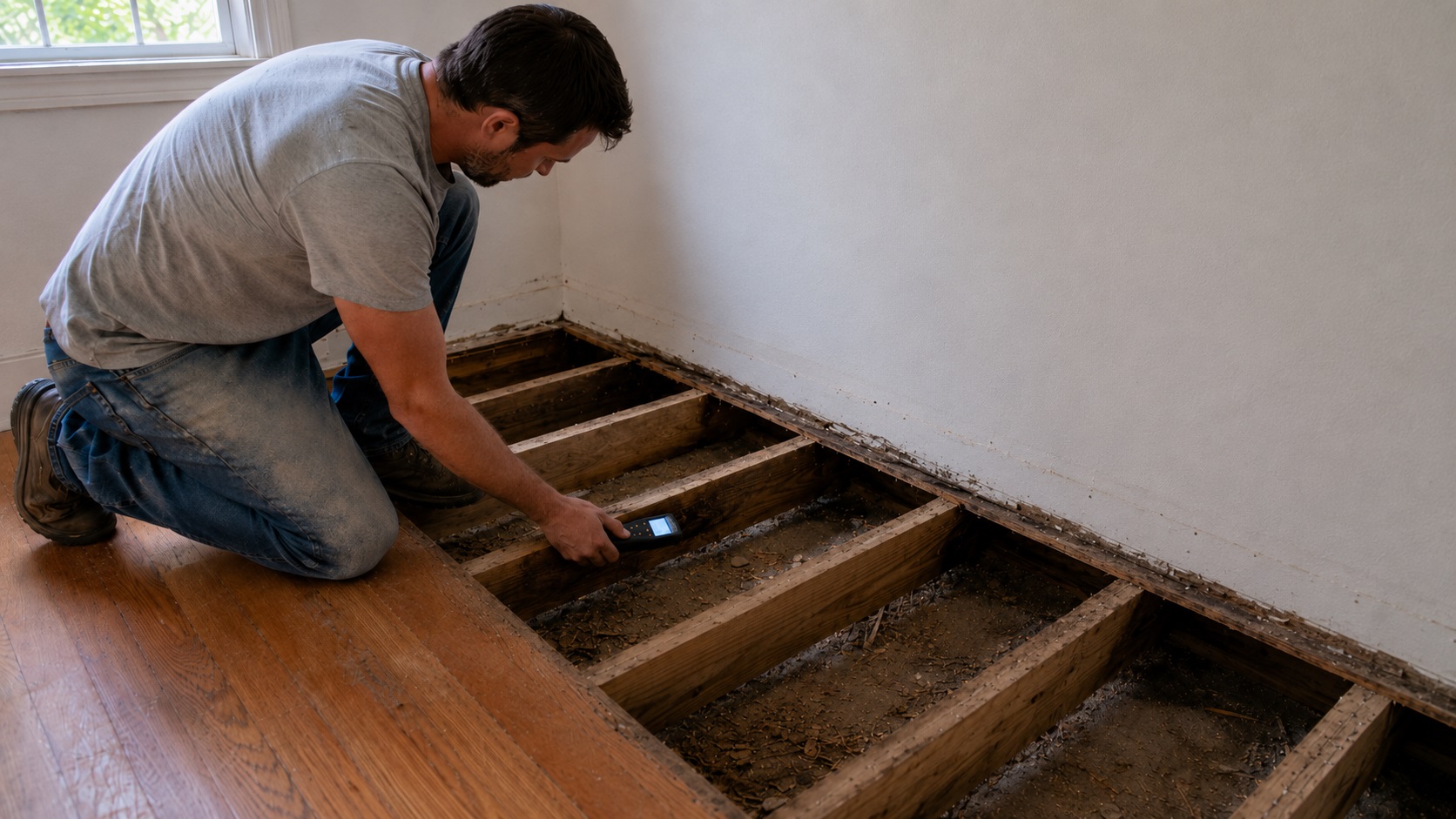
Structural moisture is different because it reaches the hidden or load-related parts of the home. It may soak into subfloor panels beneath finished flooring, reach joists under a bathroom, dampen wall framing behind a shower, rot a window sill, weaken roof sheathing under a long-term roof leak, or affect exterior wall sheathing behind failed siding.
The line between surface damage and structural concern depends on three main factors:
- How long the material stayed wet. Brief wetting is usually less concerning than repeated or hidden moisture.
- What material was affected. Paint and trim are different from framing, subfloors, roof decking, or sheathing.
- Whether the water source has been fixed. Repairs often fail when the visible damage is corrected but the moisture source remains active.
Why Repeated Wetting Matters
Many structural moisture problems are not caused by one dramatic leak. They develop because the same area gets wet again and again. A small roof leak after every storm, a slow plumbing drip under a cabinet, a window that leaks during wind-driven rain, or siding that lets water behind the wall can gradually damage materials that would have survived a single short-term event.
Repeated wetting is especially risky when moisture is trapped behind finishes. Drywall, flooring, trim, insulation, cabinets, and siding can hide damp materials behind them. The visible surface may look dry while deeper layers remain wet. That is why structural moisture problems often become obvious only after swelling, soft spots, odor, staining, rot, or movement appears.
How Moisture Becomes a Structural Problem
Moisture usually becomes structural when three things happen together: water enters or forms where it should not, the affected area cannot dry properly, and the moisture reaches materials that were not designed to stay wet.
In real homes, this can happen through several pathways. Water may enter from the roof, through exterior walls, around windows and doors, from plumbing systems, through basement or crawl space conditions, or from flooding. The visible damage may appear far from the actual source because water follows gravity, framing paths, insulation, seams, penetrations, and hidden cavities.
Moisture Can Enter From Above
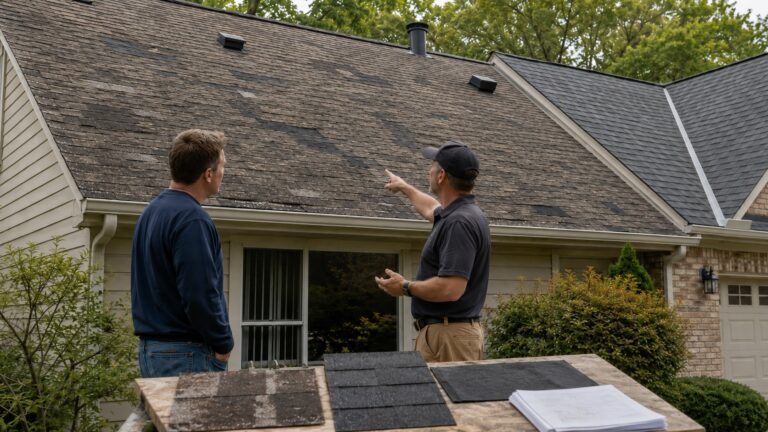
Roof leaks are one of the most common ways moisture reaches structural materials. Water may enter around damaged roofing, worn flashing, valleys, vents, chimneys, skylights, roof edges, or penetrations. Once water gets below the roof covering, it can affect roof decking, rafters, ceiling joists, insulation, drywall, and attic framing.
Roof-related structural moisture does not always appear as an obvious drip. It may show up as staining on a ceiling, damp insulation, darkened roof sheathing, mold-like growth in an attic, peeling paint near an exterior wall, or recurring moisture after rain. When roof materials age or fail, the problem may shift from a simple leak repair to a broader roof system decision. For roofing-specific causes and material failure patterns, use the guide to common roofing material failures.
Moisture Can Enter Through Exterior Walls
Exterior walls are designed to shed water, drain water, and dry when small amounts of moisture get behind the outer surface. Problems begin when siding, flashing, trim, caulk joints, wall penetrations, or drainage details fail and water reaches the layers behind the exterior finish.
Hidden wall moisture can affect sheathing, framing, insulation, interior drywall, trim, and flooring near the wall. This is especially common around transitions, penetrations, corners, decks, windows, doors, roof-wall intersections, and areas where exterior water is pushed against the wall by poor drainage or wind-driven rain.
Exterior wall moisture can be difficult to recognize because the siding may hide the damage until staining, swelling, paint failure, odor, or interior wall damage appears. For the dedicated exterior wall hub, see how exterior walls allow moisture into homes.
Moisture Can Come From Plumbing Leaks
Plumbing leaks often become structural because they occur inside walls, under floors, behind cabinets, beneath appliances, or in areas that are not inspected every day. A slow supply-line drip, leaking drain, failed appliance hose, toilet leak, tub overflow, shower leak, or water heater leak can wet subfloors, wall framing, cabinets, base plates, flooring, and nearby rooms.
The damage may not stay directly under the fixture. Water can travel along flooring layers, framing, pipe penetrations, cabinet bases, and wall cavities before it becomes visible. By the time a homeowner sees staining, swelling, soft flooring, or a musty smell, the affected materials may have been wet for longer than expected.
For the dedicated plumbing damage hub, use how plumbing leaks cause structural damage.
Moisture Can Enter Around Windows and Doors
Windows and doors are vulnerable because they interrupt the wall system. Every opening depends on proper flashing, drainage, seals, trim, sill details, and exterior water management. When those details fail, water can reach the frame, wall cavity, sheathing, insulation, trim, or flooring below the opening.
Window and door moisture problems often appear as staining around trim, swollen sills, peeling paint, soft wood, damp drywall, musty odors, or recurring moisture after rain. In some cases, the problem is condensation. In others, it is exterior water intrusion. The repair path depends on whether the moisture is forming on the inside surface, leaking through the opening, or entering behind the exterior wall system.
For the dedicated opening-related hub, see how windows and doors cause hidden moisture problems.
Moisture Can Damage Structural Wood Over Time
Wood can handle small, temporary moisture changes when it is able to dry. Problems begin when wood stays damp, gets wet repeatedly, or is enclosed before it has dried. Framing, joists, beams, sill plates, subfloors, roof decking, and wall sheathing can all be affected by long-term moisture exposure.
Structural wood moisture problems may show up as soft or spongy flooring, sagging areas, darkened wood, surface decay, musty odors, movement, fastener corrosion, or materials that no longer hold together properly. These signs do not automatically prove severe structural failure, but they do mean the source and extent of moisture should be evaluated carefully.
For a deeper symptom-focused guide, see signs of structural moisture problems.
Common Areas Where Structural Moisture Problems Start
Structural moisture problems usually begin in predictable areas. These are parts of the home where water is already present, where exterior water is being resisted, or where building assemblies depend on proper flashing, sealing, drainage, and drying.
Roof Assemblies
Roof systems protect the home from direct rainfall, snow, ice, and wind-driven water. When they fail, water can reach sheathing, rafters, attic insulation, ceiling drywall, and wall framing. Roof problems are especially important because water often travels before it becomes visible. A ceiling stain may appear several feet away from the actual leak path.
Common roof-related moisture sources include worn roofing materials, failed flashing, damaged valleys, leaking penetrations, clogged roof drainage details, poor roof-to-wall transitions, and aging materials that no longer shed water reliably.
Exterior Walls and Siding
Siding is not the only water-control layer in an exterior wall, but it is the first visible defense. When siding, trim, flashing, or drainage details fail, water can move behind the exterior surface and affect sheathing, framing, insulation, and interior finishes.
This type of damage can stay hidden for a long time. A homeowner may notice paint failure, wall staining, swollen trim, musty odor, or soft materials before realizing that water is entering from the outside.
Subfloors, Joists, and Beams
Floors are vulnerable because water often moves downward. Bathroom leaks, kitchen leaks, laundry leaks, appliance failures, window leaks, exterior wall leaks, and flooding can all reach subfloors and framing below. Finished flooring may hide the damage until the floor feels soft, uneven, cupped, swollen, or unstable.
Subfloor and joist moisture concerns deserve careful attention because these materials help support the floor system. A small area of surface flooring damage may be cosmetic. Repeated wetting under the flooring can become a structural repair issue.
Plumbing Walls and Fixture Areas
Plumbing walls, sink cabinets, bathrooms, laundry rooms, kitchens, and appliance areas are common starting points for structural moisture damage. Water supply lines, drain lines, toilet seals, shower assemblies, dishwasher connections, refrigerator water lines, washing machine hoses, and water heaters can all leak into surrounding materials.
These areas are risky because the leak may be slow and hidden. The first visible sign may be swelling, staining, cabinet damage, flooring changes, baseboard damage, or moisture in an adjacent room.
Window and Door Openings
Windows and doors are common weak points because they combine framing, trim, flashing, caulk, sealants, thresholds, and drainage details. Water that gets past these details can affect wall cavities, sheathing, interior trim, flooring, and framing around the opening.
Recurring damage near a window or door should not be dismissed as only a paint problem. If the same area becomes damp after rain, the source may be exterior water intrusion, failed flashing, condensation, poor drainage, or a combination of issues.
Warning Signs That Moisture May Be Affecting the Structure
Structural moisture problems are not always obvious at first. A home may show small surface symptoms long before the deeper material damage becomes visible. The key is to watch for patterns that suggest moisture has reached hidden materials, returned after previous repairs, or affected materials that help support or protect the home.
The signs below do not automatically prove serious structural damage. They are warning signals that the moisture source, the affected material, and the hidden layers behind the surface should be checked more carefully.
Soft, Spongy, or Uneven Floors
A soft or spongy floor can indicate that moisture has reached the finished flooring, underlayment, subfloor, or framing below. This is especially concerning near bathrooms, kitchens, laundry rooms, exterior doors, sliding doors, windows, water heaters, dishwashers, refrigerators with water lines, or areas above crawl spaces and basements.
Floor movement may come from several causes, so it should not be diagnosed from feel alone. However, when softness appears with staining, swelling, odor, past leaks, or recurring dampness, moisture should be considered a possible cause.
Stains That Return After Painting or Repair
A stain that comes back after repainting is usually a sign that the source was not corrected or the material behind the surface is still affected. This can happen with roof leaks, plumbing leaks, exterior wall leaks, window leaks, or moisture trapped behind drywall, trim, ceiling materials, or flooring.
Covering a stain does not solve a moisture problem. If the stain returns, grows, darkens, or appears after rain or plumbing use, the repair should shift from cosmetic treatment to source investigation.
Swollen Trim, Baseboards, Window Frames, or Door Frames
Trim often shows moisture problems before framing or sheathing is visible. Baseboards may swell near floor leaks. Window trim may discolor after rain or condensation. Door frames may soften near thresholds. Exterior trim may split, cup, or rot when water is entering behind it.
Because trim sits at transitions, it often marks a moisture pathway. Water may be entering at the window, door, wall, floor, or exterior surface nearby, then collecting where trim covers the joint.
Darkened, Soft, or Crumbling Wood
Wood that stays damp can darken, soften, split, decay, or lose its ability to hold fasteners. This can happen in subfloors, joists, beams, sill plates, roof decking, exterior trim, window frames, door frames, or wall framing.
Visible wood deterioration deserves closer inspection because the surface may not show the full extent of moisture movement. For a more focused symptom guide, use the article on signs of structural moisture problems.
Ceiling or Wall Changes After Rain
Moisture that appears after rain often points toward a roof, flashing, siding, window, door, chimney, exterior wall, or drainage-related source. The visible stain may be on a ceiling or wall, but the actual leak may start higher up or farther away.
This pattern matters because rain-related moisture can repeat for months before the source is found. Repeated wetting gives roof decking, framing, insulation, drywall, and wall sheathing more time to absorb moisture and deteriorate.
Musty Odors Near Floors, Walls, Cabinets, or Openings
A musty odor does not prove structural damage, but it often means moisture is lingering somewhere. Odors near sink cabinets, bathroom floors, exterior walls, crawl space access areas, windows, or door openings can point to hidden damp materials.
If the odor returns after cleaning, appears after rain, or stays strongest near one building assembly, the issue may be moisture trapped behind finished materials rather than a simple surface problem.
Roof-Related Structural Moisture Problems
Roof systems are one of the most important moisture-control systems in a home. When they work properly, they shed water before it reaches the structure. When they fail, water can reach roof decking, rafters, ceiling joists, insulation, attic spaces, drywall, and wall framing.
Roof moisture problems can begin with obvious damage, such as missing shingles or storm damage. They can also begin with slow failures, such as aged roofing materials, cracked boots, worn flashing, poor roof-wall transitions, leaking valleys, damaged vents, or small gaps around penetrations.
The structural concern is not just the roof covering. It is what happens underneath the visible roofing. Long-term roof leaks can damage sheathing, rot roof edges, wet insulation, stain ceilings, affect framing, and create repair decisions that go beyond patching a small leak.
Roof-related moisture should be taken especially seriously when:
- ceiling stains appear after rain;
- attic sheathing looks dark, damp, or deteriorated;
- insulation below the roof is wet or compressed;
- roof leaks return after patching;
- flashing areas show repeated moisture symptoms;
- roof decking feels soft or damaged during repair work;
- water appears near chimneys, vents, skylights, valleys, or roof-wall intersections.
At the hub level, the main point is simple: a roof leak is not only a roofing problem if it has reached the structure below. The repair may need to address the roofing source, the water path, and any damaged sheathing, framing, insulation, or ceiling materials.
For the dedicated roofing hub, see common roofing material failures.
Exterior Wall and Siding Moisture Problems
Exterior walls protect the home from wind, rain, humidity, and temperature changes. They are not just decorative surfaces. A wall assembly may include siding, trim, flashing, sealants, drainage layers, sheathing, insulation, framing, drywall, and interior finishes. Moisture problems can affect any part of that system.
Many siding and exterior wall problems begin at weak points rather than open wall areas. Common trouble spots include corners, seams, penetrations, trim joints, roof-wall intersections, deck connections, hose bibs, vents, windows, doors, and areas where water is directed against the wall.
When exterior water gets behind siding or trim, it may not show immediately. Siding can hide wet sheathing or framing until the problem becomes larger. Interior symptoms may appear as wall stains, bubbling paint, damp drywall, musty odor, swollen baseboards, or flooring damage near an exterior wall.
Exterior wall moisture becomes more serious when:
- the same wall area becomes damp after storms;
- siding is cracked, loose, warped, or deteriorated;
- paint fails repeatedly near the same wall section;
- trim is soft, swollen, or pulling away;
- interior wall stains line up with exterior transitions;
- water enters near windows, doors, decks, vents, or penetrations;
- hidden sheathing or framing may have stayed wet.
The repair path depends on where the water is entering and which materials were affected. Sometimes the fix is a siding, flashing, or trim correction. Other times the damaged sheathing or framing behind the exterior surface must also be evaluated.
For the dedicated exterior wall hub, use how exterior walls allow moisture into homes.
Structural Wood Moisture Problems
Wood is used throughout the structure of many homes because it is strong, workable, and durable when kept dry. But wood is also porous. When it stays damp or gets wet repeatedly, it can swell, decay, soften, grow mold on the surface, lose fastener strength, or become less reliable as a building material.
Structural wood moisture problems can involve:
- floor joists;
- subfloor panels;
- beams;
- sill plates;
- wall studs;
- bottom plates;
- roof rafters;
- roof decking;
- wall sheathing;
- rim joists;
- crawl space framing;
- wood around windows and doors.
The risk depends on how much moisture reached the wood, how long it stayed wet, whether the wood can dry, and whether the affected piece has a structural role. A small area of damp trim is not the same as a softened floor joist or damaged beam. The article should help readers understand that distinction without making every moisture issue sound catastrophic.
Moisture-damaged wood may show warning signs such as dark staining, softness, cracking, musty odor, visible decay, surface growth, loose fasteners, uneven flooring, sagging, or material that breaks apart when probed. These signs call for further evaluation because the visible face of the wood may not reveal the full extent of damage.
If the concern is specifically whether moisture has reached framing, joists, subfloors, beams, or other structural wood, use the guide on signs of structural moisture problems.
Plumbing Leaks That Become Structural Problems
Plumbing leaks can cause structural damage because they often happen inside the home, close to materials that are not meant to stay wet. Unlike rain leaks, plumbing leaks may continue every day until they are discovered. A slow drip can be more damaging than it looks because it keeps feeding moisture into the same hidden area.
Common plumbing-related sources include sink drains, supply lines, toilet seals, tub and shower leaks, washing machine hoses, dishwasher connections, refrigerator water lines, water heaters, leaking pipes inside walls, and appliance failures.
Plumbing leaks can affect:
- cabinet bases;
- finished flooring;
- underlayment;
- subfloors;
- floor joists;
- wall framing;
- drywall;
- baseboards;
- adjacent rooms;
- ceilings below bathrooms or kitchens.
The hidden nature of many plumbing leaks is what makes them risky. A cabinet may hide a wet wall base. Flooring may hide a saturated subfloor. A ceiling stain below a bathroom may be the first visible sign of a leak that has already reached framing or insulation.
Warning signs include swelling near fixtures, soft flooring around toilets or tubs, cabinet discoloration, stains below bathrooms, damp baseboards near plumbing walls, water marks under sinks, recurring odors, or moisture that appears after using a fixture.
The repair should begin with the source. Replacing flooring or patching drywall before the leak is corrected can trap the same problem behind new materials. For the dedicated plumbing hub, see how plumbing leaks cause structural damage.
Window and Door Moisture Problems
Windows and doors are not just openings in a wall. They are transitions where the wall system, frame, trim, flashing, sill, sealants, drainage details, and interior finishes all meet. Because of this, they are common places for hidden moisture problems.
Water may enter around a window or door because of failed seals, missing or improper flashing, cracked caulk, poor drainage, damaged trim, wind-driven rain, condensation, deteriorated frames, or exterior wall failures near the opening. The visible symptom may be on the interior trim, drywall, sill, flooring, or wall below the opening.
Window and door moisture becomes more concerning when:
- trim swells or darkens;
- paint bubbles or peels near the opening;
- moisture appears after rain;
- the sill feels soft;
- flooring near the opening cups or stains;
- musty odor stays near the frame;
- caulk keeps failing in the same place;
- interior damage appears below an exterior opening.
Not every window moisture problem is a structural leak. Some are condensation problems caused by indoor humidity, cold glass, poor airflow, or thermal bridging. Others are true water intrusion problems. The correct repair depends on whether moisture is forming indoors, leaking through the unit, or entering around the opening from outside.
For the dedicated window and door hub, use how windows and doors cause hidden moisture problems.
When Moisture Damage Requires More Than Drying
Drying is important, but drying alone does not always solve structural moisture damage. A material can be dry and still damaged. A wall, floor, roof assembly, or framed opening can also look dry on the surface while deeper layers remain damp. The repair decision depends on what got wet, how long it stayed wet, whether the source has been corrected, and whether the affected material still performs its job.
This is where many homeowners make the wrong decision. They dry the visible area, repaint the stain, replace a piece of trim, or patch the ceiling, but the source remains active or the hidden material behind the surface was never checked. When that happens, the same damage often returns.
When the Water Source Has Not Been Fixed
No structural moisture repair is complete until the water source is corrected. If the roof still leaks, the window still allows water in, the plumbing line still drips, or siding still sends water behind the wall, new materials can become damaged the same way the old materials were.
This is especially important when the visible damage is not where the leak began. A ceiling stain may come from a roof penetration several feet away. A soft floor may come from a leaking toilet, shower, appliance hose, exterior door, or nearby wall. A swollen baseboard may come from a window leak, plumbing leak, slab edge, or exterior wall issue.
Before replacing damaged materials, identify whether the moisture came from above, outside, inside the plumbing system, below the floor, or around an opening. Repairing the damaged surface without correcting the source can make the problem harder to see while it continues behind the new finish.
When Materials Have Swollen, Softened, or Delaminated
Some wet materials recover after drying. Others do not. The difference depends on the material, the amount of water, the length of exposure, and whether the material changed shape or lost strength.
Materials may need more than drying when they show:
- softness or sponginess;
- swelling that does not return to normal;
- delamination or layers separating;
- crumbling edges;
- rotted or punky wood;
- flooring that cups, lifts, or separates;
- subfloor panels that flex or break down;
- drywall that sags, crumbles, or loses its paper face;
- trim that stays distorted after drying.
Drying removes moisture. It does not restore material strength if the material has already deteriorated. This is why structural moisture problems should be judged by both moisture condition and material condition.
When Load-Bearing or Support Materials May Be Involved
Moisture damage becomes more serious when it may involve parts of the home that carry weight or help support other materials. These can include floor joists, beams, sill plates, wall studs, headers, roof rafters, roof decking, subfloors, and other framing components.
A homeowner may be able to recognize warning signs, but load-bearing repair decisions should not be guessed. Soft joists, sagging floors, damaged beams, rotted sill plates, or roof framing problems may require a qualified contractor, structural specialist, or other professional evaluation.
The same is true when moisture damage appears near stair openings, exterior walls, large spans, roof framing, crawl space framing, or areas where floors feel unstable. The issue may still be localized and repairable, but it should be evaluated before finishes are replaced.
When Hidden Layers May Still Be Wet
Finished surfaces often dry faster than hidden layers. A wall may feel dry while insulation, sheathing, or the back side of drywall remains damp. Flooring may look normal while the subfloor below is wet. A ceiling may stop dripping while insulation above it still holds moisture.
This is why recurring moisture problems often come back after cosmetic repairs. If damp layers are covered before they dry, moisture can remain trapped. That can lead to odor, staining, material breakdown, mold growth, or repeated failure of the new repair.
Hidden moisture is especially likely behind:
- baseboards and trim;
- finished flooring;
- tile assemblies;
- cabinets;
- insulation;
- drywall cavities;
- exterior wall sheathing;
- window and door trim;
- roof and attic insulation.
If the damage pattern suggests moisture may be hidden in another layer, drying should be verified before the area is closed, painted, or rebuilt.
When Floodwater or Contaminated Water Is Involved
Flooding is different from a small clean-water leak. Floodwater can affect many materials at once and may carry contaminants depending on the source. Even when the water recedes, moisture can remain in wall cavities, insulation, flooring layers, subfloors, cabinets, and framing.
Flood-related structural repair decisions often depend on water category, exposure time, material type, and whether the affected area can be safely cleaned and dried. Some materials may need removal even if they look intact. Others may be salvageable if they are structurally sound and can be dried properly.
When flooding affects electrical systems, gas appliances, major framing, flooring systems, insulation, or multiple rooms, safety should come before cosmetic cleanup. The issue is no longer just water removal. It may involve structural safety, contamination, drying verification, and staged rebuilding.
Repair vs. Replacement: How to Think About Structural Moisture Damage
Structural moisture damage does not always mean full replacement, but a simple patch is not always enough. The important thing is whether the affected material is dry, sound, and still able to perform after the moisture source has been fixed.
A practical repair decision should move in this order:
- Find and correct the moisture source.
- Determine what materials were affected.
- Check whether those materials dried properly.
- Evaluate whether the materials are still structurally sound.
- Replace only what is damaged, unsafe, contaminated, or unable to perform.
- Rebuild in a way that reduces the chance of the same damage returning.
Start With the Source, Not the Stain
The visible stain is not always the source of the problem. It is often only the place where water finally appeared. Before deciding whether to repair or replace damaged materials, trace the moisture back to the source as closely as possible.
For roof-related damage, that may mean checking the roof surface, flashing, attic, roof penetrations, valleys, and roof-wall intersections. For wall damage, it may mean checking siding, trim, windows, doors, penetrations, drainage, and interior moisture patterns. For plumbing damage, it may mean checking fixtures, supply lines, drains, appliance connections, and the floor or ceiling below.
If the source is not fixed first, even a well-done material repair can fail.
Then Judge the Material
After the source is corrected, the damaged material needs to be evaluated. Some materials can be dried, cleaned, sealed, patched, or refinished. Others may need partial or full replacement.
For example, minor staining on a dry, solid piece of trim is different from a swollen, soft, rotted sill. A small drywall stain is different from sagging drywall with wet insulation behind it. A dry subfloor with no softness is different from a delaminated or weakened panel. A roof leak that only stained a ceiling is different from one that has softened roof decking.
The decision should be based on condition, not just appearance.
Consider the Material’s Structural Role
The same amount of moisture can matter more in one location than another. Moisture in a decorative trim piece may be a repair concern. Moisture in a joist, beam, subfloor, sill plate, or roof deck may be a structural concern.
This does not mean every damp framing member must be replaced. It means the repair decision should consider what the material does. A component that carries weight, supports flooring, resists weather, or anchors another system should be evaluated more carefully than a purely cosmetic finish.
Do Not Hide Damage Behind New Finishes
One of the most common repair mistakes is closing an assembly before the damaged area is dry, sound, and corrected. New flooring can hide a weakened subfloor. New drywall can hide damp framing or insulation. New trim can hide a leaking window or door. New paint can hide a stain while the source continues.
Good moisture repair is not just about making the area look normal. It is about making sure the source is fixed, the material is dry, and the damaged component can still do its job.
How to Prevent Structural Moisture Problems From Returning
Prevention is not separate from repair. A structural moisture repair is only successful if the same moisture condition is less likely to return. This does not require making the home perfect. It requires controlling the known water source and improving the weak point that allowed damage to develop.
Keep Water Out of the Building Envelope
The building envelope includes the systems that separate indoor space from outdoor conditions. Roofs, siding, flashing, windows, doors, trim, sealants, and drainage details all help keep exterior water out.
Many structural moisture problems begin when one of these systems fails. Maintaining roof materials, repairing flashing, correcting siding gaps, improving drainage, sealing vulnerable penetrations, and addressing window or door leaks can prevent repeated water entry.
Fix Plumbing Leaks Early
Plumbing leaks often become expensive because they stay hidden. A slow leak under a sink, behind a toilet, near a shower, or behind an appliance can damage cabinets, flooring, subfloors, drywall, and framing before it is discovered.
Inspecting supply lines, drains, appliance hoses, water heaters, toilet bases, and sink cabinets can help catch leaks before they affect structural materials. Early plumbing repair is often much cheaper than replacing water-damaged floors, cabinets, or framing.
Dry Before Rebuilding
Rebuilding too soon can trap moisture. Before replacing drywall, trim, flooring, insulation, cabinets, or other finishes, the affected area should be dry enough for the material and assembly involved.
This is especially important after leaks that affect wall cavities, subfloors, insulation, ceilings, or exterior walls. If hidden layers remain wet, the repaired area may smell musty, stain again, or fail prematurely.
Watch Previously Damaged Areas
Areas that have leaked once deserve extra attention. A repaired roof penetration, window, exterior wall section, bathroom floor, sink cabinet, or appliance connection should be watched during the next rainstorm or period of normal use.
Recurring moisture does not always mean the repair failed completely. It may mean another source is nearby, the original source was only partially fixed, or hidden moisture was never fully addressed. For broader recurrence control, use the guide on how to prevent recurring moisture damage.
Which Structural Moisture Guide Should You Read Next?
Structural moisture problems are easier to understand when you separate them by source and affected system. A roof leak, plumbing leak, siding leak, window leak, and damaged floor system may all involve moisture, but they do not have the same repair path.
Use the sections below to move into the guide that best matches the problem you are seeing.
If the Moisture Starts at the Roof
If the damage appears after rain, shows up on a ceiling, appears near an attic, or may involve roof decking, flashing, valleys, vents, chimneys, skylights, or roof-wall intersections, start with the roofing system.
Roof leaks can begin as small exterior failures and become structural when water reaches sheathing, framing, insulation, or ceiling materials. For the roofing hub, use common roofing material failures.
If the Moisture Comes Through Siding or Exterior Walls
If the damage appears near an exterior wall, siding section, wall penetration, deck connection, window edge, door edge, or roof-wall transition, the issue may involve the exterior wall system.
Exterior wall leaks can stay hidden behind siding, trim, sheathing, insulation, and interior drywall. For the exterior wall hub, use how exterior walls allow moisture into homes.
If You See Signs of Wood Damage, Soft Floors, or Framing Concerns
If the main concern is soft flooring, sagging, darkened wood, suspected rot, joist damage, subfloor damage, beam damage, or moisture in framing, focus on the structural wood system.
Structural wood problems need careful judgment because some damp wood can dry and remain serviceable, while other wood may be weakened or deteriorated. For the symptom-focused guide, use signs of structural moisture problems.
If the Moisture Comes From Plumbing or Appliances
If the problem is near a sink, toilet, shower, tub, dishwasher, washing machine, refrigerator water line, water heater, drain line, or supply line, the source may be plumbing-related.
Plumbing leaks can damage floors, cabinets, subfloors, walls, framing, and ceilings below the leak. For the plumbing damage hub, use how plumbing leaks cause structural damage.
If the Moisture Appears Around Windows or Doors
If the problem appears around trim, sills, thresholds, frames, nearby flooring, or the wall below a window or door, the opening itself may be the weak point.
Windows and doors can leak from failed flashing, deteriorated seals, poor drainage, cracked caulk, damaged frames, or exterior wall failures near the opening. For the opening-related hub, use how windows and doors cause hidden moisture problems.
If the Problem Keeps Returning After Repairs
If the same stain, odor, damp area, swelling, or material failure keeps returning, the source may not have been fully corrected. The repair may also have covered hidden moisture before the affected area was dry.
Recurring damage should be treated as a moisture-source problem, not just a surface repair problem. For broader guidance on repeat moisture problems, use the guide on how to prevent recurring moisture damage.
When to Call a Professional for Structural Moisture Problems
Some moisture problems can be inspected and handled by a careful homeowner. Others should be evaluated by a qualified professional because the damage may involve hidden materials, safety risks, roof systems, structural framing, contamination, or repair decisions that are difficult to judge from the surface.
Professional help is especially important when moisture may have affected load-bearing materials, roof framing, subfloors, floor joists, beams, sill plates, large wall sections, electrical systems, or multiple rooms. The goal is not to create fear. The goal is to avoid guessing when hidden structural materials may be damaged.
Call a Professional if Floors Feel Soft, Sagging, or Unstable
A soft or uneven floor can come from several causes, but moisture is one of the important possibilities. If the floor feels spongy, dips underfoot, moves near plumbing fixtures, or has visible swelling or staining, the subfloor and framing may need inspection.
This is especially important in bathrooms, kitchens, laundry rooms, crawl-space areas, and rooms affected by flooding. Finished flooring can hide damage below, so the surface may not show the full condition of the floor system.
Call a Professional if Roof Leaks Have Reached Decking or Framing
A small roof leak may be a straightforward repair if it is found early. But if roof decking, rafters, attic framing, insulation, ceiling materials, or wall framing have been wet repeatedly, the problem may need more than a patch.
Roof systems are difficult to judge from inside the home alone. If the roof feels soft, attic sheathing looks deteriorated, stains return after roof repairs, or water appears near penetrations and transitions, a roofing professional may need to evaluate the source and the affected materials.
Call a Professional if Wood Looks Rotten, Soft, or Crumbling
Wood that is dark, soft, punky, crumbling, or visibly decayed should be evaluated carefully. This does not always mean a large structural repair is needed, but the damaged area should not be covered without understanding what caused it and how far it extends.
Rot near framing, joists, beams, sill plates, subfloors, windows, doors, or roof structures deserves more attention than minor cosmetic trim damage. The concern is whether the affected material still performs its job.
Call a Professional After Significant Flooding
Flooding can affect many materials at once. It can wet drywall, insulation, flooring, cabinets, subfloors, framing, electrical systems, and mechanical equipment. Depending on the water source, contamination may also affect what can be dried, cleaned, or saved.
After significant flooding, the first concern is safety. Electrical hazards, contaminated water, weakened materials, slippery surfaces, and hidden moisture all need to be considered before rebuilding begins.
Call a Professional if the Source Cannot Be Found
Moisture damage is hard to repair when the source is uncertain. If stains return, odors persist, dampness appears after rain, flooring changes continue, or repairs fail more than once, the source may be hidden behind the surface.
A professional may be able to inspect roof areas, wall assemblies, plumbing lines, window and door openings, crawl spaces, attics, or moisture patterns that are not obvious from the finished side of the home.
Common Mistakes That Make Structural Moisture Problems Worse
Structural moisture damage often becomes more expensive when early warning signs are treated as cosmetic problems. The mistakes below are common because they make the home look better temporarily while the real moisture source remains active.
Painting Over Stains Before Finding the Source
Paint can cover discoloration, but it cannot stop a roof leak, plumbing leak, siding leak, or window leak. If a stain returns after painting, the issue is not the paint. The issue is the moisture path behind the stain.
Before repainting, check whether the stain appeared after rain, plumbing use, condensation, appliance operation, or flooding. The pattern usually gives clues about where the moisture is coming from.
Replacing Flooring Over a Wet or Damaged Subfloor
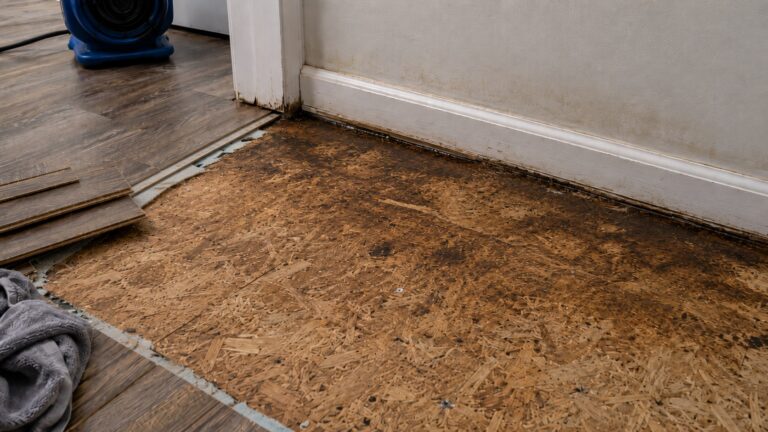
New flooring can hide an old moisture problem. If the subfloor below is wet, swollen, delaminated, soft, or moldy, the new flooring may fail, cup, smell musty, or trap moisture below the surface.
Before installing new flooring after a leak, the subfloor should be checked for moisture, strength, flatness, and damage. The source should also be fixed so the same area does not get wet again.
Closing Walls Before Hidden Cavities Are Dry
Drywall can be replaced quickly, but wall cavities may dry slowly. If insulation, framing, sheathing, or the back side of drywall remains damp, closing the wall can trap moisture inside the assembly.
This is especially risky after plumbing leaks, exterior wall leaks, window leaks, roof leaks, and flooding. A wall that looks repaired on the surface can still have hidden moisture if drying was not verified before rebuilding.
Assuming Mold Cleanup Solves the Structural Problem
Mold is often a result of moisture, not the original cause. Cleaning visible mold does not fix a leaking roof, damp subfloor, wet wall cavity, plumbing drip, failed window seal, or exterior wall leak.
If mold appears near structural materials, the moisture source and affected assembly should be addressed first. Mold cleanup and structural moisture repair are related, but they are not the same job. For broader mold cleanup guidance, use the guide on how to remove mold permanently.
Using Caulk as the Main Repair for a Larger Water Problem
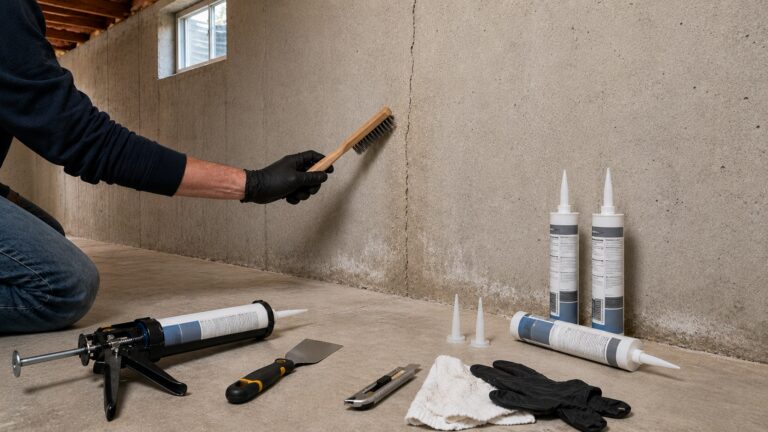
Caulk can seal small gaps when used in the right location, but it should not be used as the main fix for failed flashing, roof leaks, siding problems, structural movement, rotted trim, or drainage defects. When water is being driven into an assembly, caulk alone often fails because it does not correct the underlying water path.
If caulk keeps cracking, peeling, separating, or needing repeated replacement in the same area, the problem may be movement, poor drainage, missing flashing, trapped moisture, or a larger assembly failure.
More Structural Moisture Repair Guides
The guides below cover specific repair, replacement, safety, crawl space, HVAC, basement, flood, subfloor, framing, and contractor-decision topics that connect back to structural moisture problems.
Persistent Moisture and Leak Repair Guides
- How to Fix Persistent Moisture Behind Baseboards
- Why Flooring Feels Soft After Water Damage
- How to Fix Persistent Moisture Under Floors
- How to Fix Persistent Bathroom Moisture Problems
- How to Fix Persistent Moisture Behind Kitchen Cabinets
- How to Fix Persistent Leaks Under Kitchen Sinks
- How to Fix Persistent Dishwasher Moisture Problems
- How to Fix Persistent Moisture Under Kitchen Floors
- How to Fix Persistent Plumbing Leak Locations
- Why Pipes Leak Under Floors
Exterior Wall, Window, Door, and Flashing Repair Guides
- How to Fix Persistent Exterior Wall Moisture Problems
- How to Fix Persistent Moisture Problems Behind Siding
- How to Fix Persistent Window Leak Problems
- How to Fix Persistent Door Leak Problems
- Signs Exterior Flashing Needs Repair
- How to Fix Persistent Flashing Problems
Crawl Space Moisture and Repair Guides
- Signs Crawl Space Ventilation Needs Repair
- How to Fix Persistent Crawl Space Ventilation Problems
- What Is Crawl Space Encapsulation and How It Works
- Signs Your Crawl Space Needs Encapsulation
- How to Inspect a Crawl Space Before Encapsulation
- Common Problems Found During Crawl Space Encapsulation
- Signs of Failed Crawl Space Encapsulation
- How to Fix Persistent Moisture After Encapsulation
- Why Crawl Space Wood Framing Develops Mold
- How to Fix Persistent Structural Crawl Space Moisture Problems
- Why Crawl Space Drainage Systems Fail
- Signs Crawl Space Drainage Needs Repair
- How to Fix Persistent Crawl Space Drainage Problems
Basement, Drainage, Sump Pump, and Foundation Repair Guides
- How to Fix Persistent Basement Floor Water Problems
- Signs Basement Drainage Needs Repair
- How to Fix Persistent Basement Drainage Problems
- Signs Your Sump Pump Needs Replacement
- How to Fix Persistent Basement Flooding Problems
- Best Foundation Crack Repair Kits
- How Much Does Foundation Crack Repair Cost?
HVAC Moisture and Indoor Humidity Repair Guides
- How to Fix Persistent HVAC Moisture Problems
- How to Fix Persistent HVAC Condensation Issues
- How to Inspect HVAC Ductwork for Moisture Damage
- How to Fix Persistent HVAC Duct Moisture Problems
- How to Inspect HVAC Airflow Systems
- How to Fix Persistent Indoor Humidity Problems
- Best Condensation Pumps for HVAC Systems
- Little Giant VCMA-20 Condensate Pump Review: HVAC Moisture Drainage Tested
Repair, Replacement, Cost, and Contractor Decision Guides
- How to Prioritize Moisture Repairs in Your Home
- Best Crawl Space Vent Covers
- When to Hire a Crawl Space Repair Specialist
- How to Choose a Crawl Space Encapsulation Contractor
- How Much Does Crawl Space Encapsulation Cost?
- How Much Does Crawl Space Repair Cost?
- Should You Repair or Replace Crawl Space Vapor Barriers?
- Should You Repair or Replace Crawl Space Insulation?
- Should You Repair or Replace Water-Damaged Flooring?
- Questions to Ask Before Hiring a Crawl Space Contractor
- How to Compare Crawl Space Repair Quotes
- How to Avoid Contractor Scams for Moisture Repairs
- When to Call Water Damage Restoration Services
Flood Damage, Safety, and Material Replacement Guides
- Electrical Safety After Flood Damage
- How to Shut Off Utilities After Flooding
- Safety Hazards to Watch for After Flooding
- Drywall Replacement After Flooding
- When Flooring Must Be Replaced After Flooding
- When Insulation Must Be Replaced After Flooding
Subfloor, Joist, Framing, and Structural Safety Guides
- When Subfloors Must Be Replaced After Water Damage
- When Floor Joists Must Be Replaced
- When Structural Framing Must Be Repaired
- How to Evaluate Structural Safety After Water Damage
- How Structural Damage Progresses After Moisture Exposure
- Signs of Ceiling Collapse Risk After Water Damage
FAQ About Structural Moisture Problems
How do I know if water damage is structural?
Water damage may be structural if it affects subfloors, joists, beams, framing, roof decking, sill plates, wall sheathing, window or door frames, or other materials that support or protect the home. Warning signs include soft floors, sagging, darkened or soft wood, recurring stains, swollen materials, and damage that returns after repairs.
Can structural moisture damage dry on its own?
Some damp materials can dry if the source is fixed and air can reach the affected area. But drying on its own is not guaranteed, especially inside wall cavities, under flooring, behind cabinets, in insulation, or inside roof and exterior wall assemblies. A material can also dry but remain damaged if it softened, swelled, rotted, or delaminated.
Is mold always a sign of structural damage?
No. Mold means moisture is present or was present, but it does not automatically mean the structure is damaged. Mold can grow on surface materials, dust, paint, drywall paper, trim, or hidden materials. The structural question depends on whether moisture reached framing, subfloors, sheathing, roof decking, or other building components.
Can a small roof leak cause structural problems?
Yes, a small roof leak can cause structural problems if it repeats over time or stays hidden. A one-time leak that is found and dried quickly may cause limited damage. A slow leak that wets roof decking, insulation, ceiling materials, or framing after every storm can become a larger repair issue.
Should I repair the source before replacing damaged materials?
Yes. The moisture source should be corrected before damaged materials are replaced. Otherwise, the new materials may be damaged by the same leak, condensation problem, exterior wall failure, plumbing drip, or drainage issue.
When should I call a professional for moisture damage?
Call a professional when moisture may involve load-bearing materials, floor joists, beams, subfloors, roof decking, roof framing, large wall sections, flood damage, electrical systems, or damage that keeps returning after repairs. Professional evaluation is also wise when the source cannot be found or when finished surfaces may be hiding deeper damage.
Conclusion
Structural moisture problems begin when water reaches materials that are supposed to stay dry and continue supporting, enclosing, or protecting the home. The problem may start at the roof, exterior wall, plumbing system, window, door, floor, crawl space, basement, or flood-damaged area. What matters most is whether the source has been fixed, whether hidden materials are dry, and whether the affected components are still sound.
Not every stain is structural damage. Not every damp material needs replacement. But repeated moisture, soft materials, hidden leaks, swollen wood, roof leaks, exterior wall failures, plumbing damage, and recurring repairs should be treated as signals to look deeper.
Use this hub as the starting point for structural moisture repair decisions. If the problem is roof-related, begin with roofing material failures. If it comes through the exterior wall, use the exterior wall moisture guide. If the concern is framing, joists, subfloors, or beams, use the structural moisture signs guide. If the source is plumbing, use the plumbing leak damage guide. If the moisture appears around openings, use the window and door moisture guide.
The best repair is not simply the one that makes the surface look normal again. The best repair corrects the source, dries the affected area, preserves what can safely remain, replaces what no longer performs, and prevents the same moisture path from returning.
4 Comments
Comments are closed.