
Signs Crawl Space Drainage Needs Repair
Crawl space drainage usually needs repair when water keeps returning after basic fixes, drain channels hold standing water, sump pumps cycle more often than normal, or soil stays wet for days after rain. These signs suggest the system is no longer moving water out of the crawl space effectively.
Small improvements such as extending downspouts, correcting low soil areas, or redirecting runoff can help when the problem is still minor. When moisture comes back despite those corrections, the issue often moves from routine maintenance into drainage repair. If you are still confirming the early warning signs, review signs of poor crawl space drainage first.
This guide focuses on repair-level warning signs: repeated water patterns, blocked drainage channels, sump pump stress, saturated soil, and material damage inside the crawl space.
For the broader structural risk behind these symptoms, see structural moisture problems in homes: causes, risks, and repair guide.
When Drainage Problems Move Beyond Maintenance
Most crawl space drainage systems require occasional maintenance, but there is a clear difference between routine upkeep and structural repair needs. Maintenance addresses minor issues, while repair corrects failures that prevent water from leaving the crawl space.
Temporary Fixes Stop Producing Results
One of the earliest repair-readiness indicators is when previously effective solutions stop working. For example, downspout extensions, grading corrections, or small surface-water adjustments may reduce moisture for a while, but the same crawl space areas eventually get wet again.
- Water reappearing after rainfall despite grading improvements
- Moisture returning after minor drainage adjustments
- Temporary fixes losing effectiveness over time
- Repeated cleanup required after storms
- Persistent damp conditions despite maintenance
When improvements no longer reduce moisture levels, the problem may be inside the drainage system itself, such as a blocked line, failed sump pump, collapsed pipe, or poorly draining channel. For the root causes behind those failures, see why crawl space drainage systems fail.
Recurring Moisture Appears in the Same Locations
Drainage failures typically follow consistent patterns. Water often returns to the same locations within the crawl space because system components no longer direct water away effectively.
- Wet areas forming in identical locations
- Moisture appearing along the same wall sections
- Recurring damp soil beneath certain zones
- Repeated mold growth in specific areas
- Water patterns matching previous problem locations
Consistent moisture patterns usually mean the same drainage path is failing repeatedly.
Water That Returns Despite Improvements
Water returning after drainage improvements is one of the clearest signs that repair is needed. Exterior corrections such as grading work, downspout extensions, and runoff control should reduce moisture. If water continues appearing, clogged pipes, damaged drainage channels, or sump pump failure may be preventing the system from removing water.
Moisture Appears Shortly After Rainfall
When drainage systems are functioning properly, crawl spaces should remain mostly dry between storms. If moisture returns quickly after rainfall, the system is likely unable to handle incoming water.
- Water appearing within hours of rainfall
- Damp soil forming repeatedly after storms
- Wet conditions returning before soil dries
- Moisture increasing after moderate rainfall
- Recurring puddles near drainage areas
These recurring moisture cycles indicate that drainage capacity has been reduced or blocked.
Exterior Improvements Provide Little or No Change
Improvement efforts such as redirecting water away from the foundation should produce noticeable results. When changes have little impact, deeper structural drainage problems are likely present.
- Downspout extensions installed but moisture remains
- Low spots filled but pooling continues
- Surface water redirected with minimal improvement
- Repeated adjustments failing to reduce moisture
- Drainage improvements not reducing humidity levels
If exterior work was incomplete or uncertain, how to improve drainage around crawl spaces explains the outside corrections that should be checked before assuming the drainage system itself needs repair.
Drainage System Not Removing Water Properly
A functioning crawl space drainage system should collect water and move it toward a safe discharge point. When water lingers in channels, soil, or sump areas instead of leaving the crawl space, the system may be blocked, damaged, undersized, or mechanically failing.
Standing Water Inside Drainage Channels
Drainage channels are designed to collect and direct water away from crawl space walls. If water remains inside these channels instead of flowing outward, the system is no longer performing correctly.
- Water remaining in drainage trenches long after rainfall
- Visible pooling inside perimeter channels
- Slow-moving water that fails to exit the system
- Sediment buildup inside drainage areas
- Overflowing drainage trenches during storms
Standing water inside channels usually indicates that pipes are partially blocked, collapsed, poorly sloped, or unable to carry water to the discharge point.
Water Collecting Near Sump Basins
Sump basins are designed to collect water before it is pumped out of the crawl space. When water accumulates around the basin instead of entering it properly, the system may be damaged or obstructed.
- Water pooling around the sump basin
- Drain lines failing to direct water into the basin
- Overflow occurring during moderate rainfall
- Visible debris blocking basin openings
- Water remaining near pump areas
These signs often appear before complete system failure and should be addressed promptly. If electrical components, extension cords, or pump wiring are near standing water, avoid entering the area until the electrical risk has been evaluated safely.
Frequent Pump Cycling or Continuous Operation
Sump pumps are designed to operate only when water levels rise to a certain point. Frequent or continuous pump operation often signals that the drainage system is under stress or experiencing mechanical problems.
Track whether cycling is becoming more frequent, lasting longer, or occurring during dry weather.
Pump Running More Often Than Usual
In healthy systems, pumps operate occasionally during rainfall and remain inactive during dry conditions. When pumps begin cycling frequently, it usually means the system is struggling to remove water efficiently.
- Pump activating every few minutes during rain
- Short cycling with repeated on-and-off behavior
- Pump activity increasing over time
- Water levels rising faster than expected
- System running longer than in previous seasons
Frequent cycling increases wear on pump components and can lead to sudden mechanical failure.
Pump Running During Dry Weather
If a sump pump runs when rainfall has not occurred, water may be entering from high groundwater, a stuck float switch, a leaking discharge line, or drainage lines that are feeding water back toward the basin.
- Pump operating during dry conditions
- Unexpected water entering the sump basin
- Continued cycling without visible rainfall
- Noise from repeated pump operation
- Water accumulation without clear external cause
This behavior often signals deeper drainage problems that extend beyond simple surface runoff.
Persistent Soil Saturation Beneath the Crawl Space
Healthy crawl space soil should dry between rainfall events. When soil stays muddy, sticky, or damp for days after storms, the drainage system may not be removing water effectively. Saturated soil also becomes a continuous humidity source that increases mold, pest, and structural moisture risk.
Soil Remaining Wet for Days After Rain
Proper drainage allows soil to dry naturally after storms. When moisture remains trapped, soil conditions become increasingly unstable.
- Muddy soil remaining several days after rainfall
- Damp soil that never fully dries
- Sticky or soft ground beneath the home
- Wet patches expanding across the crawl space
- Moisture spreading beyond initial problem areas
Soil that remains wet for extended periods usually indicates that drainage capacity is inadequate or blocked.
Moisture Spreading Across Larger Areas
Drainage problems often start in isolated areas, but they may spread as the system deteriorates. Expanding moisture zones indicate that water movement is no longer controlled.
- Small wet spots expanding after repeated storms
- Damp soil spreading toward foundation walls
- Moisture moving beneath more floor area
- Multiple wet zones appearing at once
- Previously dry areas becoming damp
Expanding moisture patterns often mean drainage failure is progressing rather than remaining isolated.
Drain Channels Backing Up or Overflowing
Drainage channels and pipes should allow water to move away from the crawl space. When these components back up or overflow, repair is often necessary. Backup usually means water cannot move through the system at the required rate.
Overflow problems may occur during heavy rain, but repeated overflow during moderate rainfall suggests system failure.
Water Rising Above Drain Level
Water that rises above drain channels or collection points indicates that the drainage system cannot keep up with incoming moisture. This may happen because the system is clogged, undersized, or damaged.
- Water rising above channel edges
- Overflow from drainage trenches
- Water spilling into surrounding soil
- Drainage areas backing up repeatedly
- Water moving in the wrong direction
Repeated backup strongly suggests that repair or replacement of drainage components may be necessary.
Sediment or Debris Blocking Drain Entry Points
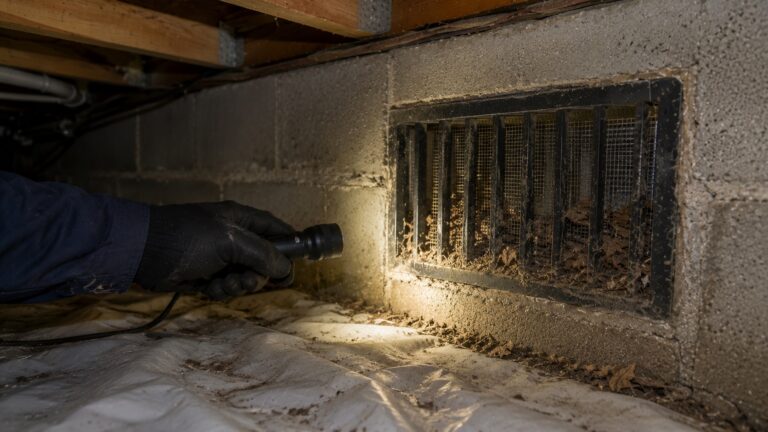
Drainage systems can become blocked by soil, sediment, debris, or collapsed material. When water cannot enter the system freely, it remains inside the crawl space instead of being removed.
- Visible mud near drain openings
- Sediment collecting inside channels
- Debris blocking water entry points
- Drain covers or openings clogged
- Water flowing around drains instead of into them
Blocked entry points often signal long-term maintenance neglect or system deterioration, especially in older systems where sediment and debris have had time to accumulate.
Recurring Mold and Moisture Damage
Drainage repair may be needed when mold, odors, or material damage keep returning after cleanup. If cleanup does not last, water is probably still entering or staying inside the crawl space.
Mold Returning After Cleanup
Mold growth that returns after cleaning often indicates that crawl space moisture remains uncontrolled. Drainage repair may be needed when mold patterns match recurring wet areas.
- Mold returning in the same crawl space areas
- Musty odors returning after cleanup
- Moisture stains appearing near mold zones
- Repeated surface cleaning without lasting improvement
- Mold growth spreading after wet weather
Recurring mold should not be treated as a cleaning problem alone when drainage failure is still present.
Damage to Insulation and Structural Materials
When drainage systems fail, moisture can damage insulation, wood framing, subflooring, and vapor barriers. Repeated wetting weakens materials and increases repair urgency.
- Sagging or wet insulation
- Discoloration on floor joists
- Damp vapor barrier surfaces
- Soft or deteriorating wood
- Moisture stains on structural members
Material damage indicates that water exposure has continued long enough to affect crawl space components.
Structural Warning Signs of Advanced Drainage Failure
Advanced drainage failure can eventually affect structural materials above and around the crawl space. These warning signs are more serious than surface dampness and usually require professional evaluation.
Structural symptoms suggest that moisture has been present long enough to weaken building materials.
Wood Softening or Deterioration
Wood exposed to repeated moisture may soften, darken, or begin to deteriorate. These changes often appear near areas where drainage has failed repeatedly.
- Soft spots in floor joists
- Dark staining on wood members
- Crumbly or weakened wood surfaces
- Visible rot near wet crawl space areas
- Wood that stays damp between storms
Wood deterioration means drainage failure may already be affecting structural integrity.
Floor Sagging or Uneven Surfaces Above
In severe cases, crawl space moisture problems may affect floors above the crawl space. Sagging, unevenness, or soft flooring can indicate that structural components are being weakened by repeated moisture exposure.
- Soft spots in floors above the crawl space
- Sagging areas over wet crawl space zones
- Uneven floor surfaces
- Floor bounce increasing over time
- Persistent dampness beneath affected floor areas
Structural movement or soft flooring should be evaluated quickly because drainage repair may need to be combined with structural repair.
Escalation Patterns That Indicate Urgent Repair
Drainage repair becomes more urgent when symptoms escalate over time. A single wet spot is less concerning than moisture that spreads, appears more frequently, or affects multiple crawl space components.
Moisture Problems Becoming More Frequent
Frequency matters when evaluating repair needs. Moisture that once appeared only after heavy storms but now appears after moderate rain suggests that drainage capacity has declined.
- Wet conditions appearing after smaller storms
- Drainage issues occurring more often
- Dry periods becoming shorter
- Moisture returning faster than before
- Problems worsening season after season
Increasing frequency usually means drainage performance is declining.
Damage Appearing in Multiple Areas
Drainage failure becomes more serious when damage is no longer isolated. Multiple affected zones suggest that the system is failing broadly rather than in one small area.
- Several wet areas forming at once
- Moisture affecting both soil and wood materials
- Multiple structural materials showing damage
- Increasing humidity throughout the crawl space
- Expansion of mold growth zones
Widespread damage strongly suggests that the drainage system is failing across multiple components.
When to Stop Waiting
Waiting becomes risky when repeated water exposure is paired with material damage, spreading moisture, or pump failure. At that point, the crawl space is no longer just damp; it is showing signs that the drainage system is allowing damage to progress.
Water Returns After Every Rainfall
One of the clearest signs of urgent repair is when water consistently returns after nearly every storm. Occasional moisture may be manageable, but repeated flooding patterns signal that the drainage system has failed.
- Water appearing after most rain events
- Little or no drying time between storms
- Persistent pooling in drainage areas
- Recurring moisture buildup beneath the home
- Increased frequency of wet conditions
These repeated cycles often indicate deeper problems that cannot be solved through surface improvements alone.
Moisture Damage Is Increasing Over Time
Another urgent repair signal is visible worsening of existing damage. Moisture problems that continue spreading suggest that drainage conditions are deteriorating.
- Mold spreading across larger areas
- Insulation becoming saturated repeatedly
- Wood showing increased deterioration
- Persistent odors becoming stronger
- Visible expansion of moisture-affected zones
When damage continues growing, repair delays allow moisture exposure to intensify.
Professional Evaluation and Repair Planning
Once drainage problems reach repair-level conditions, professional evaluation is often necessary. Contractors can identify damaged components, confirm system capacity, and recommend appropriate repair methods.
Professional planning becomes especially important when wet soil, standing water, pump problems, and wood damage appear together.
What Professionals Typically Evaluate
During a professional inspection, contractors assess multiple drainage components to determine where failure is occurring.
- Condition of drainage pipes
- Function of sump pump systems
- Water flow through drainage channels
- Soil moisture patterns around the foundation
- Discharge locations and water movement
Understanding how these elements interact helps professionals identify the correct repair approach. Detailed inspection procedures are outlined in how to inspect crawl space drainage systems, which explains how drainage systems are evaluated.
Why Professional Repair May Be Necessary
Some drainage problems involve structural components that cannot be safely repaired without specialized tools or experience. Attempting major repairs without proper knowledge may worsen the problem.
- Collapsed drainage pipes
- Major blockages within underground lines
- Failed sump pump systems
- Extensive soil saturation around foundation
- Drainage systems requiring redesign
When repeated moisture problems occur despite improvements, the system may need more than cleaning, minor grading work, or temporary runoff control.
Frequently Asked Questions About Crawl Space Drainage Repair
How do I know if my crawl space drainage system is broken?
A drainage system is likely broken if water repeatedly returns after rainfall, soil remains saturated for long periods, drain channels hold standing water, or drainage components fail to remove water effectively.
Can drainage systems fail suddenly?
Yes. Mechanical failures such as pump breakdowns, stuck float switches, discharge line problems, or pipe collapses can cause sudden drainage failure. However, many systems fail gradually over time as debris accumulates or components deteriorate.
How long can drainage problems go without repair?
Drainage problems should not be ignored once water keeps returning, soil stays wet for days, or wood, insulation, or vapor barriers begin deteriorating. Delaying repair allows moisture to spread and usually increases the risk of structural damage.
Is recurring water always a repair issue?
Recurring water is more likely to require repair when it returns after downspout extensions, grading corrections, sump pump checks, or other basic improvements. A single damp spot may be maintenance-related, but repeated water in the same areas usually points to a system problem.
Can temporary fixes delay major repairs?
Temporary fixes can reduce symptoms briefly, but they should not be relied on if water keeps returning. If the same crawl space areas stay wet after each rain, the drainage system should be inspected for blockages, damage, pump failure, or poor discharge.
Key Takeaways
- Recurring moisture despite improvements often signals drainage repair is needed.
- Standing water inside drainage channels indicates system failure.
- Frequent sump pump cycling may signal underlying drainage problems.
- Persistent soil saturation is a strong repair-readiness indicator.
- Structural warning signs increase urgency for professional repair.
- Ignoring drainage failure increases repair cost and structural risk.
- Professional evaluation helps identify correct repair strategies.
Conclusion
Crawl space drainage usually needs repair when water keeps returning after basic improvements, drain channels back up, sump pumps cycle excessively, soil stays saturated, or moisture damage begins spreading. These patterns show that the system is no longer removing water reliably.
Once repair-level symptoms appear, document where water returns, how long soil stays wet, how often the pump runs, and whether damage is spreading. Then review how to fix persistent crawl space drainage problems to compare likely repair options.
One Comment
Comments are closed.