Signs Basement Drainage Needs Repair (When Your System Is No Longer Working Properly)
Basement drainage systems are designed to collect and move water away from your foundation before it can enter your home. When these systems are working correctly, water is redirected efficiently and rarely becomes visible inside the basement.
When a basement drainage system needs repair, the warning signs usually show up as changed water behavior: water drains more slowly, returns to the same spots, pools near the wall-floor joint, or overwhelms the sump system during rain. These patterns suggest the system is no longer moving water the way it was designed to.
If you’re seeing general moisture issues but aren’t sure whether drainage is the problem, it may help to review signs of failed basement waterproofing to understand how broader system failures appear.
This guide focuses specifically on drainage-related warning signs that suggest repair may be needed instead of simple maintenance.
What Basement Drainage Repair Really Means
Basement drainage repair involves restoring the system’s ability to move water efficiently. This can include clearing blockages, correcting slope issues, repairing damaged pipes, or upgrading system capacity.
Unlike routine maintenance, which prevents problems, repair becomes necessary when the system’s performance has already declined.
A simple way to separate maintenance from repair is this: maintenance keeps a working system clear, while repair restores a system that is already showing repeated water problems, poor flow, or visible failure patterns.
| Symptom | Likely Maintenance Issue | Likely Repair Issue |
|---|---|---|
| Slow drainage after one storm | Debris, sediment, or temporary overload | Repeated slow drainage after normal rain |
| Sump pump runs more often | Heavy rain or seasonal groundwater | Constant cycling, long run times, or water still rising |
| Damp spot near one wall | Minor surface moisture or isolated seepage | Same spot returns after each rain event |
| Water near the perimeter | Short-term water load | Pooling, delayed drainage, or expanding wet areas |
Most basement drainage systems include:
- Interior drain tile or perimeter drainage channels
- Sump basin and collection points
- Connections to sump pumps or discharge lines
- Entry points where water flows into the system
When any part of this system stops working properly, water begins to accumulate instead of being removed. Over time, this leads to increased pressure around the foundation and a higher risk of water entering the basement.
Understanding why drainage systems fail can help clarify whether repair is necessary. For a deeper explanation, see why basement drainage systems fail, which explains the underlying causes behind reduced flow, blockages, and system breakdown.
Early Signs Your Drainage System Is Struggling
Drainage problems often begin gradually. Early signs may not seem serious, but they indicate that the system is no longer working at full capacity.
If you are still trying to identify whether the issue is drainage-related at all, start with early signs of poor basement drainage before deciding whether the system has reached the repair stage.
Water Takes Longer to Drain After Rain
One of the earliest repair-level warning signs is a noticeable change in drainage speed. If areas that used to dry quickly now stay damp for hours or days after rain, the system may be partially blocked, undersized, or no longer sloped correctly.
This often appears as:
- Damp areas that remain for extended periods
- Moisture along the wall-floor joint that fades slowly
- Water that recedes but leaves visible staining
Slow drainage typically signals partial blockage or reduced flow efficiency.
One slow drying event after an unusually heavy storm does not always mean the drainage system has failed. The stronger warning sign is a pattern: the same area drains slowly after normal rain, takes longer to dry than it used to, or keeps returning after maintenance.
Recurring Damp Spots in the Same Locations
When moisture repeatedly appears in the same areas, it usually indicates a consistent drainage weakness.
Common locations include:
- Perimeter edges of the basement floor
- Corners where walls meet
- Areas near known drainage entry points
Repeated moisture in the same location is more concerning than a one-time damp spot because it points to a consistent weakness in the drainage path.
Increased Sump Pump Activity
If your sump pump begins running more frequently than usual, it may be compensating for drainage inefficiencies.
Signs include:
- More frequent pump cycles during rain
- Longer run times per cycle
- Operation even during moderate weather conditions
This does not always indicate pump failure—it often means the drainage system is delivering water less efficiently, forcing the pump to work harder.
Regular maintenance can help prevent these issues, but once performance declines, repair may be required. Maintenance practices are covered in how to maintain basement drainage systems.
Clear Signs Your Drainage System Needs Repair
As problems progress, symptoms become more obvious and consistent. At this stage, the system is no longer functioning properly and repair is usually necessary.
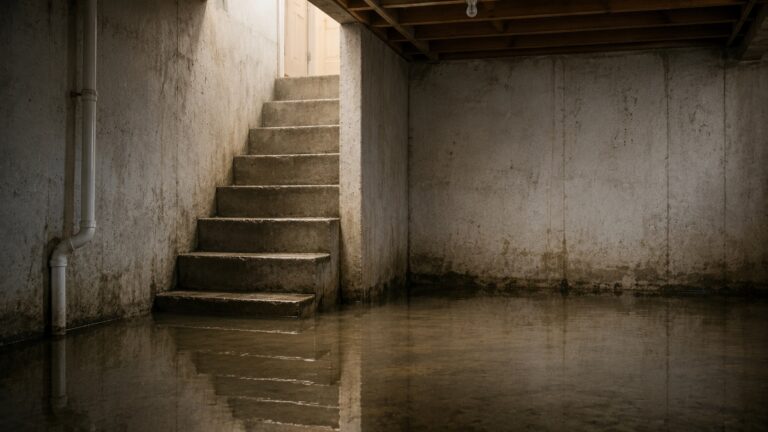
Water Pooling Near Basement Walls
Standing or pooling water near walls is one of the strongest indicators of drainage failure.
This occurs when water is no longer being carried away efficiently and begins to accumulate at the lowest points of the basement.
Common signs include:
- Puddles forming after rain
- Water collecting along the wall-floor joint
- Wet areas that do not dry quickly
Pooling water suggests that the drainage system is either blocked or unable to handle the volume of water entering it.
Water Appears Quickly During Storms
If water begins entering the basement rapidly during rain events, it often means the drainage system cannot keep up with incoming water.
This pattern typically indicates:
- System capacity limitations
- Severe blockages restricting flow
- Improper system design for current conditions
In these cases, maintenance alone is unlikely to resolve the issue.
Persistent Moisture Despite Regular Maintenance
If you are maintaining your system but still experiencing moisture problems, it suggests that the issue goes beyond routine care.
This may indicate:
- Hidden blockages within the drainage system
- Pipe misalignment or structural damage
- Changes in environmental conditions affecting performance
When maintenance no longer improves performance, repair becomes necessary to restore proper function.
Sump Pump Warning Signs Linked to Drainage Problems
Sump pump symptoms do not always mean the pump itself is failing. Sometimes the pump is reacting to a drainage system that is restricted, overwhelmed, or delivering water unevenly.
Pump Runs Constantly During Rain
If your sump pump runs continuously during rain events, it may indicate that water is entering the system faster than it can be moved through drainage channels.
This often points to:
- Restricted flow before water reaches the basin
- Excessive water buildup around the foundation
- More water entering the system than the pump and drainage path can remove
While pumps are designed to handle increased load, constant operation increases wear and raises the risk of failure.
If the warning signs seem centered on the pump itself rather than the drainage path, compare them with signs your basement sump pump is not working.
Pump Cannot Keep Up With Water Volume
If water continues to accumulate even while the pump is running, it is a strong sign that the system is overwhelmed.
This may be caused by:
- Drainage capacity limitations
- Partial or full blockages upstream
- System design that no longer matches environmental conditions
In these situations, the pump is not the root problem—it is simply unable to compensate for a failing drainage system.
Water Behavior That Indicates Drainage Failure
Drainage-related water usually shows a pattern. It appears near the perimeter, lingers after rain, returns to the same low spots, or shows up faster as the system becomes more restricted.
Water Appears Along the Perimeter Only
If water consistently appears along the edges of the basement floor, it is often tied directly to the drainage system.
This indicates that water is reaching the foundation but not being properly redirected into the drainage channels.
Water Lingers Instead of Draining Away
Water that remains in place rather than draining quickly is a clear sign of flow restriction.
Common observations include:
- Wet areas that stay damp for extended periods
- Slow receding moisture after storms
- Visible water trails that do not fully dry
These conditions suggest partial blockage or reduced drainage efficiency.
Water Appears Without Heavy Rain
Water appearing during light rain, long after a storm, or when the basement should already be dry may indicate that groundwater pressure is staying high around the foundation or that drainage flow is severely restricted.
Possible causes include:
- Full blockage preventing normal drainage
- High groundwater levels overwhelming the system
- Persistent pressure buildup around the foundation
This type of behavior often requires immediate attention and likely repair.
When Maintenance Is No Longer Enough
Routine maintenance can prevent many problems, but there is a point where maintenance alone cannot restore system performance.
Recurring Problems Despite Regular Upkeep
If you are performing routine maintenance but still experiencing issues, it suggests that the system has underlying damage or design limitations.
Examples include:
- Repeated dampness after each rain event
- Ongoing slow drainage despite cleaning efforts
- Persistent sump pump strain
At this stage, continued maintenance without repair may only delay the problem.
Increasing Severity Over Time
Drainage problems that worsen gradually indicate that system performance is declining.
Warning patterns include:
- Small damp spots becoming larger over time
- Water appearing more frequently
- Longer drying times after each event
These changes show that the system is no longer maintaining proper water flow.
Water Appears Faster With Each Storm
If water begins appearing sooner during rain events, it suggests that the system is losing its ability to manage incoming water.
This often indicates:
- Increasing blockage or restriction
- Decreasing drainage capacity
- Higher pressure around the foundation
When performance declines under stress, repair is typically required to restore functionality.
What to Document Before Requesting Drainage Repair
Before calling a contractor, document the pattern rather than only the damage. This helps separate a drainage failure from a one-time storm overload or a separate sump pump problem.
- Where water first appears
- How long it takes to appear after rain begins
- How long the area stays wet after rain stops
- Whether the sump pump runs constantly, cycles briefly, or cannot keep up
- Whether the same spots return after routine cleaning or maintenance
When to Call a Professional
Call a professional when the pattern suggests a hidden blockage, damaged drain tile, failed discharge path, poor system slope, or capacity problem. Homeowners can document where and when water appears, but locating the actual failure often requires camera inspection, drainage testing, or foundation-level evaluation.
Repeated Water Intrusion
If water continues to enter the basement despite maintenance efforts, it is a strong indicator that repair is necessary.
- Water returns after every rain event
- Moisture appears in the same locations repeatedly
- Temporary fixes do not improve the situation
These patterns suggest that the drainage system is no longer functioning correctly and requires more than routine upkeep.
Signs of Hidden System Damage
Some drainage problems are not visible on the surface. Internal blockages, pipe damage, or misalignment can affect performance without obvious external signs.
Indicators may include:
- Slow drainage despite visible cleaning
- Unexplained sump pump strain
- Inconsistent water behavior
In these cases, professional inspection can identify the source of the issue. Homeowners can learn more about this process in how to inspect basement waterproofing systems.
Flooding or Rapid Water Accumulation
Sudden water buildup or flooding is a clear sign that the drainage system is not functioning at all or is severely compromised.
If water is reaching outlets, electrical equipment, appliances, or the sump pump power supply, avoid standing in the water and shut off power only if it can be done safely from a dry location.
This may indicate:
- Complete blockage within the system
- Drainage pathways failing under pressure
- System capacity limitations during storms
At this point, the system should be evaluated before the next heavy rain because rapid accumulation can lead to flooring damage, wall seepage, sump pump failure, or unsafe electrical conditions.
For homeowners facing ongoing issues, exploring how to fix persistent basement drainage problems can help clarify what repair options may be necessary.
Frequently Asked Questions About Basement Drainage Repair
How do I know if my basement drainage system needs repair?
A basement drainage system may need repair when water drains more slowly than before, returns to the same floor edges or corners, pools near basement walls, or causes the sump pump to run harder during rain. Repeated patterns are more important than one isolated damp spot.
Can a basement drainage system be repaired instead of replaced?
Yes. Some problems, such as partial blockages, damaged discharge lines, poor connections, or localized flow restrictions, may be repairable. Full replacement is more likely when the system is undersized, collapsed, badly misaligned, or repeatedly overwhelmed.
Is slow basement drainage always a serious problem?
Not always. Slow drainage after an unusually heavy storm may not mean the system has failed. It becomes more concerning when drying times get longer, the same areas stay wet after normal rain, or maintenance no longer improves the flow.
Can sump pump problems be caused by bad drainage?
Yes. A sump pump may run constantly, cycle frequently, or struggle to keep up when the drainage system is delivering water unevenly or too slowly. In that case, the pump may be a symptom rather than the original cause.
When should I call a contractor for basement drainage repair?
Call a contractor if water enters repeatedly, pools near walls, appears faster with each storm, remains after routine maintenance, or reaches electrical equipment. These signs may point to hidden blockage, damaged drain tile, poor slope, or a system capacity problem.
Final Signs Your Basement Drainage System Needs Repair
A basement drainage system usually needs repair when water behavior changes in a repeatable way: slower drainage, recurring damp spots, pooling near the walls, sump pump strain, or water entering faster during storms.
The most important distinction is whether maintenance still improves the problem. If cleaning, monitoring, or basic upkeep no longer changes the pattern, the issue is more likely a repair-level drainage failure.
If you are unsure whether drainage symptoms are connected to deeper foundation or structural moisture issues, review structural moisture problems in homes to see how recurring water movement can affect framing, foundations, and long-term repair decisions.
Key Takeaways
- A basement drainage system usually needs repair when water behavior changes repeatedly, not after one isolated damp spot
- Slow drainage, recurring damp spots, perimeter pooling, and sump pump strain are the strongest warning patterns
- If routine maintenance no longer changes the pattern, the problem is more likely repair-level
- Sump pump strain can point to upstream drainage restrictions, not only pump failure
- Rapid water accumulation should be evaluated before the next heavy rain, especially near electrical equipment
- Document where water appears, how fast it appears, and how long it remains before requesting repair