Best Condensation Pumps for HVAC Systems
If you have ever found water around your air handler, furnace, boiler, or dehumidifier, the problem may not be a major leak. Sometimes the equipment is simply producing condensate that has nowhere to drain by gravity.
A condensate pump solves that problem by collecting water in a small reservoir and automatically pumping it to a drain, sink, laundry standpipe, sump pit, or approved discharge point.
This is common in basements, utility closets, laundry areas, and finished lower levels where even a small overflow can damage flooring or create a musty smell.
This guide compares the best condensation pumps for HVAC systems based on practical homeowner needs: reliable automatic operation, lift height, flow rate, safety-switch protection, tubing compatibility, and residential HVAC suitability. The goal is not to replace HVAC diagnosis. If your system is leaking because of a clogged drain line, frozen coil, poor airflow, or installation problem, start with the cause. But if your HVAC system simply needs help moving condensate uphill or across the room, the right pump can make moisture control much easier.
If you are still unsure whether the water is normal condensate or a larger issue, start with the guide to signs of HVAC condensation problems.
For broader moisture and structural warning signs, see the parent guide on structural moisture problems in homes. You can also use the sitewide guide on how to find, fix, and prevent moisture problems for a complete home moisture-control overview.
Amazon affiliate disclosure: As an Amazon Associate, DryHomeGuide may earn from qualifying purchases at no extra cost to you.
Best Condensation Pumps for HVAC Systems: Quick Picks
| Category | Product | Best Use | Amazon Link |
|---|---|---|---|
| Best Overall | Little Giant VCMA-20ULST | Most homeowners who want a proven HVAC condensate pump with strong residential versatility | Check on Amazon |
| Best Value | Little Giant VCMA-15ULST | Standard residential HVAC systems, furnaces, boilers, and dehumidifier drainage | Check on Amazon |
| Best for Higher Lift | Asurity by DiversiTech ULTRACP-22T | Basement or utility-room setups where condensate must be pumped upward farther | Check on Amazon |
| Best Budget Alternative | Aquastrong Automatic Condensate Pump for HVAC | Budget-conscious homeowners needing a basic automatic condensate pump | Check on Amazon |
| Best Dual-Voltage Option | Aquastrong HVAC Condensate Pump 115V/230V | Installations where voltage flexibility matters | Check on Amazon |
| Best Pro-Brand Backup Pick | Beckett BK171UL | Homeowners who prefer a known pump brand and want a backup option if top picks are unavailable | Check on Amazon |
Which HVAC Condensate Pump Should You Choose?
- Choose Little Giant VCMA-20ULST if you want the safest overall pick for most home HVAC setups.
- Choose Little Giant VCMA-15ULST if you need a proven value option for a standard residential system.
- Choose Asurity by DiversiTech ULTRACP-22T if your drain route requires more vertical lift.
- Choose Aquastrong 115V if you want a budget alternative for a simple setup.
- Choose Aquastrong 115V/230V if voltage flexibility is part of your installation decision.
Condensate Pump Reviews
Each pump below was chosen for a specific homeowner situation. The main differences are not flashy features, but practical installation factors: lift height, capacity, voltage, safety-switch protection, and how easily the pump can be inspected later.
Little Giant VCMA-20ULST
Category Label: Best Overall
Quick verdict: The best starting point for most homeowners replacing or adding an HVAC condensate pump.
The Little Giant VCMA-20ULST is the pump I would start with for most home HVAC setups because it balances capacity, brand reputation, safety-switch protection, and residential HVAC compatibility.
It is designed to move condensate from air conditioners, high-efficiency furnaces, boilers, and dehumidifiers when water cannot drain downhill on its own. For homes where the HVAC unit sits below the nearest drain, this type of pump can help keep water from pooling around the equipment or spreading across the floor.
This is the model I would put first because it matches the most common real-world situation: the HVAC system is working, water is collecting normally, but the drain point is too high or too far away.
It is especially useful as a furnace condensate pump in basements where the discharge point sits above the equipment.
Key Features
- Designed for automatic condensate removal from HVAC and related equipment
- Higher-capacity option than the smaller VCMA-15 series
- Includes overflow safety-switch functionality for added protection
- Useful for air conditioners, furnaces, boilers, and dehumidifiers
- Compact enough for many utility rooms, basements, closets, and mechanical areas
Pros
- ✔ Strong overall choice for residential HVAC condensate removal
- ✔ Proven pump line with broad homeowner and HVAC use
- ✔ Good pick when a standard gravity drain is not available
- ✔ Overflow switch can help reduce overflow risk when wired correctly
- ✔ Better suited for a main recommendation than most low-review alternatives
Cons
- ✖ May be more pump than a very small, low-condensate setup needs
- ✖ Still requires correct discharge routing and safe electrical placement
- ✖ Does not fix clogged HVAC drain lines, frozen coils, or poor system maintenance
Best For
- Homeowners who want one dependable condensate pump for a standard HVAC, furnace, boiler, or dehumidifier setup
- Basement mechanical rooms where condensate must be pumped up to a drain point
- Replacing an older condensate pump with a well-known residential model
Check the Little Giant VCMA-20ULST on Amazon to see current availability.
Little Giant VCMA-15ULST
Category Label: Best Value
Quick verdict: A practical value pick for standard residential condensate drainage.
The Little Giant VCMA-15ULST is the best value pick for homeowners who need a proven condensate pump but do not necessarily need the higher-capacity VCMA-20 model. It is a sensible choice for standard HVAC condensate drainage, especially when the pump only needs to move water from a furnace, air conditioner, boiler, or dehumidifier to a nearby drain location.
This model makes sense for many homes because not every HVAC setup needs the biggest pump available. What they need is consistent automatic operation, a compact reservoir, an overflow switch, and compatibility with common condensate discharge tubing. For readers looking for a practical replacement pump without overcomplicating the decision, the VCMA-15ULST is one of the safest recommendations in this category.
Key Features
- Automatic condensate pump for common residential HVAC applications
- Lower-capacity Little Giant option compared with the VCMA-20 series
- Overflow detection switch for added safety when properly connected
- Suitable for standard condensate from AC units, furnaces, boilers, and dehumidifiers
- Compact vertical design for tight mechanical spaces
Pros
- ✔ Strong value for ordinary residential condensate pumping
- ✔ Very good fit for many replacement-pump situations
- ✔ Familiar HVAC pump line with broad homeowner use
- ✔ Overflow switch adds protection beyond a basic pump
- ✔ Less excessive than larger pumps for lighter-duty condensate loads
Cons
- ✖ Not the best choice when you need higher lift or more pumping capacity
- ✖ Tubing, routing, and discharge height still need to match the installation
- ✖ A pump replacement will not solve an underlying HVAC condensate problem
Best For
- Standard residential HVAC condensate drainage
- Homeowners replacing a similar small condensate pump
- Dehumidifier setups where gravity drainage is not available but lift demands are moderate
Check the Little Giant VCMA-15ULST on Amazon to see current availability.
Asurity by DiversiTech ULTRACP-22T
Category Label: Best for Higher Lift
Quick verdict: The better choice when your condensate has to travel upward to reach the drain.
The Asurity by DiversiTech ULTRACP-22T makes the most sense for homeowners who need more lift height than a basic condensate pump provides. That matters in a basement or low utility room where the water has to climb up to a sink, standpipe, drain, or another approved discharge point.
DiversiTech is a familiar name in HVAC accessories, which makes this pump a good alternative to the Little Giant models. For homeowners dealing with moisture near an HVAC unit because condensate cannot drain naturally, the ULTRACP-22T gives them a solid higher-lift option.
This is the kind of HVAC drain pump that makes the most sense when the issue is distance or height, not just basic condensate collection.
Key Features
- Designed for HVAC condensate removal applications
- Higher lift capability than many basic residential condensate pumps
- Includes tubing on the selected listing
- Compact design suited for mechanical rooms and utility spaces
- Helpful where the discharge point is above the HVAC unit
Pros
- ✔ Good choice when lift height is the main concern
- ✔ Familiar HVAC accessory brand
- ✔ Useful for basement HVAC installations
- ✔ Included tubing can simplify product selection
- ✔ Gives homeowners a solid alternative to the Little Giant models
Cons
- ✖ Higher lift does not mean it is right for every small setup
- ✖ Users still need to confirm voltage, routing, and tubing compatibility
- ✖ More specialized than a basic replacement pump for short discharge runs
Best For
- Basement HVAC systems that need to pump condensate upward
- Homes where the nearest drain is above the furnace, AC coil, or dehumidifier
- Readers who want an HVAC-brand alternative to Little Giant
Check the Asurity by DiversiTech ULTRACP-22T on Amazon to see current availability.
Aquastrong Automatic Condensate Pump for HVAC
Category Label: Best Budget Alternative
Quick verdict: A budget-friendly option for simple HVAC or dehumidifier condensate drainage.
The Aquastrong Automatic Condensate Pump for HVAC is the budget alternative here. It is not the first pump I would recommend over Little Giant or DiversiTech for a high-confidence HVAC article, but it is useful for homeowners who want a lower-cost-style option that still fits the basic residential condensate pump category.
This pump is intended for applications such as air conditioners, furnaces, dehumidifiers, and similar equipment that produce condensate. It is a reasonable choice when the setup is straightforward, the lift requirement is moderate, and the homeowner wants automatic condensate removal without buying the most established brand. It belongs in the budget slot, not above the more proven Little Giant and DiversiTech options.
Key Features
- Automatic condensate pump for HVAC-related drainage
- Designed for air conditioners, furnaces, dehumidifiers, and similar equipment
- Includes a high-water switch feature
- Compact design for residential mechanical areas
- Useful when gravity drainage is not available
Pros
- ✔ Lower-cost option for straightforward condensate drainage setups
- ✔ Suitable for common residential condensate applications
- ✔ High-water switch feature is a plus at this level
- ✔ Compact enough for many home utility spaces
- ✔ Can work for dehumidifier drainage when the setup matches the pump limits
Cons
- ✖ Not as proven as Little Giant or DiversiTech in HVAC accessory reputation
- ✖ Review and listing details should be rechecked before publishing
- ✖ Better for straightforward setups than demanding or hard-to-access installations
Best For
- Budget-conscious homeowners with a simple HVAC condensate drainage need
- Dehumidifier or AC condensate situations where moderate lift is enough
- Secondary spaces where a basic automatic pump is acceptable
Check the Aquastrong Automatic Condensate Pump for HVAC on Amazon to see current availability.
Aquastrong HVAC Condensate Pump 115V/230V
Category Label: Best Dual-Voltage Option
Quick verdict: A flexible option when voltage compatibility is part of the decision.
The Aquastrong HVAC Condensate Pump 115V/230V is the best fit here for readers who specifically want voltage flexibility. Most homeowners will simply choose the voltage that matches their existing installation, but some HVAC and dehumidifier setups may benefit from a pump listing that supports more than one voltage configuration.
This pump should be presented as a flexible option, not as the default recommendation. It can make sense for readers replacing a pump in a system where voltage compatibility needs extra attention, or for someone comparing pump specifications before an HVAC technician completes the installation. If the reader is unsure about electrical compatibility, this is one of the areas where it is better to have an HVAC professional verify the setup than to guess.
Key Features
- Dual-voltage condensate pump option
- Designed for HVAC condensate removal applications
- Automatic operation with high-water switch functionality
- Suitable for air conditioners, furnaces, and dehumidifiers when properly matched
- Useful where voltage compatibility is a key buying factor
Pros
- ✔ Helpful for setups where voltage flexibility matters
- ✔ Fits the HVAC condensate pump category better than generic utility pumps
- ✔ High-water switch feature supports overflow protection planning
- ✔ Can be useful for homeowners comparing replacement pump specs
- ✔ Adds a clear specialty category to the article
Cons
- ✖ Most homeowners do not need dual voltage for a simple replacement
- ✖ Electrical compatibility should be confirmed before installation
- ✖ Less established than the top Little Giant and DiversiTech picks
Best For
- Installations where voltage compatibility is not standard or obvious
- Homeowners comparing pump options before replacing an existing condensate pump
- HVAC or dehumidifier condensate setups where a flexible electrical option is useful
Check the Aquastrong HVAC Condensate Pump 115V/230V on Amazon to see current availability.
Beckett BK171UL
Category Label: Best Pro-Brand Backup Pick
Quick verdict: A known-brand backup option if the main recommendations are unavailable.
The Beckett BK171UL is the backup pick I would include for readers who prefer a known pump brand but need an alternative if the top products are unavailable. Beckett is a more established name than many generic pump listings, and the BK171UL fits the condensate pump category for residential HVAC use. However, because the Amazon review volume may be lower than the main picks, I would not rank it above the Little Giant or DiversiTech models in this article.
This is a useful product to mention because availability can shift in narrow HVAC accessory categories. If a homeowner cannot find the main Little Giant or DiversiTech options, a known-brand backup is better than choosing a random low-review pump with unclear specifications.
Key Features
- Automatic condensate removal pump for HVAC-related use
- Designed for residential condensate applications
- Known pump brand with HVAC and water-removal relevance
- Useful as an alternative if the main picks are unavailable
- Better fit for this category than non-HVAC utility pumps
Pros
- ✔ Good backup option from a recognizable pump brand
- ✔ Suitable for condensate removal rather than general water transfer only
- ✔ Useful when top picks are out of stock
- ✔ More relevant for HVAC condensate drainage than generic water-transfer pumps
Cons
- ✖ Amazon link may lead to a brand store instead of a direct product listing
- ✖ Review volume may be lower than the main recommendations
- ✖ Should be treated as a backup rather than the strongest overall pick
Best For
- Homeowners who want a known-brand backup option
- Replacement situations where Little Giant or DiversiTech options are unavailable
- Readers comparing condensate pumps from established pump manufacturers
Check the Beckett BK171UL on Amazon to see current availability.
HVAC Condensate Pump Comparison Table
| Product | Category Label | Best Use Case | Key Strengths | Main Limitation | Amazon Link |
|---|---|---|---|---|---|
| Little Giant VCMA-20ULST | Best Overall | Most residential HVAC, furnace, boiler, and dehumidifier condensate setups | Proven brand, strong capacity, safety-switch feature, broad residential fit | May be more than needed for very small condensate loads | Check on Amazon |
| Little Giant VCMA-15ULST | Best Value | Standard replacement pump for ordinary residential condensate drainage | Good value, compact design, overflow protection, well-known product line | Lower capacity than the VCMA-20 option | Check on Amazon |
| Asurity by DiversiTech ULTRACP-22T | Best for Higher Lift | Basement or utility-room installations where condensate must be pumped upward | Higher lift capability, HVAC accessory brand, included tubing on selected listing | Not necessary for simple short-run drainage setups | Check on Amazon |
| Aquastrong Automatic Condensate Pump for HVAC | Best Budget Alternative | Simple AC, furnace, or dehumidifier condensate drainage on a tighter budget | Automatic operation, safety switch, residential HVAC compatibility | Less established than Little Giant or DiversiTech | Check on Amazon |
| Aquastrong HVAC Condensate Pump 115V/230V | Best Dual-Voltage Option | Setups where voltage flexibility is an important selection factor | Dual-voltage listing, automatic operation, safety-switch feature | Most standard homeowners do not need dual voltage | Check on Amazon |
| Beckett BK171UL | Best Pro-Brand Backup Pick | Backup option if the leading picks are unavailable | Recognizable pump brand, residential condensate use, good alternative category fit | Amazon review volume and direct product availability may vary | Check on Amazon |
How to Choose the Right HVAC Condensate Pump
The best condensation pumps for HVAC systems are not always the largest pumps. The right choice is the pump that matches your equipment, lift height, discharge route, voltage, and safety needs. Before choosing a product, look at the actual moisture problem you are trying to solve.
If the HVAC system is producing normal condensate but the water has nowhere to go, a pump can help. If the system is leaking because something is clogged, frozen, cracked, or installed incorrectly, the pump is only part of the answer.
Start With the Drainage Problem
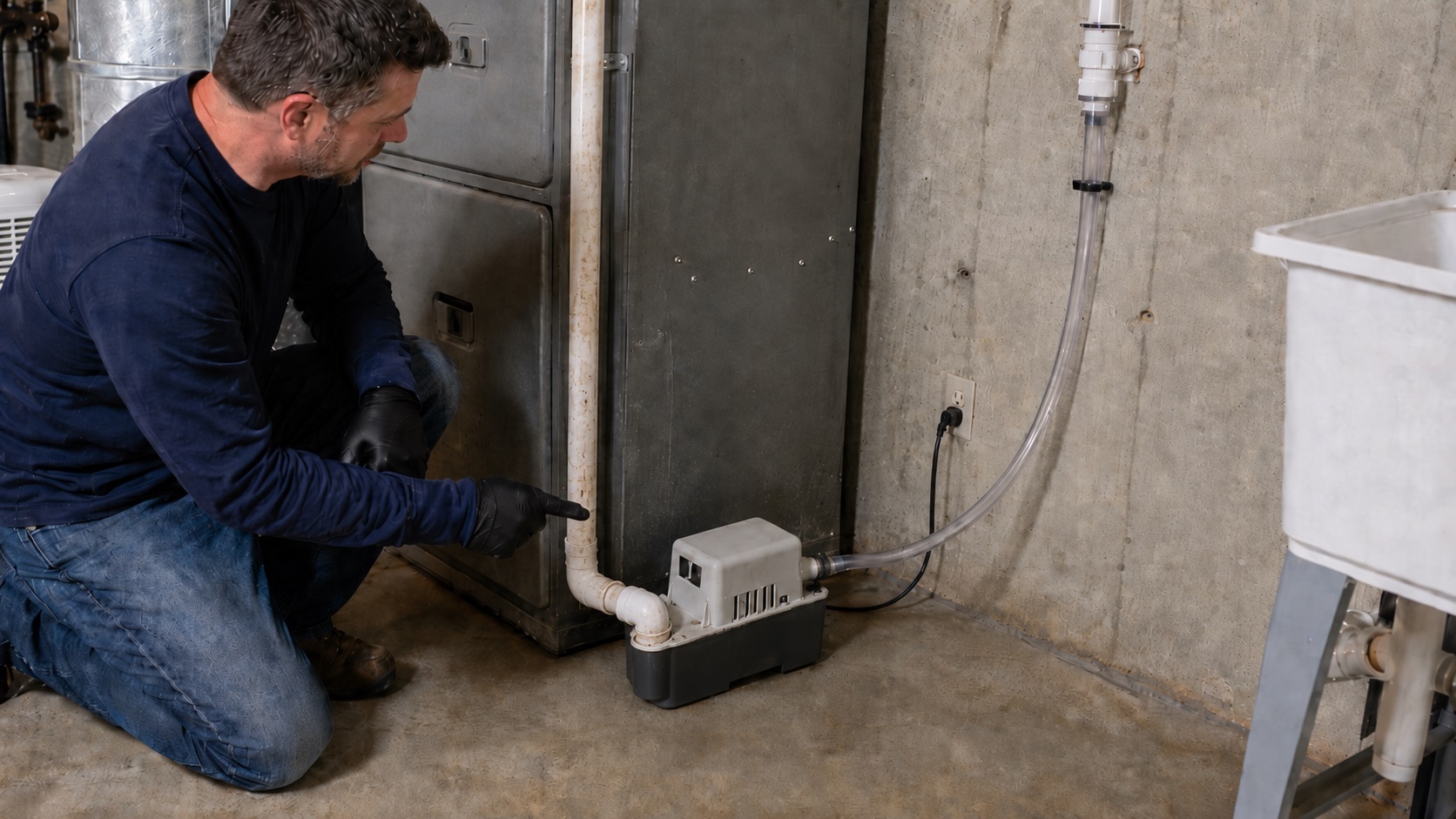
A condensate pump is useful when your system produces water but cannot drain it by gravity. Common examples include a furnace or air handler in a basement, a dehumidifier that needs to drain into a sink, or an HVAC system where the closest drain is above the equipment.
A condensate removal pump is most useful when water is being produced normally but cannot flow downhill to a safe drain.
If water is appearing away from the pump or drain line, it may help to first detect HVAC condensation leaks before replacing equipment.
If water is leaking because the drain line is clogged, the condensate pan is cracked, the coil is freezing, or the system is improperly sloped, a new pump may not solve the real issue. In that case, read why HVAC units leak water indoors or how to inspect HVAC drain lines for blockages before assuming the pump is the problem.
Check Lift Height Before Anything Else
Lift height is one of the most important specifications. It tells you how far the pump can push water upward. If your HVAC equipment sits on the basement floor and the discharge point is several feet above it, choose a pump with enough lift for that route. The Asurity by DiversiTech ULTRACP-22T is the strongest pick in this list when higher lift is a major concern.
If the discharge line has to climb from a basement floor to a laundry sink or utility sink, choose an AC condensate pump with enough vertical lift for that route.
For example, a pump sitting beside a furnace on the basement floor may need to push water several feet upward before it can drain into a laundry sink. That is a very different job than moving water a few feet across a flat floor.
Do not compare pumps only by flow rate. A pump may move plenty of water under easy conditions but struggle if the discharge line rises too high, runs too far, or has too many bends.
Choose Capacity Based on Real Condensate Load
Condensate pumps are often rated by gallons per hour, but most residential systems do not need an extreme flow rate. A standard air conditioner, furnace, or dehumidifier usually produces water gradually. The pump collects it in the tank and activates when the float rises.
The Little Giant VCMA-15ULST is a good value pick for standard loads. The Little Giant VCMA-20ULST is better when you want a stronger all-around pump or are replacing a unit in a more demanding setup.
Do Not Ignore the Safety Switch
A safety switch is one of the most important features on an HVAC condensate pump. When properly wired, it can shut down the connected equipment or signal a problem if the reservoir fills too high.
It does not guarantee your home will avoid water damage, but it gives you one more layer of protection before an overflow gets worse.
For finished basements, utility closets, or any area where overflow could damage flooring, an HVAC condensate pump with safety switch protection is worth prioritizing.
This matters most in finished basements, closets, and utility rooms where a small overflow can disappear under flooring before anyone notices it.
If you are not comfortable wiring a safety switch, have an HVAC technician handle it. Simply placing a pump on the floor without connecting the safety switch may still allow overflow if the pump fails, the discharge tube clogs, or the power is interrupted.
Match the Voltage to Your Installation
Most homeowners should choose a pump that matches the existing outlet and HVAC setup. The Little Giant VCMA-20ULST, Little Giant VCMA-15ULST, and Asurity ULTRACP-22T are straightforward options for many standard residential installations. The Aquastrong 115V/230V model is more specialized and makes sense when voltage flexibility matters.
If you are replacing an existing pump, check the label on the old pump before ordering. Do not assume voltage, plug style, or safety wiring is the same just because the pump looks similar.
Think About Tubing and Discharge Routing
The pump is only one part of the drainage path. The discharge tubing must be routed safely, supported properly, and directed to an approved drain point. Long horizontal runs, sharp bends, freezing locations, and unsupported tubing can all create drainage problems.
The best condensate pump for a furnace or air conditioner still depends on the tubing path, drain height, and how easily you can inspect the pump later.
If your condensate pump is being used with a dehumidifier, also see the guide to best dehumidifier drain hose kits. The hose and pump need to work together instead of fighting each other.
Condensate Pump Setup and Usage Tips
Installing a condensate pump is usually simple in concept, but small mistakes can cause leaks, overflow, or nuisance shutdowns. Always follow the manufacturer’s instructions and local code requirements. When in doubt, involve an HVAC professional.
Safety note: A condensate pump sits near water and electrical equipment. Keep the plug, outlet, and wiring away from standing water, and have an HVAC technician handle safety-switch wiring if you are not familiar with low-voltage HVAC controls.
Place the Pump on a Stable, Level Surface
The pump reservoir needs to sit level so the float can operate correctly. If the pump is tilted, the float may activate too early, too late, or inconsistently. Avoid placing the pump on soft insulation, uneven blocks, or surfaces where vibration can slowly move it out of position.
Keep the Pump Near the Condensate Source
The inlet side should receive water from the condensate drain by gravity. Do not force the drain line uphill before it reaches the pump. The pump is meant to move water after it enters the reservoir, not pull water uphill from the HVAC pan.
Route Discharge Tubing Carefully
Use the tubing size recommended for the pump. Avoid kinks, sharp bends, crushed sections, and long unsupported runs. Make sure the tubing does not terminate somewhere that can freeze, backflow, or spill water into a wall cavity.
Also avoid routing the tubing where it can be stepped on, pinched behind stored items, or hidden so well that you cannot inspect it later.
Test the Pump After Installation
After setup, pour clean water slowly into the pump reservoir until the pump activates. Confirm that water discharges properly and that no fittings leak. This simple test can reveal problems before the HVAC system produces enough condensate to expose them.
Clean and Inspect It Regularly
Condensate water can carry dust, slime, algae, and mineral buildup. Over time, that debris can affect the float, check valve, tubing, or reservoir. Inspect the pump seasonally and clean it according to the instructions. If the pump is connected to a dehumidifier, routine maintenance matters even more. See how to maintain a dehumidifier for related drainage and cleaning guidance.
A common sign of trouble is a pump that hums, cycles rapidly, or runs but does not move much water. Those symptoms usually point to a stuck float, dirty reservoir, blocked tube, or failing check valve.
A pump in a dusty basement or laundry area may collect more debris than you expect, especially during cooling season when the system is making condensate every day.
Common Mistakes to Avoid
Choosing a Pump Without Checking Lift Height
A pump that works for a short drain run may not work for a basement installation where water must be pushed upward. Always compare the vertical rise from the pump to the discharge point.
Buying a Drain-Cleaning Tool Instead of a Condensate Pump
Some products are made to clear HVAC drain lines, not pump condensate automatically. A drain-clearing tool can be useful for maintenance, but it is not a replacement for a condensate pump.
Ignoring the Real Cause of the Leak
A new pump can feel like the obvious fix when there is water on the floor, but it is worth checking whether the pump failed or whether the HVAC system is sending water somewhere it should not.
If the HVAC unit is leaking because of a clogged line, cracked pan, frozen coil, or poor airflow, replacing the pump may not fix the problem. If condensation keeps returning, read why HVAC drain lines overflow and how to fix persistent HVAC condensation issues.
If the same area keeps getting wet after repairs, use this guide to detect repeated moisture problems before assuming the pump is the only failure point.
Many homeowners replace the pump because it is the easiest part to see, but the actual problem may be upstream in the drain pan, trap, tubing, or HVAC unit.
Not Connecting the Safety Switch
A pump with a safety switch is only fully useful when the switch is connected correctly. If the switch is left unused, the pump may still overflow if something fails.
Using the Wrong Discharge Location
Do not route condensate into a hidden wall cavity, onto a floor, outside where it can freeze near the foundation, or into an unapproved drain. Water should discharge to a suitable location where it will not create a new moisture problem.
Forgetting About Maintenance
Even a good condensate pump can clog, stick, or fail if it is never cleaned. Check the reservoir, float, tubing, and discharge path before the cooling season and during periods of heavy use.
When a Condensate Pump Is Not the Real Fix
A condensate pump helps move water after it reaches the pump reservoir. It does not solve every HVAC water problem. If the drain pan is cracked, the line is clogged, the coil is freezing, or the unit is not pitched correctly, the moisture problem can continue even with a new pump.
Condensate Pump FAQ
What does an HVAC condensate pump do?
An HVAC condensate pump collects water produced by equipment such as an air conditioner, high-efficiency furnace, boiler, or dehumidifier and pumps it to a safe drain point. It is used when gravity drainage is not practical.
Do I need a condensate pump for my air conditioner?
You need one if the AC condensate cannot drain by gravity to a suitable drain. If the indoor unit is above a working drain line, you may not need a pump. If the unit is in a basement or below the discharge point, a pump may be necessary.
Can I use a condensate pump with a dehumidifier?
Yes, many homeowners use condensate pumps with dehumidifiers when there is no floor drain nearby. Make sure the pump, hose, and dehumidifier drainage setup are compatible. For broader dehumidifier selection help, see how to choose and use a dehumidifier effectively.
Is a higher GPH rating always better?
No. Higher GPH can help in demanding setups, but the most important factors are lift height, reliability, safety-switch protection, tubing route, and compatibility with your equipment. A standard residential system may not need the highest-capacity pump.
What is the safety switch on a condensate pump for?
The safety switch is designed to respond when water rises too high in the pump reservoir. When properly wired, it may shut down the connected equipment or trigger an alarm so the pump does not continue receiving condensate during a failure.
What is the difference between a condensate pump and a sump pump?
A condensate pump is for small amounts of water produced by HVAC equipment, furnaces, boilers, and dehumidifiers. A sump pump is for larger volumes of groundwater or floodwater collected in a sump pit. They are not interchangeable.
Why is my condensate pump running constantly?
It may be handling normal heavy condensate production, or there may be a problem such as a stuck float, blocked discharge tube, incorrect routing, or excessive condensate from the HVAC system. If the pump behavior changes suddenly, inspect the pump and the HVAC drain system.
How often should I clean a condensate pump?
At minimum, inspect it seasonally and clean it according to the manufacturer’s instructions. Homes with heavy AC use, dusty mechanical areas, or dehumidifiers draining into the pump may need more frequent cleaning.
Can a condensate pump prevent mold?
A condensate pump can help move water away from HVAC equipment, but it does not guarantee mold prevention. Mold risk depends on whether moisture is controlled, leaks are fixed, humidity is managed, and affected materials are kept dry.
Conclusion
For most homeowners, the Little Giant VCMA-20ULST is the best overall condensate pump because it offers a strong balance of capacity, reliability, and residential HVAC usefulness. If you want a slightly smaller value pick for a standard setup, the Little Giant VCMA-15ULST is the most practical alternative.
If lift height is your main concern, choose the Asurity by DiversiTech ULTRACP-22T. If you need a budget alternative, the Aquastrong Automatic Condensate Pump for HVAC is worth considering. If voltage flexibility matters, look at the Aquastrong 115V/230V model. The Beckett BK171UL is best treated as a backup pick from a recognizable pump brand.
For long-term prevention, combine the right pump with routine drain-line checks, filter changes, and basic HVAC maintenance. See this guide on how to prevent moisture build-up in HVAC systems.
The safest way to choose is to start with the actual layout: how far the water must travel, how high it must rise, where it will discharge, and whether the pump has overflow protection. A good pump can help manage condensate, but it should be part of a complete moisture-control approach, not a cover-up for clogged drain lines or persistent HVAC leaks.
If water keeps returning after a pump replacement, stop treating it as a product problem and look for a system problem: clogged drain line, improper slope, high indoor humidity, frozen coil, or another hidden moisture source.