When to Repair vs Replace Vinyl Siding
Vinyl siding can often be repaired when the damage is limited to one or a few panels. A crack, small hole, loose panel, or damaged corner piece does not automatically mean the entire house needs new siding. If the surrounding panels are still flexible, the wall behind the siding is dry, and matching material is available, a targeted repair may be enough.
Replacement becomes more practical when the damage is no longer isolated. Widespread brittleness, repeated cracking, large areas of warping, severe fading with panel failure, loose sections that keep coming back, or moisture behind the siding can all point to a bigger problem. In those cases, replacing a few panels may not restore the siding’s ability to protect the wall.
The best decision depends on whether the vinyl siding still locks together, sheds water, and protects the wall assembly. Vinyl siding is not just an exterior finish. It is part of the exterior wall system, so damaged panels can create openings where wind-driven rain, trapped moisture, and wall leaks become more likely. That is why vinyl siding decisions should connect to how exterior walls allow moisture into homes, not only to appearance.
Vinyl Siding Repair Depends on Whether the Panels Still Protect the Wall
Vinyl siding is designed to shed most rainwater away from the wall, but it is not a fully waterproof barrier by itself. Water can still get behind vinyl siding during wind-driven rain, at seams, around windows and doors, and through damaged trim or loose panels. The wall system also depends on housewrap, flashing, sheathing, drainage paths, and proper installation.
That means a vinyl siding repair should do more than make the wall look better. It should restore the siding’s ability to overlap correctly, lock securely, and direct water outward. A damaged panel that still leaves a gap, loose edge, or poor overlap after repair may continue to let water reach the wall behind it.
The repair-or-replace decision should look at three things:
- Panel condition: Are the panels cracked, punctured, warped, brittle, loose, or melted?
- Connection points: Do the panels still lock together and overlap correctly at seams, corners, trim, and J-channel?
- Wall condition: Is the sheathing behind the siding dry and firm, or are there signs of moisture, staining, softness, or interior wall damage?
If the damage is limited to the siding surface and the wall behind it is dry, repair may be reasonable. If the siding no longer fits together properly or water has reached the wall system, the repair may need to include removing panels, checking housewrap and flashing, repairing sheathing, and replacing a wider section of siding.
Vinyl siding repairs are strongest when the damage has a clear cause. A panel cracked by impact is easier to evaluate than panels that keep pulling loose after every storm. A single melted area near a grill is different from warping across an entire sun-exposed wall. One damaged section may be repairable. A repeated pattern suggests the siding system may no longer be reliable.
When Vinyl Siding Repair Is Usually Enough
Vinyl siding repair is usually enough when the damage is local, the surrounding panels are stable, and the wall behind the siding is dry. In many homes, vinyl siding is made from individual interlocking panels, which means one damaged piece can often be removed and replaced without replacing the entire wall.
Repair is often reasonable for one cracked panel, a small puncture, a loose panel, a damaged corner piece, or minor trim damage. These problems are common after impact from branches, ladders, rocks, yard equipment, wind, or accidental pressure against the wall. If the damage is limited and the rest of the siding is still performing well, replacing the affected piece can restore the wall’s water-shedding surface.
Vinyl siding repair usually makes sense when these conditions are present:
- Only one or a few panels are cracked, loose, or punctured.
- The panels around the damage are still flexible and secure.
- The siding still locks together correctly.
- The wall behind the damaged area is dry.
- There are no stains, soft spots, musty odors, or interior wall symptoms.
- A matching or compatible replacement panel is available.
- The same section has not needed repeated repairs.
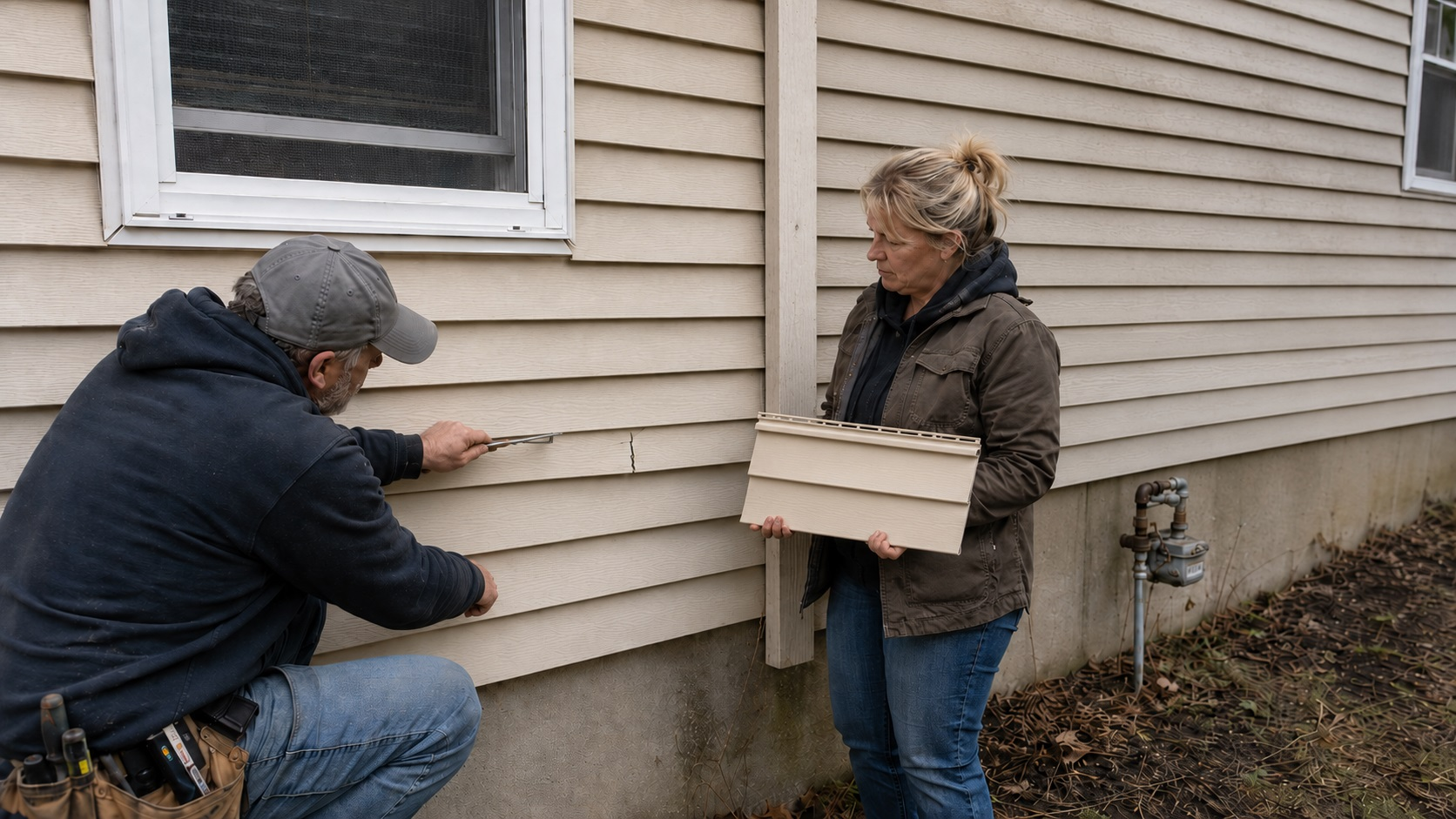
A repair is especially practical when the damaged panel can be replaced cleanly. A contractor or experienced repair technician may be able to unlock the surrounding panels, remove the damaged piece, install a matching replacement, and reconnect the siding without disturbing a large wall area.
Repair is less reliable when the surrounding siding is brittle. Older vinyl can crack during removal, especially in cold weather or after years of sun exposure. If several nearby panels break while trying to replace one damaged piece, the repair may expand quickly. That does not always mean the whole house needs new siding, but it does suggest that the siding’s condition should be evaluated before assuming a small repair will stay small.
When Panel Replacement Is Better Than Patching
Panel replacement is usually better than patching when vinyl siding is cracked, punctured, split, or broken along the locking edge. A patch may cover the opening temporarily, but it often does not restore the way the panel overlaps, expands, contracts, and sheds water. If the panel itself is damaged, replacing the panel is usually the cleaner and more reliable repair.
Caulk, tape, or surface patches should not be treated as permanent fixes for damaged vinyl siding. They may reduce exposure for a short time in a small emergency, but they can fail, collect dirt, look obvious, and leave the damaged panel weaker than it should be. Vinyl siding moves with temperature changes, so rigid patches and heavy sealant can also interfere with normal expansion and contraction.
Panel replacement is usually the better option when:
- a crack runs through the panel face;
- a hole exposes the wall behind the siding;
- the locking edge is broken;
- the panel has pulled loose and will not stay engaged;
- the damaged area is large enough to catch wind-driven rain;
- the panel is distorted and no longer lies flat;
- the patch would be highly visible or unreliable.
Replacing the damaged panel also gives the contractor a chance to look behind the affected area. This matters because a crack or hole may not be the only issue. If the panel has been open for a while, wind-driven rain may have reached housewrap, sheathing, or trim details behind it. When a damaged panel is removed, the wall behind it should be checked for staining, softness, trapped moisture, and damaged flashing.
Panel replacement is most successful when the replacement material matches the original siding profile. A replacement panel does not have to look factory-new compared with older siding, but the thickness, profile, locking system, and lap still need to fit correctly. If they do not, the repair may not shed water properly and may stand out visually, especially on a faded wall.
For homeowners comparing vinyl siding repairs with broader siding decisions, it helps to separate panel-level damage from wall-system damage. One cracked panel may be simple. A cracked panel with wet sheathing behind it is not. When the problem extends beyond the panel, the decision may need to follow the broader logic of whether to repair or replace siding rather than treating the vinyl panel as the only issue.
When Warped or Melted Vinyl Siding Should Be Replaced
Warped or melted vinyl siding usually needs replacement if the panel no longer lies flat, locks correctly, or overlaps the surrounding siding properly. Vinyl can distort when exposed to excessive heat, improper fastening, poor expansion clearance, or reflected sunlight. Once the shape of the panel changes, it may stop shedding water the way it was designed to.
Heat distortion is a common reason vinyl siding gets replaced. A grill placed too close to the wall, reflected sunlight from nearby windows, dark surfaces that concentrate heat, or localized heat from vents and equipment can soften or deform the siding. The damage may appear as waves, ripples, sagging, melted spots, or panels that look pulled out of shape.
Warping can also come from installation problems. Vinyl siding needs room to expand and contract. If it is nailed too tightly, cut too long, or installed without enough movement space at trim and channels, it may buckle during temperature changes. In that situation, replacing one warped panel may not solve the problem if the installation error is repeated across the wall.
Warped vinyl siding should be replaced when:
- the panel no longer locks into the course below it;
- the overlap has opened enough for wind-driven rain to enter;
- the panel bows outward or pulls away from the wall;
- heat damage has permanently changed the panel shape;
- several panels are buckling in the same pattern;
- the siding was fastened too tightly and cannot move properly;
- the warped area keeps returning after being reset.
Isolated warping may only require panel replacement. For example, a few melted panels near a grill or one reflected-sunlight zone may be replaced if the wall behind them is dry and the heat source is corrected. But widespread warping across a wall suggests a larger issue, such as improper installation or repeated heat exposure. In that case, replacing a few panels may not be enough.
Warped siding should not be dismissed as only cosmetic. Even if the wall still looks mostly covered, distorted panels can create gaps and poor overlaps. Those openings can let wind-driven rain get behind the siding, especially near corners, seams, windows, doors, and trim. If there are moisture symptoms behind the distorted area, the homeowner should also check for signs of water damage behind siding before deciding the repair scope.
When Faded or Brittle Vinyl Siding Changes the Decision
Faded vinyl siding does not automatically need replacement. The question is whether the fading is only color loss or whether the panel has also become chalky, brittle, cracked, or weak. Fading is often cosmetic, especially when the panels are still flexible, secure, and shedding water correctly. A faded wall may look older, but it can still protect the home if the siding is not cracked, brittle, warped, loose, or moisture-damaged.
Brittleness is different. Brittle vinyl siding is more likely to crack during impact, wind movement, cold weather, or repair work. A homeowner may start with one broken panel and discover that nearby panels crack when they are removed or handled. When that happens, a small repair can expand into a larger project because the siding no longer has enough flexibility to be repaired cleanly.
Fading and brittleness also create matching problems. A new panel may fit properly but stand out sharply against older, sun-faded siding. This is mostly an appearance issue when the repair is small and the wall is protected. But if many panels need replacement and none match the existing siding, larger section replacement may make more sense than scattered patches across the house.
Faded or brittle vinyl siding changes the decision when:
- panels crack easily during normal handling;
- several panels are already split, chipped, or broken;
- new replacement panels cannot blend acceptably with the old siding;
- the siding has become chalky, weak, or fragile across large areas;
- wind repeatedly pulls loose panels from the same wall;
- repairs create more breakage than they solve;
- UV aging is combined with warping, gaps, or moisture entry.
In some cases, partial replacement is enough. A less visible wall section may be repaired with a close match, or panels from a hidden area may be moved to a more visible wall so the repair blends better. But if the siding is brittle across the home, full replacement may be more practical than continuing to chase broken panels.
The key distinction is function. Faded siding that still performs may not need replacement. Brittle siding that cracks, opens gaps, or fails during repair is a performance problem. Once aging affects the siding’s ability to stay attached and shed water, replacement becomes more reasonable.
When Moisture Behind Vinyl Siding Means Bigger Repairs
Moisture behind vinyl siding is one of the most important reasons to expand the repair scope. Vinyl siding can hide water problems because the wall may look mostly normal from the outside while sheathing, housewrap, or trim details behind the panels are wet. If moisture has reached the wall assembly, replacing one damaged panel may not be enough.
Water can get behind vinyl siding through open seams, cracked panels, loose trim, failed flashing, poorly sealed penetrations, missing kick-out flashing, or wind-driven rain. Vinyl siding is expected to manage some incidental water, but the wall behind it must be able to drain and dry. If housewrap is damaged, flashing is missing, or water is trapped, moisture can stay behind the siding longer than it should.
Possible warning signs include:
The most useful clues often appear after wind-driven rain, not during dry weather.
- soft or dark sheathing behind removed panels;
- musty odors near an exterior wall;
- bubbling paint or staining on the interior side of the wall;
- repeated mildew or staining near windows, doors, or lower wall sections;
- loose siding that returns after storms;
- water marks around J-channel, trim, or penetrations;
- insulation that feels damp when the wall is opened.
When these signs are present, the repair should include inspection behind the siding. The contractor may need to remove panels, check the water-resistive barrier, inspect sheathing, correct flashing, and replace damaged materials before reinstalling siding. If the homeowner is unsure whether the wall is wet, the next step may be to detect moisture behind exterior siding instead of guessing from the surface.
Moisture behind vinyl siding also changes the urgency. A cracked panel may wait briefly if the wall is dry and weather is mild. But a cracked panel with wet sheathing behind it should not be treated as a cosmetic issue. Repeated wetting can affect sheathing, framing, insulation, and interior finishes. Vinyl siding replacement should not cover those materials until the wall has been inspected, dried, and repaired as needed.
After moisture-related repair, prevention matters. New panels will not solve the problem if the cause was failed flashing, poor drainage, low clearance, or water being directed behind the siding. The repair should correct the water path and support long-term moisture control. Otherwise, the same section may fail again even with new siding.
When Full Vinyl Siding Replacement Is the Better Choice
Full vinyl siding replacement is usually the better choice when the damage is widespread, recurring, or tied to hidden wall moisture. The goal is not only to make the home look newer. It is to restore a reliable exterior cladding system that sheds water, stays attached, and works with the wall’s drainage layer.
Replacement becomes more practical when many panels are cracked, brittle, warped, loose, or faded beyond reasonable matching. If individual repairs keep spreading because nearby panels break during handling, the siding may no longer be a good repair candidate. Likewise, if several walls have wind damage, heat distortion, or repeated loose sections, the problem may be broader than one damaged panel. For broader warning signs across all siding materials, compare these symptoms with the main guide to signs siding needs replacement.
Full replacement should be considered when:
- cracking appears across multiple walls;
- large sections are brittle or break during repair;
- warping or buckling affects a broad wall area;
- panels repeatedly come loose after wind;
- fading makes section repairs visually unacceptable;
- matching panels are unavailable or incompatible;
- moisture problems exist behind multiple siding areas;
- the original installation left poor fastening, gaps, or drainage problems.
Full replacement is also more likely when the existing siding was installed incorrectly. If panels were nailed too tightly, installed without enough movement space, poorly integrated around windows, or placed over damaged wall materials, replacing one panel will not fix the system. The project may need to correct the installation details and wall preparation underneath.
However, full replacement should still be based on evidence. One cracked panel, one loose corner, or one heat-damaged area does not automatically mean the whole house needs new vinyl siding. If the damage is isolated and the wall is dry, repair may still be the smarter choice. Replacement becomes more reasonable when repeated vinyl-specific problems show that the siding is no longer reliable as a system.
Questions to Ask Before Repairing or Replacing Vinyl Siding
Before deciding whether to repair or replace vinyl siding, homeowners should ask questions that separate a simple panel problem from a larger wall protection issue. Vinyl siding is often repairable, but the repair needs to restore the siding’s ability to stay locked, overlap correctly, and shed water away from the wall.
- Is the damage isolated? One cracked or loose panel is usually more repairable than damage spread across several walls.
- Are the surrounding panels still flexible? If nearby panels crack during handling, the siding may be too brittle for a small repair.
- Do the panels still lock properly? Broken locking edges, loose laps, and panels that will not stay engaged can allow wind and water behind the siding.
- Is the wall behind the siding dry? Wet sheathing, stains, musty odors, or interior wall symptoms make the repair more serious.
- Is matching material available? A replacement panel should fit correctly and blend well enough for the repair area.
- What caused the damage? Impact, heat, wind, poor installation, and aging lead to different repair decisions.
- Has this area failed before? Repeated failure suggests the problem may involve fastening, flashing, drainage, or wall movement.
If the answers point to one dry, isolated, easy-to-match panel, repair is usually reasonable. If the answers point to widespread brittleness, moisture behind the siding, repeated wind damage, or panels that no longer lock correctly, replacement or partial replacement should be considered more seriously.
When to Call a Siding Contractor
A siding contractor should be called when the damage involves large loose sections, moisture behind the siding, brittle panels that break during repair, or damage around windows, doors, corners, rooflines, decks, or wall penetrations. These areas often involve flashing, housewrap, trim, and drainage details that affect whether water gets into the wall.
Professional help is especially important when the wall behind the vinyl may be wet. Avoid sealing, caulking, or covering the area permanently until the source of moisture has been identified. A contractor may need to remove panels carefully, check the water-resistive barrier, inspect sheathing, correct flashing, and replace damaged materials before reinstalling or replacing siding. In that situation, the project is no longer just a cosmetic vinyl repair. It is part of protecting the exterior wall system.
Call a contractor when you see:
- large sections of vinyl siding pulling loose;
- warping or buckling across a broad wall area;
- cracks or holes in multiple panels;
- panels that break when touched or moved;
- water stains, soft sheathing, or musty odors behind siding;
- interior paint bubbling or staining on the other side of the wall;
- repeated damage around windows, doors, trim, or corners.
A good siding contractor should explain whether the damage is panel-level, installation-related, heat-related, wind-related, or moisture-related. The recommendation should identify whether the wall behind the siding needs inspection or repair. If moisture was involved, the repair should also include steps to prevent moisture damage behind siding so the same failure does not return.
FAQ About Repairing or Replacing Vinyl Siding
Can you replace one piece of vinyl siding?
Yes. One piece of vinyl siding can often be replaced if the surrounding panels are flexible, the locking edges are intact, and a matching or compatible panel is available. The wall behind the damaged piece should also be checked for moisture if the panel was cracked, punctured, or loose for a long time.
Is warped vinyl siding repairable?
Warped vinyl siding usually needs panel replacement if it no longer lies flat, locks correctly, or overlaps properly. Isolated heat distortion may only require replacing a few panels. Widespread warping may point to installation problems, heat exposure, or siding that needs larger replacement.
Does cracked vinyl siding let water in?
Cracked vinyl siding can let wind-driven rain reach the wall behind it, especially if the crack creates an opening or affects the panel overlap. Vinyl siding is not the only water barrier, but damaged panels should still be replaced before repeated moisture reaches housewrap, sheathing, or trim details.
Should faded vinyl siding be replaced?
Fading alone is usually cosmetic. Vinyl siding should be considered for replacement when fading is combined with brittleness, cracking, warping, loose panels, or serious matching problems. If faded siding still locks properly and protects the wall, replacement may not be necessary yet.
Can you patch a hole in vinyl siding?
A small patch may work temporarily, but replacing the damaged panel is usually more reliable. Patches and caulk do not always restore the panel’s strength, appearance, movement, or water-shedding function. If the hole exposed the wall behind the siding, check for moisture before covering the area permanently.
When is vinyl siding too old to repair?
Vinyl siding may be too old to repair cleanly when panels are brittle, crack during handling, no longer lock together, are badly faded, or cannot be matched with compatible replacements. Age alone does not decide it. The issue is whether the siding can still be repaired without creating more damage.
Final Decision: Repair the Panel or Replace the Siding System?
Vinyl siding repair is usually the better choice when damage is isolated, the panels still lock together properly, and the wall behind the siding is dry. One cracked panel, a small puncture, a loose piece, or a minor corner issue can often be repaired without replacing the entire wall.
Replacement becomes more practical when the vinyl is brittle, warped, repeatedly loose, moisture-compromised, difficult to match, or damaged across large areas. In those situations, replacing one or two panels may not restore reliable wall protection.
The final decision should focus on function first. If the vinyl siding can still shed water, stay attached, and protect the wall after a targeted repair, repair may be enough. If the siding no longer fits together properly or moisture has reached the wall behind it, partial or full replacement may protect the home more reliably.