When to Repair vs Replace a Tile Roof
A tile roof does not always need to be replaced just because a few tiles are cracked, slipped, or broken. In many cases, isolated tile damage can be repaired by replacing individual tiles, resetting loose pieces, or correcting a small problem around a valley, flashing, or roof penetration. But tile roofs can also hide deeper problems because the visible tile surface is only one part of the roof system.
The most important question is not simply whether the tiles look damaged. The bigger question is whether the waterproofing layer beneath the tiles is still protecting the roof deck. A tile roof may look acceptable from the ground while the underlayment, flashing, fasteners, battens, or decking are already failing. That is why the repair-or-replace decision has to look at the whole roof system, not only the surface tile.
In general, repairing a tile roof makes sense when the damage is isolated, the underlayment is intact, the roof deck is dry, and the leak source is clear. Replacement, partial replacement, or a lift-and-relay becomes more reasonable when leaks keep returning, broken tiles are widespread, the underlayment is brittle or torn, or moisture has reached the decking. Tile roof decisions often overlap with broader common roofing material failures, but tile roofs have their own repair thresholds because the surface tiles and waterproofing layer age differently.
Repair vs Replacement Depends on More Than the Tiles
Tile roofing is different from asphalt shingles because the clay or concrete tiles are only the visible water-shedding surface. The underlayment, flashing, valleys, penetrations, battens, fasteners, and decking also determine whether the roof system stays watertight.
That means a tile roof can look acceptable from the ground while hidden components underneath are failing. Replacing a few broken tiles is very different from removing tile sections to replace underlayment, repair flashing, or correct wet decking. If water has reached the roof deck, the decision is no longer just a surface-tile repair.
Before deciding whether to repair or replace a tile roof, the homeowner should think in layers:
- Tile condition: Is the damage limited to a few tiles, or are many tiles cracked, loose, or displaced?
- Underlayment condition: Is the waterproofing layer still intact, or is it brittle, torn, exposed, or deteriorated?
- Leak history: Is this the first leak, or has the roof needed repeated repairs?
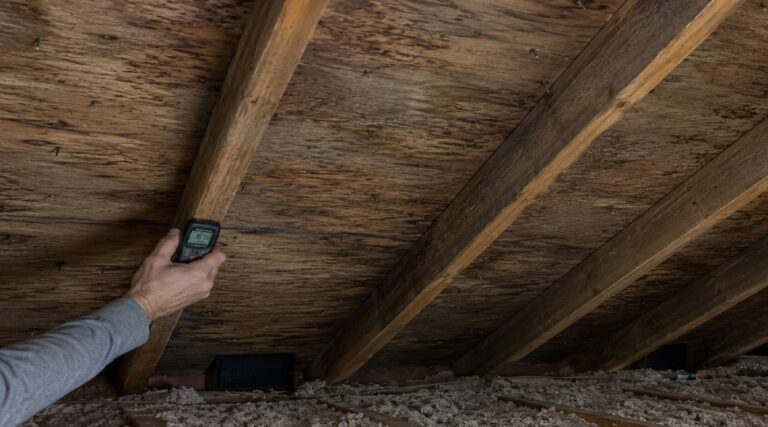
- Decking condition: Is the wood underneath dry and solid, or is there rot, softness, staining, or sagging?
- Flashing condition: Are valleys, chimneys, vents, skylights, and walls still properly flashed?
- Repair feasibility: Can matching tiles be found, and can the damaged area be repaired without breaking surrounding tiles?
This layered approach keeps the decision realistic. A cracked tile by itself does not automatically mean the roof needs replacement. But a tile roof with recurring leaks, failed underlayment, and wet decking should not be treated as if replacing a few surface tiles will solve the problem. If moisture has already moved into the structure, the issue may connect to broader whole-home moisture problems, not just an exterior roof defect.
When Tile Roof Repair Is Usually Enough
Tile roof repair is usually enough when the problem is small, localized, and clearly tied to a limited area of damage. This is most common when a few tiles crack from impact, one tile slips out of position, or a small section is disturbed by foot traffic, falling branches, wind, or work near roof equipment.
A repair is more likely to make sense when the damaged tiles are easy to identify, the underlayment below them is still intact, and there are no signs of interior moisture. For example, one broken tile after a storm may be a limited surface issue if there are no ceiling stains, no attic moisture, no damp insulation, and no repeated leak history. In that situation, the goal is to restore the water-shedding surface before sunlight and water damage the underlayment beneath it.
Repair is usually the better first option when these conditions are present:
- Only a few tiles are cracked, chipped, slipped, or missing.
- The damage is limited to one small area.
- The underlayment beneath the damaged tiles is still flexible and intact.
- There are no stains, damp spots, or musty odors inside the home.
- The roof deck below the damaged area is dry and solid.
- The same or compatible replacement tiles are available.
- The roof has not needed repeated repairs in the same area.
Small repairs are especially important on tile roofs because broken tiles can expose the underlayment to direct weather. Even if the roof does not leak immediately, exposed underlayment can deteriorate faster when sunlight, heat, and water reach areas that were meant to stay protected. This is why a “small” broken tile should not be ignored for months just because there is no visible indoor leak yet.
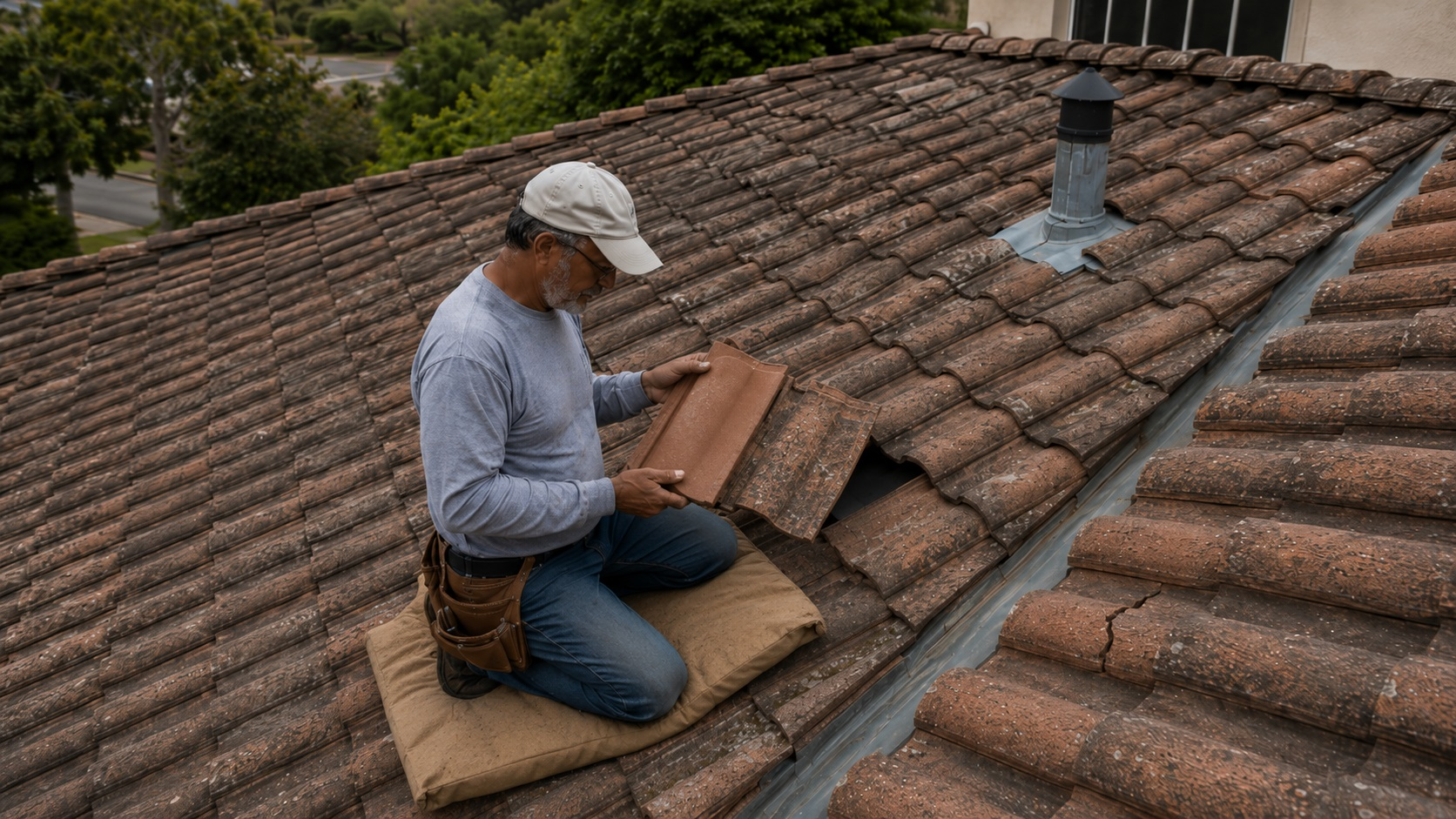
However, tile repair should still be done carefully. Walking on tile roofs can break surrounding tiles, especially older clay or concrete tiles that have become brittle, and steep tile roofs create serious fall hazards. A repair that cracks more tiles around the original problem can expand the damaged area. For most homeowners, the safest approach is to inspect from the ground or attic when possible and have a qualified roofer handle tile replacement on the roof surface.
When Partial Tile Replacement Makes Sense
Partial tile replacement makes sense when the damage is larger than one or two tiles but still limited to a clear section of the roof. This may involve replacing a cluster of broken tiles, opening a small area around a leak, correcting tiles near a valley, or replacing damaged tiles around a vent, chimney, skylight, or wall transition.
The key question is whether the problem is still local. For example, if a branch breaks several tiles on one slope but the surrounding roof has no leaks, no soft decking, and no widespread tile movement, a partial repair may be enough. The roofer may replace the broken tiles, inspect the underlayment, correct limited exposed areas, and restore that section without replacing the entire roof.
Partial replacement is also common when damage occurs around details where water is already more likely to enter. Valleys, sidewalls, chimneys, skylights, plumbing vents, and roof-to-wall intersections are higher-risk areas because water is concentrated or redirected there. If the tile damage is limited to one of those areas, the repair may need to include flashing work, not just tile replacement. If the problem is tied to flashing, the homeowner should understand how roof flashing failures that cause leaks can make a tile roof appear worse than it really is.
Partial tile replacement is usually reasonable when the following conditions line up:
- The affected section is limited to one area or one roof slope.
- The surrounding tiles are still stable and not breaking easily during inspection.
- The underlayment beneath the affected section is intact or only locally damaged.
- The roof deck under the problem area is dry, firm, and not rotted.
- The leak source can be traced to the damaged section.
- Replacement tiles are available or compatible salvaged tiles can be used.
- The rest of the roof does not show a pattern of repeated leaks.
Tile matching can affect the decision. Older tile profiles, discontinued colors, weathered clay, and specialty concrete tiles can be difficult to match perfectly. If only a small number of tiles are needed, a slight color variation may be acceptable in a less visible area. If a large section needs replacement and matching tile is not available, the decision may become more complicated because the repair can affect the roof’s appearance and water-shedding pattern.
Partial replacement becomes less attractive when the repair area keeps expanding. If a roofer removes a few broken tiles and many surrounding tiles crack during normal handling, the roof may be too brittle for a simple repair. If the underlayment tears apart when exposed, the repair is no longer only about tile replacement. And if the decking below the problem area is wet or soft, the homeowner may need to think beyond surface repair and consider when roof decking must be replaced.
When Underlayment Failure Changes the Decision
Underlayment condition is one of the biggest decision points on a tile roof. Clay and concrete tiles can last a long time, but the waterproofing materials beneath them may age, dry out, tear, or deteriorate before the tiles themselves are worn out. This creates a confusing situation for homeowners because the roof may still look solid from the outside while the hidden waterproof layer is no longer reliable.
This is why tile roof leaks should not be judged only by how the tiles look. A tile roof can leak even when most tiles are still in place. Water may enter through cracked tiles, slipped tiles, exposed fasteners, failed flashing, valley problems, or penetrations. Once water gets below the tile layer, the underlayment becomes the backup protection. If that layer is damaged or deteriorated, water can reach the roof deck and eventually show up as stains, damp insulation, or interior leaks.
Underlayment failure is more likely when the roof has:
- Leaks despite few visible broken tiles.
- Multiple leak locations across different roof areas.
- Brittle or crumbling underlayment visible beneath lifted tiles.
- Exposed underlayment where tiles have been missing or broken for a long time.
- Repeated repairs that stop one leak but not the next.
- Water stains on roof decking or attic framing.
- Tile sections that look fine from the ground but reveal dry, cracked, or torn underlayment when lifted.
- Older flashing transitions that no longer drain water correctly.
A failed underlayment changes the repair decision because replacing surface tiles over compromised waterproofing can waste money. The new tiles may improve the appearance of the roof, but they will not restore the hidden layer that actually protects the deck when wind-driven rain or concentrated runoff gets below the tile. This is especially important near valleys, roof penetrations, eaves, hips, and ridges.
One common mistake is assuming that replacing cracked tiles automatically solves a tile roof leak. It may solve the leak if the broken tile was the only problem and the underlayment remained sound. But if the leak has already exposed weak underlayment, damaged flashing, or wet decking, the repair needs to address those layers too. Otherwise, the roof may keep leaking even after the visible tile damage is corrected.
Another mistake is relying on roof sealant as a long-term fix for cracked tiles or failed underlayment. Sealant may temporarily reduce water entry in a limited emergency, but it should not be treated as a proper substitute for replacing broken tiles, correcting flashing, or repairing deteriorated waterproofing. A tile roof is meant to shed water through a layered system. Once that system is failing, patching the surface does not address the deeper cause.
When underlayment failure is suspected, the decision often moves from simple repair toward a larger roof-system repair. That does not always mean every tile must be discarded. In some cases, reusable tiles can be removed, the underlayment and flashing can be replaced, and the tiles can be reinstalled. But the homeowner should not approve a surface-only tile repair if the real failure is underneath the tile layer.
Tile Repair, Partial Repair, Lift-and-Relay, or Full Replacement
Tile roof decisions often fall into four practical categories: tile repair, partial roof repair, lift-and-relay, or full replacement. The right choice depends on which layer has failed: the visible tile surface, the local flashing or underlayment, the broader underlayment system, or the roof deck itself.
Tile repair
Tile repair is the smallest option. It usually involves replacing cracked, broken, missing, or slipped tiles and correcting small problems in the immediate area. This makes sense when the damage is visible, limited, and not tied to broader underlayment, flashing, or decking failure.
The limitation is that tile repair only solves tile-level problems. It does not renew old underlayment, correct widespread flashing failure, or fix rotten decking. If the leak is coming from deeper system failure, replacing a few tiles may only hide the problem temporarily.
Partial roof repair
A partial roof repair is larger than replacing a few tiles but smaller than full replacement. It may involve opening a limited tile section, replacing damaged underlayment in that area, correcting flashing, repairing a small amount of decking, and reinstalling or replacing the tiles above that section.
This can make sense when a valley leak, chimney leak, skylight leak, or one-slope impact problem can be clearly traced and the rest of the roof is still performing well. The risk is patchwork: if the homeowner repairs one area this year, another area next year, and a third area after the next storm, the decision starts to resemble the broader general roof repair vs replacement decision.
Lift-and-relay
A lift-and-relay is a middle option between a targeted repair and a full tile roof replacement. In a lift-and-relay, the roofer removes usable tiles, replaces the underlayment and related flashing components, and then reinstalls the salvaged tiles. Damaged tiles are replaced as needed.
This option is especially relevant for tile roofs because the tiles may still have usable life while the underlayment beneath them has deteriorated. If the clay or concrete tiles are structurally sound, available in sufficient quantity, and not breaking apart during removal, a lift-and-relay may allow the homeowner to renew the waterproofing layer without discarding all the original tile.
A lift-and-relay is more likely to make sense when:
- The tiles are generally reusable.
- The main failure is underlayment deterioration.
- The roof deck is mostly solid or only needs limited repair.
- The tile profile can be reinstalled properly.
- The roof layout allows the tiles to be removed without excessive breakage.
- The homeowner wants to preserve the appearance of the existing roof.
However, lift-and-relay is not always possible. If many tiles break during handling, if the tile is no longer available, if the roof deck is badly damaged, or if the original installation was poor, a full replacement may be more practical. The success of a lift-and-relay depends heavily on tile condition and the roofer’s ability to remove, store, and reinstall the tiles correctly.
Full tile roof replacement
Full replacement means the roof is treated as a complete system. The tiles, underlayment, flashings, battens or attachment components, and damaged decking are addressed together. This is the most expensive option, but it may be the most logical when the roof has moved beyond isolated failure.
Full replacement becomes more reasonable when there are problems across multiple parts of the roof. Widespread cracked tiles, recurring leaks, deteriorated underlayment, rotted decking, failed flashing, and repeated repairs all point toward a system that may no longer be worth patching. In those situations, paying for another small repair may delay the decision but not solve the roof’s underlying moisture risk.
The homeowner should also consider replacement when the roof has signs that go beyond surface tile issues. Interior water stains, attic moisture, soft decking, sagging roof sections, repeated leak paths, or mold-related concerns suggest that water may already be moving into the structure. Those symptoms should be evaluated carefully because they may connect to signs of roof leaks inside the house, not just roof-surface damage.
Signs a Tile Roof Should Be Replaced Instead of Repaired
A tile roof should be considered for replacement when the damage is no longer isolated. The clearest warning sign is a pattern: broken tiles in many areas, leaks in multiple rooms, repeated repairs, widespread underlayment deterioration, or moisture damage beneath the roof surface. A single problem can often be repaired. A pattern usually means the roof system needs a deeper evaluation.
Replacement becomes more likely when several of these signs appear together:
- Many tiles are cracked, broken, loose, or missing across multiple roof slopes.
- The roof leaks in more than one location.
- Leaks return after previous repairs.
- The underlayment is brittle, torn, exposed, or deteriorated in multiple areas.
- The roof deck has dark staining, softness, rot, or sagging.
- Flashing around valleys, chimneys, walls, skylights, or vents has failed in several places.
- Tiles break easily when handled during inspection or repair.
- Matching tiles are unavailable and the damaged area is too large for a clean repair.
- The original roof installation has widespread layout, fastening, flashing, or drainage mistakes.
Recurring leaks are especially important. A tile roof that leaks once from a broken tile may still be a repair candidate. A tile roof that leaks again and again after repairs may have underlayment, flashing, or deck problems that were never fully addressed. If the same general area keeps leaking, the repair may not have reached the actual source. If new areas keep leaking, the roof may be aging as a system.
Homeowners should also be cautious when the roof looks acceptable from the street but the attic tells a different story. Water stains on sheathing, damp insulation, rusted fasteners, musty odors, or darkened framing can indicate that moisture has been entering for longer than the homeowner realized. If those symptoms repeat after rain, they may belong in a larger evaluation of signs of recurring roof leaks.
Replacement is not always the immediate answer, but it should be on the table when repairs are no longer controlling the moisture risk. Tile roofs can be durable, but durability does not mean every part of the system lasts forever. When the roof’s hidden layers are failing, the surface tiles alone cannot protect the home.
Cost and Risk Factors That Affect the Decision
The decision to repair or replace a tile roof is not based only on the number of broken tiles. Cost matters, but the bigger question is what the repair leaves behind. A cheap repair can become expensive if it covers failed underlayment, damaged flashing, or wet decking instead of correcting the layer that actually failed.
The biggest cost and risk factors include tile availability, underlayment condition, roof access, roof slope, leak history, flashing condition, and decking damage. A small repair on an easy-to-access roof section may be straightforward. The same number of broken tiles on a steep, fragile, multi-level roof may require more labor and may create a higher risk of breaking surrounding tiles during access.
Tile availability can also change the decision. If matching tiles are easy to find, a limited repair may blend well and perform properly. If the tile is discontinued, unusually shaped, heavily weathered, or difficult to match, a larger section may be harder to repair cleanly. In some cases, salvaged tiles from a less visible roof section can be reused in a prominent area, but that depends on the roof layout and the condition of the existing tiles.
Leak history is another major factor. A first-time leak in one clear location often supports a repair-first approach. Repeated leaks across different areas suggest the roof may have broader waterproofing problems. The more often a homeowner pays for tile roof repairs, the more important it becomes to compare the next repair against the possibility of larger corrective work. That does not mean replacement is always cheaper, but it does mean the homeowner should stop treating each leak as an unrelated event.
Underlayment age should also be weighed separately from tile age. A tile roof may still have durable surface tiles while the underlayment has reached the point where it no longer protects the roof deck reliably. For homeowners trying to understand the material lifespan side of the decision, it helps to compare the repair issue with how long tile roofs usually last, while remembering that tile lifespan and underlayment lifespan are not always the same thing.
Decking condition is where the decision becomes more serious. If the roof deck is dry and solid, the repair may stay limited. If the deck is soft, stained, delaminated, sagging, or rotted, the problem has moved below the roof covering. At that point, the homeowner is no longer deciding only between replacing tiles and leaving them alone. The repair may need to include structural roof components, and the roof should be evaluated for broader signs a roof needs replacement.
When to Call a Roofing Contractor
A tile roof is not a good place for casual trial-and-error repairs. Clay and concrete tiles can crack under foot traffic, and steep tile roofs create serious fall hazards. Even when the visible damage looks small, the roof may need careful tile removal to inspect the underlayment beneath. For most homeowners, the safest role is to document the symptoms, inspect from the ground or attic when safe, and call a qualified roofing contractor when the decision is unclear.
A roofing contractor should be called when there is an active leak, repeated leak history, cracked tiles across multiple slopes, missing tiles after wind or impact, visible sagging, soft decking, or interior water staining. A contractor is also important when a repair requires lifting tiles, checking underlayment, or replacing flashing. These tasks affect the roof system’s water control, not just its appearance.
Professional inspection is especially important before installing new tiles over old underlayment. If the underlayment is compromised, covering it with new or reset tiles may hide the weakness without fixing it. That can lead to more leaks later and make the next repair more expensive. A proper inspection should identify whether the issue is isolated tile damage, a flashing problem, underlayment deterioration, decking damage, or a combination of several failures.
Homeowners should ask the roofer direct questions:
- Are the damaged tiles isolated, or is there a broader pattern?
- What condition is the underlayment in beneath the damaged area?
- Is the roof deck dry and solid?
- Are any valleys, walls, chimneys, vents, or skylights contributing to the leak?
- Can the existing tiles be safely removed and reinstalled?
- Would a lift-and-relay solve the problem, or is full replacement more realistic?
- Are matching replacement tiles available?
- Can you show photos of the underlayment and decking condition after tiles are lifted?
The best contractor recommendation should connect the repair scope to the actual failure. “Replace a few tiles” makes sense when the issue is a few broken tiles. “Open and repair this section” makes sense when the leak is local but deeper than the tile surface. “Lift and relay” makes sense when the tiles are reusable but the underlayment is failing. “Replace the roof” makes sense when damage is widespread or the system can no longer be trusted to shed water reliably.
FAQ About Repairing or Replacing a Tile Roof
Can you replace only a few broken roof tiles?
Yes. A few broken roof tiles can usually be replaced if the surrounding tiles are stable, matching tiles are available, and the underlayment below is still intact. The repair should not stop at the surface if the broken tiles exposed or damaged the waterproofing layer underneath.
Does a tile roof need replacement if the tiles still look good?
Not always, but good-looking tiles do not guarantee the roof system is healthy. Tile roofs can leak from failed underlayment, flashing problems, valley issues, or damaged decking. If leaks are recurring or the underlayment is deteriorated, larger repair work may be needed even if many tiles still look usable.
Is underlayment replacement the same as tile roof replacement?
No. Underlayment replacement may be done through a lift-and-relay if the existing tiles can be removed and reused. Full replacement usually means replacing the tile, underlayment, flashing, and damaged supporting materials as a complete system. The right choice depends on tile condition, deck condition, and repair feasibility.
Can cracked roof tiles be repaired with sealant?
Sealant should not be treated as a proper long-term fix for cracked roof tiles or failed underlayment. It may reduce water entry temporarily in a limited emergency, but cracked or broken tiles should usually be replaced. If the underlayment is damaged, sealing the tile surface will not restore the waterproofing layer underneath.
How do I know if my tile roof underlayment is failing?
Possible signs include leaks with few visible broken tiles, brittle or torn underlayment beneath lifted tiles, repeated leak repairs, water stains on roof decking, damp attic insulation, and moisture appearing in multiple areas. A roofer usually has to lift tiles carefully to confirm the underlayment condition.
Is lift-and-relay better than full tile roof replacement?
A lift-and-relay can be better when the tiles are still reusable but the underlayment needs replacement. Full replacement is more realistic when many tiles are damaged, the roof deck is compromised, matching tiles are unavailable, or the original installation has widespread problems.
Final Decision: Which Layer Has Failed?
The best tile roof decision comes from identifying which layer has failed. If only a few surface tiles are damaged and the underlayment is intact, repair may be enough. If the underlayment is failing but the tiles are reusable, a lift-and-relay may be the better middle option. If the roof has widespread broken tiles, repeated leaks, failed flashing, wet decking, or structural moisture problems, full replacement may protect the home more reliably than continued patching. Before approving the work, make sure the repair recommendation explains the condition of the tiles, underlayment, flashing, and roof deck—not just the visible damage from the ground.