
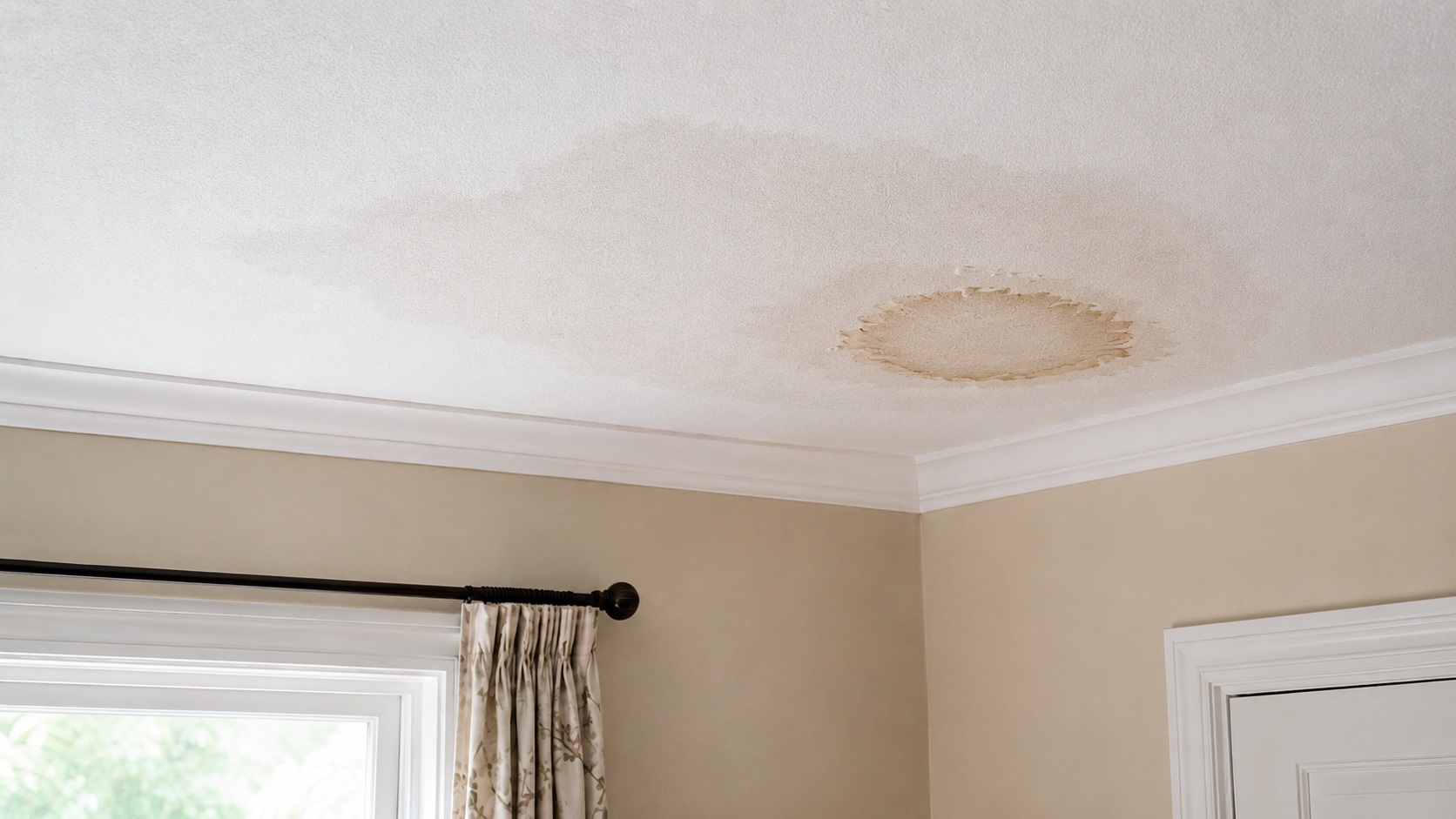
Signs of Recurring Roof Leaks
The clearest signs of recurring roof leaks are stains that return after rain, damp insulation that does not fully dry, musty odors near attic spaces, rust on nail tips or fasteners, and moisture that appears in the same area weeks or months after repairs.
A recurring leak does not always mean the repair failed completely. Sometimes the original leak was only one part of a larger roof problem, or water is entering through a nearby flashing, valley, vent, chimney, or roof-to-wall connection.
If you recently completed roof repairs, ongoing observation is essential. Following structured monitoring practices described in How to Monitor Roof Areas After Repairs improves the chances of identifying recurrence before damage spreads.
Why a Roof Leak May Return After Repairs
Roof leaks return for several common reasons. In some cases, the original repair corrected only part of the problem. In others, surrounding materials may continue to deteriorate even after repairs are completed.
Recurring leaks do not always mean poor workmanship. Roofing systems are complex, and leaks may originate from multiple sources that were not visible during the initial repair process. For a deeper cause-based explanation, see Why Roof Leaks Return After Repairs.
The most common reasons include incomplete repairs, more than one leak source, movement around flashing or roof penetrations, and nearby roofing materials continuing to deteriorate after the visible repair is finished.
Common recurrence scenarios include:
- Damaged shingles are replaced, but nearby flashing remains loose or corroded
- A visible gap is sealed, but water is still entering higher up the roof slope
- One leak location is fixed, but a secondary leak exists around a chimney, vent, valley, or roof-to-wall joint
- Seasonal expansion, settling, or thermal movement reopens a small gap after the repair
Understanding how flashing failures create hidden leak pathways — explained in Why Roof Flashing Failures Cause Leaks — helps explain why some repairs fail to fully resolve moisture problems.
Most Common Signs of Recurring Roof Leaks
Recurring roof leaks usually show a pattern. The same stain returns, the same insulation stays damp, or the same attic area changes after rain even though the repair appeared finished.
Stains That Reappear in the Same Location
One of the clearest indicators of recurring roof leaks is the return of stains in previously repaired areas. If discoloration reappears in the same location, it strongly suggests that water is still entering through the same pathway.
Recurring stains often appear:
- Directly below repaired roof areas
- Near chimney or vent penetrations
- Along ceiling joints below roof transitions
- In attic spaces beneath flashing zones
If stains return repeatedly after rainfall, it may indicate that the repair did not fully address the original leak source.
Stains That Slowly Grow Larger Over Time
Expanding stains indicate ongoing moisture exposure. Even if water is not visibly dripping, gradual enlargement of stained areas suggests that moisture is continuing to enter the structure.
Signs of expanding moisture damage include:
- Stain edges becoming darker
- Discoloration spreading outward
- Paint beginning to bubble or peel
- Drywall softening around affected areas
If these symptoms appear, additional inspection is necessary to confirm whether moisture exposure is continuing. Reviewing Signs of Water Damage from Roof Leaks can help determine whether structural materials are being affected.
Moisture Appearing After Rain Events
One of the strongest indicators of a recurring roof leak is moisture that appears consistently after rainfall. This pattern suggests that water is still entering the structure whenever the roof is exposed to active water flow.
Recurring moisture after rain often follows predictable timing patterns. Homeowners may notice damp spots forming shortly after storms, even if the original repair appeared successful during dry conditions.
A simple way to confirm the pattern is to photograph the stain edge when it is dry, then compare it after the next heavy rain. A stain that darkens, spreads, or feels damp after rain is more concerning than an old stain that does not change.
Warning signs associated with rainfall-triggered recurrence include:
- Ceiling stains appearing shortly after rain begins
- Water spots forming after heavy storms
- Dripping sounds during rainfall
- Moisture appearing only during prolonged rain events
- Water stains drying between storms but returning later
This timing pattern strongly suggests that water entry pathways remain active. If rainfall consistently triggers moisture signs, additional investigation should be performed to identify unresolved leak sources.
When moisture appears after storms, comparing the timing and symptoms with the inspection guidance in How to Detect Hidden Roof Leaks helps confirm whether hidden leak pathways still exist.
Persistent Damp Insulation
Damp insulation is one of the most reliable indicators of recurring leaks. Insulation absorbs moisture easily and often retains water longer than surrounding materials. If insulation remains damp after repairs, it may indicate continued moisture entry.
Wet insulation reduces thermal performance and increases the likelihood of structural damage if moisture remains trapped.
Signs of damp insulation include:
- Insulation that feels heavy or compressed
- Clumped or matted insulation fibers
- Discoloration or staining within insulation layers
- Visible moisture buildup beneath roof decking
- Slow drying after rainfall events
Persistent damp insulation is especially concerning because it allows moisture to remain inside structural spaces for extended periods. This increases the risk of rot and long-term material deterioration.
Musty Odors Returning After Repairs
Odor changes inside attic or living spaces often indicate recurring moisture problems. Musty smells frequently develop when damp materials remain enclosed without proper airflow.
If musty odors return after repairs, it may indicate that moisture is still entering the structure or that previously trapped moisture has not fully dried.
Common odor-related warning signs include:
- Musty smells appearing after rain events
- Damp odors concentrated near attic spaces
- Air quality changes in upper levels of the home
- Odors returning periodically rather than remaining constant
These signs suggest persistent moisture presence, even if visible stains are not immediately apparent.
Hidden Attic Warning Signs
Some recurring leak symptoms remain hidden until attic inspections are performed. Attic spaces often reveal early structural warning signs before moisture becomes visible inside living areas.
Routine attic checks help identify developing problems before they become severe.
Hidden attic warning signs include:
- Dark staining on roof sheathing
- Rust forming on nail tips or fasteners
- Water droplets forming on structural surfaces
- Soft or weakened wood materials
- Moisture collecting near repaired flashing zones
These attic-level signs often appear before interior ceiling damage becomes obvious.
How to Tell the Difference Between Old and New Damage
One challenge with recurring roof leaks is distinguishing old damage from new moisture activity. Stains, discoloration, and material changes may remain visible long after the original leak has been repaired.
Understanding the difference helps avoid unnecessary concern while still recognizing when moisture problems have returned.
Signs of Old Roof Leak Damage
Old leak damage usually remains stable over time. It may look unpleasant, but it does not continue changing after rainfall or humidity shifts.
Old damage often shows:
- Dry stains with clearly defined edges
- Discoloration that does not expand
- No dampness after storms
- No musty odors returning
- No softness or new material deterioration
If the stain remains unchanged through several rain events, it may be leftover damage from the previous leak rather than evidence of recurrence.
Signs of New or Active Leak Damage
New leak damage continues changing over time. These changes are especially important when they appear after rainfall or near previously repaired areas.
Active damage may include:
- Stains that darken after rain
- Damp surfaces or soft materials
- New bubbling paint or peeling finish
- Moisture meter readings that remain elevated
- Odors returning after storms
If signs change or intensify, the leak should be treated as active until proven otherwise.
Recurring Leak Timing Patterns to Watch For
Timing patterns provide some of the strongest clues when evaluating recurring roof leaks. The way symptoms appear after weather events often reveals whether water entry is still occurring.
Leaks That Appear Only During Heavy Rain
Some recurring leaks only appear during heavy rainfall. This often happens when normal rain does not create enough water volume to overwhelm weak areas, but heavy storms expose unresolved vulnerabilities.
Heavy-rain recurrence may suggest problems with:
- Roof valleys
- Gutter backup
- Flashing transitions
- Low-slope roof areas
- Drainage paths that concentrate water near repaired zones
If symptoms appear only during intense storms, the repair may have resolved normal water exposure but not heavier water flow conditions.
Leaks Triggered by Wind-Driven Rain
Wind-driven rain can force water into areas that remain dry during calm rainfall. This type of recurrence often appears inconsistent because it depends on storm direction and wind pressure.
Wind-driven leak patterns may involve:
- Sidewall flashing
- Dormer connections
- Chimney sides
- Roof vents
- Raised seams or vulnerable overlaps
If leaks return only when rain blows from a certain direction, the unresolved entry point may be located on a vertical or transition surface rather than the main roof field.
Leaks Appearing During Freeze-Thaw Cycles
In colder climates, recurring leaks may appear during freeze-thaw cycles. Water can enter small gaps, freeze, expand, and reopen pathways that were temporarily sealed.
Freeze-thaw recurrence may appear as:
- Leaks after snow melt
- Moisture appearing after daytime warming
- Stains forming near eaves or valleys
- Ice-related moisture near roof edges
These patterns are especially important in regions where ice dams or trapped snow contribute to repeated roof moisture problems.
Location Patterns That Signal Recurring Leaks
Recurring roof leaks often follow location patterns. Comparing where new symptoms appear with the previous repair location helps determine whether the same problem has returned or a related nearby issue has developed.
Recurring Damage Near Previous Repair Locations
Damage that returns near a previous repair location often suggests unresolved water entry. This does not always mean the exact repair failed, but it does indicate that the surrounding roof area needs further evaluation.
Common areas where recurring damage appears include:
- Around chimney flashing
- Near plumbing vent boots
- Below roof valleys
- Near skylight perimeters
- Along roof-to-wall transitions
If damage reappears near these areas, the leak source may require more than a surface repair.
Damage Appearing Slightly Away From Original Locations
Water movement inside roof structures often causes damage to appear in nearby areas rather than directly below the original leak. This behavior may confuse homeowners into believing a new leak has formed.
Typical movement-related location patterns include:
- Water traveling along rafters before dripping
- Moisture spreading through insulation layers
- Damage appearing along ceiling seams
- Stains developing several feet from entry points
Understanding water movement patterns helps identify recurring leaks more accurately.
When Recurring Roof Leaks Become Structural Risks
Recurring roof leaks become structural risks when the same materials stay wet through multiple rain cycles. Repeated wetting can affect roof sheathing, framing, drywall, insulation, fasteners, and ceiling materials before the damage looks severe from inside the room.
Early Structural Risk Warning Signs
Structural damage typically begins gradually. Identifying early warning signs helps prevent costly repairs and reduces the likelihood of widespread deterioration.
Early structural risk indicators include:
- Wood framing that appears darker than surrounding materials
- Persistent damp insulation that does not fully dry
- Rust forming on fasteners and metal connectors
- Minor warping of wood surfaces
- Localized musty odors near roof structures
These symptoms suggest that moisture exposure has continued long enough to begin affecting structural materials.
Advanced Structural Risk Indicators
If recurring leaks remain unresolved, damage may progress into more serious structural problems.
Advanced warning signs include:
- Soft or crumbling wood components
- Sagging ceiling areas
- Significant drywall deterioration
- Visible mold growth inside attic spaces
- Insulation heavily saturated or collapsing
At this stage, avoid walking on weakened roof areas or disturbing saturated ceiling materials. A roofing contractor or qualified restoration professional should evaluate the leak source and the affected materials before more damage develops.
When Homeowners Should Call a Professional
While some moisture symptoms may appear minor at first, recurring leaks often indicate unresolved structural issues. Professional inspection becomes necessary when warning signs persist or worsen despite previous repairs.
Situations That Require Professional Attention
- Recurring leaks that return after repairs
- Multiple moisture locations appearing at once
- Visible deterioration of flashing systems
- Increasing stain size over time
- Persistent dampness despite drying efforts
If symptoms return after more than one repair attempt, the roof area should be inspected for missed flashing defects, nearby secondary leaks, or hidden moisture damage before another surface repair is attempted.
When leak problems persist across multiple repair attempts, reviewing How to Fix Persistent Roof Leak Problems helps homeowners understand when more extensive repair strategies may be required.
Frequently Asked Questions About Recurring Roof Leaks
How Do I Know If a Roof Leak Has Returned?
A returning leak typically produces new moisture symptoms after rainfall. Expanding stains, damp insulation, or musty odors appearing again are strong indicators of recurrence.
Can Old Stains Look Like New Leaks?
Yes. Old stains may remain visible long after a leak is repaired. However, new leaks usually produce wet surfaces, expanding discoloration, or recurring moisture after storms.
Why Do Roof Leaks Return After Repairs?
Leaks often return when the visible repair did not address every water entry path. Multiple leak sources, loose flashing, roof penetrations, or movement around transitions can allow moisture signs to come back after storms.
Should I Call a Contractor Immediately After Seeing Recurring Signs?
If moisture appears repeatedly or structural damage indicators develop, contacting a contractor promptly prevents further deterioration and reduces repair costs.
Can Recurring Roof Leaks Cause Mold Problems?
Yes. Repeated wetting can support mold growth in attic insulation, roof sheathing, ceiling cavities, and drywall. The priority is to stop the leak source and verify that affected materials dry fully.
What to Do When Roof Leak Signs Return
Recurring roof leaks rarely resolve on their own. In most cases, repeated symptoms indicate unresolved water entry points that require additional investigation. Early recognition of recurring signs allows homeowners to respond before moisture spreads into structural materials.
If the same stain, odor, or damp attic area keeps returning after storms, treat the problem as active until the roof source and hidden moisture conditions have both been confirmed.
2 Comments
Comments are closed.