When to Repair vs Replace a Metal Roof
Deciding whether to repair or replace a metal roof depends on the type of metal roof, the condition of the panels, and whether the problem is isolated or spreading across the system. A metal roof can often be repaired when the issue is limited to one area, such as a loose fastener, failed washer, small seam problem, damaged flashing, or one affected panel. Replacement becomes more likely when corrosion, seam failure, fastener problems, panel distortion, or leaks are widespread.
Metal roofs are known for long service life, but that does not mean every metal roof leak is minor. A small repair may be enough when the roof is structurally sound and the problem is clear. Repeated sealing, patching, or fastener replacement may not be enough when the roof has broader deterioration or moisture damage below the panels.
This guide focuses only on metal roofs. For the broader roof-level decision across all roof types, see the guide on how to decide whether to repair or replace a roof. For metal roofs specifically, the decision usually comes down to fasteners, seams, corrosion, panel condition, coating wear, roof type, and whether water has reached the decking or attic.
Is the Metal Roof Locally Damaged or Failing as a System?
The first step is to decide whether the metal roof has one repairable failure point or whether the roof system is beginning to fail across many areas.
Localized damage usually points toward repair. For example, a few backed-out screws, one cracked washer, one damaged flashing detail, a minor puncture, a small rust spot, or one panel damaged by impact may be repairable if the rest of the roof is in good condition. In those cases, the roof may still have many years of service life left.
System-wide failure is different. If fasteners are backing out across large sections, seams are leaking in multiple areas, corrosion is spreading, coatings are failing broadly, or panels are distorted, the roof may no longer be a good candidate for repeated small repairs. Patching one area may stop one leak while another weak point continues to develop.
This distinction is especially important because metal roofs can fail in ways that are different from asphalt shingles, slate, or rubber roofs. Metal panels expand and contract. Fasteners and washers age. Seams and laps can move. Coatings can wear. Corrosion can begin at scratches, cut edges, fasteners, or areas where water is trapped. Understanding these patterns helps separate normal maintenance from serious common roofing material failures.
The question is not only whether a repair can be done. Many metal roof leaks can be sealed temporarily. The better question is whether the repair addresses the real cause and whether the surrounding roof is strong enough for the repair to last.
| Metal Roof Condition | Repair More Likely | Replacement More Likely |
|---|---|---|
| Fasteners | A few loose screws or failed washers | Fasteners failing across large roof areas |
| Seams | One limited seam or lap issue | Multiple seams opening or leaking repeatedly |
| Corrosion | Minor surface rust in one area | Rust-through, holes, or widespread corrosion |
| Panels | One damaged panel or small puncture | Several distorted, loose, punctured, or weakened panels |
| Moisture below roof | No decking or attic moisture damage | Wet decking, stained sheathing, insulation damage, or recurring leaks |
When Metal Roof Repair Usually Makes Sense
Metal roof repair usually makes sense when the roof problem is limited, the roof panels are still structurally sound, and the leak source is clear. In these cases, a focused repair may restore the roof without the cost of full replacement.
One common repair-friendly situation is isolated fastener failure. On exposed-fastener metal roofs, screws and washers can loosen, back out, or deteriorate over time. If only a small number of fasteners are affected and the surrounding panels are not damaged, replacing or correcting those fasteners may be enough.
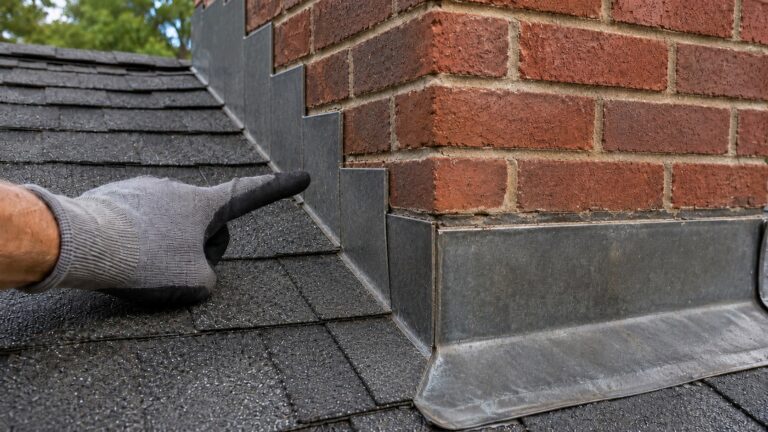
Another repairable situation is a localized flashing or penetration problem. Metal roofs can leak around vents, chimneys, skylights, sidewalls, valleys, or roof transitions if flashing details fail. If the panels around the area are still sound, the repair may involve correcting the flashing rather than replacing the entire roof.
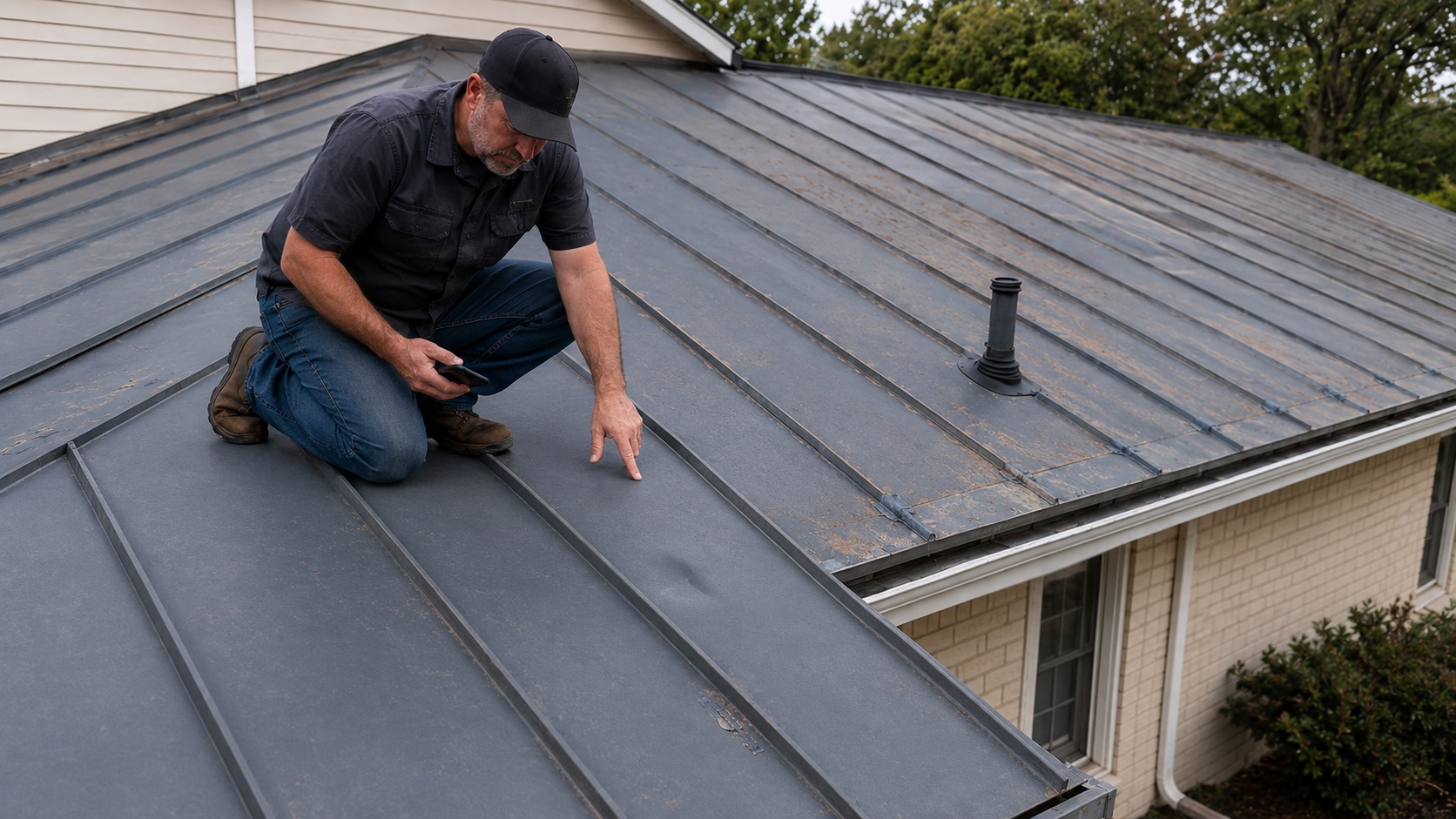
Small panel damage may also be repairable. A puncture, scratch, minor dent, or damaged panel section may be addressed if it is limited and has not allowed long-term moisture below the roof surface. In some systems, individual panels can be replaced, although the feasibility depends on the roof design, fastening method, panel profile, and location of the damage.
Metal roof repair is more reasonable when:
- The leak source is clear and limited to one area.
- Fastener or washer problems are isolated.
- Seams and laps are generally intact.
- Corrosion is minor and surface-level.
- Panels are not loose, perforated, or severely distorted.
- Coating wear is limited rather than widespread.
- The roof deck and attic materials are dry.
- The roof still has meaningful service life left.
A repair should be specific. “These fasteners are leaking because the washers have failed” is a stronger repair explanation than “We can seal the area and see if it works.” Sealant may be part of some metal roof repairs, but repeated sealant patches should not be treated as a substitute for correcting loose fasteners, moving panels, failed seams, damaged flashing, or rusted metal.
When Metal Roof Replacement Usually Makes More Sense
Metal roof replacement usually makes more sense when the problem is no longer limited to one repairable area. A roof with one loose fastener, one failed flashing detail, or one damaged panel may be repairable. A roof with widespread corrosion, repeated seam leaks, failing fasteners across many panels, or moisture-damaged decking may be too far along for small repairs to be reliable.
One of the strongest replacement indicators is repeated leakage after previous repairs. If the roof has already been sealed, patched, or refastened and leaks continue to return, the problem may be deeper than one visible opening. The roof may have panel movement, poor installation details, failed seams, aged fasteners, or hidden moisture damage below the metal.
Widespread corrosion is another serious warning sign. Surface rust in one small area may be repairable, especially if the metal is still solid. But corrosion that appears around many fasteners, along seams, at panel edges, or across broad areas may mean the protective coating has failed and the metal is deteriorating. If rust has created holes or weakened panels, replacement becomes much more likely.
Replacement also becomes more reasonable when seams or laps are failing across the roof. Metal roofs rely on properly detailed seams, overlaps, clips, fasteners, and flashing to manage water and movement. If seams are opening in multiple locations or previous sealant repairs keep failing, simple patching may not correct the underlying movement or installation problem.
In general, replacement deserves serious consideration when:
- Corrosion is widespread or has created holes in the panels.
- Fasteners are backing out across large sections of the roof.
- Washers are cracked, missing, or failing throughout the system.
- Seams, laps, or panel edges are leaking in several areas.
- Panels are loose, punctured, badly distorted, or structurally weakened.
- Coating failure is broad rather than limited to a few scratches.
- Previous repairs have not stopped recurring leaks.
- Decking, insulation, or attic materials show moisture damage.
If several of these problems are present, it may help to compare the roof with broader signs a roof needs replacement. A metal roof can last a long time, but once the system is failing in multiple ways, repeated repairs may become less practical than replacement.
How Fastener Problems Affect the Decision
Fastener problems are especially important on exposed-fastener metal roofs. These systems use screws with washers to secure the panels. Over time, fasteners can loosen, back out, over-compress the washer, under-compress the washer, or allow the washer to crack and shrink. When that happens, water may enter around the screw hole.
Isolated fastener problems are often repairable. If only a few screws have backed out or a limited group of washers has deteriorated, a roofer may be able to replace the affected fasteners and restore the seal. This is more likely to work when the panel holes are not enlarged, the metal is not corroded, and the surrounding roof area is still sound.
Widespread fastener failure is more serious. If screws are loose across many panels, water stains appear around multiple fastener rows, or fasteners no longer hold tightly, the roof may have a broader maintenance or aging problem. In some cases, the roof can be refastened. In other cases, enlarged holes, corrosion, movement, or poor installation make repairs less dependable.
Fastener leaks can also be misleading. A homeowner may see one interior stain and assume one screw is leaking. But water can travel under panels, along seams, or across underlayment before appearing indoors. If many fasteners are aging at the same time, replacing only the obvious ones may not solve the full problem.
When evaluating fastener problems, ask:
- Are only a few fasteners loose, or are fasteners failing across the roof?
- Are the washers cracked, missing, compressed, or deteriorated?
- Are screw holes enlarged or stripped?
- Is there rust around fastener heads?
- Have fastener leaks been repaired before?
- Are panels still tight and secure?
Loose screws do not automatically mean a metal roof needs replacement. But repeated fastener problems across a large roof area can signal that the system is becoming harder to maintain reliably.
How Seam and Panel Damage Affect Repair vs Replacement
Seams and panels are central to the metal roof decision. Metal roofs move as they expand and contract with temperature changes. That movement has to be handled by the roof design. When seams, laps, clips, fasteners, or flashing details fail, leaks can develop even when the metal itself still appears solid.
Some seam problems can be repaired. A small separated lap, a limited sealant failure, or one flashing-related seam leak may be corrected if the surrounding panels are stable and the roof was otherwise installed properly. The repair should address why the seam opened, not just cover the gap with sealant.
Repeated seam failure is more concerning. If several seams are opening, sealant repairs are failing, or panels appear to be moving excessively, the issue may involve expansion and contraction, poor fastening, incorrect panel layout, inadequate detailing, or aging materials. At that point, repair may become less reliable.
Panel damage also needs careful evaluation. A minor dent may be cosmetic if the panel coating is intact and the panel still sheds water properly. A puncture, torn panel edge, crushed rib, failed lap, or panel distortion can be more serious. If water can enter through the damage or if the panel no longer sits correctly, repair or panel replacement may be needed.
Whether one panel can be replaced depends on the roof system. Some exposed-fastener panels are easier to remove and replace than integrated standing seam panels. Standing seam systems may require more careful work because panels are locked together and may be connected with clips or concealed fasteners. That is why understanding standing seam metal vs corrugated metal roofing can help homeowners understand why repair feasibility varies by system.
Seam or panel damage points more strongly toward replacement when:
- Multiple seams are separating or leaking.
- Panel laps are loose or distorted.
- Several panels are punctured, bent, or structurally compromised.
- Repairs keep failing in the same seam areas.
- Panel movement is causing repeated fastener or flashing problems.
- Water has already reached decking or attic materials in several areas.
A metal roof does not need replacement just because one panel is damaged. But if seams and panels are failing in a pattern, the roof may be showing system-level weakness rather than one isolated repair issue.
How Corrosion Changes the Decision
Corrosion is one of the most important factors in deciding whether to repair or replace a metal roof. The key is to separate minor surface rust from corrosion that has weakened the metal, opened leak paths, or spread across the roof system.
Minor surface rust may be repairable if it is limited, the metal is still solid, and the cause can be corrected. For example, a small scratch that exposed bare metal, a rust spot near a fastener, or a limited area where the coating has worn may not require full roof replacement. The important question is whether the corrosion is superficial or whether it has started to compromise the panel.
Rust becomes more serious when it appears around many fasteners, along seams, at panel edges, or in low areas where water sits. Corrosion in these areas can interfere with the roof’s ability to shed water and stay sealed. If rust forms around screw holes, the fasteners may no longer hold tightly. If corrosion spreads along seams, the roof may start leaking even after sealant repairs.
Rust-through is a much stronger replacement signal. If corrosion has created holes, weakened panels, or caused metal to flake away, the roof may need panel replacement or full replacement depending on how widespread the damage is. Coating over rust-through does not restore structural metal or close hidden leak paths reliably.
Corrosion should also be evaluated by cause. If rust is limited to one scratched area, the repair may be simple. If corrosion is caused by trapped water, incompatible metals, poor drainage, failed coating, debris buildup, or repeated wetting, the repair must address the condition that allowed rust to develop. Otherwise, the problem may return.
Corrosion points more strongly toward replacement when:
- Rust appears across multiple roof slopes or panels.
- Corrosion is concentrated around many fasteners.
- Panel edges, seams, or laps are rusting.
- Metal has thinned, flaked, or developed holes.
- Coating failure is widespread.
- Previous rust repairs or coatings have failed.
- Leaks are occurring in corroded areas.
A rusty metal roof is not automatically beyond repair. But when corrosion is widespread or structural, it should be treated as more than a surface appearance problem. At that point, the decision may move closer to when a roof must be replaced instead of repaired, especially if panels are perforated or moisture has reached the structure below.
How Roof Age and Metal Roof Type Affect the Decision
Metal roofs can last a long time, but age still matters. A repair on a newer metal roof with one isolated defect is very different from a repair on an older roof with widespread fastener wear, coating failure, corrosion, and repeated leaks.
On a newer metal roof, repair is often the first option to consider. If the problem is one flashing detail, one damaged panel, one area of fastener leakage, or one installation-related defect, the rest of the roof may still have many years of service life left. In that case, replacement may be unnecessary unless the installation problem is widespread.
On a mid-life metal roof, the decision depends on maintenance history and the pattern of damage. A roof that has been maintained, kept clean, and repaired properly may still be a good repair candidate. A roof with neglected fasteners, failing sealant, spreading rust, and repeated leaks deserves closer evaluation.
On an older metal roof, replacement becomes more likely when the repair would only address one symptom of a roof that is aging throughout the system. If the panels are still structurally sound, maintenance or restoration may be possible. If corrosion, movement, and leakage are widespread, replacement may be the better long-term choice.
The type of metal roof also affects the decision. Exposed-fastener roofs often require more attention to screws, washers, and panel laps. Standing seam roofs usually have concealed fasteners and different seam details, so leaks may be tied more to flashing, clips, seams, panel movement, or installation errors. These systems should not be evaluated exactly the same way.
For age context, it helps to compare the roof’s current condition with realistic expectations for how long metal roofs usually last. A long expected lifespan does not mean every metal roof should be repaired indefinitely. It means the repair decision should weigh current condition against the amount of useful life that remains.
The best age-related question is not simply, “How old is the metal roof?” It is, “Are the panels, seams, fasteners, coating, and deck still reliable enough for a repair to last?” If the answer is yes, repair may be practical. If the answer is no, replacement may be the safer financial decision.
How Moisture Below the Metal Roof Changes the Decision
Moisture below a metal roof can change the project from a simple repair to a larger replacement decision. A metal roof problem may begin at a fastener, seam, panel edge, or flashing detail, but once water reaches the deck or attic, the scope of the work can expand.
If a leak is caught early and the decking below the roof is dry, a targeted repair may be enough. But if water has been entering for months or years, the materials below the metal may be stained, softened, deteriorated, or mold-prone. In that case, repairing the visible roof surface may not solve the full moisture problem.
Signs that moisture may have moved below the metal roof include:
- Water stains on the underside of roof decking
- Wet or compressed attic insulation
- Darkened sheathing around fasteners, seams, or penetrations
- Recurring ceiling stains after rain
- Musty odors in attic areas
- Soft or weakened decking, especially when the damage raises questions about when roof decking must be replaced
- Leak stains that return after previous sealing attempts
These signs do not always mean the entire metal roof must be replaced. A localized leak with limited decking damage may be repaired if the surrounding roof is sound. But if moisture is found in several areas, or if leaks have returned after multiple repairs, replacement becomes more likely.
Moisture also affects whether coating or resealing is appropriate. A coating may help extend the life of a metal roof when the panels are structurally sound and the leak paths are properly corrected. It should not be used to cover serious corrosion, loose panels, failed seams, or wet decking. Coating over hidden moisture problems can make the roof look improved while leaving the underlying issue unresolved.
When water has reached below the metal panels, the goal is not just to stop the next rain from entering. The goal is to prevent recurring moisture damage. That decision fits into the larger process of how to find, fix, and prevent moisture problems in a home, especially when attic materials, roof decking, or ceilings have already been affected.
A metal roof repair is strongest when it corrects the leak source and confirms the materials below are still sound. Replacement becomes more logical when the roof surface and the structure below it are both showing signs of repeated water intrusion.
Questions to Ask Before Repairing a Metal Roof
Before approving a metal roof repair, ask questions that show whether the repair will solve the real problem or only cover the most visible leak. Metal roof repairs can be effective when the cause is clear, but they become less reliable when fasteners, seams, corrosion, or panel movement are failing across the system.
Start by asking what type of metal roof you have. An exposed-fastener roof and a standing seam roof are not repaired the same way. The failure points are different, and the cost of accessing or replacing panels can vary. A repair recommendation should make sense for the roof system, not just the leak location.
Ask these questions before approving the repair:
- Is the leak source clearly identified?
- Is the problem limited to one fastener, seam, flashing detail, or panel?
- Are fasteners failing in one area or across the roof?
- Are washers cracked, missing, compressed, or deteriorated?
- Are seams, laps, or panel edges still stable?
- Is corrosion surface-level, or has it weakened the metal?
- Are any panels punctured, distorted, loose, or rusted through?
- Is the roof deck below the metal dry and solid?
- Has this area been sealed or repaired before?
- Would the repair still make sense if larger panel replacement, refastening, coating, or full roof replacement is likely soon?
These questions help separate a maintenance repair from a roof that may be reaching the end of its reliable life. Replacing a few failed fasteners is very different from chasing leaks across a roof where hundreds of fasteners are aging at the same time. Sealing one seam is different from sealing multiple seams that keep opening because of panel movement or poor installation.
Cost should also be considered in context. A modest repair on a sound metal roof may be a good investment. A large repair on a roof with widespread corrosion, repeated leaks, or wet decking should be compared with replacement. When reviewing estimates, it can help to understand typical roof leak repair cost ranges so you can tell whether the project is still a small repair or moving toward a major roof decision.
When to Call a Roofing Contractor
You should call a roofing contractor when the metal roof is leaking repeatedly, corrosion is visible, fasteners are failing in multiple areas, panels are distorted, or you are unsure whether the leak source is isolated. Metal roofs can be slippery, steep, and difficult to inspect safely, especially when wet, so do not walk the roof unless you have the proper training, fall protection, and roof-access equipment.
A professional inspection is especially important if you see rust around fasteners, open seams, panel movement, old sealant patches, recurring ceiling stains, or water marks in the attic. These signs may indicate that the problem is not limited to one obvious leak point.
A good inspection should evaluate more than the surface leak. It should look at fasteners, washers, seams, laps, flashing, panel edges, penetrations, coating condition, rust severity, and signs of moisture below the roof. The contractor should be able to explain whether the problem is repairable, whether individual panels may need replacement, or whether the roof is failing as a system.
It is wise to get more than one estimate if replacement is recommended. One contractor may recommend sealing and maintenance, while another may recommend panel replacement or full roof replacement. The useful question is not just which estimate is cheaper. It is which recommendation is better supported by the roof’s condition.
If water has reached the attic, decking, or ceiling materials, review guidance on when to hire a roofing contractor for moisture problems. If you are comparing repair scopes, replacement recommendations, warranties, or contractor explanations, it also helps to know how to choose a roofing contractor for leak repairs.
FAQ: Repairing or Replacing a Metal Roof
Can a rusty metal roof be repaired?
Sometimes. Surface rust may be repairable if the metal is still solid and the corrosion is limited. Rust-through, holes, flaking metal, or widespread corrosion around seams and fasteners is more serious. In those cases, panel replacement or full roof replacement may be needed.
Can metal roof panels be replaced individually?
Yes, in some cases. Individual panel replacement depends on the metal roof system, panel profile, fastening method, seam design, damage location, and condition of adjacent panels. Exposed-fastener panels may be easier to replace than some standing seam panels, but the roof should be inspected before deciding.
Do loose screws mean a metal roof needs replacement?
Not always. A few loose screws or failed washers may be repairable. Widespread loose fasteners, enlarged screw holes, rust around fasteners, or repeated fastener leaks may indicate a larger system problem. The pattern of fastener failure matters more than one loose screw.
Can seam leaks on a metal roof be repaired?
Some seam leaks can be repaired if the seam failure is limited and the panels are stable. Repeated seam leaks, opening laps, failed sealant across many areas, or panel movement may require more extensive work. A seam repair should address why the seam failed, not just cover the leak.
When is coating a metal roof better than replacing it?
Coating may be useful when the metal panels are structurally sound, corrosion is limited, and leak paths have been properly corrected. It should not be used to hide rust-through, loose panels, failed seams, or wet decking. Coating can extend service life, but it does not rebuild damaged metal.
Should I replace a metal roof if it leaks once?
Not automatically. One leak may come from a repairable fastener, flashing detail, seam issue, or isolated panel problem. Replacement becomes more likely when leaks repeat, corrosion is widespread, seams are failing, panels are damaged, or moisture has affected the structure below the roof.
Bottom Line: Repair the Defect, Replace the Failing System
A metal roof should usually be repaired when the problem is isolated, the panels are structurally sound, corrosion is minor, and water has not damaged the materials below the roof. Replacement becomes more reasonable when fastener failure, seam leaks, corrosion, coating breakdown, or panel damage are widespread.
The most important distinction is whether the roof has one correctable defect or whether the system is becoming unreliable. A loose fastener, small flashing issue, minor seam problem, or one damaged panel may be repairable. Rust-through, repeated leaks, failing seams, loose panels, and wet decking point toward a larger decision.
Before spending money on another patch, compare the repair scope with the roof’s remaining service life. A good repair should solve a specific problem and leave the surrounding roof reliable. If the repair only adds one more temporary fix to a roof that keeps failing, replacement may be the better long-term choice.