Roof Repairs That Fail Most Often
Some roof repairs fail because the wrong area was patched. Others fail because the repair only covered the visible symptom instead of correcting the path that allowed water into the roof system. A ceiling stain, a drip near a light fixture, or a wet spot in attic insulation does not always appear directly below the actual roof failure. Water can enter around flashing, travel beneath shingles, run along decking, follow rafters, and show up several feet away from the source.
That is why the weakest roof repairs are usually surface repairs. A bead of caulk, a smear of roofing tar, or a patch over a visible gap may stop water for a short time, but it does not always restore how the roof is supposed to shed water. A durable repair should correct the failed part of the system, whether that is flashing, shingles, underlayment, fasteners, a pipe boot, a valley, or damaged decking.
The repairs below are the ones homeowners should watch most closely because they often depend on surface sealing instead of restoring the failed roof detail. For a broader look at roof system weaknesses, see common roofing material failures.
Why Some Roof Repairs Fail So Quickly
A roof is not a flat waterproof lid. Most residential roofs are designed as layered drainage systems. Shingles shed water downward. Flashing redirects water around edges, walls, chimneys, skylights, vents, and roof penetrations. Underlayment gives secondary protection beneath the visible roof covering. Valleys collect and move large amounts of water. Fasteners hold the system in place without creating exposed leak paths.
When one part of that system fails, the visible leak is often only the final symptom. A quick repair may stop the obvious opening, but it may not restore the water path that was supposed to keep moisture out in the first place. That is why a roof can appear fixed after one rain and then leak again during wind-driven rain, heavy downpours, melting snow, or a storm from a different direction.
Many failed repairs have one thing in common: they depend too much on exposed sealant. Sealant has its place in roofing, but exposed caulk, tar, or patching compound is usually under more stress than homeowners realize. Sun, heat, wind, rain, freeze-thaw cycles, debris, and roof movement can all cause a surface repair to crack, separate, or let water move underneath it.
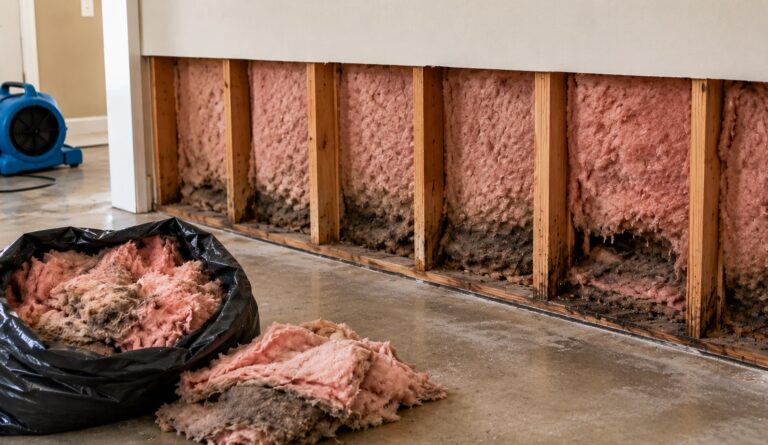
This matters because roof leaks rarely stay isolated forever. If moisture keeps entering the roof system, it can affect sheathing, attic insulation, rafters, ceilings, and interior finishes. Understanding how moisture problems move through a home helps explain why a weak roof patch can eventually become a larger structural or mold-related issue.
The repairs that fail fastest are usually the ones that do not answer the most important question: what actually failed? A stain on the ceiling does not prove the roof covering failed directly above that stain. A leak near a chimney does not always mean the chimney itself is the problem. Water around a vent pipe may come from a split rubber boot, a loose flashing flange, exposed fasteners, deteriorated shingles nearby, or water entering from higher on the roof.
A better repair identifies the failed component before covering the symptom. Was flashing loose or incorrectly lapped? Did shingles lift because of age, wind, or poor fastening? Did a pipe boot crack around the vent pipe? Did a valley collect debris and force water sideways? Did the roof deck soften because the leak had been active for a long time? Without that diagnosis, two repairs can look similar from the ground while only one actually restores the roof system.
Homeowners do not need to know every technical detail of roof installation to recognize the difference. If the repair explanation sounds like “we sealed it up” but does not mention what failed, the repair deserves closer attention. If the same area has been patched more than once, the underlying water path may still be active. If the repair is in a high-flow area such as a valley, chimney, skylight, or roof-to-wall transition, surface patching alone is especially risky.
The Roof Repairs That Fail Most Often
The roof repairs that fail most often are usually repairs made in high-stress areas or repairs that rely on surface sealing instead of correcting the failed roof detail. Some of these repairs can work temporarily when done as emergency protection, but they become risky when treated as permanent solutions.
Caulk-Only Flashing Repairs
Caulk-only flashing repairs are among the most common weak roof repairs. Flashing is supposed to direct water away from vulnerable roof transitions, including chimneys, sidewalls, skylights, dormers, valleys, and roof penetrations. When flashing is loose, rusted, improperly overlapped, lifted, or missing, simply applying caulk along the edge usually does not restore the flashing system.
The problem is not that sealant has no place on a roof. The problem is using sealant as a substitute for proper flashing. If water is already getting behind the flashing, caulk on the surface may only trap water temporarily or redirect it into another path. Once the caulk cracks, separates, or loses adhesion, the leak often returns. For a deeper explanation of this failure point, see why roof flashing failures cause leaks.
Roofing Tar Spread Over Cracks or Seams
Roofing tar is often used as a quick patch around cracks, seams, fasteners, vents, and old leak areas. It can sometimes provide short-term protection, especially in an emergency, but it often fails when used as the main repair. Tar is exposed directly to sun, temperature swings, standing debris, and roof movement. Over time, it can dry out, crack, shrink, soften, or separate from the surrounding materials.
Another problem is that tar can hide the real failure. A thick patch may cover a cracked shingle, a loose flashing edge, a failed pipe boot, or deteriorated underlayment without actually replacing the damaged material. The roof may look sealed for a while, but water can still move underneath the patch or enter at the edges. When the leak returns, the original problem may be harder to inspect because the area is covered with old patching material.
Pipe Boot and Vent Penetration Patches
Pipe boots and roof vents are common leak sources because they interrupt the roof surface. Plumbing vent pipes usually pass through rubber or metal flashing assemblies. Over time, rubber boots can split, shrink, crack, or pull away from the pipe. Fasteners can loosen. Shingles around the penetration can age or lift. If the repair only smears sealant around the top of the boot, the leak may return quickly.
A durable repair around a penetration often requires understanding which part failed. The rubber collar may be damaged. The flashing flange may be loose. The surrounding shingles may be brittle. Water may be entering from the uphill side and appearing near the pipe. If the repair does not address the actual failure, it may only delay the next leak. Homeowners who suspect this problem should compare the repair area with the warning signs in signs roof penetrations are leaking.
Valley Patch Repairs
Roof valleys fail often because they handle more water than most other parts of the roof. When two roof slopes meet, rainwater is funneled into the valley and moves downward at high volume. Leaves, granules, small branches, and roof debris can also collect there. A weak patch in a valley has to withstand concentrated water flow, debris abrasion, and constant wetting during storms.
Valley repairs fail when a roofer only seals the visible crack, exposed edge, or damaged shingle without correcting the valley lining, shingle cuts, underlayment, or flashing pattern. A patched valley may look acceptable at first, but water can work under the edges if the valley is not rebuilt correctly. Because valleys are high-flow areas, small repair mistakes can become recurring leaks. If the area already shows staining, debris buildup, or repeated patching, review the signs roof valleys are failing.
Skylight Edge Repairs
Skylight repairs often fail when the repair focuses only on the visible frame. Homeowners may see water staining near a skylight and assume the glass, gasket, or frame needs caulk. Sometimes that is part of the issue, but many skylight leaks come from flashing problems, poor curb integration, aged shingles around the skylight, or water entering above the skylight and appearing at the opening.
Caulking the skylight edge may stop minor surface entry for a short time, but it will not correct a failed flashing system. Skylights need properly layered flashing so water is directed around the opening and back onto the roof surface. If water is getting behind the flashing or under the surrounding shingles, surface sealant around the skylight frame is unlikely to hold up as a long-term repair.
Nail Pop and Exposed Fastener Patches
Exposed fasteners are another common repair failure point. A nail pop, backed-out screw, or misplaced fastener can create a small opening where water enters. A quick repair may involve dabbing sealant over the fastener head. That may help temporarily, but it does not always solve the reason the fastener became exposed.
Fasteners can back out because of movement, poor installation, deck issues, thermal expansion, or shingle lifting. If the surrounding shingle is loose, cracked, or no longer lying flat, sealant over the nail head may fail when the shingle moves again. The repair may need more than a surface dab. It may require correcting the fastening, replacing the affected shingle, or addressing surrounding roof movement.
Replacing a Few Shingles Without Checking the Whole Area
Replacing damaged shingles can be a legitimate roof repair, but it fails when the replacement is too narrow. If several shingles blew off during a storm, the visible missing shingles may not be the only damaged area. Nearby shingles may be creased, loosened, brittle, or poorly sealed. Underlayment may be torn. Decking may already be wet. Flashing near the damaged area may have shifted.
A repair that only replaces the most obvious shingles can leave hidden damage behind. This is especially common on older roofs where surrounding shingles are brittle. New shingles may be installed beside materials that no longer seal properly. The roof may look patched from the ground, but water can still enter through damaged laps, exposed nail holes, or weakened edges around the repair.
Temporary Tarp Repairs Left Too Long
Temporary tarps are useful after storm damage, fallen branches, active leaks, or emergency roof openings. The problem begins when a temporary covering becomes the long-term plan. Tarps can loosen, tear, flap in wind, trap moisture, collect debris, or allow water underneath if the edges are not secure. Even when installed well, a tarp does not restore shingles, flashing, underlayment, or decking.
A tarp should be treated as emergency protection until a proper roof repair can be made. If it stays in place through repeated storms, water can still reach the roof system at edges, fastener points, wrinkles, and low spots while moisture continues affecting decking or attic materials underneath.
Why Temporary Roof Repairs Become Long-Term Problems
Temporary roof repairs are not automatically bad. They can control water until a full repair can be scheduled. The problem begins when a temporary patch is treated as proof that the roof is fixed, especially after it survives the first light rain.
Tar, caulk, patching compound, tape, and tarp edges all sit directly in the weather. Sun, heat, wind, rain, granule loss, debris, and roof movement can weaken a repair that depends mostly on exposed adhesion.
Temporary repairs also tend to cover the top layer of the problem. They may stop water from entering one visible gap while leaving the failed detail unchanged. If flashing is incorrectly lapped, a pipe boot is split, a valley drains poorly, or nearby shingles are brittle, the roof can still leak even after the patched spot looks sealed.
This is one reason roof leaks can seem unpredictable after a repair. The patch may hold during light rain but fail during wind-driven rain. It may work during a short storm but fail during a long soaking rain. It may stop water when rain falls straight down but allow water in when wind pushes rain under edges and laps. When this happens, the homeowner may think the leak is new, when the original repair simply did not correct the full water path.
Temporary repairs can also trap moisture. A thick surface patch can hold water against old shingles, cover a wet crack, or hide soft decking underneath. If the area was already wet before the emergency repair, covering it does not automatically dry roof decking, insulation, or attic materials.
For that reason, a roof repair should not be judged only by whether the dripping stopped immediately. A stronger test is whether the repaired area stays dry through several weather conditions and whether the repair addressed the failed component. If the same area leaks again, especially after multiple patches, the issue may belong in the pattern described in why roof leaks return after repairs.
Signs a Roof Repair May Not Last
Homeowners cannot see every repair detail from the ground, but the warning signs below suggest the area should be watched closely after rain.
The Repair Depends on Thick Surface Sealant
A repair that consists mostly of thick tar, caulk, or sealant may not be durable if the sealant is doing the job that flashing, shingles, or underlayment should be doing. Heavy surface sealant around chimneys, vents, valleys, skylights, or wall intersections is often a sign that someone tried to cover the leak instead of rebuilding the failed detail.
The Same Area Has Been Patched More Than Once
Repeated patching is one of the strongest signs that the original cause was not fixed. If the same vent, chimney, valley, or shingle area has multiple layers of old sealant, the roof has probably been treated symptom by symptom. A durable repair should reduce the need for repeated emergency patching in the same place.
Shingles Near the Repair Are Lifted, Buckled, or Brittle
Even if the patched spot is sealed, surrounding shingles may still allow water in. Lifted shingles can let wind-driven rain move under the roof covering. Brittle shingles may crack when disturbed. Buckled areas may indicate movement, trapped moisture, or poor installation. A repair that ignores the surrounding roof condition may not last.
Fasteners Are Still Exposed
Exposed nails or screws are common leak points. If fasteners remain visible after the repair, or if sealant is the only thing covering them, the repair may be vulnerable. Fasteners should not become repeated water-entry points every time the sealant ages or separates.
No One Checked the Attic or Underside of the Roof
Not every roof repair requires a full attic investigation, but active leaks often need more than a surface look. If water entered long enough to stain ceilings or wet insulation, the underside of the roof may show where water traveled. Skipping the interior or attic side can make it easier to miss wet decking, mold risk, or a leak path that starts higher on the roof.
The Explanation Was Only “We Sealed It”
A weak repair often comes with a vague explanation. “We sealed it” may be fine for a small maintenance detail, but it is not enough when the roof has an active leak, recurring stain, or high-risk failure area. A better explanation identifies what failed and what was corrected: flashing, shingles, pipe boot, valley lining, exposed fasteners, underlayment, or another roof component.
Stains Return After Heavy or Wind-Driven Rain
If staining returns only after certain storms, the roof may still have an active leak path. Wind-driven rain can expose weak laps, loose flashing, poor valley details, and openings that ordinary rain does not reveal. Repeated staining, damp insulation, or new ceiling marks after a repair should be treated as a warning sign. For symptom-focused guidance, see signs of recurring roof leaks.
When a Failed Roof Repair Means a Bigger Fix Is Needed
A failed roof repair does not always mean the entire roof needs to be replaced. Sometimes the original repair was simply too narrow, too temporary, or applied to the wrong part of the roof. However, repeated repair failure is a warning sign that the problem may be larger than a single cracked shingle or small open seam.
One failed patch may point to a repair mistake. Several failed patches in the same area often point to a system problem. This is especially true around chimneys, valleys, skylights, low-slope transitions, roof-to-wall intersections, and older roof penetrations. These areas depend on correct layering and drainage. If the repair only covers the visible opening, water may continue entering from above, beside, or underneath the patched spot.
A bigger fix may be needed when roof decking is soft, stained, swollen, or deteriorated. Decking damage means water has been active long enough to affect the structure beneath the roof covering. In that situation, another surface patch will not restore the weakened material. The damaged area may need to be opened, dried, evaluated, and repaired before the roof covering is restored.
Age also matters. A small repair on a newer roof may hold well if the surrounding materials are flexible and in good condition. The same repair on an older roof may fail because nearby shingles are brittle, granules are worn away, seal strips no longer bond well, and fasteners no longer hold as securely. When the roof surface around the repair is near the end of its service life, the issue may shift from a patch question to a repair-or-replace decision.
Multiple leak locations are another sign that the problem may be larger than one repair. If one area is patched and another leak appears nearby, the roof may have widespread aging, wind damage, installation defects, or flashing weaknesses. In that case, the homeowner should avoid chasing one patch after another without a broader inspection.
A professional inspection becomes more important when the repair is near a high-risk detail, when the leak has returned more than once, when ceiling stains are spreading, or when attic materials are damp. If the roof is older or the damage is no longer isolated, compare the situation with how to decide whether to repair or replace a roof. If you are comparing advice from different contractors, use a structured approach like choosing a roofing contractor for leak repairs so the decision is based on diagnosis, documentation, and repair scope rather than the lowest patch price.
How Homeowners Can Avoid Weak Roof Repairs
The best way to avoid weak roof repairs is to ask what failed, not just where the water appeared. A good repair explanation should identify the roof component that allowed water in. That may be a cracked pipe boot, lifted flashing, missing shingles, exposed fasteners, deteriorated valley materials, damaged underlayment, or rotten decking. If the answer is only “we sealed the leak,” the repair may deserve more scrutiny.
Homeowners should also ask whether the repair is temporary or permanent. Emergency patches have their place, especially during active rain or after storm damage, but they should not be mistaken for complete roof restoration. A temporary patch should lead to a follow-up repair plan. That plan should explain what will be replaced, reset, fastened, dried, or inspected after weather conditions allow proper work.
Before approving a repair, ask whether the surrounding materials were checked. A leak at a pipe boot may involve nearby shingles. A leak in a valley may involve valley lining, underlayment, shingle cuts, and debris patterns. A chimney leak may involve step flashing, counterflashing, masonry, roof slope, and the uphill side of the chimney. A narrow repair may miss these related conditions.
Useful questions to ask include: “What failed?”, “Was this temporary or permanent?”, “Did you check the uphill side of the leak?”, “Were the surrounding shingles, flashing, and decking sound?”, and “Can you show photos of the failed part before and after repair?”
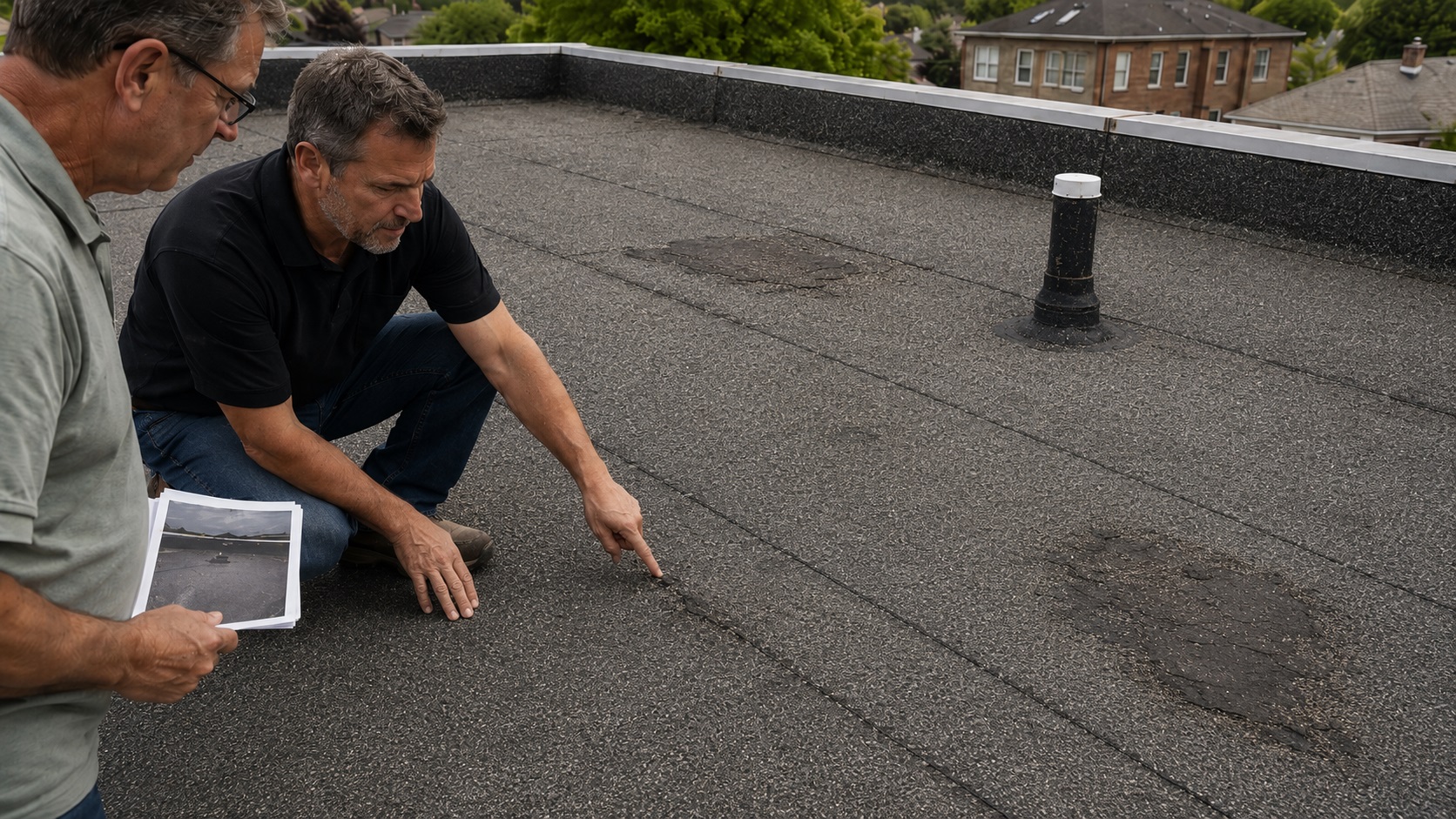
Photos are useful. Before-and-after photos can show whether the repair replaced materials or only covered them. They can also help you monitor the same area later if staining returns. If a roofer can show the failed flashing, cracked boot, lifted shingle, or damaged decking, the repair explanation becomes easier to trust.
After any roof repair, watch the area during the next few storms. Check ceilings, attic insulation, roof decking, and nearby framing only if those areas are safely accessible. Do not walk on a wet, steep, damaged, or unstable roof to verify a repair. Moisture does not always appear immediately after the first rain. Some leaks show up only during long storms, wind-driven rain, or repeated wetting. A post-repair routine like monitoring roof areas after repairs can help catch a weak repair before it turns into hidden damage.
Finally, avoid using repeated patching as a substitute for diagnosis. If the same leak keeps returning, the repair has not solved the real problem. At that point, the question is no longer just “Where can we seal it?” The better question is “Why is water still finding a path into this roof system?”
FAQs About Roof Repairs That Keep Failing
Are roofing tar repairs permanent?
Roofing tar repairs are usually better treated as temporary or limited-scope repairs, not permanent fixes for major roof failures. Tar may help stop water briefly, but it can crack, shrink, soften, or separate over time. If tar is being used instead of proper flashing, shingle replacement, or underlayment repair, the leak is more likely to return.
Is caulk enough to stop a roof leak?
Caulk may help with small maintenance gaps in the right location, but it is usually not enough for leaks caused by failed flashing, loose shingles, cracked pipe boots, exposed fasteners, or bad roof transitions. If caulk is the only repair on an active roof leak, it should be considered a warning sign unless the roofer explains why it is appropriate.
Why do roof leaks come back after being repaired?
Roof leaks often come back when the repair covered the visible leak point without correcting the original water path. Water may still be entering above the patched area, under flashing, around a penetration, or through damaged shingles nearby. Recurring leaks usually mean the repair needs a better diagnosis, not just another layer of sealant.
How long should a roof repair last?
A roof repair can last for years when the correct failure is found, damaged materials are replaced, and the surrounding roof is still in good condition. A temporary patch may last only through a short period of weather. Roof age, repair location, workmanship, and hidden damage all affect how long the repair holds.
Should I trust a roof repair that only used sealant?
It depends on the repair. Sealant can be appropriate for certain small details, but it should not replace flashing, shingles, pipe boots, underlayment, or proper fastening. Be cautious if the repair is in a valley, around a chimney, near a skylight, or at a roof penetration and the only fix was exposed sealant.
When should a failed roof repair be inspected by a professional?
A failed repair should be inspected when the leak returns, ceiling stains spread, attic insulation becomes damp, decking feels soft, or the same area has been patched more than once. Professional inspection is especially important around chimneys, valleys, skylights, roof-to-wall transitions, and older penetrations.
What a Strong Roof Repair Should Do
The roof repairs that fail most often are the ones that patch the surface without restoring the roof system underneath. Caulk, tar, sealant, and tarps can be useful in limited or temporary situations, but they are not substitutes for proper flashing, secure shingles, sound underlayment, intact pipe boots, and dry decking.
A strong roof repair should answer three questions: what failed, how water entered, and what was corrected so water sheds properly again. If the repair only hides the visible opening, the leak may return during the next heavy storm, wind-driven rain, or seasonal movement.
Homeowners should be especially cautious with repeated patches around flashing, valleys, skylights, pipe boots, and exposed fasteners. These are high-stress areas where water movement is concentrated and weak repairs often fail first. When a roof repair keeps failing, the solution is usually better diagnosis, not more surface patching.