How to Inspect HVAC Systems for Moisture Damage
To inspect an HVAC system for moisture damage, start with the air handler or furnace area, drain pan, condensate drain, visible ductwork, vents, and nearby ceilings, walls, floors, and insulation. The goal is to separate active moisture from old staining and determine whether the damage is limited to the system or spreading into building materials.
Look for standing water, rust, mineral residue, damp insulation, condensation on ducts or registers, musty odors near airflow openings, and stains around HVAC closets, attic ductwork, or ceiling vents.
If you’re still identifying early warning signs, it helps to first review signs of moisture problems in HVAC systems. If you haven’t confirmed moisture yet, how to detect moisture inside HVAC systems provides a step-by-step method for confirming whether moisture is actually present.
Because HVAC moisture problems often repeat when the underlying cause is not resolved, understanding inspection results also connects closely with why HVAC systems develop moisture problems and how to prevent moisture build-up in HVAC systems.
What HVAC Moisture Damage Actually Looks Like
HVAC moisture damage can take several forms, depending on how long the problem has been present and where the moisture has spread. In early stages, damage may be limited to the HVAC system itself. In more advanced cases, it can extend into surrounding walls, ceilings, insulation, and flooring.
Moisture damage generally falls into three categories:
- Active moisture: ongoing water or condensation issues currently happening
- Residual damage: signs of past moisture exposure such as stains or corrosion
- Structural impact: moisture affecting building materials around the HVAC system
Understanding these categories helps you determine whether the issue is ongoing, historical, or already affecting the structure of the home.
Active Moisture vs. Past Damage
One of the most important distinctions during inspection is whether moisture is still actively present or whether you are seeing leftover signs of a past issue.
Active moisture may include:
- Water collecting in the drain pan
- Condensation forming during system operation
- Dripping sounds or visible leaks while running
- Damp insulation or wet duct surfaces
Residual damage, on the other hand, may include:
- Water stains on ceilings or walls
- Rust or corrosion on HVAC components
- Mineral buildup around drainage areas
- Dry but warped or discolored materials
This distinction is critical because active moisture requires immediate correction, while residual damage may indicate a past issue that has already stopped but still left behind effects.
Why Moisture Damage Often Extends Beyond the HVAC System
HVAC systems distribute air throughout the home, which means moisture problems can also show up beyond the equipment itself. As air moves through ducts and vents, condensation, damp insulation, or humidity imbalance can leave damage in areas that do not look directly connected to the HVAC unit at first.
This is why moisture damage is often found in unexpected locations such as:
- Ceilings below attic ductwork
- Walls near supply or return vents
- Insulation in hidden duct runs
- Floors near HVAC closets or air handlers
If moisture has already spread into these areas, it may overlap with broader home moisture patterns described in how to find hidden moisture in different areas of your home.
Why Proper Inspection Matters
Inspecting HVAC moisture damage is not just about finding water near the unit. It is about following the moisture pattern from the equipment to the drain line, ductwork, vents, and nearby building materials so you can see whether the problem is isolated or spreading.
A proper inspection helps answer key questions such as:
- Is the moisture still active or already resolved?
- Is the HVAC system the source or just a distribution point?
- Has moisture reached surrounding building materials?
- Is the issue isolated or part of a larger system imbalance?
How to Safely Inspect an HVAC System for Moisture Damage
A proper HVAC moisture inspection focuses on visible, accessible areas of the system. Do not open sealed components, remove service panels, reach into moving parts, or inspect electrical areas while equipment is running. Instead, identify signs of water exposure, repeated condensation, or drainage failure using safe, external observation.
Inspection should always begin at the system itself and then expand outward into connected areas such as ducts, vents, and nearby structural materials.
Inspecting the Air Handler or Furnace Area
The air handler or indoor furnace area is one of the most important inspection points because cooling coils, drain pans, condensate lines, and nearby flooring often show the first visible signs of moisture trouble.
Start by carefully examining the area around the unit and looking for signs of water-related damage.
Key things to check include:
- Standing water in or near the drain pan
- Rust or corrosion on metal surfaces
- Water stains or residue inside the cabinet area
- Damp flooring or surrounding materials
Repeated moisture in this area often indicates drainage problems or overflow conditions. If water is present consistently, it suggests the drain system, airflow, or condensate handling is not working correctly.
In many cases, repeated moisture around the air handler points to drainage, airflow, or humidity conditions that need correction before the damage stops returning.
Checking the Condensate Drain System
The condensate drain system is responsible for removing water created during cooling. If it fails, moisture has nowhere to go and begins accumulating inside or around the HVAC unit.
During inspection, look for:
- Slow or blocked drainage flow
- Water backing up into the drain pan or triggering an overflow switch
- Overflow signs near the drain exit point
- Moisture stains around drain connections
Even small drainage issues can lead to repeated moisture exposure over time. These problems often develop gradually, making them easy to miss without careful inspection.
Inspecting the Evaporator Coil Area (Indirectly)
The evaporator coil is where most condensation is formed inside the system. While it is not always directly visible, you can still observe indirect signs of moisture issues.
Watch for:
- Water dripping shortly after the system shuts off
- Excess condensation forming during operation
- Ice-related signs such as water appearing after a frozen coil thaws
- Airflow changes that coincide with moisture buildup
If coil-related moisture is suspected, avoid opening sealed panels or disturbing internal components unless you are qualified to service HVAC equipment.
Inspecting Vents and Registers
Vents and registers are one of the most accessible areas for identifying moisture damage because they directly reflect what is happening inside the duct system.
Look for:
- Condensation forming on vent covers
- Discoloration or staining around registers
- Damp or clumped dust buildup
- Musty odors concentrated near airflow openings
Moisture at vents often indicates that condensation is forming inside ducts or being carried through airflow, rather than originating at the vent itself. A brief damp edge during very humid weather is less concerning than repeated condensation, staining, or damp dust that returns during normal operation.
For more focused duct-related symptoms, see signs of moisture in HVAC ducts.
Inspecting HVAC Ductwork for Moisture and Hidden Damage
Ductwork is one of the most common places where HVAC moisture damage spreads without being immediately visible. Because ducts often run through attics, basements, or crawl spaces, they are exposed to temperature differences that can encourage condensation.
During inspection, focus on accessible duct sections in attics, basements, crawl spaces, mechanical rooms, and other unfinished areas. Do not cut duct insulation or open ductwork just to look inside.
Key indicators include:
- Water droplets forming on duct surfaces
- Damp or compacted insulation wrapped around ducts
- Darkened areas indicating repeated moisture exposure
- Loose, disconnected, or poorly sealed duct joints
Moisture on duct surfaces often suggests temperature imbalance or insulation issues rather than a direct leak. Over time, this can affect airflow performance and spread moisture into surrounding materials.
If duct moisture appears in several rooms or along long duct runs, treat it as a system pattern rather than a single isolated wet spot.
Evaluating Surrounding Structural Materials
HVAC moisture problems can extend beyond the system itself and begin affecting nearby building materials. This is especially common when moisture has been present for an extended period.
During inspection, check areas around the HVAC system for structural impact, especially below attic equipment, around HVAC closets, near ceiling registers, and along visible duct paths.
Ceiling and Wall Areas
- Yellow or brown staining on ceilings
- Soft or weakened drywall near vents or ducts
- Paint bubbling or peeling in localized areas
- Recurring stains that reappear after drying
Floor and Baseboard Areas
- Swelling or warping of baseboards
- Damp flooring near HVAC closets or vents
- Soft or uneven floor sections near duct paths
Insulation and Hidden Cavities
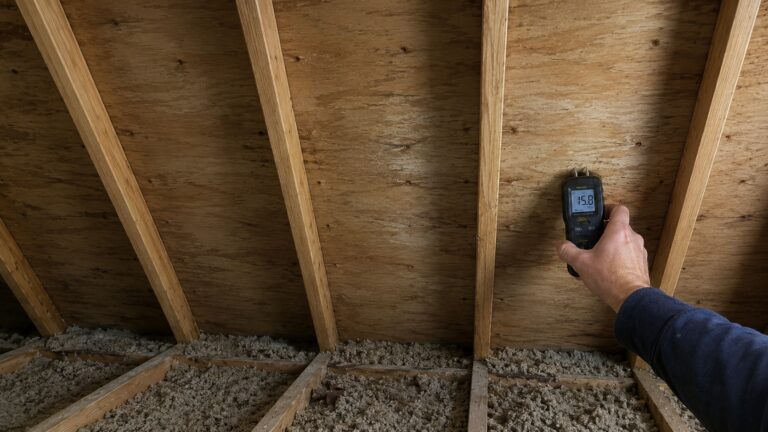
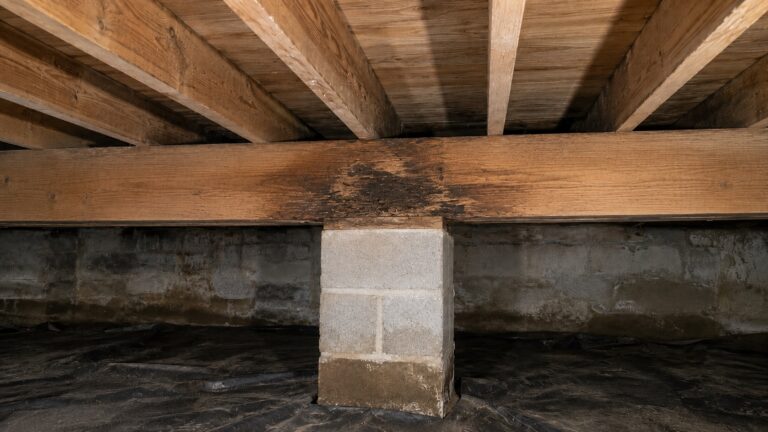
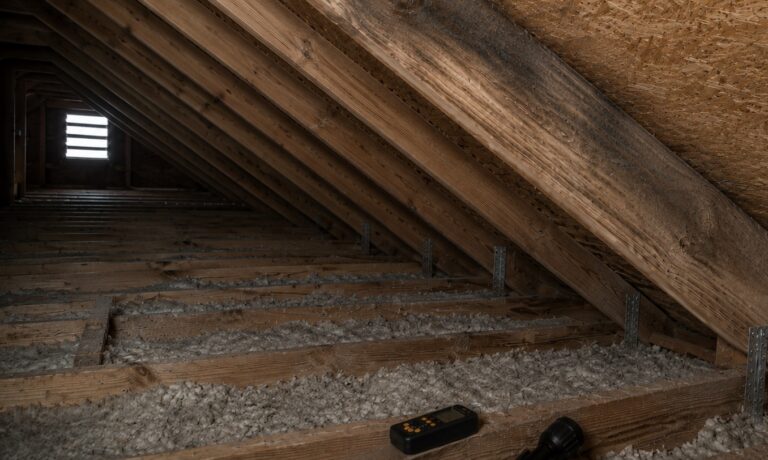
- Damp or compressed insulation in attics or crawl spaces
- Darkened insulation indicating long-term moisture exposure
- Musty odors coming from hidden wall, ceiling, attic, or crawl space areas near HVAC runs
When moisture reaches these areas, it suggests that the problem has moved beyond the HVAC system itself and is affecting the structure of the home.
Do not assume the area is safe just because the surface feels dry. Staining, warped trim, compressed insulation, or recurring odor can indicate moisture exposure inside materials that are no longer visibly wet.
How to Assess the Severity of HVAC Moisture Damage
Not all moisture damage is equally serious. Understanding the severity helps determine whether the issue can be monitored, needs correction, or requires professional attention.
Level 1 — Minor Moisture Exposure
- Occasional condensation near vents or ducts
- No visible structural damage
- Moisture limited to HVAC surfaces
This level often indicates an early-stage humidity, airflow, or insulation imbalance and may be manageable with basic maintenance or monitoring.
Level 2 — Moderate Moisture Damage
- Visible water stains near HVAC components
- Repeated condensation or drainage issues
- Localized damp insulation or duct sections
At this stage, moisture is no longer isolated and is beginning to affect surrounding materials.
Level 3 — Advanced Moisture Damage
- Structural materials affected (drywall, wood, insulation)
- Persistent moisture or recurring water issues
- Widespread humidity imbalance in the home
This level indicates a system-wide or environmental issue that usually requires professional HVAC evaluation, moisture testing of affected materials, or corrective repairs before drying alone will solve the problem.
If the moisture source has already been corrected and the next concern is drying affected HVAC areas, see how to dry HVAC systems after moisture problems.
For a broader understanding of how moisture spreads and recurs, see why moisture problems keep returning.
When HVAC Moisture Damage Becomes Serious
HVAC moisture damage becomes serious when the same signs keep returning, appear in more than one area, or begin affecting drywall, insulation, flooring, or wood near HVAC equipment and duct paths.
Key warning signs of serious moisture damage include:
- Moisture appearing in multiple areas of the home
- Repeated water stains that return after drying
- Soft or weakened drywall near HVAC zones
- Persistent musty odors throughout the system
- Dark spotting, damp insulation, or suspicious staining around ducts, vents, or HVAC closets
When these conditions are present, the problem often involves both HVAC system performance and environmental factors such as humidity and airflow imbalance.
If visible mold-like growth appears around ducts, vents, coils, insulation, or HVAC closets, the inspection has moved beyond simple moisture damage. In that case, review signs of mold growth in HVAC systems before disturbing contaminated materials.
Frequently Asked Questions About How to Inspect HVAC Systems for Moisture Damage
How do I know if my HVAC system has moisture damage?
Look for water stains near the air handler, rust on metal surfaces, standing water in the drain pan, damp duct insulation, condensation on registers, musty odors near vents, or ceiling and wall stains along duct paths. Repeated signs are more concerning than one-time condensation.
Can HVAC moisture damage walls or ceilings?
Yes. If moisture spreads through ducts or vents over time, it can lead to stains, soft drywall, or paint damage in ceilings and walls near airflow pathways.
What does HVAC moisture damage usually look like?
It typically appears as condensation, rust on metal parts, water stains on surrounding surfaces, damp insulation, or recurring humidity issues inside the home.
How do I check ducts for moisture damage?
Inspect only accessible duct sections in attics, basements, crawl spaces, or mechanical areas. Look for condensation on metal surfaces, damp or compressed duct insulation, dark staining, loose duct joints, and moisture marks below duct runs.
When should I be concerned about HVAC moisture damage?
You should be concerned when moisture is persistent, spreading, or affecting structural materials. Repeated issues despite drying or maintenance also indicate a more serious underlying problem.
Conclusion
A good HVAC moisture inspection starts at the equipment, follows the drain and duct paths, and then checks nearby ceilings, walls, floors, insulation, and vents for damage patterns. The most important question is not only whether moisture is present, but whether it is active, recurring, or already affecting surrounding materials.
If the same stains, condensation, odors, or damp materials keep returning after the area dries, the problem likely needs more than surface cleanup. The source may involve drainage, airflow, insulation, humidity, or system performance issues that should be corrected before repairs are covered or repainted.
Key Takeaways
- HVAC moisture damage can be active, residual, or structural in nature
- Inspection should include the air handler, drain system, ducts, and surrounding materials
- Moisture often spreads beyond the HVAC system into walls, ceilings, and insulation
- Severity ranges from minor condensation to advanced structural damage
- Recurring moisture usually indicates an unresolved system imbalance
- Do not cover, repaint, or close affected areas until the moisture source has been corrected