How Long Metal Roofs Last: Lifespan, Maintenance, and What Shortens Roof Life
Metal roofs often last for several decades, but the exact lifespan depends on the roof system, metal type, coating, fasteners, installation quality, climate, and maintenance. For many homeowners, a realistic metal roof lifespan is around 40 to 70 years for higher-quality systems in favorable conditions, while poorly installed or harshly exposed roofs may age sooner.
Quick answer: Most metal roofs last for decades, but standing seam systems usually have the best lifespan potential, while exposed-fastener systems often need screw and washer maintenance long before the panels fail.
The most important point is that “metal roof” is not one single product. A standing seam roof, corrugated metal roof, exposed-fastener panel roof, aluminum roof, steel roof, and coated metal roof can all age differently. A well-installed standing seam roof may last much longer than many asphalt shingle roofs, while an exposed-fastener roof may need more maintenance as screws, washers, sealants, and panel laps age.
Metal roof lifespan should be evaluated as part of the full roof system. Many common roofing material failures begin at fasteners, seams, valleys, edges, flashing, roof penetrations, or areas where water cannot drain properly, even when the main panels still look usable.
How Long Do Metal Roofs Usually Last?
Metal roofs usually last longer than basic asphalt shingle roofs, but the range is wide. A basic exposed-fastener metal roof may need more maintenance over time, while a high-quality standing seam roof can have a much longer service life when installed correctly.
A practical homeowner range looks like this:
| Metal roof type | Lifespan expectation | Main weak point |
|---|---|---|
| Exposed-fastener metal roofing | Often several decades, but highly maintenance-dependent | Screws, washers, fastener holes, and panel laps |
| Corrugated metal roofing | Varies widely based on coating, fasteners, installation, and exposure | Exposed fasteners, laps, coating quality, and drainage details |
| Standing seam metal roofing | Often one of the strongest long-term residential metal roof systems | Seams, clips, flashing, trim, and installation quality |
| Premium coated metal systems | May last many decades in favorable conditions | Coating damage, harsh environments, drainage problems, and roof details |
These ranges are not guarantees. A metal roof in a mild inland climate may age very differently from one near salt air, industrial pollution, heavy snow, constant wind, or intense sun. A roof with simple slopes and few penetrations may also last longer than a complex roof with multiple valleys, skylights, chimneys, walls, and transitions.
Metal roof panels can remain structurally sound even when the finish begins to fade or chalk. That is one reason homeowners should not judge lifespan by appearance alone. A faded roof may still be functional, while a newer-looking roof may have leaks around fasteners, flashing, or penetrations.
Age is only one part of the evaluation. A 25-year-old standing seam roof with intact seams, sound flashing, and good drainage may still have substantial useful life. A 12-year-old exposed-fastener roof with loose screws, cracked washers, rusting fastener points, and recurring leaks may need attention much sooner.
Why Metal Roof Lifespan Varies So Much
Metal roof lifespan varies because two roofs that look similar from the ground can be very different systems. One may use concealed fasteners, a high-quality coating, and proper thermal movement details. Another may use exposed screws, lower-grade coating, poor fastener placement, weak flashing, or sealants that break down early.
Roof design also matters. Long simple roof planes usually give water fewer places to enter. Complex roofs with valleys, dormers, chimneys, skylights, sidewalls, low-slope sections, and many penetrations have more details that must be installed and maintained correctly.
Climate adds another layer. In coastal areas, salt exposure can accelerate corrosion if the metal, coating, fasteners, or cut edges are not appropriate for the environment. In snowy climates, snow movement, ice, and freeze-thaw cycles can stress seams, fasteners, and flashing. In hot climates, expansion and contraction can stress panels, fasteners, and sealants over time.
This is why metal roofs can have a strong reputation for longevity while still needing thoughtful inspection. A metal roof can last a very long time, but only when the whole assembly continues to shed water and resist corrosion properly.
Standing Seam vs Corrugated Metal Roof Lifespan
Standing seam metal roofs usually have stronger long-term lifespan potential than many corrugated or exposed-fastener systems because the fasteners are commonly concealed. Fewer exposed screws on the main roof surface means fewer washers and fastener penetrations exposed directly to sun, rain, wind, and temperature movement.
Corrugated metal roofing can still last a long time, especially on simple structures and when installed correctly. However, many corrugated systems rely on exposed screws through the face of the panel. Those screws and washers may need inspection, tightening, replacement, or correction long before the metal panels themselves are worn out.
This does not mean corrugated metal is bad or standing seam is perfect. A well-installed exposed-fastener roof can outperform a poorly installed standing seam roof. But as a general lifespan factor, concealed fasteners usually reduce one major maintenance burden.
If you are choosing between these systems for a roof replacement, the direct comparison belongs in standing seam metal vs corrugated metal roofing. For this lifespan article, the key point is simple: fewer exposed fastener points usually means fewer fastener-related aging concerns.
What Shortens Metal Roof Life?
Metal roofs can last for decades, but they can still age early when the system is poorly installed, exposed to harsh conditions, or neglected. Fasteners, sealants, coatings, flashing, laps, and penetrations often show problems before the metal panels reach the end of their useful life.
Poor installation
Poor installation is one of the fastest ways to shorten metal roof life. A metal roof must be installed with the correct fasteners, panel alignment, slope, flashing, trim, underlayment, seam details, and allowance for thermal movement. If these details are wrong, the roof can leak or deteriorate long before the panels themselves are worn out.
Common installation-related problems include poorly placed screws, overdriven fasteners, underdriven fasteners, weak flashing, incorrect panel laps, poorly sealed penetrations, mismatched accessories, and improper trim details. These small errors can become long-term water entry points.
Metal expands and contracts as temperatures change. If the system is not designed or installed to handle that movement, panels, fasteners, seams, or sealants can be stressed over time. That movement is one reason metal roofing should be installed by someone familiar with the specific system being used.
Exposed fastener wear
Exposed-fastener metal roofs rely on screws and washers through the face of the panel. These fasteners are exposed to sun, rain, wind, temperature swings, and panel movement. Over time, washers can harden, screws can loosen, and fastener holes can become more vulnerable to water entry.
This does not mean exposed-fastener roofs are automatically short-lived. Many perform well for years when installed correctly. But fasteners are maintenance points, and they often need attention before the panels fail. A roof that is ignored for decades may develop leaks around screws even if the metal panels still look usable.
Failed sealants
Sealants are used in some metal roof details, especially around laps, penetrations, transitions, trim, and flashing. Sealant is not usually the main long-term waterproofing strategy for a properly designed roof, but it often plays an important supporting role.
When sealants dry out, crack, shrink, separate, or lose adhesion, water may find a path into vulnerable roof details. Failed sealant is especially concerning around vents, chimneys, skylights, wall transitions, and older repair areas. A small sealant failure can create a localized leak even if the rest of the roof is still in good condition.
Scratched or damaged coatings
Most residential metal roofs rely on protective coatings or paint finishes to resist weathering and corrosion. If the coating is scratched, gouged, or damaged during installation, maintenance, storm events, or foot traffic, the exposed metal may become more vulnerable.
Small scratches do not always mean the roof is failing. The seriousness depends on the metal type, coating system, scratch depth, location, and environment. In coastal or industrial areas, coating damage can become more important because corrosion pressure is higher.
Poor drainage or standing water
Metal roofs are designed to shed water. If water sits on the roof because of low slope, debris buildup, clogged gutters, poor design, or trapped drainage areas, the roof may age faster. Standing water can stress coatings, seams, fasteners, laps, and flashing details.
Poor drainage is especially important around valleys, transitions, low-slope sections, and areas where leaves or debris collect. Even a durable metal panel can develop problems if water repeatedly sits in the same place or backs up under trim details.
Dissimilar metal contact
Some metal roof problems happen when incompatible metals are used together. Certain metals can react with each other when moisture is present, increasing corrosion risk. This can happen around fasteners, flashing, trim, gutters, or repair materials if they are not compatible with the roof system.
Homeowners do not need to know every metal compatibility rule, but they should know that roof accessories matter. Fasteners, flashing, sealants, and repair materials should be appropriate for the specific metal roof, not chosen randomly.
Coastal or industrial exposure
Coastal air, salt spray, and industrial pollution can shorten metal roof life if the roof system is not designed for that environment. Salt and contaminants can accelerate corrosion, especially at cut edges, scratches, fasteners, and areas where debris or moisture collect.
Homes near the ocean may need specific metals, coatings, fasteners, and maintenance routines. A roof that performs well inland may not perform the same way near salt air.
Storm damage
Hail, falling branches, wind-blown debris, and severe storms can damage metal roof panels, seams, coatings, fasteners, and flashing. Some damage is cosmetic, such as minor dents. Other damage can expose metal, loosen trim, open seams, or create leak paths around penetrations.
After a major storm, the roof should be checked from a safe location or by a qualified professional. Small storm-related problems can shorten metal roof life if water begins entering around damaged details.
How Fasteners and Sealants Affect Metal Roof Longevity
Fasteners and sealants are often more important to metal roof longevity than homeowners expect. The metal panels may remain strong for decades, but the roof can still leak if fasteners loosen, washers fail, sealant cracks, or flashing details separate.
On exposed-fastener roofs, screws and washers are part of the roof’s weather protection. Each fastener must be placed correctly and sealed correctly. If a screw is overdriven, the washer may be damaged. If it is underdriven, the washer may not compress enough. If it is installed at an angle, the seal may be uneven.
On standing seam roofs, fastener maintenance is usually less visible because many fasteners are concealed. However, concealed-fastener systems still depend on proper clips, seams, flashing, and trim. Hidden does not mean maintenance-free.
Sealants also have a limited service life compared with metal panels. A metal roof should not depend on exposed caulk as its main defense against water, but sealants around vulnerable details still need periodic inspection. If sealant is cracked, loose, missing, or pulling away, the surrounding detail may need attention.
This is one reason a metal roof inspection should focus on roof details, not just the panels. A roof can look solid from the ground while still having problems at screws, laps, vents, skylights, ridges, walls, valleys, or old repairs.
How Coatings, Paint, and Rust Affect Metal Roof Life
Metal roof lifespan is not only about the metal panel. It is also about the protective coating or paint finish on the panel. That finish helps shield the metal from sun, rain, moisture, pollutants, and corrosion. When the finish stays intact, the panel has better long-term protection.
Over time, metal roof finishes may fade, chalk, or lose some of their original color. This can be normal aging, especially on roof slopes exposed to strong sun. Fading does not automatically mean the roof has failed. A faded metal roof may still shed water properly and remain structurally sound.
Rust is more serious, but it also needs context. Small localized rust spots around scratches, cut edges, fasteners, or damaged coating areas may be repairable if caught early. Widespread rust, panel perforation, rust around many fasteners, or corrosion spreading beneath coatings is more concerning.
Rust risk depends on several factors:
- The type of metal used
- The quality of the coating or paint finish
- Whether cut edges are protected
- Whether fasteners and accessories are compatible
- How much salt, pollution, or moisture the roof receives
- Whether scratches or coating damage are repaired early
Homeowners should not assume that cosmetic fading means replacement is needed. They should also not ignore rust just because the panels still look mostly intact. The important question is whether the roof is still shedding water, resisting corrosion, and protecting the structure below.
Climate Factors That Affect Metal Roof Lifespan
Climate has a major effect on metal roof lifespan. A metal roof in a dry inland climate may age differently from one near the ocean, under heavy trees, in a snowy mountain area, or in a region with frequent hail and wind.
Coastal climates can be especially hard on metal roofing. Salt in the air can accelerate corrosion, particularly around scratches, fasteners, cut edges, and areas where moisture or debris collect. Homes near saltwater may need specific roof metals, coatings, and fasteners designed for that exposure.
Hot sunny climates can stress coatings and sealants. The metal panels expand and contract with temperature changes, and the finish receives long-term ultraviolet exposure. Over time, this can contribute to fading, chalking, sealant wear, and movement stress at roof details.
Cold and snowy climates create different demands. Snow movement, ice, freeze-thaw cycles, and heavy loads can stress seams, valleys, fasteners, gutters, and roof edges. A metal roof can perform well in snow country, but the system must be designed and installed for those conditions.
Wet climates also require careful detailing. Metal roofs shed water well when properly installed, but repeated rain exposes every seam, fastener, flashing detail, and penetration. If you are comparing roofing options for frequent rain or damp conditions, review the broader guide to the best roofing materials for wet climates.
Storm-prone areas add another layer. Hail may dent panels or damage coatings. Wind can loosen trim, stress fasteners, and expose weak details. Falling branches can scratch panels or damage seams. Even when storm damage looks minor, it can shorten roof life if coating damage, open seams, loose flashing, or exposed bare metal are ignored.
Cosmetic Aging vs Functional Failure
One of the most important metal roof distinctions is cosmetic aging versus functional failure. A metal roof can look older without being failed. It can also look mostly fine from the ground while having hidden problems at fasteners, penetrations, or flashing.
Cosmetic aging may include:
- Paint fading
- Light chalking
- Minor color variation between roof slopes
- Small dents that do not break the coating or open seams
- Surface staining that does not indicate corrosion or water entry
Functional failure is more serious. It means the roof is no longer protecting the home properly or is moving toward that point. Functional problems may include:
- Leaks around fasteners, seams, or flashing
- Loose or missing screws
- Cracked or failed washers
- Open seams or separated laps
- Rust that is spreading or penetrating the panel
- Damaged flashing around chimneys, vents, skylights, or walls
- Panel movement that opens gaps or stresses attachments
- Wet attic insulation, roof deck staining, or ceiling leaks
This distinction matters because replacing a metal roof only because the paint has faded may be unnecessary. At the same time, ignoring small functional problems can allow water to reach roof decking, framing, insulation, ceilings, and wall cavities.
If a metal roof has functional warning signs, it is better to evaluate the roof before interior damage spreads. For metal-specific decision help, see when to repair or replace a metal roof. A broader replacement-focused guide on the signs a roof needs replacement can also help separate normal aging from more serious failure patterns.
Early Signs a Metal Roof Is Aging
Metal roofs often age more slowly than many other roofing materials, but they still show warning signs when parts of the system are wearing down. The key is to look beyond the main panels. A metal roof may have aging issues at fasteners, seams, flashing, sealants, penetrations, or coatings before the panels themselves are worn out.
Common aging signs include:
- Loose, backed-out, or missing screws on exposed-fastener roofs
- Cracked, flattened, or deteriorated fastener washers
- Rust around screws, cut edges, scratches, or panel laps
- Fading, chalking, or worn paint finish
- Open seams, separated laps, or loose trim
- Cracked or shrinking sealant around roof details
- Damaged flashing around vents, skylights, chimneys, or walls
- Debris collecting in valleys, gutters, or low areas
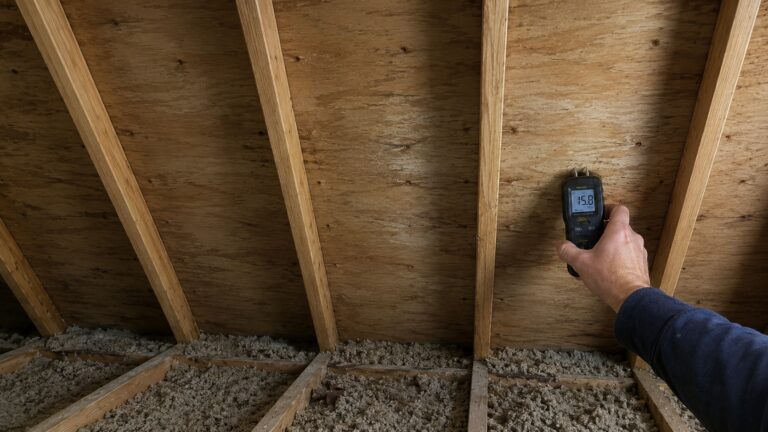
- Water stains, damp insulation, or moisture marks inside the attic
- Ceiling stains or recurring leaks after rain
Some of these signs are more serious than others. Faded paint may be mostly cosmetic. Loose fasteners, failed washers, spreading rust, open seams, and interior moisture signs are more urgent because they can affect the roof’s ability to keep water out.
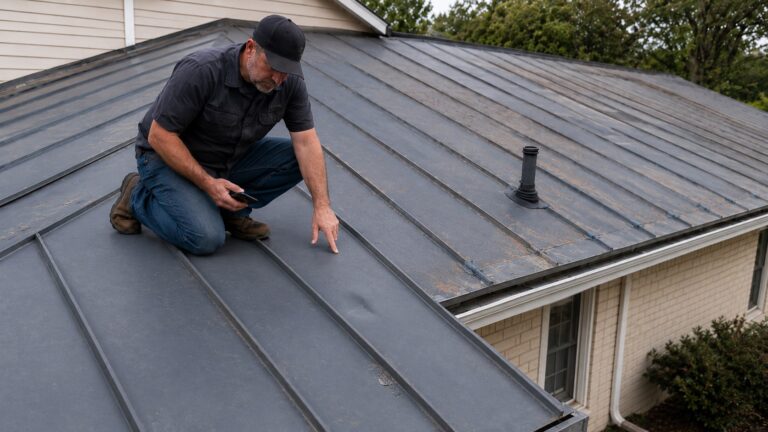
A simple inspection sequence is to check inside first, then outside from a safe location: look for attic stains, damp insulation, or ceiling marks, then use binoculars from the ground to scan fastener lines, valleys, ridge areas, penetrations, trim, and panel laps.
Homeowners should inspect safely. Many warning signs can be seen from the ground, from attic access, from gutter level, or during a professional roof inspection. Walking on a metal roof can be dangerous and may also damage panels, coatings, or seams if done incorrectly.
How to Help a Metal Roof Last Longer
A metal roof can last longer when small maintenance issues are handled before they become leak paths. The goal is to keep the roof clean, watertight, well-drained, and protected from avoidable damage.
A metal roof should usually be checked after major storms, visible fastener movement, new rust, sealant separation, repeated debris buildup in valleys, or attic stains and ceiling marks after rain.
To help a metal roof last longer:
- Keep gutters and downspouts clear so water drains away from roof edges.
- Remove leaves, branches, pine needles, and debris from valleys and low areas.
- Trim branches that scrape the roof or drop heavy debris.
- Inspect exposed fasteners and washers periodically on exposed-fastener roofs.
- Have loose screws, failed washers, or damaged fasteners corrected early.
- Watch for rust around scratches, cut edges, fasteners, and panel laps.
- Repair damaged coatings before corrosion spreads.
- Check sealants around vents, skylights, chimneys, and wall transitions.
- Keep incompatible metals or random repair materials away from the roof system.
- Schedule inspection after major hail, wind, or falling-branch events.
- Avoid walking on metal roof panels unless you have the right safety equipment and know where the roof can be stepped on without damaging panels, seams, or coatings.
Maintenance does not mean constantly working on the roof. A standing seam roof may need less routine fastener attention than an exposed-fastener roof. But no metal roof should be treated as completely maintenance-free.
If you are planning a roof replacement and want long service life, the selection process matters. Panel type, coating, fastener design, climate suitability, roof slope, and installer experience should all be considered when you choose the right roofing material.
Longer roof life also helps protect the home from hidden water entry. A roof that is kept in good condition is less likely to allow moisture into roof decking, attic insulation, ceilings, and wall cavities. That makes roof maintenance part of a larger plan to prevent moisture problems in your home.
FAQ
Do metal roofs really last 50 years?
Many metal roofs can last around 50 years or longer, but it depends on the system. Standing seam roofs, quality coatings, proper installation, good drainage, and mild exposure improve the odds. Exposed-fastener roofs may still last for decades, but fasteners and washers often need maintenance before the panels fail.
How long does a standing seam metal roof last?
A well-installed standing seam metal roof can often last several decades because many systems use concealed fasteners and raised seams. Actual lifespan depends on the metal, coating, installation quality, flashing, roof design, climate, and maintenance.
How long does corrugated metal roofing last?
Corrugated metal roofing can last for many years, but lifespan depends heavily on coating quality, fastener condition, washer life, installation, panel laps, and exposure. Many corrugated systems use exposed fasteners, so screw and washer maintenance is especially important.
Do metal roof screws need to be replaced?
On exposed-fastener metal roofs, screws and washers may eventually need replacement or correction. Washers can age, screws can loosen, and fastener holes can become vulnerable. Standing seam roofs usually have fewer exposed screws on the main roof surface, but they still need inspection around details.
Does rust mean a metal roof needs replacement?
Not always. Small localized rust around scratches, fasteners, or cut edges may be repairable if caught early. Widespread corrosion, rust-through, panel perforation, or rust spreading under coatings is more serious and should be evaluated by a roofing professional.
Is a faded metal roof still functional?
Often, yes. Paint fading or chalking can be cosmetic if the panels, seams, fasteners, flashing, and protective coating remain sound. A faded roof should still be inspected for rust, coating failure, leaks, and damaged details, but fading alone does not always mean replacement is needed.
When Metal Roof Age Becomes a Real Concern
Metal roof age becomes a real concern when aging moves from cosmetic wear to water-entry risk. Faded paint, light chalking, or minor color change may not mean the roof has failed. Loose fasteners, failed washers, spreading rust, open seams, damaged flashing, recurring leaks, or attic moisture are more serious because they affect the roof’s ability to protect the home.
The best approach is to treat metal roofing as a durable but not maintenance-free system. If fasteners, seams, coatings, flashing, drainage areas, and penetrations are inspected and corrected early, the roof has a much better chance of reaching its full service-life potential.