When Roof Replacement Saves Money Long-Term
Roof replacement saves money long-term when an old or unreliable roof is likely to keep producing repair bills, leak damage, emergency costs, and hidden moisture problems. Replacement is expensive upfront, but repeated patching can become more expensive when the roof no longer protects the home consistently.
This does not mean every roof problem requires replacement. A local leak, a few missing shingles, one damaged flashing area, or a minor storm defect may still be worth repairing. Replacement becomes the smarter financial decision when repairs stop reducing risk and only delay the next leak. The question is not whether replacement costs more today. The question is whether continued repairs will cost more over the next few years than replacing the roof at the right time.
A new roof should be viewed as a long-term cost-control decision, not just a large home improvement expense. When a roof is failing across multiple areas, replacement can prevent future repair invoices, reduce emergency service calls, protect roof decking, and stop moisture from spreading into insulation, ceilings, framing, and interior finishes. Many expensive roofing decisions begin as ordinary common roofing material failures that were repaired too many times instead of evaluated as a system.
Roof Replacement Saves Money When Repairs Stop Reducing Risk
A roof repair is valuable when it fixes a defined problem. A roof replacement becomes valuable when the problem is no longer limited to one repairable area. The financial turning point usually happens when each repair solves one leak but leaves the homeowner exposed to the next one.
For example, replacing a cracked pipe boot may be a smart repair if the rest of the roof is sound. Repairing a single flashing gap may be reasonable if the roof has not leaked before. Replacing a few damaged shingles after a small wind event may protect the roof for years. Those repairs reduce risk because the damage is isolated and the roof system still has useful life.
Replacement starts to make more sense when repairs no longer restore confidence in the roof. If one leak is fixed and another appears on a different slope, or if a valley repair is followed by a chimney leak and then a ceiling stain near a vent, the homeowner is no longer dealing with one defect. The roof may be aging as a system. At that point, the repair decision becomes less about the next invoice and more about whether the roof can still be trusted.
This is where replacement can save money. A new roof system can reset several risk points at once: worn surface materials, aging underlayment, deteriorated flashing, exposed fasteners, damaged sealants, weak valleys, and small defects that have not yet turned into interior leaks. Instead of paying for one failure after another, the homeowner invests in restoring the roof’s overall water-shedding function.
The difference between repair and replacement is not just size. It is certainty. A good repair gives confidence that one specific problem has been corrected. A good replacement gives confidence that the roof system as a whole has been renewed. When repairs no longer provide that confidence, replacement may be the more cost-effective path.
Homeowners who are unsure whether they are still in repair territory should compare the situation with when roof repairs are worth the cost. If the roof still has local, clearly defined problems, repair may be the better choice. If the roof has a pattern of repeated failure, replacement deserves serious consideration.
When Repeated Roof Repairs Become More Expensive Than Replacement
Repeated repairs can make an old roof more expensive than it appears. Each individual repair may seem cheaper than replacement, but the total cost can build quietly. The homeowner may pay for roof patches, emergency tarping, ceiling drywall repair, attic drying, insulation replacement, repainting, and repeated contractor visits. Over time, the “cheaper” choice may not be cheaper at all.
The first warning sign is repair frequency. A roof that needs one repair after a storm may still be a repair candidate. A roof that needs repairs every season, after every major rain, or in a new location each time is different. That pattern suggests the roof is no longer failing in one spot. It may be losing reliability across the system.
Repeated repairs become financially risky when:
- the same leak returns after previous work;
- new leaks appear in different areas;
- repair invoices are becoming more frequent;
- interior stains keep coming back after repainting;
- the roof needs emergency work during storms;
- contractors keep finding additional damaged areas;
- the repair only addresses the latest symptom, not the broader roof condition.
The issue is not only the money already spent. It is the money likely to be spent next. A homeowner may approve one more repair because it is smaller than replacement, then face another leak months later. If that cycle continues, replacement may have saved money by stopping repeated service calls and reducing the chance of interior damage.
A simple test is to compare the next repair estimate with the roof’s realistic remaining life. A $900 repair on a roof with many dependable years left may be reasonable. The same repair on a roof that is likely to need replacement soon may be money spent delaying a project that is already unavoidable.
Recurring leak history is one of the strongest signs that replacement may be more economical. A roof with repeated leaks often needs more than another patch. It needs a deeper evaluation of materials, flashing, underlayment, ventilation, decking, and installation quality. If the roof’s leak pattern matches recurring roof leaks, continued repairs may be buying less protection each time.
How an Aging Roof Increases Future Costs
An aging roof becomes expensive when several small weaknesses start working together. Roofing materials do not usually fail all at once. Shingles lose granules, tiles crack, metal fasteners loosen, membranes shrink, flashing separates, sealants dry out, and underlayment becomes less reliable. Each weakness may look manageable by itself, but together they increase the chance of future leaks.
This is why a roof can become more expensive before it completely fails. The homeowner may still be able to repair individual areas, but the roof may no longer be predictable. A repair in one section does not renew the aging materials in another section. If the whole roof is near the end of its useful life, each repair may only reduce one immediate risk while leaving several future risks in place.
Aging roof systems often increase costs through:
- Worn surface materials: shingles, tiles, panels, shakes, or membranes become less able to shed water reliably.
- Failing flashing: roof transitions around walls, chimneys, skylights, and vents become more vulnerable to leaks.
- Brittle underlayment: hidden waterproofing layers may no longer protect the decking when water gets below the surface.
- Loose fasteners: movement, corrosion, or expansion can create small entry points.
- Weak valleys: valleys carry concentrated water and can become leak-prone as materials age.
- Deck exposure: repeated leaks can darken, soften, or rot the roof deck.
The older the roof becomes, the more important pattern recognition becomes. One damaged area may still be repairable. But if several components are aging at the same time, replacement may prevent the homeowner from paying for a series of repairs that were predictable from the roof’s overall condition.
Replacement can also reduce the risk of expensive timing. Old roofs often fail at inconvenient times: during storms, before holidays, during real estate transactions, or when contractors are busy after widespread weather events. Emergency repair is often more stressful and may cost more than planned replacement. Replacing before failure becomes urgent can give the homeowner more control over scheduling, contractor selection, and project scope.
How Roof Replacement Prevents Hidden Moisture Damage
Roof replacement can save money by preventing hidden moisture damage before it spreads. The most expensive part of a roof problem is not always the exterior roof work. It is often the damage caused after water gets past the roof and reaches materials that were never meant to stay wet.
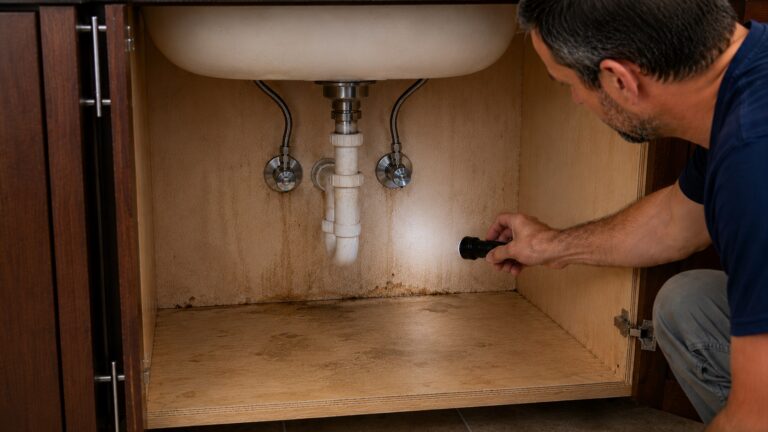
Once water enters the roof system, it can move through layers before the homeowner notices. It may soak roof decking, drip into attic insulation, follow rafters, stain ceiling drywall, or collect around light fixtures. The visible stain may be only the final symptom of a leak path that has been active for longer than expected.
Replacement can help prevent damage to:
- roof decking and sheathing;
- attic insulation;
- ceiling drywall and plaster;
- wood framing and rafters;
- paint, trim, and interior finishes;
- electrical fixtures and attic equipment, which should be evaluated carefully if water has reached them;
- areas where repeated moisture can support mold growth.
This is where long-term savings often appear. A homeowner may compare a roof replacement estimate only against the cost of one repair. But the better comparison includes the damage that replacement may prevent. If continued repairs allow repeated wetting, the homeowner may eventually pay for roofing work plus interior repairs, drying, insulation replacement, and possibly mold-related cleanup.
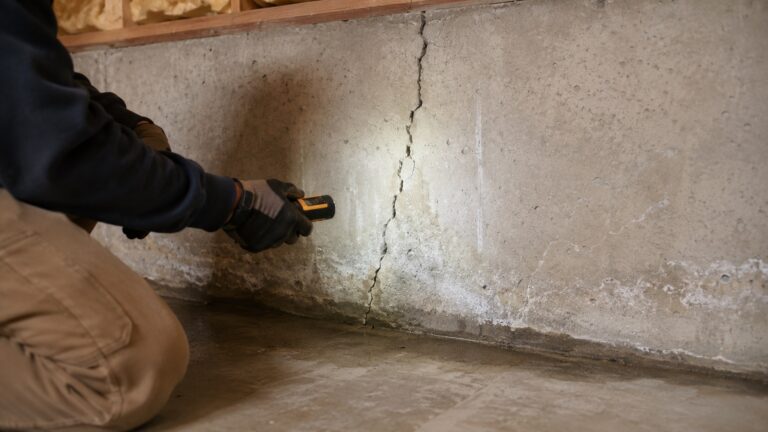
Moisture damage also gets more expensive when it is hidden. A ceiling stain is visible. Damp insulation, darkened decking, or slow moisture accumulation in attic framing may not be obvious from inside the living space. By the time the homeowner sees repeated staining, water may have already affected several materials. That is why replacement timing should be connected to preventing moisture problems from spreading through the home, not just stopping the next drip.
Roof decking is especially important. If leaks continue long enough, the deck can soften, delaminate, rot, or lose fastener-holding strength. Once decking is damaged, the roof project becomes more expensive because the replacement must include structural surface repair, not only new roofing material. Homeowners seeing soft spots, dark sheathing, or sagging areas should understand when roof decking must be replaced before assuming another surface repair is enough.
When Replacement Is Smarter Than Another Repair
Replacement is usually smarter than another repair when the roof has moved from isolated failure to system-wide unreliability. This does not require every part of the roof to be destroyed. It means the roof has enough overlapping problems that one more repair is unlikely to restore dependable performance.
A roof replacement should be seriously considered when several of these conditions are present:
- repair costs are rising while roof reliability is declining;
- leaks have appeared in multiple areas;
- the roof has little useful life left;
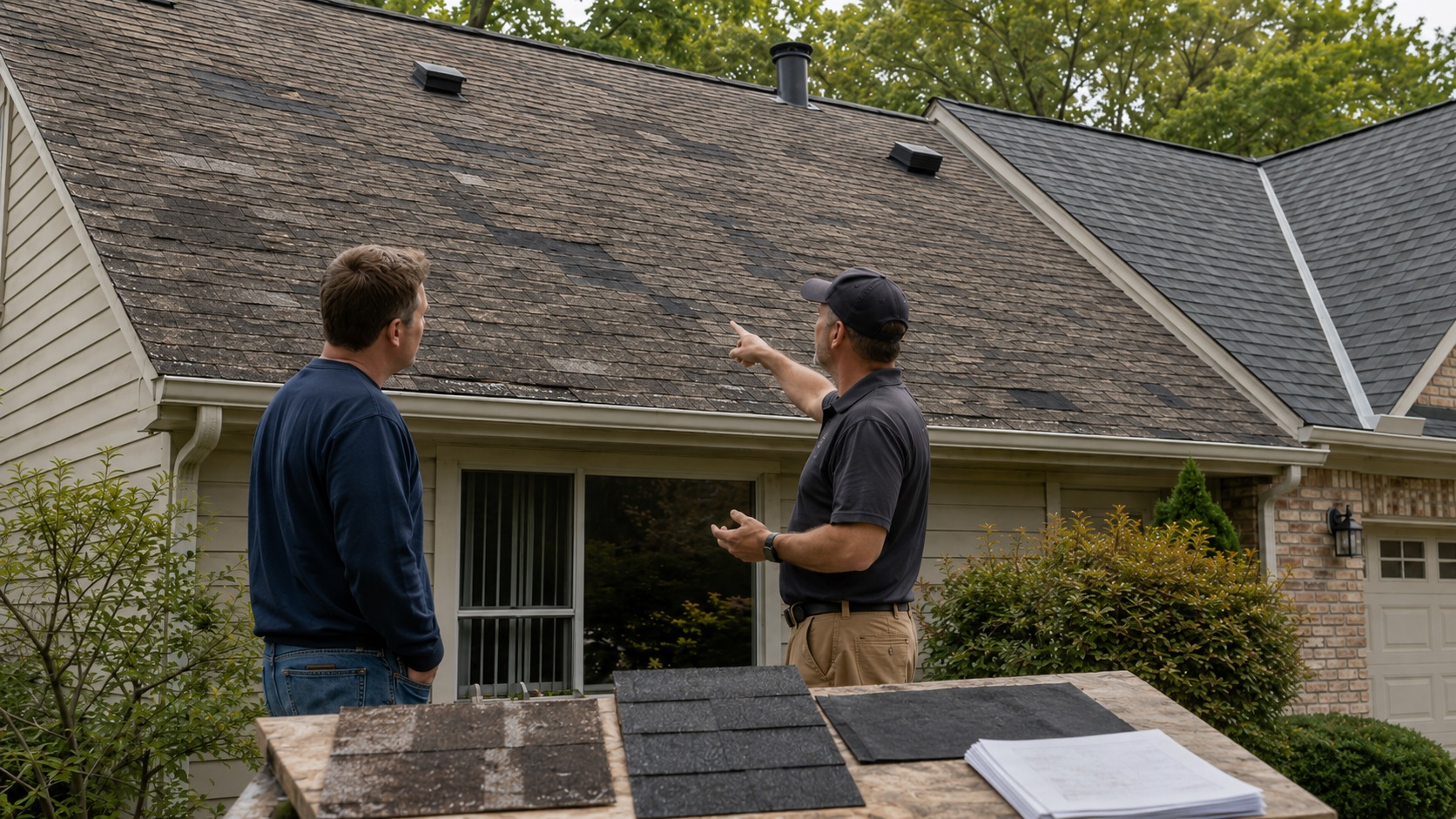
- surface materials are broadly worn, cracked, curled, loose, broken, rusted, or deteriorated;
- flashing failures appear around several roof transitions;
- underlayment or membrane layers are deteriorated;
- roof decking is soft, stained, rotted, or sagging;
- previous repairs have not stopped the problem;
- the original installation has widespread errors.
The replacement decision becomes stronger when a high repair estimate only buys limited time. For example, if a contractor recommends a major repair but also says the roof will likely need replacement soon, the homeowner should ask whether that repair is a true investment or only a temporary delay. A large repair can be worth it on a roof with years of life left. The same repair may be poor value on a roof that is already nearing replacement.
Replacement is also more logical when the repair does not address the whole risk. A roofer may be able to patch the latest leak, but if nearby materials are failing, other leaks may follow. This is different from a single isolated defect. It is a reliability problem. In that situation, the homeowner should compare the repair plan with broader signs a roof needs replacement.
When Replacement May Not Save Money Yet
Roof replacement does not always save money. Replacing too early can waste useful roof life if the roof has one isolated problem and the rest of the system is still performing well. A roof should not be replaced simply because one repair is needed. The decision should be based on pattern, risk, and remaining service life.
Repair may still be the better financial choice when the damage is local, the source is clear, and the surrounding materials are sound. For example, one failed pipe boot, one lifted flashing section, one small patch of missing shingles, or one cracked tile does not automatically justify full replacement. If the roof deck is dry, the leak has not repeated, and the rest of the roof is in good condition, a targeted repair may protect the home at a much lower cost.
Replacement may not save money yet when:
- the roof has one isolated problem;
- the repair source is clear and correctable;
- the roof still has meaningful useful life left;
- the roof deck is dry and solid;
- there is no pattern of recurring leaks;
- the repair cost is reasonable compared with the remaining life of the roof;
- the surrounding materials are not broadly worn or failing.
This is important because replacement should not be used as a default answer for every roof issue. A homeowner may spend far more than necessary if they replace a roof that only needed a small, root-cause repair. The better decision is to compare the repair scope with the larger condition of the roof. If the repair truly fixes the problem and the roof is otherwise reliable, replacement may not be financially justified yet.
The strongest replacement decisions are evidence-based. They come from repeated leaks, broad deterioration, failing roof layers, moisture damage, or repair costs that no longer make sense. Without those signs, the homeowner should be careful about replacing too soon. For the broader decision framework, use this guide on whether to repair or replace a roof to separate isolated damage from a roof that is aging as a system.
How to Time Roof Replacement Before Costs Escalate
The most expensive roof replacement is often the one that happens too late. Waiting until water has damaged decking, insulation, ceilings, and interior finishes can turn a roofing project into a structural and interior repair project. The goal is not to replace at the first sign of wear. The goal is to replace before the roof’s declining reliability creates avoidable damage.
Good timing usually falls between two extremes. Replacing too early can waste money because the roof still had useful life left. Replacing too late can increase total cost because leaks have already damaged hidden materials. The best timing is when repairs are becoming less dependable, but before water damage has spread deeply into the home.
Homeowners should start comparing replacement estimates before the roof reaches emergency condition. This gives time to inspect the roof properly, compare contractors, choose materials, plan the budget, and schedule work in better weather. Waiting until active leaks are widespread can limit options and increase pressure to accept rushed decisions.
Replacement timing becomes more important when:
- repair frequency is increasing;
- leaks are appearing in new areas;
- interior stains return after being repaired;
- the roof needs emergency service during storms;
- decking or attic materials show moisture staining;
- contractors are recommending larger repairs each time;
- the roof is near the end of its expected service life;
- the homeowner is planning to stay in the home long-term.
Timing also matters because roof problems can affect other systems. A roof leak may begin at the exterior covering, but the financial damage can continue through the attic, ceiling, walls, insulation, and interior finishes. Once water spreads, the homeowner may face both roof replacement and water-damage repair. That is why replacement can save money when it happens before the roof allows repeated moisture entry.
A practical way to think about timing is to ask whether the next repair will make the roof reliable again. If the answer is yes, repair may still be sensible. If the answer is no, replacement may be the better long-term financial decision. The homeowner should not only ask what the roof needs today, but what the roof is likely to need over the next few years.
Questions to Ask Before Choosing Replacement
Before choosing roof replacement, homeowners should ask questions that reveal whether replacement is solving a financial risk or simply responding to fear. A roof replacement is a major project, so the decision should be based on clear evidence of declining performance, not pressure or vague warnings.
- How many roof repairs have I paid for recently? One repair may be normal. Several repairs in a short period may show a pattern.
- Are the leaks isolated or recurring? Isolated leaks often support repair. Recurring leaks make replacement more reasonable.
- How much useful life is likely left? A roof with years of reliable service left is different from one near the end of its life.
- Is the roof deck still dry and solid? Decking damage can make delayed replacement more expensive.
- What future repairs are likely? If more repairs are expected soon, replacement may reduce total cost more than another short-term patch.
- What happens if replacement is delayed? The risk may include leaks, interior damage, emergency repair, or structural moisture.
- Will replacement reduce a risk that repairs are no longer controlling? This is the strongest financial reason to replace.
These questions also help homeowners compare contractor recommendations. A good replacement recommendation should explain the failure pattern: material deterioration, recurring leaks, underlayment problems, decking damage, flashing failure, poor installation, or multiple aging components. A recommendation that simply says “you need a new roof” without explaining why is not enough.
Homeowners should also compare replacement against realistic repair costs. This does not mean choosing replacement just because one repair estimate is frustrating. It means looking at the repair history, likely future repairs, and the cost of water damage if the roof continues to fail. If roof leak repair costs are becoming frequent, a guide to roof leak repair costs can help provide context, but the replacement decision should still be based on the roof’s reliability as a system.
FAQs About Roof Replacement and Long-Term Savings
Is roof replacement cheaper than repairs?
Roof replacement is more expensive upfront than a single repair, but it can be cheaper long-term when repairs keep repeating or leaks are causing hidden damage. If the roof has one isolated problem, repair may still be less expensive. Replacement saves money when it reduces future repair risk that patching no longer controls.
When should I stop repairing my roof?
You should consider stopping repeated repairs when leaks keep returning, new problem areas keep appearing, repair costs are increasing, or the roof has widespread deterioration. If repairs no longer make the roof reliable, replacement may be the better financial decision.
Can replacing a roof prevent water damage costs?
Yes. Roof replacement can prevent water damage costs when the existing roof is allowing repeated moisture entry. A new roof can protect decking, insulation, ceiling drywall, framing, and interior finishes. This is especially important when leaks have already started spreading beyond one small area.
Does a new roof increase home value?
A new roof can improve buyer confidence and may support home value, but resale value should not be the only reason for replacement. For this decision, the bigger issue is whether replacement reduces future repair bills, leak risk, emergency costs, and hidden moisture damage.
Should I replace my roof before it leaks badly?
Sometimes. Replacing before major leaks develop can save money if the roof is already showing widespread failure signs. However, a roof should not be replaced too early without evidence. The best timing is before leaks damage decking and interiors, but after repair-only solutions are no longer a good value.
Is roof replacement worth it if only one area leaks?
Not always. If one area leaks because of a clear, isolated problem, repair may be the better choice. Replacement becomes more reasonable when that leak is part of a larger pattern, the roof is near the end of its service life, or nearby materials are also failing.
The Best Time to Replace Is Before Repairs Become a Cycle
Roof replacement saves money long-term when continued repairs no longer protect the home reliably. The upfront cost may be higher than another patch, but replacement can reduce repeated repair bills, emergency service calls, interior water damage, and hidden moisture problems that become more expensive over time.
The key is timing. Replacing too early can waste useful roof life, but waiting too long can allow water to damage decking, insulation, ceilings, framing, and interior finishes. The most financially sensible time to replace is when repairs are becoming less dependable, but before the roof creates widespread moisture damage.
Replacement is not automatically better than repair. If the problem is isolated, the roof still has useful life, and the repair fixes the source, repair may be the smarter choice. But when leaks repeat, materials fail across multiple areas, or repair costs keep accumulating, replacement may save money by restoring the roof system instead of chasing one failure after another.