Should You Repair or Replace Mold-Damaged Insulation?
Mold-damaged insulation usually needs replacement when it is visibly moldy, musty, wet, compressed, contaminated, or repeatedly damp. Insulation may sometimes stay in place when it is dry, clean, odor-free, intact, and the moisture source has been fixed, but porous or contaminated insulation is difficult to restore once mold is present.
The most important thing to understand is that moldy insulation is rarely just an insulation problem. It usually means moisture entered an attic, crawl space, wall cavity, ceiling cavity, basement rim joist, or floor system and stayed long enough to affect nearby materials. Replacing insulation without fixing the moisture source can lead to the same mold problem returning.
Start with two questions: what made the insulation damp, and what condition is it in now? Clean, dry insulation from a brief moisture event may sometimes stay. Moldy, musty, wet, sagging, matted, contaminated, or structure-contacting insulation usually should come out.
This topic connects directly to long-term mold control. If you are building a broader plan to remove mold permanently, insulation replacement should be treated as one step in moisture correction, not a stand-alone fix. For whole-home prevention, it also helps to understand how to find, fix, and prevent moisture problems before they spread into enclosed cavities.
The Short Answer: When Mold-Damaged Insulation Can Stay vs. Be Replaced
Insulation can sometimes remain in place when it is dry, clean, fluffy or stable, free of visible mold, free of musty odor, and no longer exposed to moisture. This is most realistic after a brief, clean-water moisture event that was corrected quickly and did not leave contamination behind.
Insulation should usually be replaced when mold is visible, odor remains, the insulation is damp, the material has compressed or clumped, the paper facing is stained or moldy, or the insulation has been repeatedly wet. Replacement is also more likely when nearby wood, drywall, roof sheathing, joists, or subfloor materials show mold or moisture damage.
- Keeping insulation may be reasonable when it is dry, clean, intact, odor-free, and the source of moisture has been fixed.
- Replacement is usually better when insulation is moldy, musty, wet, compressed, clumped, contaminated, or repeatedly damp.
- Professional evaluation is needed when mold covers a large area, is in a hidden cavity, affects structural wood, or may be connected to air movement into living spaces.
The insulation type also matters. Fiberglass batts, paper-faced batts, blown-in cellulose, mineral wool, spray foam, and rigid foam do not respond to mold and moisture the same way.
Fix the Moisture Source Before Replacing Insulation
Replacing mold-damaged insulation before fixing the moisture source is one of the most common mistakes homeowners make. New insulation can become damp, musty, or moldy again if the roof still leaks, the crawl space stays humid, condensation continues, or the wall cavity is still receiving water.
Common moisture sources that lead to mold-damaged insulation include roof leaks, attic condensation, bathroom exhaust fans venting into attics, plumbing leaks inside walls, exterior siding leaks, window flashing failures, crawl space humidity, basement rim joist condensation, and HVAC moisture problems.
In many cases, the insulation is not the only affected material. Roof sheathing, rafters, joists, drywall paper, subfloor panels, wall sheathing, or crawl space framing may also be damp or mold-affected. If those materials are not addressed, replacing only the insulation will not solve the larger problem.
Roof Leaks and Attic Insulation
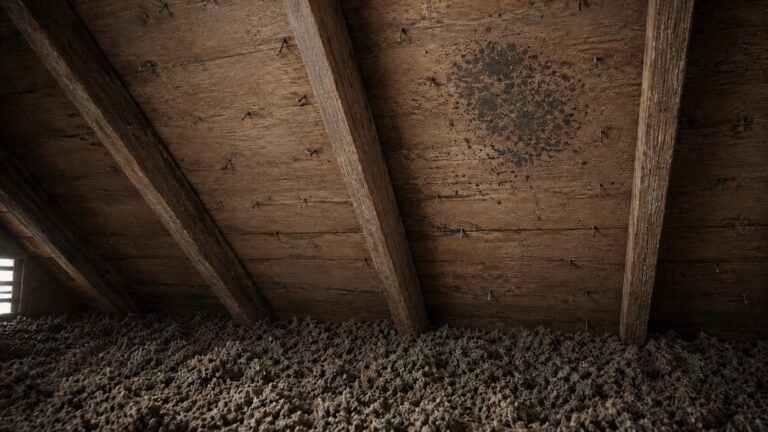
Roof leaks can wet attic insulation before a ceiling stain appears. Water may drip onto blown-in insulation, run along rafters, soak fiberglass batts, or collect above ceiling drywall. If insulation stays wet, nearby wood may also be affected.
If the moldy insulation appears below a roof leak path, the roof source needs to be corrected first. The broader damage may also need to be judged as part of a roof leak repair decision. In that case, it helps to compare the issue with whether to repair or replace roof leak damage.
Attic Condensation and Damp Insulation
Attic insulation can also become moldy from condensation, not just roof leaks. Warm indoor air can leak into a cold attic, condense on roof sheathing or framing, and transfer moisture into insulation. Poor ventilation, blocked vents, bathroom fans vented into the attic, and high indoor humidity can all contribute.
This matters because replacing attic insulation will not solve condensation if the attic air leaks, ventilation defects, or humidity sources remain. If insulation keeps getting damp after repairs, the issue may overlap with why attic insulation stays damp.
Crawl Space Moisture and Floor Insulation
Crawl space insulation often becomes mold-damaged because it is exposed to ground moisture, humid air, poor drainage, plumbing leaks, condensation, or missing vapor barriers. Batts between floor joists may sag, collect dust, absorb odor, or stay in contact with damp wood.
When crawl space insulation is moldy, replacement alone is not enough. The crawl space moisture source must be corrected so the new insulation does not fail. If the problem is mainly under the floor system, compare it with whether to repair or replace crawl space insulation.
Wall and Ceiling Cavity Leaks
Wall and ceiling insulation is harder to evaluate because it is often hidden. Plumbing leaks, window leaks, siding failures, roof leaks, and condensation inside wall cavities can wet insulation without obvious surface damage at first.
If drywall is moldy, soft, stained, or musty, the insulation behind it may also be affected. Enclosed insulation that stayed wet inside a cavity is less likely to be safely left in place, especially if odor remains or paper facing is moldy.
Main Factors That Decide Whether Moldy Insulation Should Be Replaced
The decision should be based on material condition, not just whether the insulation looks slightly discolored. Dust, air filtration marks, soot, pest debris, old water stains, and dirt can sometimes look like mold. At the same time, musty odor or dampness can indicate a problem even when visible growth is limited.
Before deciding, check three things together: the insulation surface, the smell of the cavity, and the condition of the material touching it. Insulation that looks questionable but is dry, clean, odor-free, and surrounded by dry materials is very different from insulation that is stained, musty, damp, and touching moldy wood or drywall.
Visible Mold Growth
Visible mold on insulation usually points toward replacement, especially when the insulation is porous, dusty, paper-faced, or difficult to clean. Mold on paper facing, cellulose, or matted blown-in insulation is a stronger replacement trigger than a questionable surface stain on otherwise dry material.
Visible mold on nearby framing or sheathing also matters. If insulation is touching moldy wood or drywall, the insulation may be contaminated even if the growth is more obvious on the adjacent material.
Musty Odor
Musty odor is one of the most important warning signs. If insulation smells musty after the area has been ventilated, dried, or repaired, moisture or contamination may still be present. Odor that returns after replacement or drying usually means the moisture source has not been fully corrected.
Musty insulation in attics, crawl spaces, wall cavities, or near HVAC pathways deserves extra caution because air movement can carry odors into living areas. The article should not treat odor as proof of mold by itself, but it should treat persistent odor as a reason for deeper inspection.
Dampness or Repeated Moisture
Insulation that is still damp should not be closed back into a wall, ceiling, crawl space, or attic cavity. Damp insulation loses performance and can keep nearby drywall, wood, sheathing, or subfloor materials wet.
Repeated dampness is even more concerning. Insulation that gets wet again after each storm, humid season, plumbing event, or condensation cycle is unlikely to remain safe and effective without correcting the source.
Compression, Clumping, or Sagging
Insulation works by holding air in place. When it compresses, clumps, mats down, or sags out of position, it no longer performs properly. This can happen after water exposure even when visible mold is limited.
Blown-in insulation that clumps after a roof leak, fiberglass batts that sag in a crawl space, or cellulose that mats down after condensation should be evaluated for replacement. The issue is not only mold. It is also lost insulation performance.
Contamination From Dust, Pests, or Dirty Water
Insulation can collect dust, dirt, pest debris, and other organic material over time. These materials can support mold growth when moisture is present. If insulation is dirty, musty, pest-contaminated, or exposed to dirty water, replacement is often more reliable than trying to clean it.
This is especially important in crawl spaces, old attics, basement rim joists, and areas where air leaks pull dirty air through insulation. Dark staining on insulation may sometimes be filtration staining, not mold, but dirty insulation that also smells musty or stays damp should not be ignored.
How Mold Affects Different Types of Insulation
Not all insulation reacts to mold and moisture the same way. The material itself, the facing, the dust it holds, the way it is installed, and the surrounding surfaces all affect whether it can stay or should be replaced.
Insulation is not a smooth, easily cleaned surface. Fibers, pockets, facings, and loose-fill particles can hold moisture and debris. Once mold, odor, or contamination is present, removal is often more reliable than treating the material in place.
Fiberglass Batt Insulation
Fiberglass itself is inorganic, but that does not mean fiberglass insulation is immune to mold-related problems. Fiberglass batts can hold dust, dirt, paper facing, pest debris, and moisture. Mold may grow on those materials, on the facing, or on adjacent wood and drywall that touch the insulation.
Fiberglass batts may sometimes remain if they are dry, clean, odor-free, not compressed, not visibly moldy, and the moisture source has been corrected. This is more likely when the insulation was only briefly exposed to clean water and dried quickly.
Fiberglass batts should usually be replaced when they are visibly moldy, musty, wet, dirty, compressed, repeatedly damp, or touching moldy wood or drywall. If the batt has paper facing and mold appears on that facing, replacement is usually the better choice.
Paper-Faced Insulation
Paper-faced insulation is more vulnerable to mold concerns because the paper facing is an organic surface. If that facing becomes damp and stays damp, it can support mold growth more readily than bare fiberglass fibers.
Paper-faced insulation may be left only when the facing is dry, clean, intact, odor-free, and not exposed to recurring moisture. Once the paper is moldy, stained from repeated wetting, torn, delaminated, or musty, replacement is usually more practical than trying to clean the facing.
This is especially important in wall cavities, crawl spaces, and attic areas where paper facing may stay in contact with damp wood, drywall, or air leaks. If the paper facing is the moldy surface, removing and replacing that section is usually safer than spraying it and leaving it in place.
Blown-In Cellulose Insulation
Blown-in cellulose is often more difficult to save after mold or significant wetting. It is absorbent, loose, and organic-based. When it gets wet, it can clump, mat down, hold odor, and remain damp in pockets.
Cellulose may remain only in limited cases where moisture exposure was very minor, the material stayed loose and dry, there is no odor, and no mold is visible. If cellulose insulation is clumped, musty, visibly moldy, or exposed to a roof leak or attic condensation over time, replacement is usually the better option.
Wet cellulose can also keep moisture against ceiling drywall, roof framing, or attic floor materials. If it was damp long enough to lose shape or smell musty, drying the top layer may not restore the material below.
Blown-In Fiberglass Insulation
Blown-in fiberglass may resist absorption better than cellulose, but it can still hold dust, debris, and moisture in attic pockets. It can also become contaminated if moldy roof sheathing, pest debris, or dirty water affects the surrounding area.
Blown-in fiberglass may stay if it is dry, loose, odor-free, and not contaminated. It should usually be removed or replaced when it is matted, musty, visibly dirty from water movement, mixed with debris, or located below moldy sheathing that cannot be separated cleanly from the insulation.
If blown-in insulation was affected by a roof leak, it may be useful to compare the situation with guidance on how to dry insulation after water damage. Drying may be enough for brief clean-water exposure, but moldy or musty insulation moves the decision closer to replacement.
Mineral Wool Insulation
Mineral wool is generally more moisture-resistant than some insulation materials, but it is not automatically safe to keep after a mold event. Mold can still grow on dust, debris, binders, or adjacent materials if the area stays damp.
Mineral wool may remain when it is dry, clean, stable, odor-free, and not contaminated. Replacement becomes more likely when it has been repeatedly damp, smells musty, holds debris, touches moldy wood or drywall, or cannot be separated from contaminated surrounding materials.
Spray Foam and Rigid Foam
Spray foam and rigid foam do not behave like loose or fibrous insulation. They may resist bulk water absorption better than some materials, but mold can still grow on dust or organic debris on the surface. More importantly, foam can sometimes hide or block access to wet wood, sheathing, or framing behind it.
Foam insulation may remain when it is intact, dry, and the surrounding materials are also dry. Professional evaluation may be needed if odor persists, water is trapped behind the foam, mold appears on the surface, or adjacent wood is wet, decayed, or moldy.
With foam materials, the question is often less about whether the foam itself is ruined and more about whether it is hiding moisture in the structure behind it.
When Mold-Damaged Insulation May Not Need Replacement
Not every discolored or briefly damp piece of insulation needs removal. Some insulation can remain if the issue was minor, the material is dry and clean, nearby materials are unaffected, and the moisture source has been corrected.
The Insulation Is Dry, Clean, and Odor-Free
Insulation is more likely to remain when it is fully dry, does not smell musty, has no visible mold, and still holds its shape. Fiberglass or mineral wool batts that were only briefly exposed to clean moisture may be monitored if they dried quickly and nearby materials are also dry.
This does not apply when the insulation is wet, musty, dirty, pest-contaminated, or repeatedly damp. Odor and recurring moisture change the decision even if visible mold is not obvious.
The Discoloration May Be Dust or Filtration Staining
Dark marks on insulation are not always mold. Air leakage can pull dust through fiberglass batts and create dark filtration staining. Soot, dirt, pest activity, and old water marks can also discolor insulation.
However, staining should not be dismissed if it comes with odor, dampness, nearby mold, or a known moisture source. Evaluate the full context: where the stain is located, whether the area is damp, whether the material smells musty, and whether adjacent wood or drywall is affected.
The Moisture Event Was Brief and Corrected Quickly
Insulation may sometimes remain after brief clean-water exposure if it dried quickly and did not lose shape. For example, a small fresh roof leak that lightly dampened a limited area of unfaced fiberglass may not require full removal if the batt is dry, clean, stable, and odor-free.
Even in that situation, the surrounding materials should be checked. If drywall, sheathing, rafters, or joists stayed damp, the insulation may be only one part of a larger issue.
Adjacent Materials Are Dry and Unaffected
Insulation is more likely to remain when nearby wood, drywall, sheathing, and subfloor materials are dry, firm, and free of mold. If mold is present on surrounding materials, insulation in contact with those areas may be contaminated even if the insulation itself looks only lightly stained.
For attic areas, moisture symptoms in insulation often need to be compared with nearby roof sheathing and framing. If the issue appears attic-specific, it may help to review the signs of moisture in attic insulation before deciding what can stay.
When Mold-Damaged Insulation Should Be Replaced
Replacement is usually the better choice when insulation is moldy, musty, wet, contaminated, compressed, clumped, or repeatedly damp. In those cases, the material has either become difficult to restore or is no longer performing its intended job.
If insulation was exposed to sewage, floodwater, stormwater entering from outdoors, or pest contamination, do not treat it like a simple clean-water drying problem. Contaminated insulation usually needs removal, and the surrounding cavity should be evaluated before new material is installed.
Visible Mold Is Present
Visible mold on insulation is one of the clearest reasons to replace it. This is especially true for paper-faced insulation, cellulose, dirty fiberglass, and insulation that has been wet for an extended period.
Trying to clean mold from fibrous or loose-fill insulation is rarely reliable. The surface may look better temporarily, but fibers, dust, and air pockets can hold contamination. If the insulation is visibly moldy, removal and replacement are usually more practical.
The Insulation Smells Musty
Musty odor suggests that moisture or contamination remains. If insulation still smells musty after drying and ventilation, it should not be sealed back into a wall, ceiling, crawl space, or attic assembly.
Odor is especially important in enclosed cavities. If a wall or ceiling cavity is closed over musty insulation, the smell may persist and the hidden moisture problem may continue.
The Insulation Is Wet or Repeatedly Damp
Wet insulation should not be covered or left in place without correcting the source. Damp insulation can keep nearby materials wet, reduce energy performance, and create conditions that allow mold to return.
Repeated dampness is a stronger replacement trigger than a one-time moisture event. If insulation becomes damp after every storm, humid season, plumbing event, or condensation cycle, the material and the moisture source both need attention.
The Insulation Is Compressed, Clumped, or Sagging
Insulation that has lost its shape has also lost some of its performance. Clumped cellulose, matted blown-in insulation, sagging crawl space batts, and compressed fiberglass are less effective at trapping air. If moisture caused the material to collapse or fall out of place, replacement is usually the better option.
Mold Is Present on Nearby Wood or Drywall
Insulation in contact with moldy framing, sheathing, joists, drywall, or subfloor materials should be evaluated carefully. Even if the insulation does not show the heaviest growth, it may be contaminated or may be holding moisture against the affected material.
If mold is visible across attic framing, sheathing, or roof areas, compare the insulation issue with the broader signs of mold growth in attic spaces. Mold on insulation and mold on structure should be handled as related problems, not separate cosmetic issues.
Attic Insulation: Repair or Replace?
Attic insulation is commonly affected by roof leaks, condensation, poor ventilation, air leakage from the living space, bathroom exhaust venting into the attic, or high indoor humidity reaching cold roof surfaces.
It may stay if it is dry, clean, loose or fluffy, odor-free, and only lightly affected by a brief moisture event. Replacement becomes more likely when attic insulation is wet, musty, clumped, compressed, visibly moldy, or located beneath moldy roof sheathing or rafters.
When Attic Insulation May Be Safe to Keep
Attic insulation may be monitored instead of replaced when the moisture source was minor, the material dried quickly, and there is no visible mold or musty odor. For example, a small area of unfaced fiberglass that was briefly dampened by a corrected roof leak may not automatically need removal if the material remains clean and stable.
Even then, attic insulation should be checked in context. The roof decking, rafters, ceiling drywall, and nearby insulation should all be dry. If the insulation is dry but roof sheathing above it is moldy or damp, the insulation may still be part of a larger attic moisture problem.
When Attic Insulation Should Be Replaced
Attic insulation should usually be replaced when it is visibly moldy, musty, wet, clumped, matted, compressed, or contaminated by dirty leak water. Blown-in insulation that clumps after a roof leak or attic condensation event often does not return to its original performance. Paper-faced batts with mold on the facing should also be removed rather than sprayed and left in place.
If the insulation keeps getting damp even after a roof repair, the issue may not be the roof alone. Attic ventilation, air leaks, humidity, or condensation may be involved. In that situation, the homeowner should look deeper into why mold forms in attic insulation before installing replacement material.
Crawl Space Insulation: Repair or Replace?
Crawl space insulation often becomes mold-damaged because it is exposed to ground moisture, humid outdoor air, poor drainage, plumbing leaks, condensation, pest activity, and air leakage. Batts between floor joists can sag, collect dirt, absorb odor, and stay in contact with damp wood.
It is less likely to be worth saving when it is damp, dirty, sagging, moldy, pest-contaminated, or falling out of place. Even replacement material can fail again if the crawl space remains wet or humid.
When Crawl Space Insulation May Be Repairable
Crawl space insulation may be repairable only when the material is dry, clean, properly supported, odor-free, and not touching damp wood or soil. This is more likely in a limited plumbing leak or minor localized issue than in a crawl space with chronic humidity or standing water.
If only a small area was affected and the source has been corrected, partial replacement may be enough. However, the crawl space environment should still be evaluated. If humidity, drainage, or vapor barrier problems remain, the replacement insulation may become moldy again.
When Crawl Space Insulation Should Usually Be Replaced
Crawl space insulation should usually be replaced when batts are sagging, damp, dirty, moldy, compressed, torn, pest-contaminated, or falling away from the floor system. Mold on nearby floor joists, subflooring, or beams also increases the chance that insulation in contact with those materials should be removed.
In crawl spaces, insulation damage often points to a larger moisture-control issue. Mold on floor insulation may be connected to damp joists, poor drainage, missing ground vapor barrier, or humid outdoor air entering through vents. If mold appears on the wood as well as the insulation, compare the problem with why crawl space wood framing develops mold.
Wall and Ceiling Insulation: Repair or Replace?
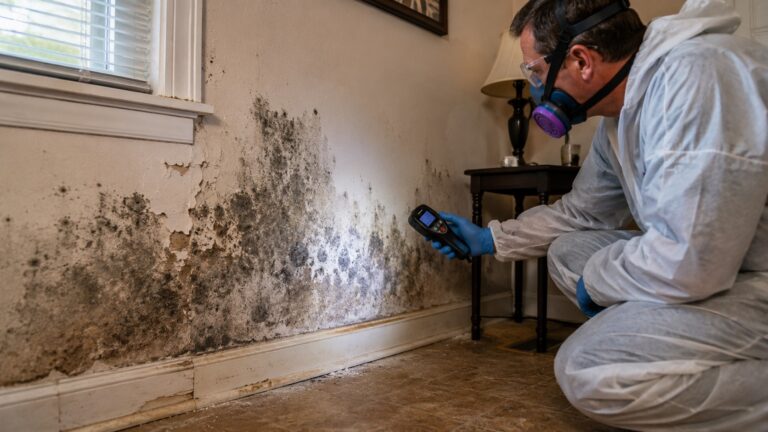
Wall and ceiling insulation can be harder to judge than attic or crawl space insulation because it is often hidden behind drywall, plaster, paneling, or ceiling finishes. By the time moldy insulation is discovered inside a wall or ceiling cavity, the leak may have already affected drywall paper, framing, sheathing, or the back side of finish materials.
Insulation inside enclosed cavities is more likely to need replacement when it was wet long enough to smell musty, stain the cavity, grow mold, or touch moldy drywall or framing. Closing the cavity over damp or contaminated insulation can trap the problem and allow odor or mold conditions to return.
Wall Cavity Insulation After Plumbing or Exterior Leaks
Plumbing leaks, window leaks, siding failures, and flashing problems can wet wall insulation from the side or above. If the drywall is soft, stained, moldy, or musty, the insulation behind it may also be affected.
In limited cases, a small area of insulation may be removed and replaced after the leak source is corrected and the cavity is dried. In more serious cases, wall materials may need to be opened further so the full moisture path can be inspected. This is especially true when odor remains after the surface has dried.
Ceiling Insulation After Roof Leaks
Ceiling insulation may be damaged by roof leaks, attic condensation, bathroom exhaust leaks, or plumbing lines above finished ceilings. If ceiling drywall sags or stains, insulation above it may be wet even when it is not visible from the room below.
If ceiling insulation is moldy, musty, or compressed from water, replacement is usually safer than leaving it above repaired drywall. New ceiling finishes should not be installed below insulation that remains damp or contaminated.
Why Hidden Cavities Need More Caution
Hidden cavities dry more slowly than open spaces. Wall and ceiling insulation can hold moisture against wood, drywall paper, and sheathing where airflow is limited. Even if the visible side of a wall dries, insulation inside the cavity may remain damp.
This is why wall and ceiling insulation decisions should be conservative when mold, odor, or repeated moisture is present. If the source is hidden, the cavity smells musty, or nearby structural materials are affected, professional inspection may be needed before closing the area again.
Common Mistakes to Avoid With Mold-Damaged Insulation
Mold-damaged insulation is often mishandled because homeowners focus on the visible material instead of the moisture system that caused the problem. These mistakes can leave contamination behind or allow the new insulation to fail.
Mistake 1: Spraying Moldy Insulation and Leaving It in Place
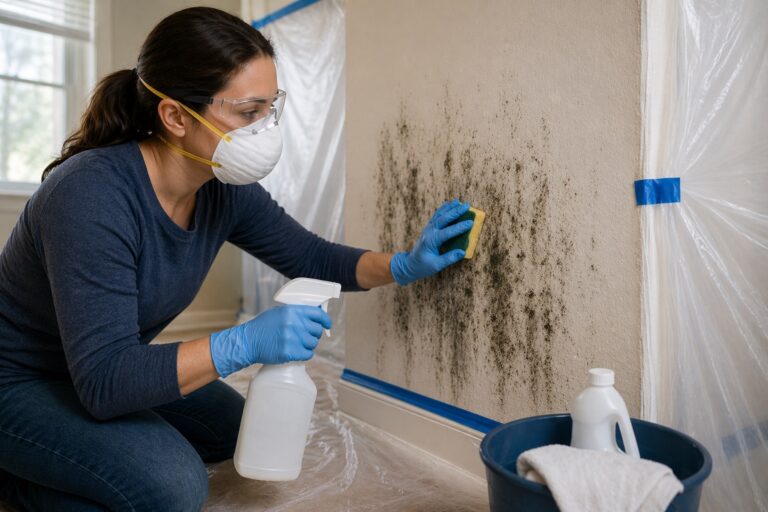
Sprays do not restore insulation that is wet, musty, compressed, dirty, or visibly moldy. Fibrous and loose-fill materials are difficult to clean thoroughly because mold, dust, and debris can remain inside the material. If insulation is mold-contaminated, removal is usually more reliable than surface treatment.
For larger mold areas or uncertain cleanup conditions, do not rely on spray treatment alone. Use professional guidance or recognized mold cleanup standards before disturbing contaminated insulation.
Mistake 2: Replacing Insulation Before Fixing the Moisture Source
New insulation can become moldy if the source is still active. A roof leak, crawl space humidity problem, plumbing leak, condensation issue, or wall leak must be corrected before replacement insulation is treated as a permanent fix.
Mistake 3: Assuming Fiberglass Cannot Have Mold Problems
Fiberglass fibers are not the same as paper or cellulose, but fiberglass insulation can still hold dust, debris, paper facing, and moisture. Mold may grow on those materials or on adjacent wood and drywall. Clean, dry, unfaced fiberglass is different from dirty, damp, faced, or contaminated fiberglass.
Mistake 4: Ignoring Musty Odor
Musty odor can indicate damp or contaminated material even when visible mold is limited. Odor that returns after ventilation or replacement often means the moisture source or affected material remains. Insulation that smells musty should not be sealed into a closed cavity.
Mistake 5: Covering Damp Cavities With New Materials
Installing new drywall, vapor barriers, flooring, or finish materials over damp insulation can trap moisture. The cavity should be dry, clean, and stable before it is closed. Otherwise, the same mold conditions can continue behind the new surface.
Mistake 6: Treating Insulation Separately From Nearby Wood
Insulation often touches framing, sheathing, joists, drywall, or subfloor materials. If those nearby materials are moldy or damp, replacing the insulation alone may not solve the problem. The entire moisture path should be evaluated before repairs are finished.
When to Call a Mold or Insulation Professional
Small, clean, dry insulation concerns may only need monitoring after the moisture source is fixed. Consider calling a mold remediation professional, insulation contractor, restoration company, or qualified inspector when the damaged area is large, the source is unclear, the insulation is visibly moldy, wet, musty, or contaminated, or removal could spread debris from an attic, crawl space, wall cavity, or air pathway into living areas.
Call a Professional If You Notice These Warning Signs
- Mold covers a large area of insulation or nearby framing.
- Insulation smells musty even after drying or ventilation.
- Insulation is wet, clumped, compressed, sagging, or falling out of place.
- Mold appears on paper-faced insulation, roof sheathing, rafters, joists, drywall, or subfloor materials.
- The moisture source is unknown or keeps returning.
- Insulation is inside a closed wall or ceiling cavity.
- Crawl space insulation is dirty, pest-contaminated, or touching damp wood.
- Attic insulation is affected by roof leaks, condensation, or bathroom exhaust moisture.
- The area connects to HVAC ducts, return air leaks, or air movement into living spaces.
- Anyone in the home has heightened sensitivity and the contamination is more than a small, isolated area.
A professional can help determine whether the insulation is the main affected material or only one part of a larger mold and moisture problem. If the situation is beyond minor inspection, use the more specific guidance on when to hire a mold remediation professional.
How to Prevent Mold From Returning After Insulation Replacement
Replacing mold-damaged insulation only solves the material problem. It does not solve the moisture condition that allowed the mold to develop. If the source remains, new insulation can become damp, musty, compressed, or moldy again.
Correct the Moisture Source First
The first step is to stop the moisture source. That may mean repairing a roof leak, improving attic ventilation, redirecting a bathroom exhaust fan, fixing a plumbing leak, sealing exterior wall leaks, improving crawl space drainage, adding or repairing a vapor barrier, or controlling indoor humidity.
Do not treat new insulation as the solution by itself. Insulation can improve energy performance, but it does not stop water entry, condensation, plumbing leaks, or crawl space humidity.
Make Sure the Surrounding Materials Are Dry
Before replacement insulation is installed, nearby wood, drywall, sheathing, subflooring, or framing should be dry and stable. If new insulation is installed against damp wood or moldy drywall, the problem can continue behind the new material.
This is especially important in attics and crawl spaces. Roof sheathing, rafters, floor joists, subfloor panels, and rim joists can remain damp even after insulation is removed. Replacement should wait until the area is dry enough to support a lasting repair.
Improve Ventilation and Air Sealing Where Needed
Some insulation mold problems are caused by condensation rather than direct leaks. Warm indoor air leaking into a cold attic, crawl space, rim joist, or wall cavity can create moisture where insulation touches cold surfaces. In those cases, replacing insulation without addressing air leakage or ventilation can allow condensation to return.
Attics may need better airflow, clear soffit paths, corrected exhaust fan routing, or air sealing at ceiling penetrations. Crawl spaces may need ground vapor control, drainage correction, sealed openings, or humidity management. The right fix depends on where the insulation is located and why it became damp.
Monitor the Area After Replacement
After insulation is replaced, monitor the area during rain, humid weather, cold weather, and seasonal changes. Look for new musty odor, dampness, staining, condensation, sagging insulation, or mold on nearby materials.
If the same area becomes damp again, the moisture source was not fully corrected. Do not keep replacing insulation without solving the underlying moisture path.
FAQ About Mold-Damaged Insulation Replacement
Can mold be cleaned off insulation?
Mold is difficult to clean from fibrous or loose-fill insulation. Hard, non-porous surfaces are easier to clean than insulation batts, cellulose, or blown-in materials. If insulation is visibly moldy, musty, wet, compressed, or contaminated, removal and replacement are usually more reliable than trying to clean it in place.
Does fiberglass insulation grow mold?
Fiberglass fibers themselves are not a strong food source for mold, but fiberglass insulation can still have mold-related problems. Dust, dirt, paper facing, organic debris, and nearby wood or drywall can support mold when moisture is present. Dirty, damp, faced, or contaminated fiberglass should be evaluated carefully.
Should moldy attic insulation be removed?
Moldy attic insulation should usually be removed when it is visibly contaminated, musty, wet, clumped, compressed, or located below moldy roof sheathing or rafters. If the issue was only brief dampness and the insulation is dry, clean, odor-free, and stable, replacement may not always be necessary. The roof leak, condensation, or ventilation problem must be corrected first.
Can wet insulation be saved before mold grows?
Wet insulation may sometimes be saved if the water exposure was clean, brief, and the material dried quickly without odor, mold, clumping, or compression. Saturated, musty, dirty, or repeatedly damp insulation is much less likely to be worth saving. If there is water exposure without visible mold, use the more specific guide on how to dry insulation after water damage.
Is paper-faced insulation with mold replaceable or cleanable?
Paper-faced insulation with mold should usually be replaced. The paper facing is an organic surface, and cleaning it in place is rarely reliable once it becomes moldy, damp, stained, or musty. The cavity should also be checked for moisture on drywall, framing, or sheathing before new insulation is installed.
Can I replace only part of moldy insulation?
Partial replacement may be enough when the mold-damaged area is small, clearly limited, and the moisture source has been fixed. However, nearby insulation and surrounding materials should still be inspected. If odor, dampness, or mold extends beyond the visible section, removing only one small area may leave contaminated material behind.
Should I replace insulation before or after fixing the leak?
In most cases, fix the leak or moisture source before installing replacement insulation. Damaged insulation may need to be removed earlier to allow drying or inspection, but new insulation should not be installed until the source is corrected and nearby materials are dry.
When is moldy insulation a professional remediation job?
Moldy insulation is more likely to require professional remediation when the affected area is large, mold is visible on framing or sheathing, insulation is inside hidden cavities, the source is recurring, air pathways connect the area to living space, or contamination is difficult to remove safely. Large attic, crawl space, or wall-cavity mold problems should not be treated as simple insulation replacement projects.
Final Decision: Replace Moldy Insulation When Moisture or Contamination Remains
You should usually replace mold-damaged insulation when it is visibly moldy, musty, wet, compressed, clumped, contaminated, or repeatedly damp. Insulation may sometimes remain when it is dry, clean, odor-free, intact, and the moisture source has been corrected, but that is a narrower situation than many homeowners assume.
The most important step is not simply removing the insulation. It is finding and fixing the moisture source that allowed mold to grow. Roof leaks, condensation, crawl space humidity, plumbing leaks, wall leaks, and poor ventilation can all damage new insulation if they are not corrected first.
Evaluate the insulation type, visible condition, odor, moisture history, and nearby materials before deciding. If the insulation is moldy or contaminated, replacement is often the safest and most practical option. If structural wood, hidden cavities, or widespread mold are involved, professional evaluation is the better next step.