Signs of Improper Roof Shingle Installation
Improper roof shingle installation can show up as crooked rows, lifted tabs, exposed nails, shingles that do not lie flat, or early leaks after a roof replacement. Some of these signs are only cosmetic, but others can weaken the roof’s ability to shed water and resist wind. The key is learning which shingle symptoms are normal and which ones suggest the roof needs closer inspection.
This article focuses on the shingle layer, not every roofing mistake, flashing failure, ventilation issue, or structural roof problem. For a whole-roof diagnosis, start with the broader guide to signs a roof was installed incorrectly. To understand the mistakes behind these symptoms, see the related guide to common roof installation mistakes.
Here, the focus is narrower: what do improperly installed shingles look like, how do those problems affect moisture risk, and when should a homeowner document the issue or get a professional inspection?
Why Shingle Installation Problems Matter
Asphalt shingles are designed to shed water in overlapping courses. Each row covers the fasteners and vulnerable joints in the row below it. The roof surface works because water moves down and off the shingles instead of being allowed to reach the roof deck, nail holes, underlayment seams, or interior structure.
When shingles are installed incorrectly, that water-shedding pattern can weaken. Misaligned rows may expose vulnerable joints, poor fastening may allow shingles to lift in wind, exposed nails may create direct water entry points, and bad starter-course details may let water enter near the roof edge.
Not every uneven shingle means the roof was installed wrong. Lighting, shingle color variation, packaging memory, old decking, and normal surface texture can all make a roof look slightly uneven from certain angles. The stronger warning sign is a repeated pattern, especially on a newer roof.
Improper shingle installation is more concerning when you see:
- Several crooked or uneven shingle rows on the same slope
- Multiple exposed nail heads in water-shedding areas
- Shingles lifting or sliding shortly after installation
- Repeated raised bumps that look like nail pops
- Shingles blowing off in moderate wind
- Rough cuts around valleys, vents, or roof features
- Leaks or attic moisture below areas with visible shingle defects
These issues matter because shingle problems can allow moisture into areas that are difficult to see from indoors. A small opening at the roof surface may eventually lead to wet decking, damp insulation, ceiling stains, or hidden roof cavity moisture. That is why shingle installation defects belong within the broader issue of common roofing material failures, even when the shingles themselves are not old.
Crooked or Uneven Shingle Rows
Crooked shingle rows are one of the most visible signs that shingles may have been installed improperly. Shingle courses should create a consistent pattern across the roof plane. If the rows dip, rise, wander, or appear uneven across large sections, the layout may have been rushed or poorly controlled.
Uneven shingle rows can happen when the starter course was not aligned correctly, when exposure was inconsistent, when chalk lines were not followed, or when the installer failed to maintain a consistent pattern. On some roofs, uneven decking or old layers beneath the shingles can also make the surface look irregular, so the visual sign needs context.
The concern becomes stronger when the unevenness repeats across the roof. A single odd shingle may be a local defect. Several rows that run crooked across the slope suggest a pattern. Repeated pattern problems may affect not only appearance but also the overlap that helps protect the layers beneath.
Look for these alignment clues from the ground:
Stand far enough back to see the whole slope, then compare the shingle rows with the eave, rake edge, and nearby roof lines instead of judging one shingle up close.
- Rows that do not run parallel with the roof edge
- Shingle exposure that changes from one area to another
- Vertical joints that appear too closely aligned
- Uneven stair-step patterns across the roof
- Shingle courses that look compressed or stretched in certain areas
- Odd-looking patches on a roof that was recently installed
Crooked rows do not always mean water is entering the home, but they do justify a closer look when the roof is new or when other symptoms are present. If uneven shingle rows appear together with leaks, lifted tabs, or exposed nails, the issue is more likely to be a workmanship problem than a harmless cosmetic variation.
Shingles That Do Not Lie Flat
Shingles that do not lie flat can be another sign of improper roof shingle installation, especially when the roof is new and the raised areas repeat across a slope. A few shingles may relax after warm weather, but persistent lifting, buckling, rippling, or raised tabs can point to installation or roof-surface problems that should be checked.
There are several reasons shingles may not sit flat. Some are related to installation, while others come from conditions below the shingles. A roof deck that is uneven, old, damp, or damaged can make new shingles look wavy. Shingles installed over old layers may also show irregular surfaces. In other cases, the shingles may have been fastened poorly, installed with inconsistent exposure, or placed in conditions that prevented proper sealing.
The most concerning signs include:
- Several shingles lifting at the lower edge or corners
- Raised tabs that do not settle after warm weather
- Buckled or rippled areas that follow shingle rows
- Shingles that look loose, curled, or poorly seated soon after installation
- Raised areas near fasteners, seams, or roof transitions
- Leaks or attic dampness below sections where shingles do not lie flat
Raised shingles matter because they can give wind and wind-driven rain a path under the roof surface. Once air can lift the tab, each storm may loosen the shingle further. Water may then reach nail holes, underlayment, or roof decking. Even if the roof is not leaking yet, repeated lifting can shorten the roof’s service life.
It is also important not to misdiagnose the problem. A roof that looks wavy because the deck is soft, sagging, or uneven may not be only a shingle installation issue. If the surface irregularity appears structural, or if there are soft spots, sagging roof planes, or long-term moisture symptoms, the underlying roof damage may be structural rather than limited to the shingles.
Exposed Nails, Nail Pops, and Fastener Marks
Fastener problems are among the most important signs of improper roof shingle installation. Shingles are designed so most fasteners are covered by the overlapping course above them. When nails are exposed in water-shedding areas, they can become direct leak points as water reaches the nail head, follows the fastener, or enters through a small opening around it.
Exposed nails are especially concerning when they appear repeatedly across the shingle field, along roof edges, near valleys, or around roof features. One visible nail may be a local repair defect. Multiple exposed nails may suggest poor layout, poor fastening, poor accessory installation, or rushed workmanship.
Nail pops are another warning sign. These often look like small raised bumps under the shingle surface or fastener heads pushing upward. Nail pops can happen when nails were not driven correctly, when decking movement pushes the fastener up, or when the shingle was not seated properly. Once a raised fastener lifts the shingle surface, wind and water have an easier path under the material.
Fastener-related warning signs include:
From the ground, exposed nails often show up as small bright dots, dark dots, rust marks, or repeated specks in straight lines across the shingle surface.
- Visible nail heads on the exposed shingle surface
- Raised bumps beneath shingles
- Rust stains near fasteners
- Shingles lifting around nail locations
- Shingles tearing near fastener points
- Repeated exposed nails in straight lines or repeated patterns
These symptoms are not just cosmetic. A nail that is too high may fail to hold the shingle correctly. A nail that is too low may be exposed. An overdriven nail can damage the shingle. An underdriven nail can hold the shingle up. Any of these problems can reduce wind resistance and increase moisture risk.
Do not climb onto the roof to inspect nail placement closely unless you are trained and have safe access. Many fastener problems can be documented with zoomed photos, binoculars, or a professional inspection. If exposed nails appear together with stains, drips, or attic dampness, the shingle issue may already be allowing moisture past the roof surface.
Shingles Lifting, Sliding, or Blowing Off Early
Shingles that lift, slide, or blow off soon after installation are a serious warning sign. A properly installed shingle roof should resist ordinary wind and weather when the materials have sealed correctly and the fasteners are holding properly. If a newer roof starts losing shingles quickly, the problem may be poor fastening, poor sealing, bad starter-course installation, weak decking, or incorrect shingle layout.
Lifting shingles usually show up as raised tabs, curled-looking lower edges, or corners that do not stay sealed to the course below. Sliding shingles may appear slightly out of line with the surrounding rows. Blow-offs are more obvious because shingles are missing after wind, sometimes leaving exposed underlayment or nail patterns behind.
Common warning signs include:
- Shingle tabs lifting after moderate wind
- New shingles sliding out of alignment
- Missing shingles shortly after roof replacement
- Several lifted tabs facing the same direction
- Shingles that flap, rattle, or move during wind
- Exposed underlayment where shingles have blown off
- Repeated failures on one slope or roof edge
Wind can damage any roof under severe conditions, but early movement on a newer roof should not be dismissed automatically as storm damage. If shingles blow off during moderate weather, or if the same area keeps lifting after repairs, the installation should be inspected. The shingles may not have been fastened correctly, may not have sealed properly, or may have been installed over a weak surface.
Lifting shingles also create a moisture problem. Once the lower edge is raised, wind-driven rain can move under the tab and reach nail holes, underlayment, or roof decking. If the roof has already leaked, compare the interior symptoms with water damage from roof leaks so you can tell whether the problem has moved beyond the shingle surface.
Poor Starter Course or Roof Edge Shingle Details
The starter course is the first layer of shingles or starter material installed along roof edges. It helps protect the eaves and rakes, supports the first visible shingle course, and reduces the chance that wind and water will get under the lower edge of the roof covering. When the starter course is missing, misaligned, reversed, or poorly positioned, the entire roof edge becomes more vulnerable.
Poor starter-course installation can cause the first course of shingles to lift, shift, or leak. It can also make the roof edge look uneven. If shingles are cut too short, water may not enter the gutter correctly. If shingles overhang too far, the edge may bend, crack, or catch wind. Either condition can increase moisture risk at the fascia, soffit, roof deck edge, or exterior wall below.
Watch for these roof-edge shingle symptoms:
- Lower shingle rows lifting along the eaves
- Uneven shingle overhang along gutters or rake edges
- Water running behind gutters instead of into them
- Shingles curling or bending at the roof edge
- Gaps where the first shingle course meets the roof edge
- Edge shingles that look loose, short, or poorly aligned
Roof-edge problems are important because the eaves and rakes are exposed to repeated wind and water. A small shingle placement issue in this area can become a recurring leak path. Water that misses the gutter or curls under the roof edge can wet fascia boards, soffit materials, sheathing edges, and wall assemblies below.
If edge symptoms appear on a newer roof, document them during rain if you can do so safely from the ground. Photos of water running behind gutters, lifted edge shingles, or uneven overhangs can help a roofer determine whether the issue is the shingle placement, drip edge, gutter alignment, or another roof-edge detail.
Bad Shingle Cuts Around Valleys, Vents, and Roof Features
Improper shingle installation often becomes visible around areas where shingles must be cut or fitted carefully. Valleys, vents, skylights, chimneys, dormers, and roof-wall intersections all require clean shingle work because water movement is more complicated in these locations.
This article is focused on the shingle symptoms, not the full flashing system. However, bad shingle cuts around roof features can still indicate poor workmanship. Rough cuts, wide gaps, uneven edges, exposed fasteners, shingles cut too close to water channels, or heavy sealant smeared over shingle joints can all suggest that the detail was not handled cleanly.
Valleys deserve special attention because they carry more water than ordinary roof slopes. Poor valley cuts, exposed fasteners near the water channel, or heavy roof cement over messy edges can suggest that the shingle detail is not directing water properly.
Look for these signs around valleys and roof features:
- Jagged or uneven shingle cuts
- Large gaps around vents, skylights, or penetrations
- Shingles cut too close to the center of a valley
- Exposed nails near water channels
- Heavy sealant used to cover poor cuts
- Shingles buckling near roof features
- Leaks or stains below areas where shingles were cut or fitted
Some roof features require flashing, boots, collars, or other components that cannot be evaluated by looking at shingles alone. Still, poor shingle fitting around those features is a warning sign because it may indicate the installer did not handle the transition carefully. If stains or damp insulation appear below one of these areas, you may need to inspect roof areas for leak damage before assuming the issue is only visible at the surface.
Bad cuts are most concerning when they appear repeatedly. One rough cut may be a local workmanship issue. Several poorly finished valleys, vents, or edges suggest a broader installation pattern. When that pattern appears on a newer roof, it should be documented and reviewed before moisture has time to spread into the roof structure.
How to Tell Improper Shingle Installation From Aging or Storm Damage
Improper shingle installation can look similar to normal aging or storm damage, so timing and pattern matter. A roof that is near the end of its service life may have brittle shingles, granule loss, curling, fading, or widespread surface wear. Those symptoms usually develop gradually. Installation problems often appear sooner and may follow the layout of the roof.
Storm damage is different because it is usually tied to a specific event. High winds may lift shingles on exposed slopes. Hail may leave impact marks or granule displacement. Falling branches may damage one section of the roof. If the roof looked normal before a storm and changed immediately afterward, the damage may be weather-related.
Improper shingle installation is more likely when the roof is newer and the symptoms repeat. Crooked rows, exposed nails, lifting tabs, uneven exposure, or shingles blowing off shortly after installation may suggest that the shingles were not laid out, fastened, sealed, or edged correctly.
Use these comparisons as a guide:
- Likely aging: older shingles with gradual curling, brittleness, fading, and widespread wear.
- Likely storm damage: sudden missing shingles, lifted tabs, or impact damage after a known storm.
- Possible improper installation: newer shingles with repeated alignment problems, exposed nails, early lifting, sliding, or blow-offs.
Some roofs have more than one issue. A poorly installed shingle roof may be more vulnerable to wind damage. An older roof may have been repaired badly. A new roof may look uneven because old decking was not corrected before the shingles were installed. If shingle symptoms appear with sagging, soft areas, or long-term leaks, the roof may need deeper evaluation beyond the shingle layer.
What to Do If You Suspect Shingles Were Installed Wrong
If you suspect improper roof shingle installation, start by documenting the problem. Take clear photos from the ground, including wide shots that show the roof slope and closer zoomed images that show the specific shingle issue. Do not climb onto a steep, wet, icy, storm-damaged, or visibly damaged roof just to confirm a problem up close.
Document the installation date, contractor name, warranty information, product details, and the first date you noticed the issue. If leaks or stains appear indoors, write down the weather conditions before the stain appeared. A stain that grows after each rain is more concerning than an old stain that stays dry.
If the roof is new, also save packaging labels, shingle brand information, permit records, and any written installation or warranty documents you received.
Helpful documentation includes:
- Photos of crooked rows, lifting shingles, exposed nails, or rough cuts
- Photos of missing shingles after wind
- Interior photos of ceiling stains or damp areas
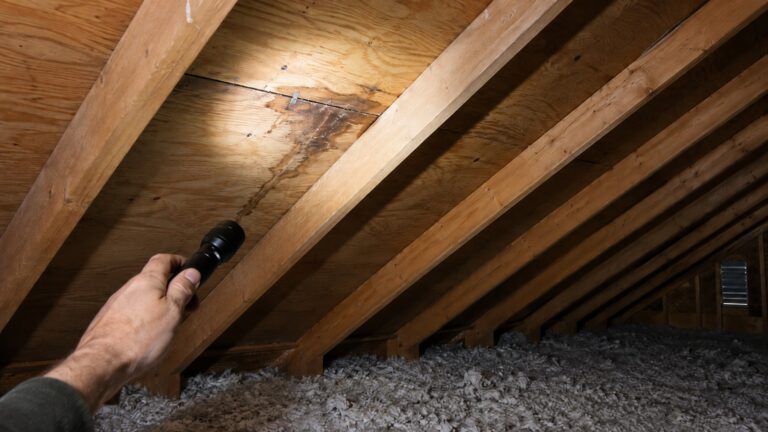
- Attic photos of wet insulation or stained decking if the attic is safe to access
- Dates of storms, leaks, or visible changes
- Copies of roofing invoices, warranties, and product information
If the roof is still under workmanship warranty, contact the original installer with clear documentation. Explain what you are seeing and where it is located. If the issue is active leaking, widespread shingle movement, repeated failed repairs, or disagreement about the cause, a second opinion from another qualified roofing professional may be appropriate.
Shingle problems should be inspected promptly when they are allowing water into the home. Moisture from a roof leak can spread into attic insulation, roof decking, ceilings, and wall cavities before the damage becomes obvious. The goal is not only to fix the visible shingle issue, but also to prevent moisture problems from spreading into the home through hidden roof pathways.
If the shingles are failing early across large areas, or if repeated corrections do not solve the problem, compare the situation with broader signs a roof needs replacement. Some improper shingle installation problems can be corrected locally, but widespread layout, fastening, or deck-related problems may require a larger repair plan.
FAQ
Is it normal for new shingles to look uneven?
Minor texture variation or slight unevenness can be normal, especially before shingles fully relax or seal in warm weather. Repeated crooked rows, raised tabs, exposed nails, sliding shingles, or leaks are more concerning and may suggest improper installation.
Can improperly installed shingles cause leaks?
Yes. Improperly installed shingles can allow water to reach nail holes, underlayment, roof decking, valleys, or roof edges. The risk is higher when shingles are misaligned, poorly fastened, lifting, badly cut, or installed with exposed fasteners.
Are exposed nails on shingles a serious problem?
Exposed nails can be serious when they appear in water-shedding areas. They may allow water to follow the fastener into the roof system. A single exposed nail may be a local defect, but repeated exposed nails suggest a larger installation problem.
Why are my new shingles lifting?
New shingles may lift because they have not sealed yet, but persistent lifting can point to poor fastening, weak decking, incorrect starter-course installation, wind exposure, or installation conditions that prevented proper bonding. Lifting becomes more urgent if leaks or missing shingles appear.
How soon should new shingles settle?
Some new shingles may relax after warm weather and sun exposure, but repeated raised tabs, sliding shingles, exposed nails, or leaks should not be ignored while waiting for the roof to settle. If the same areas stay lifted or move after wind, document the pattern and ask for an inspection.
Can bad shingle installation void a warranty?
Improper installation can create warranty problems because roofing products are designed to perform when installed according to manufacturer requirements. If shingles fail early because they were installed incorrectly, the issue may become a workmanship or warranty dispute.
Key Takeaways
The strongest signs of improper roof shingle installation are repeated patterns that do not look or perform correctly. Crooked rows, uneven exposure, exposed nails, nail pops, raised tabs, early blow-offs, poor starter-course details, and rough cuts around roof features should be documented, especially on a newer roof.
Not every shingle irregularity is an emergency. Some visual differences are cosmetic, and some raised shingles may settle after warm weather. But when shingle defects repeat or appear with leaks, stains, damp attic materials, or wind damage, the roof should be inspected before moisture spreads deeper into the system.
- Crooked rows, uneven exposure, exposed nails, nail pops, lifted tabs, and early blow-offs are important warning signs.
- Shingles that do not lie flat may point to installation problems, weak decking, old layers, or poor sealing conditions.
- Exposed nails in water-shedding areas can become direct leak points.
- Document shingle concerns with photos, dates, weather conditions, and warranty information before repairs begin.
- Get a professional inspection if shingle symptoms are widespread, recurring, or connected to leaks or attic moisture.