
Why Dryer Vents Cause Moisture Problems
Dryer vents cause moisture problems when warm, damp dryer exhaust does not move outdoors the way it should. A clothes dryer removes water from wet laundry, but that moisture does not disappear. It enters the exhaust air and must be carried safely out of the home through the dryer vent system.
When the vent is blocked, crushed, leaking, disconnected, too long, poorly routed, or exposed to cold surfaces, moisture can collect inside the duct or escape into the laundry room. Over time, that can lead to damp air, condensation, musty odor, lint sticking to wet surfaces, and moisture problems in nearby walls, ceilings, or flooring.
This article explains why dryer vents create moisture problems, especially when humid exhaust slows down, leaks, or cools before it reaches outdoors. It focuses on causes, not inspection steps or repair instructions. If you are already seeing stains, damp lint, wall moisture, or odor near the vent path, the companion guide to signs of dryer vent moisture damage will help you identify what those warning signs may mean.
Why Dryer Exhaust Contains So Much Moisture
A clothes dryer works by moving warm air through wet laundry. As the clothes heat up, water evaporates from the fabric and enters the air inside the drum. That warm, moisture-loaded air then moves into the dryer vent system.
This is normal. The problem starts when that humid exhaust does not leave the home efficiently. A dryer vent is not just a lint path; it is the dryer’s moisture-removal path. If the vent cannot move humid air outdoors, that moisture has to go somewhere.
Wet Clothes Release Water Vapor
Every load of wet laundry contains water. The dryer’s job is to remove that water from the fabric. As the dryer runs, the moisture becomes water vapor in the exhaust stream.
The heavier or wetter the load, the more moisture the dryer has to remove. Towels, blankets, jeans, and overloaded machines can send a large amount of water vapor into the vent system. If the vent is clear and properly routed, that moisture leaves the home. If not, it can condense inside the duct, leak from weak joints, or raise humidity around the laundry area.
Warm Air Carries Moisture Out of the Dryer
Warm air can carry more moisture than cool air. That is why dryers use heat and airflow together. Heat helps moisture leave the fabric, and airflow moves that moisture toward the exterior vent.
If airflow slows down, moisture stays in the system longer. The exhaust cools, lint becomes damp, and condensation becomes more likely inside the duct. This is one reason a moisture problem near a dryer often points back to airflow, not just humidity in the room.
The Vent Must Discharge Outdoors
A standard vented dryer is designed to send warm, damp exhaust outdoors. If that exhaust leaks into the laundry room, wall cavity, ceiling cavity, basement, garage, or closet, it can add moisture to areas that were not designed to handle repeated damp air.
Ventless dryers are different appliances, but a conventional vented dryer should not release its exhaust indoors. Indoor dryer exhaust can add humidity, lint, heat, and odor to the room. If you are trying to understand whether dryer use is affecting indoor moisture levels, it can also help to test indoor humidity levels before and after drying cycles.
How Dryer Vent Airflow Is Supposed to Work
A dryer vent system should move humid exhaust from the dryer to the outdoors with as little resistance as possible. The path should allow air to leave the machine, pass through the duct, and exit through an exterior vent termination.
When that airflow is smooth, most of the moisture leaves the home before it can condense or leak indoors. When airflow is restricted, the dryer has to push damp air through a slower, tighter, or colder path, which gives moisture more time to collect inside the vent system.
The Dryer Pushes Moist Air Into the Duct
After warm air passes through the clothes, it carries lint and moisture into the dryer duct. The duct should move that exhaust away from the appliance and toward the exterior.
Short, straight, properly connected duct runs usually move moisture more effectively than long, crushed, sagging, or complicated vent paths. The more resistance the exhaust meets, the longer humid air remains inside the duct.
The Exterior Vent Releases the Exhaust
At the end of the duct, the exterior vent should open when the dryer runs and allow warm, damp air to exit outdoors. If the exterior flap is stuck, blocked, clogged with lint, covered by debris, or restricted by snow or nesting material, moisture may back up into the duct.
This backup can make the dryer take longer to dry clothes and can cause condensation inside the vent system. It can also force humid air out through weak joints or gaps near the dryer connection.
The System Depends on Continuous Air Movement
Dryer vent moisture problems often begin when air movement is interrupted. Even a partially restricted duct can hold warm, damp exhaust long enough for condensation to form. A small leak at a duct joint can release humid air every time the dryer runs.
Because the dryer repeats this process load after load, a minor venting problem can become a recurring moisture source. That is why dryer vent issues should be considered part of recurring moisture problems in the home when dampness keeps returning near the laundry area.
Why Restricted Dryer Vents Create Moisture Problems
Restricted airflow is one of the most common reasons dryer vents cause moisture problems. When the vent cannot move exhaust outdoors efficiently, warm damp air slows down inside the duct. That gives moisture more time to condense, collect, leak, or escape into the laundry area.
A restricted vent can still let some air through, so the dryer may continue working even while the vent is holding too much heat, lint, and moisture during each cycle. Clothes may eventually dry, but the vent may still be creating damp conditions behind the appliance or along the duct route.
Lint Buildup Slows Moist Airflow
Lint buildup reduces the open space inside the dryer duct. As the duct narrows, exhaust air slows down and moisture stays in the system longer. Damp lint can also stick to duct walls, elbows, exterior flaps, and rough flexible vent material.
Over time, lint and moisture can reinforce each other. Restricted airflow leaves more moisture in the duct. That moisture can make lint cling more easily. The more lint collects, the harder it becomes for humid exhaust to leave the home.
Restricted dryer vents can also become a fire hazard because lint is combustible and the dryer may run hotter when airflow is blocked. If the dryer area smells hot, the appliance overheats, the exterior vent does not exhaust air, or the duct appears blocked or disconnected, stop using the dryer until the vent path is checked.
Crushed or Kinked Ducts Trap Moisture
A dryer duct can become crushed behind the appliance if the dryer is pushed too close to the wall. Flexible ducts can also kink, sag, or fold in tight laundry closets. These restrictions interrupt airflow and create low spots where moisture can collect.
A crushed duct may not stop the dryer completely, but it can slow the exhaust enough to cause condensation and damp lint. If the restriction is behind the dryer, the first warning may be a humid laundry room, longer drying times, or moisture around the vent connection.
Long Vent Runs Increase Condensation Risk
The longer the dryer vent run, the more opportunity exhaust has to cool before it reaches the exterior. Long runs also tend to include more elbows, joints, and horizontal sections, each of which adds resistance.
When warm humid air travels through a long duct, it may cool before it exits the house. If the air cools enough, water vapor can condense inside the duct instead of leaving as vapor. This is especially likely when the duct runs through a cold basement, crawl space, garage, attic, or exterior wall.
Blocked Exterior Vents Push Moisture Backward
The exterior vent termination has to open freely. If the flap sticks shut or the outlet is blocked by lint, debris, snow, vegetation, or nesting material, dryer exhaust cannot leave the home properly.
When moist air is pushed against a blocked outlet, it may condense near the termination, leak from duct joints, or back up toward the dryer. A blocked exterior vent can also make the dryer run longer, which adds more heat and moisture to the problem.
How Condensation Forms Inside Dryer Ducts
Condensation forms when warm humid dryer exhaust cools inside the vent system. The dryer air begins warm enough to carry moisture from wet laundry, but if that air meets a cold duct surface, it can release moisture as water droplets.
This is the same basic moisture behavior that causes condensation on cold windows or cold pipes. The difference is that the dryer vent is carrying a concentrated stream of warm, damp air from wet clothes.
Warm Exhaust Meets Cold Duct Surfaces
Metal dryer ducts can become cold when they pass through unconditioned spaces or exterior walls. When warm moist exhaust touches the cooler duct surface, water vapor can condense inside the duct.
This does not always mean the dryer itself is broken. The dryer may be producing normal exhaust, but the vent path may be too cold, too long, too restricted, or poorly insulated for that moisture to stay in vapor form until it reaches outdoors.
Water Collects in Low Spots and Sagging Sections
Once condensation forms, gravity pulls the water toward low spots. Sagging flexible ducts, dips in horizontal runs, elbows, and poorly supported sections can collect moisture. Over time, these areas may hold damp lint, odor, and residue.
If enough water collects, it may drip from a duct joint, stain nearby materials, or make the duct sound or feel damp. In enclosed spaces, this moisture may not be visible until surrounding materials begin showing signs of damage.
Condensation Can Mix With Lint
Moisture inside a dryer duct often mixes with lint. Damp lint can cling to duct walls and create more restriction. That restriction slows airflow, which then allows more condensation to form.
This cycle can make a vent problem progressively worse. At first, it may only cause longer drying times or a damp smell. Later, it may create damp lint clumps, dripping, staining, or moisture around the duct path.
Why Cold Weather Makes Dryer Vent Moisture Worse
Dryer vent moisture problems often become more noticeable in cold weather because the duct and exterior vent surfaces are colder. Warm dryer exhaust loses heat faster, which increases the chance of condensation inside the vent system.
Cold Exterior Walls Cool the Exhaust Faster
If a dryer vent passes through a cold exterior wall, the duct near that wall may cool quickly. Warm moist exhaust can condense near the final section of the duct or around the exterior termination.
This can make moisture appear near the exterior wall, around the vent opening, or along the wall area where the duct exits. In some homes, the laundry room may feel damp mainly during winter dryer use because the temperature difference is greater.
Unconditioned Spaces Increase Temperature Differences
Dryer ducts that pass through garages, basements, crawl spaces, attics, or other unconditioned spaces are more likely to cool the exhaust before it reaches outdoors. The colder the duct, the easier it is for moisture to condense inside it.
This is why two homes with similar dryers may have different moisture problems. The vent route, duct material, length, number of bends, and surrounding temperature all affect whether moisture stays in the exhaust stream or condenses inside the duct.
Blocked Winter Vents Can Trap Moisture
Snow, ice, leaves, or debris can restrict an exterior dryer vent during colder months. If the vent flap cannot open fully, moist exhaust may slow down or back up into the duct.
When that happens, condensation may increase inside the vent, and humid air may leak from weak duct connections. If the laundry room suddenly becomes more humid when the dryer runs in cold weather, the exterior vent path should be considered.
How Dryer Vents Add Humidity to Laundry Rooms
A dryer vent should carry humid exhaust outdoors. When that exhaust leaks into the laundry room, the dryer becomes a direct source of indoor humidity. This can make the room feel damp, warm, heavy, or musty while the dryer is running.
Dryer-related humidity is different from general indoor humidity because it often appears at specific times. If the laundry room feels noticeably damp during or shortly after dryer use, the vent connection, duct path, or exterior termination may be part of the problem.
Loose Duct Connections Release Damp Air
A loose duct connection behind the dryer can release warm humid air into the room every time the appliance runs. This may happen if the duct is not clamped tightly, has slipped off the dryer outlet, or has gaps at a joint.
When this happens, lint may collect near the back of the dryer or around the wall connection. Damp lint near the vent area is a useful clue because it suggests dryer exhaust is escaping before it reaches outdoors.
Disconnected Ducts Can Dump Moisture Indoors
A fully or partially disconnected dryer duct can release a large amount of moisture into a laundry room, closet, basement, garage, or wall cavity. The room may feel humid quickly, and surfaces near the dryer may collect lint, condensation, or odor.
This problem can be easy to miss if the disconnection is behind the appliance or inside a concealed area. The dryer may still run, but the moisture from the clothes is no longer being carried outdoors correctly.
Indoor Venting Raises Laundry Room Humidity
A conventional vented dryer should not discharge into the indoor living space. Releasing standard dryer exhaust indoors adds moisture, lint, heat, and odor to the room. If the dryer is gas-fired, indoor exhaust can also create combustion-safety concerns, so the vent should discharge outdoors as designed. Even if the room feels warm and dry at first, repeated dryer cycles can raise humidity and create condensation on cooler surfaces.
Ventless dryers are a different type of appliance, but a standard vented dryer depends on outdoor exhaust. If a vented dryer is sending air indoors, it can turn the laundry room into a recurring moisture source instead of a dry utility space.
Leaky Duct Joints Can Affect More Than the Laundry Room
Dryer ducts often run through walls, ceilings, basements, garages, or closets before reaching the exterior. If a joint leaks in one of those areas, humid exhaust may be released outside the laundry room where it is harder to notice.
That is one reason dryer vent moisture can seem mysterious. The dryer is the source, but the dampness may appear along a wall, ceiling, or duct route instead of right beside the appliance.
Why Dryer Vent Moisture Can Affect Walls and Ceilings
Dryer vent moisture can affect walls and ceilings when humid exhaust leaks or condenses inside enclosed building spaces. A duct that passes through a wall cavity, ceiling chase, attic edge, garage wall, or basement ceiling can create moisture problems away from the dryer itself.
Not every dryer vent causes wall damage. The risk increases when the duct is loose, blocked, cold, poorly supported, or routed through spaces where condensation can form and go unnoticed.
Moisture Can Leak Into Enclosed Cavities
If a dryer duct joint separates inside a wall or ceiling, humid exhaust may leak into an enclosed cavity. Because the space is hidden, moisture may collect before there is an obvious surface warning sign.
Repeated dryer use can keep adding moisture to the same area. Over time, that can affect drywall, insulation, framing, or nearby finishes. If you see visible warning signs along a duct route, the next step is usually to inspect dryer vents for moisture problems rather than assuming the room itself is the only issue.
Cold Wall Cavities Can Encourage Condensation
Dryer ducts near exterior walls or unconditioned cavities can cool quickly. When warm exhaust moves through those cold areas, moisture can condense on the duct surface or inside the duct.
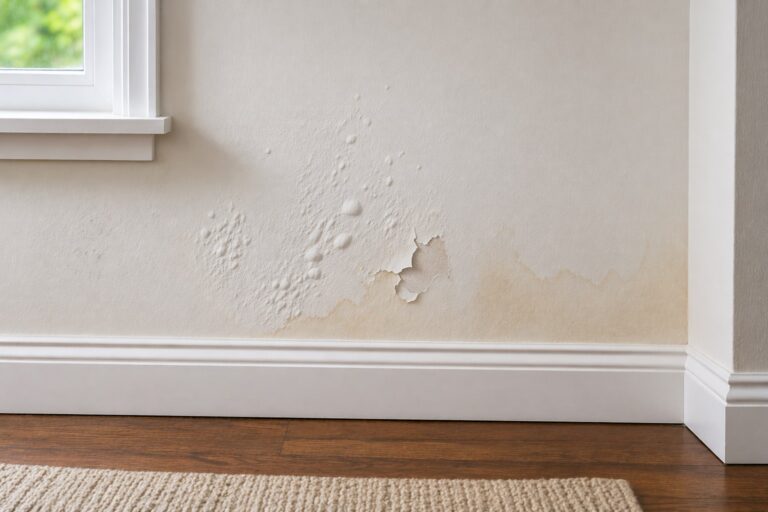
If condensation forms repeatedly near the same wall or ceiling area, it may lead to stains, dampness, odor, or material changes. The source may not be a roof leak or plumbing leak; it may be dryer exhaust cooling or leaking along the vent path.
Lint Can Mark the Moisture Path
Dryer exhaust carries both moisture and lint. When exhaust leaks from a duct joint, lint may collect on nearby surfaces. If that lint feels damp or sticks to a wall, floor, ceiling, or duct connection, it may show where humid exhaust is escaping.
This combination of lint and dampness is one reason dryer vent moisture has a distinct pattern. It is not just water. It often comes with dust, lint, heat, and odor from the drying cycle.
What Dryer Vent Moisture Is Often Mistaken For
Dryer vent moisture can look like general humidity, a roof issue, a bathroom problem, or a washer leak because the visible clues may be damp walls, musty odor, condensation, or stains.
The timing is one of the biggest clues. If the moisture appears or worsens when the dryer runs, the dryer vent system should be considered.
General Indoor Humidity
A damp laundry room may seem like a whole-house humidity problem, especially in humid weather. But if the room becomes noticeably more humid only when the dryer runs, the dryer vent may be adding moisture locally.
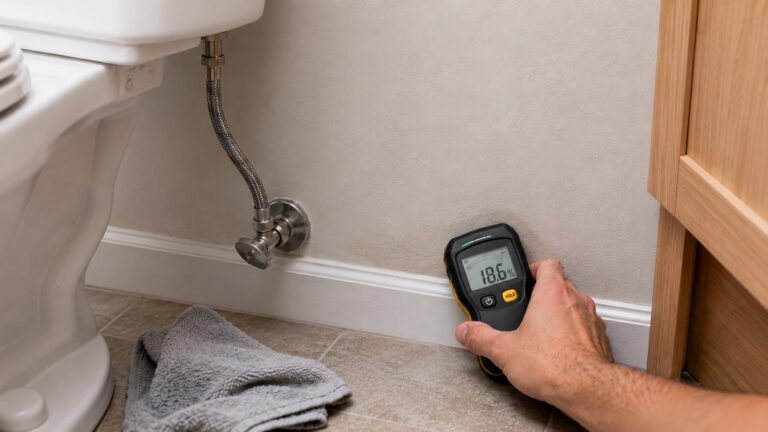
A hygrometer can help compare humidity before, during, and after dryer operation. Place it in the laundry room before starting a load, then watch whether the reading rises during the cycle and stays elevated afterward. If the readings jump while the dryer runs, the vent path may be leaking or failing to exhaust properly. If you need a tool for this, compare hygrometers for home humidity.
Washer Leak Moisture
Laundry room moisture is often blamed on the washing machine. Washer leaks can absolutely wet floors and baseboards, but dryer vent moisture behaves differently. It is more likely to show up as humid air, condensation, lint residue, damp duct surfaces, or moisture that appears during dryer use.
If the floor is wet after washer cycles, the washer should be investigated. If the room feels damp while the dryer runs, especially without visible standing water near the washer, the vent system should be part of the investigation.
Roof or Exterior Wall Leaks
Moisture near a ceiling or exterior wall can look like a roof leak or exterior wall leak. In some cases, that may be true. But if a dryer vent runs through that area, condensation or duct leakage can create similar staining or dampness.
The clue is whether the moisture pattern relates to dryer use, cold weather, or the duct route. A dryer vent problem usually follows the path of warm humid exhaust rather than rainfall alone.
Bathroom or Shower Humidity
Bathroom moisture and dryer vent moisture can both cause condensation and damp surfaces. The difference is location and timing. Bathroom humidity usually follows showers or baths. Dryer vent moisture follows dryer cycles and appears near the laundry area or duct route.
Keeping these sources separate matters because the fix is different. A damp bathroom wall needs a bathroom moisture solution. A damp laundry room during dryer cycles needs dryer vent airflow and exhaust evaluation.
When Dryer Vent Moisture Becomes a Bigger Home Moisture Problem
Dryer vent moisture becomes a bigger problem when it is repeated, hidden, or connected to poor airflow. Brief condensation near a cold vent surface may dry quickly, but dampness after every dryer cycle can keep the same materials exposed again and again.
The warning point is not whether the laundry room feels humid once. It is whether damp air, condensation, damp lint, odor, or staining keeps returning when the dryer runs.
The Laundry Room Feels Damp During Dryer Cycles
If the laundry room feels warm and damp every time the dryer runs, humid exhaust may not be leaving the home properly. The cause may be a loose duct, restricted airflow, indoor venting, or a blocked exterior vent.
This type of repeated humidity can affect walls, trim, flooring, cabinets, stored items, and nearby surfaces. If it happens often, the next step is usually inspection, not simply opening a door after each load.
Clothes Take Longer to Dry
Long drying times can be a clue that airflow is restricted. When moist air cannot leave the dryer efficiently, clothes stay damp longer and the vent system may hold humidity for more of the cycle.
Long drying times do not prove there is moisture damage, but they do suggest the vent may not be moving air properly. If longer drying times appear with condensation, odor, or damp lint, the vent system should be checked.
Lint Sticks to Damp Surfaces
Lint around the dryer is common, but damp lint near duct joints, wall connections, or the floor behind the dryer is more concerning. It can indicate that dryer exhaust is escaping into the room instead of staying inside the duct.
Damp lint can also hold moisture against surfaces, making odor and residue worse. If lint buildup appears with condensation or musty smell, the issue is likely more than ordinary dust.
Musty Odor Keeps Returning
A musty odor near the dryer can develop when damp lint, wet duct sections, or nearby materials stay moist between cycles. The smell may be strongest behind the dryer, near the duct connection, in a laundry closet, or along the vent route.
If odor returns after cleaning, the moisture source may still be active. Dryer vent moisture can also contribute to conditions described in broader laundry-room content, such as why laundry rooms develop mold problems, but this article’s focus remains the venting cause.
Moisture Signs Appear Near the Duct Route
Moisture signs do not always appear beside the dryer. If the duct runs through a wall, ceiling, basement, garage, or closet, dampness may show up along that path. Stains, odor, condensation, or lint near the route can suggest exhaust leakage or duct condensation.
If visible signs are already present, review the guide to signs of dryer vent moisture damage so you can separate vent-related symptoms from other moisture problems.
What to Check Next After Dryer Vent Moisture
Once you understand why dryer vents cause moisture problems, the next step depends on what you are seeing. If there are visible warning signs, the vent system needs inspection. If laundry room humidity keeps rising during dryer cycles, the room may need better monitoring and prevention. If moisture has affected walls, ceilings, or hidden areas, professional help may be needed.
For most homeowners, the practical next step is to check whether the dryer vent is moving humid air outdoors. A blocked, crushed, leaking, or disconnected duct should not be ignored. Once the vent issue is corrected, the laundry room may also need better airflow and humidity monitoring to prevent moisture build-up in laundry rooms.
Frequently Asked Questions
Can a dryer vent cause moisture in a laundry room?
Yes. A dryer vent can cause moisture in a laundry room when warm humid exhaust leaks indoors, backs up because of restricted airflow, or condenses inside the duct. Loose duct connections, blocked vents, crushed hoses, and indoor venting are common causes.
Why is there condensation inside my dryer vent?
Condensation forms when warm moist dryer exhaust cools inside the duct. This often happens when the duct is cold, too long, restricted, poorly supported, or routed through an unconditioned space such as a garage, attic, basement, crawl space, or exterior wall.
Can a clogged dryer vent make walls damp?
Yes. A clogged or restricted dryer vent can cause humid exhaust to slow down, condense, or leak from weak duct joints. If the duct runs through a wall or ceiling, moisture may affect nearby drywall, insulation, or framing over time.
Why does my dryer vent drip water?
A dryer vent may drip water when condensation collects inside the duct. This can happen when warm humid exhaust meets cold duct surfaces, airflow is restricted, the duct sags, or water collects in low spots instead of being carried outdoors as vapor.
Does a long dryer vent run cause moisture?
A long vent run can increase moisture risk because exhaust has more time to cool before reaching outdoors. Long runs often include more bends and joints, which can slow airflow and increase the chance of condensation inside the duct.
Can dryer vent moisture cause mold?
Dryer vent moisture can contribute to mold-friendly conditions if damp air, condensation, or wet lint repeatedly affects nearby materials. Dryer vent moisture alone is not the same as mold, but recurring dampness around walls, trim, duct chases, or enclosed cavities should be taken seriously. For broader laundry-room mold causes, see why laundry rooms develop mold problems.
Is dryer vent moisture worse in cold weather?
It can be. Cold weather makes duct surfaces and exterior wall areas cooler, which can cause warm humid dryer exhaust to condense more easily. Blocked exterior vents from snow, ice, debris, or stuck flaps can also worsen moisture backup.
Should a standard vented dryer ever release indoors?
A conventional vented dryer should release exhaust outdoors, not into the laundry room or living space. Ventless dryers are designed differently, but indoor venting of a standard dryer can add humidity, lint, heat, odor, and possible safety concerns to the home.
The Main Reason Dryer Vents Cause Moisture
Dryer vents cause moisture problems when warm, humid exhaust cannot leave the home efficiently. The dryer is supposed to remove water from clothes and carry that moisture outdoors. When airflow is restricted, ducts are cold, joints leak, vent runs are too long, or exhaust is released indoors, moisture can collect in ducts, laundry rooms, walls, ceilings, and nearby materials.
The most important idea is that dryer vent moisture is usually not random. It follows airflow, temperature, duct routing, and exhaust leakage. If moisture appears when the dryer runs, the vent system should be considered as a possible source before assuming the problem is general humidity, a washer leak, or another household issue.
2 Comments
Comments are closed.