
How to Prevent Moisture Build-Up in Laundry Rooms
Laundry rooms are naturally moisture-prone because they combine wet clothes, washing machines, dryer exhaust, heat, lint, and often limited airflow in one small space. A laundry room may feel slightly warm or humid during use, but it should not stay damp, smell musty, or develop recurring condensation after every laundry cycle.
Preventing moisture build-up in a laundry room requires more than opening a window once in a while. The dryer vent must move humid exhaust outdoors, the room needs enough airflow to recover after use, wet items should not sit against floors or walls, and small washer leaks should be caught before they become recurring moisture problems.
This guide focuses on keeping the laundry area dry during normal use. It also shows when repeated dampness is no longer a room-air problem and should be treated as a dryer vent issue, washer leak, wet flooring problem, or mold risk.
Why Laundry Rooms Build Up Moisture
Laundry rooms build up moisture because several sources operate in the same area. Wet laundry releases moisture. Washing machines can leave water behind during leaks or overflows. Dryers produce warm, humid exhaust. Damp towels, rugs, lint, and stored items can hold moisture against surfaces.
Small laundry rooms and laundry closets make the problem worse because humid air has less room to disperse. Closed doors, crowded shelves, and tight appliance clearances can trap moisture around the washer, dryer, baseboards, walls, and flooring.
Wet Clothes Add Moisture to the Room
Wet clothes release moisture into the surrounding air before, during, and after laundry cycles. If damp laundry sits in the washer, in a basket, on top of the dryer, or hanging in a closed laundry room, the room can stay humid longer than necessary.
This is especially noticeable in small laundry closets. A basket of damp towels or wet clothes can make the space feel heavy, musty, or humid even when there is no active leak.
Dryers Can Raise Humidity When Venting Is Poor
A standard vented dryer should carry warm, damp exhaust outdoors. If the duct is loose, blocked, crushed, disconnected, or leaking, that humid air can enter the laundry room instead. This can make the room feel damp every time the dryer runs.
Dryer vent problems are one of the most common causes of recurring laundry moisture. If the room becomes humid during dryer use, or if lint sticks to damp surfaces near the dryer, review why dryer vents cause moisture problems before assuming the issue is only room humidity.
Closed Laundry Spaces Trap Damp Air
Many laundry rooms are not large, open rooms. They may be closets, hallway alcoves, utility rooms, basement corners, or garage spaces. These areas often have limited airflow, few windows, and doors that stay closed for noise or appearance.
When airflow is limited, moisture from normal laundry use stays in the space longer. Condensation can form on cooler walls, windows, ducts, appliances, or trim. Stored items can also block airflow behind appliances, making the rear wall and floor area slower to dry.
Small Leaks Can Keep the Room Damp
Not all laundry room moisture comes from air humidity. A slow washer hose drip, drain hose leak, floor wetting, or small overflow can keep the room damp even if ventilation is good.
If floors, baseboards, or wall edges are damp near the washing machine, treat that as a possible leak symptom rather than a normal humidity problem. The guide to signs of water damage around washing machines explains what to look for when washer-related moisture is visible.
Control Dryer Exhaust First
Dryer exhaust control is one of the first steps in preventing laundry room moisture build-up. A dehumidifier or fan can help with room air, but it cannot fully solve a dryer vent that is leaking humid exhaust indoors or failing to move moisture outside.
Make Sure Dryer Exhaust Goes Outdoors
A conventional vented dryer should exhaust outdoors through a properly connected duct. If warm, damp air is being released into the laundry room, basement, garage, closet, or wall cavity, the dryer is adding moisture directly to the home.
Indoor dryer exhaust can raise humidity quickly, especially in small rooms. It can also spread lint and odor. Ventless dryers are different appliances, but a standard vented dryer depends on a clear outdoor exhaust path.
Keep the Dryer Duct Connected and Open
The duct behind the dryer should remain connected, supported, and free of crushing or sharp kinks. If the dryer is pushed too close to the wall, flexible ducting can flatten and restrict airflow. If a clamp loosens, humid exhaust can leak into the room.
Do not rely only on cleaning the lint trap. The lint trap helps, but it does not guarantee the full vent path is clear. If the dryer takes longer than usual, the laundry room feels damp during cycles, or condensation appears near the vent route, it may be time to inspect dryer vents for moisture problems.
Watch for Damp Lint or Condensation Near the Dryer
Dryer lint should not be damp around the vent connection, wall outlet, or floor behind the appliance. Damp lint can mean humid exhaust is leaking, airflow is restricted, or condensation is forming inside the duct.
Condensation near the dryer is also a warning sign. If water droplets appear on nearby walls, windows, ducts, or appliance surfaces while the dryer runs, the room may not be exhausting or recovering properly.
Do Not Ignore Long Drying Times
Long drying times can indicate poor airflow. When damp air cannot leave the dryer efficiently, clothes stay wet longer and the room may experience more heat and moisture during each cycle.
Long drying times are not always a moisture emergency, but they should not be dismissed. When they appear with damp air, lint buildup, condensation, or musty odor, dryer vent airflow should be corrected before adding more moisture-control equipment.
Improve Airflow in the Laundry Room
Airflow helps a laundry room recover after moisture is released from wet clothes, dryer use, damp mats, or minor surface spills. Without airflow, moisture lingers around walls, shelves, trim, flooring, and the space behind appliances.
The goal is simple: keep damp air from sitting in one small area long enough to cause condensation, odor, or recurring moisture.
Leave the Door Open After Laundry Cycles
If the laundry room or closet has a door, leave it open after washer and dryer use. This allows damp air to mix with drier air from the rest of the home and helps the room recover faster.
This is especially important for laundry closets. A closed closet can trap warm, moist air around the washer, dryer, hoses, duct connections, shelves, and baseboards. Even if the appliances are working properly, poor air exchange can make the space stay damp longer than it should.
Use a Fan When Air Feels Stagnant
A small fan can help move air through a laundry room that feels still or damp after use. Position the fan so air moves across the room, behind appliances if possible, and toward an open doorway or safe exhaust path.
Do not blow air into wet electrical areas, run cords across wet flooring, or use fans as a substitute for fixing leaks. Fans help move air, but they do not remove the source of moisture if the dryer vent is leaking or the washer is wetting the floor.
Avoid Blocking Air Movement Behind Appliances
Overpacked laundry rooms dry slowly. Detergent boxes, baskets, hampers, towels, cleaning supplies, and storage bins can block air movement around the washer and dryer. They can also hide damp surfaces.
Keep the area behind and beside appliances as accessible as possible. Air should be able to move around the rear wall, floor edges, and vent connections. This also makes it easier to notice leaks, condensation, or damp lint early.
Consider Louvered Doors or Transfer Airflow for Laundry Closets
Some laundry closets trap moisture because the doors seal the space too tightly. Louvered doors, transfer grilles, or improved air paths can help the closet breathe when appliances are running or cooling down after use.
Any airflow change should still respect appliance clearances and local building requirements. The main idea is simple: a washer and dryer in a tiny sealed space need some way for damp air and heat to disperse.
Measure Humidity Before Guessing
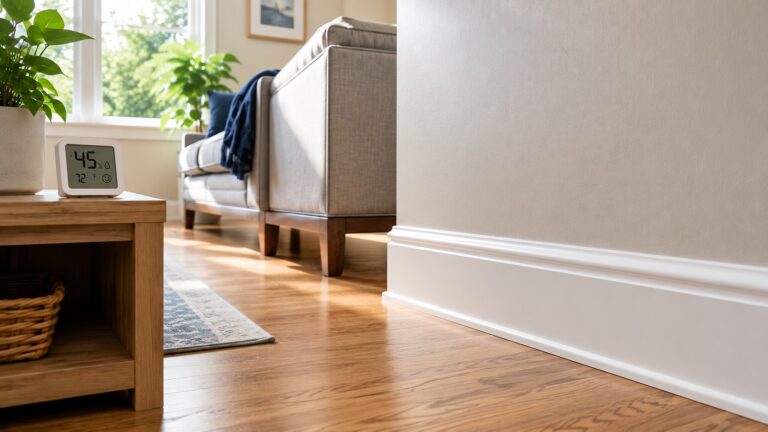
Humidity control is easier when you measure it. A laundry room may feel damp for many reasons, but a hygrometer can show whether humidity rises during laundry cycles and whether the room returns to normal afterward.
If the laundry room is in a basement, garage, interior closet, or humid climate, monitoring becomes even more useful. It helps you separate occasional dampness from a recurring moisture pattern.
Use a Hygrometer to Track Laundry Room Humidity
A hygrometer measures relative humidity. Place one in the laundry room and compare readings before laundry, during dryer use, and after the room has had time to recover. A short spike during use is less concerning than readings that stay elevated after the dryer stops, the door is open, and the room has had time to air out.
For a full explanation of measurement methods, see this guide on how to test indoor humidity levels. If you need a simple monitoring tool, compare hygrometers for home humidity before choosing one.
Use a Dehumidifier in Damp Laundry Spaces
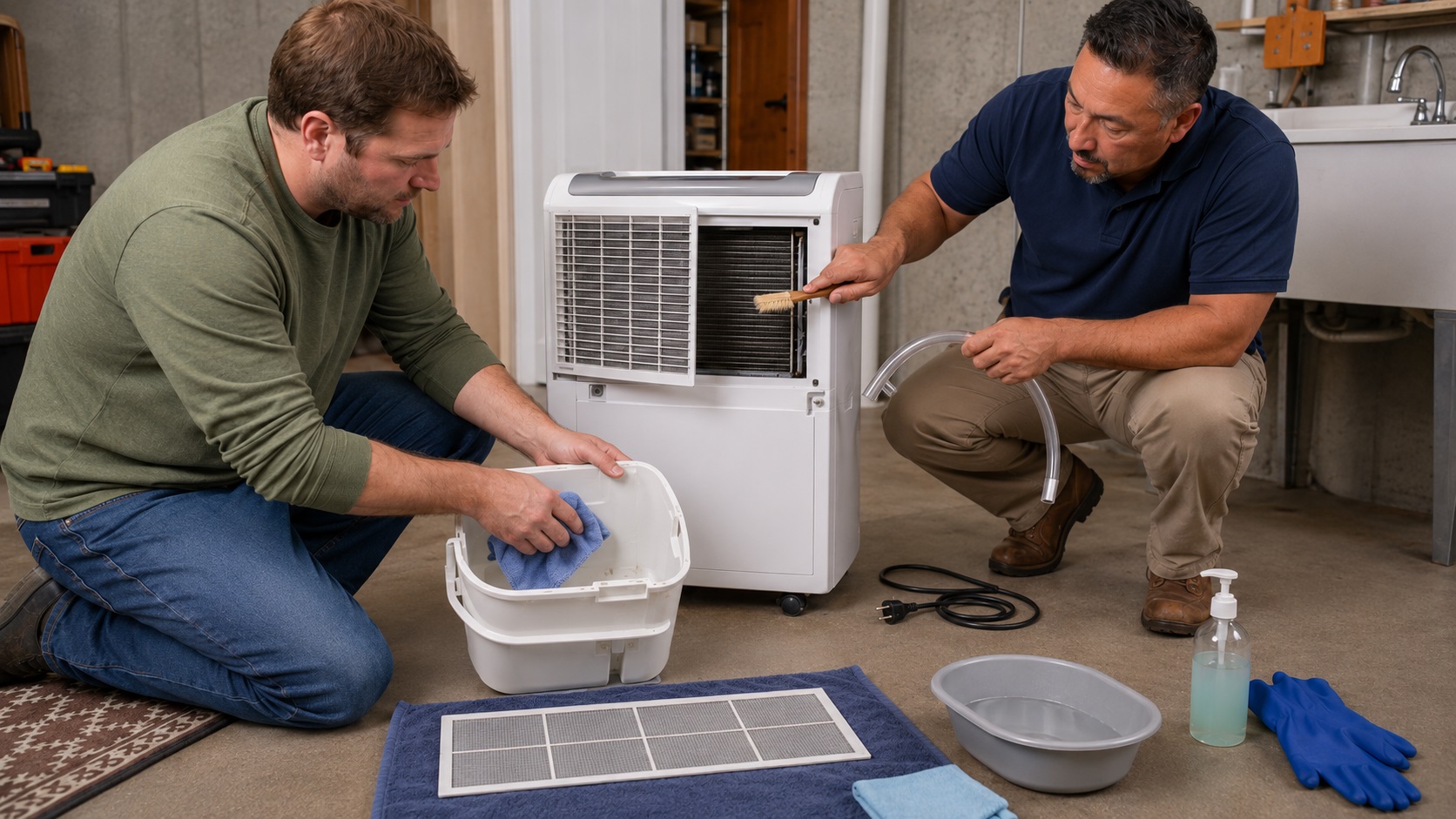
A dehumidifier can help prevent moisture build-up in basement laundry rooms, garage laundry areas, interior laundry closets, and humid homes. It removes moisture from the air so surfaces dry more easily and damp air does not linger after each cycle.
A dehumidifier is most useful when the room stays humid even after the dryer vent is working properly and no active leak is present. It is not a replacement for fixing a washer leak, dryer vent leak, or drain problem.
Watch Whether Humidity Recovers After Laundry
A brief humidity increase during laundry use is not always a problem. The warning sign is humidity that remains elevated long after the washer or dryer has finished. That can mean damp air is trapped, moisture is hidden in materials, or the dryer vent is adding humidity indoors.
Track the pattern over several laundry days. If humidity repeatedly stays high only during dryer cycles, start with the vent path. If humidity stays high even when the dryer is not running, look at airflow, wet storage, basement or garage dampness, and hidden water near the washer.
Prevent Washer-Related Moisture
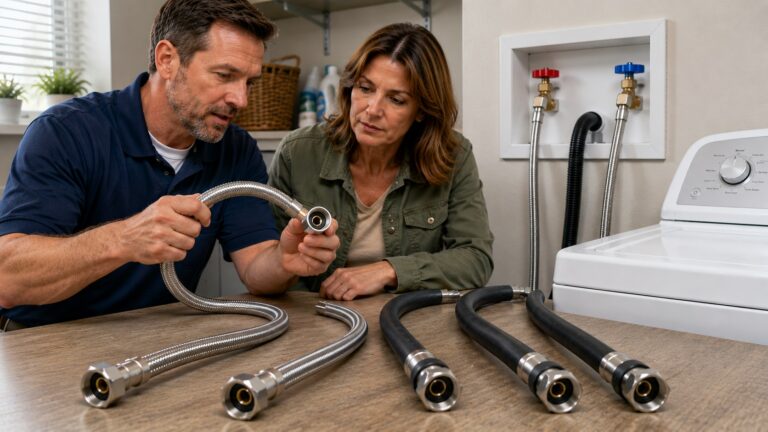
Washer-related moisture prevention is about catching small water problems before they become repeated floor or wall exposure. Even a tiny leak can keep a laundry room damp if it happens during multiple cycles.
Keep the Washer Area Visible Enough to Inspect
A washer should not be surrounded by so much storage that the floor, hose area, and wall base cannot be checked. Keep detergent boxes, rugs, baskets, and stored items away from the rear wall and appliance edges when possible.
This makes it easier to see damp flooring, hose stains, swollen baseboards, or water trails. If you cannot see the area, a small leak can continue for weeks before it becomes obvious.
Investigate Damp Floors or Baseboards
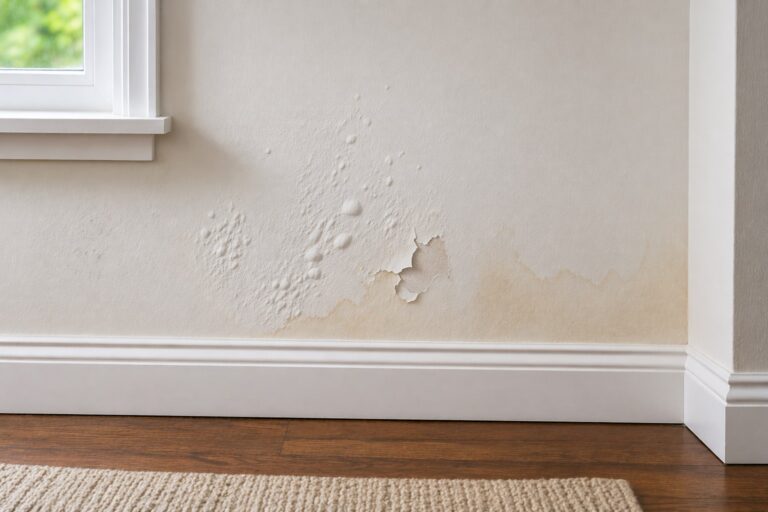
Damp flooring near a washer should not be treated as normal laundry moisture. It may come from a supply hose, drain hose, internal washer leak, loose valve connection, overflow, utility sink leak, or water that has moved under flooring.
If the same area gets wet repeatedly, use the guide on how to detect hidden washing machine leaks. If the floor has already been exposed to water, follow the steps to dry floors after washing machine leaks before putting rugs or stored items back.
Do Not Let Small Water Events Become Normal
A small puddle, damp towel under the washer, or recurring wet spot near the wall may seem minor, but repeated moisture can still affect flooring, trim, and wall materials.
If you need to keep drying the same area after laundry cycles, the room does not have a moisture-prevention problem alone. It has a source problem that needs to be corrected.
Keep Wet Fabrics and Storage From Holding Moisture
Moisture build-up in laundry rooms is not always caused by a broken appliance. Everyday laundry habits can keep the room damp, especially when wet fabrics, rugs, towels, cardboard, or storage bins stay in a small enclosed space.
The best prevention habits are simple: remove wet items quickly, keep absorbent materials off damp floors, and avoid storing items where they block airflow around the washer, dryer, and wall base.
Do Not Leave Wet Clothes Sitting in the Washer
Wet clothes left inside the washer release moisture and odor into the laundry area. The longer they sit, the more likely the room is to smell damp or musty when the washer door is opened.
Move laundry to the dryer or drying area promptly. If you cannot dry the load right away, leave the washer door open when appropriate so the drum can air out instead of trapping moisture inside the machine.
Avoid Drying Damp Clothes in a Closed Laundry Room
Hanging damp clothes in a closed laundry room can raise humidity quickly. This is especially true in laundry closets, basement laundry rooms, and interior rooms without windows or active ventilation.
If you air-dry clothes indoors, make sure the room has airflow and humidity control. Otherwise, the moisture that leaves the clothes simply moves into the room air and may settle on cooler surfaces.
Remove Wet Rugs and Laundry Mats
Rugs and laundry mats can trap moisture against the floor. This is common near washers, utility sinks, and dryer doors where small spills or damp laundry may wet the surface repeatedly.
Use washable, quick-drying mats where needed, and remove them if they become damp. Do not leave rubber-backed mats on a floor that was recently wet because they can slow evaporation and hide moisture underneath.
Keep Cardboard and Fabric Storage Away From Appliance Zones
Cardboard boxes, fabric bins, towels, and stored supplies absorb moisture from the air and from small leaks. When they are stored behind or beside laundry appliances, they can hide dampness and hold moisture against walls or floors.
Use moisture-resistant storage where possible, and keep stored items away from hose connections, dryer ducts, baseboards, and floor drains. The easier the appliance area is to see, the easier it is to prevent moisture from becoming hidden damage.
Prevent Moisture in Laundry Closets and Small Spaces
Laundry closets need more attention than open laundry rooms because they trap heat and moisture quickly. A washer and dryer inside a tight closet can create damp air even when both appliances are working normally.
The smaller the space, the more important airflow, appliance clearance, and humidity monitoring become.
Keep Closet Doors Open After Use
After washing or drying clothes, leave laundry closet doors open long enough for heat and moisture to escape. This helps the closet recover instead of trapping damp air around the appliances.
If the closet has solid doors and no airflow path, moisture may linger behind the machines and around the wall base. Louvered doors or transfer airflow may help in some layouts, especially when condensation or odor keeps returning.
Do Not Overpack Shelves Around Appliances
Storage shelves are useful, but overpacking a laundry closet restricts airflow. Detergent bottles, towels, baskets, cleaning products, and paper goods can block air circulation and hide moisture signs.
Keep some open space around the washer, dryer, duct connection, and hose areas. Moisture prevention is easier when air can move and when warning signs are visible.
Check Behind Appliances Periodically
Even if the laundry room feels dry, check behind appliances periodically. Look for damp lint, condensation, water stains, hose moisture, soft baseboards, or musty odor near the rear wall.
This habit helps catch problems before they become larger. It also supports a broader strategy to prevent recurring moisture damage instead of responding only after visible damage appears.
Use Monitoring in Hard-to-See Spaces
In laundry closets, upper-floor laundry rooms, and tight utility spaces, moisture can build up where you rarely look. A hygrometer can show whether humidity stays high, and a leak sensor near the washer pan, supply hoses, or floor edge can alert you before a small water problem spreads.
Monitoring does not replace maintenance, but it helps reveal patterns. If a small closed laundry area stays damp after every cycle, the room needs better airflow, better source control, or both.
Keep Surfaces and Appliance Areas Dry
Moisture prevention depends on regular housekeeping as much as equipment. Laundry rooms collect lint, detergent residue, damp fabrics, dust, and small spills. These materials can hold moisture and make damp areas harder to notice.
Wipe Up Small Spills Quickly
Small detergent spills, washer drips, and water from wet laundry should be wiped up quickly. Do not let repeated small spills sit near baseboards, flooring seams, or appliance feet.
A single spill may not matter, but repeated moisture in the same area can eventually affect flooring and trim. If the same spot keeps getting wet, investigate the source instead of treating cleanup as routine.
Keep Lint From Collecting Around Damp Areas
Lint can hold moisture and stick to damp surfaces. If lint collects behind the dryer, near a vent connection, or along a wall where condensation appears, it can make the area stay dirty and damp longer.
Clean visible lint around the dryer area and keep the vent connection accessible. Damp lint near the vent is not just a cleaning issue; it can be a clue that humid dryer exhaust is leaking or condensing nearby.
Let the Washer and Dryer Area Breathe
After laundry cycles, give the appliance area time to air out. Open doors, avoid covering the floor with mats too soon, and do not push storage back against damp walls or warm appliances.
This is especially important after a leak, overflow, or heavy laundry day. Even when the visible moisture is gone, the area may need extra drying time before it is covered or closed up again.
When Moisture Prevention Means There Is a Bigger Problem
Laundry room moisture prevention should make the room noticeably drier. If airflow, wet-item control, humidity monitoring, and clear appliance areas do not help, the problem may be larger than normal laundry humidity.
Persistent dampness usually means one of three things: moisture is still being added, airflow is still restricted, or wet materials are staying hidden. At that point, prevention habits alone are not enough.
Moisture Returns Every Time the Dryer Runs
If the laundry room becomes damp every time the dryer runs, the dryer vent system should be checked. A disconnected duct, blocked vent, crushed hose, long vent run, or stuck exterior flap can release or trap humid exhaust.
Opening the laundry room door may reduce the damp feeling, but it will not fix humid exhaust leaking indoors. If moisture is linked to dryer cycles, the vent path needs attention before the room can stay dry.
Floors or Baseboards Stay Damp
Damp flooring or baseboards near the washer are not normal laundry humidity. They may point to a slow washer leak, drain hose problem, supply valve drip, utility sink issue, or water that has already moved under the flooring.
If the same floor area keeps getting damp, prevention should shift into source detection. Moisture that reaches flooring and trim can continue causing problems even if the room air feels dry.
Humidity Stays High After Laundry Is Finished
A short humidity rise during laundry use may be normal. A room that stays humid for hours afterward may have poor air exchange, trapped moisture, a dryer vent problem, or wet materials hidden behind appliances or storage.
If humidity readings remain elevated after the room has had time to recover, check airflow, dryer exhaust, stored items, wet mats, and hidden surfaces. Persistent high humidity is a sign that the room needs more than occasional ventilation.
Musty Odor Keeps Coming Back
A musty odor that returns after cleaning usually means moisture is still present somewhere. The source may be damp lint, wet rugs, trapped moisture behind the washer, a dryer vent leak, or moisture under flooring.
Do not cover the odor with air fresheners or close the door to hide it. A recurring odor means the laundry room is not drying properly or hidden materials may still be damp.
Visible Mold-Like Growth Appears
This article focuses on moisture prevention, not mold removal. However, visible mold-like growth in a laundry room means the moisture problem has progressed beyond simple humidity control.
If growth appears on drywall, trim, flooring, stored items, or behind appliances, the moisture source must be corrected before cleanup will last. For mold-specific prevention steps, use the guide on how to prevent mold in laundry rooms after the moisture source is under control.
Frequently Asked Questions
Why does my laundry room feel damp?
A laundry room may feel damp because of wet clothes, poor airflow, dryer exhaust leakage, closed doors, high humidity, wet rugs, stored absorbent items, or small washer leaks. If the room feels damp mainly when the dryer runs, the dryer vent should be checked. If the floor or baseboards are damp, look for a water source.
Should I leave the laundry room door open?
Yes, leaving the laundry room or laundry closet door open after washer and dryer use can help moisture escape and improve drying. However, an open door will not fix a leaking washer, blocked dryer vent, wet flooring, or disconnected duct.
Does a dryer vent cause laundry room humidity?
Yes. A dryer vent can cause laundry room humidity if the duct is loose, blocked, crushed, disconnected, leaking, or venting indoors. A standard vented dryer should move humid exhaust outdoors, so dampness that appears mainly during dryer cycles should point your attention to the vent path first.
Do laundry rooms need a dehumidifier?
Some laundry rooms benefit from a dehumidifier, especially basement laundry rooms, garage laundry areas, interior laundry closets, and homes in humid climates. A dehumidifier helps control air moisture, but it does not replace leak repair, dryer vent repair, or proper airflow.
How do I prevent moisture in a laundry closet?
Keep closet doors open after laundry cycles, avoid overpacking shelves, maintain airflow around appliances, keep the dryer duct connected, remove wet rugs or mats, and monitor humidity. Laundry closets trap moisture faster than open rooms, so they need extra attention.
Can wet clothes cause moisture build-up?
Yes. Wet clothes, towels, rugs, and damp laundry left in a closed room can raise humidity and create musty odor. Move wet clothes promptly, avoid hanging damp laundry in a closed space without airflow, and let the washer area air out after use.
What humidity level is too high for a laundry room?
A brief humidity spike during laundry use may not be a problem. The bigger warning sign is humidity that stays elevated after the dryer has stopped, the door is open, and the room has had time to recover. For exact measurement methods and target ranges, use a hygrometer and compare readings with the guide on how to test indoor humidity levels.
When is laundry room moisture a sign of a leak?
Laundry room moisture may be a leak if the floor is damp, baseboards are swollen, stains appear near the washer, water returns after cycles, or the same area keeps getting wet. Air humidity usually affects the whole room, while leak moisture often starts near a hose, valve, drain, appliance base, or floor seam.
Why is my laundry room damp only when the dryer runs?
Moisture that appears mainly when the dryer runs usually points to dryer exhaust, not general room humidity. Check for a loose duct, crushed vent hose, blocked exterior flap, damp lint, or condensation near the vent route before relying on a fan or dehumidifier.
The Laundry Room Should Dry Out After Use
Preventing moisture build-up in laundry rooms requires a system. Dryer exhaust must leave the home properly, the room needs enough airflow to recover after use, humidity should be monitored when dampness keeps returning, and wet fabrics or absorbent storage should not hold moisture against floors and walls.
The most important step is separating normal laundry humidity from recurring moisture problems. A room that briefly feels warm during use is different from a laundry room that stays damp, smells musty, develops condensation, or has wet flooring near appliances. If moisture keeps returning, look for the source before relying on fans, dehumidifiers, or cleaning alone.

One Comment
Comments are closed.