
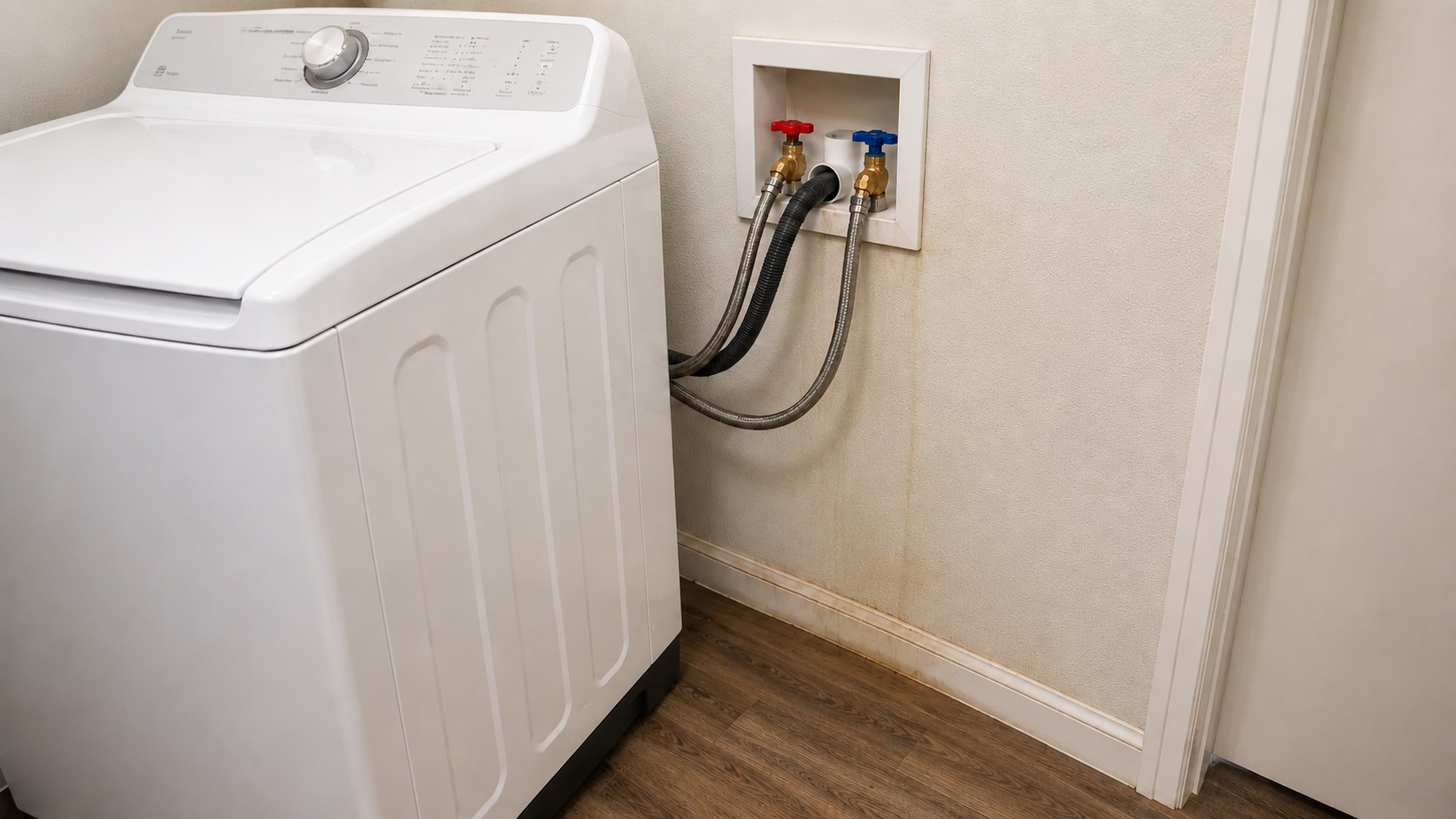
Signs of Water Damage Around Washing Machines
Water damage around a washing machine is easy to miss because the most important warning signs usually start behind the appliance, under the flooring, or along the baseboards where you do not look every day. A washer may also leak only during certain parts of the cycle, which means the floor can look dry by the time you notice something is wrong.
The earliest signs are often small: a musty smell, a damp spot after laundry, swollen trim, rust around hose connections, or flooring that no longer feels firm. These symptoms may seem minor at first, but repeated moisture around a washer can affect flooring, drywall, baseboards, and the subfloor beneath the laundry area.
This guide focuses on visible warning signs of water damage around washing machines: what to look for, where the damage usually appears, and when washer-area moisture may be more serious than a simple spill. For a broader explanation of how appliance and plumbing leaks affect building materials, see this guide to how plumbing leaks cause structural damage.
Why Water Damage Around Washing Machines Is Easy to Miss
Washing machines create a unique moisture risk because they combine pressurized water supply lines, drain discharge, vibration, heavy loads, and hidden wall connections in one small area. A leak can start behind the machine long before water spreads into the open floor area.
Many washer leaks are also intermittent. A hose connection may drip only when the washer fills. A drain hose may leak only during the drain cycle. A loose internal seal may release water only during spin or heavy loads. Because the leak is not constant, homeowners often assume the problem was a one-time splash or a small spill from wet laundry.
Washer damage is also overlooked because laundry baskets, detergent bottles, rugs, shelving, and the machine itself can hide the most important inspection areas. The supply valves, hose couplings, drain hose, standpipe, wall base, and rear floor edge are usually behind the appliance. By the time water damage is visible from the front, moisture may already have reached flooring seams, trim, drywall, or subfloor materials.
Early Signs of Water Damage Around a Washing Machine
The first signs of water damage around a washing machine are usually subtle. Instead of a large puddle, you may notice repeated dampness, staining, odor, or material changes near the appliance. The key is pattern. A one-time splash can happen, but recurring moisture after wash cycles is not normal.
Recurring Damp Spots Near the Washer
A damp spot near the washer after every few loads is one of the clearest early warning signs. The area may dry between cycles, but that does not mean the problem has gone away. Water can evaporate from the surface while moisture remains trapped under flooring, behind trim, or along the wall base.
Pay attention to where the dampness appears. Moisture behind the washer may point toward a supply hose, valve, drain hose, or standpipe issue. Moisture under the front edge may suggest a door seal, detergent drawer, pump area, or machine-body leak. Moisture spreading outward from the washer footprint can indicate that water is traveling beneath the finished floor.
A Musty Smell Around the Laundry Area
A musty smell near the washing machine can be an early clue that moisture is trapped somewhere nearby. The odor may be strongest behind the appliance, near the floor, around a drain area, or along damp baseboards.
A musty odor does not automatically prove there is visible mold. It may come from wet lint, damp flooring, stagnant water near a drain, moisture behind trim, or materials that have stayed damp too long. Still, it should not be ignored, especially if the smell returns after cleaning or gets stronger after laundry cycles.
If odor is the main issue and you are trying to understand whether it is tied to broader laundry room humidity rather than an active washer leak, the prevention article on how to prevent moisture build-up in laundry rooms will be the better next step after visible leak signs are ruled out.
Small Stains or Discoloration Near the Washer
Water stains near a washing machine often appear before major damage is obvious. Look for darkened flooring, cloudy vinyl, yellow or brown staining near the wall, grayish marks along baseboards, or uneven discoloration around the washer feet.
Stains behind the washer often suggest repeated moisture rather than a single spill. If the stain lines run downward from the wall valves, hose connections, or drain area, the source may be above the floor. If the stain spreads outward from under the appliance, the washer itself or the flooring beneath it may be involved.
Rust, Corrosion, or Mineral Buildup Around Hose Connections
Rust or white mineral buildup around washer hose couplings, shutoff valves, or the recessed valve box can indicate slow leakage or repeated condensation around water connections. These signs are easy to dismiss because they may not produce a visible puddle right away.
Hose-related symptoms matter because washer supply lines remain under pressure when the valves are open. If you see corrosion, cracking, bulging, damp hose ends, or staining below a connection, treat it as a warning sign rather than normal aging. For hose-specific timing and replacement guidance, use the article on when to replace washing machine hoses before they fail.
Water Appearing Only After Certain Cycles
Washer water damage does not always show up after every load. You may notice water only after large loads, hot-water cycles, fast spin cycles, or the drain portion of the wash. This pattern can make the problem harder to recognize because the floor may stay dry during smaller or lighter loads.
If water appears only during certain cycles, the timing is important. Water during fill may point toward supply connections. Water during drain may point toward the drain hose or standpipe area. Water during spin may point toward the washer body, pump area, door boot, or internal components. This article focuses on the signs, but if you need a source-finding process, continue with the guide on how to detect hidden washing machine leaks.
Floor Damage Signs Near Washing Machines
The floor around a washing machine often shows damage before the wall does. Water naturally moves outward from the appliance, follows flooring seams, and collects at low spots. Even if the surface looks dry, moisture may be trapped below vinyl, laminate, tile edges, carpet, underlayment, or wood flooring.
Soft or Spongy Flooring Near the Washer
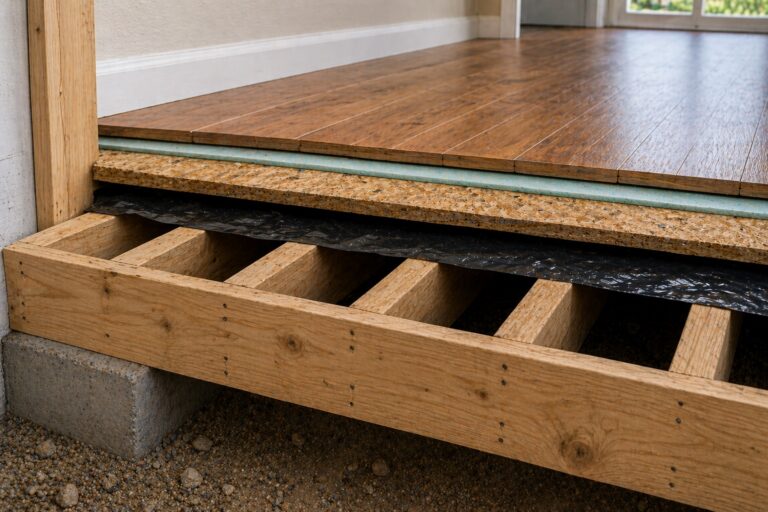
A soft spot near the washer is one of the more serious signs of water damage. The floor may feel slightly springy, weak, uneven, or spongy when you step near the machine. This can happen when moisture reaches the underlayment or subfloor, especially if water has been spreading under the finished floor for a while.
Soft flooring does not always mean the entire floor has failed, but it does mean the problem should be taken seriously. A surface spill usually dries without changing the feel of the floor. If the floor texture or firmness has changed, moisture may be below the surface. For deeper laundry-floor symptoms, see the guide to water damage under laundry room flooring.
Buckling, Cupping, Curling, or Lifting Flooring
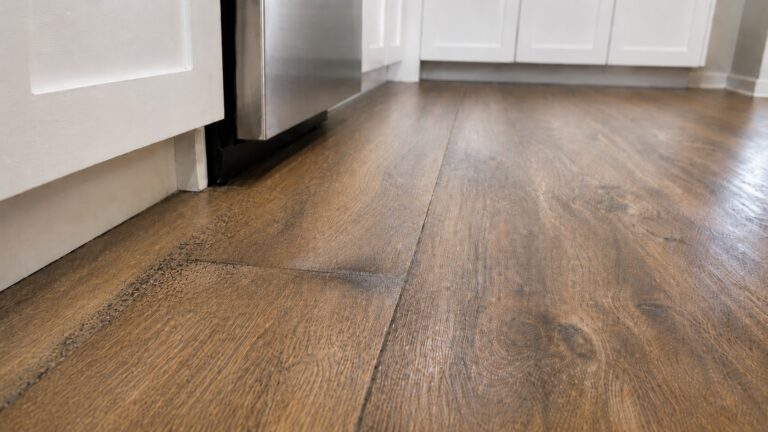
Washer leaks can cause flooring to move out of shape. Wood flooring may cup or crown. Laminate may swell at the seams. Vinyl planks may lift at the edges. Sheet vinyl may bubble or loosen. Tile may stay visually intact while grout lines darken or moisture works underneath loose areas.
These changes usually happen because water has reached a layer that was not designed to stay wet. Finished flooring may resist brief surface moisture, but repeated moisture from a washer leak can move through seams, edges, transitions, and gaps around the appliance footprint.
Darkened Flooring Seams
Dark seams near the washer can be an early clue that water is entering below the surface. This is common with laminate, vinyl plank, engineered wood, and older sheet flooring. The seam may look darker, wider, raised, or dirtier than nearby areas.
Pay close attention to seams that run from the washer toward the wall, door, hallway, or nearby cabinets. Water does not always stay directly under the appliance. It can travel along seams and low spots, making the visible damage appear several inches or even several feet away from the original leak.
Loose Flooring Around the Washer Feet
Washer vibration can make moisture damage worse. If flooring around the washer feet looks compressed, loose, discolored, cracked, or uneven, repeated movement may be combining with moisture exposure. A heavy washer can also hide damage beneath the feet until the floor begins to deform.
Look for circular marks, dark stains, or softened areas around the washer legs. If the washer rocks more than it used to, the floor may no longer be supporting it evenly. That may be a leveling issue, a flooring issue, or a sign that water has weakened the area beneath the machine.
Wall and Baseboard Signs Behind the Washer
Wall and baseboard symptoms are common around washing machines because many leaks begin at the back of the appliance. Supply valves, hose connections, drain hoses, and standpipes are usually located near the wall. When one of those areas leaks, the wall base and trim may absorb moisture before water spreads into the open room.
Swollen or Warped Baseboards
Baseboards near the washer should stay flat and tight against the wall. If they begin to swell, separate, curve, soften, or pull away from the wall, moisture may be entering from behind or below them.
Swollen baseboards are especially important when the damage is concentrated behind the washer or along the floor-wall joint. This pattern often means water has been reaching the wall base repeatedly, not just sitting briefly on the surface of the floor.
Bubbling Paint or Peeling Finish Near the Floor
Paint bubbling near the washer is another sign that moisture may be affecting drywall or trim. Look low on the wall behind the appliance, around the valve box, below hose connections, and along corners where the floor meets the wall.
Peeling paint, softened drywall paper, or small blisters in the wall finish can suggest that water is coming from above the floor line or wicking upward from the base. If the bubbling is near the washer valves, hose connections, or drain area, the problem may be related to the washer system rather than general room humidity.
Dark Staining at the Floor-Wall Joint
A dark line where the wall meets the floor can be a warning sign of repeated moisture. This may appear as brown, gray, yellow, or black discoloration along the baseboard, caulk line, trim edge, or drywall bottom.
This type of staining often forms where moisture collects and dries over time. If the stain is strongest behind the washer or near the drain standpipe, it may point to a washer-related source. If similar staining appears throughout the room, the issue may involve wider humidity, flooding, or flooring moisture rather than only the washer.
Soft Drywall Behind or Beside the Washer
Drywall that feels soft, crumbly, swollen, or dented near the washer may indicate repeated wetting. This is more serious than a surface stain because drywall loses strength when it stays wet or is exposed to recurring moisture.
Do not cut into the wall just to investigate a stain. Instead, look for visible clues first: bubbling, staining, trim swelling, odor, or recurring dampness. If the wall feels soft or the damage is expanding, it may be time for a professional inspection, especially if the washer valves or drain lines are involved.
Hose and Valve Warning Signs
Washing machine hoses and valves are among the most important warning areas because they can leak slowly before they fail more severely. The article on signs appliance water hoses are failing covers hose deterioration more broadly, but around a washing machine, the symptoms are usually concentrated behind the appliance and below the supply connections.
Damp Hose Ends or Wet Couplings
The hose ends should not stay wet. If you see moisture around the threaded coupling, below the valve, or where the hose connects to the washer, that is a sign of leakage. Even a slow drip can damage the wall base or flooring if it continues unnoticed.
Use caution around wet areas behind appliances. If the floor is wet near an outlet, cord, or power strip, do not reach into the area casually. Stop using the washer until the leak source can be checked safely.
Cracked, Bulging, Kinked, or Stiff Hoses
Washer hoses should not look cracked, blistered, swollen, kinked, or brittle. Rubber hoses can age and weaken. Braided hoses can also develop problems at the fittings, bends, or crimped ends. A hose that looks distorted should be treated as a warning sign even if it is not actively spraying water.
Damage near the hose ends is especially important because those areas handle movement, pressure, and connection stress. If the hose looks worn and there are also stains on the wall or floor below it, the water damage may already be related to hose failure.
Rust or Greenish Corrosion Around Valves
Rust, corrosion, or greenish deposits around washer shutoff valves can indicate slow moisture exposure. Sometimes the valve itself leaks. Other times the leak comes from the hose connection or nearby fittings.
Corrosion does not always mean an active leak is happening today, but it does mean that water has likely been present around the connection. If the valve is difficult to turn, heavily corroded, or surrounded by damp drywall, a plumber may be needed before the valve fails or becomes impossible to shut off.
Stains Below the Washer Valve Box
Many laundry rooms have a recessed washer valve box in the wall. If you see staining below this box, bubbling paint under it, or dampness running down toward the baseboard, the source may be above the floor rather than under the washer.
This pattern is easy to miss because the washer blocks the wall. If you only see the stain from the side, it may look like a flooring problem at first. The location of the stain matters: damage directly below valves or hose connections often points to a supply-side issue.
Drain-Related Water Damage Signs
Not every washing machine leak comes from the supply hoses. Some water damage starts on the drain side, especially when the drain hose is loose, the standpipe backs up, the hose is inserted incorrectly, or water splashes out during discharge. Drain-related leaks often appear during or shortly after the washer drains.
These symptoms can be confusing because the floor may stay dry during the fill cycle and become wet only later in the wash. If you notice water after the washer pumps out, the drain area deserves closer attention.
Water Appears During or After the Drain Cycle
If water shows up only when the washer drains, the problem may be near the drain hose, standpipe, utility sink, or laundry drain line. The water may appear behind the machine first, then spread forward across the floor.
This pattern is different from a supply-side leak, which often appears during fill or while the washer is sitting connected to pressurized water lines. Drain-side damage may be intermittent because it only happens when the machine releases a large volume of water quickly.
Splash Marks Near the Standpipe
Splash marks, drip trails, or stains near the standpipe can point to drain discharge problems. The area behind the washer may show dried water spots, lint residue, detergent film, or dark marks running down the wall or pipe area.
If the drain hose is loose, poorly seated, or positioned incorrectly, water can splash or overflow during draining. A partially blocked drain can also cause water to back up instead of flowing away smoothly. This article is focused on the signs, but if you need to trace the source, use the guide on how to detect hidden washing machine leaks.
Wetness Concentrated Behind the Washer
Drain-related damage often stays concentrated near the back of the appliance. You may see damp flooring along the rear wall, dark staining behind the washer, or moisture that seems to start at the standpipe rather than under the machine body.
Because the washer blocks this area, the first visible sign may be water spreading out from behind the appliance. If the back wall or baseboard is wet but the front of the machine is dry, the drain or supply connection area may be involved.
Odor Near the Drain Area
A sour, musty, or stagnant odor near the washer drain area may suggest trapped moisture, drain residue, or water that has been collecting behind the appliance. Odor alone does not prove a leak, but when it appears with staining, damp flooring, or swollen trim, it becomes an important warning sign.
Drain-side moisture can also leave residue that attracts dirt and makes the area look darker over time. If the smell returns after cleaning and is strongest near the washer wall, do not assume it is just dirty laundry or detergent residue.
Signs the Washing Machine Itself May Be Leaking
Sometimes the visible damage does not start at the wall. It starts under or near the washer body. A machine-body leak may come from the pump area, door seal, detergent drawer, tub seal, internal hose, or other appliance components. You do not need to diagnose the internal part to recognize the warning signs.
Water Under the Center of the Washer
Water that appears under the center of the machine may point toward an internal washer leak, especially if the hose and wall areas look dry. The puddle may be small at first and may only appear after certain cycles.
Look for staining beneath the washer footprint, moisture around the washer feet, or a wet area that seems to begin under the machine rather than behind it. If the water keeps returning, it should not be treated as a simple spill.
Moisture Under the Front Edge
Water under the front edge of a washing machine can sometimes come from the door area, detergent drawer, front seal, or oversudsing. This is especially common with front-load machines, though top-load machines can also leak from the body or overflow under certain conditions.
If the floor is repeatedly wet at the front after wash cycles, watch for a pattern. Does it happen after large loads? Does it happen when using more detergent? Does it happen during spin? These clues can help separate a machine-body issue from a supply or drain-side leak.
Rust or Staining Beneath the Washer Feet
Rust-colored marks, dark rings, or stained flooring beneath the washer feet can indicate repeated moisture exposure. The washer may not leave a visible puddle every time, but small leaks can collect under the machine and dry slowly.
Washer vibration can also worsen the problem. If the appliance rocks, shifts, or presses into softened flooring, damage may become more visible around the feet before it appears elsewhere.
Water Appears After Spin or Heavy Loads
Leaks that appear after spin cycles or heavy loads may be related to machine movement, internal seals, load imbalance, or water escaping during agitation. The key sign is timing: the floor may stay dry during filling but become wet after the machine moves or drains.
A heavy-load leak should not be ignored just because smaller loads seem fine. Intermittent leaks can still damage flooring, baseboards, and nearby wall materials over time.
How to Tell the Damage Is Getting Worse
Washer-area water damage is getting worse when the symptoms repeat, spread, or begin changing the floor, trim, wall, or odor in the room.
The Damp Area Keeps Returning
If the same area gets damp after multiple laundry cycles, the problem is not resolved. Recurring dampness is one of the strongest signs that water is still escaping or that trapped moisture has not dried properly.
Do not rely only on whether the floor looks dry the next day. Some materials dry on the surface while remaining damp underneath. If the same washer-area moisture keeps returning, the next step is to look for a hidden washing machine leak rather than treating the area as a housekeeping issue.
The Musty Smell Gets Stronger
A musty smell that gets stronger over time suggests moisture is staying trapped somewhere. This can happen behind baseboards, under flooring, behind the washer, or near damp drywall. The smell may be most noticeable when the room is closed up, after a wash cycle, or when humidity is high.
Odor should be taken more seriously when it appears with staining, soft flooring, swollen trim, or visible spotting. At that point, the problem is no longer just an occasional damp smell.
Stains Expand or Change Color
Water stains that expand, darken, or change shape indicate ongoing moisture movement. A stain that slowly spreads from behind the washer toward the open floor may show that water is traveling under the flooring. A stain that grows downward from the valve box may point toward a supply-side leak.
Documenting the stain with photos can help you see whether it changes over several days or wash cycles. Expanding stains are a stronger warning sign than a single old mark that stays unchanged.
The Floor Feels Less Stable
If the floor feels softer, bouncier, uneven, or weaker than before, water may have reached the layers below the finished surface. This is especially concerning if the washer vibrates more than usual or no longer sits level.
At this stage, surface cleaning is not enough. The leak source must be found, and the affected materials may need drying or evaluation. If the floor has already been wet, the next step is usually guidance on how to dry floors after washing machine leaks.
Mold-Like Spots Appear Near the Washer
Dark specks, fuzzy patches, or recurring staining near the washer can appear when damp materials stay wet long enough to support growth. This may show up on baseboards, drywall, flooring seams, wall corners, or nearby stored items.
This article is not a mold removal guide, but mold-like growth around a washer is a sign that moisture has been present long enough to create a bigger concern. If spotting appears with odor and repeated dampness, the washer area needs more than routine cleaning.
What to Do When You Notice Water Damage Around a Washing Machine
Once you notice signs of water damage around a washing machine, the first goal is to prevent more water from entering the area. The second goal is to understand whether the moisture is only on the surface or has reached flooring, trim, drywall, or the subfloor.
If active leaking is visible, stop using the washer until the source is found. If the supply valves are easy to reach and the area is safe, turn off the hot and cold water valves behind the machine. Do not reach into standing water near an outlet, cord, or power strip. Water and electricity should always be treated carefully, especially in tight laundry rooms.
Check Whether the Moisture Is Active or Old
Some washer-area stains are old, but recurring dampness means the problem may still be active. After cleaning up visible water, watch the area during the next wash cycle only if it is safe to do so. Notice whether moisture appears during fill, drain, spin, or only after the washer has finished.
The timing can help you understand the likely direction of the problem. Water during fill often points toward hoses, valves, or supply connections. Water during drain may point toward the drain hose, standpipe, or laundry drain. Water under the machine after spin may suggest the washer body or internal components. For a more detailed inspection process, use the guide on how to detect hidden washing machine leaks.
Move Stored Items Away From the Washer Area
Remove detergent boxes, laundry baskets, rugs, cardboard, towels, and stored items from the affected area. These materials can hide moisture and hold water against the floor. Cardboard and fabric can also develop odor quickly when they stay damp.
Clearing the area makes it easier to see stains, swollen trim, damaged flooring seams, and wet wall edges. It also helps air circulate around the area while you decide whether the issue is only surface moisture or deeper water damage.
Document the Damage Before It Changes
Take photos of the wet area, stains, damaged flooring, swollen baseboards, hose connections, valve box, and any visible mold-like spotting. Photos are useful because water damage can change as materials dry, swell, darken, or spread.
Documentation also helps if you need to explain the problem to a plumber, appliance technician, water damage company, landlord, property manager, or insurance representative. Do not rely on memory if the damage pattern changes from one cycle to the next.
Start Surface Drying Without Ignoring the Source
If the leak has stopped and the area is safe, wipe up standing water and increase airflow around the washer area. Remove wet rugs or absorbent items. Open the laundry room door, use fans only where electrical connections are dry and safe, and keep the area accessible so it can continue drying.
Surface drying is not the same as solving the problem. If water has entered flooring seams, baseboards, drywall, or subflooring, the visible surface may dry faster than the materials underneath. If the flooring was wet for more than a brief spill, follow a more complete process for how to dry floors after washing machine leaks.
When Water Damage Around a Washer Needs Professional Help
Some washer-area moisture problems are simple, but others require professional inspection or repair. The more the damage affects structural materials, wall systems, flooring layers, or plumbing connections, the less it should be treated as a routine cleanup issue.
Call for Help if the Floor Feels Soft or Unstable
Soft flooring near a washer may indicate moisture beneath the finished surface. Because a washing machine is heavy and vibrates during operation, weakened flooring can create both moisture and stability concerns.
If the floor feels spongy, uneven, or weaker than nearby areas, stop treating the problem as a simple surface spill. You may need a plumber or appliance technician to stop the water source and a flooring or water damage professional to evaluate the material below the surface.
Call for Help if Water Is Coming From a Valve or Pressurized Hose
Leaks from washer shutoff valves, supply hoses, or wall connections can become serious because those lines are connected to pressurized water. A slow drip can become a larger leak if a hose or fitting fails.
If you see active dripping from a valve, a bulging hose, a corroded connection, or moisture around a fitting that will not stop, avoid running more laundry until the connection is repaired. Hose and valve issues are also a good reason to review the signs that appliance water hoses are failing.
Call for Help if Stains or Odor Keep Returning
Recurring stains or musty odor usually means the moisture source has not been corrected or the affected materials were not fully dried. Cleaning the visible surface may temporarily improve the appearance, but the smell and staining often return if moisture remains below the floor or behind the trim.
If the same washer area keeps getting damp, the long-term solution is not just cleanup. The source has to be found, the affected materials have to dry, and the washer area has to be monitored so the damage does not return.
Call for Help if Mold-Like Growth Appears
Small stains near a washer do not always mean mold, but visible mold-like growth combined with dampness, odor, or soft materials should be taken seriously. Growth on drywall, baseboards, flooring seams, or stored items suggests that moisture has been present long enough to create a secondary problem.
If the affected area is small and on a cleanable nonporous surface, the response may be limited. If the growth appears on porous materials, behind trim, under flooring, or near soft drywall, professional evaluation may be safer than guessing how far the moisture has spread.
How to Reduce the Risk After the Damage Is Handled
After the immediate leak or water damage is addressed, the washer area should be monitored. Laundry rooms often develop repeat problems because the same appliance, hoses, drain connection, and flooring remain in place after the first cleanup.
Check behind the washer periodically, especially after heavy loads. Replace aging or damaged hoses before they fail. Keep the area clear enough to inspect. Consider a washing machine leak pan or a water leak sensor for early detection where appropriate.
Long-term prevention also depends on the room itself. Poor airflow, trapped humidity, and stored absorbent materials can make minor washer moisture problems worse. Once active leak signs are resolved, review how to prevent moisture build-up in laundry rooms so the area stays easier to monitor and dry.
Frequently Asked Questions
Is a small amount of water around a washing machine normal?
A one-time splash from loading wet clothes or cleaning the machine can happen, but repeated water around a washing machine is not normal. If moisture appears after wash cycles, near the hose connections, behind the washer, or under the machine, treat it as a possible leak or drainage problem.
Why does the floor near my washing machine feel soft?
A soft floor near a washing machine can mean water has moved below the finished flooring and reached underlayment or subfloor material. This is more serious than a surface puddle. If the floor feels spongy, uneven, or weak, the leak source should be found and the flooring layers may need evaluation.
Can a washing machine leak only during certain cycles?
Yes. A washer can leak only during fill, drain, spin, or heavy-load cycles. That is why the floor may look dry most of the time. The timing of the water helps narrow the likely area, but the source still needs to be confirmed before repairs or drying decisions are made.
Does a musty smell behind the washer mean water damage?
A musty smell behind the washer can be a warning sign of trapped moisture, but it does not prove the exact source by itself. Odor becomes more concerning when it appears with damp flooring, swollen baseboards, staining, soft drywall, or recurring wetness after laundry cycles.
Should I move the washing machine to check behind it?
You can look behind the washer if it is easy and safe to do so, but do not risk injury, hose damage, or electrical hazards. Washing machines are heavy, and tight laundry rooms can make movement difficult. If the floor is wet near electrical connections or the washer is difficult to move, get help instead of forcing it.
When should I call a plumber for washer water damage?
Call a plumber if water appears to come from the shutoff valves, supply hoses, wall connections, or drain line. You should also call if the valves are corroded, difficult to turn, actively leaking, or if water keeps returning even after you clean the area.
What Washer Water Damage Signs Mean
Water damage around a washing machine usually starts with small signs: damp flooring, musty odor, hose stains, swollen trim, rusted fittings, or water that appears only after certain cycles. These symptoms are easy to dismiss, but repeated moisture around a washer can damage flooring, baseboards, drywall, and the materials below the surface.
The most important step is to notice the pattern. Water that returns after laundry cycles, stains that expand, flooring that softens, or odor that keeps coming back should not be treated as normal laundry room moisture. Once you recognize the signs, the next step is to find the source, dry affected materials, and monitor the washer area so the damage does not return.
Washer Water Damage Warning Signs to Remember
- Recurring dampness around a washing machine is not normal, even if the floor dries between cycles.
- Early warning signs include musty odor, damp flooring, stains, swollen baseboards, rust, corrosion, and darkened flooring seams.
- Water behind the washer often points toward hoses, valves, drain connections, or standpipe problems.
- Water under the front or center of the washer may suggest a machine-body leak.
- Soft flooring, expanding stains, and mold-like spots suggest the damage may be more serious than a surface spill.
- Stop using the washer if active leaking is visible, and avoid wet areas near electrical connections.
- After the source is fixed, the floor, baseboards, and nearby wall materials may still need drying and monitoring.
3 Comments
Comments are closed.