
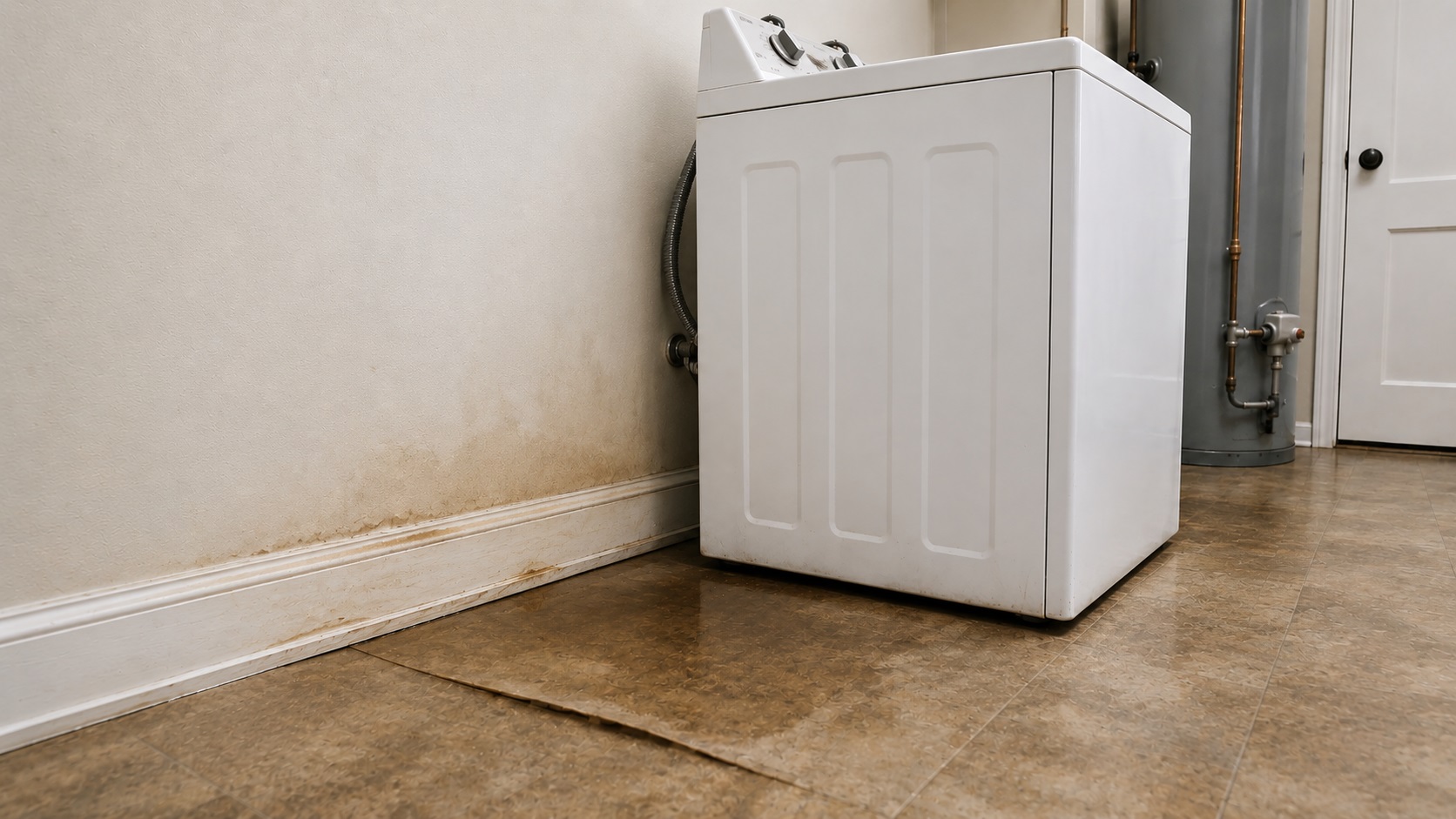
Signs of Water Damage Under Laundry Room Flooring
Water damage under laundry room flooring can stay hidden until the floor starts to feel soft, smell musty, lift at the edges, or move underfoot. Because laundry rooms contain heavy appliances, plumbing connections, drains, hoses, and humid air, a small leak or repeated moisture problem can affect the flooring layers long before the damage looks obvious from above.
This is why laundry rooms should be part of any plan to check hidden moisture in different areas of your home. Moisture under laundry flooring may come from a washing machine leak, drain issue, utility sink, dryer vent condensation, floor drain backup, or repeated humidity. The warning signs often show up as changes in the floor itself rather than as a visible puddle.
The goal is to recognize when the visible floor may be hiding a deeper problem. A floor can look mostly clean on the surface while water is trapped beneath vinyl, laminate, tile, underlayment, or subfloor panels. If the moisture continues, the floor may weaken, swell, separate, or support mold growth under the surface.
Why Laundry Room Flooring Hides Water Damage
Laundry room flooring often hides water damage because the moisture source may be intermittent. A washer hose may drip only during certain cycles. A drain standpipe may overflow briefly and then appear dry. A utility sink may leak only when used. A dryer vent may release humid air only while the dryer is running. By the time the floor looks different, moisture may already have reached layers below the surface.
Floor coverings can also trap water. Sheet vinyl, luxury vinyl plank, laminate, tile, and engineered flooring may dry on top while the underlayment or subfloor remains damp below.
Laundry rooms also contain heavy, vibrating appliances. A weakened floor may reveal itself when the washer enters a spin cycle, when the dryer vibrates, or when you step near appliance feet. A floor that feels slightly soft in another room may be easy to ignore. In a laundry room, that same weakness matters more because appliance weight and movement can stress damaged flooring and subfloor materials.
Another reason laundry damage is easy to miss is that many people expect laundry rooms to be a little damp. A wet towel, humid dryer cycle, or small splash near a utility sink may seem normal. The problem begins when moisture repeatedly reaches flooring seams, wall edges, baseboards, or the space under appliances.
If you are also seeing water around the appliance itself, compare the floor symptoms with signs of water damage around washing machines. The washer-area article focuses on appliance-adjacent clues, while this article focuses on the flooring and subfloor symptoms that may develop underneath.
Soft, Spongy, or Uneven Flooring
A soft or spongy floor is one of the strongest signs that water may have affected the layers below the visible surface. Laundry room flooring should feel firm and stable. If it flexes, dips, bounces, or feels weaker in one area than the rest of the room, hidden moisture may have damaged the underlayment or subfloor.
Walk slowly across the laundry room and compare different areas. Pay attention to the floor in front of the washer, behind the washer if accessible, near the drain, around the utility sink, along the wall behind the appliances, and at the doorway transition. A soft spot near a likely water source is more concerning than a general unevenness that has always been present. Also compare the floor before and after a wash cycle. A spot that feels worse after the washer runs is more suspicious than a floor variation that never changes.
Common warning signs include:
- A spongy feeling near the washing machine
- A dip in the floor around appliance feet
- Flooring that flexes more than nearby areas
- A soft spot that feels worse after laundry cycles
- A hollow or weakened feeling under vinyl, laminate, or tile
- A washer that rocks more than it used to
- A floor that feels unstable when the washer spins
Why soft spots matter near a washer
Soft flooring near a washer should not be dismissed as a cosmetic issue. Washing machines are heavy, and they become even more dynamic during spin cycles. If water has weakened the subfloor, appliance vibration can make the weakness more noticeable and may worsen the damage over time.
A soft floor may mean moisture has reached the underlayment, subfloor, or framing below. Slight flexing can be an early clue; sagging, appliance shifting, or unstable movement suggests the problem may be structural.
Do not keep leveling or shimming a washer without asking why the floor changed. If the washer used to sit firmly but now rocks, shakes, or seems to sink toward one corner, the problem may be below the appliance rather than in the appliance feet alone.
How appliance vibration can reveal subfloor weakness
Washer vibration can expose hidden moisture damage because it puts repeated stress on the floor. During a spin cycle, a weakened section may bounce, rattle, or feel less stable than it does when the machine is off. You may also hear squeaks, creaks, or hollow sounds that were not present before.
Vibration clues are especially important if they appear with other symptoms, such as a musty smell, warped flooring, staining near baseboards, or repeated dampness after laundry cycles. One symptom alone may not confirm subfloor damage, but several symptoms together suggest the floor should be inspected more carefully.
Warped, Buckled, or Raised Flooring
Water damage under laundry room flooring often shows up as shape changes before the floor feels obviously rotten. Moisture can swell flooring materials, loosen adhesive, lift seams, or distort underlayment. These changes may be subtle at first, especially if appliances, baskets, mats, or stored supplies hide the affected area.
Look closely at the floor around the washer, dryer, utility sink, drain, baseboards, and doorway transition. Compare suspicious areas with flooring farther away from the laundry appliances. If warping, buckling, or raised edges are concentrated near water sources, moisture below the surface becomes more likely.
Vinyl and sheet flooring clues
Vinyl and sheet flooring can hide moisture because the surface may look water-resistant while water is trapped underneath. Once moisture gets under an edge, seam, appliance cutout, or damaged area, it may not evaporate quickly.
Signs of possible moisture under vinyl or sheet flooring include:
- Bubbles or blisters in the flooring surface
- Loose edges near walls or appliances
- Raised seams between planks or sheets
- A soft or padded feeling underfoot
- Dark discoloration below translucent or light-colored flooring
- Adhesive failure that lets the floor lift or shift
- A musty smell when the floor is pressed or warmed by appliance use
Do not assume vinyl flooring is protecting the subfloor just because the top surface looks intact. Vinyl can also trap water below it. If the edge near the washer, drain, or wall feels loose, moisture may have moved beneath the flooring layer.
Laminate and wood flooring clues
Laminate, engineered wood, and hardwood flooring can respond quickly to moisture. Water often enters through seams, edges, transitions, or gaps around appliance areas. Once the material swells, the changes may remain even after the surface dries.
Look for:
- Raised seams between boards
- Swollen plank edges
- Cupping, crowning, or uneven board height
- Darkened seams or water lines
- Boards that feel loose or hollow
- Gaps that open or close unevenly
- Flooring that pinches or peaks near walls
These signs are especially concerning when they appear near the washer, laundry sink, floor drain, or appliance wall. Laundry moisture can work its way under floating floors and spread beyond the original leak point, so the visible distortion may not be exactly where the water first entered.
Tile and grout clues
Tile can make laundry room water damage harder to recognize because the surface itself may resist water. The problem is that moisture can still reach grout joints, cracks, edges, underlayment, or the subfloor below. A tile floor may look durable while hidden layers are deteriorating underneath.
Inspect tile floors for:
- Cracked grout near the washer or sink
- Loose tiles
- Hollow sounds when tiles are tapped
- Staining along grout lines
- Tiles that move slightly underfoot
- Recurring dampness along floor edges
- Musty odor from grout, corners, or transitions
Loose or hollow tile does not always mean water damage, but in a laundry room it should be taken seriously. If tile movement appears with soft flooring, odor, staining, or recurring appliance leaks, the floor system may need closer inspection.
Musty Odors Near the Floor
A musty odor near the laundry room floor can be an early sign that moisture is trapped below the surface. Odor is especially important when the floor looks mostly normal but smells worse after laundry cycles, humid weather, or appliance use.
Smell near the baseboards, behind the washer if accessible, around the dryer wall, near the utility sink, at floor seams, and near the doorway transition. A localized odor near the floor is more concerning than a general laundry smell from clothes, detergent, or the washer drum.
Musty odor may come from:
- Damp underlayment below vinyl, laminate, or tile
- Moisture trapped under appliance footprints
- Wet baseboards or trim at the floor-wall joint
- Slow leaks behind the washer
- Moisture collecting near a drain or utility sink
- Dryer vent humidity contributing to a damp room environment
- Mold-supporting conditions under or beside flooring
A musty smell does not automatically prove visible mold is present, but it does mean the area should be checked carefully. If you also see dark spotting, fuzzy growth, persistent odor, or staining around walls and trim, review the guide to mold warning signs in laundry rooms so the mold symptoms are evaluated separately from the floor-damage symptoms.
Be careful not to solve odor only by cleaning the surface. If the smell is coming from below the flooring, mopping, fragrance, or detergent will not fix the trapped moisture. The source has to be found, and affected materials may need drying, removal, or repair depending on severity.
Stains, Swollen Trim, and Floor-Edge Damage
Water under laundry flooring often leaves clues at the edges of the room. Baseboards, shoe molding, door trim, thresholds, and floor transitions can absorb or reveal moisture before the center of the floor looks damaged.
Check the lower wall areas behind and beside the washer and dryer. Look under laundry baskets, mats, shelving, and stored supplies. These items can hide staining and slow drying.
Important edge clues include:
- Swollen baseboards
- Paint bubbling near the floor
- Dark staining at the floor-wall joint
- Trim separating from the wall
- Soft or crumbly lower drywall
- Discoloration around thresholds
- Flooring lifting near walls or corners
- Water lines behind appliances
Floor-edge damage is often a clue that water has spread farther than the original source. A small leak behind a washer may travel under flooring, collect along a wall, and show up as swollen trim several feet away. That is why the full room should be checked, not just the spot where water was first noticed.
If stains or swollen trim are paired with repeated washer activity, the next step may be to detect hidden washing machine leaks rather than assuming the floor itself is the source. Flooring symptoms often point to the result of moisture, while leak detection identifies where the water is coming from.
Moisture Patterns Around Laundry Appliances
The location of the damage often gives clues about the moisture source. Laundry rooms can have several overlapping water and humidity sources, so map symptoms around the washer, drain, utility sink, dryer wall, baseboards, and doorway instead of judging one spot alone.
Start by asking when the symptoms appear. If dampness, odor, or floor movement becomes more noticeable after wash cycles, the washer or drain system may be involved. If the room feels humid after drying cycles or moisture appears near the dryer wall, the dryer vent may be contributing. If the problem is constant, there may be trapped moisture below the flooring or a slow leak that is not tied to a single appliance cycle.
Around the washer
The washer is one of the most common sources of laundry room floor damage. Water may come from supply hoses, a drain hose, a standpipe overflow, a pump leak, a tub leak, a door gasket issue, or splashing from overloaded cycles. Sometimes the leak is small enough that no puddle remains by the time the room is checked.
Look for floor symptoms near:
- The back wall behind the washer
- The washer supply hose connections
- The drain hose and standpipe
- The front edge of the washer
- The floor beneath the appliance feet
- The wall or trim beside the washer
If the strongest symptoms are directly behind or under the washer, compare them with visible signs of water damage around washing machines. Washer-related symptoms often include staining, corrosion, damp wall areas, hose leaks, and repeated moisture behind the appliance.
Around drains and utility sinks
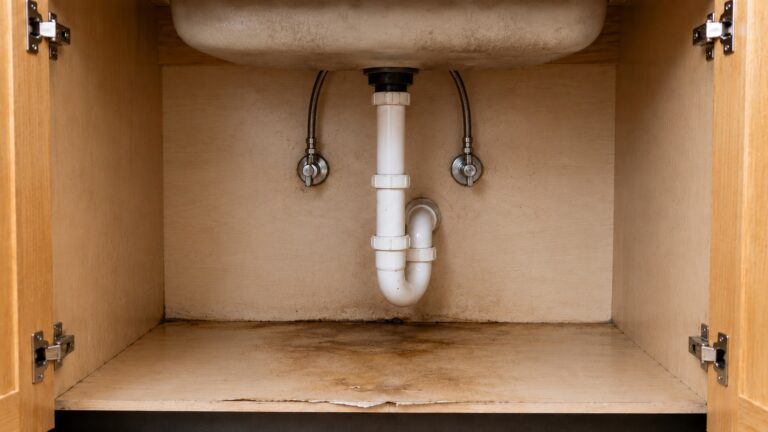
Laundry rooms may also include a floor drain, utility sink, drain pan, condensate line, or nearby water heater. These features can create localized floor damage that looks similar to washer damage. A utility sink trap may leak slowly. A floor drain may back up. A drain pan may overflow or fail to discharge properly.
Check for moisture around:
- Floor drains
- Utility sink legs and cabinet bases
- Drain pans beneath washing machines
- Nearby water heaters or plumbing equipment
- Wall penetrations where plumbing enters the room
- Low points where water would naturally collect
Water often follows gravity and flooring seams. The damaged area may not be directly under the leak. A small amount of water can travel along a seam, collect at a low spot, or wick into trim before the surface dries.
Around dryer vent paths
Dryers do not usually leak water in the same way a washer does, but dryer vent moisture can still affect the laundry room environment. If the dryer vent is restricted, disconnected, or condensing heavily, humid exhaust may dampen nearby walls, trim, or flooring over time.
Pay attention to floor and wall symptoms near the dryer wall outlet, behind the appliance, and along the likely vent route. If the laundry room becomes humid during drying cycles, if lint feels damp, or if the dryer vent path shows condensation, inspect the dryer system separately using the guide on how to inspect dryer vents for moisture problems.
Signs the Subfloor May Be Damaged
Subfloor damage is more serious than surface flooring damage. The visible floor may be vinyl, laminate, tile, or wood, but the subfloor is what supports the room and the appliances. When moisture reaches that layer, the floor may become soft, unstable, uneven, or unable to hold fasteners and finishes properly.
Warning signs that the subfloor may be affected include:
- The floor feels spongy or weak underfoot
- The washer rocks even after leveling attempts
- The floor dips around appliance feet
- Tile moves, cracks, or sounds hollow
- Vinyl or laminate feels soft underneath
- Flooring keeps lifting after being pressed back down
- Musty odor returns after cleaning
- Moisture appears repeatedly after laundry cycles
- Staining appears on the ceiling below the laundry room
- The floor feels worse over time instead of improving
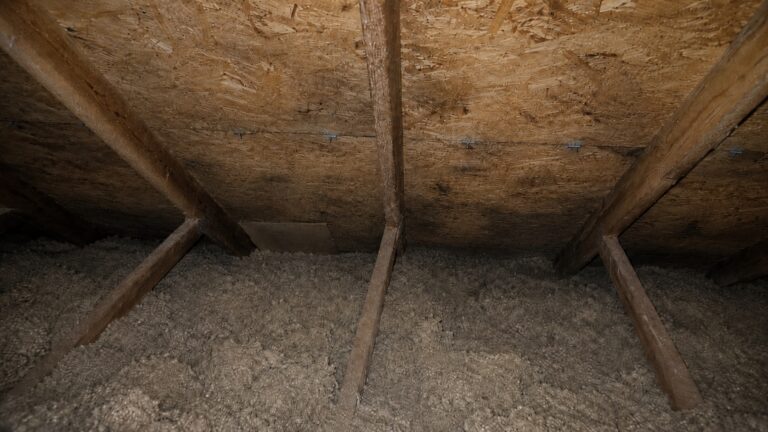
If the laundry room is over a basement or crawl space, inspect from below if it is safe and accessible. Look for darkened subfloor panels, wet insulation, staining, mold-like growth, corrosion on fasteners, or wood that looks swollen or deteriorated. Do not disturb suspected mold or damaged materials unnecessarily. The goal is to identify whether professional evaluation is needed.
Subfloor damage can also affect appliance safety. A washing machine on a weakened floor may vibrate more, shift position, stress hoses, or worsen the damaged area. If the floor feels unstable under the appliance, stop treating the issue as normal washer movement.
For broader structural warning signs beyond the laundry room, compare these symptoms with signs of water damage in subfloors. That article covers subfloor damage throughout the home, while this article keeps the focus on laundry-area floor symptoms.
When Laundry Room Floor Damage Needs Professional Inspection
Not every laundry room floor symptom means the floor has failed, but some signs should not be handled by guesswork. Water damage below flooring can involve plumbing, subfloor materials, mold-supporting conditions, and structural support. The sooner the source is identified, the less likely the damage is to spread.
Professional inspection is strongly recommended when:
- The floor feels soft, spongy, sagging, or unstable
- The washer rocks because the floor is no longer firm
- Water returns after laundry cycles
- Musty odor keeps coming back after cleaning
- Flooring is buckling, lifting, or separating
- Tile is loose or grout is cracking near appliance areas
- Baseboards or lower drywall are swollen or stained
- You suspect moisture under flooring but cannot access the area
- There is staining on the ceiling below the laundry room
- Electrical outlets, cords, or appliances are near active water
If active water is present near electrical outlets, appliance cords, or the washer motor area, stop using the appliances and address safety first. Avoid stepping on visibly sagging or unstable flooring, and do not keep running laundry cycles to “test” the problem if the floor is wet, weak, or visibly deteriorating. If the leak came from the washer and the floor needs recovery steps, use a focused guide on how to dry floors after washing machine leaks instead of guessing from surface dryness alone.
The right professional depends on the likely source and damage. A plumber may be needed for washer, drain, sink, or supply-line leaks. A restoration professional may be needed for trapped moisture and drying. A flooring contractor may be needed for damaged flooring layers. A mold professional may be appropriate if odor or visible growth suggests a broader contamination issue. Long-term control should also connect to a broader plan to find, fix, and prevent moisture problems throughout the home.
FAQ About Water Damage Under Laundry Room Flooring
How can I tell if water is under my laundry room floor?
Common signs include soft flooring, raised seams, musty odors, warped vinyl or laminate, loose tile, cracked grout, swollen baseboards, and dampness that returns after laundry cycles. If the surface looks dry but the floor feels weak, hollow, or uneven, moisture may be trapped below the visible flooring layer.
Why does my laundry room floor feel soft near the washer?
A soft floor near the washer may mean repeated moisture has reached the underlayment or subfloor. Washing machines are heavy and vibrate during spin cycles, so subfloor weakness often becomes more noticeable around appliance feet. A washer that rocks more than it used to may be sitting on a floor that has lost strength from moisture exposure.
Can washer leaks damage the subfloor without visible standing water?
Yes. Slow leaks, drain overflows, hose drips, and small spills can seep under flooring and dry on the surface before the homeowner notices standing water. Over time, trapped moisture can weaken underlayment, swell flooring edges, and damage the subfloor without leaving obvious puddles.
Does a musty smell near the laundry floor mean mold?
A musty smell does not prove mold by itself, but it often means moisture is trapped somewhere. In a laundry room, odor near the floor may come from damp underlayment, wet trim, moisture under appliances, or mold-supporting conditions below flooring. If odor appears with staining, dark spots, or recurring dampness, review the broader causes of why laundry rooms develop mold problems.
Can dryer vent moisture damage laundry room flooring?
Dryer vent moisture can contribute to floor problems if humid exhaust leaks indoors, condenses near the dryer wall, or raises humidity in a small laundry room. It is less common than washer or drain leaks as the main cause of subfloor damage, but it can worsen damp conditions when the dryer vent is restricted, disconnected, or poorly routed.
When should I stop using the washer because of floor damage?
Stop using the washer if the floor feels unstable, water is actively present, the washer is sinking or shifting, electrical areas are wet, or the floor appears to be sagging. Continuing to run a washer on a weakened or wet floor can worsen structural damage and may create safety risks.
Quick Laundry Floor Damage Checklist
- Water damage under laundry room flooring often appears as softness, warping, odor, staining, or floor movement rather than obvious standing water.
- Washer leaks are common, but drains, utility sinks, dryer vent moisture, nearby plumbing, and high humidity can also contribute.
- Vinyl, laminate, wood, and tile all show moisture damage differently, so material-specific clues matter.
- A soft or spongy floor near a washing machine can indicate subfloor damage, not just cosmetic flooring wear.
- Musty odor near the floor may mean moisture is trapped below the surface, especially when cleaning does not solve it.
- Professional inspection is important when the floor feels unstable, damage keeps returning, or moisture may be under the flooring.
What to Do When Laundry Flooring Shows These Signs
If laundry room flooring feels soft, lifts at seams, smells musty, shows swollen trim, or lets the washer move more than it used to, treat the floor as a possible hidden moisture area rather than a cosmetic problem.
Use the pattern of the damage to narrow the source: washer-side symptoms point toward appliance leaks, drain-side symptoms point toward backup or overflow issues, dryer-wall dampness may point toward vent moisture, and widespread softness may suggest trapped moisture below the flooring.
If the floor feels weak, unstable, or progressively worse, do not treat the issue as cosmetic. Moisture under laundry room flooring can affect the subfloor and surrounding materials. A timely inspection can prevent the problem from spreading and help protect the room from recurring moisture, mold, and structural damage.
One Comment
Comments are closed.