
Signs of Wind Damage on Siding
Wind damage on siding often shows up as looseness, separation, shifting, or missing sections. Unlike hail damage, which usually creates impact marks such as dents, cracks, chips, or punctures, wind damage is more about movement. Strong gusts can pull siding away from the wall, open seams, loosen trim, break panel locks, or leave sections rattling during later storms.
This matters because siding is part of the home’s exterior water-shedding system. Siding does not have to fall completely off the house to become a moisture risk. If wind opens gaps, separates overlaps, pulls trim away, or leaves panels loose enough for wind-driven rain to get behind them, moisture can reach the wall system behind the siding.
Some siding movement is normal, especially with vinyl siding that expands and contracts with temperature changes. The concern is sudden change after strong wind: panels that were previously flat now look loose, seams that used to be tight now show gaps, or siding that begins flapping or rattling during storms. Those signs can point to wind-related attachment failure.
After strong winds, the most important thing to check is whether the siding still sits flat, overlaps correctly, and stays secured at corners, trim, windows, doors, and upper wall sections.
Why Wind Damage on Siding Matters
Wind damage on siding matters because siding protects the wall by shedding rain away from the structure. When siding is loose, shifted, or separated, wind-driven rain can be pushed behind the panels instead of draining down the exterior surface.
The risk is not only the visible loose panel. The larger concern is what happens behind it. Water that gets behind siding can reach housewrap, sheathing, trim backing, insulation, framing, or interior wall materials. The homeowner may not see the moisture right away, which is why loose siding after a storm should not be dismissed as a cosmetic issue.
Wind-damaged siding belongs within the broader issue of how exterior walls allow moisture into homes. Exterior walls rely on many layers working together: siding, trim, flashing, housewrap, sheathing, sealants, and drainage gaps. If wind opens the outer layer, the backup layers may be exposed to more water than they were designed to handle.
Not every loose-looking panel means the wall is wet. Some siding can move slightly by design. But gaps, open seams, missing pieces, pulled-away trim, and panels that flap in wind are warning signs because they can change how the wall sheds water. The more widespread the movement is, the more seriously it should be evaluated.
What Wind Damage on Siding Looks Like
Wind damage usually looks like siding that has moved out of place. It may be obvious, such as a missing section, or subtle, such as a seam that has opened near a corner. Homeowners should look for changes that appeared suddenly after a storm rather than old waviness or minor cosmetic aging.
Loose or Pulled-Away Panels
Loose or pulled-away panels are one of the clearest signs of wind damage on siding. A panel may lift from the wall, sag slightly, bow outward, or separate from the panel beside it. In some cases, the siding remains partly attached but no longer sits flat against the wall.
This kind of damage is common where wind can catch an edge. Corners, gable ends, lower starter strips, upper wall sections, and areas near trim are especially vulnerable. Once wind catches a loose edge, repeated gusts can pull the panel farther away or break its locking connection.
A loose panel becomes more serious when you can see a gap behind it or when it moves during wind. Even if the siding is still attached, wind-driven rain may be able to reach behind it. That moisture may not show up indoors immediately, but it can create hidden problems if the area stays wet.
Open Seams and Gaps
Open seams and gaps are important because siding depends on overlaps and joints to shed water. If wind separates a lap joint, pulls a panel away from trim, or opens a corner joint, rain can be pushed behind the wall covering.
Look for gaps where panels meet each other, where siding meets corner posts, and where siding stops against windows, doors, trim boards, utility penetrations, or soffit areas. A small gap can be more serious when it faces the direction of prevailing storms or when it appears after a wind event.
Open seams may not look dramatic from a distance. They may appear as dark lines, uneven joints, shadowed edges, or siding that no longer aligns with nearby panels. If the gap was not there before the storm, it should be documented and watched closely after the next rain.
Missing or Shifted Siding Sections
Missing siding sections are obvious wind damage. If a panel or part of a panel is gone, the wall behind it may be exposed to rain and sunlight. Missing pieces can also expose fasteners, housewrap, sheathing, or open joints that were supposed to remain covered.
Shifted siding sections can be less obvious but still important. A panel may slide, drop, or unlock from the panel below it. Vinyl siding, in particular, can disengage from its lock and remain hanging in place. From a distance, the wall may simply look wavy or uneven.
Any missing or shifted siding should be taken seriously because the wall may no longer drain water correctly. If wind-driven rain reaches the exposed area, moisture can get behind the siding and spread beyond the visible damaged section.
Loose Trim Around Windows, Doors, and Corners
Wind damage often affects trim and transition areas. Corner posts, J-channel, window trim, door trim, fascia-adjacent trim, and utility blocks can loosen during strong gusts. These areas matter because they are natural weak points in the exterior wall surface.
If trim pulls away from a window or door, it can create a gap where water enters behind the siding. If corner trim loosens, it may expose panel ends. If J-channel shifts, water may collect or drain poorly around openings. These problems can be more moisture-relevant than a loose panel in the middle of a wall.
Trim separation after wind should be evaluated carefully because windows, doors, and corners already require good water management. A small gap near a window can allow repeated moisture entry during storms, especially if the wall faces prevailing wind.
Common Signs of Wind-Damaged Siding
The clearest signs of wind-damaged siding involve movement, looseness, open edges, missing pieces, or panels that no longer shed water correctly.
One common sign is siding that rattles or flaps during wind. A panel that moves noticeably during gusts may have lost part of its attachment or locking connection. This is different from slight material movement caused by temperature expansion. Rattling after a storm often means the siding is no longer secured the way it should be.
Pulled-away siding becomes more urgent when the gap exposes backing materials, lets the panel move during later gusts, or appears near a corner, window, door, or upper wall edge.
Gaps around corners and trim are also important. Wind often works at edges first because those are the places where moving air can catch the siding. If corner posts, J-channel, window trim, or door trim look separated, water may have a new path behind the siding.
Broken panel locks are another concern, especially with vinyl siding. Vinyl siding panels are designed to interlock. If wind breaks or disengages that lock, the siding may still look mostly attached but may no longer stay aligned or shed water properly. The panel may sag, shift, or lift during later storms.
Missing siding is the most obvious sign and should be treated as more than cosmetic damage. Even if exposed housewrap appears intact, it should not be left open to repeated weather because the wall has lost part of its normal rain-shedding layer.
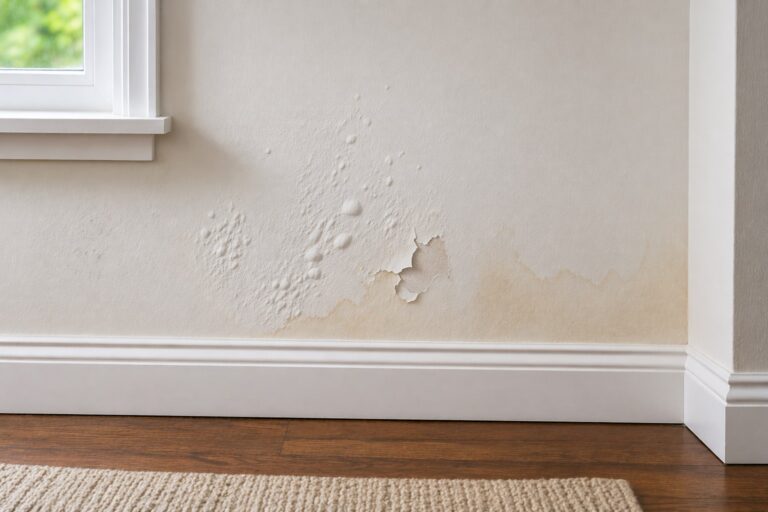
Interior signs can appear later. If wind-damaged siding allows rain behind the exterior covering, the homeowner may eventually notice musty smells, peeling paint, damp drywall, soft trim, or stains near exterior walls. Those symptoms move the issue beyond visible siding damage and into possible wall moisture. In that case, it is important to understand the signs of water damage behind siding.
Where Wind Damage Usually Shows Up First
Wind damage usually appears first where moving air can catch an edge or stress a transition. Siding in the middle of a protected wall may survive the storm while corners, gable ends, trim edges, and upper walls show damage. The pattern often depends on wind direction and the layout of the home.
Storm-facing walls are the first place to check. These walls take the strongest pressure from wind and wind-driven rain. If siding damage is concentrated on one side of the home, that pattern may point to storm exposure rather than general aging.
Corners are another common starting point. Wind can wrap around corners and pull at siding edges, corner posts, and trim. If a corner post loosens, it can expose the ends of siding panels and create openings where water can enter.
Gable ends are especially vulnerable because they are often high, broad, and exposed. Strong wind can push against these areas and pull at siding near the roofline. Damage on gable ends can be difficult to inspect safely from the ground, so obvious movement or missing pieces in these areas usually justify professional evaluation.
Upper wall sections near soffits and roof edges can also be affected. Wind may lift or pull siding where the wall meets roof overhangs, fascia, or trim. These upper areas may be more exposed than lower walls and harder for homeowners to examine closely.
Windows and doors should also be checked. Wind can loosen trim, open gaps in J-channel, or separate siding around openings. Because window and door transitions already need careful drainage, wind damage in these areas can create moisture problems faster than damage in a flat wall field.
Previously repaired or older siding sections deserve extra attention. A panel that was already loose, brittle, cracked, or poorly fastened before the storm may fail first. Wind often exposes weak points that were already present but not yet obvious.
How Wind-Damaged Siding Can Let Moisture In
Wind-damaged siding can let moisture in when panels no longer overlap, lock, or drain correctly. Siding is designed to shed most rain away from the wall. It is not meant to work with open gaps, loose trim, missing pieces, or panels that lift during every storm.
Wind-driven rain is the main concern. Rain that falls straight down may run off the siding without entering. Rain pushed sideways by wind can enter open seams, loose panel edges, corners, and trim gaps. If the siding has pulled away from the wall, water may be driven behind it more easily.
Once water gets behind siding, the next layers are supposed to manage incidental moisture. Housewrap, flashing, drainage gaps, and sheathing details all play a role. But those backup layers can be overwhelmed when wind repeatedly pushes water behind loose siding. If the drainage path is blocked or the wall cannot dry, hidden moisture can develop.
Moisture behind siding may not show up right away. It can remain behind the wall covering, wet the back of panels, collect near trim, or reach sheathing. Over time, the homeowner may notice interior symptoms such as stains, peeling paint, musty odors, or soft trim. If those signs appear after wind damage, the issue may require a more direct effort to detect moisture behind exterior siding.
Open seams near windows, doors, and corners are especially risky. These areas already interrupt the siding surface, and they often depend on proper trim, flashing, and sealant details. If wind pulls those pieces loose, water can reach the wall system at a vulnerable location.
Missing siding also raises moisture risk because the wall is exposed more directly. Even if the exposed housewrap appears to shed water temporarily, it is not a finished exterior surface. Leaving missing siding unrepaired can expose the wall to repeated wetting, ultraviolet light, debris, and further wind damage.
How to Tell Normal Siding Movement From Wind Damage
Some siding movement is normal. Vinyl siding, for example, expands and contracts with temperature changes. It should be able to move slightly when installed correctly. Slight waviness on an older wall does not automatically mean wind damage.
Normal movement is usually gradual, consistent, and not tied to one storm. It may appear as mild waviness, seasonal expansion, or small changes that have been present for a long time. Normal movement usually does not create open seams, missing pieces, flapping panels, or new gaps around trim.
Wind damage is more likely when the change appears suddenly after strong wind. A panel that was flat before the storm but is now pulled away from the wall is not normal expansion. A corner post that opened after the storm is not ordinary siding movement. A panel that rattles loudly or flaps during later gusts should be treated as a warning sign.
Timing matters. If the siding looked normal before the storm and changed afterward, wind damage is more likely. If the same area also faces the direction of the storm, has nearby fallen debris, or matches other storm damage around the home, the connection becomes stronger.
The presence of moisture symptoms also changes the concern level. Slight waviness with no gaps and no moisture signs may be mostly cosmetic. Loose siding plus interior dampness, stains, or musty odors after wind-driven rain suggests a more serious exterior wall moisture problem.
What Homeowners Should Check After Strong Winds
After strong winds, homeowners should begin with a safe ground-level inspection. Do not climb onto ladders or try to reach high siding immediately after a storm. Wet ground, damaged materials, loose trim, and unstable ladders can create unnecessary risk. Many signs of wind-damaged siding can be seen from the ground, especially if you compare exposed walls with sheltered walls.
Start with the storm-facing side of the home. Look for siding that appears loose, shifted, bowed outward, or separated from trim. Check whether the panel lines still look straight and consistent. Sudden unevenness after a storm may indicate that wind has pulled panels out of position.
Next, check corners, gable ends, window trim, door trim, and areas near soffits. Wind often catches these transition points first. Look for open gaps, pulled-away trim, loose corner posts, missing J-channel pieces, or panel ends that are no longer covered. These areas are important because they can allow wind-driven rain behind the siding.
Listen during later winds if you suspect damage. Siding that rattles, taps, or flaps may be loose even if it looks mostly normal from a distance. A moving panel can worsen over time because repeated wind movement stresses the locks and fasteners.
Look for missing pieces on the ground. Broken siding fragments, trim pieces, or fasteners near the home can help identify where damage occurred. If you find pieces but cannot safely see the damaged area, take photos and get help inspecting the wall from a safe position.
Check the interior side of affected walls after rain. Look for musty smells, damp drywall, stains, peeling paint, soft trim, or moisture around windows and baseboards. Interior symptoms do not prove siding is the only problem, but they do show that the issue may have moved beyond surface damage.
For a more complete sequence, use a dedicated guide on how to inspect siding after a storm. This article is focused on wind-specific warning signs, while a full storm inspection should include siding, trim, flashing, windows, corners, and interior moisture checks.
When Wind-Damaged Siding Needs Professional Inspection
Wind-damaged siding needs professional inspection when panels are missing, loose across a large area, high on the wall, open at seams, separated near windows or doors, or connected to signs of moisture indoors. A professional inspection helps determine whether the damage is isolated or whether the wall covering has lost its ability to shed water properly.
Professional inspection is especially important when siding is damaged on upper walls or gable ends. These areas can be difficult and unsafe for homeowners to reach. They are also more exposed to wind pressure, which means damage there may be more extensive than it appears from the ground.
Missing siding should be evaluated quickly. Exposed housewrap, sheathing, or backing materials are not meant to stay uncovered through repeated storms. Even if the wall does not leak immediately, ongoing exposure can increase moisture risk.
Loose trim around windows, doors, and corners also deserves closer inspection. These areas often involve several water-management details working together. If wind pulls trim away or opens a gap at a transition, water may reach the wall behind the siding more easily.
Widespread loose panels are more concerning than one isolated loose piece. If several panels have shifted, unlocked, or begun rattling, the siding system may have attachment problems across that wall. That can make future wind damage and water entry more likely. If the damage is broad, repeated, or difficult to resecure properly, compare it with the signs that storm-damaged siding may need replacement.
Do not simply nail, glue, caulk, or snap loose siding back into place if there may be wet sheathing, torn housewrap, damaged flashing, or trapped debris behind it. The siding may need to be opened carefully enough to confirm that the wall can still drain and dry correctly.
Interior moisture signs raise the urgency. If siding damage is followed by stains, dampness, musty odors, peeling paint, or soft trim inside the home, the exterior wall should be evaluated as part of a broader effort to find, fix, and prevent moisture problems in homes. The goal is not only to reattach siding. It is to confirm that the wall behind it has not become wet.
FAQ
What does wind damage on siding look like?
Wind damage on siding often looks like loose panels, open seams, shifted sections, missing pieces, rattling siding, pulled-away trim, broken panel locks, or gaps at corners and edges. It is usually movement-related rather than impact-related.
Can loose siding let water behind the wall?
Yes. Loose siding can let wind-driven rain behind the wall covering, especially if seams are open, panels have shifted, or trim has separated. Water may reach housewrap, sheathing, insulation, or interior wall materials if the problem continues.
Is siding that rattles in the wind damaged?
Rattling siding may be loose or partly unlocked, especially if the sound started after a storm. Some minor movement can be normal, but panels that flap, tap, or move noticeably during wind should be checked for attachment problems.
How do I know if siding movement is normal or storm damage?
Normal siding movement is usually slight, seasonal, and not connected to one storm. Wind damage is more likely when panels suddenly pull away, seams open, trim separates, pieces go missing, or the siding starts rattling after strong winds.
Can wind damage siding without removing panels?
Yes. Wind can loosen panel locks, pull siding away from trim, open seams, or leave panels partly detached without fully removing them. This can still create moisture risk if wind-driven rain can get behind the siding.
Should loose siding be inspected after a storm?
Loose siding should be inspected if it appeared after strong wind, affects more than one panel, creates visible gaps, occurs near windows or corners, or is followed by moisture signs indoors. High or widespread damage should be inspected professionally.
Is wind damage different from hail damage on siding?
Yes. Wind damage usually shows as movement, separation, loose panels, open seams, or missing sections. Hail damage is usually impact-based, such as dents, chips, cracks, holes, or surface bruising. For impact signs, see signs of hail damage on siding.
Key Takeaways
- Wind damage on siding usually shows up as looseness, movement, gaps, separation, or missing sections.
- Loose siding can become a moisture risk when wind-driven rain gets behind the wall covering.
- Corners, gable ends, upper walls, windows, doors, trim, and storm-facing walls are common damage areas.
- Normal siding movement is usually slight and seasonal; storm damage is often sudden and more visible after high winds.
- Rattling or flapping siding can indicate broken locks, loose fasteners, or attachment failure.
- Open seams and pulled-away trim are more serious because they can create water-entry paths.
- Interior stains, musty odors, damp drywall, or soft trim after wind-driven rain should not be ignored.
- Professional inspection is important when siding is missing, high, widespread, loose near transitions, or connected to moisture symptoms.
Final Check After Wind-Damaged Siding
Wind damage on siding is usually a movement problem: loose panels, open seams, pulled-away trim, broken locks, shifted sections, or missing pieces. The damage becomes more serious when those changes create openings for wind-driven rain, especially near corners, windows, doors, gable ends, and upper wall sections.
After strong winds, inspect safely from the ground, compare exposed and sheltered sides of the home, photograph gaps or missing pieces, listen for rattling panels, and monitor the interior side of affected walls after rain. If siding is missing, loose across a wide area, separated near trim, or followed by dampness, stains, musty odors, or soft trim indoors, the issue should be checked before hidden wall moisture has time to spread.
One Comment
Comments are closed.