When Storm-Damaged Siding Must Be Replaced Instead of Repaired
Storm-damaged siding does not always need to be replaced. Some dents, scuffs, and isolated cracks can be repaired if the siding still sheds water, stays attached, and protects the wall behind it. But some storm damage goes beyond appearance. When siding is cracked through, pulled loose, missing, exposing wall layers, or allowing moisture behind the exterior wall, replacement is often safer than a surface repair.
The key question is not simply, “Does the siding look damaged?” The better question is, “Can this siding still do its job?” Siding should direct rain away from the wall, maintain reliable overlaps and seams, protect vulnerable trim areas, and keep repeated moisture from reaching sheathing, framing, insulation, and interior finishes.
Why Storm-Damaged Siding Is Not Always a Simple Patch
After a storm, it is tempting to focus only on the most visible damage. A cracked panel, a dented section, or a missing piece may look like a small isolated repair. Sometimes it is. But siding works as a system. Panels, boards, trim, corners, flashing, fasteners, and wall penetrations all work together to shed water away from the home.
That is why a small patch is not always enough. If the storm damaged only one replaceable piece and the wall behind it is dry, a localized repair may restore the siding. If the storm loosened an entire section, cracked multiple panels, exposed sheathing, damaged trim, or allowed water behind the siding, the repair decision becomes more serious.
Storm damage can also reveal older weaknesses. Brittle vinyl may crack in several places when one panel is removed. Wood siding may have hidden rot at lower edges. Engineered wood may already be swollen beneath the coating. Fiber cement may have open joints or damaged edges that were vulnerable before the storm. Metal siding may look dented but also have distorted seams that no longer shed water properly.
Because siding is part of the home’s exterior moisture defense, replacement decisions should be made with the whole wall in mind. For broader context on how siding and exterior wall details affect water entry, see how exterior walls allow moisture into homes.
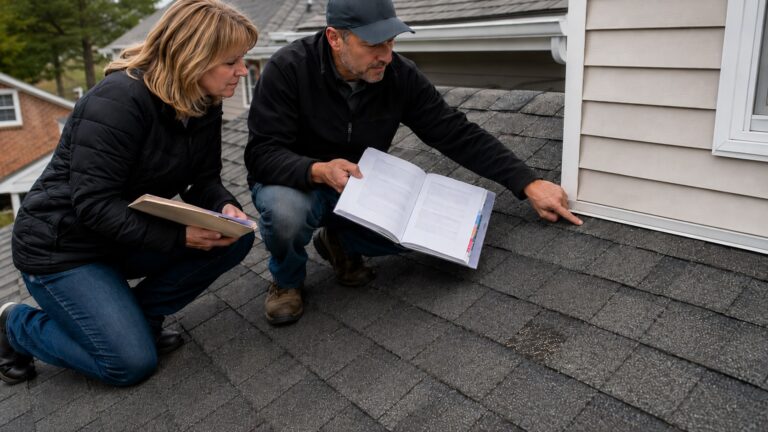
If you have not already checked the full wall after the storm, begin with a basic inspection. A focused guide on how to inspect siding after a storm can help you identify the areas that may require repair, replacement, or professional evaluation.
First Decide Whether the Damage Is Cosmetic or Functional
The first replacement decision is whether the storm damage is cosmetic or functional. Cosmetic damage affects appearance; functional damage affects the siding’s ability to protect the wall.
Cosmetic damage may include shallow dents, scuffs, minor surface marks, or small discoloration that does not crack the siding, expose substrate, open seams, loosen panels, or damage trim. Cosmetic damage may still matter for appearance, property value, or documentation, but it does not always mean the siding has failed.
Functional damage is different. Functional damage creates a water path, weakens attachment, exposes vulnerable material, or prevents the siding from overlapping and draining correctly. This type of damage is more likely to require replacement, especially if it affects more than one piece or appears near a moisture-sensitive detail.
Functional siding damage includes:
- cracks that go through the siding material.
- holes, punctures, or shattered sections.
- missing panels or boards.
- loose siding that moves in the wind.
- open seams, separated laps, or widened joints.
- broken nail hems or failed fastener areas.
- exposed sheathing, housewrap, substrate, or insulation.
- damaged trim around windows, doors, corners, vents, or utilities.
- swollen, soft, rotted, or delaminated siding material.
- interior stains, musty odor, or damp wall symptoms near the damaged area.
A good rule is this: if the storm damage changed how water moves across or behind the siding, treat it as more than a cosmetic problem. That does not automatically mean full replacement, but it does mean the damaged area should be evaluated carefully before a quick patch is used.
Storm Damage That Usually Requires Siding Replacement
Siding replacement becomes more likely when storm damage affects the siding system, not just one small surface mark. If attachment, water shedding, material integrity, or the wall behind the siding is compromised, a small repair becomes less reliable.
Missing siding is one of the clearest replacement indicators. If panels or boards were blown off, broken away, or torn loose, the wall may have been exposed to rain, wind, and debris. Even if the exposed area looks dry now, the siding no longer provides reliable protection until the missing section is replaced correctly.
Large cracks, punctures, and holes also point toward replacement. These defects create direct water-entry paths. A small crack in one panel may be repairable by replacing that individual panel, but widespread cracking across a wall usually means the damage is no longer isolated.
Storm-damaged siding usually needs replacement when you see:
- missing panels or boards.
- multiple cracked, broken, or punctured pieces.
- open seams or separated laps across a wall section.
- loose siding that moves, rattles, or pulls away from the wall.
- broken corners, trim, or transition details.
- exposed sheathing, housewrap, substrate, or insulation.
- water stains, soft trim, or dampness behind the damaged area.
- older siding that breaks during attempted repair.
- widespread hail or wind damage across one or more elevations.
Hail and wind damage can both lead to replacement, but they usually do it in different ways. Hail often causes repeated impact damage, cracks, holes, and surface fractures. Wind often causes lifting, loosening, missing panels, broken nail hems, and attachment failure. If you need to separate those patterns, compare the specific signs of hail damage on siding and wind damage on siding.
Damage near windows, doors, corners, vents, and utility penetrations is especially important. These areas are already moisture-sensitive because they rely on trim, flashing, sealant, and careful overlaps. If storm damage opens a gap at one of these transitions, a surface patch may not restore the water-control details behind the siding.
Replacement is also more likely when the siding is old, brittle, faded, discontinued, or difficult to match. A contractor may be able to replace one damaged section, but surrounding pieces may crack during removal. In that case, what looked like a simple repair can expand because the existing material no longer handles repair work well.
When Localized Siding Repair May Be Enough
Not every storm-damaged area requires replacement of a full wall or full siding system. Localized repair may be enough when the damage is isolated, the siding material is still sound, and the wall behind the damaged area has not been exposed to moisture.
Localized repair is more realistic when:
- only one or two panels or boards are damaged.
- matching replacement material is available.
- the surrounding siding is not brittle, warped, swollen, or deteriorated.
- trim, corners, flashing, and penetrations remain intact.
- there are no signs of water damage behind the siding.
- the damaged area can be replaced without disturbing a larger failing section.
- the siding still overlaps and drains correctly after repair.
For example, one cracked vinyl panel from a branch impact may be repairable if the panel can be replaced, the surrounding pieces are flexible enough to work with, and the wall behind it stayed dry. A single fiber cement board with localized impact damage may also be replaceable if adjacent boards and joints remain sound.
The same is true for some trim pieces. If a small section of trim was damaged but the flashing, sheathing, and siding around it remain intact, a targeted repair may restore the detail. However, if the trim damage opened a water path or exposed wall layers, the repair should include moisture evaluation before the area is closed.
Localized repair becomes less reliable when the damage is part of a larger pattern. If several panels are cracked, multiple seams are open, lower edges are swollen, or moisture symptoms appear indoors, replacing one visible piece may only hide the larger problem. In those cases, storm damage may be connected to hidden siding damage that leads to moisture problems.
The goal is not to replace siding unnecessarily. The goal is to avoid under-repairing damage that has already compromised the wall’s protection. A good repair should restore the siding’s function, not just cover the most visible mark. For a broader non-storm framework, compare this with the general guide on how to decide whether to repair or replace siding.
Material-Specific Replacement Indicators
The replacement decision depends partly on the siding material. A dent in metal siding, a crack in vinyl siding, and swelling in engineered wood siding do not mean the same thing after a storm. Each material has its own failure patterns, but the replacement question stays the same: can the siding still shed water and protect the wall?
Vinyl Siding
Vinyl siding often needs replacement when storm damage causes cracks, holes, shattered sections, broken nail hems, or panels that have blown loose. Vinyl does not absorb water like wood, but broken or displaced vinyl can let rain reach the wall behind it.
Replacement becomes more likely if the vinyl is brittle. Older vinyl siding can crack when a damaged panel is removed, making a small repair difficult. If several panels break during repair attempts or matching panels are unavailable, replacement of a larger section may be more practical than patching one damaged piece at a time.
Fiber Cement Siding
Fiber cement siding may need replacement when boards are cracked through, corners are broken, edges are chipped, or joints have opened after impact. A small surface mark may not be serious, but damage that exposes edges or allows water into joints should be evaluated carefully.
Replacement is more likely when multiple boards are cracked, when lower edges show moisture damage, or when impact damage affects the board’s strength. If the surrounding trim, flashing, or caulk joints also failed, the repair may need to address more than the damaged board.
Wood Siding
Wood siding may need replacement when boards are split, swollen, soft, rotted, warped, or pulling away from the wall. Storm damage that breaks paint or exposes end grain can let water soak into the wood, especially if the damaged area is repeatedly wet.
Localized wood siding repair may be possible when damage is limited and the surrounding material is dry and solid. Replacement becomes more likely when the board has lost structural integrity, when the backside is wet, or when decay has spread into trim or sheathing.
Engineered Wood Siding
Engineered wood siding should be evaluated carefully after storm damage because exposed substrate and swollen edges can worsen with repeated wetting. Replacement is more likely when panels show delamination, edge swelling, coating failure, soft spots, or damage near lower wall sections.
If the storm only caused a minor surface mark and the coating remains intact, replacement may not be necessary. But once water has reached the inner material, the panel may not return to its original shape or strength.
Metal or Aluminum Siding
Metal and aluminum siding may not need replacement for every dent. Shallow dents can be cosmetic if they do not affect seams, fasteners, trim, or overlap. Replacement becomes more likely when panels are punctured, deeply creased, distorted at seams, pulled loose, or bent away from the wall.
A crease is more serious than a shallow dent because it can change how the panel sits against adjacent pieces. If the storm damage creates a gap, opens an edge, or prevents the siding from shedding water correctly, replacement may be needed even if the material itself does not absorb moisture.
How Moisture Risk Changes the Replacement Decision
Moisture risk is one of the biggest reasons storm-damaged siding may need replacement instead of a simple patch. If the siding damage is only cosmetic, repair may be optional. If water has reached the wall behind the siding, the decision becomes more urgent.
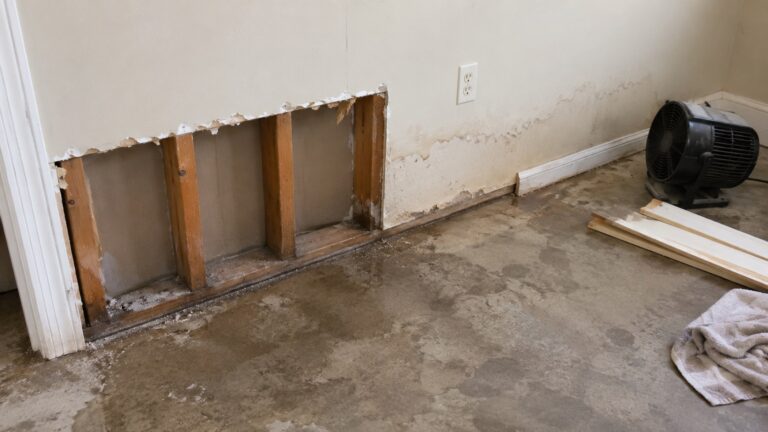
Water behind siding can affect the water-resistive barrier, sheathing, trim, framing, insulation, and interior drywall. The homeowner may not see immediate indoor leakage. Moisture may first appear as staining, musty odor, soft trim, bubbling paint, or dampness near a nearby interior wall.
If you see exterior storm damage and interior symptoms in the same area, do not treat the siding as an appearance-only problem. Review the signs of water damage behind siding and consider whether the wall needs to be evaluated before new siding is installed.
The most important rule is simple: do not cover wet or damaged wall materials with new siding without understanding what is behind the damaged area. New siding may hide the problem, but it will not dry wet sheathing, fix failed flashing, restore damaged trim, or remove trapped moisture. If electrical fixtures, soaked insulation, structural softness, or widespread mold-like growth are present, get the area evaluated before closing the wall.
Moisture risk can push the decision toward replacement when:
- storm damage exposed sheathing, housewrap, or insulation.
- the siding stayed open during heavy rain.
- trim or lower siding is soft, swollen, or deteriorated.
- interior stains or odors appeared after the storm.
- the same siding area keeps getting damp after rain.
- multiple siding defects are creating repeated water paths.
- older repairs have failed and allowed moisture behind the wall.
If moisture keeps returning behind siding even after small repairs, the issue may involve more than one damaged panel. There may be a larger wall assembly problem, poor drainage, failed trim details, or siding that no longer manages water correctly. In that situation, the decision may connect to broader persistent moisture problems behind siding.
Replacement should restore function. That means the wall should be dry, damaged materials should be addressed, and the siding system should shed water correctly after the work is complete.
Partial Replacement vs Full Siding Replacement
Storm damage does not always mean the entire home needs new siding. In many cases, only one section, one elevation, or a group of damaged panels needs replacement. The right scope depends on how widespread the damage is, whether matching material is available, and whether the existing siding can still perform reliably.
Partial replacement may make sense when the damage is limited to one area, the surrounding siding is sound, and the replacement material can be matched closely enough. This is common when a branch damages one wall section, wind pulls loose a few panels, or hail affects one exposed side more than the rest of the house.
Full replacement becomes more likely when storm damage is widespread, the siding is old or brittle, matching material is unavailable, or the existing siding system has multiple failure points. If several walls have cracked panels, loose attachment, open seams, or exposed edges, repairing one piece at a time may not restore reliable protection.
Matching is a practical issue. Older siding may have faded, and the exact profile, color, texture, or exposure width may no longer be manufactured. A technically correct repair can still look obviously mismatched. This does not always require full replacement, but it may influence whether one elevation or a larger section is replaced for a consistent result.
Moisture conditions also affect the scope. If water has reached the wall behind the siding, the contractor may need to remove enough siding to evaluate the sheathing, flashing, trim, and water-resistive barrier. In some cases, the visible damaged area is smaller than the area that needs to be opened and repaired.
When to Call a Siding Contractor
A siding contractor should be involved when the damage affects more than appearance, the wall may be exposed, or the replacement scope is unclear. Homeowners can document obvious damage, but replacement decisions often require checking attachment, damage spread, and possible moisture entry.
Call a contractor when you see:
- missing siding panels or boards.
- large cracks, holes, punctures, or shattered sections.
- siding that moves, rattles, or pulls away from the wall.
- multiple damaged areas on one or more elevations.
- open seams around windows, doors, corners, vents, or utility penetrations.
- exposed housewrap, sheathing, insulation, or substrate.
- soft, swollen, rotted, or delaminated siding material.
- interior dampness, stains, or musty odor near the damaged wall.
- older siding that may break during repair.
- damage that may require professional estimates or insurance documentation.
A contractor can determine whether individual pieces can be replaced, whether a larger section must be removed, and whether the wall behind the siding needs drying or repair before new siding is installed. This matters because siding replacement should not simply cover hidden moisture or damaged wall materials.
What to Do Before Replacing Storm-Damaged Siding
Before replacing storm-damaged siding, document the damage and check for signs that water entered behind the wall. Take wide photos of each affected side of the house, then take close-ups of cracks, missing panels, dents, open seams, exposed layers, and damaged trim. Also photograph interior stains, soft trim, bubbling paint, or damp areas that line up with the exterior damage.
Do not rush to cover the damaged area without checking whether the wall behind it is dry. If the siding was open during heavy rain, ask whether the contractor will check the sheathing, housewrap, trim edges, and moisture-prone seams before closing the wall. If moisture is trapped behind siding, new siding may hide the symptoms while the underlying problem continues. Any wet sheathing, damaged trim, failed flashing, or damp insulation should be addressed before the exterior is closed again.
Ask the contractor to explain what will be replaced and why. The scope should match the problem. A small isolated repair should not automatically become full replacement, but a widespread functional failure should not be treated as a cosmetic patch.
Before approving replacement, clarify:
- whether the damage is cosmetic or functional.
- whether the wall behind the siding was exposed to water.
- whether matching siding is available.
- whether trim, flashing, corners, and penetrations are included.
- whether damaged sheathing or moisture-affected materials need repair.
- whether replacement is limited to one section, one elevation, or the full siding system.
Storm damage should be handled as part of a larger moisture-control plan, not only an exterior appearance repair. If your home has repeated siding, wall, or water-entry problems, use a broader approach to find, fix, and prevent moisture problems before they become recurring damage.
FAQ About Storm-Damaged Siding
Does all storm-damaged siding need to be replaced?
No. Minor scuffs, shallow dents, or isolated cosmetic damage may not require replacement if the siding still sheds water, remains attached, and does not expose vulnerable materials. Replacement becomes more likely when damage affects water protection, attachment, or the wall behind the siding.
Can hail-dented siding be repaired instead of replaced?
Sometimes. Shallow dents may be cosmetic, especially on metal siding. Replacement is more likely when hail causes cracks, holes, broken edges, exposed substrate, distorted seams, or widespread damage across an elevation.
Should loose siding be replaced after wind damage?
Loose siding may be resecured if the panels are intact and the attachment system is still sound. Replacement becomes more likely when panels are cracked, nail hems are broken, the siding repeatedly pulls loose, or a larger section has lost attachment.
Can one section of siding be replaced after storm damage?
Yes. One section or one wall elevation can often be replaced when damage is localized and matching material is available. Partial replacement becomes harder when the siding is faded, discontinued, brittle, or damaged across multiple areas.
Does siding always need replacement if water got behind it?
Possibly, but the wall behind the siding should be evaluated first. New siding should not be installed over wet sheathing, damaged trim, damp insulation, or failed water-control details. Replacement should solve the moisture path, not hide it.
Should I replace siding before checking the wall behind it?
If moisture is suspected, no. The wall should be inspected or evaluated before it is closed up. Covering hidden moisture with new siding can trap damage and allow stains, rot, or mold-supporting conditions to continue behind the finished exterior.
Storm-Damaged Siding Replacement Checklist
- Minor cosmetic storm damage may not require siding replacement.
- Replacement is more likely when siding is cracked, missing, loose, punctured, exposed, swollen, or no longer shedding water correctly.
- Cosmetic dents are different from functional damage that opens a moisture path.
- Moisture behind siding can change a small repair into a larger replacement or wall-repair decision.
- Partial replacement may work when damage is isolated and matching material is available.
- Full replacement is more likely when damage is widespread, materials are brittle, or the siding system can no longer protect the wall.
- Wet or damaged wall materials should be evaluated before new siding is installed.
Final Decision: Replace Siding When It Can No Longer Protect the Wall
Storm-damaged siding must be replaced when it can no longer protect the wall reliably. The most important signs are cracks, holes, missing panels, failed attachment, open seams, exposed wall layers, moisture symptoms, and material deterioration.
A small localized repair may be enough when storm damage is isolated and the wall behind the siding is dry. Replacement becomes the better decision when the siding system is compromised, the wall has been exposed to repeated wetting, or the repair cannot restore reliable water protection before the next storm arrives.