How to Prevent Mold in Laundry Rooms
Preventing mold in laundry rooms starts with controlling moisture before it has time to soak into walls, flooring, trim, storage items, or hidden spaces behind appliances. Laundry rooms naturally handle water, damp clothing, dryer exhaust, lint, drains, and humidity, so the goal is not to make the room perfectly dry at every moment. The goal is to keep moisture from lingering long enough to support mold growth.
The main prevention targets are washer leaks, dryer vent moisture, poor ventilation, high humidity, damp flooring, baseboard moisture, and wet storage habits. If a laundry room has had mold before, prevention is not just about wiping surfaces. It means finding why the area stayed damp, correcting that condition, and helping the room dry quickly after use.
Laundry-room mold prevention is one part of a larger strategy to prevent recurring moisture damage. If you are still unsure why mold keeps forming, review the guide on why laundry rooms develop mold problems before building a prevention routine.
Why Laundry Room Mold Prevention Starts With Moisture Control
Mold prevention in a laundry room is mainly moisture control. Cleaning can remove dirt, lint, and some surface residue, but cleaning alone does not stop mold if the room continues to get damp. The same wall, baseboard, floor edge, or appliance area may develop problems again if water or humidity keeps returning.
Laundry rooms are high-risk because they combine several moisture sources in a small space. A washing machine may leak only during certain cycles, a dryer vent may release humid air behind the appliance, a utility sink may drip slowly, and flooring may trap water underneath the surface. If the room has poor airflow, even small moisture events can dry too slowly.
The strongest prevention approach is to control three things:
- Water sources: washer hoses, drain lines, utility sinks, floor drains, and leaks.
- Humidity sources: damp clothing, dryer exhaust, wet towels, and high indoor humidity.
- Drying conditions: airflow, ventilation, appliance spacing, and storage habits.
If mold signs are already present, prevention should wait until the moisture source and visible condition are understood. The guide to signs of mold in laundry rooms can help separate normal lint or dirt from warning signs that need closer inspection.
Keep Washer Moisture Under Control
The washing machine is often the biggest water source in the laundry room. Preventing mold around the washer depends on stopping small leaks, reducing standing moisture, helping the machine dry between cycles, and keeping the area behind the appliance inspectable.
Many washer-related moisture problems begin behind the machine where they are hard to see. A hose connection may drip slowly. A drain hose may splash during discharge. A front-load gasket may stay wet. A small amount of water may run under the appliance and dry on the surface while dampness remains under flooring or trim.
Check washer hoses and connections
Inspect washer supply hoses regularly. Look for cracking, bulging, corrosion, loose connections, dampness, or water stains around the wall valves and hose ends. If hoses are old, damaged, or visibly worn, they should be replaced before they fail. If the washer sits in a finished laundry room or above living space, make hose checks, wall-valve checks, and quick floor checks part of the normal maintenance routine rather than waiting for visible water.
Also check the wall behind the washer if it is safely accessible. Watch for staining, swollen trim, damp drywall, or musty odor. These signs may mean water has already been reaching the wall or floor. If you see suspicious moisture near the machine, compare it with signs of water damage around washing machines.
A quick visual check after heavy laundry days can prevent a small leak from becoming a hidden mold source. Pay special attention after moving the washer, replacing hoses, cleaning behind the appliance, or noticing stronger vibration during spin cycles.
Prevent drain and standpipe moisture
Washer drains can create moisture even when the supply hoses are fine. A loose drain hose, slow standpipe, clogged drain, or oversudsing problem can release water behind the washer during drain cycles. Because this may happen only briefly, the area can appear dry later while hidden materials remain damp.
To reduce drain-related mold risk, keep the drain hose properly positioned, avoid overloading the washer, use the correct amount of detergent, and watch for water or foam near the standpipe after drain cycles. If water appears only while the washer drains, the issue should be investigated instead of treated as a random spill.
When moisture appears repeatedly behind or under the washer but the source is not obvious, the next step is to detect hidden washing machine leaks. Prevention depends on finding the source, not just drying the visible floor.
Help the washer dry between loads
Washer drums, lids, doors, dispensers, and gaskets can stay damp after use. That does not always create room mold, but it can contribute to musty odor and local moisture if the machine stays closed and wet for long periods.
When it is safe and practical, leave the washer door or lid open after use so the drum can dry. For front-load washers, wipe the door gasket and check the folds where moisture, lint, hair, and detergent residue can collect. Remove wet clothing promptly instead of leaving it in the machine for hours.
Use the correct detergent type and amount for the machine. Too much detergent can leave residue that holds odor and moisture. Residue is not the same as mold by itself, but it can make the washer area harder to keep dry and clean.
Prevent Dryer Vent Moisture Problems
Dryer vent moisture is another important part of laundry room mold prevention. A dryer removes moisture from wet clothing and sends warm, humid air outdoors. If the vent is loose, crushed, blocked, or condensing, some of that moisture may stay in the laundry room or collect inside nearby materials.
This does not always look like a plumbing leak. Dryer-related moisture may appear as damp lint, musty odor behind the dryer, condensation on ductwork, weak exterior airflow, or a humid laundry room after drying cycles. Those signs belong in a prevention routine because nearby walls, floors, trim, and storage areas may dry too slowly.
Keep dryer exhaust moving outdoors
The dryer vent should be firmly connected and able to move air outside without unnecessary restriction. Check behind the dryer occasionally to make sure the transition duct is not crushed, kinked, loose, or disconnected. A dryer pushed too close to the wall can flatten the duct and reduce airflow.
Also check the exterior vent outlet. The flap should open when the dryer runs, and warm air should exit with noticeable force. Keep lint, vegetation, debris, snow, and pest nesting material away from the vent hood. If the exterior outlet is blocked, humid air can slow down or back up inside the vent route.
Clean the lint screen before each load. This helps airflow, but it does not replace checking the vent system itself. Lint can still collect in the transition duct, wall duct, elbows, and exterior hood. If the dryer takes longer than usual, the laundry room feels humid, or damp lint appears behind the dryer, use the guide on how to inspect dryer vents for moisture problems.
Watch for damp lint and long drying times
Damp lint is a warning sign because lint should usually be dry and loose. If lint behind the dryer, near the vent connection, or at the exterior vent feels wet or clumpy, moisture may be lingering inside the vent system because airflow is restricted or warm exhaust is cooling before it leaves the home.
Long drying times can also point to vent problems. Running longer cycles may dry the clothes eventually, but it does not solve moisture trapped inside the duct or room. Do not treat dryer vent maintenance only as a fire-safety issue; restricted airflow can also increase condensation risk and make nearby laundry-room surfaces dry more slowly.
Improve Laundry Room Ventilation
Good ventilation helps the laundry room dry after moisture is added. It does not replace leak repair or dryer vent repair, but it reduces the time that walls, floors, trim, appliances, and stored items stay damp after normal use.
Small laundry rooms, laundry closets, basement laundry areas, and interior utility rooms are more likely to have poor airflow. Appliances may be pushed tightly against walls, doors may stay closed, and storage may block corners. In those conditions, even normal laundry moisture can linger.
To improve ventilation:
- Leave the laundry room door open after washing or drying when practical.
- Use an exhaust fan if the room has one.
- Keep appliance areas from being packed tightly with storage.
- Leave space behind and beside appliances when possible.
- Move baskets, boxes, and shelves away from damp walls.
- Avoid closing a laundry closet immediately after heavy use.
- Use a small fan only after active leaks, standing water, and electrical hazards are corrected.
Airflow behind appliances matters as much as airflow in the open room. Mold often starts behind the washer or dryer because those areas receive the least air movement. If you cannot leave much space, make those hidden areas part of a routine inspection so moisture does not remain unnoticed.
Ventilation is most effective when it works with source control. If a washer is leaking or a dryer vent is disconnected, opening a door may reduce humidity but will not solve the underlying problem. The source still needs to be corrected. For a moisture-first approach that goes beyond mold prevention, see the guide on how to prevent moisture build-up in laundry rooms.
Control Humidity in the Laundry Area
Laundry rooms can become humidity pockets, especially when they are located in basements, garages, closets, or interior rooms without good air exchange. Humidity may rise during laundry cycles and stay elevated if the room cannot dry quickly.
High humidity makes mold prevention harder because damp materials dry slowly. Water near a baseboard, under a washer, or around a sink can linger longer in a humid room, and lint, towels, cardboard, and fabric storage can hold moisture against nearby surfaces.
A hygrometer can help you understand whether the room is drying properly. Check humidity before laundry use, during cycles, and after the room has had time to air out. The goal is to identify patterns, not to panic over one reading. If you are not sure how to check the room accurately, use the guide on how to test indoor humidity levels.
To reduce humidity in the laundry area:
- Remove wet clothes from the washer promptly.
- Avoid drying clothes indoors without ventilation.
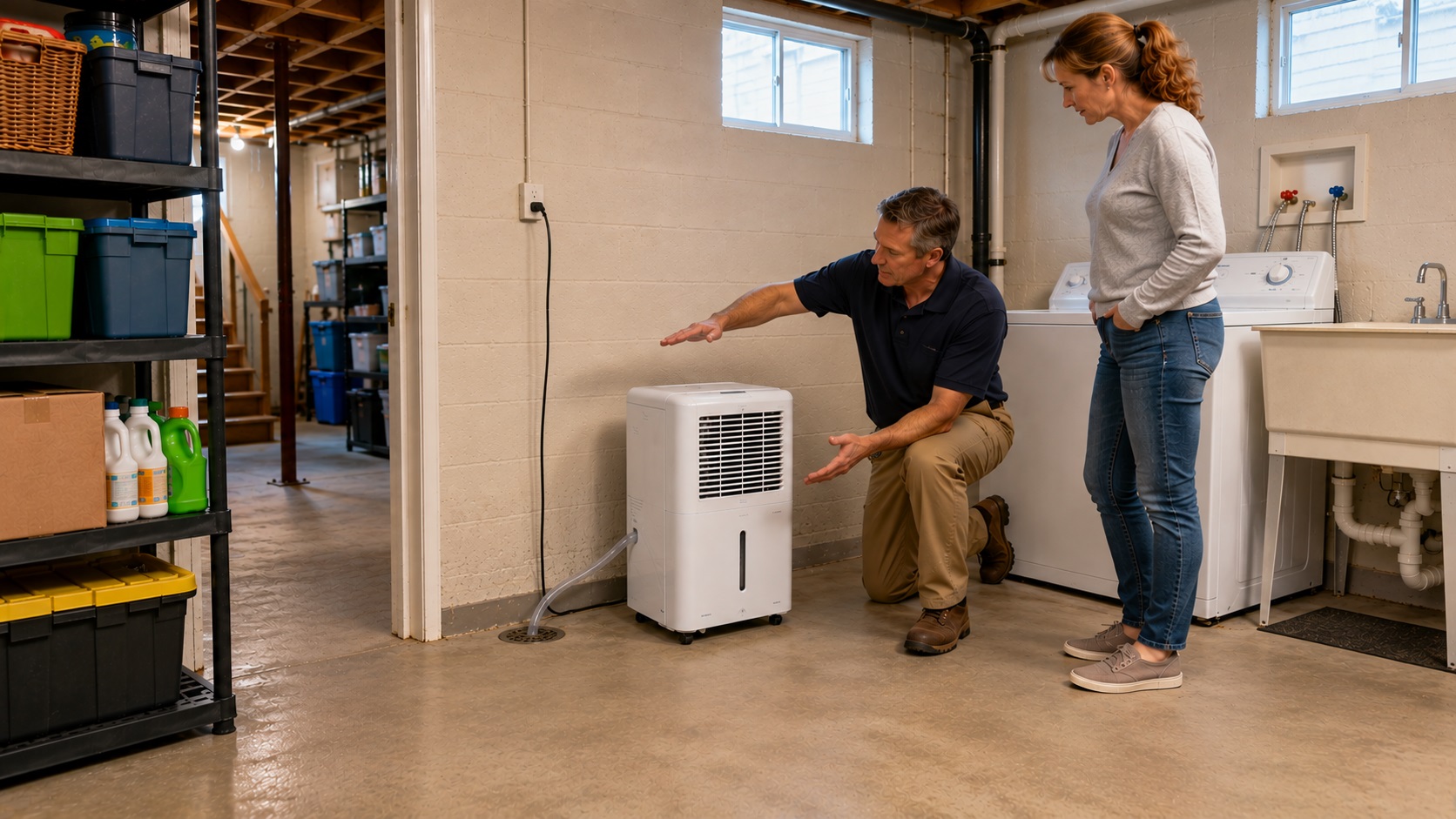
- Use a dehumidifier in damp laundry rooms when needed.
- Keep the dryer vent working properly.
- Open the room after heavy laundry use when practical.
- Fix leaks and drain problems quickly.
- Monitor basement or garage laundry rooms more closely during humid seasons.
If several rooms in the home feel damp, the laundry room may not be the only source. Whole-house humidity can make laundry-room mold prevention harder, especially in basements or poorly ventilated homes. In that case, broader steps to reduce humidity in a house may be needed along with laundry-room habits.
Prevent Moisture Around Floors, Baseboards, and Trim
Laundry room mold often starts low in the room because water moves downward and collects around floor edges, baseboards, appliance feet, and trim. Even when the visible surface dries, moisture may remain under flooring, behind shoe molding, or inside lower wall materials.
Preventing mold in these areas means treating small water events seriously. A minor washer drip, utility sink splash, floor drain backup, or wet towel left on the floor can become more important if the moisture reaches seams, edges, or absorbent materials.
Use these habits to reduce floor and trim moisture:
- Wipe up spills immediately instead of letting them air dry slowly.
- Check behind the washer after unusual vibration, hose movement, or heavy laundry days.
- Avoid placing absorbent rugs or mats where they trap moisture under appliances.
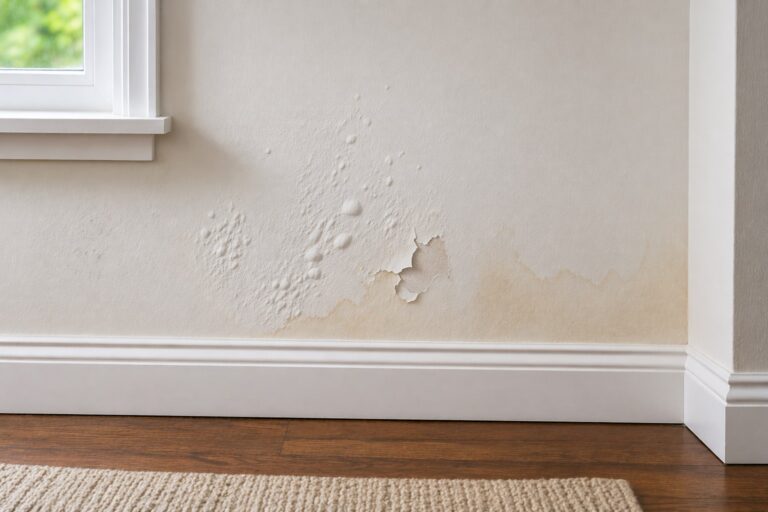
- Inspect baseboards for swelling, staining, or separation from the wall.
- Keep floor drains clear of lint, debris, and stored items.
- Do not cover recurring damp spots with mats, baskets, or storage bins.
- Look for raised seams, soft areas, or musty odor near appliance footprints.
Floor moisture deserves extra attention because it can hide below the surface. Vinyl, laminate, tile, and underlayment may trap moisture even after the top layer looks dry. If the floor feels soft, smells musty, or shows raised seams, review the guide to water damage under laundry room flooring before assuming the issue is only surface mold.
Baseboards and trim should also stay visible when possible. If baskets, boxes, or shelving hide the lower wall for months, moisture can collect unnoticed. Move stored items occasionally and inspect the wall-floor joint, especially behind or beside appliances.
Store Laundry Supplies Without Trapping Moisture
Storage habits can either help a laundry room dry or make mold prevention harder. Laundry rooms often become storage spaces for detergent, towels, cleaning supplies, cardboard boxes, pet supplies, paper goods, rags, and seasonal items. These materials can block airflow, absorb moisture, and hide early warning signs.
Avoid storing cardboard directly on the laundry room floor, especially near appliances, drains, exterior walls, or utility sinks. Cardboard absorbs moisture and can hold it against flooring or walls. Fabric bins, towels, and rugs can create similar problems if they stay damp or sit tightly against surfaces with poor airflow.
Better storage habits include:
- Keep storage bins slightly away from walls so air can circulate.
- Use shelves that allow visibility around baseboards and floor edges.
- Do not store damp towels, rags, or clothing in closed baskets for long periods.
- Avoid leaving wet cleaning tools in closed cabinets.
- Move baskets and supplies occasionally to inspect behind them.
- Keep detergent bottles and cleaners from hiding sink or hose leaks.
- Use water-resistant storage where dampness is likely, but still allow airflow.
Good storage does not mean the room has to be empty. It means damp materials should not sit against hidden surfaces, and stored items should not prevent you from seeing leaks, stains, swollen trim, or mold warning signs.
Create a Simple Laundry Room Mold Prevention Routine
The best laundry room mold prevention routine is simple enough to repeat. It should focus on drying the room after use, keeping appliance moisture visible, and catching small problems before they become hidden damage.
After each load
- Remove wet clothes from the washer promptly.
- Leave the washer lid or door open when safe and practical.
- Wipe obvious moisture from front-load washer gaskets.
- Clean the dryer lint screen.
- Check for water near the washer, drain area, or utility sink.
- Leave the laundry room door open briefly if the room feels humid.
Weekly
- Look behind or beside appliances where visible.
- Check for musty odor near the floor and baseboards.
- Move damp towels, baskets, or stored items away from walls.
- Wipe detergent residue, lint, and dust from damp-prone areas.
- Check whether the room dries normally after laundry use.
Monthly
- Inspect washer hoses, wall valves, and visible connections.
- Check the drain hose and standpipe area.
- Look at the dryer vent connection behind the dryer if accessible.
- Check exterior dryer vent airflow and lint buildup.
- Inspect baseboards, flooring seams, and lower walls.
- Check humidity patterns if the room often feels damp.
After any leak
- Stop the water source before focusing on cleanup.
- Dry visible water quickly.
- Check under and around appliances.
- Inspect floor edges, baseboards, and nearby walls.
- Monitor the area for musty odor, soft flooring, or recurring dampness.
- Do not assume the subfloor is dry just because the surface looks dry.
After a leak or previous mold problem, continue monitoring the area. A small amount of returning odor or recurring staining can mean moisture is still present. Long-term prevention works best when it is part of a broader plan to find, fix, and prevent moisture problems instead of only reacting after mold appears.
When Prevention Requires Professional Repair
Prevention habits work only when the underlying moisture sources are controllable. If a leak, vent problem, drainage issue, or hidden moisture condition keeps returning, routine cleaning and ventilation will not be enough.
Professional repair or inspection may be needed when:
- Mold keeps returning in the same area.
- The washer leaks during fill, drain, or spin cycles.
- The dryer vent has weak airflow, damp lint, or recurring condensation.
- The laundry room floor feels soft, raised, or unstable.
- Baseboards or lower drywall are swollen or stained.
- Musty odor stays strong after cleaning and airing out the room.
- Water appears near electrical outlets, appliance cords, or controls.
- A utility sink, floor drain, or wall connection may be leaking.
- The source is hidden behind appliances, under flooring, or inside a wall.
If active water is near electricity, stop using the affected area and address safety first. Do not unplug or move an appliance while standing in water or touching wet surfaces. If the floor is soft under the washer, do not keep running heavy spin cycles while hoping the problem dries on its own. Mold prevention depends on correcting the moisture source and protecting the materials around it.
A plumber may be needed for washer, sink, drain, or supply-line issues. A dryer vent professional may be needed for restricted or disconnected venting. A restoration or flooring professional may be needed when moisture is trapped below flooring. A mold professional may be appropriate when mold is widespread, recurring, or hidden inside porous materials.
FAQ About Preventing Mold in Laundry Rooms
What is the best way to prevent mold in a laundry room?
The best way to prevent mold in a laundry room is to control moisture at the source. Keep washer hoses and drains from leaking, make sure the dryer vent exhausts outdoors properly, improve airflow, remove wet clothes promptly, monitor humidity, and check floors, baseboards, and appliance areas for recurring dampness.
Should I leave the washing machine door open to prevent mold?
Leaving the washing machine door or lid open after use can help the drum dry, especially with front-load washers. This should be done only when it is safe and practical for your household. If you have children or pets, follow the appliance manufacturer’s safety guidance and avoid creating access hazards.
Can dryer vent problems cause laundry room mold?
Yes. Dryer vent problems can contribute to laundry room mold when humid exhaust leaks indoors, airflow is restricted, damp lint collects behind the dryer, or condensation forms inside the vent route. If the room feels humid after drying cycles or smells musty near the dryer, inspect the vent system.
How do I prevent mold behind the washer and dryer?
Keep the areas behind the washer and dryer dry, visible, and ventilated. Check washer hoses, drain lines, dryer vent connections, baseboards, and flooring edges regularly. Avoid pushing appliances so tightly against the wall that ducts are crushed or airflow is blocked. Clean lint, wipe moisture, and investigate any recurring odor or staining.
Does a laundry room need ventilation to prevent mold?
A laundry room does not always need a window, but it does need a way to dry after moisture is added. Ventilation may come from an exhaust fan, an open door, air movement, a properly working dryer vent, a dehumidifier, or general home airflow. Without enough drying, moisture behind appliances, near baseboards, or under storage can linger long enough to support mold growth.
What should I do if mold keeps coming back in the laundry room?
If mold keeps coming back, look for the moisture source before cleaning again. Recurring mold may point to a washer leak, drain issue, dryer vent problem, high humidity, damp flooring, wet baseboards, or poor airflow behind appliances. If the source is hidden or the growth keeps returning, professional inspection may be needed.
Laundry Room Mold Prevention Checklist
- Preventing mold in laundry rooms starts with moisture control, not just surface cleaning.
- Washer hoses, drain lines, gaskets, and appliance areas should be checked regularly for leaks and dampness.
- Dryer vents must move humid air outdoors; restricted vents, damp lint, and long drying times can contribute to mold risk.
- Ventilation helps laundry rooms dry after use, especially in small rooms, closets, basements, and interior utility areas.
- Humidity should be monitored if the room feels damp, smells musty, or dries slowly after laundry cycles.
- Floors, baseboards, trim, and storage areas should stay visible enough to inspect for moisture.
- If mold keeps returning, the moisture source has not been fully corrected.
Keeping Laundry Room Mold From Coming Back
Laundry rooms do not need to be perfectly dry every second, but they do need to dry quickly after moisture is added. The most effective prevention habits are simple: check washer hoses and drains, keep dryer exhaust moving outdoors, remove wet clothes quickly, improve airflow, monitor humidity, and inspect hidden areas regularly.
If prevention habits do not stop musty odor or recurring mold-like spots, the problem likely needs deeper inspection. Hidden washer leaks, dryer vent restrictions, trapped floor moisture, drain problems, or damaged materials may require professional repair before the laundry room can stay dry long term.