
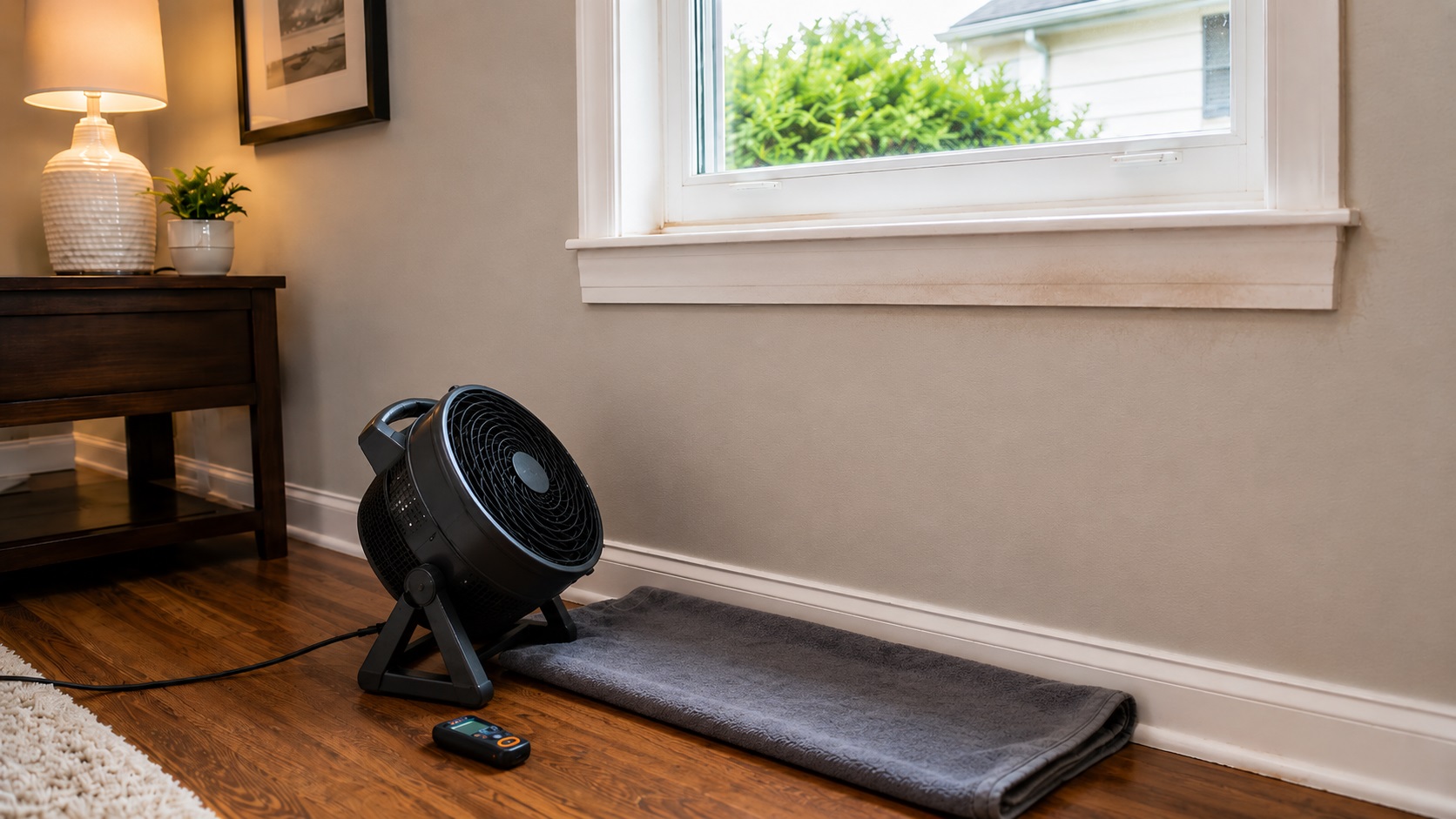
How to Dry Window Areas After Moisture Exposure
To dry window areas after moisture exposure, remove visible water first, direct steady airflow across the frame, trim, sill, and nearby wall edges, and keep checking corners, seams, and painted joints until the materials stay dry. Moisture around windows may come from condensation, wind-driven rain, minor leaks, or sudden weather changes, but the drying process should start before water has time to soak into wood trim, drywall edges, or sill joints.
This guide explains safe drying methods for window frames, trim, sills, and nearby wall materials. If you are not sure how far the dampness has spread, first detect moisture around window frames so you can identify all affected surfaces before beginning the drying process.
This article supports the broader guide to how windows and doors cause hidden moisture problems, especially when moisture has already reached frames, trim, sills, or nearby wall materials and the immediate goal is drying rather than repair.
Why Prompt Drying Matters
Drying window areas quickly after moisture exposure is one of the most important steps in preventing long-term damage. Moisture that remains trapped in materials can weaken surfaces, create persistent dampness, and increase the risk of mold growth. Even when water exposure appears minor, drying delays often lead to hidden problems that develop gradually over time.
Prompt drying reduces the chance that moisture will spread from the visible surface into trim joints, drywall edges, or hidden gaps around the window opening.
Moisture Persistence Risks
When moisture remains on window surfaces, it gradually spreads into nearby materials. Wood trim, drywall edges, and paint coatings may absorb water, making them slower to dry and more vulnerable to damage. The longer moisture stays present, the deeper it can travel into surrounding structures.
Moisture persistence creates several risks, including:
- Swelling or warping of wood trim
- Softening of drywall edges
- Deterioration of paint or sealant surfaces
- Weakening of joints and seams
- Gradual structural material breakdown
These risks increase when moisture exposure occurs repeatedly or when drying is delayed.
Mold Risk After Window Moisture
Mold risk rises when window materials stay damp or go through repeated wet-dry cycles. Drying promptly reduces the time moisture remains available on trim, sills, drywall edges, and frame joints.
If the dampness is caused by repeated condensation rather than a one-time leak, see why windows develop condensation and mold for the cause behind the recurring moisture pattern.
Immediate Steps After Moisture Exposure
The first few minutes after moisture exposure are critical for reducing long-term damage. Taking immediate action helps prevent water from spreading into surrounding materials and allows drying to begin before surfaces absorb significant amounts of moisture.
The goal is to remove liquid water first, then use airflow to dry the materials that may have started absorbing moisture.
Remove Visible Moisture
Visible water should be removed as quickly as possible. Standing moisture increases the chance of absorption into porous materials, making drying slower and more difficult.
Removing visible moisture typically involves:
- Wiping surfaces using absorbent cloths or paper towels
- Blotting moisture from horizontal surfaces
- Drying window glass edges and surrounding trim
- Removing water collected along sills
- Checking corners where moisture often collects
Repeated wiping may be necessary when moisture continues forming during condensation events. Use a dry towel rather than spreading the water around, and press into sill corners, lower frame joints, and the seam where trim meets the wall.
Increase Airflow Quickly
Airflow plays an important role in drying wet surfaces. Moving air across damp materials speeds evaporation and helps remove moisture from surfaces before it spreads deeper into materials.
Improving airflow can be accomplished by:
- Opening nearby doors to encourage air movement
- Positioning fans to direct air across damp surfaces
- Allowing air circulation around window areas
- Reducing airflow obstructions near windows
- Maintaining consistent air movement after surfaces feel dry so absorbed moisture can continue evaporating
Even moderate airflow significantly improves drying speed compared to stagnant air conditions.
Avoid using high heat directly on painted trim, vinyl window parts, or sealed surfaces. Gentle airflow is safer than trying to force-dry the area with intense heat, which can damage finishes or cause uneven drying.
Adjust Drying Based on the Moisture Source
Window areas do not always dry the same way because the moisture source affects where water collects and how likely it is to return. Before assuming the area is dry, consider whether the moisture came from condensation, wind-driven rain, a minor leak, or repeated dampness around the frame.
After Condensation
After condensation, focus on wiping glass edges, lower frame tracks, sill corners, and painted trim where droplets collect. Keep air moving until the surface stays dry, and watch for repeated moisture in the same location during cold weather or high indoor humidity.
After Wind-Driven Rain or a Minor Leak
After wind-driven rain or a minor leak, focus more carefully on trim seams, lower frame joints, drywall edges, and the area where the window meets the wall. These areas can hold moisture behind the visible surface even after the sill and glass look dry.
How to Dry Window Frames and Trim
Window frames and trim often absorb moisture more easily than glass surfaces. These materials frequently include wood, composite materials, or painted finishes that can hold moisture beneath the surface. Proper drying techniques help prevent swelling, cracking, and long-term deterioration.
After removing visible water and improving airflow, attention should shift to drying the frame and trim areas completely. Failing to dry these materials thoroughly can allow hidden moisture to remain trapped beneath coatings or inside joints.
Drying Wood Trim Safely
Wood trim is especially vulnerable to moisture absorption because it contains natural fibers that retain water. Once moisture enters the wood, drying becomes slower and requires consistent airflow.
Effective drying methods for wood trim include:
- Wiping trim surfaces repeatedly until no visible moisture remains
- Directing airflow along the length of the trim
- Maintaining steady ventilation in the surrounding room
- Checking corners and joints where water may collect
- Allowing additional drying time if the trim still feels cool, slightly swollen, or damp at joints
Wood trim may appear dry on the surface before internal moisture has fully evaporated. Continued airflow helps remove remaining moisture and reduces the chance of long-term damage.
Drying Painted and Sealed Surfaces
Painted and sealed surfaces resist moisture better than bare wood or exposed drywall, but water can still collect along seams, edges, cracks, and worn caulk lines. If paint starts bubbling, peeling, or feeling soft, the problem may be more than surface moisture.
Drying painted surfaces typically involves:
- Wiping moisture from edges and corners carefully
- Monitoring areas where paint shows signs of wear
- Maintaining airflow across affected surfaces
- Inspecting seams where moisture may collect
- Allowing gradual drying rather than rushing the process
Surface coatings may slow evaporation slightly, making consistent airflow especially important during drying.
How to Dry Window Sills and Horizontal Surfaces
Window sills and other horizontal surfaces are particularly vulnerable to moisture retention because water naturally collects and remains in place. These areas often hold moisture longer than vertical surfaces, increasing the risk of absorption into surrounding materials.
Careful attention to horizontal surfaces helps prevent hidden moisture from spreading into nearby structural components.
Surface Drying Sequence
Drying horizontal surfaces should follow a consistent sequence to remove moisture effectively. Beginning with visible moisture removal ensures that deeper drying efforts remain effective.
Recommended surface drying steps include:
- Removing standing water using absorbent materials
- Wiping the entire sill surface thoroughly
- Drying edges where water collects most frequently
- Checking corners for trapped moisture
- Maintaining airflow until surfaces remain dry to the touch
Following this sequence helps prevent moisture from remaining in hidden areas that are difficult to access later.
Absorption Risk Zones
Some parts of window sills absorb moisture more easily than others. Joints, seams, and small surface imperfections often allow water to penetrate beneath visible layers.
High-risk absorption zones include:
- Seams between trim sections
- Cracks in paint or protective coatings
- Areas near window frame corners
- Locations where water repeatedly collects
- Surfaces exposed to frequent condensation
These zones should be monitored carefully during drying to ensure that moisture does not remain trapped below the surface.
How to Use Fans and Airflow to Dry Window Areas
Airflow is one of the most effective tools for drying window areas after moisture exposure because it moves damp air away from frames, trim, sills, and nearby wall edges. Keep air moving across the affected area long enough for absorbed moisture to evaporate, not just until the surface looks dry.
Keep Air Moving Across Damp Materials
Air movement patterns determine how efficiently moisture evaporates from surfaces. Direct airflow across damp areas increases evaporation rates and helps remove moisture more quickly.
Effective airflow patterns may include:
- Positioning fans to direct air across damp window surfaces
- Creating cross-ventilation by opening doors or vents
- Maintaining steady airflow across multiple surfaces
- Adjusting fan angles to reach hidden areas
- Keeping airflow active until drying is complete
Where to Place Fans for Better Window Drying
For better drying, aim the fan across the lower frame and sill rather than straight at the glass. Angled airflow helps move damp air away from corners, trim seams, and wall edges where moisture tends to linger.
Circulation strategies often involve:
- Placing fans at a slight angle toward damp areas
- Allowing space around window areas for air movement
- Avoiding airflow blockage by furniture or curtains
- Maintaining airflow pathways throughout the room
- Continuing ventilation until humidity levels stabilize
Understanding airflow behavior also supports long-term prevention strategies. Learning how to prevent mold around windows helps reduce the likelihood of repeated moisture problems after drying is complete.
When Drying Takes Longer Than Expected
Most minor moisture exposure around windows dries within a reasonable time when airflow and surface drying are applied consistently. However, some situations require longer drying periods due to material absorption, repeated moisture exposure, or hidden moisture pockets. Recognizing slow drying conditions helps prevent long-term damage and reduces mold risk.
If drying appears slower than expected, reviewing nearby surfaces and hidden areas may help identify lingering moisture. It may also be helpful to detect moisture around window frames again to ensure all affected areas are included in the drying process.
Stop relying on surface drying alone if the same area keeps getting wet, if trim feels soft or swollen, if paint bubbles, or if a musty odor appears. Those signs may indicate hidden moisture behind the trim or an unresolved leak around the window assembly.
Drying is usually enough after a one-time condensation event or a small amount of surface moisture. It is not enough when water returns after each rain, when the same corner stays damp for days, when trim separates from the wall, or when moisture readings remain elevated after airflow has been used. Those conditions point to an ongoing moisture source rather than a simple drying problem.
Persistent Moisture Signs
Persistent moisture often develops when water has absorbed into porous materials or remains trapped in seams and joints. Even after visible water is removed, moisture may continue to evaporate slowly from deeper layers.
Common signs of persistent moisture include:
- Surfaces that remain cool or damp to the touch
- Discoloration that does not fade after drying attempts
- Lingering moisture odors near window areas
- Repeated condensation forming in the same location
- Trim materials appearing swollen or uneven
These signs mean the area may need more drying time, another moisture check, or closer inspection for an ongoing moisture source.
Hidden Moisture Indicators
Hidden moisture can remain inside materials even when surfaces appear dry. Small gaps between materials or beneath trim surfaces often allow moisture to remain trapped. Over time, this hidden moisture may contribute to mold development if conditions remain damp.
Indicators of hidden moisture may include:
- Moisture returning after initial drying efforts
- Surface discoloration developing gradually
- Paint or sealant beginning to peel or bubble
- Unusual odors forming near window areas
- Localized dampness appearing repeatedly
When drying takes longer than expected because moisture keeps returning, why windows develop condensation and mold explains how repeated condensation can keep window materials damp even after surface drying.
How to Know the Window Area Is Dry Enough
A window area may look dry before nearby materials have fully released absorbed moisture. Before stopping airflow, check the frame, trim, sill, wall edge, and lower corners for signs that moisture is still present.
- The sill and lower frame stay dry after wiping.
- Trim joints do not feel cool, damp, soft, or swollen.
- Paint is not bubbling, peeling, or softening near the window.
- No musty odor appears near the frame or trim.
- Moisture does not return after airflow has been running.
FAQ: How to Dry Window Areas After Moisture Exposure
How long does it take to dry window areas?
Drying time varies depending on the amount of moisture and the materials involved. Minor surface moisture may dry within a few hours, while absorbed moisture in wood or drywall may require extended airflow over longer periods.
Can moisture around windows dry on its own?
Some minor moisture may dry naturally over time, but relying on passive drying increases the risk of absorption into surrounding materials. Active drying methods such as wiping surfaces and improving airflow help reduce damage risk.
Should I use fans to dry window areas?
Yes. Fans improve airflow and help moisture evaporate more quickly. Directed airflow across damp surfaces significantly reduces drying time compared to still air conditions.
What happens if window moisture stays wet?
If moisture remains present for extended periods, materials may weaken or absorb water. Persistent dampness increases the likelihood of mold growth and long-term structural deterioration.
Can drying prevent mold growth?
Prompt drying reduces the time moisture remains on surfaces, making it more difficult for mold colonies to develop. Limiting moisture duration helps lower the risk of contamination.
How do I know when drying is complete?
Drying is generally complete when surfaces remain dry to the touch, show no visible moisture, and do not develop odors or discoloration. Continued airflow for a short period after visible drying helps ensure moisture removal.
Conclusion: Effective Drying Protects Window Areas From Long-Term Damage
Drying window areas promptly after moisture exposure helps protect surrounding materials from long-term deterioration. Removing visible moisture, improving airflow, and monitoring surfaces carefully reduces the likelihood of structural damage and mold development.
Even small moisture events can create lasting problems when water is allowed to sit in sill corners, trim seams, or frame joints.
If moisture keeps returning after drying, the problem may involve a recurring window leak, failed seal, poor drainage path, or hidden dampness behind trim. In that case, use how to fix persistent moisture around windows to decide whether the area needs closer inspection or professional repair rather than repeated surface drying.
For a one-time moisture event, drying may be enough. For repeated wetness in the same window area, drying should be treated as the first response, not the final fix.
Key Takeaways
- Prompt drying helps prevent moisture from spreading into surrounding materials.
- Removing visible water quickly reduces absorption risk.
- Airflow significantly improves drying speed and effectiveness.
- Horizontal surfaces often retain moisture longer than vertical ones.
- Persistent dampness may indicate hidden moisture requiring continued drying.
- Effective drying reduces the likelihood of mold development and long-term damage.
3 Comments
Comments are closed.