
How Exterior Door Frames Develop Moisture Problems
Exterior door frames develop moisture problems when water reaches the frame repeatedly or stays trapped long enough to affect the materials around the opening. The problem may begin with a small leak, a weak seal, a poorly draining threshold, wind-driven rain, splashback from a patio, or cracked exterior trim joints. Over time, that moisture can lead to peeling paint, swelling, staining, soft jamb bottoms, musty odor, and hidden deterioration around the door. The first places to check are usually the lower jamb corners, threshold-to-jamb joints, exterior trim seams, and flooring edge just inside the door.
A door frame is not just the visible trim around the door. It is part of a larger opening where the door slab, jambs, threshold, exterior trim, interior casing, wall framing, subfloor, and weather-control layers all meet. Because so many materials come together in one location, water can enter through one small weakness and show up somewhere else. This is why exterior door frame moisture is often harder to understand than a simple surface leak.
The lower corners of exterior door frames are especially vulnerable. Rain runs down the door, water collects near the threshold, splashback wets the bottom of the frame, and small gaps at the jamb-to-threshold connection can allow water to enter. If the frame does not dry quickly, repeated wetting can slowly damage the paint, trim, jambs, and nearby materials. For the broader window and door moisture system, see How Windows and Doors Cause Hidden Moisture Problems. For the larger water-entry pattern around the whole opening, see How Water Enters Around Exterior Doors.
Why Exterior Door Frames Are Vulnerable to Moisture
Exterior door frames are vulnerable because they sit between outdoor weather and indoor materials. They must resist rain, wind, humidity, temperature changes, and daily door movement while also connecting to the wall system. Any weakness in that transition can allow moisture to reach materials that are not meant to stay wet.
Unlike an open exterior surface, a door frame has many joints and covered edges. Water can move behind trim, under paint, into exposed end grain, along caulk cracks, or below the sill. Once moisture reaches these areas, it may dry slowly because airflow is limited. That slow drying is what turns occasional wetting into a long-term moisture problem.
Several materials meet at the frame
An exterior door frame includes multiple materials that expand, contract, absorb moisture, and age differently. Wood jambs, composite trim, metal thresholds, sealant joints, weather stripping, paint, fasteners, sheathing, and flooring may all meet within a few inches of each other. Each connection creates a potential weak point.
When rain hits the door opening, water does not always stay on the surface. It can follow seams, joints, and edges. A small failure at the exterior trim may wet the side of the frame. A weak threshold corner may wet the lower jamb. A failed weather seal may allow stormwater to reach the inside edge of the frame. The visible damage may appear in one place even though the moisture entered somewhere nearby.
The frame may be the material showing damage, but the source may involve the threshold, weather seal, exterior trim, sill area, or storm exposure.
The lower jambs receive the most water
The bottom of an exterior door frame is usually the highest-risk area. Water naturally moves downward. Rain running down the door slab, side jambs, and exterior trim often ends up near the lower corners. If that water does not drain away quickly, the bottom of the jamb can absorb moisture repeatedly.
Lower jambs are also exposed to splashback from patios, walkways, decks, steps, and landings. When rain hits a hard exterior surface, it can bounce back against the lower frame. If the landing is close to the threshold or slopes toward the door, the frame may stay wetter than expected during storms.
Moisture at the lower jamb can be easy to miss at first because paint and trim may hide the joint where the jamb meets the sill. A small dark stain, peeling paint edge, or slightly swollen corner may be the first clue. By the time the wood feels soft, the moisture problem may have been active for a while.
The frame can hide moisture behind paint and trim
Paint and trim can make a door frame look better than it really is. A painted surface may appear mostly intact while moisture is entering through a crack, seam, nail hole, exposed edge, or lower corner. Interior casing and exterior trim can also hide damp joints behind the visible face.
Not every stained or peeling door frame has serious hidden damage, but recurring stains or repeated paint failure mean the visible surface is not the full story. Water may be entering behind the finish or staying trapped in the frame.
Painting over damp or soft wood does not solve the moisture problem. New paint may temporarily hide the damage, but if the underlying material remains wet or the water source is still active, the paint will usually fail again. The lasting solution begins with understanding why the frame is getting wet and why it is not drying properly.
Door movement can open small moisture paths
Exterior doors move every time they open and close. That movement affects the frame, seals, hinges, latch area, threshold, and trim joints. Over time, small movements can loosen caulk, shift weather seals, widen gaps, or allow water to reach places that were once protected.
Seasonal changes can add to the problem. Wood and other materials expand and contract as temperature and humidity change. A tight joint during one season may open slightly during another. If water reaches those small openings repeatedly, the frame can begin absorbing moisture even when there is no large obvious leak.
This is one reason door frame moisture often develops gradually. The problem may start as a tiny joint failure, a weak seal, or a slight threshold gap. After enough wetting cycles, the frame begins showing visible signs of moisture stress.
How Moisture Gets Into Exterior Door Frames
Moisture can reach an exterior door frame from several directions. Sometimes the source is obvious, such as water blowing through a gap during a storm. Other times, moisture moves behind trim, under the threshold, or along small joints before it becomes visible. The frame is often where the damage appears, but the source may be somewhere else in the door opening.
Rain around exterior trim
Exterior trim helps finish the door opening, but it also creates joints where water can collect. If caulk cracks, paint fails, trim separates, or the joint between trim and siding opens, rain can move behind the trim and reach the frame area.
This type of moisture may not show up as water pouring through the door. Instead, the homeowner may notice peeling paint, dark staining, or swelling near the side of the frame. Water can enter from the exterior side, travel behind the trim, and wet the jamb or rough opening before appearing indoors.
Failed weather seals
Weather seals are supposed to reduce air and water movement around the movable door slab. When they flatten, crack, tear, shrink, or lose contact, wind and rain can reach the frame more easily. The lower corners are especially vulnerable because water running down the door often collects there.
A failed seal may wet the frame gradually rather than causing an obvious leak. Dampness may appear near the latch side, hinge side, or bottom corner after storms. If the door seal is no longer making even contact, Why Exterior Door Weather Seals Fail explains the seal failure side of the problem.
Wind-driven rain
Wind-driven rain can push water against parts of the door frame that stay dry during calm weather. Rain may hit the door face, trim, side seals, and lower corners at an angle. Wind pressure can then force moisture into small gaps that are not active during normal rainfall.
This is why exterior door frame moisture may be worse on one side of the door. If storms usually hit from one direction, the wind-facing side may receive more water. Repeated directional wetting can lead to one-sided staining, swelling, or lower-jamb damage. For more detail on the storm pattern, see How Wind-Driven Rain Causes Door Leaks.
Threshold and sill problems
The threshold and sill area sit directly below the door frame. If water collects at the threshold, drains poorly, or moves under the sill, the lower jambs can become wet. A threshold problem may therefore show up as frame damage rather than only as water on the floor.
Water can also enter where the threshold meets the side jambs. These lower corners combine several vulnerable details in one small area. If the threshold does not shed water outward or the sill area does not drain properly, moisture may reach the frame ends repeatedly. The article How Door Threshold Design Affects Water Intrusion explains how threshold design affects this water movement.
Splashback and exterior surface drainage
Patios, walkways, decks, landings, and steps can send water back toward the door frame. When rain hits a hard surface, it can splash upward against the lower jambs and trim. If that surface slopes toward the home, water may also collect near the threshold instead of draining away.
Splashback is a common reason lower door frames deteriorate faster than upper frame areas. The top of the frame may stay dry while the bottom receives repeated wetting. Over time, that lower-frame exposure can weaken paint, caulk, wood, composite trim, and fastener connections.
Capillary movement and wicking
Water does not always need a large opening to move into a frame. Porous materials can absorb moisture through exposed ends, cracks, or small contact points. This is often called wicking. Lower jambs are vulnerable because cut ends or less-protected edges may sit close to wet thresholds, damp trim, or exterior surfaces.
Once water is absorbed into the material, it may move upward or sideways beyond the original wet spot. This is why a small damp area at the bottom of a frame can gradually become a larger stain, swollen edge, or soft section if the moisture source continues.
Why Moisture Stays Trapped Around Door Frames
Moisture problems become worse when the frame cannot dry as quickly as it gets wet. A brief wetting event may not cause damage if the materials dry promptly. Repeated wetting combined with slow drying is what creates long-term problems around exterior door frames.
Paint can hide moisture until it fails
Paint helps protect exterior door frame materials, but it can also hide early moisture problems. Water may enter through a small crack or exposed edge and remain behind the paint film. The surface may look mostly normal until the paint begins to bubble, peel, blister, or separate.
When paint fails repeatedly in the same lower-frame area, moisture should be suspected. Repainting without correcting the water source may temporarily improve appearance, but the new finish often fails again if the frame is still getting wet.
Trim and casing reduce airflow
Exterior trim and interior casing cover joints around the door frame. They improve appearance and help finish the opening, but they can also reduce airflow around damp areas. Water behind trim may dry much more slowly than water on an open surface.
This is one reason hidden moisture can develop around door frames. The visible surface may dry after a storm, while the area behind trim, under casing, or near the rough opening stays damp. Slow drying increases the chance of swelling, paint failure, odor, and material breakdown.
End grain absorbs water quickly
Wood and some wood-based materials absorb moisture most readily through exposed end grain or cut edges. The bottom of a door jamb is often close to the threshold, sill, or exterior surface where water collects. If that lower end is not well protected, it can absorb moisture repeatedly.
Once the lower end of the jamb begins absorbing water, damage may move upward. The homeowner may see the bottom inch or two of the frame swell, soften, or darken first. Over time, the affected area can grow if the water source remains active.
Poor caulking can trap water
Caulk can help seal stationary exterior gaps, but it can also trap moisture when used in the wrong place. If water has entered behind trim and caulk blocks the drying or drainage path, the frame may stay damp longer. Caulk that is cracked, smeared over dirty surfaces, or applied over damp materials can also fail quickly.
The goal is not to avoid caulk entirely. The goal is to understand where sealing helps and where drainage or drying is needed. Do not caulk or paint over damp, soft, dirty, or actively leaking frame materials; blindly sealing every joint can trap water and hide the moisture source instead of correcting it.
Damp materials dry slowly in concealed spaces
Door frame moisture often involves concealed edges, covered joints, and narrow spaces. These areas receive little airflow and may remain damp long after the surface looks dry. If storms or splashback wet the same area again before it fully dries, moisture can accumulate over time.
The frame does not have to be soaked every day. It only has to get wet often enough, and dry slowly enough, for damage to progress.
Common Frame Deterioration Patterns
Exterior door frame moisture usually becomes visible in stages. Early signs may look cosmetic, such as peeling paint or a small stain near the lower jamb. As moisture continues, the material may swell, soften, separate, or lose strength. Recognizing these patterns helps homeowners understand when the problem is more than normal exterior wear.
Peeling paint and cracked finish
Peeling paint near the bottom of an exterior door frame is often one of the first visible signs of moisture stress. Paint may bubble, blister, crack, or flake away where water is getting behind the finish or entering through exposed edges.
This is especially important when the paint fails repeatedly in the same location. If the lower jamb is repainted but the peeling returns after rain or seasonal wet weather, the frame may still be absorbing moisture. The paint is not the root problem; it is showing that the surface underneath is not staying dry.
Swollen trim or jamb edges
Swelling means the material has absorbed moisture. Around an exterior door, swelling often appears near the threshold, lower jambs, or side trim. The surface may look wavy, raised, uneven, or slightly separated from nearby materials.
Wood, MDF, finger-jointed trim, and some composite materials can all change shape when they absorb water. Even if the swelling dries partly, repeated wetting can leave the material distorted. Once trim or jamb edges swell, gaps may open wider and allow more water to enter.
Dark staining near the lower frame
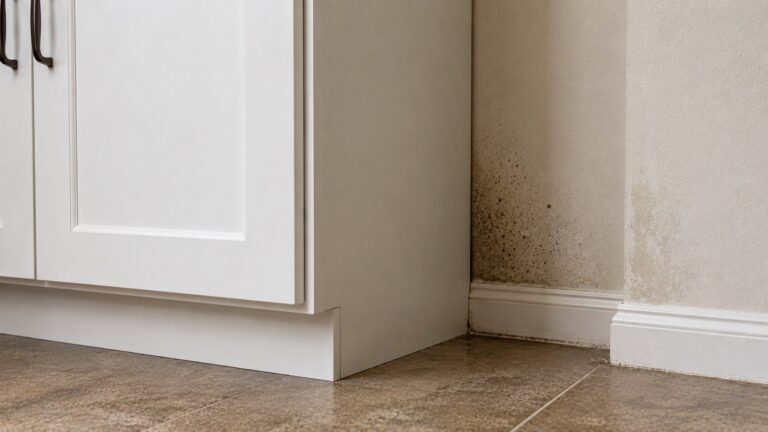
Dark staining near the bottom of the frame may come from repeated wetting, dirt carried by water, tannin movement in wood, mildew on the surface, or early material deterioration. The location of the stain matters. Stains concentrated near one lower corner often point to a local water-entry path.
Staining does not always mean severe rot, but it should not be ignored when it appears after rain or keeps growing. If the stain is paired with softness, odor, peeling paint, or swelling, the moisture problem is more advanced.
Soft jamb bottoms
A soft lower jamb is a more serious warning sign. Wood that compresses under light pressure, flakes apart, crumbles, or feels spongy may have been wet long enough for decay or fiber breakdown to begin. This is no longer just a surface finish issue.
Softness often begins at the bottom of the jamb because that area receives runoff, splashback, threshold moisture, and wicking from exposed edges. Once the lower jamb softens, fasteners may loosen, weather seals may stop seating correctly, and the door opening may become harder to seal against future moisture.
Door sticking after rain
A door that sticks after wet weather may be reacting to moisture-related swelling or frame movement. The door may rub at the jamb, latch poorly, or require more force to close. This does not always prove rot, but it can indicate that the door or frame is changing shape when damp.
Seasonal sticking can also come from humidity-related expansion. The concern increases when sticking appears together with visible frame damage, lower-jamb swelling, peeling paint, or recurring water near the threshold.
Musty odor near the door
A musty odor near an exterior door may mean moisture is lingering in hidden areas around the frame, under trim, below flooring, or near the sill. Odor alone does not identify the exact source, but it can be an important clue when paired with dampness, staining, or repeated storm leakage.
Because hidden frame areas often have limited airflow, they may stay damp after visible surfaces dry. If musty odor returns after storms, the door frame area should be checked more carefully instead of only cleaning the visible surface.
How Frame Rot Progresses Over Time
Frame rot usually develops from repeated wetting and slow drying. It is rarely caused by one brief contact with water. The risk increases when water reaches the same lower jamb, trim joint, or sill area again and again, especially when paint or caulk hides damp material underneath.
Moisture first weakens protective finishes
The first stage is often finish failure. Paint cracks, caulk separates, and exposed edges begin absorbing more water. Once the protective finish is breached, the frame becomes more vulnerable during each storm or wetting event.
This creates a cycle. Moisture causes small finish failures. Those failures let in more moisture. More moisture causes more peeling, cracking, and swelling. If the source is not corrected, the frame becomes harder to protect with surface coatings alone.
Repeated wetting leads to swelling and softening
As the material absorbs moisture repeatedly, it may swell and lose firmness. Wood fibers can begin to separate. Trim edges may open. The lower jamb may become misshapen. Seal contact may become uneven because the frame surface is no longer stable.
At this stage, the frame may still look repairable from the surface, but the cause must be addressed. Simply painting over swollen or damp material can trap moisture and lead to another round of failure.
Decay can spread behind visible trim
Rot does not always stay on the exposed face of the frame. Moisture can move behind casing, along the rough opening, under exterior trim, or into the lower sill area. The visible damage may be only the part that has reached the surface.
This is why soft lower jambs, spreading stains, or recurring dampness deserve closer inspection. A homeowner may see a small damaged area at the surface while hidden edges behind trim are staying wet.
Frame movement can make the leak worse
As moisture damage progresses, the frame may no longer hold its original shape. Softened wood, loose fasteners, swollen trim, or shifting jambs can affect how the door closes. Once the door no longer seals evenly, more wind and rain can enter.
This creates another feedback loop. Moisture damages the frame. The damaged frame allows poorer seal contact. Poorer seal contact allows more moisture. Over time, a small lower-frame issue can become a recurring door leak problem.
How Door Frame Moisture Affects Nearby Materials
Moisture in an exterior door frame rarely stays limited to the visible jamb. Because the frame connects to flooring, trim, wall framing, exterior cladding, and the sill area, repeated wetting can affect nearby materials. The longer the moisture source continues, the more likely it is that damage will spread beyond the first visible stain or soft spot.
Flooring near the threshold can absorb moisture
Interior flooring often begins directly beside the threshold. If water moves through the lower frame corner or across the sill area, it can reach the cut edges of laminate, hardwood, engineered wood, or vinyl plank flooring. Swelling, lifting, cupping, discoloration, or raised seams near the door may indicate repeated moisture exposure.
This type of damage can develop slowly. A small amount of stormwater may dry on the surface, but moisture that reaches flooring edges or the subfloor can linger longer. If the flooring has already become wet from door leakage, How to Dry Flooring After Door Leaks explains the drying side of that problem.
Subfloor edges can weaken near the opening
The subfloor edge near an exterior door is vulnerable because it sits close to the threshold and lower jambs. If water enters below the sill or around the frame, the subfloor may absorb moisture before the homeowner sees a major puddle.
Over time, repeated wetting can lead to softness, staining, swelling, or a spongy feeling near the doorway. Subfloor moisture is more serious than surface dampness because it may indicate that water is moving below the finished floor and into structural materials.
Baseboards and interior casing can show secondary damage
Interior trim near the door may show signs of frame moisture even when the exterior source is hidden. Baseboards can swell near the corner. Interior casing may separate from the wall. Paint may bubble along the lower trim. These signs often appear where moisture has moved from the frame into adjacent materials.
When interior trim damage is concentrated near one side of the door, the source may be a lower-corner leak, a frame joint problem, or directional storm exposure. The trim may be the visible clue, but the moisture source is often deeper in the door opening.
Wall cavities can stay damp behind the frame
Moisture that enters behind exterior trim or around the rough opening may reach concealed wall areas. These spaces have limited airflow and may dry slowly. If water continues entering after storms, dampness can persist behind casing, sheathing, insulation, or framing near the door.
This does not mean every damp door frame has hidden wall damage. It means recurring moisture should be taken seriously, especially when there is musty odor, spreading staining, or damage that returns after repainting or resealing.
When Door Frame Moisture Becomes a Serious Problem
Minor surface dampness after a single storm is different from recurring moisture that damages the frame. Door frame moisture becomes more serious when materials begin to soften, swelling spreads, stains return, or the door no longer seals correctly. At that point, the issue may involve the frame, threshold, sill, exterior trim, or hidden rough opening.
Before repainting or resealing, check whether the frame gets wet after rain, whether the lower jamb feels firm, whether nearby flooring edges are swelling, and whether the door still contacts the weather seal evenly.
The lower jamb feels soft or crumbly
Soft wood at the lower jamb is one of the clearest warning signs. If the material compresses easily, flakes apart, crumbles, or feels spongy, moisture has likely been active long enough to weaken the frame. This should not be treated as a cosmetic paint problem.
Damage returns after repainting or resealing
If the same frame area keeps peeling, swelling, or staining after repairs, the moisture source has probably not been corrected. Repainting damp material or caulking over the surface may hide the problem temporarily, but it will not stop water that is entering behind the frame or below the sill.
The door no longer closes or seals properly
Frame moisture can affect how the door fits. Swelling, softened jambs, loose fasteners, or shifting trim can cause rubbing, sticking, latch problems, or uneven weather seal contact. Once the frame changes shape, moisture problems can become worse because the door is no longer sealing evenly.
Water damage is spreading beyond the frame
Moisture becomes more serious when flooring, baseboards, subflooring, drywall edges, or nearby trim begin showing damage. Spreading damage suggests that water is moving beyond the visible frame and into adjacent materials.
The same area gets wet after every storm
Recurring wetting is one of the most important warning signs. Even if the frame dries between storms, repeated moisture at the same lower corner or jamb bottom can lead to cumulative damage. If the leak pattern keeps returning, the door opening should be evaluated as a system.
When frame moisture keeps returning, the problem may involve more than the visible jamb. The threshold, sill area, weather seals, exterior trim, flashing, landing slope, and drainage path may all need to be considered. For next-step guidance on recurring door leaks, see How to Fix Persistent Door Leak Problems.
FAQ
Why do exterior door frames rot at the bottom first?
The lower frame receives the most water. Rain runs down the door, splashback hits the lower jambs, threshold moisture collects at the corners, and exposed end grain can absorb water. That makes the bottom of the frame the most common place for rot to begin.
Can a door frame be wet without a visible leak?
Yes. Moisture can move behind trim, under paint, below the threshold, or through small corner joints before it becomes visible. The frame may feel damp, smell musty, or show peeling paint even without an obvious puddle.
Does peeling paint on an exterior door frame mean moisture damage?
It can. Peeling paint near the lower jamb, threshold, or exterior trim joints often suggests moisture is entering or staying behind the finish. Repeated peeling in the same area should be investigated instead of simply repainted.
Can failed weather stripping cause door frame rot?
Yes. Failed weather stripping can allow rain, damp air, or wind-driven moisture to reach the frame. If the lower jambs or corners get wet repeatedly, the frame may eventually swell, soften, or decay.
Can caulk trap moisture in a door frame?
Yes. Caulk can help at stationary gaps, but poorly placed caulk can also trap water behind trim or block drying paths. Caulking over damp, dirty, or damaged material often fails quickly and may hide the real moisture source.
When does exterior door frame moisture need deeper inspection?
It needs deeper inspection when the lower jamb is soft, fasteners are loose, the frame shifts, flooring near the threshold is damaged, stains spread, or moisture keeps returning after storms. Those signs suggest the problem may extend beyond surface finish damage.
What Door Frame Moisture Usually Means
Exterior door frame moisture usually means water is reaching the frame repeatedly, staying trapped around lower jambs and sill joints, or both. Peeling paint, staining, slight swelling, and soft jamb bottoms should be read as moisture-pattern clues, not just cosmetic wear.
The lower parts of the frame are most vulnerable because they receive rain runoff, threshold moisture, splashback, and water from lower-corner gaps. When those areas stay damp after storms, the likely problem is not one isolated stain but a door-opening detail that is allowing water to enter, collect, or dry too slowly.
A lasting solution starts with tracing the wetting pattern before covering the damage. If softness, spreading stains, recurring dampness, flooring damage, or door movement appear, the door opening should be inspected more carefully before repainting, caulking, or assuming the surface has dried.
2 Comments
Comments are closed.