
How to Inspect Baseboards for Hidden Mold
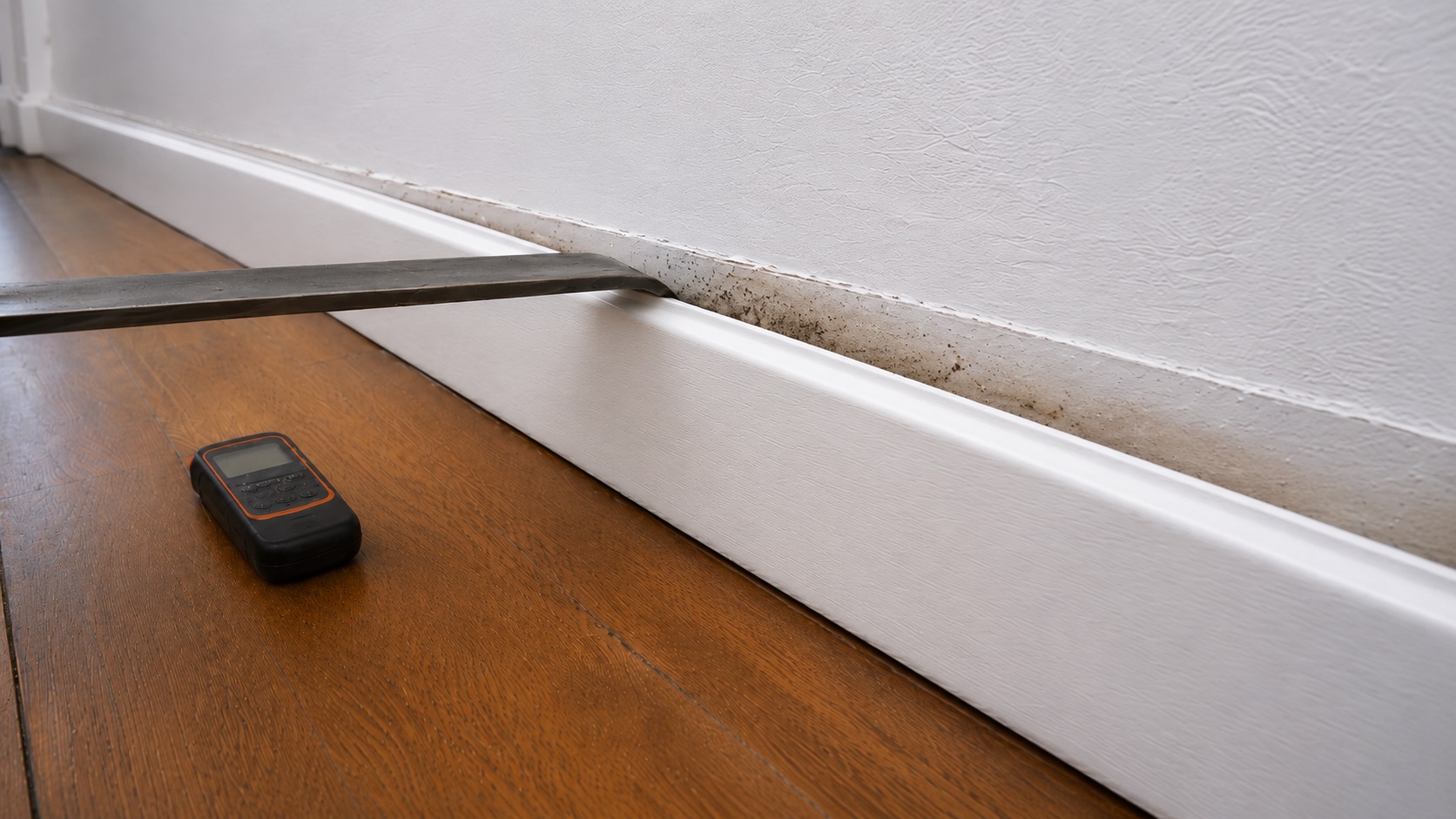
To inspect baseboards for hidden mold, start by checking the lower wall line for musty odors, swelling, staining, soft trim, paint bubbling, and gaps between the baseboard and wall. These signs do not always confirm mold, but they often show that moisture has been trapped behind the trim long enough to justify closer inspection.
Baseboards are vulnerable because they cover the joint where drywall meets the floor. Moisture from spills, leaks, condensation, damp flooring, or lower-wall water migration can collect behind this trim and remain hidden. A careful inspection helps you decide whether the area can be monitored, needs moisture testing, or should be evaluated by a professional before trim is disturbed.
For a broader room-by-room approach to concealed dampness, use how to find hidden moisture in different areas of your home as the parent guide. If you specifically need moisture testing around trim, how to detect moisture behind baseboards explains the tool-based checks that support a visual inspection.
Why Mold Often Forms Behind Baseboards
Baseboards cover the seam where drywall meets the floor, creating a narrow enclosed space where moisture can linger. Even small amounts of water can remain hidden there when airflow is limited.
Moisture Naturally Moves Toward the Floor
Water inside walls tends to travel downward due to gravity. This means that moisture entering higher areas — such as from roof leaks, window condensation, or plumbing failures — often ends up collecting along the lower edges of walls. Baseboards act like a barrier that hides this moisture from view.
After leaks or spills, moisture may soak into drywall edges or wood framing at floor level. Even when the visible surface feels dry, hidden materials can remain damp behind the trim.
If moisture problems occur frequently in lower wall areas, it may help to understand why baseboards trap moisture and how airflow limitations contribute to prolonged dampness.
Trim Blocks Airflow Behind the Wall Edge
Baseboards restrict airflow behind them. Without airflow, moisture trapped against drywall or framing takes much longer to evaporate. This makes even minor moisture exposure more dangerous over time.
Homes with carpet, laminate flooring, or vinyl flooring are especially vulnerable because moisture can spread beneath flooring edges and into the baseboard area. This moisture often remains hidden until visible damage appears.
Small Leaks Can Create Hidden Risk
Not all baseboard mold risk begins with major flooding. Small, repeated moisture exposures can be enough to justify inspection.
Examples of minor moisture sources that commonly affect baseboards include:
- Slow plumbing leaks behind walls
- Wet carpet padding after spills
- Condensation near windows or exterior walls
- Bathroom overflow incidents
- Dishwasher or washing machine leaks
- Seasonal humidity buildup near exterior walls
If mold has formed due to previous leaks, reviewing why baseboards become moldy after leaks can help you understand how moisture exposure leads to hidden growth behind trim.
Early Warning Signs to Look for Before Inspection
Before removing or disturbing baseboards, it is important to look for visible or detectable warning signs. Many hidden mold problems reveal themselves through subtle clues that appear on or near the trim.
Musty Odors Near the Floor
A persistent musty smell near baseboards is often one of the earliest indicators of hidden mold. Mold produces microbial gases that create earthy or damp odors, especially in enclosed areas with limited airflow.
If the smell becomes stronger near specific sections of the wall or floor, this may suggest hidden moisture behind the trim. Odors that return quickly after cleaning are particularly important to investigate.
Persistent odors combined with other symptoms may suggest hidden mold conditions similar to those discussed in signs of mold behind baseboards, where visual and smell clues often appear together.
Paint Bubbling or Peeling Along Trim
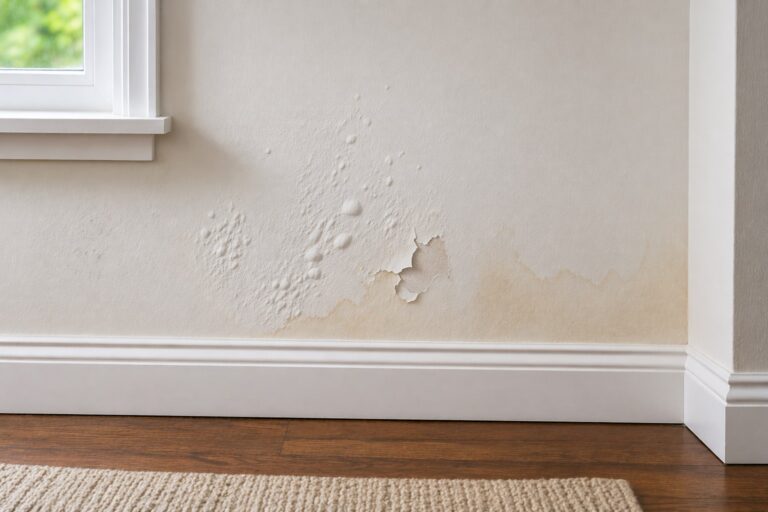
Paint bubbling or peeling near baseboards is often caused by moisture trapped beneath the surface. When drywall edges absorb moisture, paint layers lose adhesion and begin separating from the wall.
This type of damage typically appears as:
- Raised paint bubbles
- Flaking or peeling paint
- Discolored patches along trim edges
- Uneven paint surfaces near the floor
While paint damage alone does not confirm mold, it strongly suggests that moisture has been present long enough to affect surface materials.
Swelling or Warping of Baseboards
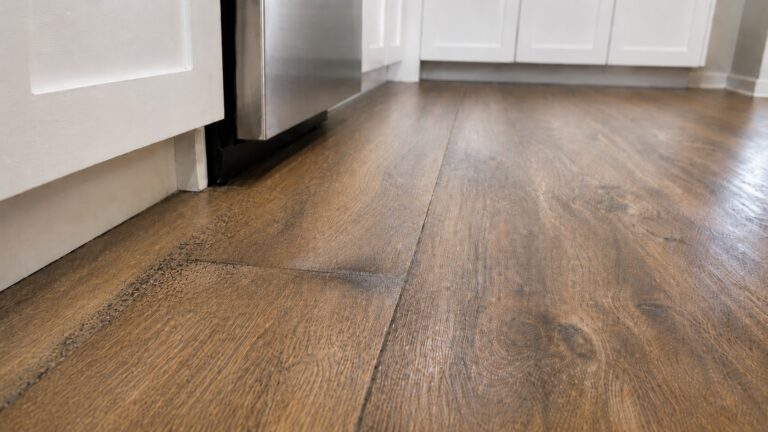
Swollen baseboards are among the most reliable signs of moisture exposure. Many modern baseboards are made from medium-density fiberboard (MDF), which absorbs moisture quickly and expands when wet.
Signs of swelling include:
- Bulging trim surfaces
- Rounded or distorted edges
- Soft spots when pressed gently
- Visible gaps between trim and wall
If baseboards feel soft or visibly warped, moisture may be present behind them. In these cases, additional inspection steps may be needed to confirm the condition of the wall structure.
How to Inspect Baseboards Step by Step
Once early warning signs appear, a careful inspection helps confirm whether hidden mold or moisture may be present behind the baseboard. The goal of this inspection is not to remove trim immediately, but to gather clear evidence that supports safe decision-making.
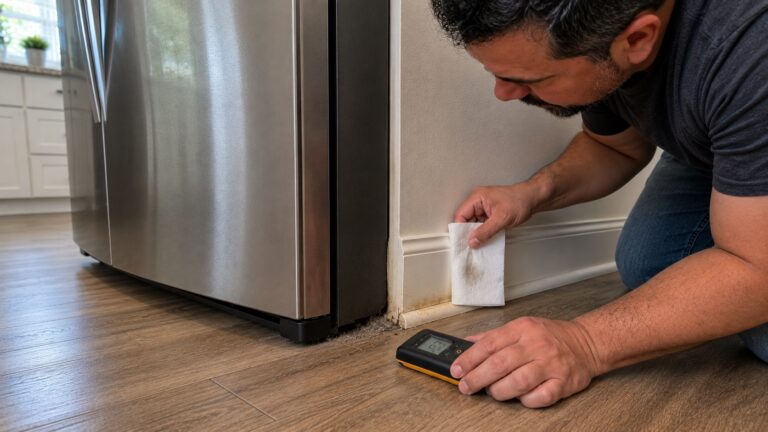
Before you begin, gather a bright flashlight, disposable gloves, a phone or camera, and a notepad. If you already own a moisture meter, use it only as a supporting tool; visual damage, odor patterns, and material softness still matter because mold can be hidden behind the trim rather than on the surface.
In many cases, inspection findings should be compared with known moisture conditions. If you suspect ongoing dampness, reviewing how to detect moisture behind baseboards can help confirm whether hidden moisture remains in the wall structure.
Step 1 — Perform a Careful Visual Inspection
Begin with a close visual examination of the baseboard and surrounding wall surface. Use bright lighting and inspect slowly along the full floor line, especially behind furniture, near exterior walls, around bathrooms, and near appliances or plumbing fixtures.
Pay close attention to:
- Discoloration or staining along the bottom edge
- Dark spots or speckled growth patterns
- Paint separation or bubbling
- Uneven trim alignment
- Localized wall staining above the baseboard
Visible mold growth may appear as small black, green, or gray patches. However, discoloration alone does not always confirm mold. Water staining, dirt accumulation, and paint damage can sometimes resemble mold patterns.
Examine transitions where baseboards meet corners, door frames, and exterior walls. These areas often experience increased moisture exposure due to airflow changes or temperature differences.
Step 2 — Check for Softness or Structural Changes
After completing the visual inspection, gently test the firmness of the baseboard using light finger pressure. Do not apply excessive force, as damaged materials may break easily.
Softness or structural changes often indicate prolonged moisture exposure.
Watch for:
- Soft or spongy trim sections
- Trim that flexes under light pressure
- Cracking or separation along seams
- Loose nails or fasteners
When baseboards lose rigidity, it often means moisture has penetrated deeply enough to weaken the material. This is especially common with MDF trim, which swells and softens quickly after moisture exposure.
Step 3 — Inspect Gaps Between Trim and Wall
Baseboards should sit flush against the wall and floor. When moisture enters the wall cavity, materials may expand or shift, creating visible gaps along trim edges.
Look for:
- Small openings along the top of the baseboard
- Separation at corners or seams
- Uneven trim alignment along the floor
- Warped or bowed trim sections
Gaps often indicate swelling within the wall structure or deterioration of materials behind the baseboard. These changes frequently develop after repeated moisture exposure or unresolved leaks.
Step 4 — Trace Musty Odors to Specific Locations
If a musty smell is present, move slowly along the baseboard and identify where the odor is strongest. Odor intensity often increases near the source of mold growth.
This process helps narrow down inspection zones without disturbing large sections of trim unnecessarily.
Strong localized odors combined with moisture damage signs should be treated as a high-priority inspection concern.
Step 5 — Look for Recurring Damage Patterns
Repeated staining or recurring trim damage often indicates unresolved moisture problems. If baseboards have been repainted or repaired multiple times in the same area, hidden moisture may still be present.
Recurring damage may include:
- Stains that return after cleaning
- Paint failure in identical locations
- Trim distortion that worsens over time
- Repeated moisture events in the same wall area
If repeated moisture exposure has occurred, reviewing how to dry baseboards after water damage can help clarify how incomplete drying contributes to recurring mold risk.
Inspection Clues That Mold May Be Behind the Baseboard
Some symptoms strongly suggest mold growth behind trim, even when visible mold is limited. Recognizing these warning patterns helps determine whether deeper inspection or professional evaluation may be necessary.
Recurring Stains Along the Floor Line
Repeated staining along the same section of wall often indicates moisture migration within the wall cavity. Mold frequently grows in areas where moisture cycles continue over time.
Recurring stains are especially concerning when:
- The area has experienced prior leaks
- The wall remains damp after cleaning
- Stains expand slowly upward
- Odors persist despite surface cleaning
If stains extend beyond the baseboard itself, comparing them with signs of moisture behind wall trim can help determine whether the problem is limited to the baseboard area or affecting nearby trim surfaces.
Swelling Patterns That Continue to Spread
Swelling that spreads along a baseboard usually indicates ongoing moisture exposure rather than a single isolated incident. Mold growth often accompanies swelling when moisture remains trapped behind trim.
Watch for:
- Swelling that moves horizontally along the wall
- Trim expansion into nearby sections
- Soft areas that grow larger over time
- Cracking paint lines along trim edges
Horizontal swelling often indicates that moisture is spreading along the wall base rather than staying in one isolated spot.
Persistent Dampness Without Visible Source
If the baseboard feels damp or appears wet without an obvious leak source, moisture may be traveling internally within the wall.
This condition often occurs when:
- Water enters from exterior walls
- Condensation forms within insulation cavities
- Hidden plumbing leaks remain undetected
- Flooding or spills were not fully dried
Persistent dampness without explanation is one of the strongest indicators that deeper inspection or moisture testing may be required.
When Deeper Inspection May Be Necessary
In many cases, visual inspection alone provides enough information to monitor the situation. However, certain warning signs suggest that hidden mold or moisture may be present behind the baseboard, and limited removal or professional inspection may become necessary.
The goal is not to remove trim unnecessarily. Baseboards protect wall edges and flooring, and removing them without clear justification can create additional repair work. Instead, removal decisions should be based on repeated evidence that moisture damage exists behind the surface.
Warning Signs That Removal May Be Needed
Consider deeper inspection when multiple warning signs appear together. A single minor symptom may not justify removal, but combined symptoms often indicate hidden moisture conditions.
Look for combinations such as:
- Strong, persistent musty odors that remain after cleaning
- Soft drywall or trim that continues to deteriorate
- Visible swelling that spreads across sections of trim
- Recurring staining in the same wall location
- Evidence of previous water damage that was not fully dried
- Moisture readings suggesting damp materials behind the wall
If you recently experienced water damage, evaluating whether drying was complete is critical. Incomplete drying is one of the most common reasons mold continues to grow behind trim. Reviewing how to dry baseboards after water damage can help you understand whether prior drying efforts were sufficient.
Situations Where Removal Should Be Avoided
There are situations where disturbing baseboards can make the problem worse. Removing trim without proper containment may release mold spores into the air or damage surrounding materials.
Avoid removing baseboards yourself if:
- Large areas show visible mold growth
- You suspect contamination extending inside the wall cavity
- The wall surface feels severely weakened
- The affected area is larger than a few feet
- You have experienced flooding that saturated multiple rooms
When these conditions exist, professional inspection is usually safer than attempting removal. Professionals have equipment to contain dust, measure moisture levels, and evaluate structural damage without increasing risk.
How to Document What You Find During Inspection
Documenting inspection results helps you track changes over time and communicate clearly with contractors if professional help becomes necessary. Proper documentation also helps identify whether moisture conditions are improving or worsening.
Use the same angle and lighting each time you take photos. This makes it easier to compare whether staining, swelling, or gaps are spreading instead of relying on memory.
Take Clear Photos of Problem Areas
Use your phone or camera to capture detailed photos of affected areas. Take images from multiple angles and distances to show the full condition of the baseboard and surrounding wall.
Helpful photo documentation includes:
- Close-up images of visible damage
- Wide-angle photos showing the full wall section
- Corner and seam areas
- Floor transitions near the baseboard
- Any visible staining or swelling
Consistent photo documentation allows you to compare changes over time, which can reveal whether moisture problems are spreading.
Record Moisture History and Events
Write down any known moisture events that may have affected the area. Understanding the history of water exposure often explains why mold forms behind baseboards.
Examples of useful records include:
- Date of leaks or spills
- Location of plumbing failures
- Flooding incidents
- Previous drying efforts
- Cleaning or repair attempts
Tracking moisture history improves decision-making and helps identify patterns that contribute to mold growth.
Monitor Changes Over Time
Even after inspection, ongoing monitoring may be necessary. Moisture problems sometimes develop gradually, especially in areas exposed to seasonal humidity or recurring condensation.
Watch for:
- New stains forming
- Existing stains expanding
- Odors becoming stronger
- Trim swelling increasing
- Wall softness worsening
If new damage appears, it may indicate unresolved moisture sources that require further investigation.
When to Call a Professional
Call a professional if inspection points to widespread moisture, repeated leaks, structural weakening, or mold that may extend beyond a small surface area. Professional evaluation is also safer when you cannot identify the moisture source or when odors return soon after cleaning.
Professionals can use moisture detection tools, containment methods, and limited inspection openings to evaluate the wall edge without unnecessary damage. If moisture conditions appear widespread, how to detect moisture behind baseboards explains the types of testing that may be used during a deeper inspection.
Frequently Asked Questions About Inspecting Baseboards for Hidden Mold
Can mold grow behind baseboards without visible signs?
Yes, mold can grow behind baseboards without being visible on the surface. Because trim covers the joint where drywall meets the floor, moisture trapped behind it may remain hidden. Mold often develops on the back side of the baseboard or along the bottom edge of drywall before any visible growth appears on painted surfaces.
How do you know if mold is inside the wall near baseboards?
Several signs may suggest mold inside the wall near baseboards, even if you cannot see it directly. These include persistent musty odors, swelling trim, recurring stains, or soft drywall along the floor line. If these signs appear after water exposure, the risk of hidden mold increases.
Comparing visible symptoms with patterns described in signs of mold behind baseboards can help confirm whether hidden mold is likely present.
Should baseboards always be removed after water damage?
No, baseboards do not always need to be removed after water damage. If moisture exposure was minor and materials dried quickly, removal may not be necessary. However, removal becomes more likely when drying was incomplete, materials remain soft, or persistent odors develop.
Understanding how moisture behaves after flooding or leaks is important. In situations where drying was incomplete, mold risk increases. Reviewing how to dry baseboards after water damage can help clarify whether additional action may be needed.
What does mold behind baseboards usually look like?
Mold behind baseboards may appear as dark speckled patches, fuzzy growth, or irregular staining on drywall edges or the back of trim. During inspection, indirect signs such as swelling trim, musty odors, and recurring stains are often noticed before visible growth is confirmed.
How quickly can mold grow behind trim?
Mold can begin developing within 24 to 72 hours after materials remain wet. However, the exact timing depends on temperature, humidity levels, and the type of materials affected. Areas with poor airflow, such as behind baseboards, are especially vulnerable to rapid mold growth when moisture remains trapped.
Conclusion: Careful Inspection Helps Prevent Hidden Mold Damage
Inspecting baseboards for hidden mold is one of the most effective ways to detect early moisture problems before they spread into walls or structural materials. Because baseboards cover critical wall edges, even small moisture events can lead to hidden mold growth if conditions remain damp.
By recognizing warning signs such as swelling, staining, musty odors, and recurring damage, homeowners can identify potential mold risks early. Careful visual inspection, combined with proper documentation and monitoring, helps prevent minor moisture problems from becoming expensive structural repairs.
When mold or moisture conditions appear persistent or widespread, professional inspection may be necessary to evaluate deeper wall damage safely. Understanding the broader room-by-room moisture inspection process can also help you connect baseboard warning signs with other hidden damp areas. For a wider diagnostic path, review how to find hidden moisture in different areas of your home.
Key Takeaways
- Baseboards are common locations for hidden mold because they hide damp wall edges from view.
- Musty odors, swelling trim, and recurring stains are early indicators of possible hidden mold.
- Visual inspection should always be performed before removing baseboards.
- Repeated moisture exposure greatly increases the likelihood of hidden mold growth.
- Professional inspection may be necessary when contamination appears widespread or structural damage is suspected.
- Ongoing monitoring helps detect moisture changes before mold spreads into larger areas.
2 Comments
Comments are closed.