
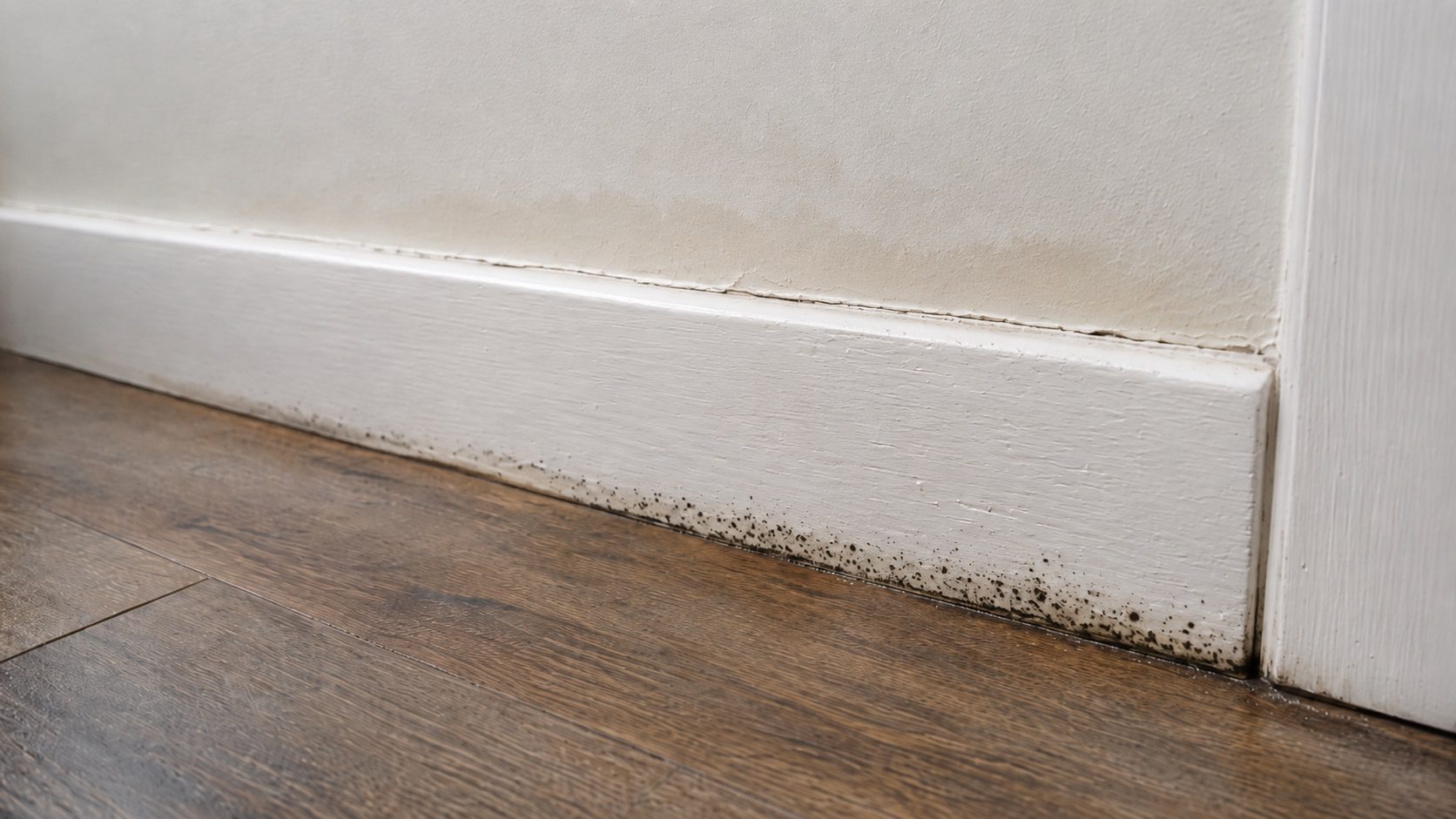
Why Baseboards Become Moldy After Leaks
Baseboards often become moldy after leaks because water does not stay where it first appears. It spreads into hidden spaces along floors and walls, collecting behind trim where airflow is limited. Even after visible water is cleaned up, moisture can remain trapped inside drywall, trim, flooring edges, and wall cavities, creating the conditions mold needs to grow.
This is why mold sometimes appears days or weeks after a leak seems resolved. The visible surface may dry quickly, but the narrow space behind the baseboard can stay damp much longer. Understanding how this happens helps homeowners recognize why cleanup after a leak needs to address hidden moisture, not just standing water.
If you are noticing damage near lower wall trim, reviewing signs of moisture behind wall trim can help identify whether hidden moisture may already be present. For broader patterns involving repeated dampness after cleanup or repairs, see why moisture problems keep returning.
How Water From Leaks Reaches Baseboards
Water from leaks rarely remains in one location. Once water escapes from a pipe, appliance, fixture, or exterior opening, it begins moving through surrounding materials. This movement explains why mold often develops in areas that were not visibly wet when the leak first happened.
Water Spreads Beyond the Original Leak Location
Leaks often start in one location but spread into nearby areas through flooring and wall materials. Water naturally flows outward and downward, following the easiest available path.
Common water movement paths include:
- Under flooring materials
- Into wall cavities
- Along framing components
- Behind baseboards and trim
- Across subfloor seams
This hidden movement explains why baseboards frequently become moldy even when the original leak appeared small.
Gravity Pulls Water Toward Floor-Level Seams
Gravity causes water to move downward until it reaches the lowest available point. Baseboards sit at the junction between walls and floors, making them a natural collection point for moisture after leaks.
Water often settles along these seams because:
- Floor edges create natural stopping points
- Small gaps allow moisture entry
- Trim creates enclosed spaces
- Surface tension holds water in narrow gaps
These conditions make the wall-floor joint especially vulnerable after leaks.
Water Can Travel Into Hidden Areas Without Being Seen
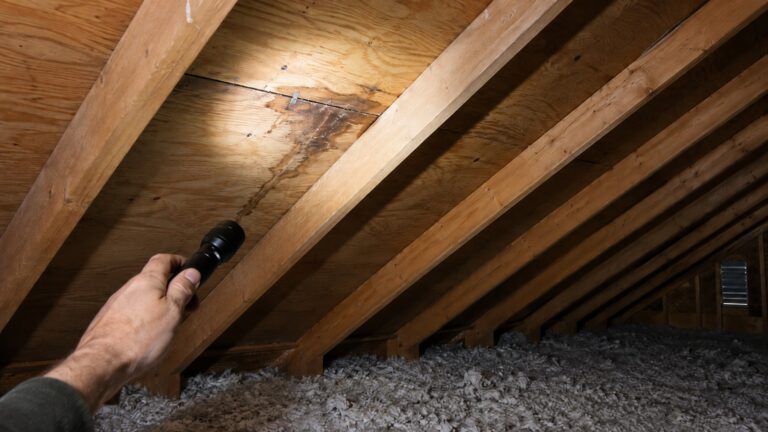
Even when visible surfaces appear dry, water may continue moving through materials behind the scenes. Moisture can enter the small gaps around trim, flooring edges, caulk joints, and lower wall materials before the homeowner realizes the leak reached that area.
Water can move through:
- Drywall seams
- Flooring edges
- Insulation materials
- Wood framing components
- Caulk and trim joints
This hidden travel increases the likelihood that mold will develop behind baseboards rather than only on visible surfaces.
Why Moisture Gets Trapped Behind Baseboards
One of the main reasons baseboards become moldy after leaks is that moisture becomes trapped behind trim. Open surfaces may dry quickly, but enclosed spaces behind baseboards dry much more slowly.
Baseboards Create Small Enclosed Spaces
Baseboards are installed tightly against walls and flooring, leaving narrow gaps behind and below the trim. These small spaces restrict airflow and hold moisture once water enters.
These hidden spaces often:
- Receive very little airflow
- Remain shaded and cool
- Retain moisture longer than exposed surfaces
- Allow moisture to spread quietly behind trim
Understanding why baseboards trap moisture helps explain why mold commonly develops in these areas after leaks.
Moisture Moves Through Materials by Capillary Action
Water does not only move downward. It can also travel sideways and upward through small pores and gaps in a process called capillary action. This allows moisture to spread into areas that were never directly covered by standing water.
Capillary movement allows water to:
- Travel upward into trim materials
- Spread along seams between materials
- Move sideways into drywall
- Extend beyond the original wet area
This behavior explains why mold often appears in locations that did not seem wet immediately after a leak.
Porous Materials Hold Moisture Longer
Many materials behind baseboards are absorbent. Once moisture enters them, they can stay damp long after the visible floor or wall surface looks normal.
Highly absorbent materials include:
- Wood trim and framing
- Medium-density fiberboard (MDF)
- Drywall backing paper
- Carpet padding near walls
- Dust and debris trapped behind trim
These materials can hold enough moisture to support mold growth even when the leak itself has already stopped.
Why Dry Surfaces Can Still Hide Moisture
Many homeowners believe that once surfaces appear dry, the moisture problem has been resolved. However, surface drying does not always remove moisture hidden inside walls, trim, insulation, and flooring edges.
Surface Drying Happens Faster Than Internal Drying
When water exposure occurs, surface moisture evaporates first. Internal moisture remains inside materials longer because airflow and evaporation are limited.
This difference leads to common misunderstandings, such as:
- Assuming dry flooring means dry walls
- Believing wiped surfaces are fully dry
- Overlooking hidden moisture behind trim
- Ending drying efforts too soon
This is one of the main reasons mold can appear after cleanup seems complete.
Drying Efforts May Miss Hidden Areas
Typical cleanup focuses on visible water. Moisture that has entered wall cavities, flooring edges, or trim spaces may remain untreated unless those areas are checked directly.
Common cleanup gaps include:
- Drying only exposed surfaces
- Not checking behind baseboards
- Limited airflow reaching hidden spaces
- Stopping drying efforts prematurely
When hidden moisture is left behind, mold growth can continue even after the room looks clean.
Moisture Can Remain in Insulation and Framing
Insulation materials and wood framing can hold moisture longer than surface materials. These components often remain damp even when surrounding surfaces appear dry.
Persistent moisture in structural materials may lead to:
- Long-term humidity trapped inside walls
- Repeated mold growth after cleanup
- Gradual deterioration of building materials
- Delayed appearance of visible damage
If moisture remains trapped after a leak, following the guidance in how to dry baseboards after water damage helps clarify why extended drying time is often necessary.
What to Check After a Leak Near Baseboards
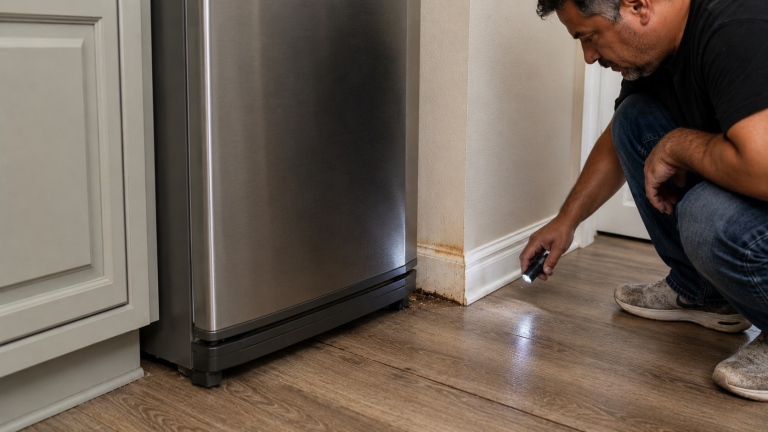
Because mold behind baseboards usually starts with hidden moisture, the most important early step is to check the lower wall and floor edge carefully after any leak. This does not replace a full moisture inspection, but it helps identify whether the leak may have reached the trim area.
After a leak, look for:
- Baseboards that feel soft, swollen, loose, or warped
- Dark staining along the top or bottom edge of the trim
- Paint bubbling, peeling, or separating near the floor
- Musty odors strongest near the wall-floor joint
- Damp carpet edges, flooring seams, or underlayment near the wall
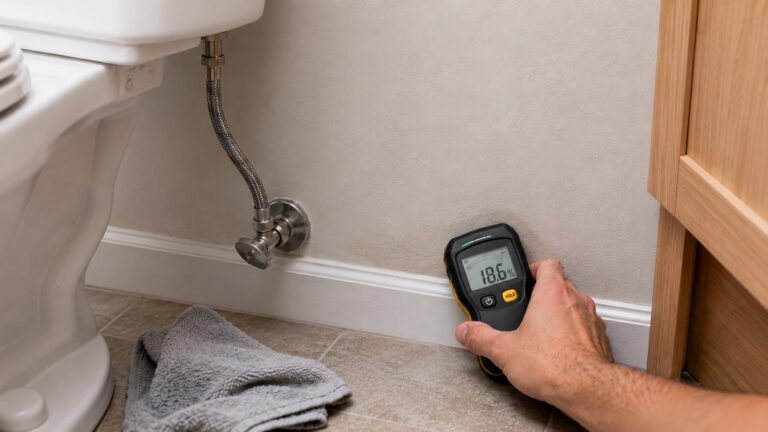
- Moisture meter readings that remain elevated after the surface appears dry
If the trim is soft, the drywall crumbles, the odor persists, or the leak involved sewage, floodwater, or contaminated water, avoid simply covering the area with paint or caulk. Those conditions usually require a more careful inspection before the wall is closed or refinished.
How Mold Begins Growing After a Leak
Mold growth after a leak usually develops in stages. The timing depends on how much water entered the materials, how long they stayed wet, and whether airflow reached the affected area.
The First 24 Hours: Materials Absorb Water
During the first day after a leak, building materials begin absorbing moisture. This stage may produce little visible damage, but moisture can spread quickly into hidden areas.
Common events during this phase include:
- Water soaking into drywall and trim
- Moisture spreading into subfloor materials
- Insulation absorbing water behind walls
- Hidden cavities retaining moisture
At this stage, most damage may remain invisible, making early detection difficult.
24 to 48 Hours: Mold Activation Becomes More Likely
Mold spores are naturally present in indoor environments. When moisture remains for more than 24 to 48 hours, those spores may begin growing on damp organic materials. Growth starts at a microscopic level before becoming visible.
Conditions that support mold growth include:
- Persistent dampness inside materials
- Limited airflow behind trim
- Warm indoor temperatures
- Organic materials such as paper facing, wood, dust, or MDF
Although mold may not yet be visible, growth can already be underway during this stage.
Two to Seven Days: Early Mold Growth Develops
If moisture remains trapped, mold colonies can begin expanding. At this stage, odors may develop before obvious visible mold appears.
Typical early-growth indicators include:
- Faint musty odors developing near floor level
- Subtle discoloration forming along trim
- Humidity trapped behind walls or trim
- Moisture spreading into adjacent materials
These early changes often go unnoticed until the odor, staining, or trim damage becomes more obvious.
Why Mold Sometimes Appears Weeks After a Leak
Many homeowners are surprised when mold appears long after a leak has been repaired. This delay usually occurs because moisture stayed hidden behind baseboards, inside wall materials, or along flooring edges after the visible cleanup was finished.
Hidden Moisture Can Persist After Cleanup
When porous materials stay damp after cleanup, mold can continue developing behind trim.
Persistent moisture often remains in:
- Drywall backing materials
- Wood framing behind trim
- Insulation inside wall cavities
- Flooring edges and subfloors
When moisture remains in these areas, mold can develop gradually until visible symptoms finally appear.
Environmental Changes Can Make Mold More Noticeable
Changes in indoor conditions can cause previously hidden mold activity to become more noticeable. Higher humidity, warmer temperatures, and poor ventilation can slow drying and encourage mold expansion.
Environmental triggers may include:
- Seasonal humidity increases
- Warm indoor temperatures
- Extended rainy periods
- Reduced ventilation in enclosed areas
These conditions can turn a hidden moisture problem into visible mold growth near baseboards.
Mold May Spread Before Becoming Visible
In many cases, mold spreads within hidden cavities before appearing on the face of the baseboard or wall. By the time visible mold appears, internal growth may already be established.
Signs that mold may have spread internally include:
- Persistent musty odors
- Increasing discoloration near trim
- Recurring moisture symptoms
- Visible changes in nearby materials
If these symptoms appear, comparing them with signs of moisture behind wall trim can help confirm whether hidden moisture damage is developing.
Factors That Increase Mold Risk After Leaks
Not all leaks lead to mold growth. Several environmental and structural factors influence how likely mold is to develop after a water incident.
Longer Moisture Exposure Increases Risk
The length of time materials remain wet plays a major role in mold development. Quick cleanup reduces risk, while prolonged exposure significantly increases it.
Higher-risk conditions include:
- Leaks that continue unnoticed
- Delayed drying efforts
- Repeated moisture exposure
- Standing water left in place
Prolonged moisture exposure gives mold more time to establish itself inside hidden spaces.
High Indoor Humidity Slows Drying
Indoor humidity affects how quickly materials dry after a leak. High humidity slows evaporation and allows moisture to remain trapped longer.
Humidity-related risks include:
- Indoor humidity levels above 60%
- Poor ventilation in affected rooms
- Seasonal humidity increases
- Condensation forming on walls
These conditions allow mold to develop more easily after leaks occur.
Warm Temperatures Encourage Mold Growth
Temperature also influences mold growth speed. Warm indoor conditions, especially when combined with poor airflow and trapped moisture, allow mold colonies to expand faster than they would in cooler, drier spaces.
Why Some Leaks Cause More Mold Than Others
Some leaks cause minimal damage, while others lead to widespread mold problems. The difference usually depends on how much water was released, where the leak occurred, what materials became wet, and how quickly the area was dried.
Leak Size and Water Volume Matter
Larger leaks release more water into building materials, increasing the likelihood of moisture spreading into hidden areas behind baseboards. Even a short-duration leak can create significant damage if enough water enters walls or flooring.
Higher-risk leak scenarios include:
- Pipe bursts releasing large volumes of water
- Appliance failures that run continuously
- Overflowing fixtures such as toilets or sinks
- Flooding events affecting multiple rooms
More water exposure increases the chances that moisture will reach areas where drying is difficult.
Leak Location Influences Mold Risk
The location of a leak plays a major role in determining how much mold risk develops. Some areas allow moisture to spread into enclosed spaces more easily than others.
Leaks located in these areas carry greater risk:
- Inside walls where pipes are hidden
- Beneath flooring materials
- Near exterior walls
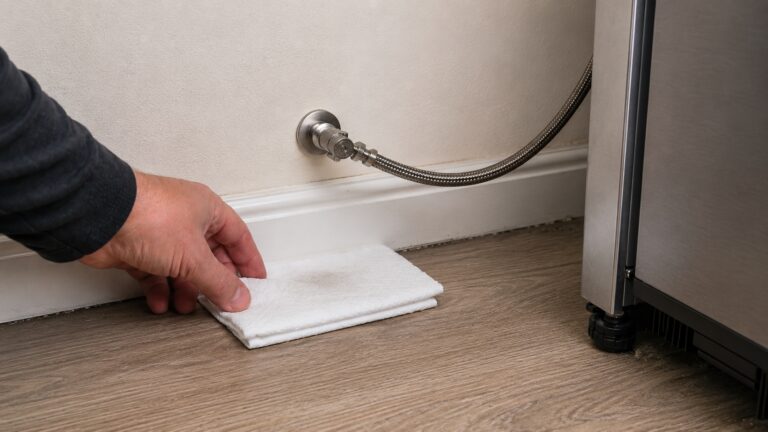
- Behind appliances or cabinets
- In basements or crawl spaces
Leaks that occur in open, visible spaces are generally easier to manage because moisture can be removed quickly.
Detection Speed Makes a Significant Difference
How quickly a leak is discovered often determines how much damage occurs. Early detection reduces moisture exposure time, limiting the opportunity for mold to develop.
Faster detection typically results in:
- Reduced moisture penetration into materials
- Shorter drying times
- Lower risk of mold development
- Less structural damage overall
Delayed detection increases the chance that moisture will spread into hidden spaces before cleanup begins.
Key Takeaways
- Baseboards become moldy after leaks because moisture spreads into hidden spaces behind trim.
- Water naturally collects at floor-level seams where baseboards are installed.
- Surface drying alone does not remove moisture trapped inside materials.
- Mold growth often begins when materials remain wet for 24 to 48 hours or longer.
- Visible mold may appear days or weeks after a leak due to delayed hidden moisture effects.
- Larger leaks, hidden leak locations, high humidity, and delayed detection increase mold risk.
- Soft trim, musty odors, bubbling paint, and persistent dampness near floor-level seams should not be ignored.
Frequently Asked Questions About Mold After Leaks
How fast does mold grow after a water leak?
Mold can begin developing within 24 to 48 hours if moisture remains trapped in materials. Visible mold may appear days or weeks later depending on humidity, temperature, airflow, and material type.
Why does mold appear after water damage even if surfaces look dry?
Mold can appear after surfaces look dry because moisture may still be trapped inside walls, flooring edges, trim, or wall cavities.
Can mold grow behind baseboards after cleaning up a leak?
Yes, mold can grow behind baseboards after cleanup if moisture remains behind the trim or inside lower wall materials.
Why does mold sometimes return after a leak?
Mold may return if the original leak was repaired but hidden materials were not fully dried. Persistent moisture allows growth to continue.
How long can moisture remain behind baseboards?
Moisture can remain behind baseboards for days or weeks depending on airflow, humidity, material type, and how much water entered the wall-floor joint.
Conclusion: Baseboard Mold After Leaks Starts With Hidden Moisture
Baseboard mold after leaks usually starts when water reaches the wall-floor joint and stays hidden behind trim. Once moisture is trapped in absorbent materials with limited airflow, mold can develop even after the room appears clean and dry. Moisture moves through materials, settles behind trim, and creates conditions that support mold growth even after cleanup seems complete.
The most important lesson is that a dry-looking surface is not always proof that the wall-floor joint is dry. When lower-wall materials, trim, flooring edges, or insulation stay damp, mold can appear later even after the original leak has been repaired.
For a broader look at why damp areas keep causing problems after cleanup or repairs, review why moisture problems keep returning.
One Comment
Comments are closed.