How to Dry Baseboards After Water Damage
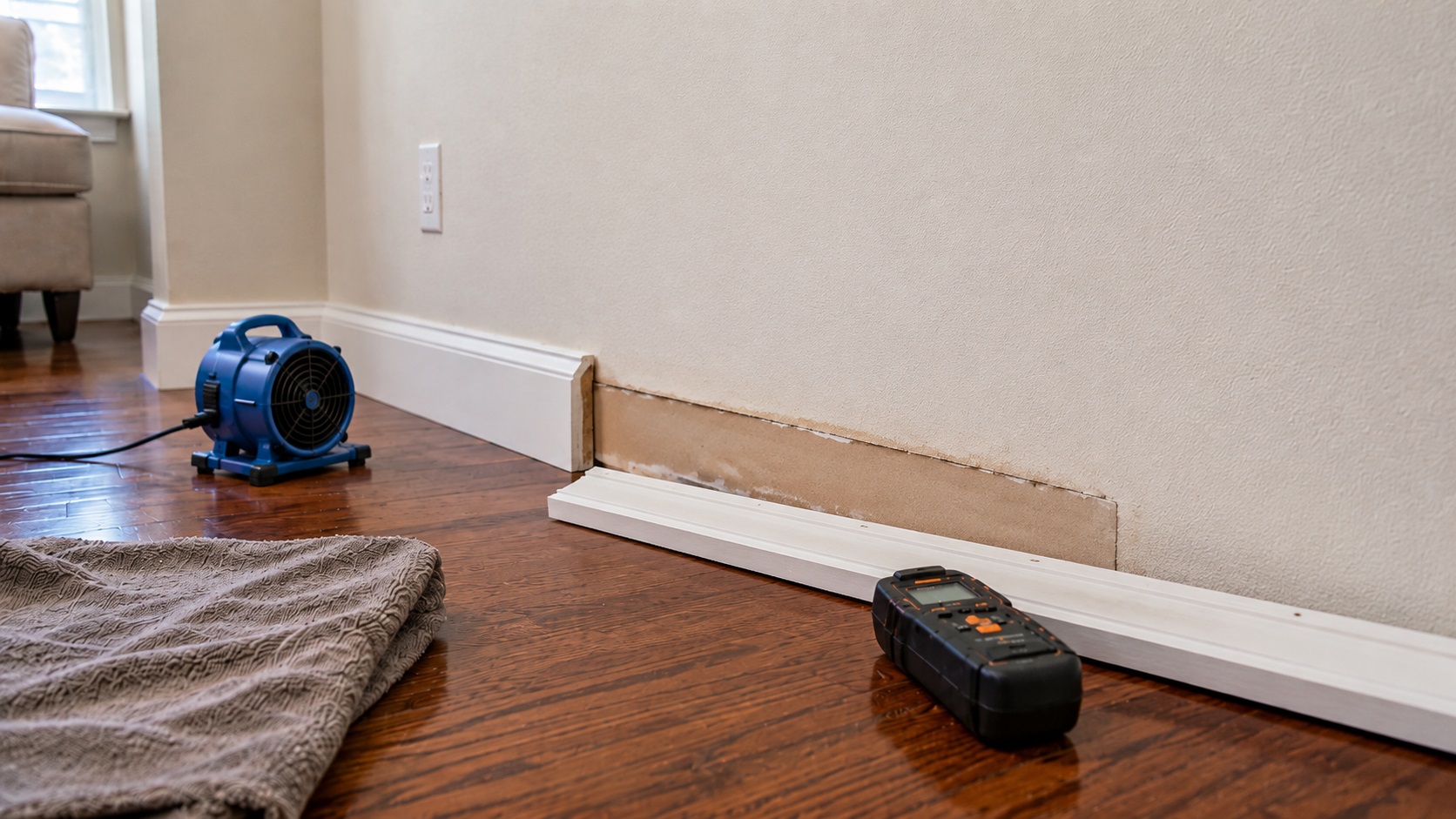
To dry baseboards after water damage, remove standing water first, stop the moisture source, move furniture away from the wall, run fans across the baseboards, lower indoor humidity, and check whether moisture is trapped behind the trim. If the baseboards are swollen, soft, moldy, or wet behind the wall edge, they may need to be removed so the lower wall and back side of the trim can dry.
Surface drying is not enough if water has wicked into wood, MDF, drywall edges, or the gap behind the baseboard. The goal is to dry the visible trim, the wall edge behind it, and the flooring seam below it before the area is repainted, caulked, or covered again.
If moisture has already been detected behind trim, reviewing how to detect moisture behind baseboards can help confirm whether hidden dampness remains before beginning the drying process.
For broader drying and recurrence prevention steps, this article fits under how to prevent recurring moisture damage, which covers how to stop moisture problems from returning after the immediate drying work is complete.
Why Wet Baseboards Need Fast Drying
Time plays a major role in determining how much damage occurs after baseboards become wet. The longer moisture remains inside materials, the greater the likelihood of mold growth, material distortion, and hidden structural problems.
Mold Can Begin Developing Quickly
Mold growth can begin when wet materials stay damp, especially in warm, humid, poorly ventilated rooms. Baseboards, drywall edges, and flooring seams can all support mold when moisture remains trapped.
Conditions that increase mold risk include:
- High humidity levels
- Warm indoor temperatures
- Poor airflow conditions
- Organic materials such as wood and drywall
If mold development is suspected, reviewing signs of mold behind baseboards helps identify early symptoms before visible growth spreads.
Wood Baseboards Can Warp or Swell
Wood materials expand when they absorb moisture. Baseboards exposed to water often swell, bend, or lose their original shape if moisture remains inside the wood fibers.
Common signs of moisture-related wood damage include:
- Bulging or swelling along trim edges
- Paint cracking or peeling
- Visible warping or distortion
- Separation between trim and wall surfaces
Prompt drying reduces the likelihood of permanent deformation and helps preserve structural stability.
Moisture Can Spread Into Wall Materials
When baseboards become wet, moisture often spreads into nearby materials such as drywall and flooring edges. This movement increases the total area affected by water exposure.
Moisture spreading beyond the baseboard area may lead to:
- Hidden dampness inside wall cavities
- Recurring moisture problems
- Increased mold risk
- Additional repair requirements
Assess the Severity of Baseboard Water Damage
Before beginning the drying process, it is important to determine how much moisture is present and how far it has spread. Not all wet baseboards require the same level of response. Minor moisture exposure may require simple drying measures, while severe water damage may require more extensive intervention.
Identify the Source of Water Exposure
The water source helps determine whether the baseboards are only surface-wet or likely saturated behind the trim.
Common water sources include:
- Plumbing leaks
- Appliance malfunctions
- Flooding events
- Roof or exterior leaks
Identifying the source also helps prevent additional moisture from entering the affected area during the drying process.
Safety note: Do not handle water near outlets, electrical wiring, or powered appliances until the area is safe. If the water came from sewage, floodwater, or a contaminated source, avoid DIY drying and contact a qualified restoration professional.
Check for Visible Signs of Saturation
Visible changes in baseboards often provide clues about the severity of moisture exposure. Surface conditions help indicate whether moisture has penetrated deeply into materials.
Warning signs of significant saturation include:
- Swelling or bulging trim
- Darkened staining along edges
- Paint bubbling or peeling
- Soft or spongy materials
When visible damage appears severe, deeper moisture penetration is likely.
Evaluate Adjacent Materials
Water exposure rarely affects only the baseboard itself. Moisture often spreads into surrounding materials such as flooring and drywall. Evaluating nearby surfaces helps determine how far moisture has traveled.
Check adjacent materials for:
- Damp flooring near trim edges
- Staining along wall surfaces
- Soft or weakened drywall
- Recurring moisture patterns
First Steps to Dry Wet Baseboards
Start drying only after the active water source has been stopped. If water is still entering from a pipe, appliance, exterior leak, or flood condition, fans may spread moisture without solving the problem.
Remove Standing Water Immediately
Standing water significantly increases moisture absorption into baseboards and surrounding materials. Removing visible water quickly reduces the amount of moisture entering porous materials.
Effective water removal steps include:
- Blot pooled water with towels or use a wet/dry vacuum if the water is clean and safe to handle
- Pull rugs, mats, and stored items away from the wet baseboard
- Wipe the top edge, bottom edge, and floor seam where water collects
- Keep the area uncovered until moisture readings or repeated checks show drying progress
Prompt water removal helps reduce long-term moisture retention behind trim.
Use Airflow and Humidity Control Together
Fans work best when they move air across the baseboard rather than directly into one small spot. Aim airflow along the wall so moisture can evaporate from the trim, lower drywall edge, and floor-wall joint. Move furniture, boxes, curtains, and stored items away from the affected wall so air can reach the full length of the baseboard.
If indoor humidity is high, pair fans with a dehumidifier or HVAC drying. Opening windows only helps when outdoor air is drier than indoor air. If the weather is humid, outdoor ventilation can slow drying instead of improving it.
When Baseboards Should Be Removed to Dry
Not all wet baseboards require removal, but certain conditions make removal necessary to ensure proper drying. Leaving severely saturated baseboards in place may allow moisture to remain trapped behind trim, increasing the risk of mold growth and structural damage.
Removal is most important when the back side of the trim, the lower drywall edge, or the floor-wall seam cannot dry while the baseboard remains installed.
Severe Water Saturation
Baseboards exposed to large amounts of water often require removal to allow proper drying behind the trim. Saturation occurs when water remains in contact with materials long enough to penetrate deeply.
Signs of severe saturation include:
- Significant swelling or warping
- Soft or weakened wood
- Persistent dampness after initial drying
- Visible separation from the wall surface
When these symptoms appear, removal improves drying access and prevents trapped moisture.
Moisture Behind the Baseboard
Moisture trapped behind the trim may not dry properly without removal. Hidden moisture often remains trapped inside drywall edges and wall cavities.
Warning signs of hidden moisture include:
- Recurring dampness near trim edges
- Musty odors developing near floor level
- Staining along the baseboard line
- Moisture returning after drying attempts
Hidden moisture requires careful evaluation to ensure complete drying.
Signs of Mold Development
Mold growth behind baseboards often indicates that moisture has been present for an extended period. When mold symptoms appear, removal allows full inspection of affected materials.
Common mold indicators include:
- Dark discoloration along trim edges
- Persistent musty odors
- Recurring moisture stains
- Surface growth appearing along seams
Do not sand, scrape, repaint, or caulk over moldy or damp baseboards. Covering the area too soon can trap moisture and make the problem harder to correct later.
If mold symptoms are observed, reviewing signs of mold behind baseboards helps confirm whether hidden growth may be occurring.
How Long Baseboards Take to Dry
The time required to dry baseboards depends on several factors, including the amount of moisture present, environmental conditions, and the materials involved. Drying times vary widely depending on the severity of water exposure.
Drying Time for Minor Moisture Exposure
Minor water exposure often dries relatively quickly when airflow and ventilation are sufficient. Small spills or brief moisture exposure typically affect only surface materials.
Minor drying conditions include:
- Limited water contact
- No visible swelling or distortion
- Dry surrounding materials
- Strong airflow conditions
Under these conditions, the baseboard may dry with basic airflow and humidity control.
Drying Time for Moderate Water Exposure
Moderate moisture exposure occurs when water penetrates deeper into materials but does not fully saturate them. Drying times increase when moisture spreads into adjacent surfaces.
Moderate drying conditions include:
- Visible staining or swelling
- Damp adjacent materials
- Reduced airflow conditions
- Increased humidity levels
Moderate exposure requires careful monitoring to ensure moisture does not remain trapped.
Drying Time for Severe Water Damage
Severe water exposure significantly increases drying time because materials become deeply saturated. These situations often require removal of trim or additional drying equipment.
Severe drying conditions include:
- Standing water exposure
- Large-scale flooding events
- Deep material saturation
- Multiple affected areas
Severe water damage often requires extended drying periods and close monitoring to prevent recurring moisture problems.
Signs Baseboards Are Fully Dry
Determining whether baseboards are fully dry is one of the most important steps in preventing long-term moisture problems. Surface dryness alone does not guarantee that hidden moisture has been removed. Moisture may remain trapped behind trim or inside porous materials even after visible surfaces appear dry.
Surfaces Feel Firm and Stable
Dry baseboards typically feel firm to the touch without signs of softness or distortion. Materials that remain damp often feel spongy or unstable due to internal moisture retention.
Signs of stable, dry materials include:
- Firm texture without softness
- No visible swelling or bulging
- Paint surfaces remaining intact
- Trim edges maintaining original shape
Changes in material firmness often indicate remaining moisture within the baseboard.
No Visible Staining or Moisture Patterns
Dry baseboards typically show no active staining or spreading moisture marks. When stains remain stable and do not expand, drying progress is likely improving.
Warning signs of remaining moisture include:
- Darkened edges returning after drying
- Stains expanding along trim surfaces
- Moisture patterns spreading over time
- Recurring discoloration near seams
If recurring moisture patterns appear, further inspection may be necessary.
No Persistent Musty Odors
Musty odors often indicate hidden moisture or developing mold growth. Dry baseboards typically do not produce noticeable odors.
Odor-related warning signs include:
- Persistent musty smells near floor level
- Odors returning after ventilation
- Unusual smells developing in enclosed areas
- Odors intensifying during humid conditions
If musty odors continue, reviewing signs of mold behind baseboards helps identify whether mold development may be occurring.
Moisture Readings Remain Stable
Moisture measurement tools can help confirm whether materials are fully dry. Stable readings over time suggest moisture levels are no longer increasing.
Moisture monitoring benefits include:
- Confirming hidden moisture removal
- Detecting recurring dampness
- Tracking drying progress accurately
- Reducing uncertainty during recovery
If you use a moisture meter, compare the wet area with a similar dry baseboard or wall section in the same room. A single reading is less useful than a pattern: the affected area should trend downward and stay close to the nearby dry reference area before the wall is closed, painted, or recaulked.
For guidance on identifying hidden dampness, reviewing how to detect moisture behind baseboards helps confirm whether additional drying may be necessary.
Reduce Mold Risk After Baseboards Dry
After the baseboards are dry, keep the area visible for a while instead of immediately covering it with furniture, boxes, or fresh caulk. Watch for returning stains, musty odor, softened trim, or moisture readings that rise again. If those signs return, the issue is no longer just drying; the moisture source still needs to be found.
For a fuller prevention plan focused specifically on mold at the floor-wall joint, see how to prevent mold behind baseboards.
Maintain Proper Humidity Levels
Controlling indoor humidity helps prevent moisture from returning to previously affected areas. Stable humidity levels reduce condensation and support consistent drying conditions.
Humidity control strategies include:
- Maintaining indoor humidity between 30% and 50%
- Using ventilation during moisture-producing activities
- Monitoring humidity regularly
- Adjusting airflow based on environmental conditions
Stable humidity levels significantly reduce mold risk after drying.
Continue Monitoring Previously Wet Areas
Areas affected by water damage remain vulnerable to recurring moisture problems. Continued observation helps identify early signs of moisture returning.
Monitoring strategies include:
- Inspecting baseboards periodically
- Checking for new stains or discoloration
- Observing odor changes over time
- Evaluating environmental conditions during seasonal changes
If stains, odor, or dampness return during monitoring, treat the area as an unresolved moisture problem rather than a completed drying job.
When Drying Alone Is Not Enough
Some moisture problems require additional corrective action beyond drying. Persistent moisture conditions may indicate hidden leaks or structural weaknesses that prevent complete moisture removal.
Recurring Moisture After Drying
Moisture that returns after drying suggests that the original source of water has not been resolved. Repeated dampness often indicates hidden moisture pathways.
Warning signs of recurring moisture include:
- Repeated staining along baseboard edges
- Persistent damp conditions
- Musty odors returning over time
- Moisture spreading to new areas
Recurring moisture problems should be investigated carefully to identify underlying causes.
Structural Materials Remain Damp
Materials that remain damp despite drying efforts may require deeper evaluation. Moisture trapped inside structural components often requires specialized drying methods.
Indicators of persistent dampness include:
- Soft drywall near trim areas
- Visible swelling or deterioration
- Ongoing moisture readings
- Delayed drying progress
If moisture persists beyond normal drying expectations, reviewing how to fix persistent moisture behind baseboards helps determine when additional corrective action becomes necessary.
Common Mistakes to Avoid When Drying Baseboards
The biggest drying mistakes are stopping too soon, blocking airflow, ignoring moisture behind the trim, and covering the area before the source is fixed.
Assuming Baseboards Are Dry Too Soon
One of the most common mistakes is assuming that baseboards are dry simply because surfaces feel dry to the touch. Hidden moisture often remains trapped inside materials long after visible surfaces appear dry.
This mistake often leads to:
- Recurring moisture problems
- Delayed mold development
- Hidden structural damage
- Repeated repair requirements
Allowing sufficient drying time helps reduce the risk of long-term moisture retention.
Failing to Improve Airflow
Without proper airflow, moisture evaporates slowly and remains trapped inside materials. Inadequate ventilation often prolongs drying time and increases the risk of mold growth.
Common airflow-related mistakes include:
- Leaving furniture against walls during drying
- Using limited airflow sources
- Opening windows when outdoor air is more humid than indoor air
- Failing to maintain continuous air movement
Maintaining strong airflow supports faster evaporation and reduces moisture retention.
Ignoring Hidden Moisture Behind Trim
Moisture trapped behind baseboards is often overlooked during drying efforts. Without inspecting concealed areas, moisture may remain hidden and allow mold to develop.
Warning signs of hidden moisture include:
- Recurring stains along trim edges
- Persistent damp conditions
- Musty odors developing after drying
- Moisture returning to previously affected areas
If hidden moisture is suspected, reviewing why baseboards trap moisture helps explain why concealed moisture often remains after surface drying.
Delaying Drying After Water Exposure
Waiting too long to begin drying allows moisture to penetrate deeper into materials. The longer water remains present, the greater the likelihood of mold growth and structural damage.
Rapid response significantly reduces drying time and prevents secondary damage.
FAQ — How to Dry Baseboards After Water Damage
How long does it take for baseboards to dry after water damage?
Drying time depends on moisture severity, baseboard material, airflow, and humidity. Light surface wetting may dry relatively quickly, but saturated wood, MDF, drywall edges, or hidden moisture behind trim can take longer and may require removal or professional drying.
Should wet baseboards always be removed?
Not all wet baseboards require removal. Minor moisture exposure may dry without removal, but severely saturated baseboards often require removal to allow proper drying behind trim.
Can baseboards dry without removal?
Yes, baseboards can sometimes dry without removal when moisture exposure is minimal and airflow conditions are strong. However, hidden moisture may remain if drying conditions are insufficient.
Will wet baseboards cause mold?
Wet baseboards increase mold risk when moisture remains trapped for extended periods. Prompt drying and proper moisture control significantly reduce the likelihood of mold development.
How do I know when baseboards are fully dry?
Baseboards are typically dry when materials feel firm, odors disappear, stains stop spreading, and moisture readings remain stable over time.
Final Checks Before You Cover or Repaint Baseboards
Before replacing furniture, repainting, or applying fresh caulk, confirm that the baseboard, lower wall edge, and flooring seam are no longer showing active moisture signs. The area should feel firm, stains should not be spreading, odors should not return, and any moisture readings should stay stable compared with a nearby dry reference area.
If the baseboard remains soft, swollen, musty, or damp after drying efforts, do not cover the area and hope it improves. Persistent moisture may indicate trapped water behind the trim, damp drywall edges, or an unresolved leak that needs further investigation.
Drying baseboards after water damage works best when the water source is stopped first, standing water is removed quickly, airflow reaches the entire floor-wall joint, and the area is monitored before being closed or refinished. Taking those steps early reduces the risk of hidden mold, recurring moisture, and avoidable repair work.
Key Takeaways
- Fast drying after water exposure reduces mold risk and prevents structural damage.
- Airflow and humidity control work together to remove trapped moisture from baseboards and surrounding materials.
- Severely saturated baseboards may require removal to allow proper drying behind trim.
- Hidden moisture can remain even when surfaces appear dry.
- Monitoring drying progress helps prevent recurring moisture problems.
- Persistent moisture after drying may indicate deeper underlying issues.