Signs of Water Leaks Around Water Heaters
Water leaks around water heaters are easy to overlook at first because the early signs are often small. A damp spot on concrete, a little water in the drain pan, a rust-colored stain, or a musty smell near the heater may not look urgent. But recurring moisture around a water heater can spread into flooring, baseboards, drywall, nearby framing, or stored items before the leak becomes obvious.
The most important thing to understand is that a visible leak sign does not always prove the tank itself has failed. Water around a water heater can come from the tank, drain valve, pipe connections, relief valve discharge pipe, expansion tank, nearby plumbing, HVAC condensate, or even a floor drain issue. The sign tells you moisture is present. The source still needs to be confirmed.
This guide focuses on the visible warning signs of water leaks around water heaters. For a deeper explanation of how plumbing-related moisture can damage floors, walls, and structural materials, see how plumbing leaks cause structural damage.
Why Water Heater Leaks Are Easy to Miss
Water heater leaks are often missed because they do not always start as obvious puddles. A slow drip may evaporate on warm concrete. A small leak may collect inside the water heater pan instead of spreading across the floor. A valve may drip only when pressure changes. A fitting may leak only during heating cycles. In a dark utility room, garage, basement, or closet, these signs can stay hidden for days or weeks.
Another reason water heater leaks are confusing is that moisture near the heater does not always come from the same place. A homeowner may see water near the base and assume the tank is leaking from the bottom. That can happen, but the water may also be running down from a pipe connection, a relief valve discharge pipe, or a nearby plumbing line before collecting at the lowest point.
That is why the pattern matters. A one-time wet spot after cleaning or moving items may not mean much. Moisture that returns after drying, water that appears after hot water use, rust that is paired with dampness, or repeated water in the heater pan is more concerning.
Water heater leak signs are also easy to ignore because many water heaters sit on concrete. Concrete can hide early moisture by absorbing small amounts of water, leaving only a faint dark ring or mineral stain behind. By the time water spreads into nearby finished flooring, baseboards, or drywall, the leak may have been active longer than it first appeared.
Water heaters should also be part of a broader moisture inspection routine. The sitewide guide to finding, fixing, and preventing moisture problems in homes explains how small leak signs fit into whole-home moisture control.
Water Around the Base of the Water Heater
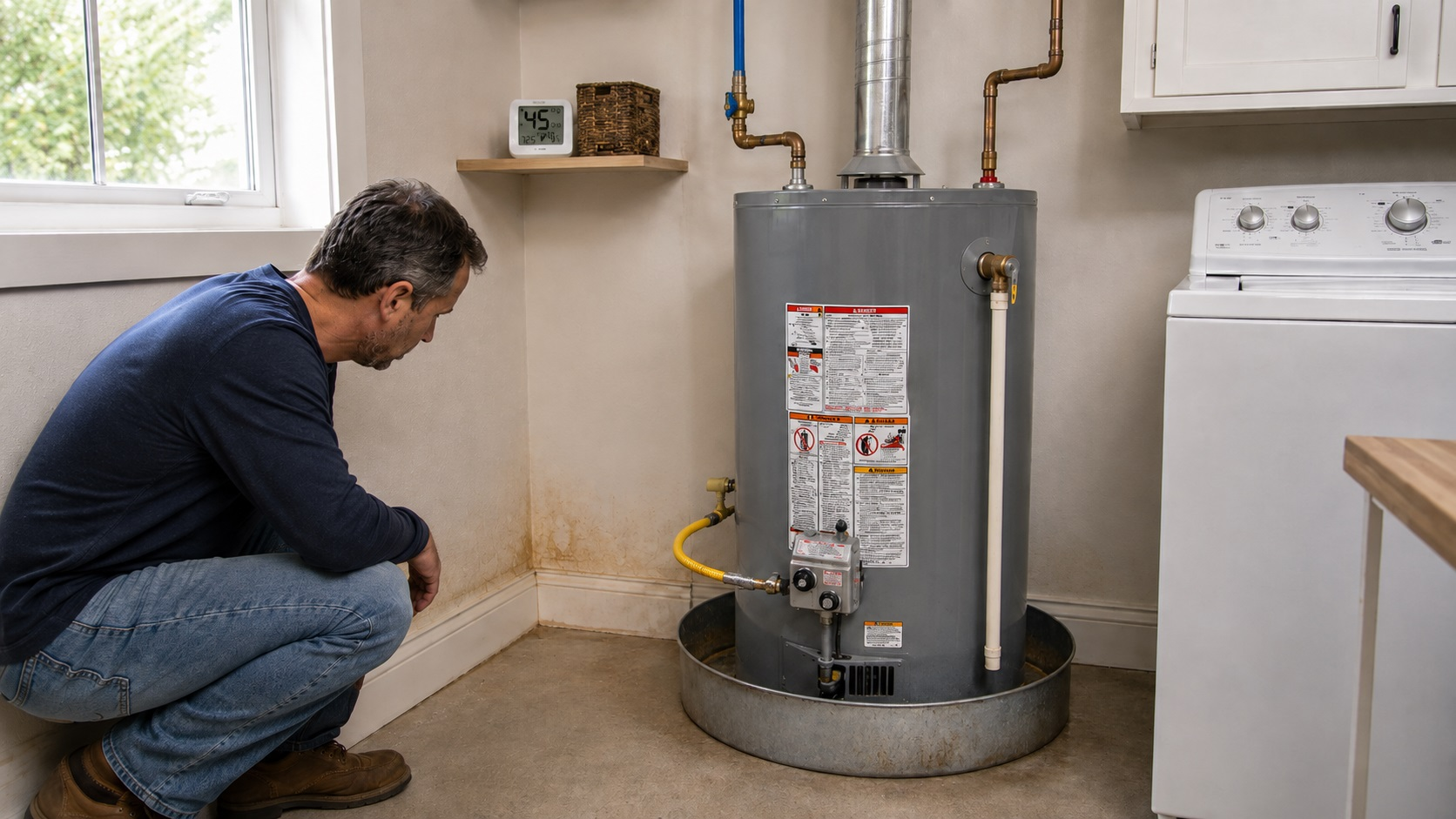
Water near the base of a water heater is one of the most common warning signs homeowners notice. It may appear as a small puddle, a damp ring around the tank, a dark area on concrete, or water spreading outward from under the heater. Even if the amount is small, recurring water at the base should not be dismissed.
A damp area around the base can mean several different things. The tank may be leaking, but water may also be running down the outside of the heater from a pipe fitting, valve, or discharge line. In some cases, the water collects under the heater because the floor slopes slightly toward the tank, even though the source is nearby.
A simple way to avoid guessing is to dry the floor, place a dry paper towel near the suspected drip path, and check whether the towel wets from above, from the tank base, or from the floor edge. Do not remove covers, open panels, or disturb gas or electrical components to perform this check.
Look for patterns such as:
- Water that returns after you wipe the floor dry
- A damp circular stain around the bottom of the tank
- Water appearing after the heater has been actively heating
- Rust-colored water or staining near the base
- Moisture that spreads farther from the heater over time
- Wet flooring or trim near the water heater closet
Water appearing directly from beneath the tank is more concerning than water that clearly drips from a fitting above. A tank leak may start slowly, especially if corrosion has weakened the inner tank. However, it is important not to guess. The next step is to observe whether the water is actually emerging from the tank base or simply collecting there after running down from another part of the system.
If the water around the base keeps returning, the issue has moved beyond a random spill. At that point, the source needs to be checked carefully. For step-by-step source confirmation, use how to detect slow water heater leaks rather than relying on the floor pattern alone.
Finished flooring near a water heater deserves extra attention. Concrete can tolerate brief moisture better than wood, laminate, carpet, or subfloor materials. If the heater sits in a laundry room, closet, utility room, or finished basement, water can move under flooring edges before the surface looks badly damaged. That is when a small leak can become a larger moisture problem.
Water at the base is not always proof of a failed tank, but recurring water should be treated as an active leak sign until the source is confirmed.
Water in the Water Heater Drain Pan
A water heater pan is designed to catch water before it spreads across the floor, but the pan itself does not fix the leak. If you see water sitting in the pan, streaks inside the pan, mineral residue, rust marks, or repeated dampness around the pan drain, something is releasing water into that area.
Water in the pan may come from a fitting above the heater, the drain valve, the relief valve discharge pipe, condensation, or the tank itself. A small amount of water may dry before you notice it, leaving behind white mineral marks or rust-colored staining. That residue can be a clue that water has been entering the pan repeatedly.
Pay attention to these drain pan warning signs:
- Standing water in the pan
- Water that returns after the pan is dried
- Rust stains or mineral deposits inside the pan
- A pan drain line that is wet or dripping
- Water marks on the outside edge of the pan
- A pan that overflows or cannot drain properly
A pan is especially important when the water heater sits near finished flooring, drywall, wood framing, stored belongings, or an upper-level mechanical closet. If the pan is cracked, too shallow, missing a drain connection, or sloped away from the drain, water can still move into surrounding materials. The pan delays damage; it does not eliminate the need to find the source.
If water keeps appearing in the pan, do not assume the problem is contained. Recurring pan water means the heater or connected plumbing should be inspected, especially if the water is paired with rust, mineral deposits, or relief valve discharge.
Rust, Corrosion, and Staining Around the Heater
Rust and corrosion are important clues because they often show where moisture has been present repeatedly. A dry water heater with a small amount of age-related surface discoloration is different from a heater with rust trails, damp fittings, mineral crust, or reddish-brown stains running down the tank jacket.
Rust near the bottom of the heater can be concerning because it may suggest long-term moisture exposure at the base. Rust around pipe connections, shutoff valves, unions, or threaded fittings may point to a slow connection leak. Rust-colored stains on the floor can show where water has carried corrosion residue away from the heater.
Common rust and corrosion signs include:
- Reddish-brown streaks on the tank jacket
- Rust-colored stains on the floor near the heater
- Corrosion around the cold-water inlet or hot-water outlet
- White, green, or crusty mineral buildup around fittings
- Rust around the drain valve
- Deterioration near the bottom rim of the tank
- Corrosion on nearby shutoff valves or pipe joints
Rust by itself does not always prove that an active leak is happening right now. The stronger warning sign is rust combined with moisture. If you see corrosion and the area is damp, or if staining keeps spreading, that is more serious than an old dry stain.
Water heaters can develop hidden leak problems as components age, pressure changes stress fittings, or corrosion weakens parts of the system. For a cause-focused explanation, see why water heaters develop hidden leaks.
Drips From Valves, Fittings, or Connected Pipes
Not all water heater leaks come from the tank. Many visible leak signs begin at valves, fittings, or connected plumbing. A slow drip from one of these areas can run down the side of the heater, collect at the base, and make it look like the tank is leaking from the bottom.
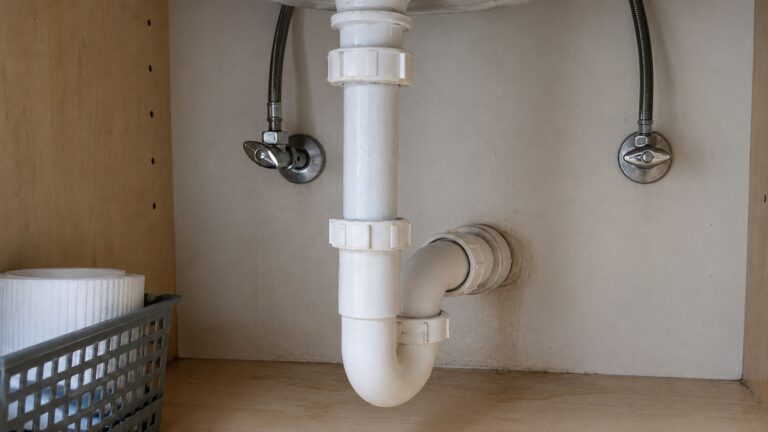
Start by looking at the areas where water normally enters, leaves, or drains from the heater. These include the cold-water inlet, hot-water outlet, shutoff valve, flexible connectors, threaded fittings, drain valve, expansion tank connection, and temperature and pressure relief valve discharge pipe.
Possible warning signs include:
- A bead of water forming under a pipe connection
- Moisture around the shutoff valve
- Drips from the drain valve near the lower part of the tank
- Wet pipe insulation near the heater
- Corrosion or mineral buildup around fittings
- Water trails running down the side of the tank
- Moisture around an expansion tank connection
The temperature and pressure relief valve deserves special caution. If water is coming from the relief valve discharge pipe, do not plug, cap, or block the pipe. That valve is a safety component. Repeated dripping or steady discharge may point to pressure, temperature, expansion, or valve issues that should be evaluated by a qualified plumber.
Drips from fittings and valves may look small, but they can still cause damage if they continue. A drop at a time can keep nearby materials damp, stain concrete, rust metal parts, or feed moisture under finished flooring. The visible drip is only part of the problem; the larger concern is how long the area has been wet.
If the water source is not obvious, avoid guessing based only on where the puddle appears. Water follows gravity, pipe surfaces, floor slope, and small gaps. The damp spot may be several inches or several feet from the actual source.
Floor and Wall Signs Near the Water Heater
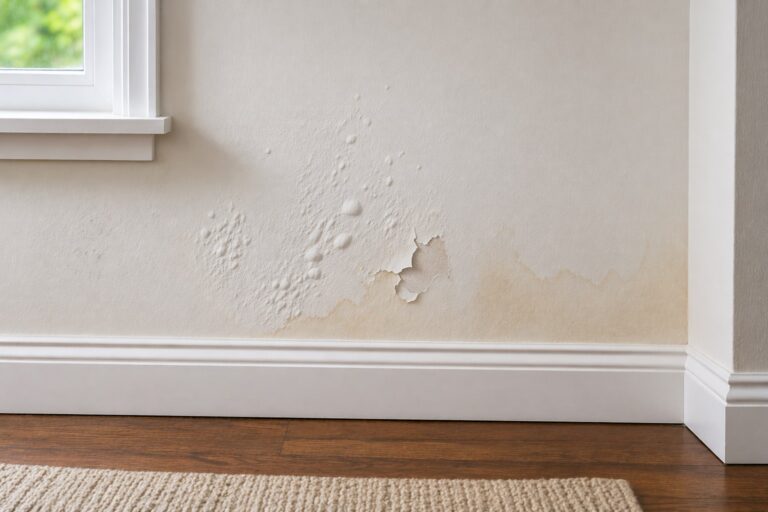
Water heater leaks do not always stay directly under the tank. In finished areas, moisture can move into flooring seams, under baseboards, behind nearby drywall, or along the edge of a utility closet. By the time the floor feels soft or the room smells musty, the leak may have already affected materials beyond the heater itself.
Look closely at the surfaces around the water heater, not just the tank. A small puddle may be the first sign, but the surrounding materials often show whether the problem has been happening repeatedly.
Common floor and wall warning signs include:
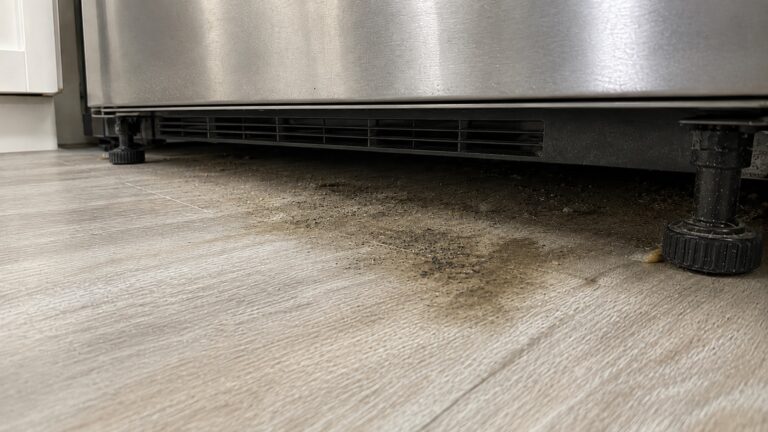
- Dark staining on concrete around the heater
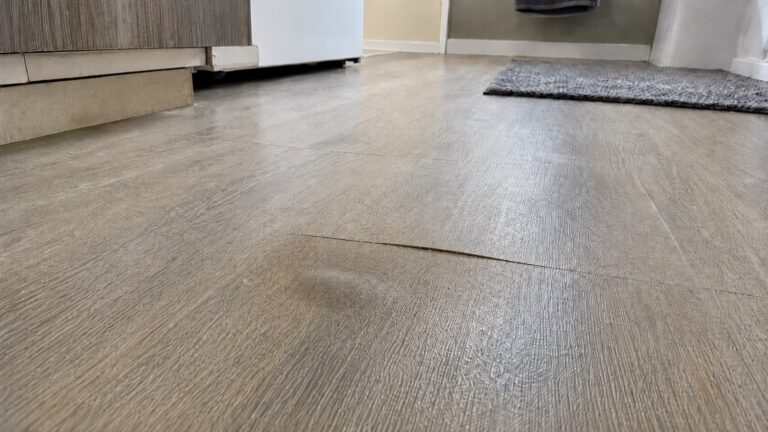
- Swollen laminate, vinyl, or wood flooring near the unit
- Soft or spongy spots in the floor
- Loose flooring edges near the heater closet
- Discoloration at nearby baseboards
- Paint bubbling or peeling near the floor
- Damp drywall behind or beside the heater
- Water marks spreading away from the heater area
These signs matter because water may be traveling farther than it appears on the surface. Flooring can trap moisture underneath the visible finish layer, especially if the water heater sits near vinyl plank, laminate, carpet, engineered wood, or sheet flooring. A surface that looks dry may still have moisture beneath it.
Check the edge closest to the heater first. Swelling at a flooring seam, a dark line at the baseboard, or a soft spot just outside a utility closet often shows where water has moved beyond the visible puddle.
If flooring has been wet from a water heater leak, drying the visible surface is only the first step. The area may also need airflow, moisture checks, and closer inspection at flooring edges. For recovery guidance after the leak source is controlled, see how to dry floors after water heater leaks.
Musty Smells Near the Water Heater
A musty smell near a water heater is a warning sign when it appears with damp flooring, water stains, rust, or recurring puddles. The smell may come from wet dust, damp cardboard, stored items, baseboards, drywall, flooring, or hidden materials that have stayed moist too long.
A musty odor does not prove that mold is visible or widespread. It does mean the area deserves closer inspection. Water heater closets and utility rooms often have limited airflow, which can allow damp materials to stay wet longer than expected. If boxes, towels, tools, insulation, or stored supplies are kept near the heater, they may absorb moisture and hold the smell even after the floor looks dry.
Musty odor becomes more concerning when you notice:
- The smell is strongest near the water heater
- The odor returns after cleaning
- Stored items near the heater feel damp
- Baseboards or drywall near the heater are discolored
- The room feels humid or closed-in
- Water has been present more than once
Recurring moisture is the key issue. A one-time spill that is dried quickly is different from a slow leak that keeps feeding dampness into surrounding materials. If the smell continues after the floor is cleaned and dried, look for a moisture source instead of trying to cover the odor with air fresheners. If you also see spotting, fuzzy growth, stained materials, or odor that stays strongest around the heater, compare the area with the signs in signs of mold growth near water heaters.
Signs the Leak May Be Getting Worse
Some water heater leak signs stay small for a while. Others begin to worsen quickly. A leak may be getting worse if the amount of water increases, the damp area spreads, the pan fills more often, or rust and staining become more noticeable.
Watch for changes over time. The pattern often tells you more than one isolated observation. If you dry the area and the water returns, the issue is active. If the puddle grows larger after hot water use, the leak may be connected to heating cycles, pressure changes, or tank operation. If the flooring starts to swell, the moisture is no longer limited to the surface.
Warning signs that the leak may be worsening include:
- Puddles that are larger than before
- Water returning within hours after drying
- Water in the pan more than once
- Steady dripping instead of occasional moisture
- New rust trails on the tank or floor
- Moisture spreading under nearby flooring
- Musty odor becoming stronger
- Soft flooring near the heater
- Water appearing from beneath the tank
Water appearing from beneath the tank should be treated as a higher-priority sign, especially if it is paired with rust, age, or recurring puddles. It may indicate a tank leak rather than a simple connection drip. If water is actively spreading or the leak is increasing, the heater should be evaluated promptly.
Moisture that keeps returning after cleanup is also a sign that the problem has not been resolved. In that situation, prevention steps such as pans, leak alarms, and routine monitoring are helpful only after the source is understood. For longer-term protection strategies, see how to prevent water heater leak damage.
What Can Look Like a Water Heater Leak but May Come From Somewhere Else
Water near a water heater does not always come from the water heater itself. Before assuming the tank has failed, look at the surrounding systems and surfaces. Water can travel along pipes, drip from nearby equipment, or collect at the heater because the floor slopes in that direction.
Possible moisture sources that can be mistaken for a water heater leak include:
- Condensation from nearby HVAC equipment
- A leaking pipe above or beside the heater
- A floor drain backing up or overflowing
- Water from a nearby washing machine, utility sink, or softener
- Rainwater or groundwater entering a basement or garage
- Cleaning water or spilled water that was not fully dried
- Condensation on cold pipes in a humid utility space
This is why the location of the puddle is not always enough to identify the source. Water can run down a pipe, follow the outside of the tank jacket, drip into the pan, or spread across a slightly sloped floor before you see it. A puddle near the base may be the final collection point, not the actual leak point.
Still, recurring moisture near a water heater should not be ignored just because another source is possible. If water appears more than once, leaves stains, causes rust, or affects nearby flooring, treat it as an active moisture problem until the source is confirmed.
First Steps After You Notice Water Heater Leak Signs
Once you notice water, staining, rust, corrosion, or damp flooring around a water heater, limit moisture exposure and keep the area visible. Remove stored items, especially cardboard, paper goods, fabrics, wood, or anything that can absorb water. Wipe up standing water if it is safe to do so, then watch whether moisture returns.
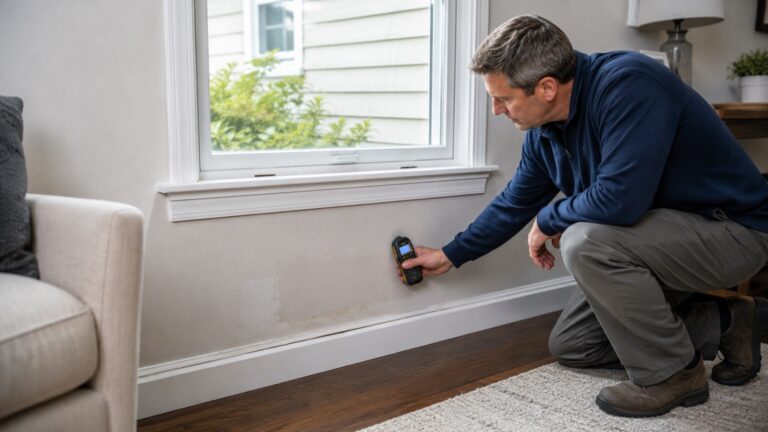
Next, look for the general direction of moisture. Is water collecting under the tank, dripping from a fitting, appearing in the pan, running from a discharge pipe, or spreading from another nearby appliance? You do not need to disassemble the heater to gather useful clues. The pattern can help separate a connection leak, possible tank leak, or nearby moisture source.
If water keeps appearing, the next step is a focused inspection. That can help separate tank leaks from valve leaks, connection leaks, and nearby plumbing leaks. For a more detailed process, use how to detect slow water heater leaks.
Leak monitoring can also help in areas where small leaks may go unnoticed, especially water heater closets, finished basements, garages with stored items, or utility rooms that are not checked daily. A simple leak sensor near the pan or base can alert you before water spreads into flooring. For product options, see best water leak sensors for early detection.
When to Call a Plumber
Some water heater leak signs are safe to observe briefly, but others call for professional help. A plumber should evaluate the system if the leak is active, recurring, connected to a safety valve, or coming from the tank itself.
Call a plumber if you notice:
- Water repeatedly appearing from beneath the tank
- Steady dripping from the water heater
- Water in the pan more than once
- Recurring discharge from the temperature and pressure relief valve pipe
- Severe rust or corrosion near the bottom of the tank
- Wet electrical components or wiring near the heater
- Water spreading into finished flooring, drywall, or baseboards
- A leak that grows instead of staying stable
- Any gas odor near a gas water heater
If water is actively spreading and you can safely reach the water shutoff without standing in water or touching electrical equipment, shutting off the water supply can help limit damage until a plumber arrives.
Do not plug, cap, or block the temperature and pressure relief valve discharge pipe. That valve is a safety component, and repeated discharge should be evaluated rather than bypassed. Also avoid opening electrical panels, handling gas components, relighting a gas water heater, or standing in water near electrical equipment.
If nearby materials have already become wet, the leak source and the moisture damage need to be handled as separate problems. Fixing the leak stops new water from entering the area, but it does not automatically dry flooring, drywall, trim, or stored items that already absorbed moisture.
How to Reduce Damage While You Wait for Repairs
While you are arranging repair or inspection, the safest damage-reduction steps are simple moisture-control actions. Keep the area open, remove absorbent storage, dry visible standing water, and avoid covering damp areas with rugs, boxes, mats, or plastic that can trap moisture underneath.
If the heater is in a finished room, pay close attention to flooring edges and baseboards. Water can move under trim and flooring before it looks serious from above. If the leak has reached flooring materials, follow a drying process after the plumbing issue is controlled.
For longer-term protection after the source is handled, such as pans, leak alarms, periodic inspection, and safer storage around the heater, see how to prevent water heater leak damage.
FAQ: Signs of Water Leaks Around Water Heaters
Is a little water around a water heater normal?
A one-time small wet spot may come from condensation, cleaning, or a nearby source, but recurring water around a water heater is not something to dismiss. If water returns after drying, appears in the pan, leaves stains, or shows up with rust or corrosion, treat it as a leak warning sign.
Does water in the water heater pan mean the tank is leaking?
Not always. Water in the pan can come from the tank, a valve, a pipe connection, the relief valve discharge pipe, or another component above the heater. However, water in the pan means something released water, so the source should be identified.
Can a water heater leak only sometimes?
Yes. Some leaks appear only during heating cycles, pressure changes, heavy hot water use, or certain temperature conditions. That is why a dry floor at one moment does not always mean the problem is gone.
Is rust around a water heater a leak sign?
Rust alone does not always prove an active leak, but rust combined with dampness, staining, mineral buildup, or recurring water is a stronger warning sign. Rust near the tank base, fittings, drain valve, or pan should be watched closely.
Can a small water heater leak affect nearby flooring?
Yes. A small recurring leak can move under vinyl plank, laminate, carpet edges, wood flooring, or baseboards before the surface looks badly damaged. The biggest warning signs are swelling seams, soft spots, dark baseboard lines, or musty odor near the heater.
Should I shut off the water if I see water around the heater?
If water is actively spreading and you can safely reach the shutoff valve without standing in water or touching electrical equipment, shutting off the water supply can limit damage. If you smell gas, see water near wiring, or notice relief valve discharge, call a qualified professional instead of handling gas or electrical components yourself.
Why does the floor near my water heater dry and then get wet again?
That pattern often means the moisture source is intermittent. The leak may happen during heating cycles, after hot water use, when pressure changes, or when a small valve or fitting releases water slowly. Repeated wet-dry cycles should be investigated.
Key Takeaways About Water Heater Leak Signs
- Water around the base of a water heater should not be ignored if it returns after drying.
- Water in the drain pan is a warning sign, not a repair.
- Rust combined with active moisture is more concerning than dry surface rust alone.
- Drips from fittings, valves, and discharge pipes can mimic a tank-bottom leak.
- Musty odors, soft flooring, and stained baseboards may mean moisture has spread beyond the heater.
- Do not plug or block the temperature and pressure relief valve discharge pipe.
- Once signs are visible, confirm the leak source and dry affected materials quickly.