
How to Prevent Water Heater Leak Damage
Water heater leaks can cause damage quickly because the first signs are often small and easy to miss. A little water in the pan, a damp ring around the base, or a wet spot on the floor may not look serious at first. But if moisture keeps returning, it can spread into flooring, baseboards, drywall, stored items, or nearby framing before the leak becomes obvious.
Preventing water heater leak damage means making small leaks visible early, containing water before it spreads, monitoring the heater area consistently, and responding before moisture reaches vulnerable materials. A clear floor area, a working drain pan, a leak sensor, and regular checks can make the difference between a small plumbing issue and expensive water damage.
This guide focuses on preventing damage from water heater leaks. If you are already seeing water, rust, pan moisture, or damp flooring, start with signs of water leaks around water heaters. If you need to trace the exact source of recurring moisture, use how to detect slow water heater leaks.
Why Water Heater Leak Damage Happens So Quickly
Water heater leak damage often happens faster than homeowners expect because the leak may begin in an area that is rarely inspected. Water heaters commonly sit in garages, basements, laundry rooms, utility closets, finished basement corners, or mechanical rooms. These spaces may be dark, crowded, or partly hidden by storage.
A slow leak may not create a dramatic puddle right away. Water may collect in the drain pan, darken concrete, run behind the heater, wick into cardboard boxes, or move under flooring seams. By the time the moisture is easy to see, it may already have reached materials that are harder to dry.
Water heater leak damage becomes more likely when:
- The heater area is blocked by storage
- The drain pan is hidden, damaged, or not draining properly
- The heater is installed near finished flooring or drywall
- No leak sensor is installed near the pan or base
- Rust, corrosion, or small drips are ignored
- The heater is in a room that is not checked often
- Water can spread under flooring before it is noticed
Finished areas raise the risk. A water heater on an open concrete garage floor may still cause problems, but a heater in a finished utility closet can damage baseboards, drywall, subflooring, trim, and rooms below. Upper-level water heater closets are especially important because a leak can spread into ceilings, walls, and flooring before anyone sees the source.
Prevention should focus on visibility, early warning, and fast response. This is part of a larger moisture-control strategy. For a broader framework, see how to prevent recurring moisture damage.
Inspect the Water Heater Area Regularly
The simplest way to prevent water heater leak damage is to inspect the area regularly. A quick visual check can catch water before it spreads, especially if the heater is older or located near finished materials.
Do not only look at the front of the heater. Look around the base, inside the pan, beneath valves, around pipe connections, near the discharge pipe, and along the nearby floor. If the heater is in a tight closet, use a flashlight so you can see the back and sides as much as possible.
Also check the floor just outside the closet or utility area. A small water heater leak may show up first as a damp threshold, stained baseboard, lifted flooring edge, or musty smell outside the immediate heater footprint.
During a routine check, look for:
- Water around the tank base
- Water inside the drain pan
- Rust-colored stains on the floor or pan
- Corrosion around fittings or valves
- Mineral buildup near pipe connections
- Drips from the drain valve
- Moisture near the temperature and pressure relief valve discharge pipe
- Damp flooring, trim, or nearby drywall
- Musty odor in the utility area
Check more often if the water heater is older, located in a finished area, or has shown any previous moisture signs. A heater that has already had pan water, rust, damp fittings, or intermittent drips deserves closer attention than a new heater in a fully visible location.
Inspection is not the same as repair. The goal is to notice early signs before damage spreads. If you repeatedly find moisture, move from routine inspection to source tracing. Water that returns after drying should not be treated as normal.
Water heaters are only one part of whole-home moisture control. The larger guide to finding, fixing, and preventing moisture problems in homes explains how small appliance leaks fit into broader household moisture prevention.
Keep the Area Around the Heater Clear
A clear water heater area makes leak damage less likely because early moisture is easier to see. When the heater is surrounded by boxes, bags, tools, paper goods, towels, cleaning supplies, or stored household items, a small leak can stay hidden while those materials absorb water.
Cardboard is especially risky because it can wick water from the floor and hold moisture against stored items. Fabric, rugs, wood, paper, and soft storage containers can also hide leaks and develop musty odors if they stay damp. Even plastic bins can become a problem if they block the pan, hide the base, or make it difficult to inspect behind the heater.
Keep the area around the heater open enough to inspect:
- The tank base
- The drain pan
- The pan drain line
- The drain valve
- The hot and cold water connections
- The shutoff valve
- The temperature and pressure relief valve discharge pipe
- The nearby floor, wall, and baseboards
Do not store absorbent materials directly against the water heater or on the floor beside it. If storage is unavoidable in the same room, keep items elevated, away from the pan, and far enough from the heater that you can see the floor. The goal is to avoid creating a hidden moisture zone around a leak-prone appliance.
A clear area also helps you notice patterns. If you can see the floor and pan, you are more likely to catch a damp ring, a small drip, rust stains, or water returning after drying. If the heater is blocked by storage, the first obvious sign may be damaged flooring or a musty smell.
Use a Proper Drain Pan and Keep It Visible
A water heater drain pan can reduce damage by catching water before it spreads across the floor, especially when the heater is near finished flooring, drywall, wood framing, storage areas, or rooms below. However, a pan only helps if it is visible, intact, and able to drain properly.
Water in the pan means water has escaped from somewhere, even if the pan caught it before it spread. Treat pan water as an early warning sign, not as proof that the area is protected.
Check the pan for:
- Standing water
- Rust stains or mineral residue
- Cracks, corrosion, or damage
- Blocked drain openings
- A drain line that is disconnected or poorly routed
- Water marks along the pan edge
- Stored items blocking your view of the pan
Repeated pan water can indicate a slow tank leak, fitting leak, drain valve drip, relief valve discharge, or nearby moisture source. The pan may reduce the spread of water, but the source still needs attention.
Drainage matters too. A pan without a working drain can overflow if the leak increases. A pan drain that is blocked, kinked, disconnected, or routed to the wrong place may fail when you need it most. If you are not sure whether the pan is installed or draining correctly, have it evaluated before relying on it to protect finished materials.
Install a Water Leak Sensor Near the Heater
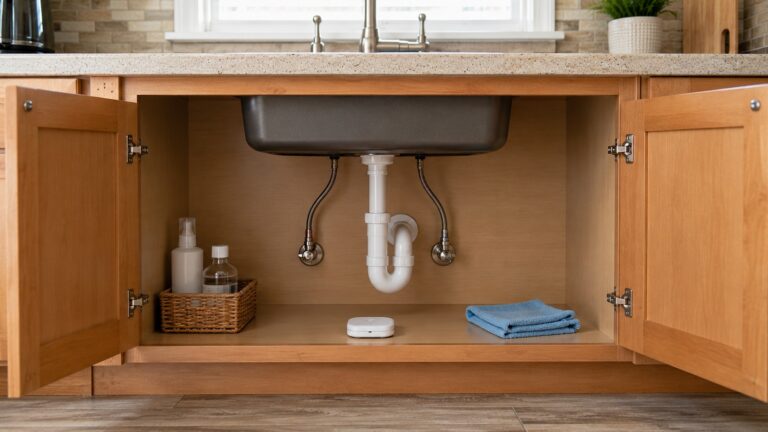
A water leak sensor is one of the most useful ways to prevent water heater leak damage because it can alert you before water spreads far from the heater. This is especially helpful in basements, garages, laundry rooms, utility closets, finished rooms, and upper-level water heater closets that are not checked every day.
Basic leak sensors sound an alarm when water reaches the sensor contacts. Smart leak detectors may send phone alerts, connect to a home system, or notify you when you are away. Either type can give you earlier warning than waiting until water reaches visible flooring or nearby rooms.
Good places to consider placing a leak sensor include:
- Near the edge of the water heater pan
- On the floor beside the tank base
- Near the lowest point where water would collect
- Beside finished flooring near the heater closet
- Near a pan drain outlet if that is where leaks would appear
- In an upper-level closet where overflow could damage rooms below
Place the sensor where it can monitor likely water paths without blocking a drain, touching hot components, interfering with the pan, or creating a tripping or electrical hazard. Test the alarm or app notification occasionally so you know it still works before a leak happens.
For simple options, see best water leak sensors for early detection. If you want alerts while you are away from home, compare options in best smart leak detectors for homes.
A leak sensor does not prevent the leak itself. It prevents damage by helping you find the leak early, before water spreads into flooring, trim, drywall, or stored belongings.
Watch Older Water Heaters More Closely
Older water heaters deserve closer monitoring because age increases the chance of corrosion, worn valves, loose fittings, sediment buildup, and pressure-related problems. An older heater is not automatically unsafe, but small moisture signs around an aging unit should be taken more seriously than the same signs around a new, fully visible installation.
Pay extra attention if the heater has:
- Rust near the base or fittings
- Mineral buildup around valves or pipe connections
- Water in the drain pan more than once
- A damp ring that returns after drying
- Drips from the drain valve
- Recurring discharge from the relief valve pipe
- Rumbling, popping, or unusual operating sounds
- Past leak repairs or repeated service issues
Many water heater leaks develop because of gradual wear rather than one sudden event. Corrosion, pressure changes, sediment, aging valves, and worn fittings can all create slow leak paths. For a deeper explanation of those causes, see why water heaters develop hidden leaks.
Older water heaters should also be easier to inspect, not harder. If the unit is blocked by storage, hidden behind shelving, or installed in a dark closet, small leaks can continue unnoticed. Keeping the area clear becomes more important as the heater ages.
If the connections are aging or you are unsure how old they are, review when to replace water heater supply lines before small connector problems become leak damage.
Protect Nearby Flooring, Walls, and Storage
Preventing water heater leak damage means thinking beyond the heater itself. The most expensive damage often happens when water reaches nearby materials such as finished flooring, subflooring, baseboards, drywall, trim, insulation, or stored belongings.
If the heater sits on bare concrete in an open garage, a small leak may be easier to see and clean up. If the heater sits near laminate, vinyl plank, carpet, engineered wood, drywall, or baseboards, the damage risk is higher. Water can move under flooring edges, behind trim, and into wall materials before the surface looks badly wet.
Reduce damage risk by keeping vulnerable materials away from the heater area whenever possible. Avoid placing cardboard boxes, paper supplies, fabric storage, wood items, rugs, or absorbent belongings directly beside the tank or pan. If items must be stored in the same room, keep them elevated and away from likely water paths.
Finished-floor areas need special attention. Do not cover the floor around a water heater with rugs or mats that can hide moisture. Do not stack storage against nearby baseboards. Do not assume a surface is dry just because the visible puddle is gone. Water can stay trapped beneath flooring seams or behind trim.
If water has already reached flooring, prevention has shifted into recovery. After the source is controlled, the affected materials may need a more careful drying process. For that stage, see how to dry floors after water heater leaks.
Respond Quickly When Moisture Appears
The best prevention plan still depends on fast response. If you notice water around the heater, water in the pan, rust with dampness, or wet flooring nearby, do not wait to see whether the problem disappears on its own. A slow leak can dry between cycles and then return later.
Start by drying visible water if it is safe to do so. Keep the area open and visible. Remove absorbent items from the floor. Take a photo of the moisture pattern so you can compare it later. Then check whether the water returns after hot water use, after the tank reheats, or over the next several hours.
If water returns, the next step is source confirmation. You need to know whether the moisture is coming from the tank, drain valve, pipe connection, relief valve discharge pipe, pan drain, or nearby source. Do not rely only on where the puddle collects.
Prompt response should include:
- Drying visible water safely
- Removing stored items from the wet area
- Checking whether the pan has standing water
- Looking for drips from valves or fittings
- Watching whether moisture returns after the area is dried
- Using a leak sensor for continued monitoring
- Calling a plumber if the leak is active, recurring, or safety-related
Do not stand in water near electrical equipment. Do not handle gas components. Do not plug, cap, or block the temperature and pressure relief valve discharge pipe. If water is near wiring, controls, gas equipment, or the relief valve discharge line, treat the situation as a professional evaluation issue.
After a leak repair, keep monitoring the area. Some moisture problems return because the original source was not fully corrected, nearby materials stayed damp, or more than one leak source was present. For post-repair monitoring, see how to monitor areas after leak repairs. If the same water heater leak pattern keeps coming back, review why water heater leaks keep returning.
Plan Preventive Plumbing Inspection When Risk Is Higher
Some water heater situations deserve preventive inspection before a small leak becomes water damage. The goal is not to replace parts unnecessarily. The goal is to catch aging, corrosion, pressure issues, valve problems, and drainage concerns before they allow water to spread into surrounding materials.
Preventive inspection is especially important when the water heater is located in a finished room, an upper-level closet, a basement with stored items, or any area where a leak could reach drywall, baseboards, flooring, or rooms below. The higher the damage risk, the less you should rely on occasional visual checks alone.
Consider professional inspection if you notice:
- Water in the pan more than once
- Rust or corrosion around the tank base
- Recurring discharge from the temperature and pressure relief valve pipe
- Mineral buildup around fittings or valves
- A drain pan that does not appear to drain properly
- Older plumbing connections near the heater
- Past leaks that have returned
- Finished flooring or drywall close to the heater
A plumber can evaluate issues that should not be handled by guesswork, including pressure-related discharge, unsafe valve conditions, tank corrosion, aging connectors, and drainage problems. This is especially important if the same moisture pattern keeps returning after minor repairs.
Leak Protection Mistakes That Still Allow Damage
Some protective measures help, but none of them replace visibility, monitoring, and prompt response.
Do not rely only on the drain pan
A drain pan can catch water, but it does not stop the leak. It can also overflow, drain poorly, crack, corrode, or become hidden behind storage. If the pan has water in it, treat that as a warning sign, not proof that the problem is solved.
Do not rely only on occasional checks
Visual checks are useful, but leaks can start between inspections. If the heater is in a finished space, upper-level closet, or rarely checked area, a leak sensor can provide earlier warning.
Do not ignore relief valve discharge
Water from the temperature and pressure relief valve discharge pipe can point to pressure, temperature, thermal expansion, or valve issues. Do not plug, cap, or block the pipe. Repeated discharge should be evaluated.
Do not hide the floor with rugs or storage
Rugs, mats, boxes, and storage bins can hide small leaks and trap moisture. The area near the heater should stay visible enough that water, staining, or pan overflow can be noticed quickly.
Do not assume concrete means no damage risk
Concrete may tolerate short-term moisture better than some finished materials, but it can still hide damp spots. Water can also move from concrete into nearby walls, baseboards, storage, wood framing, or finished flooring.
FAQ: How to Prevent Water Heater Leak Damage
Is a water heater pan enough to prevent water damage?
A water heater pan helps reduce damage, but it is not enough by itself. The pan must be visible, intact, and able to drain properly. Water in the pan still means water escaped from somewhere, so the source should be checked instead of assuming the pan solved the problem.
Where should I place a leak sensor near a water heater?
Place a leak sensor where water would likely appear first, such as near the pan edge, beside the tank base, or at the lowest point where water would collect. Keep it away from hot surfaces, drains, wiring, and service areas that should remain clear.
How often should I check my water heater for leaks?
A quick monthly visual check is a practical habit for many homes, but older heaters, finished spaces, upper-level closets, and heaters with previous leak signs should be checked more often. Any recurring moisture should be investigated instead of watched indefinitely.
Should I keep storage near a water heater?
Avoid storing cardboard, paper, fabric, rugs, wood, or absorbent items near the water heater. If storage is unavoidable in the same room, keep items elevated and away from the pan, base, and likely water paths.
Can a small water heater leak damage flooring?
Yes. A small leak can damage flooring if it continues long enough or reaches seams, edges, subflooring, or baseboards. Finished flooring can hide moisture underneath the surface, so recurring water near the heater should be handled quickly.
How do I protect finished flooring near a water heater?
Keep the area visible, use a properly draining pan when appropriate, install a leak sensor, avoid rugs or absorbent storage near the heater, and respond quickly to any water. If water reaches flooring, drying may need more than surface wiping.
When should I call a plumber to prevent leak damage?
Call a plumber if water appears from beneath the tank, pan water returns, the relief valve discharge pipe drips repeatedly, corrosion is severe, the leak is active, or water is near electrical or gas components. Do not plug or cap the relief valve discharge pipe to stop dripping. Preventive evaluation is also wise when an older heater is located near finished materials.
Keep Water Heater Leak Protection Simple and Visible
Preventing water heater leak damage depends on keeping the area visible enough to catch small problems before they spread. A visible pan, clear floor area, regular inspection routine, leak sensor, safer storage habits, and quick response plan can reduce the chance that a small leak becomes flooring, drywall, or structural moisture damage.
Water Heater Leak Damage Prevention Checklist
- Keep the water heater area clear so early leaks are visible.
- Inspect the pan, base, fittings, valves, floor, and nearby walls regularly.
- A drain pan catches water, but it does not repair the leak.
- A leak sensor can alert you before water spreads into finished materials.
- Older water heaters and heaters near finished flooring need closer monitoring.
- Keep absorbent storage away from the heater, pan, and likely water paths.
- Respond quickly to recurring moisture, pan water, rust, or relief valve discharge.
- Call a plumber when leak signs involve the tank base, pressure relief valve, severe corrosion, gas, electrical components, or repeated moisture.
2 Comments
Comments are closed.