How to Prevent Mold in Closets (Moisture Control Strategies for Enclosed Spaces)
To prevent mold in closets, keep stored items dry, improve airflow, avoid packing clothing tightly against walls, and keep indoor humidity below mold-friendly levels. Closets are enclosed spaces with limited air movement, so even small amounts of trapped humidity can create conditions where mold grows on walls, shelves, shoes, and fabrics.
Closet mold prevention is not about constant cleaning — it is about controlling moisture, airflow, and storage conditions before mold has a chance to form.
Closet moisture control is part of broader long-term prevention practices covered in how to prevent recurring moisture damage. Understanding how humidity behaves in enclosed spaces helps homeowners take practical steps that protect clothing, walls, and stored belongings.
If you’ve already noticed early warning signs like musty odors or slight dampness, focus first on finding the moisture pattern inside the closet. Repeated dampness, exterior-wall condensation, or humidity that keeps returning may point to a broader prevention issue, not just a cleaning problem.
This guide focuses specifically on prevention strategies that work in real-world closet conditions — including bedroom closets, hallway closets, linen closets, coat closets, and walk-in wardrobes. For broader storage spaces such as garages, basements, utility rooms, supply shelves, and long-term boxes or bins, see how to prevent mold in storage areas.
Why Closets Are Especially Vulnerable to Mold Growth
Closets naturally allow humidity to linger longer than it does in open rooms. Even when the rest of the house feels dry, the inside of a closet can remain damp enough to support mold growth.
Lack of Airflow in Enclosed Spaces
The most significant factor behind closet mold growth is limited air circulation. When closet doors stay closed and storage areas are packed tightly, humid air becomes trapped inside.
Without airflow, moisture settles onto surfaces such as drywall, shelving, and fabrics. Over time, this persistent moisture creates the ideal environment for mold to develop.
If you’ve noticed similar moisture buildup elsewhere in the home, it may be helpful to review broader humidity symptoms described in signs of high humidity in a house, since whole-house humidity often contributes to closet mold risk.
Temperature Differences Inside Closet Spaces
Closets frequently stay slightly cooler than surrounding rooms, especially when located along exterior walls. Cooler surfaces attract moisture from humid air, allowing small amounts of condensation to form over time.
This is especially common in:
- Closets built against exterior walls
- Closets near bathrooms
- Closets with poor insulation
- Closets located in basements
These locations experience temperature differences that increase condensation risk, particularly during seasonal humidity changes. If the closet is below grade or connected to a damp basement area, the prevention strategy may need to include basement moisture control practices such as those covered in how to prevent mold in basements.
Exterior Wall Closet Risks
Closets attached to exterior walls face higher mold risk because those walls are more exposed to outdoor temperature changes. When warm indoor air meets a cooler wall surface, condensation can develop inside the closet — even if the wall itself appears dry.
This situation becomes more dangerous when clothing or storage items are pressed directly against the wall, blocking airflow and trapping moisture.
If moisture conditions behind walls are suspected, it may also be useful to understand broader wall-related moisture behavior described in what causes mold in walls, since similar mechanisms often affect closet spaces.
Humidity Trapped Inside Closet Spaces
Humidity becomes trapped when:
- Closets are tightly packed
- Doors remain closed for long periods
- Damp items are stored inside
- Airflow paths are blocked
Because closets are smaller than rooms, humidity can rise quickly and remain trapped after the surrounding room feels dry. This is why closet mold can appear even in homes without obvious water damage.
Common Causes of Mold in Closets
Closet mold rarely develops from a single mistake. In most homes, several small moisture problems combine over time. Understanding the most common causes helps homeowners target the real source of risk instead of relying on temporary fixes.
Many of these causes relate to humidity behavior that affects the entire house, even if the damage first appears in closets. If you suspect humidity is affecting multiple areas, reviewing how to reduce humidity in a house can help identify broader conditions that contribute to enclosed-space moisture problems.
Storing Damp Clothing or Shoes
One of the most common and underestimated causes of closet mold is storing items that still contain moisture. Even slightly damp materials release humidity into the air inside the closet, raising moisture levels around surrounding surfaces.
Common examples include:
- Putting away clothing that has not fully dried
- Storing sweaty workout gear
- Leaving damp towels in closet spaces
- Placing wet or recently worn shoes on shelves
- Returning clothing to the closet after humid outdoor exposure
Fabrics hold moisture longer than many homeowners realize. A shirt that feels dry to the touch may still release moisture slowly into the surrounding air. Shoes are especially risky because leather and fabric footwear can trap moisture deep inside materials long after use.
Poor Air Circulation Inside Closets
Closets depend heavily on airflow to maintain safe humidity levels. Without consistent air movement, moisture remains trapped instead of dispersing into the larger room.
Poor airflow commonly results from:
- Closet doors remaining closed at all times
- Overfilled shelves and tightly packed clothing
- Items stored directly against walls
- Lack of ventilation openings
- Blocked airflow from nearby vents
Air circulation problems often develop gradually as closets become more crowded over time. What begins as safe storage can turn into a moisture trap simply because air can no longer move between items.
Closets Located Along Exterior Walls
Closets built along exterior walls are among the highest-risk locations for mold development. Exterior walls experience temperature changes throughout the day, especially in climates with high humidity or seasonal temperature swings.
Warning signs of exterior-wall closet risk include:
- Closets feeling cooler than surrounding rooms
- Musty odors concentrated along one wall
- Clothing touching the wall feeling slightly damp
- Mold forming in consistent vertical patterns
Condensation often develops when humid indoor air touches cooler surfaces. Even when moisture is not visible, repeated condensation cycles can slowly introduce enough moisture to support mold growth.
In some cases, persistent condensation inside walls contributes to recurring closet moisture. This behavior is closely related to issues described in prevent condensation inside walls, which explains how trapped moisture forms behind surfaces.
High Indoor Humidity Levels
Closets are highly sensitive to overall indoor humidity conditions. If humidity levels inside the home remain elevated, closets will often be the first spaces to develop mold problems.
Typical sources of high indoor humidity include:
- Frequent shower use without proper ventilation
- Cooking without using exhaust fans
- Drying laundry indoors
- Basement moisture problems
- Poor ventilation throughout the home
Humidity levels above 60 percent create conditions where mold growth becomes increasingly likely. Even if humidity levels fluctuate during the day, repeated exposure to high moisture conditions significantly increases risk.
If multiple areas of the home show moisture symptoms, including closets, walls, or windows, the problem may extend beyond the closet and should be handled as a whole-house humidity issue.
Seasonal Humidity Changes
Many homeowners notice closet mold problems during specific seasons rather than year-round. Seasonal humidity spikes can overwhelm closet airflow and moisture control, particularly during warm, rainy, or poorly ventilated periods.
This is especially common during:
- Spring humidity increases
- Summer heat waves
- Rainy seasons
- Periods of reduced ventilation
Closets tend to hold moisture longer than open spaces. Seasonal monitoring becomes especially important in regions where humidity levels fluctuate significantly throughout the year.
Overcrowded Storage Conditions
Closets packed tightly with clothing and storage containers often develop moisture problems more quickly than partially filled closets.
Overcrowding increases mold risk because it:
- Blocks natural airflow between items
- Creates shaded areas that retain moisture
- Prevents surfaces from drying properly
- Traps humidity deep inside storage areas
When clothing is compressed tightly together, moisture becomes trapped between layers of fabric and can support mold growth long before visible signs appear.
Closets filled with seasonal storage bins also increase risk, especially when containers are stacked tightly against walls or ceilings. For broader strategies that protect stored boxes and materials in multiple locations, see how to prevent mold in storage areas.
How to Improve Airflow Inside Closets
Improving airflow is one of the most effective ways to prevent mold inside closets. Air movement helps remove trapped humidity, reduces surface moisture, and allows materials to dry naturally.
Closet airflow does not require complex equipment in most homes. Small layout changes and consistent ventilation habits often produce noticeable improvements in moisture control.
Leave Space Between Stored Items
One of the simplest ways to improve airflow is to create physical gaps between stored items. Good spacing allows air to move naturally between surfaces, helping them dry after exposure to humidity.
Practical spacing recommendations include:
- Leave at least 1–2 inches between clothing items when possible
- Avoid pressing storage boxes tightly against walls
- Maintain small gaps between shelves and stored materials
- Rotate seasonal storage items periodically
Closets that feel crowded often develop hidden humidity pockets behind clothing and boxes. Over time, these trapped moisture zones can support mold growth.
Keep Items Away From Exterior Walls
Exterior walls inside closets often remain cooler than surrounding surfaces. When clothing or storage containers are pressed directly against these walls, airflow becomes restricted and condensation risk increases.
Recommended spacing practices:
- Keep clothing at least 1–2 inches away from exterior walls
- Avoid placing shelving tightly against wall surfaces
- Use adjustable shelving systems when possible
- Inspect wall surfaces periodically for signs of moisture
This spacing allows warm indoor air to circulate and reduces the chance of persistent moisture buildup. If mold has previously developed along closet walls, it may be helpful to understand the early warning patterns explained in signs of mold behind walls, since similar moisture conditions can affect closet interiors.
Allow Periodic Air Exchange
Closets benefit from periodic air exchange with surrounding rooms. Even brief airflow exposure helps remove humidity that accumulates inside enclosed storage spaces.
Effective air exchange practices include:
- Opening closet doors periodically during the day
- Allowing air circulation after storing freshly washed clothing
- Increasing airflow during humid weather
- Using room fans to encourage air movement near closet openings
Homes with tightly sealed construction often require intentional ventilation to maintain safe humidity levels inside closets.
Avoid Blocking Ventilation Paths
Some closets include nearby air vents or indirect airflow paths connected to the room’s ventilation system. Blocking these paths prevents natural air movement and increases moisture retention.
Common ventilation mistakes include:
- Placing boxes in front of vents
- Stacking items near airflow openings
- Covering ventilation gaps with storage materials
- Using large storage bins that restrict airflow circulation
Even partial airflow obstruction can increase humidity levels in enclosed areas.
Improve Shelf and Storage Layout
The way shelves and storage systems are arranged directly affects airflow patterns inside closets. Poor layout design traps humidity and prevents natural drying.
Improved layout techniques include:
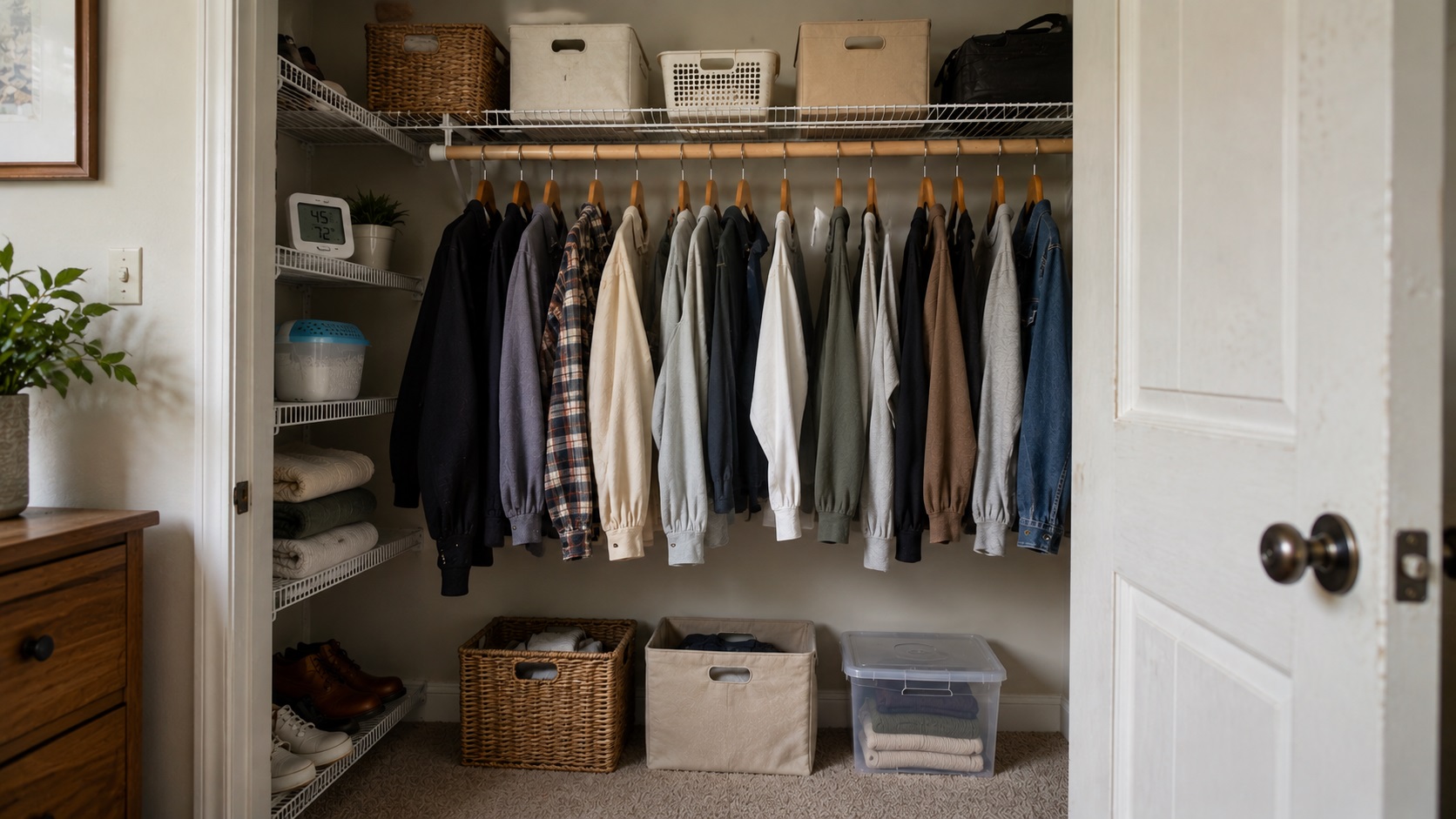
- Using open-wire shelving instead of solid shelving when possible
- Maintaining gaps between stacked storage containers
- Avoiding floor-to-ceiling stacking that blocks airflow
- Using breathable storage containers rather than airtight bins
These layout adjustments often work better than adding equipment because they allow moisture to dissipate naturally instead of remaining trapped inside storage layers.
Use Fans Strategically During Humid Conditions
During periods of high humidity, temporary airflow assistance can help prevent moisture buildup. Portable fans placed near closet openings encourage air exchange and reduce stagnant humidity zones.
This approach is especially helpful:
- After rainy weather
- During seasonal humidity spikes
- When drying laundry indoors
- After storing multiple clothing items at once
Fans do not remove moisture directly, but they help distribute humidity more evenly throughout the room, reducing localized buildup inside closets.
How to Control Humidity in Closet Spaces
While airflow is essential, humidity control determines whether mold can form in the first place. Closets that maintain safe humidity levels rarely develop mold problems, even when airflow conditions are limited.
Understand Safe Closet Humidity Levels
Closet humidity should generally remain below 50–55 percent relative humidity. Levels above this range increase the likelihood of moisture accumulation and mold formation.
For closet monitoring, place a small hygrometer on a shelf or near the back wall for several days instead of checking only the open room. If closet readings regularly rise above 60 percent, or stay higher than the surrounding room, improve airflow and reduce moisture sources before relying on moisture absorbers alone.
Signs of elevated closet humidity include:
- Musty odors when opening the closet
- Clothing that feels slightly damp
- Condensation on nearby surfaces
- Persistent odor buildup inside stored fabrics
Monitoring humidity levels periodically helps identify problems before mold develops. For step-by-step guidance, see how to test indoor humidity levels.
Use Moisture Absorbers as Supplemental Support
Moisture absorbers can help reduce localized humidity inside closets, especially in small enclosed spaces. They are most effective when used alongside airflow improvements and broader humidity management.
Moisture absorbers are especially useful:
- In small closets
- During seasonal humidity spikes
- In areas with limited ventilation
- When storing moisture-sensitive materials
However, moisture absorbers alone cannot correct major humidity problems affecting the entire home. If humidity issues extend beyond closets, larger solutions may be required.
Use Dehumidifiers When Humidity Is Persistent
In homes with consistently high humidity, portable or whole-room dehumidifiers may be necessary to maintain safe conditions. Dehumidifiers remove moisture from the air and help stabilize humidity levels throughout the home.
Proper humidity control settings are important for effective operation. For guidance, see Best Dehumidifier Settings to Prevent Mold.
Closets located near bathrooms, basements, or laundry areas often benefit from nearby dehumidification.
Persistent humidity conditions should not be ignored. If mold problems continue to appear in multiple areas, the broader moisture conditions described in signs of high humidity in a house may indicate a whole-home humidity issue requiring attention.
How to Store Clothing to Prevent Mold Growth
The way clothing and stored items are handled inside closets plays a major role in mold prevention. Even when airflow and humidity are controlled, poor storage habits can introduce moisture into enclosed spaces and increase mold risk.
Always Store Completely Dry Clothing
One of the most important prevention habits is ensuring that all clothing is completely dry before placing it in the closet. Even slightly damp materials release moisture into enclosed spaces, raising humidity levels over time.
Items that commonly introduce moisture include:
- Towels that have not fully dried
- Recently worn workout clothing
- Clothing exposed to rain or humidity
- Shoes containing retained moisture
- Laundry removed from dryers too early
When moisture accumulates repeatedly, it can create hidden humidity zones that support mold growth long before visible signs appear.
Protect Shoes and Leather Items
Shoes and leather materials are particularly vulnerable to mold because they absorb moisture and dry slowly. When stored without proper ventilation, these items can trap humidity inside the closet environment.
To reduce mold risk:
- Allow shoes to dry fully before storing
- Avoid stacking damp footwear in enclosed areas
- Use breathable storage containers instead of sealed bins
- Inspect leather items periodically for early odor signs
Leather and synthetic materials often develop mold before drywall surfaces show visible growth. Early prevention protects both clothing and closet structures.
Avoid Overcrowding Fabric Storage
Closets filled with tightly packed clothing create shaded, low-airflow zones where moisture can accumulate. These hidden areas often remain damp even when the rest of the closet appears dry.
Overcrowding increases mold risk by:
- Blocking airflow between garments
- Trapping humidity inside folded layers
- Preventing fabrics from drying naturally
- Creating surfaces where mold can spread unnoticed
Reducing storage density helps maintain consistent airflow throughout the closet and allows moisture to dissipate more easily.
Use Breathable Closet Storage for Clothing and Shoes
Closet storage containers can either help or worsen mold prevention efforts depending on their design. Airtight bins can trap moisture around clothing, shoes, and accessories, while breathable closet storage allows humidity to escape more easily.
Better storage choices include:
- Fabric storage bins
- Ventilated plastic containers
- Open shelving systems
- Breathable garment bags
Avoid sealing damp items inside containers, as trapped moisture can create ideal mold conditions even without external humidity.
Special Prevention Tips for Closets on Exterior Walls
Closets located along exterior walls require additional attention because they experience greater temperature variation than interior closet spaces. These temperature changes create condensation risk that may not be visible immediately.
Create an Air Gap Between Walls and Stored Items
Maintaining space between stored materials and exterior walls reduces moisture buildup and improves airflow. Without this gap, humidity can accumulate behind stored items and remain trapped for long periods.
Recommended practices include:
- Leave a small gap between shelving and walls
- Avoid stacking boxes tightly against exterior surfaces
- Position clothing slightly forward from wall surfaces
- Check walls periodically for signs of dampness
This simple adjustment helps prevent persistent condensation from forming behind stored items.
Monitor Exterior Wall Moisture Patterns
Exterior wall closets should be inspected periodically for subtle moisture patterns. Even minor changes in surface conditions can signal developing humidity problems.
Watch for signs such as:
- Cool or damp wall surfaces
- Persistent musty odors
- Discoloration along wall edges
- Localized mold forming in consistent areas
If repeated moisture patterns appear, the problem may extend beyond the closet itself. In such cases, understanding underlying wall moisture behavior — such as the condensation patterns explained in prevent condensation inside walls — can help identify the true source of risk.
Early Warning Signs That Closet Mold May Be Forming
Preventing mold requires recognizing early warning signs before visible damage develops. Mold often begins quietly, producing subtle changes that homeowners may overlook until contamination spreads.
Musty Odors When Opening Closet Doors
A persistent musty smell is often the earliest sign of developing mold conditions. This odor commonly indicates elevated humidity, hidden moisture buildup, early-stage mold activity, or fabric contamination.
If odors appear repeatedly, airflow and humidity conditions should be evaluated immediately.
Clothing Developing Persistent Odors
Clothing that develops a musty smell after storage often signals elevated humidity inside the closet. Fabrics absorb airborne moisture and can support mold growth even when wall surfaces appear unaffected.
Repeated odor problems should never be ignored, as they often indicate conditions that allow mold to spread over time.
Localized Surface Changes
Early surface changes inside closets may include faint discoloration or texture variations. These changes often appear along walls, corners, or shelving edges where moisture accumulates.
Small visible patches can signal broader hidden moisture issues. If visible mold appears, it may already be present behind stored materials or inside wall surfaces.
When visible mold appears on painted closet walls, proper surface-cleaning procedures described in remove mold from painted walls may become necessary before prevention steps can work.
When Closet Mold Risk Requires Professional Evaluation
While many closet moisture problems can be managed with airflow and humidity control, some conditions require professional assessment. Ignoring persistent moisture patterns can lead to structural damage that extends beyond the closet.
Repeated Mold Growth in the Same Location
If mold continues to return after cleaning or airflow adjustments, an underlying moisture source may be present — a pattern often explained in why mold keeps coming back after cleaning. This often indicates hidden humidity infiltration or structural condensation issues.
Recurring mold patterns should be investigated rather than repeatedly cleaned.
Persistent Dampness or Wall Moisture
Closets that consistently feel damp, even after improving airflow, may be affected by hidden moisture sources. These sources may include wall leaks, insulation problems, or external moisture intrusion.
Structural moisture conditions often require professional inspection tools to identify accurately.
Moisture Affecting Multiple Areas of the Home
If mold or humidity symptoms appear in several locations — such as closets, walls, and windows — the issue likely involves whole-house moisture conditions rather than isolated closet problems.
When moisture symptoms appear in several areas, it is usually better to identify the recurring moisture pattern than to keep treating each closet as a separate cleaning problem.
Frequently Asked Questions About Preventing Mold in Closets
How do I keep mold from growing in my closet?
The most effective prevention methods include improving airflow, controlling humidity levels, storing dry clothing, and reducing overcrowding. Consistent airflow and moisture control prevent humidity from reaching levels that support mold growth.
Why do my clothes smell musty even without visible mold?
Musty odors usually develop before mold becomes visible. Fabrics absorb moisture from humid air, allowing microscopic mold growth to begin even when surfaces appear clean.
Should closet doors be left open to prevent mold?
Leaving closet doors open periodically can improve airflow and reduce humidity buildup. However, this method works best when combined with proper storage spacing and humidity control.
Do moisture absorbers really prevent closet mold?
Moisture absorbers can help reduce localized humidity but should not be relied upon as the only prevention method. Airflow and humidity management remain the most effective long-term solutions.
Is mold more likely in walk-in closets or small closets?
Both closet types can develop mold if airflow and humidity are poorly managed. Small closets trap humidity more easily, while large walk-in closets often experience airflow issues due to overcrowding.
How often should closets be ventilated?
Closets should receive regular airflow, especially during humid weather or after storing freshly washed clothing. Periodic ventilation helps maintain safe moisture levels inside enclosed storage areas.
Key Takeaways
- Closet mold prevention starts with moisture control, airflow, dry clothing storage, and enough spacing for walls, shelves, shoes, and fabrics to dry. Closets are highly vulnerable to mold due to limited airflow and trapped humidity.
- Storing damp clothing is one of the most common causes of closet mold.
- Maintaining airflow gaps between stored items helps reduce moisture buildup.
- Humidity levels above 60 percent significantly increase mold risk.
- Exterior wall closets require extra spacing and periodic inspection.
- Musty odors are often the earliest warning sign of developing mold conditions.
- Persistent moisture problems may require professional evaluation.