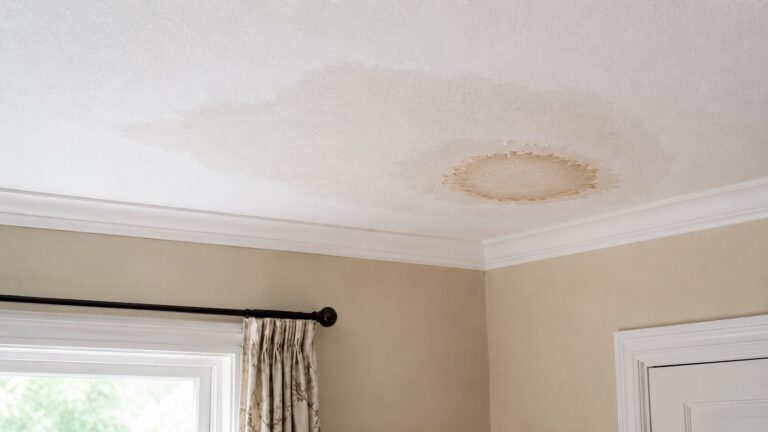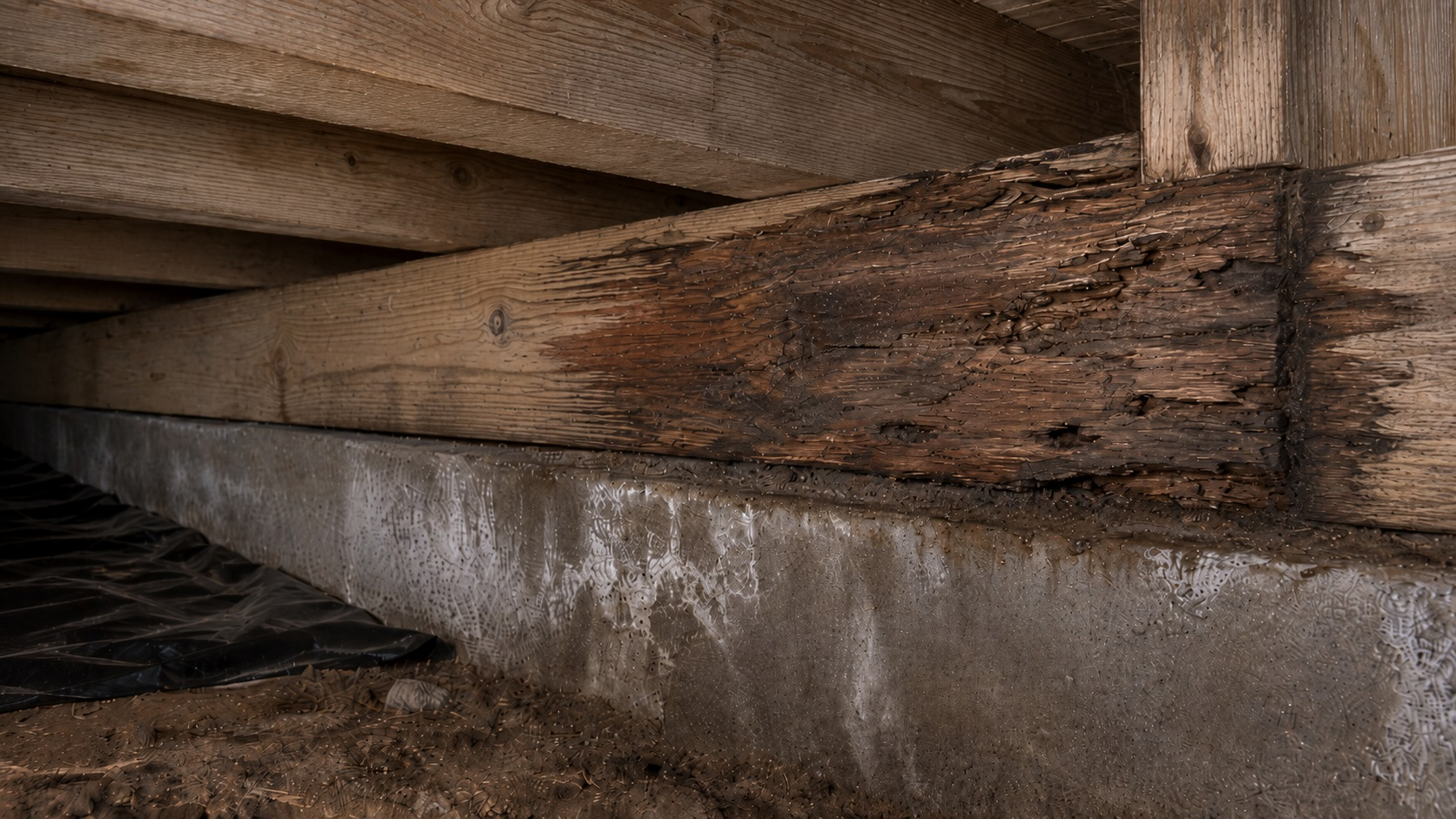
How Wood Rot Develops After Water Damage
Wood rot does not develop the moment wood gets wet. A short leak that is found quickly and dried properly may not cause rot at all. The risk begins when water damage leaves wood damp long enough for decay organisms to break down the wood fibers.
This distinction matters because homeowners often confuse wet wood, moldy wood, stained wood, and rotten wood. They are not the same condition. Wet wood may dry and remain usable. Moldy wood may indicate a moisture problem without proving structural failure. Rotten wood means decay has begun to damage the material itself.
Wood rot after water damage is most likely when moisture is hidden, repeated, or trapped. A slow plumbing leak inside a wall, damp crawl space joists, a subfloor under a leaking toilet, roof sheathing below a persistent roof leak, or a sill plate near foundation moisture can stay damp long after the visible surface looks dry.
This article explains how wood rot develops after water damage, what conditions allow it to progress, and when damp wood becomes a structural concern. For broader moisture-related structural warning signs, see Signs of Structural Moisture Problems. For whole-home moisture control, see How to Find, Fix, and Prevent Moisture Problems in Homes.
What Wood Rot Means After Water Damage
Wood rot is the breakdown of wood caused by decay fungi. These fungi use parts of the wood as a food source. As the decay progresses, the wood can lose firmness, stiffness, strength, and structural reliability.
That is different from simple staining. A dark stain means water reached the wood or carried material into it. A stain may remain even after the wood is dry and solid. Rot means the wood itself is being broken down. When rot advances, the wood may become soft, punky, crumbly, stringy, brittle, or cracked.
Wood rot is also different from surface mold. Mold can grow on the surface of damp wood, dust, paper, drywall, or other materials. Mold is a warning sign that moisture conditions are wrong, but mold does not automatically mean the wood has lost structural strength. Rot becomes more serious because decay fungi affect the wood fibers themselves.
In structural areas, wood rot matters because framing relies on wood strength and connection integrity. Joists, beams, posts, sill plates, rafters, headers, subfloors, and wall plates must remain solid enough to carry and transfer loads. If rot develops in those areas, the issue can move beyond cleanup and become a structural repair concern. For the broader mechanics of moisture-related strength loss, see How Moisture Weakens Structural Framing.
Conditions That Allow Wood Rot to Develop
Water damage creates rot risk by supplying the moisture decay fungi need. But moisture is only one part of the process. Wood rot develops when several conditions exist together long enough for decay to become active.
Moisture
Moisture is the main trigger homeowners can control. Wood that stays dry is much less likely to rot. Wood that gets wet and dries quickly may also avoid rot. The danger increases when wood remains damp because of a leak, flood, condensation problem, crawl space humidity, wet insulation, exterior water intrusion, or repeated moisture exposure.
Moisture can enter wood through surfaces, cracks, joints, fastener holes, and cut ends. End grain is especially vulnerable because it can absorb moisture more readily. That is why rot often begins at joist ends, cut framing members, post bases, sill plates, trim ends, and other places where water can soak into exposed wood fibers.
The longer the moisture remains, the greater the risk. Pay special attention to wood ends, seams, joints, and bearing points because these areas often stay damp longer than flat exposed surfaces. A one-time spill on exposed framing is not the same as a slow leak behind drywall. A roof leak found immediately is not the same as roof sheathing that stays damp through repeated storms. Rot needs time, and trapped moisture provides it.
Wood as a Food Source
Decay fungi need organic material, and wood provides that food source. In homes, this can include framing lumber, subfloors, plywood, OSB, roof sheathing, sill plates, trim, wood posts, joists, rafters, and structural panels.
Some materials are more exposed to rot risk because of where they sit. Wood near foundations, crawl spaces, bathrooms, kitchens, laundry rooms, roof leaks, exterior doors, windows, and siding transitions is more likely to experience repeated moisture. Even durable framing lumber can decay if it stays damp long enough.
Oxygen, Temperature, and Time
Wood rot also needs oxygen, suitable temperatures, and time. These conditions are common in many hidden building cavities. A wall cavity, crawl space, damp basement ceiling, or attic roof assembly can provide enough air and moderate temperature for decay to progress if moisture remains available.
Time is the factor that separates a minor wetting event from a rot problem. A board that gets wet and dries quickly may not develop decay. A board that stays damp behind finishes, inside insulation, or against a wet surface has more opportunity for rot to begin.
This is why drying must be thorough, not just cosmetic. If the visible surface dries but the wood inside a cavity remains damp, rot risk may continue even though the room looks normal.
The Difference Between Wet Wood, Moldy Wood, and Rotten Wood
One of the most important parts of understanding wood rot is separating three related but different conditions: wet wood, moldy wood, and rotten wood. They can appear together, but they do not mean the same thing.
Wet Wood
Wet wood has absorbed moisture, but it has not necessarily decayed. It may look darker, feel cool, smell damp, or show elevated moisture readings. If the source is fixed quickly and the wood dries completely, wet wood may remain structurally sound.
Wet wood becomes more concerning when it stays damp, is enclosed, touches wet insulation, sits against damp masonry, or gets wet repeatedly. The question is not just whether the wood got wet. The question is whether it dried before decay conditions became established.
Moldy Wood
Moldy wood has surface growth caused by excess moisture. Mold can appear on framing in crawl spaces, attics, wall cavities, basements, and around leaks. Mold means the area has had enough moisture to support growth, so it should not be ignored.
However, mold is not the same as rot. Mold may grow on the surface without deeply breaking down the wood fibers. The wood may still be firm beneath the surface growth. The moisture problem still needs correction, but surface mold alone does not prove that structural framing has failed.
If framing has surface mold along with softness, crumbling, sagging, or decay, the concern is higher. That combination suggests the problem may involve both moisture contamination and material breakdown.
Rotten Wood
Rotten wood has begun to lose material integrity. It may feel soft, punky, brittle, stringy, crumbly, hollow, or easy to penetrate. In some cases, it may show cubical cracking, dark decay, fibrous texture, or weak layers. For a fuller symptom-based guide, see Signs of Structural Wood Rot.
Rotten wood is more serious than wet or moldy wood because the decay affects strength. This matters most when the affected wood is structural. A rotted piece of trim may be a localized repair. A rotted joist end, sill plate, beam, post, rafter, or subfloor section can affect how loads are supported.
How Wood Rot Starts After a Leak or Flood
Wood rot usually begins quietly. In many homes, the first stage is not crumbling wood. It is hidden dampness. A leak wets the wood, the area fails to dry, and decay conditions slowly become more favorable.
Water Enters the Wood
The first stage is water entry. Water may come from a sudden event, such as flooding, a burst pipe, or a roof leak. It may also come from a slow source, such as a dripping supply line, leaking toilet flange, damp crawl space, condensation, poor drainage, or water entering around windows, doors, siding, or flashing.
Water often collects at vulnerable points. It may run to the bottom of a wall cavity, soak into a subfloor seam, enter the cut end of a joist, sit against a sill plate, wet roof sheathing around a penetration, or collect around a post base. These areas are common starting points because moisture lingers there.
The Wood Stays Damp
The second stage is moisture retention. Wood rot is much more likely when wood stays damp instead of drying quickly. Hidden building assemblies make this common. Drywall, insulation, flooring, cabinets, roofing, siding, and vapor-retarding materials can slow drying and trap moisture around wood.
For example, a bathroom leak may soak the subfloor under tile or vinyl. The visible surface may be wiped dry, but the subfloor below may stay damp. A crawl space may look dry on a sunny day while joists remain exposed to high humidity season after season. A roof leak may leave only a ceiling stain while roof sheathing stays damp above the insulation.
Persistent dampness is the bridge between water damage and rot. If the wood dries before decay becomes active, rot may not develop. If the wood stays damp behind flooring, insulation, drywall, trim, or sheathing, the risk continues even when the room surface looks dry.
Decay Begins Before Obvious Crumbling
Rot can begin before homeowners see dramatic symptoms. Early decay may only look like dark staining, dull wood, slight softness, musty odor, or repeated dampness. The wood may still look mostly intact, especially if the decay is starting at an end, joint, connection, or hidden side.
As decay progresses, the wood may lose surface hardness and fiber strength. It may become easier to dent, scrape, or compress. Fasteners may loosen because the surrounding wood is no longer holding them as firmly. Structural members may begin to sag, split, or deform if enough material integrity is lost.
This is why early correction matters. By the time wood is visibly crumbling, rot has already passed the moisture-warning stage and entered material breakdown.
Why Hidden Moisture Makes Rot More Likely
Hidden moisture is one of the biggest reasons wood rot develops after water damage. When water is visible on the surface, homeowners usually respond quickly. When water is trapped behind drywall, under flooring, inside insulation, below cabinets, or above ceilings, wood may stay damp for much longer before anyone notices.
Rot risk increases when moisture is both hidden and repeated. A slow leak that wets the same framing every day creates more risk than a single spill that dries quickly. A crawl space that stays humid for months creates more risk than a short-term damp spot. A roof leak that returns every storm creates more risk than one isolated leak that is repaired immediately.
Wall Cavities and Bottom Plates
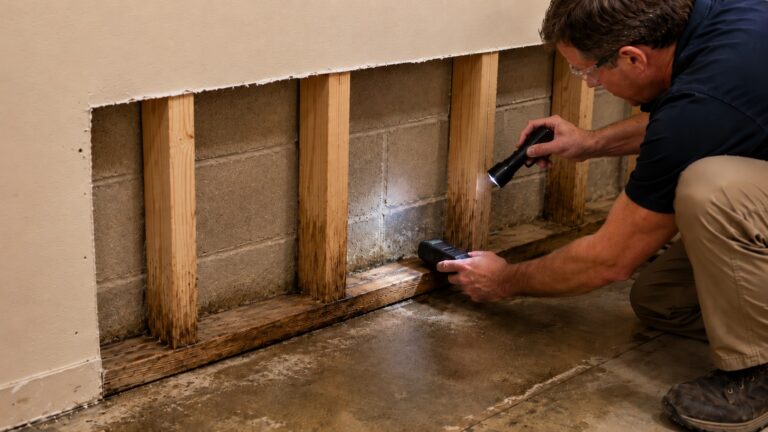
Wall cavities can hide moisture after plumbing leaks, flooding, window leaks, roof leaks, siding failures, or exterior water intrusion. The drywall may dry on the room side while insulation, studs, sheathing, or bottom plates remain damp inside the wall.
Bottom plates are especially vulnerable because water often collects at the base of wall cavities. After a flood or leak, water can wick into drywall and settle against the wood plate along the floor. If the wall is closed before the plate dries, decay conditions can continue behind the surface.
Rot in a bottom plate becomes more serious when the wall is load-bearing, supports a beam, sits on a foundation edge, or connects to exterior wall framing. A stained bottom plate may not be rotten, but a soft, crumbling, or repeatedly damp plate needs evaluation.
Subfloors and Enclosed Layers
Subfloors are common rot locations because finished flooring can trap moisture above or below the structural panel. Water from toilets, tubs, showers, dishwashers, washing machines, refrigerators, water heaters, exterior doors, and kitchen sinks can seep below the finish layer and remain there.
A subfloor may begin rotting before the surface flooring looks severely damaged. Vinyl, laminate, carpet, tile, and hardwood can all hide moisture below. Homeowners may first notice a soft spot, musty odor, loose tile, raised seam, dark staining from below, or a floor that feels spongy near a fixture or appliance.
Rot in subflooring matters because the subfloor helps distribute weight across the joists. A damaged section can affect how the floor feels and how loads move through the floor system. If the subfloor is soft, delaminated, or crumbling, it should not be covered with new flooring until the source is corrected and the damaged area is evaluated.
Crawl Spaces, Basements, and Attic Framing
Crawl spaces, basements, and attics are high-risk areas because they often contain exposed structural wood and can stay damp without daily visibility. Moisture problems in these spaces may not be noticed until the damage has already been developing for a while.
In crawl spaces, rot may develop from ground moisture, poor drainage, standing water, high humidity, wet insulation, or missing vapor barriers. Joists, beams, sill plates, rim joists, and subfloor undersides are common areas of concern. If you are dealing with this specific issue, see Signs of Moisture Damage in Crawl Space Joists.
Basement framing can rot when wood contacts damp masonry, when ceiling joists are exposed to repeated leaks, or when finished basement walls trap moisture. Attic framing can rot from roof leaks, condensation, blocked ventilation, or wet insulation against rafters and sheathing.
Hidden moisture does not prove rot is already present, but it creates the conditions where rot becomes more likely. After water damage, the priority is to find concealed damp materials before they stay wet long enough for decay to begin.
Where Wood Rot Usually Starts After Water Damage
Wood rot often starts where moisture lingers instead of drying quickly. The highest-risk areas are not always the places with the most visible water. They are often joints, ends, enclosed layers, bearing points, and hidden cavities where damp wood stays in contact with wet materials.
- Crawl space joists and beams: Rot can develop when ground moisture, standing water, wet insulation, poor drainage, or high humidity keeps framing damp. For crawl-space-specific causes, see Why Crawl Space Joists Stay Damp.
- Sill plates and rim joists: These areas sit near foundations and exterior walls, so they can be affected by crawl space moisture, exterior leaks, foundation dampness, and hidden perimeter condensation.
- Subfloors near fixtures and appliances: Toilets, tubs, showers, dishwashers, washing machines, refrigerators, water heaters, and sinks can leak into enclosed floor layers before the surface looks severely damaged.
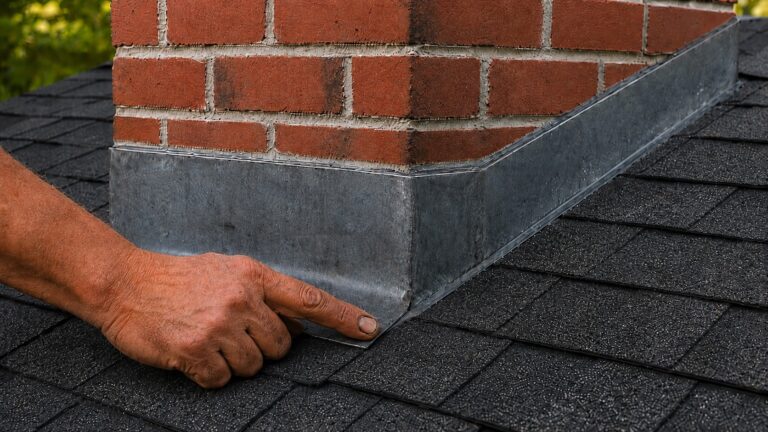
- Roof sheathing, rafters, and attic framing: Roof leaks, chimney leaks, flashing failures, condensation, blocked ventilation, and wet insulation can keep attic wood damp between storms.
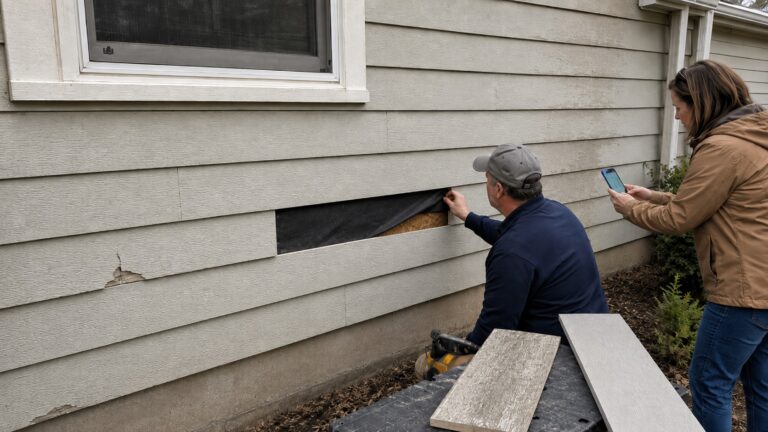
- Window, door, and exterior wall framing: Failed flashing, trim gaps, siding leaks, thresholds, and wind-driven rain can wet rough openings and bottom plates while the interior wall still looks mostly normal.
These locations matter because many of them dry slowly and are difficult to inspect without opening finishes, checking from below, or using moisture readings. A small leak is more likely to become a rot problem when it repeatedly wets the same hidden wood.
How Wood Rot Progresses Over Time
Wood rot does not follow an exact calendar. The same leak may cause different outcomes depending on moisture level, airflow, drying conditions, temperature, wood type, enclosure, and whether the source continues. The general pattern is still predictable: moisture exposure, moisture retention, early decay, material breakdown, and possible structural weakening.
Early Moisture Exposure
In the earliest stage, wood gets wet but may not be rotten. It may appear darker, feel damp, or smell musty. If the source is fixed and the wood dries completely, rot may not develop.
This is the best time to act. The goal is to stop the source, remove wet materials that trap moisture, expose the affected area if needed, and dry the wood before decay becomes established. In crawl spaces, that may involve drying structural wood directly rather than assuming the space will dry on its own. For crawl-space-specific guidance, see How to Dry Crawl Space Structural Wood.
Early Decay and Softness
If wood stays damp, early decay may begin. At this stage, the wood may still look mostly intact, but it may lose surface hardness or feel slightly soft compared with nearby dry wood. It may look dull, dark, stained, or uneven. Musty odor may persist even after surface drying.
Early decay is easy to underestimate because it may not look dramatic. Homeowners may assume the area only needs paint, flooring, or trim replacement. But if the wood has begun losing firmness, the issue is no longer just cosmetic.
Advanced Rot and Structural Weakening
Advanced rot produces clearer material breakdown. Wood may become punky, crumbly, stringy, brittle, cracked, hollow-sounding, or easy to break apart. Fasteners may loosen because the surrounding wood no longer holds them well. Joists, beams, posts, rafters, sill plates, or subfloor sections may lose strength.
Structural symptoms can appear when rot affects members that carry or distribute load. Floors may sag or bounce. Stairs may shift. Door and window openings may move. Roof areas may dip. Walls may crack near affected framing. This is where rot connects to broader structural damage progression, which is covered in How Structural Damage Progresses After Moisture Exposure.
When Wood Rot Becomes a Structural Concern
Wood rot becomes a structural concern when it affects wood that supports weight, transfers loads, connects building assemblies, or keeps floors, walls, ceilings, or roofs stable. Rot in a piece of trim is still a repair issue, but rot in a joist, beam, post, sill plate, rafter, header, or subfloor can affect how the structure performs.
The seriousness depends on both the amount of rot and the location of the affected wood. A small rotted spot in a nonstructural board may be less urgent than a smaller area of rot at the end of a floor joist where it bears on a beam or sill plate. Bearing points, connections, and load paths deserve extra caution.
Wood rot should be treated as a structural concern when you see:
- Soft, punky, crumbly, or easily compressed joists
- Rotted sill plates, rim joists, beams, posts, rafters, or headers
- Subfloor sections that feel spongy, weak, or unstable
- Rot near joist hangers, beam pockets, post bases, or bearing points
- Floors that sag, bounce, dip, or feel unsafe
- Wall or ceiling cracks that appear near rotted framing
- Door or window openings that shift because surrounding wood has deteriorated
- Roof sheathing or rafters that are soft, delaminated, or visibly decayed
- Fasteners or connectors that are loose because the wood around them has softened
If rot affects load-bearing framing, do not cover it with new drywall, flooring, insulation, or trim without evaluation. The surface repair may hide the problem while the weakened wood remains in place. If you are unsure whether the affected wood supports weight, compare the situation with Signs of Load-Bearing Wood Damage.
Safety note: If a floor feels unstable, a ceiling is sagging, framing is visibly deteriorated, or a support member is soft enough to crumble, avoid loading that area until it has been evaluated. Structural rot is not just a cleanup issue.
When rot appears after a water damage event, it is also important to consider overall safety. Soft floors, sagging ceilings, rotted structural members, or deteriorated support points should not be treated as simple cosmetic problems. For a broader safety-focused guide, see How to Evaluate Structural Safety After Water Damage.
How to Lower Rot Risk After Water Damage
The best way to reduce wood rot risk after water damage is to stop the moisture source and dry the affected wood before decay becomes established. Cleaning the surface is not enough if the wood behind or below the surface remains damp.
Stop the Water Source First
Rot prevention starts with source control. A wood member cannot stay sound if the same leak, seepage, or humidity problem keeps returning. Fix plumbing leaks, roof leaks, exterior flashing failures, drainage problems, appliance leaks, toilet leaks, crawl space water intrusion, and condensation problems before rebuilding over the damaged area.
If the water source is not corrected, the wood may dry temporarily and then become wet again. Repeated wetting gives rot more time to develop and makes future repairs less reliable.
Remove Materials That Trap Moisture
Rot often develops because moisture is trapped against wood. Wet insulation, soaked carpet padding, swollen flooring, damp drywall, closed wall cavities, cabinets, and vapor-retarding materials can slow drying. In some cases, these materials need to be removed or opened so the wood can dry properly.
This does not mean every wet wall or floor should be torn apart immediately. It means the drying plan must account for hidden moisture. If the wood cannot dry because surrounding materials are holding moisture against it, surface drying will not solve the rot risk.
Dry the Wood Thoroughly Before Covering It
Do not close walls, install flooring, reinstall insulation, or paint over damaged areas until the wood is dry and the source has been corrected. A dry-looking surface can hide damp end grain, wet joints, or moisture inside an enclosed cavity.
Drying may require airflow, dehumidification, removing wet materials, opening cavities, or professional drying equipment. Larger water damage events, contaminated water, crawl space moisture, or hidden structural wetting may require professional restoration drying rather than basic household fans. Do not rely on touch alone; wood can feel dry on the surface while moisture remains at joints, ends, or enclosed faces.
Monitor High-Risk Areas After Drying
After drying, monitor the area for recurring dampness, musty odor, softening, staining, mold growth, or movement. Rot risk does not end if the source returns. Pay special attention to crawl spaces, bathrooms, laundry rooms, kitchens, exterior doors, windows, roof leak areas, sill plates, and subfloors.
If structural wood has already softened or started to decay, drying alone may not restore strength. Drying stops the moisture condition, but it does not rebuild wood fibers that decay has already damaged. Late-stage repair decisions belong in a repair-versus-replacement evaluation, such as Should You Repair or Replace Structural Wood Affected by Moisture?.
Common Misconceptions About Wood Rot After Water Damage
Wood rot is often misunderstood because it develops gradually and can stay hidden. These misconceptions can lead homeowners either to panic too early or ignore a problem until the wood is structurally weakened.
Wet Wood Always Rots
Wet wood does not always rot. If wood gets wet briefly, dries completely, and stays dry, rot may not develop. The risk rises when moisture remains long enough for decay fungi to break down the wood.
Mold Turns Into Rot
Mold does not turn into rot. Mold and wood rot are different biological problems. Mold grows on surfaces and signals moisture. Rot involves decay fungi breaking down the wood itself. Mold is a warning that moisture conditions are wrong, but it is not the same as structural decay.
A Dry Surface Means There Is No Hidden Rot
A visible surface can dry while hidden wood remains damp. Moisture may remain inside subfloor layers, wall plates, joist ends, roof sheathing, or insulation cavities. This is why hidden water damage can lead to rot even when the room looks dry.
Rot Only Happens Outdoors
Rot can develop indoors whenever wood stays damp. Bathrooms, kitchens, laundry rooms, crawl spaces, basements, attics, exterior wall cavities, and subfloors are all common indoor locations for rot after water damage.
Dark Staining Always Means Rot
Dark staining does not always mean rot. Staining shows moisture exposure, but rot means the wood fibers have begun breaking down. Firm stained wood is different from soft, punky, crumbly, or structurally weakened wood.
Rot Can Be Fixed Without Source Control
Rot repairs will not last if the moisture source continues. Replacing wood, patching flooring, painting trim, or covering damaged framing without correcting the leak or damp condition allows the same problem to return.
FAQ
How long does wood take to rot after water damage?
There is no exact timeline because rot depends on moisture level, drying conditions, temperature, airflow, wood type, and whether the water source continues. Rot is much more likely after repeated or prolonged dampness than after one short leak that dries quickly.
Can wood rot develop behind drywall?
Yes. Wood rot can develop behind drywall if framing stays damp after a plumbing leak, flood, window leak, roof leak, or exterior wall leak. Drywall may look dry on the room side while studs, bottom plates, insulation, or sheathing remain damp inside the wall.
Can wood rot from humidity without a visible leak?
Yes. Wood can rot from long-term dampness even without an obvious dripping leak. This is common in crawl spaces, basements, attics, and enclosed cavities where high humidity, condensation, wet insulation, or poor airflow keeps wood damp season after season.
When does wood rot become structural?
Wood rot becomes structural when it affects load-bearing or support-related components such as joists, beams, posts, rafters, sill plates, rim joists, headers, or subfloors. It is also a structural concern when rot causes sagging, softness, movement, loose connections, or unstable floors.
Can rotten structural wood be repaired?
Rotten structural wood can sometimes be repaired, reinforced, or replaced, but the correct approach depends on the location, severity, load-bearing role, and moisture source. Structural rot should be evaluated by a qualified professional before repairs are attempted.
Key Takeaways About Wood Rot After Water Damage
- Wood rot is caused by decay fungi breaking down wood fibers, not by water alone.
- Water damage creates rot risk when wood stays damp long enough for decay to begin.
- Wet wood, moldy wood, and rotten wood are different conditions.
- Mold signals excess moisture, but it is not the same as structural rot.
- Hidden moisture behind drywall, under flooring, in crawl spaces, or above ceilings increases rot risk.
- Rot often begins at wood ends, joints, bearing points, subfloors, sill plates, joists, rafters, and post bases.
- Soft, punky, crumbly, or easily compressed wood is more serious than staining alone.
- Structural wood rot should be evaluated before the area is covered, repaired, reinforced, or reused.
- Stopping the water source, removing trapped moisture, and drying the wood before covering it are the first steps in reducing rot risk.