How to Improve Airflow in Attic Spaces
To improve airflow in attic spaces, start by restoring intake airflow at the soffits, keeping exhaust vents clear, maintaining open air channels above the insulation, balancing intake and exhaust capacity, and making sure bathroom, kitchen, and laundry exhaust ducts vent outdoors.
Many attic moisture problems are not caused by roof leaks. They happen because warm, humid air becomes trapped in the attic and cannot move out through the ventilation system. When airflow works properly, fresh air enters low through intake vents and warm, moist air exits high through ridge or roof vents.
Airflow problems can be easy to miss because the vents may look intact while still performing poorly. Dust buildup, insulation blockages, collapsed baffles, poor vent balance, or exhaust fans dumping humid air into the attic can all restrict airflow without obvious exterior damage.
If you are already seeing damp insulation, condensation, staining, or musty odors, compare those symptoms with Signs of Moisture Caused by Ventilation Failure. If moisture keeps returning after cleanup, the broader pattern may fit Why Moisture Problems Keep Returning.
Why Proper Airflow Matters in Attic Systems
Proper attic airflow keeps moisture from lingering long enough to condense on roof sheathing, rafters, insulation, and other attic materials.
Attics naturally collect rising warm air from inside the home. This air carries moisture from daily activities such as cooking, bathing, laundry, and normal breathing. When airflow functions correctly, this moisture is removed before it has time to condense.
Ventilation systems depend on two essential components:
- Intake vents — usually located along soffits at roof edges
- Exhaust vents — typically installed along ridge lines or roof surfaces
Air enters through intake vents and exits through exhaust vents, creating a continuous movement of air. When both components function properly, airflow removes excess moisture and stabilizes attic temperatures.
When airflow becomes restricted, moisture begins accumulating in predictable patterns. These patterns often resemble those described in Signs of Poor Attic Ventilation, where trapped humidity leads to uneven moisture buildup.
Without proper airflow, attic temperatures also fluctuate more dramatically. Temperature swings increase condensation risk, especially during winter months when warm indoor air meets cold roof surfaces.
Moisture that remains trapped inside attic spaces gradually spreads across wood framing and insulation. Over time, repeated moisture exposure weakens structural materials and increases the likelihood of mold growth.
That is why attic ventilation should be treated as a moisture-control system, not only a temperature-control feature.
Step 1 — Improve Intake Airflow at Soffits
Improving intake airflow is usually the most effective first step in restoring attic ventilation. Intake vents allow fresh air to enter the attic, pushing moisture-laden air toward exhaust vents.
When intake airflow is blocked, the entire ventilation system becomes ineffective. Even strong exhaust vents cannot remove moisture if fresh air cannot enter.
Common intake airflow problems include:
- Insulation blocking soffit openings
- Improper insulation installation
- Dust or debris clogging intake vents
- Insufficient intake vent spacing
- Collapsed airflow pathways near roof edges
One of the most common issues is insulation covering soffit vents. Over time, insulation may shift or settle, closing off airflow openings. When this happens, moisture becomes trapped near the edges of the attic.
Safe homeowner-level improvements may include:
- Moving insulation away from soffit openings
- Installing ventilation baffles to maintain airflow channels
- Checking that intake openings remain visible and unobstructed
- Removing minor debris blocking vent openings
A simple first check is to look from inside the attic toward the eaves during daylight. If the soffit area is completely dark, packed with insulation, or has no visible air path above the insulation, intake airflow may be restricted.
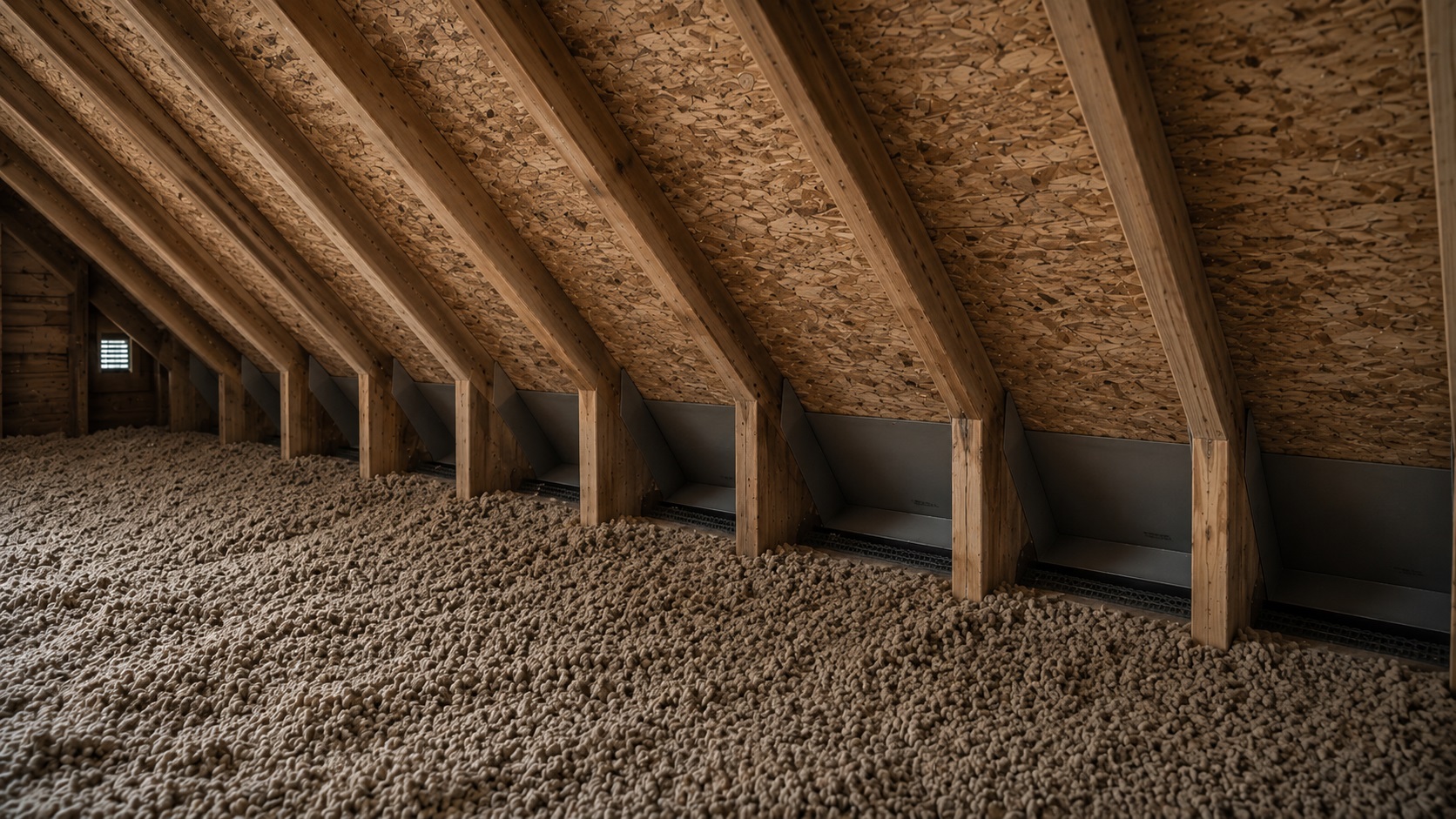
Ventilation baffles are especially important because they maintain a clear air channel between insulation and roof sheathing. In many vented attic assemblies, baffles are used to guide air from soffit vents toward the upper roof or ridge vent while keeping insulation out of the airflow path.
For technical background, the U.S. Department of Energy’s building science guidance on attic baffles explains that baffles help maintain an air gap above insulation and guide air from soffit vents toward the ridge vent.
If soffit vents appear blocked or insufficient, use the steps in how to inspect soffit and roof vent blockages to identify restricted intake zones before adding more ventilation.
Improving intake airflow is often the highest-impact first correction. In many homes, restoring soffit airflow reduces moisture accumulation without immediately adding new vents.
Step 2 — Improve Exhaust Airflow at Ridge or Roof Vents
After restoring intake airflow, the next priority is improving exhaust airflow. Exhaust vents remove warm, moisture-filled air from the attic. Without effective exhaust ventilation, humid air remains trapped even when intake airflow is functioning correctly.
Exhaust airflow problems often develop gradually. Many homeowners assume their exhaust vents are working because they are visible from the roof, but airflow efficiency can decline due to clogging, deterioration, or poor installation.
Common exhaust airflow problems include:
- Ridge vents clogged with dust or debris
- Mesh-style ridge vents losing effectiveness over time
- Roof vents blocked by debris or roofing materials
- Insufficient exhaust vent capacity
- Improperly installed ridge vent systems
When exhaust airflow becomes restricted, moisture accumulates near the highest points of the attic. This often leads to condensation along ridge lines or widespread dampness across roof sheathing.
These conditions frequently overlap with moisture patterns described in How to Detect Inadequate Roof Ventilation, where airflow performance issues become visible through recurring moisture symptoms.
Cleaning Ridge and Roof Vents
Cleaning ridge and roof vents is often the simplest way to restore exhaust airflow. Over time, ridge vents accumulate dust, pollen, roofing granules, and organic debris that restrict airflow.
Typical signs that ridge vents may require cleaning include:
- Visible debris buildup inside vent openings
- Reduced airflow exiting ridge vents
- Condensation appearing near ridge areas
- Moisture accumulating at the highest roof sections
- Persistent attic humidity despite open intake vents
Cleaning accessible vent openings can remove airflow restrictions and improve ventilation performance. Limit DIY work to safe, accessible areas from the attic side or ground-level exterior access; do not climb onto steep, wet, icy, or fragile roof surfaces to clean vents.
However, if vents are heavily clogged or deteriorated, cleaning alone may not restore proper airflow. In those cases, vent replacement becomes necessary.
Replacing Ineffective Ridge Vent Systems
In some homes, ridge vents become ineffective because of aging materials, poor installation, or vent designs that clog easily. Older mesh-style ridge vents may gradually fill with dust, pollen, roofing granules, or debris, reducing airflow even when the vent still looks intact.
If a ridge vent repeatedly clogs or no longer provides consistent exhaust airflow, replacement may be more effective than repeated cleaning. However, ridge vent upgrades should be considered only after intake airflow has been confirmed.
Homes experiencing repeated airflow problems may also benefit from evaluating broader ventilation failures described in Signs That Roof Ventilation Needs Repair, where more serious system issues are identified.
Exhaust airflow improvements are often most effective when combined with proper intake airflow restoration.
Step 3 — Establish Clear Airflow Pathways Through the Attic
Even when intake and exhaust vents are functioning properly, airflow may still be restricted if pathways inside the attic are blocked. Air must move freely from intake vents to exhaust vents without obstruction.
Airflow pathways can become blocked by insulation, storage materials, or structural features that disrupt air movement.
Common pathway obstructions include:
- Insulation packed tightly against roof decking
- Stored items blocking airflow movement
- Ductwork restricting airflow channels
- Collapsed ventilation baffles
- Structural framing restricting air movement
Storage should not be pushed into rafter bays, against soffit areas, or tightly against roof decking. Even small obstructions can create stagnant pockets where moisture lingers.
Clear airflow pathways allow intake air to move smoothly toward exhaust vents. Without these pathways, moisture becomes trapped in localized pockets.
Improving airflow pathways often involves installing ventilation baffles between rafters. These baffles maintain consistent air channels and prevent insulation from blocking airflow.
Homes with restricted airflow paths frequently experience symptoms similar to those described in Signs of Poor Attic Ventilation, where uneven moisture patterns develop due to airflow disruption.
Maintaining open pathways ensures that ventilation systems function as intended and prevents localized moisture buildup.
Step 4 — Balance Intake and Exhaust Airflow
Balanced airflow is essential for effective attic ventilation. Many homeowners focus on adding more vents, but ventilation performance depends on balance rather than quantity. Intake and exhaust airflow must work together to create steady air movement through the attic.
When airflow becomes unbalanced, moisture removal slows or stops. In some cases, too many exhaust vents without sufficient intake can pull conditioned air into the attic, increasing humidity levels rather than reducing them.
Common signs of airflow imbalance include:
- Uneven moisture patterns across attic surfaces
- Condensation appearing in isolated areas
- Warm attic temperatures despite ventilation
- Persistent humidity even after clearing intake vents
- Moisture forming at unexpected locations
Balancing airflow usually involves adjusting intake and exhaust capacity so air moves evenly across the entire attic. This may require adding intake vents, increasing exhaust airflow, or correcting improperly installed vent systems.
If airflow balance appears inconsistent, inspection guidance provided in How to Detect Inadequate Roof Ventilation can help identify areas where airflow performance is uneven.
Professional evaluation may be necessary when the vent layout appears balanced but moisture still returns. In that situation, the problem may involve hidden blockage, poor vent placement, air leakage from the living space, or competing vent types.
Step 5 — Correct Exhaust Fan Venting Problems
Improper exhaust fan routing is one of the most common sources of excess moisture in attic spaces. Bathroom, kitchen, and laundry exhaust systems generate large amounts of humid air. If these systems vent into the attic rather than outdoors, moisture accumulates quickly.
Many homes experience airflow failure because exhaust ducts terminate inside the attic rather than outside the structure.
Common signs of improper exhaust fan venting include:
- Localized moisture near duct outlets
- Condensation forming around vent pipes
- Mold growth near exhaust discharge points
- Strong humidity after showers or cooking
- Damp insulation near exhaust ducts
Correcting exhaust fan routing can significantly reduce localized attic humidity. Bathroom, kitchen, and laundry exhaust ducts should discharge outdoors through approved exterior vent outlets, not into the attic, soffit cavity, insulation, or open rafter space.
If improper exhaust routing is suspected, comparing symptoms with those described in Why Poor Roof Ventilation Causes Moisture Problems can help determine whether trapped humidity is contributing to mold risk.
Improving exhaust fan performance is often one of the most effective ways to reduce localized moisture buildup.
Common Mistakes That Make Airflow Worse
Some attic airflow fixes make moisture problems worse because they increase exhaust without intake, block air channels with insulation, or create vent paths that compete with each other.
Adding More Vents Without Fixing Intake Problems
One of the most common mistakes is adding new exhaust vents without restoring intake airflow. Without proper intake capacity, additional exhaust vents cannot remove moisture effectively.
This mistake often leads to:
- Continued moisture buildup
- Uneven airflow distribution
- Increased humidity inside attic spaces
- Higher risk of condensation formation
Before adding vents, intake airflow must always be confirmed as functional.
Blocking Airflow With Insulation
Improper insulation placement frequently blocks airflow pathways. When insulation presses tightly against roof decking, air movement slows or stops completely.
This issue is especially common after insulation upgrades. Without proper airflow channels, insulation may unintentionally trap moisture inside attic spaces.
Installing ventilation baffles prevents insulation from collapsing into airflow pathways and maintains consistent air movement.
Mixing Vent Types That Compete With Each Other
Using incompatible vent types can disrupt airflow. Certain combinations of vents compete for airflow rather than working together.
Examples of conflicting vent setups include:
- Ridge vents combined with improperly placed gable vents
- Excessive exhaust vents without intake support
- Vent placements that create short-circuit airflow paths
Short-circuit airflow occurs when air moves between nearby vents without circulating through the attic. This reduces ventilation effectiveness and increases moisture risk.
If ventilation conflicts are suspected, symptoms may resemble those described in Signs That Roof Ventilation Needs Repair, where major system failures begin affecting moisture behavior.
Ignoring Persistent Moisture Warning Signs
Another common mistake is assuming that moisture problems will resolve without correction. Ignoring recurring moisture allows mold growth and structural damage to progress.
Persistent warning signs that should not be ignored include:
- Moisture returning after cleaning
- Increasing attic humidity levels
- Repeated condensation cycles
- Mold-like staining appearing across surfaces
- Musty odors that worsen over time
Addressing airflow issues early prevents more extensive damage and reduces long-term repair costs.
When Airflow Improvements Require Professional Work
Many attic airflow improvements begin with simple corrections, but persistent or widespread moisture usually needs professional evaluation. Ventilation systems must work as complete systems, and major airflow failures may involve roof design, vent placement, air leakage, insulation defects, or damaged components.
Professional help is typically recommended when:
- Moisture continues after soffit vents and airflow pathways are cleared
- Insulation remains damp despite ventilation corrections
- Water drips from condensation during cold weather
- Ridge vents or roof vents appear clogged, damaged, or improperly installed
- Bathroom, kitchen, or laundry exhaust ducts terminate inside the attic
- Visible mold continues spreading after airflow improvements
- Wood framing or roof sheathing shows softening, dark staining, or deterioration
When airflow problems become persistent or widespread, they often overlap with the more serious ventilation failures described in How to Fix Persistent Ventilation Problems in Attics. At that stage, long-term correction may require more than clearing blocked vents.
Frequently Asked Questions About How to Improve Airflow in Attic Spaces
Can I improve attic airflow without adding new vents?
Yes. Many airflow problems are caused by blocked intake vents or restricted airflow pathways. Clearing soffit vents, installing baffles, and restoring airflow channels often improves ventilation without adding new vents.
How do I know if my attic has enough ventilation?
Good signs include dry insulation, no recurring condensation on roof sheathing, clear air paths at the soffits, and no musty odor after humid weather. If moisture returns even after vents are cleared, the attic may have hidden blockage, poor vent balance, or exhaust air leaking into the space.
Should I add more vents or improve intake airflow first?
Improving intake airflow should always be the first priority. Without sufficient intake airflow, adding exhaust vents will not improve ventilation performance.
Can insulation upgrades affect airflow?
Yes. Insulation can block airflow if installed improperly. Without airflow channels such as baffles, insulation may collapse into ventilation pathways and restrict air movement.
Is replacing ridge vents worth it?
In homes with older or clogged ridge vents, replacement may improve airflow significantly. However, ridge vent replacement should only be considered after intake airflow has been checked, because exhaust upgrades will not solve blocked soffit airflow.
Conclusion
The best way to improve attic airflow is to work in order: confirm intake airflow first, clear or repair exhaust vents second, keep baffles and air channels open, then correct any exhaust ducts that are adding humid air to the attic.
If moisture still returns after those steps, the attic may have a larger ventilation imbalance, hidden blockage, air leakage problem, or damaged vent system that needs professional evaluation.
Key Takeaways
- Improving intake airflow is usually the first and most important step.
- Exhaust vents must remain clean and unobstructed.
- Clear airflow pathways allow moisture to move out of the attic.
- Balanced ventilation prevents humidity buildup.
- Improper exhaust fan routing significantly increases moisture risk.
- Some ventilation improvements require professional assistance.
- Addressing airflow problems early prevents mold and structural damage.