
Signs of Moisture Caused by Ventilation Failure
Moisture caused by ventilation failure is often mistaken for a roof leak. The difference is usually the pattern: ventilation moisture often appears across wide attic surfaces, worsens during temperature or humidity changes, and returns after cleanup because trapped humid air keeps condensing inside the roof system.
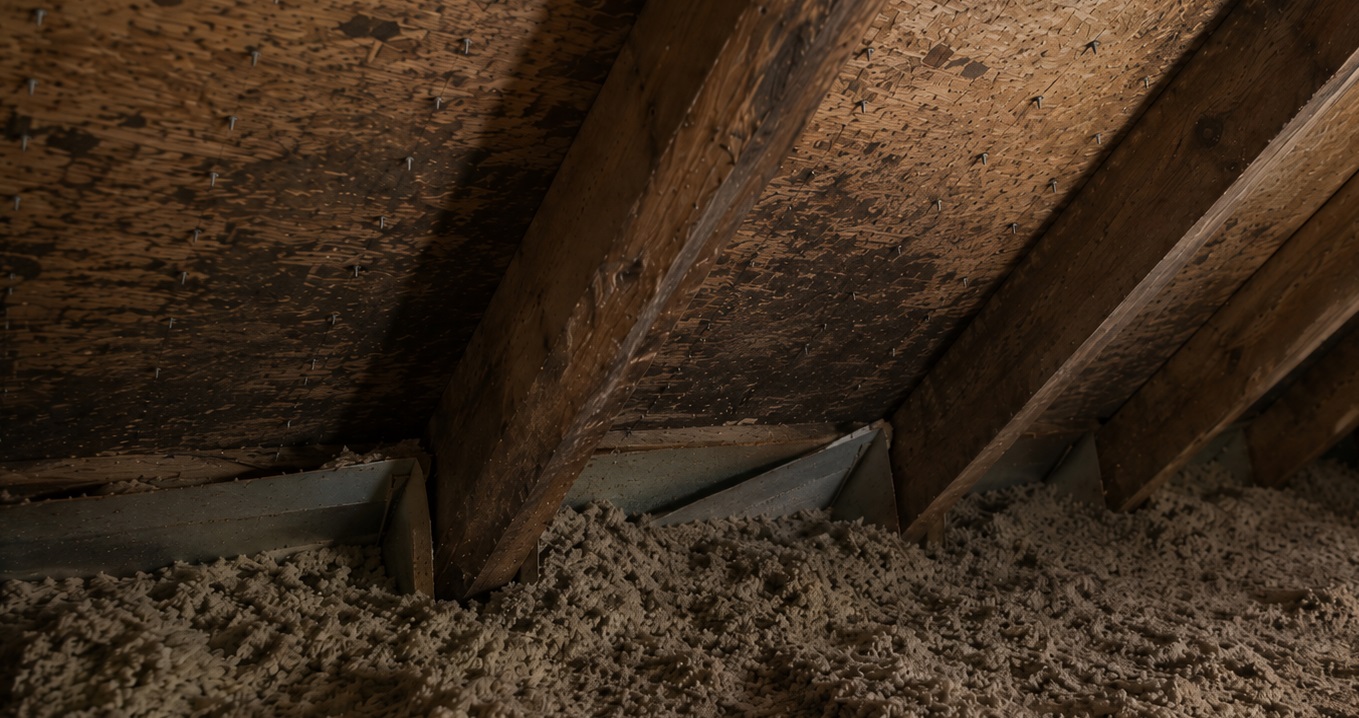
Common signs include condensation on roof sheathing, frost on nail tips, damp or compressed insulation, musty attic odors, mold-like staining on wood, and moisture that appears even when there has been no rain.
This guide explains the most common signs that ventilation failure is causing moisture problems, how those signs differ from roof leaks, and when recurring symptoms point to a larger issue. If moisture problems keep returning after cleaning or repairs, compare the pattern with the broader causes in Why Moisture Problems Keep Returning.
Why Ventilation Failure Creates Moisture Problems
Ventilation systems are designed to move air through enclosed spaces such as attics. In most homes, fresh air enters through soffit vents and exits through ridge vents, roof vents, or gable vents. This steady airflow helps remove moisture before it has time to condense onto building materials.
When airflow becomes restricted, blocked, or unbalanced, moisture remains trapped inside the attic. This trapped moisture eventually condenses onto cold surfaces, especially during temperature differences between indoor and outdoor environments.
Ventilation failure can occur for many reasons, including:
- Blocked soffit vents from insulation or debris
- Clogged ridge vents or roof vents
- Improperly installed ventilation systems
- Too few intake or exhaust vents
- Bathroom or kitchen exhaust venting into the attic
- Collapsed or obstructed airflow pathways
- Poor ventilation design in older homes
Even when vents are present, airflow may still be insufficient. Many homeowners assume that simply having vents installed means ventilation is working correctly. However, blocked intake vents or poorly balanced airflow can prevent the system from functioning as intended.
Early symptoms of ventilation problems often resemble general attic moisture issues. If you suspect airflow problems, it may help to compare your observations with known warning signs described in Signs of Poor Attic Ventilation, which outlines common airflow-related warning patterns.
For this article, the important point is the symptom pattern: moisture appears broadly, returns repeatedly, and often worsens during cold or humid weather rather than only after rain.
Common Signs Moisture Is Caused by Ventilation Failure
Ventilation-related moisture typically produces recognizable patterns that differ from water leaks. Instead of appearing as isolated wet spots, ventilation moisture often spreads across wide surfaces and appears repeatedly under certain conditions.
The strongest clue is not one single stain, but the combination of location, timing, spread, and recurrence.
The following signs are among the most reliable indicators that ventilation failure is causing moisture problems.
Condensation on Roof Sheathing
One of the most common signs of ventilation-related moisture is condensation forming on roof sheathing. Roof sheathing is the wooden paneling located beneath roofing materials, and it often becomes one of the first surfaces affected when ventilation fails.
Condensation on roof sheathing may appear as:
- Darkened patches across large areas
- Water droplets forming on the underside of the roof
- Frost buildup during cold weather
- Streaking patterns that follow airflow paths
- Wet surfaces without visible roof leaks
This type of moisture is especially common during winter months. Warm indoor air rises into the attic, carrying moisture with it. When that air contacts cold roof surfaces, condensation forms quickly.
If condensation patterns appear across wide areas rather than in one location, ventilation failure is often the underlying cause rather than roof damage.
In some cases, condensation-related symptoms may resemble those seen in Signs of Roof Condensation in Attics, where temperature differences play a major role in moisture formation.
Damp or Compressed Attic Insulation
Damp insulation is another strong indicator that ventilation failure is allowing moisture to accumulate inside the attic. Insulation is designed to remain dry and fluffy. When moisture becomes trapped in the attic air, insulation absorbs that moisture and begins to lose its effectiveness.
Common signs of ventilation-related moisture affecting insulation include:
- Insulation that feels damp to the touch
- Flattened or compressed insulation layers
- Uneven moisture patterns near the edges of the attic
- Wet insulation near soffit areas
- Cold or drafty rooms caused by reduced insulation performance
Insulation near soffit vents is particularly vulnerable when airflow becomes blocked. In many homes, insulation accidentally covers intake vents, preventing fresh air from entering the attic. Without intake airflow, moisture cannot escape properly.
If insulation moisture is suspected, reviewing guidance in Signs of Moisture in Attic Insulation can help identify patterns specific to insulation damage.
Damp insulation can also reduce thermal performance and create conditions that support mold growth if the airflow problem continues.
Musty or Stale Odors in Attic Spaces
Musty odors are often one of the earliest warning signs that ventilation failure is allowing moisture to remain trapped inside the attic. These odors typically develop when moisture accumulates repeatedly and does not fully dry between humidity cycles.
Common odor-related warning signs include:
- A stale or damp smell when opening attic access panels
- Persistent musty odors that worsen during humid weather
- Odors noticeable after seasonal changes
- Lingering smells even when visible moisture is not present
- Smells strongest near insulation or wood framing
Odors often develop before visible mold becomes obvious. Moisture trapped inside wood framing or insulation supports microbial growth that produces distinctive smells.
If odors are present without obvious leaks, ventilation problems are frequently responsible. Homes experiencing recurring odor patterns may also benefit from reviewing airflow-related inspection methods described in How to Detect Inadequate Roof Ventilation.
This makes odor a useful early warning sign when the attic looks dry during a quick inspection.
Mold-Like Staining on Wood Surfaces
Mold-like staining on attic wood components is another common indicator of moisture caused by ventilation failure. These stains often appear as dark spots or patches across wood framing, rafters, or roof sheathing.
Typical staining patterns caused by ventilation-related moisture include:
- Speckled or spotted dark marks on roof sheathing
- Black or gray staining along rafters
- Staining near areas with poor airflow
- Discoloration that spreads across wide surfaces
- Stains appearing repeatedly after cleaning
Unlike stains caused by roof leaks, ventilation-related staining often spreads broadly instead of forming isolated wet spots. These stains may appear evenly across large sections of wood rather than concentrated beneath one location.
When staining appears alongside other warning signs such as damp insulation or odors, airflow problems are likely contributing to moisture buildup. Persistent staining patterns may eventually lead to mold growth if moisture remains unresolved.
Understanding how ventilation problems lead to biological growth is explained further in Why Attic Airflow Problems Lead to Mold Growth, which examines how trapped moisture supports mold development.
Moisture That Returns After Cleanup
One of the clearest signs that ventilation failure is causing moisture problems is repeated moisture returning after cleanup efforts. Many homeowners dry visible moisture, only to see dampness return days or weeks later.
Recurring moisture patterns often indicate that airflow problems remain unresolved.
Signs of recurring ventilation-related moisture include:
- Damp areas reappearing after drying
- New staining forming after cleaning old stains
- Repeated condensation during cold weather
- Moisture forming during humid indoor conditions
- Ongoing musty smells despite cleaning efforts
This cycle of drying and recurrence is common when ventilation issues remain untreated. Without proper airflow, moisture continues accumulating inside enclosed spaces.
If moisture repeatedly returns despite cleanup, it is important to evaluate underlying causes rather than focusing only on surface symptoms. Recurring patterns are commonly associated with long-term moisture behavior described in Why Poor Roof Ventilation Causes Moisture Problems.
If the same symptoms return after drying, the airflow problem needs to be corrected before surface cleanup will last.
How Ventilation Moisture Differs From Roof Leaks
Distinguishing between ventilation-related moisture and roof leaks is critical for choosing the correct solution. While both problems can produce similar symptoms, their patterns often differ significantly.
Roof leaks typically create localized moisture patterns. Ventilation failures, by contrast, produce widespread moisture across large areas.
Key differences include:
- Ventilation moisture: Appears across wide surfaces
- Roof leaks: Often concentrated beneath one entry point
- Ventilation moisture: Worsens during cold or humid weather
- Roof leaks: Often worsens during rainstorms
- Ventilation moisture: Appears as condensation or frost
- Roof leaks: Produces dripping or flowing water
Misidentifying ventilation problems as roof leaks can lead to unnecessary repairs while allowing moisture to continue building inside the structure.
If uncertainty exists, comparing symptoms with those described in Signs of Roof Leaks Inside the House can help identify whether moisture patterns align with leak-related damage.
Correct diagnosis is essential because ventilation problems require airflow corrections rather than roofing repairs.
Where These Signs Usually Appear
Moisture caused by ventilation failure rarely appears randomly. Instead, it tends to develop in predictable areas where airflow is restricted, temperatures vary, or moisture accumulates faster than it can escape.
The most useful places to check are intake areas, exhaust areas, roof penetrations, and broad sections of roof sheathing.
Near Soffit and Eave Areas
Soffit areas are among the most common locations where ventilation moisture begins. These areas serve as the intake points where fresh air enters the attic. When soffit vents become blocked, airflow slows or stops, allowing moisture to collect near the roof edges.
Common warning signs near soffit areas include:
- Damp insulation along the outer edges of the attic
- Visible condensation near roof edges
- Dark staining along roof sheathing close to eaves
- Insulation packed tightly against intake vents
- Uneven frost buildup during cold weather
Blocked soffits are frequently caused by insulation shifting over time or being installed too tightly against vent openings. When airflow is restricted at the intake level, the entire ventilation system becomes ineffective.
If soffit blockage is suspected, reviewing inspection steps in How to Inspect Roof Vents for Blockages can help identify restricted airflow zones safely.
Along Roof Ridge Lines
Roof ridge areas are designed to release warm, moist air from the attic. When ridge vents become clogged or improperly installed, moisture may collect beneath the ridge instead of escaping.
Typical warning signs near ridge areas include:
- Dark staining near ridge vent openings
- Condensation forming along the highest points of the roof
- Moisture accumulation near ridge lines during cold weather
- Reduced airflow exiting roof vents
- Mold-like spotting concentrated near ridge sections
Clogged ridge vents are often caused by debris, dust buildup, or poorly designed vent materials. In some cases, older mesh-style ridge vents can become blocked over time, reducing their effectiveness.
Airflow problems along ridge areas may also overlap with larger ventilation failures described in How to Detect Inadequate Roof Ventilation, which explains how restricted airflow affects entire attic systems.
Around Roof Penetrations and Vent Pipes
Roof penetrations such as plumbing vents, exhaust pipes, and duct outlets are another common location where ventilation moisture appears. These areas disrupt airflow patterns and can create pockets of stagnant air.
Warning signs near roof penetrations include:
- Localized moisture buildup near pipe openings
- Staining patterns around vent boots
- Condensation forming on exposed pipe surfaces
- Moist insulation near duct terminations
- Rust forming on exposed metal components
Moisture near penetrations does not always indicate a leak. In many cases, airflow disruption causes condensation to accumulate around these structures.
If moisture appears near plumbing or exhaust penetrations, it is helpful to compare patterns with ventilation-related behavior explained in Why Poor Roof Ventilation Causes Moisture Problems.
Across Large Sections of Roof Sheathing
One of the defining characteristics of ventilation-related moisture is the spread of moisture across large sections of roof sheathing rather than in isolated spots.
This pattern usually indicates that moisture is condensing throughout the attic air space rather than entering from a single leak location.
Common large-area warning signs include:
- Widespread dark staining across roof panels
- Evenly distributed condensation droplets
- Multiple damp locations across the attic
- Moisture appearing across different roof slopes
- Staining patterns unrelated to rainfall events
Large-area moisture patterns strongly suggest ventilation imbalance rather than structural failure. If these patterns are observed, further investigation into airflow adequacy is recommended.
Seasonal Warning Patterns That Suggest Ventilation Failure
Ventilation-related moisture problems often become more noticeable during certain seasons. These seasonal patterns can help homeowners distinguish ventilation issues from roof leaks or plumbing problems.
Winter Moisture and Frost Formation
Cold weather frequently exposes ventilation failures. During winter, warm indoor air rises into the attic and meets cold roof surfaces. If airflow is insufficient, condensation forms rapidly.
Winter warning signs include:
- Frost forming on nail tips or roof sheathing
- Ice crystals appearing on attic surfaces
- Water dripping after frost melts
- Sudden moisture appearing during cold periods
- Damp insulation developing without rainfall
Winter frost buildup is one of the clearest indicators that ventilation airflow is inadequate.
Summer Humidity Accumulation
During humid summer conditions, attic spaces may accumulate moisture when ventilation systems fail to remove warm air efficiently.
Summer-related warning signs include:
- Warm, damp attic air
- Persistent humidity inside attic spaces
- Musty odors during hot weather
- Increased mold risk during humid periods
- Moisture buildup even without rain
Humidity-related moisture buildup is often mistaken for structural leaks. However, when moisture increases during hot, humid conditions without visible water intrusion, ventilation failure is often responsible.
Mold-Like Warning Signs Linked to Ventilation Failure
Mold-like staining can be one of the later warning signs that ventilation moisture has been present long enough to affect attic materials.
Mold-like warning signs may include:
- Small dark spots forming on wood surfaces
- Faint mold-like odors in attic areas
- Surface discoloration spreading gradually
- Moisture remaining present for extended periods
- Repeated dampness after seasonal changes
These early warning signs may be subtle and easy to overlook. Addressing ventilation problems before confirmed mold spreads can prevent more expensive remediation later.
If mold indicators are suspected, comparing symptoms with those described in Signs of Mold Growth in Attic Spaces can help determine whether biological growth has already begun.
Later Warning Signs After Long-Term Ventilation Moisture
If ventilation moisture continues for a long time, the warning signs may move beyond surface condensation and begin affecting wood, fasteners, and insulation.
Later warning signs may include:
- Warped roof sheathing panels
- Wood framing discoloration
- Soft or weakened wood surfaces
- Rust forming on metal fasteners
- Loose roofing nails caused by wood movement
Long-term moisture damage often develops slowly and may go unnoticed until repairs become necessary. Monitoring early warning signs reduces the risk of structural weakening.
If these later warning signs appear, investigate airflow problems promptly and consider professional inspection.
When to Call a Professional for Ventilation-Related Moisture
Some ventilation problems can be identified visually, but persistent or widespread attic moisture usually requires professional evaluation because the real issue may be blocked intake, weak exhaust, poor vent balance, or an improperly routed exhaust fan.
You should consider professional inspection if you notice any of the following:
- Moisture that returns repeatedly after drying
- Widespread staining across roof sheathing
- Persistent attic odors that do not disappear
- Visible mold-like spotting on framing or insulation
- Insulation that remains damp over long periods
- Signs of structural wood weakening
- Moisture problems that worsen seasonally
Roofing contractors, ventilation specialists, or insulation professionals can evaluate airflow balance, intake capacity, and exhaust efficiency. Many ventilation failures occur because systems are improperly sized or blocked over time.
If recurring symptoms are present, reviewing broader causes described in How to Detect Repeated Moisture Problems can help determine whether ventilation failure is part of a larger moisture cycle.
Practical Homeowner Checks Before Seeking Repairs
Homeowners can usually make basic observations from safe attic access, but they should avoid stepping on ceiling drywall, disturbing moldy insulation, or working near electrical wiring.
Safe homeowner checks include:
- Looking for blocked soffit vents from inside the attic
- Checking insulation placement near intake vents
- Noting seasonal patterns of moisture appearance
- Observing whether moisture worsens in cold weather
- Watching for repeated moisture return after cleaning
- Identifying areas where airflow may be restricted
These checks provide useful information for professionals and help confirm whether airflow problems may be involved.
If airflow issues are suspected, improvement options are explained in How to Improve Airflow in Attic Spaces, which discusses practical strategies used to restore ventilation balance.
However, major ventilation adjustments should not be attempted without proper evaluation. Adding vents without correcting intake and exhaust balance can make moisture problems worse rather than better.
Why Ventilation Problems Often Lead to Recurring Moisture
Ventilation problems often cause recurring moisture because the source is ongoing airflow imbalance, not a one-time water event. As long as humid air keeps entering or staying trapped in the attic, condensation can return even after visible surfaces dry.
Common recurrence patterns include moisture on cold winter mornings, dampness during humid weather, condensation forming in the same areas, mold-like staining returning after cleaning, and insulation staying damp despite drying efforts.
If the pattern still appears tied to rain events or previous roof repairs, compare it with Signs of Recurring Roof Leaks before assuming ventilation is the only cause.
Frequently Asked Questions About Ventilation-Related Moisture Signs
Can poor ventilation cause moisture without a roof leak?
Yes. Poor ventilation can trap humid air inside attic spaces, allowing moisture to condense on cold surfaces. This condensation often appears without any visible roof leak and may affect large areas of the attic.
Why does attic moisture get worse in winter?
During winter, warm indoor air rises into the attic and meets cold roof surfaces. If ventilation airflow is restricted, condensation forms rapidly, creating frost or water droplets that appear even without rainfall.
Can blocked soffit vents cause damp insulation?
Yes. Blocked soffit vents prevent fresh air from entering the attic. Without intake airflow, moisture becomes trapped, causing insulation to absorb moisture and lose effectiveness.
Does ventilation moisture always lead to mold?
Not always. Short-term condensation may dry before mold develops, but repeated attic moisture, damp wood, musty odors, or staining after seasonal changes can indicate conditions where mold growth becomes more likely.
How do I know if moisture is caused by ventilation failure or a leak?
Ventilation moisture usually appears across large areas and worsens during temperature changes. Roof leaks typically create localized wet spots that worsen during rainfall events.
Conclusion
Moisture caused by ventilation failure usually reveals itself through pattern and timing: widespread condensation, frost on attic materials, damp insulation, musty odors, and moisture that returns after cleanup.
If the moisture appears across broad attic surfaces or worsens during cold or humid weather without a clear rain event, the problem may be airflow imbalance rather than a roof leak. Repeated symptoms should be investigated before mold growth, insulation damage, or wood deterioration becomes more serious.
3 Comments
Comments are closed.