
Hidden Wind Damage That Leads to Roof Leaks
Hidden wind damage can lead to roof leaks even when a roof does not look obviously damaged from the ground. Many homeowners look for missing shingles after a storm, but the signs of wind damage on roofs can begin before anything fully blows off. A shingle tab may lift, the adhesive seal may separate, or the edge of a shingle may flex just enough to create a future water path.
This is why some roof leaks appear days or weeks after a wind event instead of during the storm itself. The first storm may loosen the roof surface. A later rain, another round of wind, or wind-driven water can then push moisture beneath shingles that no longer seal tightly. By the time a ceiling stain appears, the original damage may have already allowed moisture into the roof system.
Hidden wind damage matters because roofing is designed to shed water in layers. Shingles, seal strips, underlayment, flashing, decking, and attic materials all work together to keep water out. When wind weakens the outer layer, the roof may still look mostly intact, but it is no longer shedding water as reliably as it should. This is one reason wind-related roof damage belongs within the larger category of common roofing material failures.
The main warning is simple: if wind has lifted, creased, loosened, or unsealed shingles, the roof may be vulnerable during the next wind-driven rain even if it looks mostly intact today.
Why Hidden Wind Damage Can Lead to Roof Leaks
Wind damage does not have to remove a shingle to create a leak risk. A roof can be vulnerable when shingles are still present but no longer sealed, flat, or firmly attached. The problem is usually not one dramatic opening. It is often a small failure in the roof’s water-shedding surface that allows moisture to work underneath the shingles over time.
Asphalt shingles depend partly on an adhesive seal strip that helps hold each shingle course down against wind uplift. When that bond is intact, wind has a harder time lifting the shingle edge. When the bond breaks, the shingle can move more easily during later storms. That movement can expose the roof to water entry even if the shingle settles back down after the wind stops.
Hidden wind damage often creates a delayed leak pathway in this order:
- Strong wind lifts or flexes the edge of a shingle.
- The adhesive seal separates or weakens.
- The shingle lays back down but no longer bonds tightly.
- Later wind or rain lifts the same area again.
- Water reaches the underlayment, nail holes, roof deck, or nearby seams.
- Moisture eventually shows up as attic dampness, stained decking, wet insulation, or ceiling discoloration.
This is why “no missing shingles” does not always mean “no wind damage.” Missing shingles are easy to recognize, but broken seals, lifted tabs, creased shingles, and loosened edges can remain hidden until water has already entered the roof assembly.
Wind-driven rain increases the risk because water is not simply falling downward. It can be pushed sideways and upward beneath loose edges, especially along roof slopes exposed to the strongest gusts. Once the water gets beneath the shingle surface, the underlayment becomes the backup layer. If the underlayment is aged, torn, poorly lapped, or penetrated by fasteners, moisture may continue into the roof deck.
Hidden wind damage is especially important on older roofs. Aging shingles are usually less flexible, less adhesive, and more likely to crack or crease when lifted. A newer roof can still be damaged by severe wind, but an older roof often has less margin for repeated uplift. That makes subtle post-storm changes more important to monitor.
How Wind Damages a Roof Without Removing Shingles
Wind creates pressure differences over the roof surface. Some areas experience suction or uplift, while others experience direct force from wind and debris. The result is not always a cleanly missing shingle. More often, wind stresses the roof in ways that weaken the system before a full failure is visible.
These forms of hidden wind damage are common causes of delayed roof leak risk.
Lifted Shingle Tabs
A lifted shingle tab is one of the most important early warning signs after a wind event. The tab may not stay lifted all the time. It may lift during gusts, settle afterward, and appear almost normal from the ground. The problem is that the seal beneath the tab may no longer be holding the shingle down properly.
Once a tab has lifted, later wind can lift it more easily. Rain can also be driven under the edge during storms. This does not guarantee an immediate leak, but it weakens the roof’s ability to shed water. A lifted tab near a roof edge, valley, ridge, or previous repair area deserves more attention than a cosmetic surface irregularity.
Homeowners should avoid assuming that a shingle is fine just because it lies flat after the storm. If the adhesive bond has separated, the shingle may look normal while still being vulnerable during the next wind-driven rain.
Broken Adhesive Seals
The adhesive seal is one of the most important hidden parts of an asphalt shingle roof. It helps shingles resist uplift and keeps the roof surface acting as a layered water-shedding system. When wind breaks that seal, the shingle may lose much of its ability to stay tight during future storms.
Broken seals are easy to miss because they are not always visible from the ground. A roof may look complete, but individual tabs may no longer be bonded. This can create small openings where water gets beneath the shingle surface. Over time, these small openings can lead to wet underlayment, nail-path leaks, damp roof decking, and eventually interior moisture signs.
For a deeper explanation of seal mechanics, see the companion guide on how wind damage weakens roof seals. The key point here is that broken seals are one of the main reasons wind damage can remain hidden before a leak appears.
Creased or Flexed Shingles
A shingle can be damaged when wind bends it backward or flexes it repeatedly. This may create a crease across the tab or weaken the mat inside the shingle. A creased shingle may still be attached, but it may no longer perform like an undamaged shingle.
Creasing matters because it can break the surface integrity of the shingle. The shingle may crack later, shed granules faster, or fail to lie flat. A crease also suggests that the shingle experienced enough uplift force to bend beyond normal movement. That makes it more than a cosmetic issue.
From the ground, creased shingles may appear as uneven tabs, raised edges, diagonal lines, or shingles that do not match the surrounding pattern. These signs are not always easy to confirm without a professional inspection, but they should not be ignored after strong winds.
Fastener Stress and Loose Edges
Wind can also stress the fasteners that hold shingles in place. If shingles lift repeatedly, the nail holes may enlarge, the shingle may loosen, or the fastener may no longer hold the shingle tightly against the roof deck. This can create small pathways for water near nail penetrations.
Fastener-related wind damage is more likely when shingles were installed with poor nail placement, underdriven nails, overdriven nails, or too few fasteners. The key point here is not the full installation history, but the leak risk: wind can reveal weaknesses in the roof attachment system before a shingle fully detaches.
Loose edges are especially risky because they can admit wind-driven rain under the shingle course. Once moisture reaches the underside of the shingles, it may follow gravity, nail lines, seams, or decking joints until it appears far from the original entry point. That is why a leak inside the house does not always appear directly below the damaged shingle.
Why Roof Leaks May Appear Days or Weeks Later
One of the most confusing parts of hidden wind damage is the delay. A roof may survive the windstorm without an indoor leak, then leak during a later rain because the wind weakened the roof before water found its way inside.
During the wind event, the first failure may be a lifted tab, broken seal, loosened shingle edge, or small crease. At that stage, the roof surface has been compromised, but water may not have reached the roof deck yet. If the storm had more wind than rain, or if the rain direction did not push water beneath the damaged area, the leak may not show up immediately.
The next storm can change that. Once a shingle has lost its seal, it is easier for wind to lift again. Rain can then enter beneath the shingle course, travel along the underlayment, and find a vulnerable point around a nail, seam, decking joint, valley edge, or existing weakness. That is why a homeowner may connect the leak to the most recent rainstorm, even though the roof was weakened by an earlier wind event.
Delayed leaks are also common because water does not always move straight down. It may enter at one roof location, travel along the underside of the roof deck, soak insulation, or follow framing before it appears indoors. A ceiling stain may show up in one room even though the original wind damage is several feet away on the roof surface.
This delay is one reason homeowners should not wait for interior staining before taking wind damage seriously. Once water reaches the living space, moisture may already have affected attic insulation, roof decking, drywall, or framing. If indoor signs have already appeared, the article on signs of roof leaks inside the house is the better next step for interpreting what the interior symptoms may mean.
Where Hidden Wind Damage Usually Starts
Wind does not affect every part of the roof equally. Some areas are more exposed to uplift, turbulence, and wind-driven rain. These areas are more likely to develop hidden damage that later becomes a roof leak.
Roof Edges and Eaves
Roof edges and eaves are common starting points for wind damage because wind can catch the lower edges of shingles and lift them. Once the edge of a shingle lifts, the seal may separate and the shingle may become easier to lift again in future gusts.
Damage at roof edges is especially concerning because edges often receive heavy wind pressure and wind-driven rain. If water gets beneath the first courses of shingles, it can move under the roof covering and stress the underlayment. On older roofs, this may expose weak spots that were not leaking before the wind event.
From the ground, homeowners may notice uneven shingle edges, tabs that look slightly raised, missing pieces near the perimeter, or shingles that no longer form a clean straight line along the roof edge. These signs do not always prove active leakage, but they justify closer attention after strong winds.
Ridges and Corners
Ridges and roof corners are also vulnerable because wind patterns become more turbulent in these areas. Ridge caps, hip shingles, and corner sections can experience uplift from multiple directions. If the ridge or corner shingles loosen, water can enter areas that are difficult to see from the ground.
Damage near ridges can sometimes lead to attic moisture before the homeowner sees a ceiling stain. Water may enter near the peak, wet roof decking, drip onto insulation, or follow rafters downward. Because these areas are high on the roof, the water path may be longer and harder to trace.
Homeowners should be especially cautious if they see lifted ridge caps, missing ridge pieces, uneven hip shingles, or debris patterns near the roof peak after a windstorm. These are not ideal DIY inspection areas because they are high, steep, and dangerous to access.
Older or Previously Repaired Roof Sections
Older roof sections are more likely to suffer hidden wind damage because shingles become less flexible over time. Heat, sun exposure, granule loss, previous storms, and normal aging can reduce the shingle’s ability to bend and reseal. When high wind lifts an older shingle, it is more likely to crack, crease, or fail to bond again.
Previously repaired areas can also be vulnerable. A patched section may have different shingle ages, different seal strength, or edges that do not perform exactly like the original roof. If repairs were done after a previous leak or storm, those areas deserve extra monitoring during later wind events.
This does not mean every older roof needs replacement after wind. It means older roofs have less tolerance for hidden damage. If a roof already has brittle shingles, loose tabs, recurring leaks, or widespread surface wear, wind damage may accelerate problems that were already developing. Homeowners comparing age-related leak risk with storm-related damage should also review how roof age affects leak risk.
Moisture Damage That Can Follow Hidden Wind Damage
The biggest danger of hidden wind damage is not the lifted shingle itself. The bigger issue is what happens after water gets beneath the roof surface. Once moisture moves under damaged shingles, it can affect several layers before the homeowner sees anything indoors.
The first moisture risk is wet underlayment. Underlayment is meant to provide backup protection, but it is not meant to serve as the primary exposed roof surface for long periods. If shingles repeatedly allow water underneath, the underlayment may eventually wrinkle, tear, deteriorate, or allow water through at seams and penetrations.
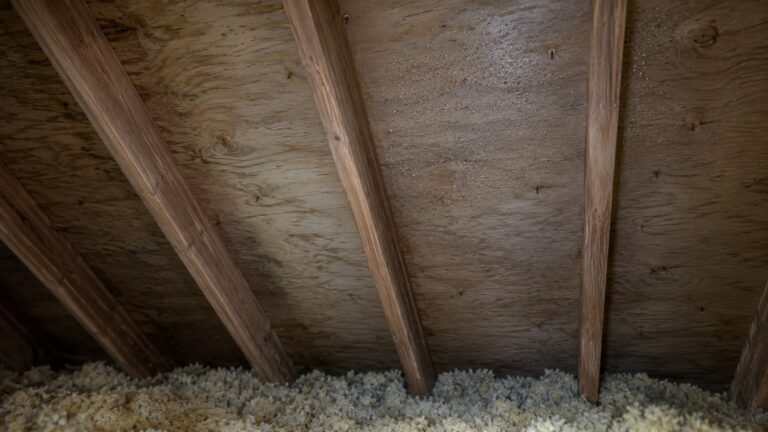
The next risk is roof decking moisture. When water reaches the sheathing, the wood can darken, swell, delaminate, soften, or eventually rot if the moisture problem continues. Early decking moisture may not be visible from inside the home unless the attic is inspected. Over time, it can become a structural concern.
Attic insulation can also absorb moisture from hidden roof leaks. Wet insulation loses performance and can hold moisture against nearby framing or ceiling drywall. If the insulation stays damp, the attic may develop musty odors or mold-friendly conditions.
Eventually, moisture may reach the ceiling below. At that point, the homeowner may notice yellow-brown stains, peeling paint, soft drywall, bubbling texture, or dripping during storms. But these indoor signs are often late compared with the original wind damage. Homeowners who need to trace moisture before it reaches that stage should use a more focused guide on how to detect hidden roof leaks.
Hidden wind damage can also contribute to recurring moisture problems. If a loosened shingle is never corrected, the roof may leak only during certain weather conditions. A light vertical rain may not cause symptoms, while wind-driven rain from a specific direction may cause water entry. This pattern can make the problem seem random when the real issue is a roof surface that no longer seals reliably.
What Homeowners Should Check After Strong Winds
After strong winds, the safest first step is a ground-level check, followed by an attic check if the attic can be accessed safely. Homeowners should not climb onto a steep, wet, storm-damaged, or high roof to look for hidden damage. For a fuller step-by-step checklist, use the guide on how to inspect roof shingles after high winds. This article focuses on the hidden leak risks those subtle changes can create.
Start by looking for changes in the shingle pattern. A healthy roof surface usually has a consistent layout, with shingle courses lying flat and aligned. After wind damage, some areas may look uneven, raised, wavy, or slightly out of place. One raised tab does not automatically mean the roof is leaking, but it can indicate that wind has broken the seal or loosened part of the roof surface.
Homeowners should also look for missing, torn, or shifted shingles. While this article focuses on hidden damage, visible damage still matters. Missing shingles create a more direct opening for water. Torn shingles can expose the layer below. Shifted shingles may leave nail holes or seams more vulnerable to rain.
Granules in gutters or near downspouts can also be a warning sign, especially if they appear suddenly after a windstorm. Some granule loss is normal as asphalt shingles age, but heavy fresh granule accumulation after wind may suggest shingle abrasion, repeated flexing, debris impact, or surface wear that reduces long-term durability. Compare the amount with what was present before the storm if you have photos or recent gutter-cleaning history.
The attic is another important inspection area if it can be accessed safely. Stay on framed walking surfaces, avoid stepping on ceiling drywall or insulation, and do not enter an attic with active electrical hazards, unstable framing, or signs of ongoing dripping near wiring. Look for damp insulation, dark roof decking, musty odors, active dripping, light showing through gaps, or stained rafters. These signs do not always reveal the exact roof entry point, but they can confirm that moisture has reached the attic. If moisture is already visible in the attic, the next step is not just watching the roof from outside. A more complete inspection may be needed to inspect roof areas for leak damage.
It is also useful to compare the roof after different weather events. Hidden wind damage may only leak when rain comes from a certain direction. If water stains appear after windy rain but not after light vertical rain, that pattern can point toward lifted shingles, edge failures, ridge problems, or wind-driven entry rather than a simple top-down drip.
When Hidden Wind Damage Needs Professional Inspection
Hidden wind damage needs professional inspection when the roof surface has signs of movement, when the roof is older, when leaks have appeared indoors, or when damage is spread across multiple areas. A professional roofer can safely evaluate shingle seals, creases, fasteners, underlayment exposure, ridge caps, and roof edges in a way that a homeowner usually cannot from the ground.
A professional inspection is especially important when several shingles look lifted or uneven. One isolated tab may be minor, but widespread lifting can mean the roof has lost significant wind resistance. Once many shingles are no longer sealed, the roof becomes more vulnerable to future storms and wind-driven rain.
Creased shingles should also be taken seriously. A crease is not just a temporary bend. It can indicate that the shingle was flexed beyond its normal working range. Creased shingles may crack, shed granules, or fail to shed water properly. If many creased shingles are present on one slope, the roof may need more than a small repair.
Interior moisture signs raise the urgency. Ceiling stains, damp attic insulation, wet decking, peeling paint, or recurring moisture after wind-driven rain suggest that water has already entered the building envelope. At that point, the issue is no longer just possible wind damage. It has become a moisture intrusion problem.
Homeowners should also be cautious with older roofs after wind events. Aging shingles may not reseal well after being lifted, and brittle shingles may crack during inspection or movement. If the roof already had curling, granule loss, previous repairs, or recurring leaks, wind damage may push it closer to a repair-or-replacement decision.
This article should not decide whether the roof must be replaced. That belongs to the dedicated guide on when wind damage requires roof replacement. However, hidden wind damage should be treated more seriously when it is widespread, when shingles are brittle, when leaks have reached the attic, or when previous repairs are failing.
If the homeowner is unsure whether the problem is safe to monitor or needs immediate evaluation, the practical next step is to understand when to hire a roofing contractor for moisture problems. Wind damage is one of the situations where professional inspection is often justified because the most important damage may be under or between the visible shingles.
How to Lower Leak Risk After Wind Damage
The best way to reduce leak risk after a wind event is to act before subtle damage becomes an active leak. Watch the roof and attic closely when wind was strong enough to move debris, damage nearby trees, loosen gutters, or disturb shingles.
First, document what you can see safely. Take photos from the ground of lifted shingles, missing pieces, uneven roof edges, damaged ridge caps, fallen branches, and granules near downspouts. Photos can help you compare changes over time and explain the issue clearly to a contractor if inspection becomes necessary.
Second, check the attic after the next rain if it is safe to do so. Look for moisture before it reaches the ceiling below. Damp insulation, darkened sheathing, or a musty smell can reveal a leak earlier than a finished ceiling stain. Early detection matters because roof leaks can affect insulation, wood, drywall, and indoor air quality if they continue unnoticed.
Third, avoid temporary fixes that hide the problem without correcting it. Smearing roof cement over a lifted shingle or relying on surface sealant may not restore the shingle’s original wind resistance. It may also make later inspection harder. Damaged shingles, broken seals, and creased tabs should be evaluated as roof system issues, not just surface gaps.
Fourth, pay attention to recurring patterns. If a stain appears only after wind-driven rain, if one attic area gets damp after storms from the same direction, or if the same slope repeatedly shows lifted shingles, there may be a persistent vulnerability. Moisture problems that repeat after weather events should be handled as part of a broader plan to find, fix, and prevent moisture problems in homes.
Finally, do not assume the roof is safe to walk on after a storm. Wind-damaged shingles can be loose, brittle, or slippery. Walking the roof can worsen damage and create personal safety risks. If the suspected damage is above the first story, near a steep slope, close to a ridge, or spread across multiple roof planes, professional inspection is the safer route.
Hidden Wind Damage and Roof Leak FAQs
Can wind damage cause a roof leak if no shingles are missing?
Yes. Wind can lift shingle tabs, break adhesive seals, crease shingles, or loosen edges without removing shingles completely. The roof may look intact from the ground, but water can enter later during wind-driven rain if the shingles no longer seal properly.
How long after wind damage can a roof start leaking?
A roof can leak during the same storm, but delayed leaks are common. Wind may weaken the roof first, then later rain exposes the damage. A leak may appear days or weeks later, especially if the damaged area only leaks during wind-driven rain.
Are lifted shingles always a leak risk?
Lifted shingles are not always actively leaking, but they should be treated as a warning sign. If the seal has broken, the shingle may lift again in future storms and allow water underneath. Multiple lifted shingles or lifted shingles on an older roof deserve closer inspection.
Can a roof leak only during wind-driven rain?
Yes. Some hidden wind damage only leaks when rain is pushed under loosened shingles from a specific direction. A roof may stay dry during light vertical rain but leak during storms with strong sideways wind. That pattern often points to lifted edges, broken seals, ridge problems, or other wind-related openings.
Should I inspect my attic after a windstorm?
If it is safe to access, an attic check after strong wind and rain can help catch hidden roof leaks early. Look for damp insulation, darkened roof decking, musty odors, stained rafters, or active dripping. Do not enter unsafe attic spaces, step on ceiling drywall, or walk on areas without proper support.
Is hidden wind damage worse on older roofs?
Older roofs are often more vulnerable because shingles become more brittle, seals weaken, and granule loss increases over time. Wind can still damage newer roofs, but older shingles are less likely to flex and reseal well after uplift. That makes subtle damage more concerning on aging roofs.
Can hidden wind damage cause mold?
Hidden wind damage can contribute to mold if it allows repeated moisture into the attic, roof decking, insulation, or ceiling materials. Mold risk depends on how long materials stay damp, how often the leak recurs, and whether the affected area dries properly between storms.
Should I use roof sealant on lifted shingles?
Roof sealant may seem like a quick fix, but it is not a full substitute for evaluating damaged shingles. If shingles are creased, loose, brittle, or widespread, the issue may involve more than a small gap. A roofer should inspect suspicious wind damage before a surface patch hides the real condition.
Key Takeaways
- Hidden wind damage can lead to roof leaks even when the roof still has all its shingles.
- Lifted tabs, broken adhesive seals, creased shingles, and loose edges can create delayed water entry.
- A roof may leak days or weeks after the wind event that weakened it.
- Wind-driven rain can push water beneath shingles that no longer seal tightly.
- Roof edges, eaves, ridges, corners, older slopes, and repaired sections are common risk areas.
- Attic dampness, wet insulation, dark roof decking, and ceiling stains may appear after hidden wind damage progresses.
- Homeowners should inspect safely from the ground and attic, not by walking on a storm-damaged roof.
- Professional inspection is important when damage is widespread, shingles are creased, or moisture has already entered the home.
What to Do if You Suspect Hidden Wind Damage
Hidden wind damage should be taken seriously when shingles look lifted, creased, loose, uneven, or repeatedly leak during wind-driven rain. The roof may still look mostly intact, but the seal system may no longer shed water reliably during later storms.
After strong winds, document suspicious areas from the ground, check the attic only if it is safe, watch for stains after wind-driven rain, and avoid walking on a storm-damaged roof. If damage is widespread, the roof is older, or moisture has already reached the attic or ceiling, a professional roof inspection is the safer next step.

2 Comments
Comments are closed.