How to Detect Moisture Under Cabinets (Hidden Water Damage Detection Guide)
To detect moisture under cabinets, inspect the toe-kick, cabinet base edges, nearby flooring, plumbing openings, appliance connections, and any musty or swollen areas. Use a flashlight, inspection mirror, touch testing, and a moisture meter to compare suspect spots with dry areas nearby.
Hidden moisture under cabinets often comes from slow plumbing leaks, appliance leaks, water migration beneath flooring, or damp materials trapped inside enclosed cabinet bases. Because cabinet bases hide flooring and plumbing connections, moisture can spread before visible staining appears.
This guide focuses on detection, not repair. It explains how to inspect cabinet bases, test suspicious materials, recognize early warning signs, and know when moisture under cabinetry may point to a hidden leak. For broader room-by-room inspection guidance, see how to find hidden moisture in different areas of your home.
Why Moisture Often Develops Under Cabinets
Cabinets are vulnerable to hidden moisture because they create enclosed spaces with limited airflow. Once water reaches the cabinet base, toe-kick area, flooring edge, or wall gap, it can stay trapped long after nearby surfaces look dry.
How Cabinets Trap Moisture
Most cabinet systems sit tight against floors and walls, so water has few places to evaporate once it gets underneath. Toe-kick panels, solid cabinet bases, narrow gaps, and flooring edges can hide damp subflooring, trapped water, or early swelling until the problem reaches the visible front of the cabinet.
Moisture may seep under flooring edges, move along seams, or collect beneath the cabinet footprint. Vinyl, laminate, tile, and hardwood can delay visible symptoms, so the cabinet base may stay wet before stains, lifting, or soft spots appear.
Why Cabinet Bases Are Vulnerable to Water Exposure
Cabinet bases often use MDF, particleboard, plywood, laminate, or composite materials that react quickly when moisture reaches the lower edges.
Common moisture reactions include:
- MDF swelling rapidly when exposed to moisture
- Particleboard softening after prolonged exposure
- Plywood layers separating under repeated damp conditions
- Laminate coatings trapping moisture beneath surfaces
Because cabinet bases sit directly on flooring materials, they are often among the first materials affected when water enters the area.
How Water Spreads Beneath Cabinets
Moisture rarely remains confined to a single location. Once water reaches flooring beneath cabinets, it often spreads laterally along seams and edges before rising into surrounding materials.
Typical moisture movement beneath cabinets follows this pattern:
- Water enters from a plumbing leak or appliance
- Moisture spreads beneath flooring surfaces
- Cabinet bases absorb water from below
- Adjacent baseboards and walls become affected
This movement explains why cabinet-related moisture problems are often connected to nearby trim, flooring, and lower wall sections. If baseboard symptoms are present nearby, reviewing signs of water damage behind baseboards can help identify related warning signs without turning this cabinet-focused inspection into a full wall or trim diagnosis.
Early Clues That Moisture May Be Under Cabinets
Small changes around cabinet bases often appear before obvious water stains. Look for patterns rather than relying on one clue by itself.
Musty Odors Inside Cabinet Bases
A persistent musty odor is often one of the earliest indicators of hidden moisture beneath cabinets. This smell develops when moisture remains trapped in enclosed spaces where airflow is limited.
Odors may become noticeable when:
- Opening cabinet doors
- Standing near sink areas
- Entering enclosed kitchen spaces
- Humidity levels increase indoors
Musty odors usually indicate prolonged moisture exposure, even when visible damage has not yet appeared.
Cabinet Base Swelling or Distortion
Swelling along the lower edges of cabinet bases often signals early moisture absorption. This swelling may appear subtle at first but typically worsens if moisture remains present.
Common signs include:
- Slight bulging at cabinet base edges
- Warped toe-kick panels
- Misalignment along cabinet seams
- Uneven cabinet surfaces near the floor
Cabinet base swelling typically develops before major structural damage occurs, making it a valuable early warning sign.
Soft Flooring Near Cabinet Edges
Flooring materials near cabinet bases often show early signs of moisture exposure. Water spreading beneath flooring surfaces weakens structural integrity, causing subtle softening or instability.
Signs of flooring involvement include:
- Soft or spongy areas near cabinet bases
- Floor movement when stepping nearby
- Slight elevation changes at seams
- Visible flooring distortion
These symptoms usually indicate that moisture has traveled beneath cabinet bases and into subfloor materials. One isolated clue does not always prove active moisture, but several warning signs together are much more meaningful.
For example, a musty odor combined with toe-kick swelling, floor softness, or elevated moisture meter readings strongly suggests an active or recently active moisture problem beneath the cabinet.
Toe-Kick Discoloration or Damage
The toe-kick panel at the base of cabinets often shows visible signs of moisture before other areas are affected. Because toe-kicks sit closest to the floor, they are frequently exposed to water migration.
Look for:
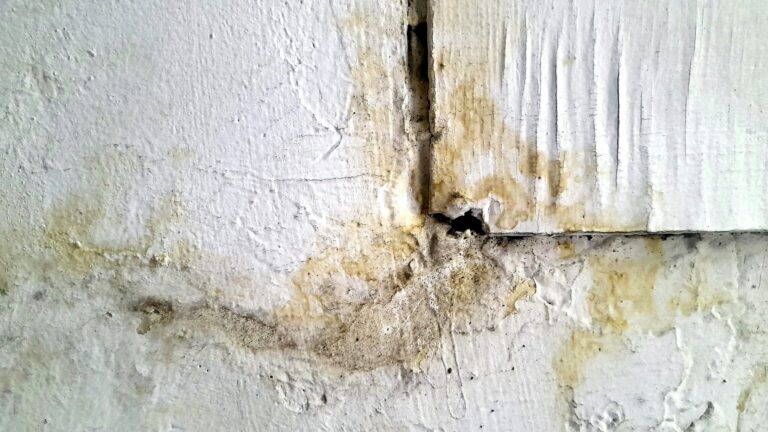
- Darkened areas along the toe-kick
- Peeling laminate finishes
- Water stains along seams
- Persistent dampness near panel edges
Toe-kick damage is one of the most reliable early indicators of moisture beneath cabinets.
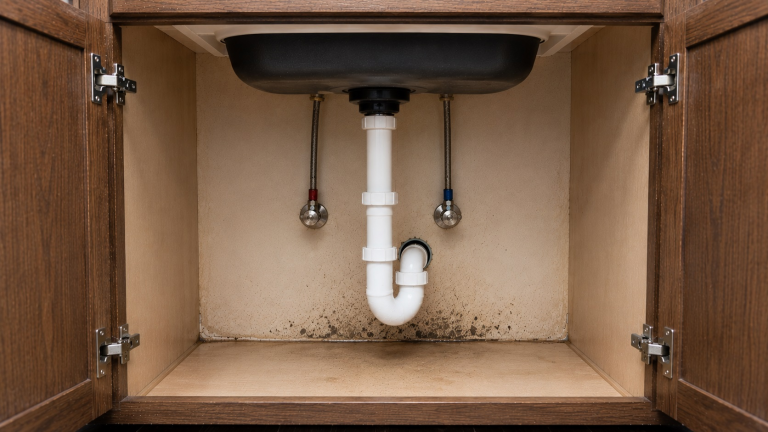
In kitchens and bathrooms, moisture symptoms often originate from plumbing connections hidden behind cabinetry. If cabinet-related signs appear near plumbing fixtures, reviewing signs of water damage under sink cabinets can help confirm whether plumbing systems are involved.
How to Visually Inspect Under Cabinets for Hidden Moisture
Visual inspection is often the first step in detecting moisture beneath cabinets. Many moisture problems produce visible clues before structural damage becomes severe. A careful inspection using proper lighting and observation techniques can reveal subtle warning signs that might otherwise go unnoticed.
Routine visual checks are especially important in kitchens, bathrooms, and laundry areas where plumbing systems operate daily.
Check Toe-Kick Panels Carefully
Toe-kick panels conceal the lower portion of cabinet bases and are one of the most important areas to inspect. Because they sit closest to the floor, toe-kicks are frequently exposed to hidden moisture traveling beneath cabinets.
Begin by examining the entire length of the toe-kick panel for irregularities.
Look for:
- Dark staining along the lower edge
- Warped or bowed sections
- Loose or separating panel edges
- Peeling laminate surfaces
Even minor toe-kick changes may indicate moisture spreading beneath cabinetry.
Inspect Cabinet Seams and Base Joints
Cabinet seams often reveal early signs of hidden moisture. When materials absorb water, expansion occurs unevenly, creating visible gaps or distortion along joints.
Pay attention to:
- Gaps forming between cabinet sections
- Misaligned seams near the floor
- Separation along joint lines
- Raised cabinet edges
These symptoms usually indicate internal moisture movement rather than simple cosmetic wear.
Look for Floor Distortion Near Cabinet Edges
Flooring materials surrounding cabinets frequently reveal moisture activity before cabinet structures show visible damage. Water spreading beneath cabinets weakens flooring systems from below.
Inspect flooring edges for:
- Slight lifting along seams
- Discoloration near cabinet bases
- Warped flooring edges
- Softened flooring sections
Floor distortion strongly suggests moisture movement beneath cabinetry.
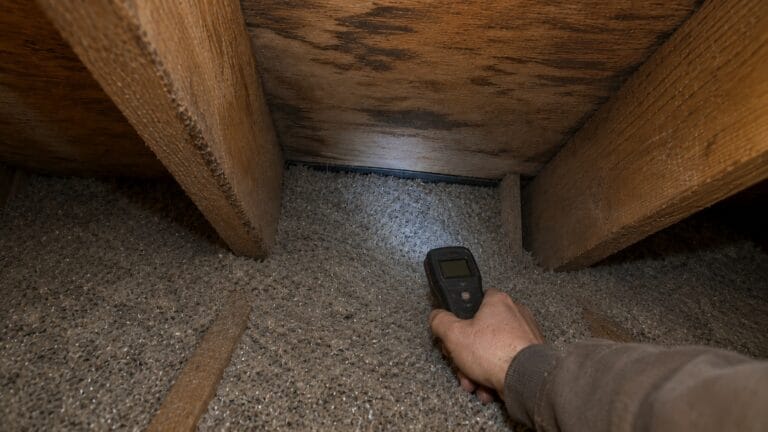
Use Flashlights and Mirrors for Hidden Areas
Many cabinet moisture problems develop in areas that are difficult to see directly. Using a flashlight and small inspection mirror improves visibility and helps reveal concealed damage.
Helpful inspection techniques include:
- Shining a flashlight beneath cabinet gaps
- Using a mirror to view hidden edges
- Checking shadowed corners behind pipes
- Inspecting dark cabinet interiors
These tools allow homeowners to examine spaces that would otherwise remain hidden from view.
When moisture appears to extend beyond cabinet areas, it may also spread toward surrounding wall structures. In such cases, reviewing how to detect moisture behind baseboards can help determine whether nearby trim areas are affected.
How to Physically Test for Moisture Under Cabinets
Physical testing techniques provide additional confirmation when visual signs are uncertain. These methods help identify hidden moisture that may not yet be visible on surfaces.
Simple hands-on tests can reveal structural changes caused by prolonged water exposure.
Press Testing Cabinet Bases
Cabinet bases exposed to moisture often become soft or unstable. Press testing helps detect weakened materials beneath cabinet structures.
Gently press along cabinet bases and toe-kick panels while observing how the surface responds.
Watch for:
- Indentation under light pressure
- Soft or spongy material response
- Cracking or crunching sounds
- Loose base sections
These signs indicate that moisture may be present within the cabinet structure.
Check Floor Stability Around Cabinet Bases
Moisture beneath cabinets frequently weakens flooring materials. Walking slowly along cabinet edges can reveal hidden instability.
Test for:
- Soft spots near cabinet edges
- Movement beneath flooring
- Uneven floor surfaces
- Unusual creaking sounds
Floor instability is often one of the earliest physical indicators of hidden water exposure.
Listen for Hollow or Unusual Sounds
Water-damaged materials sometimes produce hollow sounds when tapped lightly. This occurs when structural bonding weakens due to moisture intrusion.
Use gentle tapping to identify:
- Hollow sounds beneath cabinet bases
- Changes in sound across surfaces
- Loose or separated materials
- Areas of reduced structural density
Sound differences may indicate moisture-related deterioration beneath surfaces.
How to Use Moisture Meters Under Cabinets
Moisture meters provide one of the most reliable ways to confirm hidden moisture beneath cabinets. Choosing the right device significantly improves detection accuracy. For detailed comparisons of reliable tools, see best moisture meters for hidden water damage.
These tools measure moisture levels inside materials, allowing homeowners to detect problems that are not yet visible. While professional-grade meters provide the most precise readings, many homeowner models offer reliable results when used correctly.
Where to Measure Moisture Under Cabinets
Moisture testing locations should focus on areas most likely to collect water. Strategic testing improves detection accuracy.
Recommended testing locations include:
- Cabinet base edges
- Toe-kick panels
- Flooring seams near cabinets
- Areas adjacent to plumbing lines
Testing multiple locations increases the likelihood of detecting hidden moisture.
How to Test Cabinet Base Materials
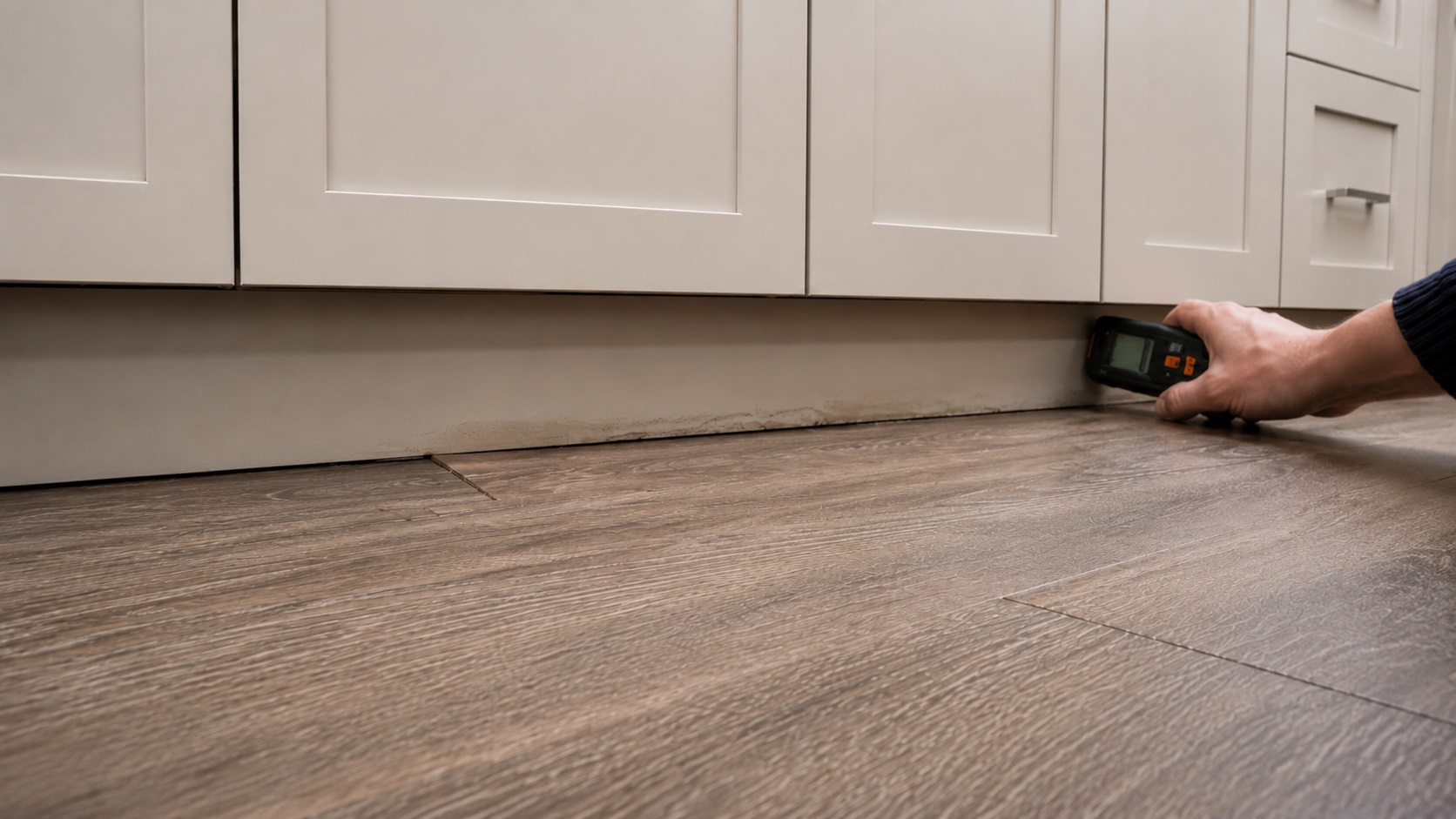
Place the moisture meter directly against the suspect cabinet base, toe-kick, floor edge, or side panel, then compare that reading with a similar dry area nearby. Follow the meter instructions for the material being tested, because wood, drywall, laminate, and composite cabinet materials can read differently.
Common testing practices include:
- Testing the toe-kick, cabinet floor, lower side panels, and nearby floor edge
- Comparing suspect readings with a dry cabinet or dry section nearby
- Retesting the same spots after several hours or the next day
- Recording readings, locations, and visible changes over time
Repeating tests helps identify moisture progression patterns. Understanding safe and unsafe moisture percentages is also important. See moisture levels that indicate water damage to interpret readings correctly.
Best Locations to Test Beneath Cabinets
Specific cabinet locations are more likely to experience hidden moisture problems. Focusing on these zones improves detection efficiency.
High-priority test areas include:
- Under sink plumbing connections
- Near dishwasher installations
- Along refrigerator water line routes
- Behind bathroom vanity cabinets
If plumbing-related moisture is suspected, additional inspection methods described in how to find hidden water leaks inside walls may help identify the underlying source.
High-Risk Cabinet Areas to Check First
Moisture beneath cabinets rarely occurs without a clear source. In most homes, water enters from predictable locations connected to plumbing systems, appliances, or nearby structural openings. Understanding where moisture typically begins helps focus inspections on the most likely problem areas.
Regularly checking these high-risk zones improves the chances of detecting hidden moisture before serious damage occurs.
Under Kitchen Sink Cabinets
Under-sink cabinets are high-risk areas because supply lines, drain fittings, shutoff valves, and garbage disposal connections can release small amounts of water. Check the cabinet floor, back wall, pipe penetrations, and lower side panels for swelling, staining, odor, or elevated meter readings. For symptom-specific guidance, see signs of water damage under sink cabinets.
Dishwasher Cabinet Spaces
Dishwashers operate under high water pressure and frequent temperature changes, making them common sources of hidden moisture. Small hose failures or connection issues may release water gradually beneath surrounding cabinetry.
Typical dishwasher-related moisture causes include:
- Loose hose connections
- Damaged door seals
- Internal leakage during operation
- Drain line failures
Dishwasher leaks often remain hidden because water travels beneath cabinets rather than appearing on visible surfaces.
Example Scenario: Detecting Hidden Moisture Near a Dishwasher
In many homes, dishwasher leaks begin as slow, intermittent drips rather than sudden failures. For example, a homeowner may notice a faint musty odor near the dishwasher but see no visible water on the floor. During inspection, the toe-kick panel below nearby cabinets may show slight swelling, while flooring along the cabinet edge feels slightly soft underfoot.
Using a flashlight to inspect beneath the cabinet edge may reveal darkened wood or minor staining. A moisture meter placed along the cabinet base may confirm elevated moisture levels compared to surrounding areas. Identifying these early warning signs allows moisture problems to be addressed before structural damage spreads further beneath cabinetry.
Refrigerator Water Line Areas
Refrigerators with built-in ice makers or water dispensers rely on small supply lines that are vulnerable to leaks. These lines may develop cracks or loosen over time.
Common warning conditions include:
- Moisture forming behind the refrigerator
- Water pooling along cabinet edges
- Discoloration along flooring seams
- Persistent damp odors near appliance areas
Check this area closely when nearby flooring smells musty, feels soft, or shows discoloration along cabinet edges.
Bathroom Vanity Cabinets
Bathroom vanity cabinets face frequent exposure to water from sinks, cleaning activities, and humidity fluctuations. Over time, moisture may accumulate beneath these cabinets without obvious warning.
Common bathroom moisture sources include:
- Leaking drain assemblies
- Overflowing sink fixtures
- Loose faucet connections
- Water splashing onto flooring
Bathroom moisture problems often progress slowly, making routine inspections especially important. Reviewing how to inspect for hidden bathroom leaks can help identify small problems before moisture spreads beneath cabinetry.
Laundry Room Cabinet Areas
Laundry rooms frequently contain plumbing connections that operate under pressure, making them another high-risk location for hidden moisture.
Persistent damp air or condensation in these spaces may also signal signs of high humidity in a house that increase cabinet moisture risk. Washing machines and utility sinks can release water through small leaks that spread beneath cabinetry.
If moisture appears near a washer, utility sink, or supply line, reviewing how to detect slow plumbing leaks can help identify early warning signs before moisture spreads into surrounding cabinet areas.
Typical laundry-related moisture sources include:
- Loose washing machine hoses — a common cause of water damage around washing machines
- Drain pipe failures
- Water heater valve leaks
- Overflow incidents
These leaks may remain hidden until moisture spreads into surrounding materials.
When to Suspect Moisture Without Visible Water
In many cases, hidden moisture develops beneath cabinets long before visible water appears. Homeowners often assume that dry surfaces mean no moisture is present, but water can spread beneath flooring or inside cabinet bases without reaching visible areas.
You should suspect hidden moisture beneath cabinets when:
- Musty odors appear without visible water
- Cabinet bases feel slightly swollen or uneven
- Flooring near cabinets feels softer than surrounding areas
- Moisture returns after cleaning or drying
- Humidity levels remain unusually high in localized areas
These warning patterns often indicate moisture trapped beneath cabinet structures, even when surfaces appear dry. Early investigation at this stage significantly reduces the likelihood of long-term damage.
When Cabinet Moisture Indicates a Hidden Leak
Moisture detected beneath cabinets often indicates an underlying plumbing issue. While minor spills can occasionally cause temporary moisture, recurring dampness usually signals a persistent leak.
Recognizing patterns associated with hidden leaks helps determine whether further investigation is needed.
Slow Plumbing Leak Warning Signs
Slow leaks are among the most common causes of hidden cabinet moisture. If slow leaks are suspected, reviewing how to detect slow plumbing leaks can help identify drip patterns before visible damage spreads.
These leaks release water gradually, allowing moisture to accumulate over extended periods. Typical signs of slow plumbing leaks include:
- Recurring dampness near cabinet bases
- Unexplained increases in humidity
- Persistent musty odors
- Water appearing without visible spills
Slow leaks may continue unnoticed until surrounding materials begin deteriorating.
Appliance Leak Indicators
Appliance-related leaks often produce distinct patterns of moisture spread. Because appliances operate under pressure, small failures may release water intermittently.
Common appliance leak indicators include:
- Moisture appearing after appliance use
- Damp areas forming near appliance edges
- Repeated water pooling in the same location
- Unexpected flooring distortion near appliances
These patterns typically indicate mechanical issues rather than accidental spills.
Recurring Dampness After Cleaning
Moisture that returns after cleaning or drying usually points to an ongoing source. If the area becomes damp repeatedly, the problem is unlikely to be caused by a one-time spill.
Recurring dampness may appear as:
- Moist spots returning after wiping
- Repeated musty odor development
- New staining after drying
- Persistent soft flooring areas
Recurring moisture should always be investigated further.
How to Monitor Cabinet Areas After Moisture Is Found
Moisture detection does not end after one inspection. Monitoring helps determine whether the problem is drying, stabilizing, or continuing to worsen.
Repeated checks are especially important after leaks, appliance issues, or unexplained dampness.
Tracking Moisture Meter Readings
Moisture meter readings are most useful when tracked over time. A single elevated reading may indicate moisture, but repeated readings show whether the condition is improving or worsening.
Track readings by:
- Testing the same locations each time
- Recording date and reading values
- Comparing suspect areas to dry areas
- Watching for rising or falling readings
Rising readings usually indicate ongoing moisture intrusion, while falling readings suggest drying progress.
Watching for Changes Over Time
Visible and physical changes provide additional clues about moisture movement. Monitoring these changes helps determine whether hidden moisture is spreading.
Watch for:
- Expanding discoloration
- Increasing cabinet swelling
- Worsening flooring softness
- Odors becoming stronger
Progressive changes usually indicate that the source has not been resolved.
Comparing Cabinet Areas With Nearby Rooms
Comparing affected cabinet areas with nearby dry spaces helps determine whether moisture is localized or part of a broader household problem.
Useful comparisons include:
- Compare humidity levels in nearby rooms
- Check whether soft flooring areas expand over time
- Watch for increasing cabinet swelling or discoloration
- Monitor whether odors become stronger or more frequent
If multiple signs continue to worsen rather than stabilize, moisture is likely still entering the cabinet area. Confirming this progression early helps prevent structural damage from spreading into surrounding flooring and wall materials.
Checking Whether Humidity Is Slowing Drying
Humidity does not usually cause cabinet moisture by itself, but high indoor humidity can slow drying after a leak, spill, or appliance problem. If cabinet areas stay damp longer than expected, place a hygrometer nearby and compare the reading with other rooms.
If the room feels damp, smells musty, or consistently reads high, see signs of high humidity in a house for broader environmental moisture clues.
When Moisture Under Cabinets Requires Immediate Action
Some moisture conditions demand immediate attention due to the risk of structural damage or mold development. Recognizing these high-risk scenarios helps prevent serious long-term problems.
Do not cover, caulk, paint, or reinstall toe-kick panels over damp material until the moisture source is identified and the area is confirmed dry. Covering the area too soon can trap moisture inside the cabinet base or flooring system.
Persistent Moisture That Does Not Dry
Moisture that remains present after drying attempts usually indicates an ongoing water source. Persistent dampness should never be ignored, as it often leads to material deterioration.
Warning signs include:
- Repeated moisture detection in the same area
- Dampness lasting longer than expected
- Visible spreading of moisture patterns
- Recurring material softening
Persistent moisture usually indicates an unresolved source that requires further investigation.
Rapid Material Deterioration
Cabinet materials exposed to ongoing moisture often deteriorate quickly. When deterioration progresses rapidly, the likelihood of structural damage increases.
Indicators of rapid deterioration include:
- Severe swelling along cabinet bases
- Cracking or crumbling materials
- Sudden flooring instability
- Rapid expansion of visible damage
Rapid deterioration typically signals extensive moisture exposure.
Strong Odors or Visible Mold Indicators
Persistent musty odors or visible mold growth often indicate long-term moisture exposure beneath cabinets. Mold development becomes increasingly likely when moisture remains trapped in enclosed spaces.
Common warning signs include:
- Strong musty smells inside cabinets
- Dark spotting on cabinet surfaces
- Discoloration along base materials
- Worsening air quality indoors
If mold-related symptoms appear, reviewing what causes mold in walls may help explain why prolonged moisture exposure leads to microbial growth.
If you find visible mold growth, soft crumbling cabinet material, sewage-related water, or widespread dampness extending into walls or flooring, stop invasive inspection and consider professional evaluation. These conditions may involve contaminated materials, hidden structural damage, or a larger moisture source than the cabinet area alone.
Simple Habits That Make Cabinet Moisture Easier to Detect
This article is focused on detection, but a few simple habits make hidden moisture easier to spot before damage spreads. Check visible supply lines, drain connections, appliance hoses, and cabinet floor panels regularly. Wipe up spills quickly, avoid storing wet items inside cabinets, and leave cabinet doors open briefly after cleaning or known water exposure.
If the same cabinet area repeatedly smells musty, feels damp, or shows rising moisture meter readings, treat it as a possible active leak instead of relying on ventilation alone.
Conclusion
Detecting moisture under cabinets requires a focused inspection of toe-kicks, cabinet bases, flooring edges, plumbing openings, appliance connections, odors, and moisture meter readings. Because cabinet bases conceal flooring and wall gaps, do not rely on surface appearance alone.
If several warning signs appear together, or if moisture readings stay elevated after the area should be dry, treat the cabinet area as a possible hidden leak source and investigate before covering, painting, or reinstalling materials.
Frequently Asked Questions About Moisture Under Cabinets
How do I know if there is moisture under cabinets?
Signs of moisture under cabinets include musty odors, swelling cabinet bases, soft flooring near cabinet edges, and discoloration along toe-kick panels. Visual inspection and moisture meter testing help confirm hidden moisture presence.
Can moisture under cabinets spread to surrounding walls?
Yes, moisture beneath cabinets often spreads laterally into nearby flooring, baseboards, and lower wall sections. Early detection helps limit structural damage and reduces the risk of mold development.
What tools help detect moisture under cabinets?
Flashlights, inspection mirrors, and moisture meters are commonly used tools for detecting hidden moisture beneath cabinets. These tools improve visibility and allow accurate moisture measurement inside materials.
How often should cabinets be inspected for moisture?
Cabinets near plumbing or appliances should be inspected at least once per month. Additional inspections are recommended after plumbing repairs or known water exposure events.
Is moisture under cabinets always caused by plumbing leaks?
While plumbing leaks are a common cause, moisture under cabinets may also result from appliance leaks, water migration beneath flooring, repeated spills, or humidity that slows drying after water exposure.