
Why Toilets Leak Around the Base
Toilets usually leak around the base because the seal between the toilet and the drain has failed. The most common cause is a worn or compressed wax ring, but loose floor bolts, a damaged flange, toilet movement, or a cracked base can create the same symptom.
A true base leak often appears during or shortly after flushing because water is escaping below the toilet instead of flowing cleanly into the drain. Water that appears at random times may come from condensation, a tank-to-bowl leak, overflow, or cleaning water instead.
Even a small repeated leak can soak the subfloor before the damage is obvious. Understanding how plumbing leaks cause structural damage helps explain why toilet base leaks should be checked promptly, even when the visible water looks minor.
How Toilet Base Leaks Actually Happen
A toilet is designed to form a watertight seal between the fixture and the drain pipe below it. This seal prevents wastewater from escaping when the toilet is flushed. When everything is working properly, water flows directly from the bowl into the drain without contacting the floor.
At the center of this system is a component called the wax ring. The wax ring sits between the bottom of the toilet and the flange that connects to the drain pipe. When the toilet is installed, the weight of the fixture compresses the wax ring, creating a tight seal.
Leaks occur when this seal is compromised. Instead of flowing directly into the drain, water escapes at the base of the toilet and spreads outward or downward. Because the leak happens beneath the toilet, water often soaks into the subfloor before becoming visible.
This is why some homeowners notice damage such as soft flooring or staining before they ever see standing water. By the time moisture appears around the base, the leak may have already been active for some time.
Because toilet leaks often start below the fixture, the visible water may only show part of the problem. A related guide on how to find, fix, and prevent moisture problems can help explain why moisture sometimes spreads into hidden flooring materials before the surface looks damaged.
Most Common Causes of Toilet Leaks at the Base
Toilet base leaks are usually caused by a small number of failure points. Each cause produces slightly different patterns of moisture and timing, which can help narrow down the problem.
As a quick rule, water that appears mainly after flushing points toward the wax ring, flange, or toilet movement. Water that appears without flushing should make you check the tank, supply line, condensation, overflow, and nearby cleaning or splash sources before assuming the base seal has failed.
Wax Ring Failure
The most common reason toilets leak around the base is a failed wax ring. This component is designed to create a watertight seal, but it can degrade or lose its shape over time.
Wax ring failure can happen due to:
- Age and gradual breakdown of the wax material
- Improper installation or uneven compression
- Movement or shifting of the toilet
- A flange height problem that prevents even contact with the seal
When the wax ring fails, water typically leaks out only during flushing. This intermittent behavior can make the problem harder to detect at first, especially if the water is absorbed into the floor before becoming visible.
Over time, repeated exposure can saturate the subfloor and lead to visible moisture around the base of the toilet.
Loose Toilet Bolts
Toilets are secured to the floor using bolts that hold the fixture firmly in place. If these bolts loosen, the toilet can shift slightly when weight is applied.
This movement can break the seal created by the wax ring, allowing water to escape during use.
If the toilet has already been rocking, simply tightening the bolts may not solve the problem. The wax ring may already be deformed, and overtightening the bolts can crack the porcelain base.
Signs associated with loose bolts include:
- A slight rocking sensation when sitting on the toilet
- Water appearing after use
- Leaks that worsen over time
Even small amounts of movement can compromise the seal, which is why stability is critical for preventing base leaks.
Damaged or Misaligned Flange
The flange is the connection point between the toilet and the drain pipe. It must be positioned correctly and remain intact to support a proper seal.
Problems with the flange can occur when:
- The flange is cracked or broken
- The flange is installed too low or too high relative to the floor
- Flooring changes alter the height of the installation
- Corrosion weakens the flange over time
When the flange is damaged, loose, too low, or uneven, even a new wax ring may not create a reliable seal. This is one reason a toilet may keep leaking around the base shortly after the seal has already been replaced.
Cracked Toilet Base
Although less common than seal or flange issues, a cracked toilet base can also cause water to appear around the bottom of the fixture. Toilets are made of porcelain, which is durable but can develop cracks due to impact, stress, or long-term wear.
These cracks may be difficult to see, especially if they are small or located underneath the base. In some cases, water seeps slowly through the damaged area and collects around the base over time.
Common indicators of a cracked base include:
- Moisture that appears even when the toilet is not flushed
- Water forming slowly without a clear pattern
- No visible leak from plumbing connections
- Hairline cracks visible on close inspection
Because cracks compromise the structural integrity of the toilet, this type of issue typically requires replacement rather than repair.
Caulking Problems Around the Base
Caulking is often applied around the base of a toilet to create a finished appearance and help prevent surface water from reaching underneath the fixture. However, it is important to understand that caulking is not the primary waterproof seal.
If caulking is missing or damaged, water from cleaning, splashing, or minor leaks can spread more easily across the floor. This may make a problem appear worse than it actually is.
In some installations, a small gap is intentionally left in the caulking to allow hidden leaks to become visible. Fully sealing the base can trap water underneath the toilet, delaying detection of more serious issues.
Because of this, caulking can change where water appears, but it does not fix a failed wax ring, loose toilet, or flange problem. Caulking over an active leak can hide moisture and delay proper repair.
Less Obvious Causes That Look Like Base Leaks
Not all water around a toilet base comes from a failed seal. Several other issues can create similar symptoms, leading to confusion and misdiagnosis. Identifying these conditions helps avoid unnecessary repairs and ensures the correct problem is addressed.
Condensation on the Toilet Tank
Condensation forms when cold water inside the tank cools the outer surface, causing moisture from warm bathroom air to collect on the tank. This is especially common in humid environments.
When condensation drips down the sides of the tank, it can collect at the base of the toilet and appear similar to a leak.
Signs of condensation include:
- Moisture forming evenly on the outside of the tank
- Water appearing without a clear connection to flushing
- Increased moisture after hot showers or high humidity
- No visible leak from the base itself
Unlike a true base leak, condensation depends on environmental conditions rather than plumbing failure.
Tank-to-Bowl Connection Leaks
Water can also leak from the connection between the toilet tank and the bowl. This typically occurs when the bolts or gasket between the two components become worn or loose.
When this happens, water may run down the back of the toilet and collect around the base, creating the appearance of a floor-level leak.
Indicators include:
- Water trails on the rear of the toilet
- Moisture forming behind the base rather than directly underneath
- Leaks that occur after flushing
This type of issue originates above the base and should be addressed differently from a wax ring or flange problem.
If the source is not obvious, a broader bathroom fixture check can help separate toilet base leaks from other hidden fixture leaks. See this guide on how to inspect for hidden bathroom leaks for a more complete bathroom-level inspection process.
Overflow or Splashing
In some situations, water around the base is caused by overflow or splashing rather than a plumbing failure. This may happen when:
- The toilet bowl overfills
- Water splashes out during flushing
- Users accidentally spill water during use or cleaning
These cases are usually easier to identify because the moisture does not follow a consistent pattern and does not originate from beneath the toilet.
If water only appears occasionally and does not return under controlled conditions, it may not be related to a leak at all.
How to Tell If a Toilet Base Leak Is Getting Worse
A toilet base leak is getting worse when water appears more often, spreads beyond the base, leaves odor behind, or starts affecting the flooring around the fixture.
Water Appears More Frequently
One of the clearest signs that a leak is worsening is an increase in how often water appears around the base. A leak that initially showed up only after occasional use may begin to appear after every flush or even remain present between uses.
This change usually indicates that the seal beneath the toilet has deteriorated further or that movement has increased, allowing more water to escape.
Water Spreads Beyond the Base
When a leak progresses, water may no longer remain confined to the immediate area around the toilet. Instead, it can spread across the floor or into adjacent materials.
Signs include:
- Moisture extending beyond the base of the toilet
- Stains or discoloration on nearby flooring
- Water reaching baseboards or surrounding fixtures
At this stage, the leak is no longer localized and may be affecting a larger area than initially visible.
Flooring Becomes Soft or Unstable
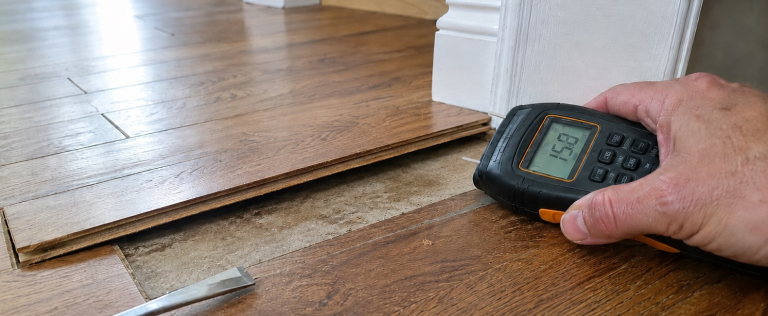
Soft or spongy flooring near the toilet is a strong indication that moisture has been present for an extended period. Water that seeps beneath the toilet can soak into the subfloor, weakening its structure.
Common indicators include:
- Floor that feels uneven or compresses under pressure
- Tiles that shift or loosen
- Vinyl or laminate surfaces that warp or bubble
This condition suggests that the leak has progressed beyond surface-level moisture and may require more extensive repairs.
Persistent Odor Around the Toilet
Leaks involving wastewater can produce noticeable odors over time. If a smell develops around the toilet base and does not go away with cleaning, it may indicate that moisture has been trapped beneath the fixture or absorbed into surrounding materials.
Persistent odors often signal that the problem has been active for longer than it appears.
When a Toilet Base Leak Becomes a Structural Problem
Toilet leaks are often underestimated because the visible water may seem minimal, but repeated water escape at the base can affect hidden materials beneath the fixture, including:
- Subfloor materials beneath the toilet
- Wood framing in the floor structure
- Adhesives and fasteners used in flooring systems
- Surrounding floor coverings
Over time, these materials can weaken, leading to instability and potential structural concerns. Understanding how plumbing leaks affect structural materials highlights why even small leaks should be addressed promptly.
In severe cases, prolonged moisture exposure may require partial floor replacement or reinforcement. This is especially true when leaks have gone unnoticed for long periods.
Hidden Damage Beneath the Toilet
Because the toilet sits directly over the affected area, damage is often hidden until the fixture is removed. By the time visible symptoms appear, the subfloor may already be compromised.
Warning signs that suggest hidden damage include:
- Repeated leaks even after attempted repairs
- Toilet instability or rocking
- Softness extending beyond the immediate base area
- Long-term moisture patterns around the toilet
When these signs are present, the problem may involve more than just a failed seal and could require structural evaluation.
When to Call a Professional for a Toilet Base Leak
While understanding the causes of a toilet base leak helps narrow down the issue, certain situations require professional evaluation. Because many of the critical components are hidden beneath the toilet, improper assumptions can lead to repeated failures or worsening damage.
Consider calling a professional if you notice:
- Water appears during or shortly after flushing
- The toilet rocks, shifts, or cannot be secured evenly
- Leaks return after a wax ring replacement
- Water spreads beyond the base of the toilet
- Flooring feels soft, loose, swollen, or unstable around the fixture
- The source remains unclear after checking the tank, supply line, condensation, and overflow possibilities
Plumbers can inspect the wax ring, flange, and subfloor directly by safely removing the toilet. They can also assess whether the leak has caused hidden damage that requires structural repair.
If the toilet leak has affected nearby flooring, baseboards, or hidden materials below the fixture, a related guide on how to identify and manage moisture problems can help prevent moisture from being missed after the plumbing repair is finished.
Frequently Asked Questions About Toilet Base Leaks
Why does my toilet leak only when I flush?
This usually points to a failed wax ring, flange problem, or movement that has broken the seal between the toilet and the drain. Water escapes during flushing because that is when wastewater passes through the hidden connection below the toilet.
Can condensation look like a toilet base leak?
Yes. Condensation from the tank can drip down and collect at the base, especially in humid bathrooms. However, condensation is typically related to temperature and humidity rather than flushing patterns.
Is a wax ring failure serious?
Yes. While the leak may seem minor at first, a failed wax ring can allow water to soak into the subfloor, leading to structural damage over time if not addressed.
Can a toilet leak damage the floor?
Yes. Persistent moisture can weaken subfloor materials, loosen flooring, and create long-term structural issues if the leak is not repaired promptly.
Should a toilet be caulked to the floor?
Many installations include caulking for appearance, stability, and surface-water control, but caulk is not the drain seal. It should not be used to hide an active leak, and some installers leave a small rear gap so hidden leaks can become visible.
Conclusion
Toilets usually leak around the base because the drain seal has failed, the toilet is moving, the flange is damaged, or the fixture itself is cracked. The timing of the water is the most useful clue: leaks that appear during flushing usually point below the toilet, while water that appears at other times may come from condensation, the tank, overflow, or nearby surface water.
Because base leaks can soak the subfloor before the damage is visible, identify the source early instead of sealing over the symptom. If the toilet rocks, the floor feels soft, or the leak returns after repair, the toilet may need to be removed so the seal, flange, and floor structure can be checked directly.
One Comment
Comments are closed.