Roof Installation Problems That Lead to Mold
Mold after roof work can be confusing because the roof may look fine from the outside. The shingles may be new, the ridge may look straight, and there may be no obvious hole in the roof. But mold does not require a dramatic leak to develop. It needs moisture that stays long enough for roof sheathing, framing, insulation, or ceiling materials to remain damp.
Roof installation problems can create those mold conditions in two main ways. The first is water intrusion, where rain enters through a poorly installed detail such as flashing, a pipe boot, a skylight, a valley, or a roof-to-wall transition. The second is moisture trapping, where humid attic air cannot escape because ventilation, intake airflow, exhaust routing, or roof deck conditions were handled incorrectly.
This is why a newer roof can still be connected to attic mold. A roof replacement may solve one visible problem while creating another if flashing is installed poorly, ventilation is unbalanced, soffit intake is blocked, bathroom exhaust is routed into the attic, or damp materials are covered before they dry. For the broader roofing-system view, see common roofing material failures, and for a wider installation-quality checklist, see common roof installation mistakes.
The important point is that mold after roof installation should be treated as a moisture-source problem first. If the defect is still letting rain in, trapping humid attic air, or sending bathroom exhaust into the attic, cleaning the visible mold will only make the area look better temporarily. For the broader home moisture framework, see how moisture problems spread through a home.
The Two Main Ways Bad Roof Installation Leads to Mold
A roof installation defect does not always cause water to pour into the attic. Many mold problems start with small, repeated moisture exposure. A flashing edge may leak during wind-driven rain, a pipe boot may leak only during certain storms, a ridge vent may be installed without usable intake air, or a bath fan may discharge humid air into the attic instead of outdoors.
Most roof-related mold follows one of two pathways: leak-driven moisture or condensation-driven moisture. Leak-driven mold starts when rainwater gets past the roof covering and repeatedly wets sheathing, rafters, insulation, ceiling drywall, or framing. For a focused explanation of that pathway, see why roof leaks cause mold growth.
Condensation-driven mold is different. In that case, the roof may not be leaking rainwater at all. Instead, warm humid air rises into the attic and meets cooler roof sheathing, roofing nails, rafters, or duct surfaces. If the attic cannot ventilate properly, that moisture can condense and stay on wood surfaces. Over time, the homeowner may see dark staining, musty odor, damp insulation, or mold on the underside of the roof deck even though the shingles appear intact.
This distinction matters because the correct solution depends on the source. A flashing leak needs a roof detail corrected. A ventilation problem needs airflow corrected. A bath fan sending moist air into the attic needs proper exhaust routing. Cleaning mold without identifying which moisture pathway is active can leave the homeowner with the same problem again during the next wet season, cold snap, or humid weather pattern.
That is why the first question is not only, “Where is the mold?” The better question is, “What roof or attic condition is keeping this area wet?” The answer may be a leak path, an airflow problem, a disconnected exhaust duct, or damp materials that were covered before they dried.
Improper Flashing That Lets Water Behind the Roof System
Flashing is one of the most important parts of a roof installation because it protects the places where water naturally tries to enter. These areas include chimneys, sidewalls, dormers, skylights, roof valleys, and roof-to-wall intersections. Shingles alone are not enough at these transitions. Flashing must be layered so water is directed back onto the roof surface instead of behind the roof covering.
When flashing is installed poorly, the roof may still look finished from the outside. The problem is that water can slip behind the visible materials during rain, especially during wind-driven storms. Over time, that slow moisture entry can wet sheathing, framing, insulation, and ceiling materials. If those materials stay damp, mold can develop even if the leak does not produce obvious dripping inside the house.
Chimney and Sidewall Flashing Mistakes
Chimneys and sidewalls are common mold-related roof failure points because they interrupt the normal flow of water. Step flashing, counterflashing, and properly layered roof-to-wall flashing are supposed to move water around these transitions. If flashing is missing, reused incorrectly, sealed only with caulk, nailed in the wrong place, or not lapped correctly, water can move behind it.
This type of installation problem can lead to mold on roof decking, rafters, attic framing, or the upper wall cavity near the leak path. The homeowner may notice staining near a chimney, damp insulation along a wall line, or mold growth in a concentrated area below the transition. The underlying issue is not just that the area needs more sealant. The flashing detail must shed water correctly. For a deeper look at this failure path, see roof flashing failures.
Skylight and Curb Flashing Problems
Skylights are another area where installation quality matters. A skylight is an opening through the roof, so it must be integrated with the surrounding shingles, underlayment, flashing, and curb. If any part of that assembly is installed incorrectly, water can collect around the opening or move underneath the roof covering.
Homeowners often assume skylight leaks come from the glass or frame, but roof integration is frequently the real issue. A bead of caulk around the skylight may slow water temporarily, but it will not correct poor step flashing, missing head flashing, bad curb details, or underlayment that does not direct water away from the opening. When water repeatedly wets the surrounding sheathing or insulation, mold can appear around the skylight well or attic framing nearby.
Valley Flashing and Drainage Mistakes
Roof valleys carry more water than most other parts of the roof. When two roof slopes meet, rainwater is concentrated into the valley and carried downward. Because of that water volume, installation errors in valleys can cause significant hidden moisture problems. If shingles are cut poorly, valley flashing is misaligned, underlayment is wrong, or debris collects along a weak valley detail, water can move sideways beneath the roof covering.
Valley-related mold may show up as damp decking or staining beneath the valley line. In some cases, water follows the framing and appears inside the home away from the actual valley. Because valleys handle so much runoff, small installation mistakes can create repeated wetting. Repeated wetting is what turns a roof leak concern into a mold risk.
Poorly Installed Roof Penetrations
Every roof penetration is a potential moisture pathway if it is not installed correctly. Plumbing vent pipes, exhaust vents, roof caps, furnace vents, skylights, satellite mounts, and other penetrations all interrupt the roof surface. Each one needs a flashing or boot detail that sheds water while allowing the penetration to pass through the roof.
When penetrations are installed poorly, water may enter slowly around the edges. This can wet insulation below the penetration, stain ceiling drywall, or keep roof sheathing damp. Mold may develop around the penetration area because the moisture source is small enough to go unnoticed but persistent enough to prevent drying.
Pipe Boots and Vent Flashing
Pipe boots can fail when the rubber collar is damaged, cut poorly, poorly fitted, or not seated correctly around the pipe. Fasteners may also be placed where they are exposed to water. If shingles are not integrated properly with the flashing flange, water can get under the surrounding roof covering.
A poor repair or installation may rely heavily on sealant around the pipe. That may work briefly, but it is not the same as a correctly installed boot or flashing assembly. If the area below a vent pipe has damp insulation, stained sheathing, or dark spotting on nearby framing, the penetration should be inspected. The warning signs are closely related to signs roof penetrations are leaking.
Exhaust Vents and Roof Caps
Roof caps and exhaust vents must do two jobs at the same time: allow air to discharge and keep rain from entering. If the roof cap is installed poorly, if flashing is not integrated with the shingles, or if the vent is placed where water can back up around it, rain can enter the attic. That moisture can affect the roof deck, insulation, ductwork, or ceiling materials below.
Exhaust vent problems can also involve humid air, not just rain. Bathroom fans, kitchen exhausts, and other moisture-producing exhaust systems should discharge outdoors. If an exhaust duct is disconnected, poorly routed, or terminated inside the attic, humid air can be released directly into the roof cavity. That moisture can condense on cooler roof sheathing and support mold growth even when the roof covering itself is not leaking.
This makes roof penetrations especially important in mold investigations. A roof may have both a water-shedding defect and an exhaust-routing problem in the same area. If the visible mold is near a vent, duct, roof cap, or pipe, the inspection should consider both rain entry and humid air discharge.
Ventilation Mistakes That Trap Moisture in the Attic
Not every mold problem caused by roof installation comes from rainwater entering the roof. Some mold problems come from trapped humidity. Attics need a way for air to move in and out so heat and moisture do not remain against roof sheathing. If a roof is installed with poor ventilation balance, blocked intake, or ineffective exhaust, damp air can linger long enough to create mold conditions.
Balanced attic ventilation usually depends on intake and exhaust working together. Intake air commonly enters near the soffits or lower roof edge, while exhaust air exits higher on the roof through ridge vents, roof vents, or other exhaust openings. When that balance is missing, the attic may look ventilated from the outside but still perform poorly.
One common mistake is installing a ridge vent without enough usable intake ventilation. A ridge vent needs air entering from lower points to create steady movement through the attic. If soffit vents are blocked by insulation, painted over, too small, missing, or not paired with proper baffles, the ridge vent cannot move air effectively. Moisture may remain near the roof deck, especially during cold weather or humid seasons.
Another problem is blocking the eaves during insulation or roof work. If insulation is pushed tightly into the soffit area without baffles, outside air cannot move from the soffit into the attic. The roof may have visible vents, but the airflow path is interrupted. That creates stagnant zones where roof sheathing can stay damp.
Too much exhaust without enough intake can also create problems. Instead of pulling fresh outdoor air from the soffits, the attic may pull conditioned air from gaps in the ceiling plane. That indoor air often carries humidity from bathrooms, kitchens, laundry areas, and living spaces. When that humid air reaches colder roof sheathing, condensation can form and support mold growth.
Ventilation problems are especially important because they can create mold without a traditional roof leak. The homeowner may not see water dripping during rain. Instead, they may see dark staining on the underside of roof sheathing, rusty nail tips, damp insulation near the eaves, or musty odors in the attic. For a deeper explanation of this moisture pathway, see poor roof ventilation causes moisture problems.
Roof installation can make ventilation better or worse. If a roofing crew installs a ridge vent but leaves blocked soffit intake unresolved, the system may not perform as expected. If old ventilation openings are covered without replacing their function, moisture may build up. If roof vents are placed poorly, some attic areas may remain stagnant. Those stagnant areas are where mold often starts first.
Exhaust Fans Vented Into the Attic
One of the most serious moisture-routing mistakes is venting bathroom fans, kitchen exhaust, or other humid air sources into the attic. This may happen during remodeling, roof replacement, fan installation, or duct repairs. The fan may appear to work from inside the room because air is being pulled from the bathroom or kitchen, but the moisture is being sent into the attic instead of outdoors.
Bathroom exhaust is especially risky because showers release warm, humid air. If that air is discharged into the attic, it can condense on colder roof sheathing, rafters, roofing nails, duct surfaces, or insulation. Over time, the attic may develop mold even though the roof covering is not leaking. The homeowner may blame the shingles, but the real source may be misrouted exhaust.
This problem can become worse after roof work if roof caps are installed incorrectly, if ducts become disconnected, or if an old exhaust path is covered or changed. A fan duct should not simply end under the roof deck or near a vent opening without being properly connected to an exterior termination. Humid air needs a controlled path out of the building.
Mold from exhaust problems often appears near the duct outlet, roof cap, or area where humid air is released. The insulation below may feel damp or compressed. The underside of the roof deck may show dark spotting or staining. Metal fasteners may rust because condensation forms on cold surfaces. In winter, the problem may become more visible because warm indoor air condenses faster against cold roof materials.
Exhaust-related mold is easy to misunderstand because it may not follow a rain pattern. The roof may pass a basic rain inspection while a disconnected or poorly terminated fan duct keeps adding moisture to the attic. If mold appears near a bath fan duct, roof cap, or exhaust opening, the inspection should confirm that the duct is connected, sealed, insulated when needed, and vented outdoors.
Underlayment, Shingle, and Drainage Installation Problems
Flashing, penetrations, and ventilation are major mold-related roof issues, but basic roof covering details can also create hidden moisture problems. Shingles are designed to shed water in layers. Underlayment provides secondary protection beneath the shingles. Drainage details move water away from vulnerable areas. If those layers are installed incorrectly, water can move inward instead of down and off the roof.
Incorrect underlayment laps are one example. Roof layers should be arranged so water flows over the next layer below it, not behind it. If laps are reversed, poorly overlapped, torn, or left exposed in vulnerable areas, water may find a path into the roof deck. That kind of leak may be slow enough to avoid immediate attention but persistent enough to wet sheathing and framing.
Fastener placement can also contribute to mold risk. Overdriven nails, underdriven nails, misplaced nails, exposed fasteners, or fasteners placed too close to vulnerable edges can weaken the roof covering. Water may enter through small openings, especially during wind-driven rain. If the water repeatedly reaches the same roof deck area, mold can develop on the underside of the sheathing or nearby framing.
Low-slope areas create another risk. Asphalt shingles need adequate slope to shed water properly. If shingles are used in an area where water drains too slowly, moisture can linger, back up under laps, or exploit small installation defects. Over time, that dampness can affect roof sheathing and attic materials below.
Drainage mistakes can also create mold conditions. Poor valley layout, bad transitions, uneven surfaces, debris-trapping details, or water flowing into a wall intersection can keep roof areas wet longer than intended. A roof does not have to leak heavily for mold to develop. Repeated dampness in the same hidden area can be enough.
Signs Mold May Be Connected to Roof Installation
Mold in an attic or roof system does not automatically prove the roof was installed incorrectly. Mold can come from old leaks, high indoor humidity, poor air sealing, bathroom exhaust problems, plumbing penetrations, or previous moisture damage. However, certain patterns make roof installation problems more likely.
Start by comparing the mold location with the roof detail above it. Mold below a chimney, sidewall, skylight, valley, pipe boot, roof cap, or ridge vent is more suspicious than mold spread evenly across unrelated attic areas. Timing also matters: mold that appears or worsens after roof replacement, vent changes, insulation work, or new roof caps deserves a closer installation review.
One warning sign is mold that appears after a roof replacement or recent roof work. If the attic was previously dry and mold appears after new shingles, vents, flashing, or roof caps were installed, the timing matters. The issue may involve changed ventilation, disturbed exhaust ducts, new flashing defects, blocked intake, or trapped moisture beneath the roof covering.
Mold concentrated near chimneys, skylights, valleys, roof-to-wall transitions, or vent pipes can also point toward installation-related water entry. These are all detail-heavy areas where small mistakes can create hidden leak paths. If the mold follows a valley line, appears below a pipe boot, or develops near a sidewall, the roof detail above that area should be inspected.
Dark staining on roof sheathing is another clue. Staining does not always mean active mold, but it does show that moisture has affected the wood surface. If staining appears in a pattern under roof vents, near blocked soffits, along the roof deck, or around penetrations, it can help narrow the likely moisture pathway. Homeowners can compare these patterns with broader signs of mold growth in attic spaces.
Rusty roofing nails visible from the attic can suggest condensation. When warm humid air contacts cold nail tips or roof sheathing, moisture can collect on those surfaces. If the attic has poor ventilation or humid indoor air is being pulled upward, nail rust and sheathing stains may appear even without a roof leak. Mold on rafters or truss members may follow the same moisture pattern. For framing-specific warning signs, see mold growth in roof framing.
Damp or compressed insulation below a roof penetration, valley, or vent can suggest water entry. Insulation can hold moisture and slow drying, which makes nearby wood and drywall more vulnerable to mold. If insulation is wet in one concentrated area, a roof leak path should be considered. If insulation is damp across a broader attic area, ventilation or humidity may be the larger issue.
A musty attic odor after roof work is another sign worth investigating. Odor alone does not prove mold is active, but it can indicate damp materials, poor ventilation, or hidden growth. If the odor is strongest near a roof penetration, exhaust duct, blocked soffit, or recently repaired area, the installation details should be checked before assuming the problem is only old attic staining.
What to Check Before Cleaning Mold After Roof Work
The most important step is to find the moisture source before focusing on cleanup. Mold can be cleaned or removed, but it will return if the roof or attic condition that caused it is still active. That is why mold after roof installation should be treated as a moisture investigation first and a cleaning project second.
Start by documenting what you can safely see. Take photos of the mold pattern, roof sheathing stains, damp insulation, visible roof penetrations, exhaust ducts, soffit areas, ridge vent areas, and any ceiling stains below. Photos can help compare changes over time and give a roofer, home inspector, or mold professional better context.
If you can inspect safely from the attic, look for a pattern before touching anything: wet insulation below one roof detail, staining that follows a valley line, rusted nail tips across a broad area, or darker sheathing near an exhaust duct. Those patterns help separate a roof leak from condensation or exhaust-related humidity.
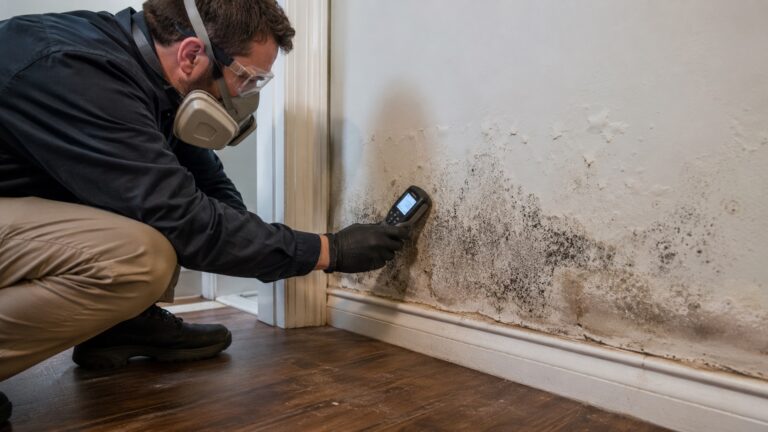
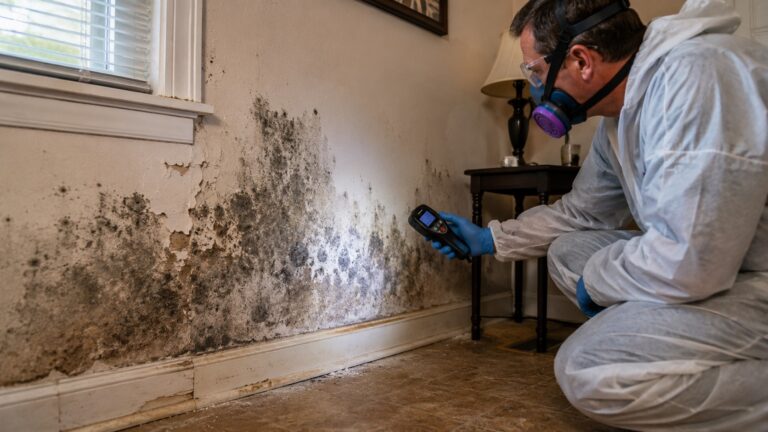
Do not disturb large moldy areas, contaminated insulation, or mold on structural framing without the right safety precautions. Scrubbing, sanding, or pulling materials apart can release particles into the air and spread contamination. If the area is large, hidden, recurring, or connected to roof framing, roof sheathing, electrical fixtures, or wet insulation, use a professional evaluation rather than treating it as a simple surface-cleaning job.
The roof and attic should be inspected for both leak paths and humidity paths. A roofer may need to evaluate flashing, shingles, valleys, roof caps, pipe boots, and penetrations. A mold or indoor air professional may need to evaluate the affected materials and cleanup scope. In some cases, an insulation or ventilation contractor may be needed to correct blocked soffits, missing baffles, or exhaust routing.
For broader cleanup strategy, see how to remove mold permanently. The key principle is the same: the moisture source must be corrected before cleanup can be considered complete. If the roof defect remains, the mold problem is likely to return.
If you suspect the mold is connected to recent roofing work, ask for a clear explanation of the moisture path. A useful inspection should identify whether the source is flashing, a penetration, ventilation, exhaust routing, drainage, underlayment, or another detail. If you need help comparing repair recommendations, use a structured process to choose a roofing contractor for leak repairs.
FAQs About Roof Installation Problems and Mold
Can bad roof installation cause attic mold?
Yes. Bad roof installation can cause attic mold if it allows water into the roof system or traps humid air inside the attic. Common causes include poor flashing, leaking penetrations, blocked ventilation, incorrect roof caps, and exhaust ducts that discharge moisture into the attic instead of outdoors.
Why would mold appear after a new roof?
Mold may appear after a new roof if the installation changed attic ventilation, blocked intake airflow, disturbed exhaust ducts, reused bad flashing, or created a small leak path around penetrations. A new-looking roof can still create mold conditions if moisture is entering or staying trapped below the roof covering.
Can a new ridge vent cause mold if the soffits are blocked?
Yes. A ridge vent needs usable intake air from lower areas such as soffit vents. If insulation blocks the soffits or baffles are missing, the ridge vent may not move enough air through the attic. Moisture can remain near the roof deck and support mold even though the ridge vent looks correct from outside.
Can poor roof ventilation cause mold without a leak?
Yes. Poor roof ventilation can cause mold without rainwater leaking through the roof. If humid air cannot leave the attic, it can condense on cooler roof sheathing, rafters, nails, and insulation. That repeated condensation can keep materials damp enough for mold growth.
Is attic mold after roof work always caused by a leak?
No. Attic mold after roof work can come from roof leaks, but it can also come from poor ventilation, blocked soffits, humid indoor air leaking into the attic, bathroom fans vented into the attic, or past moisture damage. The mold pattern and moisture source should be evaluated before assuming the roof covering is leaking.
Can incorrect flashing lead to mold?
Incorrect flashing can lead to mold when it allows water to move behind shingles, into roof decking, or along framing. This is common around chimneys, sidewalls, skylights, valleys, and roof-to-wall transitions. The mold may appear below the flashing defect or along the path where water travels.
Should I clean attic mold before fixing the roof problem?
In most cases, the moisture source should be corrected before final mold cleanup. Cleaning the mold first may make the area look better temporarily, but the growth can return if the roof leak, ventilation defect, or exhaust-routing problem remains active.
Who should inspect mold that appears after roof work?
A roofer should inspect the installation details that may be allowing water in or trapping moisture, such as flashing, penetrations, valleys, roof caps, ridge vents, soffit intake, and disturbed exhaust ducts. A mold professional may be needed to evaluate cleanup scope. If the pattern points to condensation or blocked airflow, an attic ventilation or insulation specialist may also be needed.
The Moisture Source Matters More Than the New Roof
Roof installation problems lead to mold when they either let rainwater enter or keep humid air trapped against attic materials. Flashing, penetrations, valleys, roof caps, ventilation balance, soffit intake, baffles, and exhaust routing all matter because each one can keep roof sheathing, framing, insulation, or ceiling materials damp.
If mold appears after roof work, do not focus only on cleaning the visible growth. Find the installation-related moisture path first. Once that source is corrected, mold cleanup has a much better chance of lasting.
Key Takeaways
- Roof installation problems can lead to mold through leaks, trapped humidity, or condensation.
- Poor flashing, weak penetration details, bad valleys, and poorly installed roof caps can allow hidden water entry.
- Ventilation mistakes can keep attic air damp even when the roof covering is not leaking.
- Bathroom or kitchen exhaust vented into the attic can create mold on roof sheathing and framing.
- A newer roof can still contribute to mold if flashing, ventilation, exhaust routing, or roof caps were handled incorrectly.
- The moisture source should be found and corrected before final mold cleanup.