How to Avoid Insurance Claim Denials for Mold Damage
Mold damage claims are often denied when the insurance company believes the mold came from a slow leak, long-term humidity, seepage, flooding, poor maintenance, or delayed cleanup. The strongest mold claims usually connect the mold to a covered water event and show that the homeowner acted quickly to stop the moisture, document the damage, and limit the mold from spreading.
The goal is not to force a claim to be covered. The goal is to avoid common mistakes that make a legitimate claim harder to prove. Mold damage insurance decisions usually depend on the source of moisture, the timing of the damage, the policy language, and the evidence available when the claim is reviewed.
If you are still trying to understand what mold-related costs may be covered, start with what mold damage insurance typically covers. This guide focuses specifically on how to reduce the risk of a mold claim denial before cleanup, remediation, or repairs change the evidence.
For the broader cleanup and prevention framework, use the main guide on how to remove mold permanently. This article stays focused on insurance denial risk, not the full mold removal process.
Understand Why Mold Claims Get Denied
Mold claims are usually denied because the insurer questions the covered cause, timing, policy limits, or homeowner response. Before filing or discussing a mold claim, it helps to understand the most common denial triggers.
The mold appears to come from a slow leak
Slow leaks are one of the biggest denial risks in mold damage claims. A small drip under a sink, behind a shower wall, below a refrigerator water line, inside a wall cavity, or beneath flooring can create mold over time. By the time the homeowner notices odor, staining, swelling, or visible mold, the damage may already look gradual.
Insurance companies usually treat sudden accidental water damage differently from long-term leakage. If the evidence shows old staining, rot, repeated dampness, layered damage, or mold that appears to have developed over an extended period, the insurer may argue that the damage was gradual or maintenance-related.
This is why the source and timeline are so important. A burst pipe that suddenly soaked drywall is different from a pipe that dripped behind a cabinet for months. Both can lead to mold, but the claim risk is very different.
The mold appears to come from humidity or poor ventilation
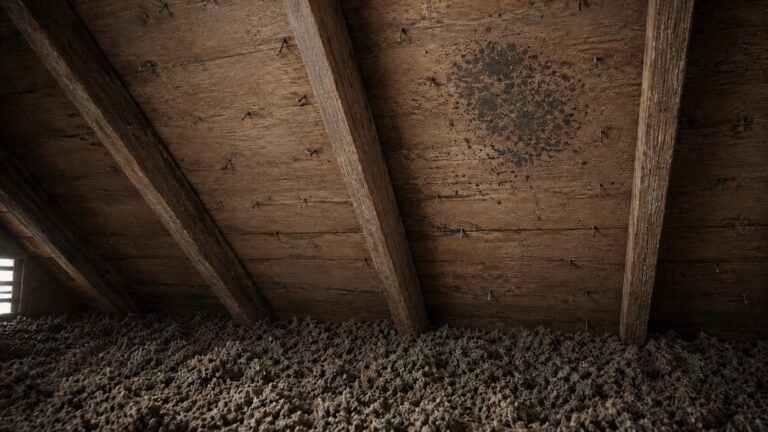
Mold caused by chronic humidity, condensation, or poor airflow is often treated as a moisture-control problem rather than a covered sudden loss. This is common in bathrooms, basements, crawl spaces, attics, closets, and poorly ventilated rooms.
Examples include mold from a bathroom fan that does not remove moisture, condensation on cold surfaces, damp basement air, attic ventilation problems, or crawl space humidity. These conditions may need serious correction, but they are often viewed as long-term environmental or maintenance issues.
For long-term control, mold cleanup has to be paired with moisture correction. The broader guide to find, fix, and prevent moisture problems throughout the home explains why recurring moisture sources must be addressed before mold problems can stay resolved.
The mold appears to come from seepage or flooding
Mold after groundwater intrusion, foundation seepage, floodwater, or surface runoff is another common denial-risk scenario. Standard homeowners insurance often treats outside water differently from sudden interior plumbing water.
For example, mold on basement walls after repeated seepage may be viewed differently from mold that developed after a covered interior pipe burst. Mold after floodwater may also fall outside a standard homeowners policy unless separate flood coverage applies.
If the mold is in a basement, crawl space, or lower-level room, the insurer may pay close attention to whether the moisture came from plumbing, groundwater, seepage, sump pump failure, sewer backup, or outside flooding.
The homeowner waited too long to act
Delay can weaken a mold claim. If water damage was discovered but not reported, dried, repaired, or documented promptly, the insurer may argue that some mold growth was preventable.
This does not mean homeowners are expected to solve everything instantly. It means they should take reasonable steps once they discover the problem. Those steps may include stopping the water source, taking photos, contacting the insurer, beginning safe drying, calling the right professional, and saving receipts.
The longer moisture remains active after discovery, the easier it is for added mold growth to look preventable. Quick action helps protect both the home and the claim record.
Prove the Mold Came From a Covered Water Event
To reduce denial risk, the claim needs to connect the mold to a specific water event. Mold proves moisture was present, but it does not prove the moisture came from a covered cause. The stronger your evidence is for the original water source and timing, the stronger your claim position may be.
Identify the original water source
Start by identifying where the moisture came from. Was it a burst pipe, appliance supply-line failure, toilet overflow, roof opening, sewer backup, groundwater seepage, slow leak, humidity, condensation, or an unknown source?
If the source is unclear, do not guess. Instead, document what you see and call the appropriate professional. A plumber, restoration company, roofer, or mold remediation professional may be able to identify the source and provide written findings.
Useful source evidence may include:
- Photos of a failed pipe, valve, supply line, hose, or appliance connection
- A plumber’s invoice describing the failed part
- Photos of the water path from the source to the mold area
- Ceiling stains below an upstairs plumbing failure
- Restoration company moisture readings
- Photos taken before walls, flooring, or cabinets were opened
When possible, keep the failed part or at least photograph it from several angles before it is discarded. A replaced hose, valve, pipe section, appliance connector, or toilet seal may be more useful than a general statement that something leaked.
Document the timeline
A clear timeline can help separate a sudden event from a gradual problem. Write down when you discovered the water damage, when you first noticed mold, when the water source was stopped, when you contacted insurance, and when cleanup or drying began.
Include dates and times when possible. If a pipe burst on Monday and mold appeared later in the affected wall area, that timeline matters. If the mold was discovered in an area with old staining and no known water event, the insurer may question whether it came from a covered cause.
Do not exaggerate the timeline or guess beyond what you know. If you are unsure when the mold started, say what you observed and when you observed it.
Connect the mold to the water event
The mold claim is stronger when the mold location matches the water path. For example, mold behind baseboards near a recent pipe leak is easier to connect than mold in a separate room with no clear moisture relationship.
Look for physical connections between the water event and the mold:
- The mold appears in the same area that was soaked by the water event.
- Water staining leads from the source toward the mold location.
- Moisture readings are elevated in the affected materials.
- Drywall, insulation, or flooring near the source remained damp.
- A contractor’s notes connect the mold to the recent water damage.
If the mold appears in a different area from the water damage, do not assume it is part of the same claim. It may still matter, but the connection needs evidence.
Document Mold and Water Damage Before Cleanup
Documentation is one of the most important ways to reduce mold claim denial risk because cleanup can change the evidence. By the time an adjuster, remediation company, or contractor sees the damage, water may be dried, materials may be removed, mold may be cleaned, and damaged belongings may be moved.
Before cleanup changes the scene, document the mold, the water damage, the suspected source, and the affected materials. Good documentation does not guarantee coverage, but it helps the insurer understand what happened and why the mold may be connected to a covered water event.
Take photos and videos of:
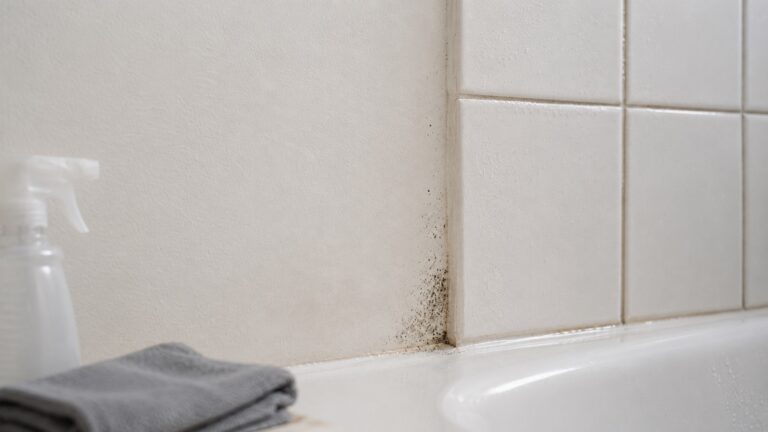
- The visible mold before it is cleaned or disturbed
- The original water source, such as a pipe, appliance, fixture, roof leak, or ceiling stain
- The path of water from the source to the mold area
- Wet drywall, flooring, trim, cabinets, insulation, or ceiling materials
- Damaged belongings before they are moved or discarded
- Moisture readings, drying equipment, or opened wall cavities if available
- Removed materials before disposal
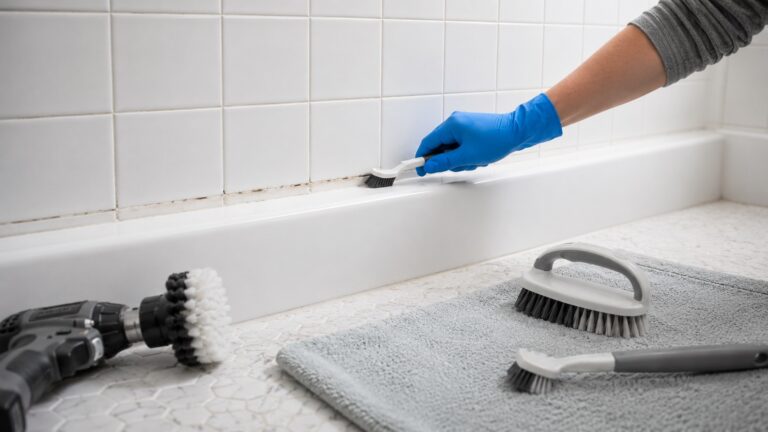
If visible mold is present, avoid disturbing it unnecessarily before it is documented. Scrubbing, sanding, cutting, or tearing out moldy materials can remove evidence and may spread particles if done without proper containment. For the full evidence workflow, see how to document mold damage for insurance claims.
Water damage photos are also important because the mold claim often depends on the original water event. If the insurer cannot see where the water came from or how it affected the home, the mold may be harder to connect to the loss. The separate guide on how to photograph water damage for an insurance claim explains how to capture wide photos, source photos, close-ups, and damaged belongings.
Act Quickly to Stop Moisture and Prevent More Mold
One of the most common ways a mold claim becomes weaker is delay. If the homeowner discovers water damage but does not stop the source, dry the area, report the loss, or take reasonable mitigation steps, the insurer may argue that additional mold growth was preventable.
Fast action does not mean unsafe action. It means taking reasonable steps once the problem is discovered. The right steps depend on the water source, contamination level, safety risk, and severity of the damage.
If water may involve sewage, floodwater, electrical hazards, sagging ceilings, or widespread mold, do not disturb materials just to gather evidence. Take safe photos from a distance and call the insurer or an appropriate professional for next steps.
Stop the moisture source
If the water source is still active, stop it if you can do so safely. Shut off a fixture valve, appliance valve, or main water supply when appropriate. If the source is a roof leak, exterior leak, foundation seepage, or hidden plumbing problem, call the correct professional instead of guessing or attempting unsafe repairs.
The claim record is stronger when you can show that you responded quickly after discovering the moisture. Keep notes about when the water was stopped, who stopped it, and what repair was made.
Begin reasonable drying or mitigation
Mold grows when moisture remains available. After documentation and safety checks, begin reasonable drying or mitigation. This may include water extraction, removing standing water, moving belongings to dry areas, opening cabinets, using drying equipment when electricity is safe, or hiring a restoration company.
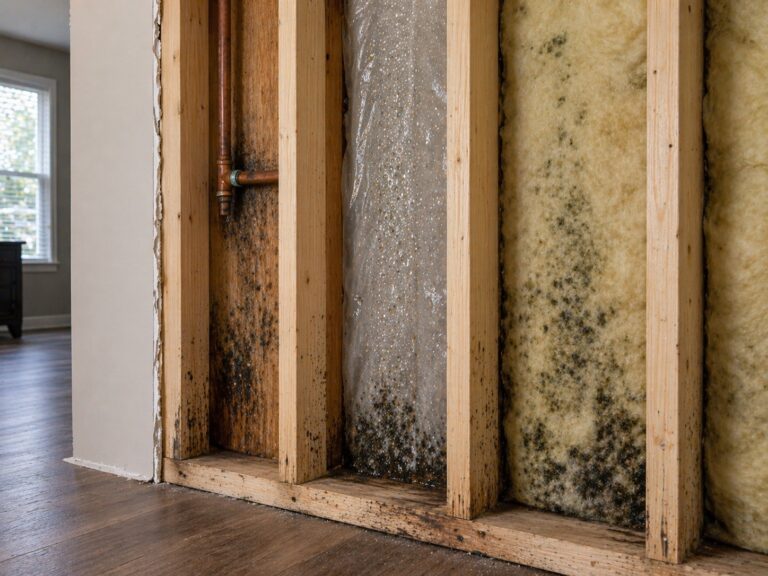
If hidden materials are involved, surface drying may not be enough. Moisture can remain inside drywall, under flooring, behind cabinets, in insulation, and along baseboards. Professional drying records, moisture readings, and drying logs can help show that the homeowner acted responsibly after the loss.
Contact the insurer promptly
Report the damage promptly and ask what the insurer needs before major demolition or remediation begins. Ask whether mold testing, remediation, or demolition must be approved. Ask what damaged materials should be kept, photographed, or discarded.
Do not wait days or weeks while mold spreads before contacting the insurer. Delayed reporting can make the timeline harder to prove and may create questions about whether the damage was made worse by inaction.
Save receipts and records
Keep receipts, invoices, estimates, and notes for every emergency step connected to the mold or water damage. Save plumber invoices, restoration records, mold remediation scopes, drying equipment receipts, photos, videos, moisture readings, and written communication with the insurer.
These records help show that you took reasonable steps to reduce damage instead of ignoring the problem. They also help separate the original water event from later cleanup and repair costs.
Avoid Claim Mistakes That Suggest Neglect
Mold claim denials often happen when the damage appears to be long-term, preventable, or poorly maintained. You cannot change the facts of what happened, but you can avoid actions that make the claim record unclear or incomplete.
Do not clean everything before documenting it
Cleaning before documentation can remove visible evidence. If you scrub mold, repaint stains, throw away materials, or remove damaged belongings before taking photos, the insurer may have less information to evaluate the cause and scope of the damage.
If cleanup must begin immediately for safety or health reasons, take quick photos first. If you already cleaned before taking photos, document what remains, list what was removed, save receipts, and explain why cleanup had to begin.
Do not discard key evidence too early
Damaged materials can help show what happened. A failed supply line, wet carpet pad, moldy drywall section, removed baseboard, damaged appliance part, or plumber-replaced valve may help support the source and timing of the claim.
You do not need to keep unsafe materials in living areas indefinitely. But when possible, photograph materials before disposal, ask the insurer what they want preserved, and keep samples only when safe and appropriate.
Do not ignore small leaks or recurring moisture
If you notice a small leak, musty odor, damp cabinet, stained ceiling, or recurring condensation, address it early. Waiting until mold spreads can make the damage look gradual or neglected.
Insurance claims are harder when there are signs that a problem was known but not corrected. If you repaired a leak, kept maintenance records, or called a professional promptly, save those records. They may help show that the home was maintained and that you responded responsibly.
Do not guess about the cause
Guessing can create problems if later evidence shows something different. If you do not know whether the mold came from a burst pipe, roof leak, seepage, condensation, or appliance failure, say what you observed and let professionals investigate.
Use factual language. Instead of saying, “This has probably been leaking for months,” say, “I first noticed the staining on this date, and the plumber inspected it on this date.” Clear facts are stronger than guesses.
Do not hide known prior problems
Trying to hide prior leaks, repairs, or moisture history can damage credibility. If there was a previous issue, be accurate about what happened, when it was repaired, and what records you have. A prior repair does not automatically defeat a claim, but inaccurate information can make the claim harder to evaluate.
Check Mold Limits, Exclusions, and Endorsements
Even when mold appears to come from a covered water event, the policy may still limit how much the insurer will pay. Mold coverage is often treated differently from ordinary water damage coverage. Some policies include mold sublimits, fungi exclusions, testing restrictions, or endorsement requirements.
Before assuming the claim will pay for all mold-related work, review the policy and ask the insurer direct questions. Mold remediation, testing, containment, demolition, disposal, and repairs may not all be handled the same way.
Ask about mold sublimits
A mold sublimit is a smaller coverage limit that applies specifically to mold, fungi, or microbial growth. For example, the policy may cover the original water damage but cap mold-related cleanup at a lower amount.
Ask whether your policy has a mold sublimit and what expenses count toward it. Testing, remediation, containment, damaged material removal, and post-remediation verification may be included in the limit depending on the policy.
Check mold exclusions
Some policies exclude mold except when it results directly from a covered water loss. Others may exclude mold from seepage, flooding, groundwater, long-term leaks, humidity, or poor maintenance.
The wording matters. If the insurer says the mold is excluded, ask which policy section applies and what evidence they used to reach that conclusion. Keep the conversation factual and request clarification in writing when possible.
Ask whether an endorsement applies
Some homeowners have added mold coverage, water backup coverage, sewer backup coverage, sump pump coverage, or other endorsements that may affect the claim. These endorsements do not guarantee approval, but they can change how certain losses are evaluated.
If the mold followed a backup, sump pump failure, basement water event, or unusual water source, ask whether any endorsement applies. If you do not have added coverage, ask your agent what options are available for the future after the current issue is resolved.
Separate mold coverage from water damage coverage
A water damage claim and a mold damage claim may overlap, but they are not always identical. The insurer may cover drying and repair for the water damage while limiting mold testing or remediation. Or the insurer may approve part of the water claim while questioning whether the mold developed from the same event.
For a broader explanation of how water losses are usually evaluated, review what water damage insurance typically covers. For mold-specific coverage categories, use the separate mold coverage guide linked earlier in this article.
Use Professional Reports When the Claim Is Complicated
Professional documentation can reduce denial risk when the mold source, timeline, or extent of damage is unclear. A homeowner’s photos are important, but plumber findings, restoration records, moisture readings, and remediation scopes can help support the claim with more technical detail.
You may need professional help when mold is hidden, widespread, inside wall cavities, connected to structural materials, near HVAC systems, or tied to a disputed water source. Professional reports can document wet materials, moisture spread, and required removal without relying only on homeowner descriptions.
Plumber reports
If the mold followed a plumbing leak, a plumber’s invoice or written finding can be valuable. Ask the plumber to identify the failed part, describe the repair, and note where the leak was found. Photos of the failed pipe, hose, valve, toilet seal, appliance connection, or supply line can help connect the mold to the water event.
Do not ask a plumber to say more than they know. A factual invoice that identifies the failure is more useful than speculation.
Restoration records
A water damage restoration company may provide moisture readings, drying logs, equipment records, demolition notes, and photos of wet materials. These records can help show that water affected the area where mold developed and that drying or mitigation began promptly.
Restoration documentation is especially helpful when surface materials looked dry but moisture remained behind walls, under floors, or inside cabinets.
Mold remediation scopes
A mold remediation company can document the affected area, containment needs, materials to remove, cleaning methods, and post-remediation recommendations. If the mold is extensive or hidden, a written scope can help the insurer understand why professional work is needed.
When mold affects a large area, returns after cleaning, involves porous materials, or appears inside hidden cavities, it may be time to hire a mold remediation professional instead of trying to clean the area yourself.
Moisture readings and drying logs
Moisture readings can help connect mold to damp materials rather than guesswork. Readings from drywall, wood, subfloors, cabinets, insulation areas, or structural framing may show where water traveled and which materials remained wet.
Drying logs also show that mitigation was performed over time. This can be useful if the insurer questions whether the homeowner acted quickly enough to prevent further mold growth.
Communicate Clearly With the Insurance Company
How you communicate with the insurance company matters. Clear, factual communication helps the claim record. Guessing, exaggerating, minimizing, or changing the story can create confusion.
When discussing the claim, focus on what you know:
- When you first discovered the water damage or mold
- Where the water appeared to come from
- What professionals found
- What steps you took to stop moisture
- What photos, videos, invoices, and reports you have
- What areas were affected
- What evidence still exists before cleanup or disposal
- What cleanup or mitigation has already been done
If you are not sure about something, say so. It is better to say, “The plumber is inspecting the source,” than to guess and later have the evidence point somewhere else.
Ask what evidence the insurer needs
Before major demolition, mold removal, or disposal, ask the insurer what evidence they want. They may request photos, contractor notes, estimates, moisture readings, damaged material samples, or an inspection before certain work begins.
If the area is unsafe or the damage is spreading, emergency action may still be necessary. Document why the action was needed and keep records of what was removed, cleaned, or dried.
Keep written notes of claim conversations
After every phone call, write down who you spoke with, the date, the time, the claim number, and the instructions you were given. If possible, follow important conversations with a written summary through the insurer’s preferred communication method.
Written records help prevent confusion later. They also make it easier to show that you asked for guidance and followed the instructions you received.
Do not overstate or minimize the damage
Describe the damage accurately. Do not exaggerate the mold, but do not minimize it either. If the mold is visible, hidden, spreading, or connected to wet materials, document it clearly. If only a small area is affected, say that as well.
Accurate descriptions help the insurer evaluate the claim and help contractors prepare the correct scope of work.
What to Do If the Insurer Questions the Mold Claim
If the insurer questions the mold claim, stay calm and ask for specifics. A questioned claim is not always the same as a final denial. The insurer may need more information about the source, timeline, policy language, or scope of damage.
Ask questions such as:
- Which part of the policy applies to this mold damage?
- Is the concern the source of water, the timing, the mold limit, or an exclusion?
- What evidence would help clarify the cause, timing, or moisture source?
- Do you need a plumber report, restoration report, or moisture readings?
- Should damaged materials be preserved for inspection?
- Can you provide the explanation in writing?
Then respond with evidence, not emotion. Provide photos, videos, invoices, repair notes, mitigation records, drying logs, and your timeline. If the insurer says the damage is gradual, focus on the facts that support when the water event was discovered, what caused it, and how quickly you responded.
If the claim is formally denied, review the denial letter carefully and compare it with your policy and documentation. This article does not provide legal appeal advice, but it is reasonable to ask for clarification, submit missing evidence, and request a written explanation of the policy language used in the decision.
FAQ
Why do insurance companies deny mold claims?
Insurance companies commonly deny mold claims when the mold appears to come from gradual leaks, long-term humidity, poor ventilation, seepage, floodwater, poor maintenance, delayed reporting, weak documentation, or policy exclusions. Mold is more likely to be questioned when the source of moisture is unclear or appears preventable.
How do I prove mold came from covered water damage?
Show the original water source, the timeline, the path of water, and the connection between the water event and the mold location. Useful evidence may include photos, videos, plumber invoices, restoration records, moisture readings, drying logs, damaged material photos, and a written timeline.
Can insurance deny mold from a slow leak?
Yes. Mold from a slow leak is commonly denied because gradual leakage is often excluded from standard homeowners policies. A slow drip under a sink, behind a shower wall, below an appliance, or inside a wall cavity can create mold over time, but that does not automatically make it a covered loss.
Should I clean mold before the adjuster sees it?
Document the mold first whenever it is safe. Take photos and videos, photograph the moisture source, and ask the insurer what evidence they need before cleanup or demolition. If cleanup must begin immediately for safety reasons, document what was removed, save receipts, and keep records of why action was needed.
Can delayed reporting cause a mold claim denial?
Delayed reporting can weaken a mold claim if the insurer believes the delay allowed mold to spread or made the original moisture source harder to prove. Report the damage promptly after safety and emergency source-control steps are handled.
Does a mold endorsement guarantee the claim will be approved?
No. A mold endorsement may expand coverage or increase limits, but it does not guarantee approval. The claim can still depend on the moisture source, timing, exclusions, deductible, sublimits, documentation, and whether reasonable mitigation began after the damage was discovered.
What records help support a mold insurance claim?
Helpful records include photos, videos, plumber reports, restoration invoices, drying logs, moisture readings, mold remediation scopes, repair estimates, damaged item lists, receipts, communication notes, and a timeline showing when the damage was discovered and what actions were taken.
Key Takeaways
- Mold claim denials often turn on source, timing, policy language, and whether the damage appears sudden or gradual.
- The claim record is stronger when the mold location matches a documented water path from a covered event.
- Photos, videos, plumber findings, restoration records, moisture readings, and receipts help support the timeline.
- Do not clean, discard, repaint, or demolish damaged materials before documenting them unless safety requires immediate action.
- Prompt mitigation helps show that you acted reasonably after discovering the moisture problem.
- If the insurer questions the claim, ask whether the concern is the source, timing, exclusion, sublimit, or missing evidence.
Final Steps to Protect a Mold Claim
Before cleanup changes the evidence, document the mold, identify the original water source, stop the moisture, contact the insurer, save receipts, and keep professional reports when the source or extent of damage is disputed.
Insurance coverage is never guaranteed, but a clear record can reduce avoidable denial risk. When the source, timing, damage, and response are well documented, the insurer has a clearer factual basis for evaluating the mold claim.