Signs of Mold Growth in Garages
Signs of mold growth in garages often appear where moisture lingers on materials that can hold or collect organic matter. In a garage, that usually means cardboard boxes, wood shelves, drywall paper, trim, fabric, stored furniture, dust-covered surfaces, and items sitting near damp concrete. Clean bare concrete is not usually the main mold food source, but dust, dirt, coatings, stored items, and nearby porous materials can support growth when they stay damp.
The first signs may be subtle. A garage may smell musty before visible mold is easy to find. Small specks may appear on boxes, shelving, wall corners, trim, or stored items. A dark stain may return after cleaning. A fuzzy patch may show up behind clutter where air does not move well. These signs are worth checking because garage mold is usually a symptom of moisture that has not been controlled.
This article focuses on garage mold symptoms, not full cleanup or prevention. If you need the broader moisture explanation, see why garages develop moisture problems. For cleanup and source-control guidance, see how to remove mold permanently, and for prevention after the source is corrected, see how to prevent mold in garages.
Why Garage Mold Signs Are Easy to Overlook
Garage mold signs are easy to overlook because garages are often dusty, cluttered, unfinished, and partly exposed to outdoor conditions. A stain on a wall may look like dirt. Dark spots on cardboard may be blamed on age. A musty odor may be dismissed as normal garage smell. Mold can grow quietly in storage areas before it appears in the open.
Unlike finished rooms, garages often contain many materials that hide early moisture problems. Boxes are stacked against walls. Shelves block corners. Tools, sports equipment, paint cans, rugs, and seasonal decorations sit for months without being moved. These areas may have less airflow and may stay damp longer than the open garage floor.
Mold also tends to appear where moisture and organic material meet. A clean concrete slab may look like the main problem because it is visibly damp, but the mold risk may be higher on the cardboard boxes sitting on that slab, the wood shelf behind them, or the drywall paper near the wall base.
Another reason mold signs are missed is that garage moisture often comes and goes. Condensation may form during humid weather, then dry before the homeowner checks the area. Rainwater may enter under a door and evaporate. A wet vehicle may leave water behind that dries later. Even after the visible water disappears, porous items can remain damp enough to develop odor or mold-like spotting.
Musty Odors That Linger or Return
A musty odor is one of the most common warning signs of possible mold growth in a garage. The smell may be earthy, stale, damp, or similar to wet cardboard. It may be strongest when the garage has been closed overnight, after rain, during humid weather, or when stored items have been sitting undisturbed.
Odor alone does not prove visible mold is growing. A musty smell can come from damp cardboard, dust, wood, fabric, stored furniture, or moisture trapped behind shelves. However, a recurring musty odor means moisture is lingering somewhere, and that moisture can create mold risk if it reaches the right materials.
The location of the odor matters. If the whole garage smells musty, high humidity or poor ventilation may be involved. If the smell is strongest near one wall, corner, shelf, box stack, or floor-level area, start there. Mold is often easier to find once you move stored items and inspect the surfaces that have been hidden.
Check the most moisture-prone areas first: box bottoms, the back side of shelves, lower wall trim, corners behind storage, and anything sitting directly on concrete.
A musty odor that returns after cleaning is more concerning than a one-time stale smell. Recurring odor usually means the source has not been corrected. The garage may still have damp storage, condensation, water entry, floor moisture, or hidden wall dampness feeding the problem.
Spots, Stains, or Fuzzy Growth on Garage Materials
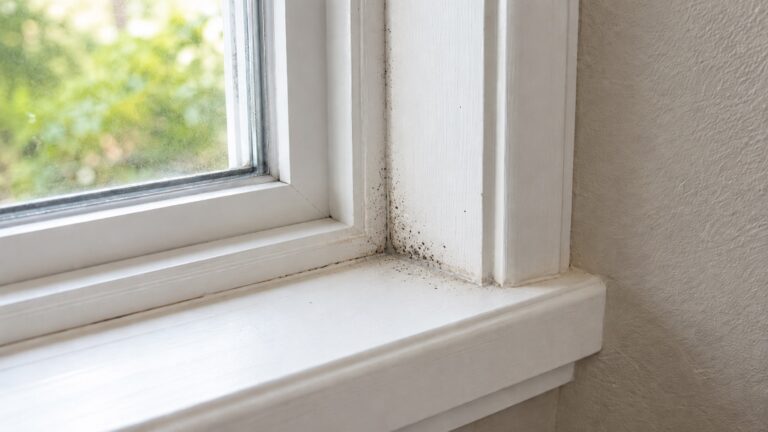
Visible mold-like growth in a garage may appear as specks, stains, patches, fuzzy growth, powdery growth, or irregular discoloration. It may be black, gray, green, brown, white, or another color. Color alone cannot identify the mold type or determine how serious the problem is, but recurring or spreading growth deserves attention.
Look at the surface where the growth appears. Mold-like spots on cardboard, wood, drywall paper, trim, fabric, or dust-covered surfaces are more suspicious than simple staining on clean concrete. Mold needs moisture and a suitable surface. In garages, those surfaces are often stored materials or wall components rather than the concrete slab itself.
Texture can also help. Dirt usually wipes away more evenly. Old stains may stay flat and unchanged. Mold-like growth may look fuzzy, dusty, raised, speckled, smeared, or irregular. It may also return after wiping if the moisture source remains active.
Do not rely on appearance alone. A black mark may be dirt, soot, tire residue, mildew-like growth, old water staining, or mold. The strongest clues are pattern and recurrence. If spots appear near damp areas, smell musty, spread over time, or return after cleaning, the area should be treated as a moisture-related warning sign.
Mold on Cardboard Boxes and Stored Items
Cardboard boxes are one of the most common places to find mold signs in a garage. Cardboard absorbs moisture from humid air, damp concrete, wet walls, and poor airflow. Once it becomes damp, it can stay that way long enough for musty odor, spotting, soft box bottoms, or visible mold-like growth to appear.
Mold on boxes may show up as dark specks, gray patches, white powdery areas, fuzzy spots, or stains that spread across the surface. The bottom of the box is often affected first because it may sit directly on concrete or in a low-airflow area. Labels may wrinkle, tape may loosen, and the box may feel soft or weak when lifted.
Stored paper, books, decorations, fabric bins, rugs, cushions, camping gear, sports equipment, and upholstered furniture can show similar signs. These materials are more vulnerable than hard plastic or metal because they absorb moisture and contain organic material. A garage can look mostly dry while the contents of a damp box or fabric item are already musty.
If mold signs appear mainly on stored items, the garage may have a storage-related moisture problem. The cause may be high humidity, damp floors, poor airflow, or items stored too close to exterior walls. For the storage-specific moisture pattern, see how stored items increase garage humidity.
Mold on Wood Shelves, Lumber, and Trim
Wood is another common surface for garage mold signs. Shelves, unfinished lumber, trim, wall framing, workbenches, plywood, and stored wood furniture can absorb moisture and hold it longer than metal or plastic. If the garage stays humid or damp, wood surfaces may show spotting, dark streaks, fuzzy growth, or a musty smell.
Wood shelves are especially vulnerable when they are pushed against exterior walls or loaded with boxes that block airflow. The back of the shelf may stay cooler and damper than the front. Mold-like spots may appear first where the shelf touches the wall, where boxes sit directly on the wood, or where dust collects.
Unfinished lumber and scrap wood can also develop mold when stored on the floor or in damp corners. The growth may look like gray, green, black, brown, or white spotting. It may be patchy rather than uniform. If the wood feels damp, smells musty, or shows recurring spots, the garage environment is likely staying too moist.
Trim and lower wall materials deserve close attention because they often sit near the floor-wall joint. If garage floor moisture, rainwater entry, or condensation keeps the lower wall area damp, trim can swell, stain, or develop mold-like spotting. This may point to a moisture source that affects both the floor and the wall.
Mold Near Lower Walls, Corners, and Floor-Wall Joints
Mold signs near lower garage walls, corners, and floor-wall joints often mean moisture is collecting where surfaces meet. These areas dry slowly because they are close to the concrete slab, often blocked by storage, and sometimes exposed to water moving across the floor.
Look for dark specks, staining, fuzzy patches, swollen trim, peeling paint, or musty odor along the bottom of walls. Mold-like growth in these areas may be connected to a damp garage floor, rainwater entering under the door, high humidity, or water moving along the slab toward the wall.
Corners are also common problem areas. They may have less airflow, cooler surfaces, and more stored items than the center of the garage. If a corner smells musty or shows recurring spots, move storage away and check the wall surface, floor, trim, and the back of any shelves or boxes.
If the wall itself appears damp, stained, or soft, the issue may not be limited to surface mold. Moisture may be affecting the wall material behind the visible area. In that case, use a wall-specific inspection process such as how to detect moisture on garage walls before assuming the problem is only on the surface.
Mold Behind Shelves, Cabinets, and Clutter
Mold in garages often hides behind shelves, cabinets, tool racks, stacked boxes, and other clutter. These areas have limited airflow, collect dust, and may stay cooler than open wall surfaces. When moisture enters the garage, hidden areas can remain damp long after the visible floor and open walls appear dry.
Move stored items away from suspicious areas and inspect the wall, floor, shelf backs, box bottoms, and nearby trim. A mold problem may be concentrated behind one shelf or one group of boxes. If the area smells stronger after items are moved, moisture may have been trapped there for some time.
Cabinets and closed storage units can also hide mold signs. Check the back panels, lower shelves, corners, and items stored inside. A cabinet placed against a damp exterior wall or sitting on a damp slab can trap moisture in a small enclosed space.
Do not judge the garage only by the open surfaces. A garage may look clean from the doorway while mold-like growth is developing behind stacked belongings. Hidden mold signs are especially likely when storage touches exterior walls, sits directly on concrete, or blocks airflow around a known damp area.
Condensation and Humidity Signs That Support Mold Risk
High humidity and repeated condensation do not automatically prove mold growth, but they create conditions where garage mold becomes more likely. If the garage often feels damp, smells stale, has condensation on metal surfaces, or keeps stored items soft and musty, mold-prone materials may be staying wet long enough for growth to begin.
Condensation is especially important because it can appear without an obvious leak. Moisture may collect on a cool garage door, window, metal shelf, tool, pipe, concrete floor, or lower wall surface. If nearby cardboard, wood, drywall paper, fabric, or dust-covered materials stay damp, those materials can become mold targets.
Humidity-related mold signs often appear across several areas rather than from one obvious leak point. You may see musty odor, rust, damp boxes, spotting on stored wood, and condensation on cold surfaces at the same time. That pattern suggests the garage air itself may be staying too damp. For the humidity-specific warning signs, see signs of high humidity in garages.
Recurring condensation should be taken seriously when it affects porous materials. A garage can dry on the surface between weather events while cardboard, wood, fabric, and drywall paper remain damp deeper inside. Mold risk increases when these materials do not dry fully before the next humid period.
How to Tell Mold-Like Growth From Dirt or Ordinary Stains
It is not always easy to tell mold-like growth from dirt, dust, tire residue, old water stains, soot, or surface discoloration. Garages collect debris, so not every dark mark is mold. The best clues are the surface, texture, odor, pattern, and whether the mark returns after cleaning.
Start with the surface. Mold is more likely on cardboard, drywall paper, wood, fabric, paper, dust-covered surfaces, and porous stored materials. Dirt or tire residue is more likely on hard, smooth, high-contact surfaces such as the middle of a concrete floor or areas where tools, tires, or equipment rub against the wall.
Texture can also help. Mold-like growth may look fuzzy, powdery, speckled, smeared, raised, or irregular. Dirt is often flatter and more consistent. Water stains may leave rings or discoloration without texture. However, appearance alone is not enough to identify mold species or risk level.
Odor and recurrence matter. A suspicious mark near a musty smell, damp material, condensation area, or recurring moisture source is more concerning than an isolated mark on a dry surface. If the spot returns after cleaning or grows over time, moisture is probably still active in that area.
Do not identify mold by color alone. Black spots are not automatically “toxic black mold,” and white or gray patches are not automatically harmless. Color can vary by species, surface, moisture level, and age. Treat recurring growth on damp organic materials as a moisture warning that needs source control.
When Mold Signs Point to a Larger Moisture Problem
Garage mold signs often point to a larger moisture problem when they return after cleaning, appear in the same area repeatedly, or spread across several moisture-sensitive materials. Mold is usually a sign that the garage has stayed damp long enough for growth to develop.
If mold-like spots appear near the garage door, check for rainwater entering under the threshold. If growth appears near lower walls, check whether the floor or wall base stays damp. If mold appears on boxes or stored items, check humidity, storage spacing, and whether those items are sitting directly on concrete.
Mold near wall surfaces may require a closer moisture inspection. A surface patch on drywall, trim, or wall sheathing may be connected to condensation, exterior water entry, or hidden moisture behind the material. If the wall is stained, soft, swollen, or repeatedly damp, the issue may extend beyond visible growth.
Floor-level mold signs may point to damp concrete, vehicle runoff, slab moisture, or water entry. Mold usually grows on the cardboard, wood, dust, or fabric touching the floor rather than on clean concrete itself. If floor dampness is part of the pattern, review why garage floors stay damp so the moisture source is not overlooked.
The long-term solution is not just wiping away visible growth. Mold can return if humidity, water entry, damp storage, poor airflow, or floor moisture remains active. For the broader source-control approach, see how to find, fix, and prevent moisture problems in homes.
When Garage Mold Needs Professional Help
Some small, surface-level mold concerns on removable stored items may be handled by removing the affected material and correcting the moisture source. Wear appropriate protection, avoid spreading dust or spores, and do not treat surface cleaning as a substitute for fixing moisture. Professional help may be needed when mold growth is widespread, recurring, hidden, affecting porous building materials, or connected to unresolved water entry.
Be more cautious if mold-like growth appears on drywall, wall cavities, insulation, framing, ceiling areas, or shared walls in an attached garage. These materials can hold moisture and may hide growth behind the visible surface. If the garage has a strong recurring odor but the source is not visible, hidden moisture or concealed mold may need a closer inspection.
Professional help is also wise when mold keeps returning after cleaning. Recurrence usually means moisture has not been corrected, especially when humidity, damp floors, exterior drainage, wall leaks, poor ventilation, or storage conditions keep materials wet.
Use extra caution around electrical components, water heaters, appliances, and damaged building materials. Do not disturb large moldy areas or tear into suspect wall materials without understanding the risk. Mold cleanup should be paired with moisture correction, containment, and appropriate protective equipment when the affected area is more than a minor surface issue.
After mold signs are addressed, prevention becomes the next step. The related guides on how to prevent mold in garages and how to prevent moisture buildup in garages can help connect mold prevention to moisture control once the active source is understood.
FAQ About Signs of Mold Growth in Garages
What does mold in a garage look like?
Mold in a garage may look like dark specks, fuzzy patches, powdery growth, irregular staining, or spreading discoloration. It can appear black, green, gray, brown, white, or another color. Color alone cannot identify the mold type, so focus on the surface, texture, odor, moisture pattern, and whether the growth returns.
Is a musty garage always mold?
No. A musty garage is not always mold, but it does mean moisture may be lingering somewhere. Damp cardboard, wood, dust, fabric, stored furniture, poor airflow, and hidden moisture can all create musty odor. If the smell returns, gets stronger, or appears with spots or staining, inspect for mold and moisture.
Can mold grow on concrete garage floors?
Mold is less likely to grow on clean bare concrete itself, but it can grow on dust, dirt, coatings, organic debris, cardboard, mats, wood, or stored items sitting on damp concrete. If the floor stays damp, the materials touching or covering it may become the real mold concern.
Why is mold growing on boxes in my garage?
Mold grows on garage boxes when cardboard absorbs moisture from humid air, damp concrete, wet walls, or poor airflow. Boxes stored directly on the floor or tightly against exterior walls are especially vulnerable. Moldy boxes usually mean the garage has a moisture or storage-drying problem.
Can high humidity cause mold on garage storage?
Yes. High humidity can contribute to mold on garage storage when porous materials stay damp long enough. Cardboard, wood, fabric, drywall paper, paper labels, and dust-covered shelves are more vulnerable than hard, clean, nonporous materials. Repeated humidity and condensation increase the risk, especially when boxes sit directly on concrete or tight against exterior walls.
How do I know if black spots are mold or dirt?
Black spots may be mold, dirt, staining, soot, tire residue, or old moisture marks. Mold is more likely if the spots appear on damp organic materials, smell musty, look fuzzy or speckled, spread over time, or return after cleaning. Color alone is not enough to identify mold.
Should I clean garage mold myself?
Small surface-level mold on removable items may be manageable if the moisture source is corrected and safe cleanup practices are used. Wear appropriate protection and avoid dry-scrubbing or disturbing growth in a way that spreads dust. Do not disturb large areas, moldy porous building materials, growth near electrical components, or hidden drywall, framing, and insulation problems unless a qualified professional is involved.
When should I call a professional for garage mold?
Call a professional when mold growth is widespread, keeps returning, affects porous building materials, appears near electrical systems, involves hidden wall or ceiling areas, or is tied to unresolved water entry. Professional help is also wise when the garage is attached to the home and odor or moisture may be affecting shared walls or nearby indoor spaces.
What Garage Mold Signs Usually Mean
Signs of mold growth in garages usually appear where moisture lingers on materials that can support growth: cardboard, wood, drywall paper, fabric, dust, trim, and stored belongings. Musty odor, dark specks, fuzzy patches, stained wood, mold-like spots behind shelves, and recurring discoloration near lower walls or floor-level storage are warning signs worth checking.
The most important clue is not color alone. Judge mold-like growth by the surface, texture, smell, location, moisture pattern, and whether it returns after cleaning. A black spot is not automatically a specific mold type, and a musty smell does not always prove visible mold, but recurring spots and odor usually mean the garage has a moisture problem that needs attention.
Cleaning visible growth without correcting the moisture source is rarely enough. If garage mold keeps returning, look for high humidity, damp floors, wall moisture, rain entry, poor airflow, or moisture-holding storage. If the growth is widespread, hidden, recurring, or affecting building materials, get professional help before disturbing the area.